Home Blog Page 626

Chamba Rumal: A cultural and traditional gift for the weddings

0

Nestled amidst the pristine beauty of the Himalayan foothills, the Chamba Valley in Himachal Pradesh has been the cradle of a unique form of artistic expression known as Chamba Rumal. This exquisite embroidered handicraft, once promoted under the patronage of the former rulers of the Chamba kingdom, has a rich history, vibrant colors, and intricate designs that have captivated art enthusiasts for centuries. In this article, we explore the fascinating world of Chamba Rumal, from its historical origins to its modern-day revival.

 The Legacy of Chamba Rumal

Chamba Rumal, also known as Chamba handkerchief, is a cultural treasure that has been lovingly passed down through generations. These finely crafted textiles have been a common item of gift-giving during weddings, adorned with detailed patterns in bright and pleasing color schemes. This tradition has deep roots in the region’s history and culture.

 Geographical Indication Protection

The significance of Chamba Rumal is further underscored by its protection under the Geographical Indication of the Trade-Related Intellectual Property Rights (TRIPS) agreement. On 22 January 2007, it was officially recognized and listed as “Chamba Rumal” under the GI Act 1999 of the Government of India. This recognition solidified its status as a unique and culturally significant art form.

Historical Roots

The origins of Chamba Rumal can be traced back to the 16th century, with one of the earliest reported examples created by Bebe Nanaki, the sister of Guru Nanak. This historic piece is now preserved in the Gurudwara at Hoshiarpur. The Victoria and Albert Museum in London also houses a Rumal gifted to the British in 1883 by Raja Gopal Singh, featuring an embroidered scene from the epic Mahabharata’s Kurukshetra War.

In the 17th century, the women of the princely state of Chamba, now part of Himachal Pradesh, began practicing the art of embroidering Rumals. These textiles were often presented as part of marriage gifts or dowries. Using fine hand-made silk from Punjab or muslin cloth from Bengal, they created highly ornamental patterns.

The Artistic Technique

Central to the creation of Chamba Rumal is the unique embroidery technique known as the “dohara tanka” or double satin stitch. This technique results in identical patterns on both faces of the fabric, creating a captivating visual effect. Chamba Rumal artists drew inspiration from various sources, including the Mughal art of Chamba miniature paintings, themes from mythology like the Mahabharata and Ramayana, and even events from ancient scriptures.

The Decline and Revival

With the downfall of the Mughal empire and the advent of commercialization, the quality of Chamba Rumal deteriorated. It began to be produced in various cheaper varieties, including tablecloths, cushion covers, and machine-made items. However, in the late 1970s, there was a renewed effort to revive this fading art form. Under the initiative of Usha Bhagat, original designs were located in museums and collections, and women artists were trained to recreate them. Sixteen designs were successfully recreated, and the quality of Chamba Rumal was restored.

 The Presidential Honor

One of the notable figures in the revival of Chamba Rumal is Lalita Vakil, who received the prestigious Nari Shakti Puraskar award for her dedicated work in organizing courses and preserving this art form. The award was presented in the Presidential Palace by the President of India, recognizing the immense cultural value of Chamba Rumal.

 The Modern Interpretation

Today, Chamba Rumal continues to thrive as a cherished form of hand embroidery. It has evolved into square and rectangular shapes, with materials including muslin, malmal, khaddar, fine charcoal or brush, and silk threads without knots. The double satin stitch embroidery ensures uniformity of design on both faces of the fabric, making Chamba Rumal truly exceptional.

 The Living Tradition

Chamba Rumal is not merely a textile; it’s a story of tradition, artistry, and cultural heritage. With its vibrant colors, intricate designs, and deep-rooted history, it stands as a testament to the creativity and craftsmanship of the people of the Chamba Valley. This “Painting in Embroidery” continues to be a source of pride and a symbol of the enduring cultural legacy of Himachal Pradesh.

In every stitch of Chamba Rumal, there lies a piece of history, a touch of mythology, and a world of artistic brilliance, making it a timeless treasure of Indian craftsmanship.

Rajasthan: This new heritage train will stop at passengers’ call promising beautiful views of hills and waterfalls!

0

PM Narendra Modi on Thursday flagged off Rajasthan’s first heritage train, which will also stop on the whistle of passengers. This train will show the most unique views like Goram Ghat, which is called Chhota Kashmir of Rajasthan and Jog Mandi Waterfall of Goram Ghat, which falls from the highest place. It will pass between two curved tunnels.

The train has been given a heritage look like a 150 year old steam engine. This train will run only 4 days a week and the fare will be Rs 2000 per passenger. The train will pass through the Aravalli hills

Pali district has got the gift of a train running on the only meter gauge track in the state. Starting from Marwar Junction, it will reach Kamlighat (Devgarh, Rajsamand) via Goramghat, Fulad. Aravalli hills, big mountains and greenery will be seen on this route. Apart from this, the train will also pass through a tunnel.

Heritage train cost: Rs 2000 per passenger

For an exciting journey of 9 hours in the train, a ticket will cost Rs 2,000 per person. The train will operate normally four days a week. Tourist groups will be able to book it for two days. It will be operated on receipt of booking for groups of more than 10 people. The group fare has not been decided yet.

The train will leave Marwar Junction at 8.30 am and reach Kamli Ghat at 11 am via Fulad, Goramghat. After a stoppage of three and a half hours at Kamli Ghat, it will leave at 2.30 pm, which will reach Marwar Junction at 5.30 pm. Food will be provided at Railway Kamli Ghat, but passengers will have to pay separate charges for this.

Goram Ghat will also be on the train’s route. Goramghat, which is included in the most exciting tourist place of Rajasthan, is also called Chhota Kashmir. It is a beautiful hill station situated in the Aravali valleys on the border of Rajsamand district and Pali. Here the train passes through the mountains.

Bhil Beri waterfall, which falls from the highest height in Rajasthan, also fall on the journey to this ghat. This waterfall looks like Dudh Sagar Waterfall located on the border of Karnataka and Goa states.

Heritage train given engine with steam engine kind look

To attract tourists, the train has been given a heritage look. The engine of the train has been designed like a 150 year old steam engine, but it will run on diesel only.

To give a Rajasthani look to the heritage train, Rajasthani paintings will be seen on its coaches. For this, elephant-horse palanquin has been made. The train also has a 60-seat Vistadome coach which is currently seen in Vande Bharat trains.

That means the seats will be able to rotate 360% and the spectators sitting on them will be able to capture the view outside the train in their mobile cameras. There will be a separate staff coach in the train.

Heritage train seats: 60 passengers can sit at a time

60 passengers will be able to sit in the train at a time. The coach has large windows on all three sides to view the outside. The coach will be completely AC. Meanwhile, the train will also pass through Goramghat tunnel.

The special thing will be that during the journey of 100 kilometers, the tourist boarding the train will be able to stop the train anywhere as per his wish. Tourists will be given about 15 to 20 minutes time to stop the train at the selfie point. Tourists will be able to take selfies at this time.

Heritage train: watch out two tunnels with scenery

Once the train journey starts, there will be two curved tunnels in the middle which will increase the thrill of the passengers. These tunnels are 23.13 meters long. Apart from this, there are a total of 13 level crossings (railway crossings).

Apart from the tunnel, it will also go round and round through 13 winding places. This train will cover the 25 KM journey from Kamli Ghat to Fulad along with many scenic spots of nature and picturesque views of the Ghat.

Enjoy snacks in pantry 

This coach, which looks like a rail bus, will also have a small pantry. In this, passengers will be able to order lunch along with tea and breakfast. Separate money will have to be paid for this. What will be in the menu and what will be the prices will be known only after the operation of the train

For the passengers going to Mavli, the meter gauge train already running will operate as usual. Train No. 09695, Marwar-Mavli train departs from Marwar Junction at 12.15 pm.

Steam engine ran for the first time in 1934

About steam engine

The special thing is that on this track a steam engine train was operated for the first time in 1934, after that meter gauge rail is being operated. For many years, a demand was raised to convert this railway track into a broad gauge line.

But due to the valley area and rotation up to 16 degrees, this change could not happen. Now, taking a new initiative, Railways will start operating heritage trains to keep the 89 year old track alive.

Birla Institute of Management Technology celebrates 36th Foundation Day

0

Birla Institute of Management Technology (BIMTECH) celebrated its 36th Foundation Day on October 2nd, coinciding with the 154th Gandhi Jayanti. The celebration underscores the institute’s unwavering commitment to instilling the culture and values of social welfare in its students. The three-day celebration, commencing on September 30th and continuing through October 1st, featured performances by the National School of Drama Repertory group with drama “Maaee Ree Main Kaa Se Kahun”, directed by Ajay Kumar, and the Asmita Theatre Group from New Delhi with drama “Andha Yug,” directed by Shri Arvind Gaur.

The Foundation Day function on October 2 began with the lighting of the ceremonial lamp, followed by the welcoming of guests. During the event, the institution paid homage to Mahatma Gandhi by playing his favorite bhajan, ‘Vaishnav Jan To Tene Kahiye’.

Anshu Gupta, founder of Goonj, graced the occasion as the Chief Guest. 

He said, “Thank you very much to BIMTECH for inviting me to their 36th Foundation Day. I come from a family of engineers—a very determined family that ensured everyone studied well. There were not many financial resources back then. I often think that being able to speak in more than one language outside the country allows me to communicate with everyone. It is a huge investment for the generation, which never thought of buying a car but invested more in the education of all of us. From a determined family with limited means to witnessing life’s complexities, I learned that challenges come in various forms. My journey through journalism and Indian mass communication unveiled hidden stories of dignity and resilience. Charity, while well-intentioned, should aim for sustainable empowerment, not dependency. We must cherish our education and uphold the dignity of every individual. Let us work together, regardless of our backgrounds, to build a nation where honesty and ambition drive progress. Subsidies are opportunities, not entitlements, and giving back enriches us all. In a world where education remains our most enduring subsidy, let’s ensure it reaches everyone.” 

Dr. Harivansh Chaturvedi, Director, BIMTECH, delivered a welcome speech in which he emphasized the remarkable development of the institute from a small basement in New Delhi to one of the top B-schools. He highlighted the institute’s tireless efforts to raise awareness about ESG in both the corporate and academic spheres.

Also, he welcomed to host Anshu Gupta, a true disciple of Gandhi who left his corporate career to embark on a transformative journey. His organization, Goonj, exemplifies Gandhi’s principles in addressing pressing global challenges, earning international recognition. It stands as a beacon of hope in the face of climate change, sustainability, and humanitarian issues.

He said, “Mahatma Gandhi’s eleven vows, including truth, nonviolence, simplicity, and duty towards humanity, remain profoundly relevant, not just in India but across the globe. BIMTECH’s choice to commence on October 2nd, Gandhi’s birthday, reflects his enduring impact. Albert Einstein once remarked, ‘Generations to come will scarcely believe that such a one as this ever in flesh and blood walked upon this earth.’ Gandhi’s influence on our world cannot be overstated.”

In keeping with its illustrious heritage of encouraging significant contributions to education, the BIMTECH administration also bestowed various honours, like the Basant Kumar Birla Distinguished Scholar Award, 2022; the Best Researcher and Teaching Excellence Award, 2022; and the felicitation of faculty and staff completing 10 years of service. 

On this occasion, the Insurance India Report, and the Annual Activity Report were also released.

The celebrations concluded with a formal vote of thanks by Dr. K. C. Arora, Registrar of BIMTECH.

World Animal Welfare Day: ‘Big or Small, We Love them All’

0

Dr. Pramiti Rastogi wrote on World Animal Welfare Day..

Animal welfare refers to the physical and mental state of an animal in relation to the conditions in which it lives and dies. It is closely linked to animal health, the health and wellbeing of people, and the sustainability of socio-economic and ecological systems. 

Animal welfare is important because it ensures that animals are treated humanely and with respect. It is necessary for humans because it helps us to maintain a healthy environment, protect biodiversity, and promote sustainable development. Animal welfare also has economic benefits as it can lead to increased productivity, reduced costs, and improved product quality.

If animal welfare is not done correctly, it can have serious consequences. Poor animal welfare can lead to animal suffering, disease outbreaks, environmental degradation, and food safety issues. It can also have negative impacts on human health and wellbeing by increasing the risk of zoonotic diseases.

World Animal Welfare Day is celebrated annually on October 4th to raise awareness about improving the welfare standards of animals across the globe. The theme for World Animal Day in 2023 is ‘Big or small, we love them all’ . This day serves as a reminder of our responsibility to shield and nurture the diverse array of species that coexist on our planet. Collectively, we can work towards ending the suffering and mistreatment of animals and transform the course of the world’s treatment of them.

Animal welfare is an important issue that affects us all. It is our responsibility to ensure that animals are treated humanely and with respect. By doing so, we can protect the environment, promote sustainable development, and improve our own health and wellbeing.

Kantha Artistry: Weaving Stories and Tradition with a Needle and Thread

0

Art possesses a remarkable ability to transcend the boundaries of time and culture, weaving together threads of history, heritage, and creativity. Kantha, a traditional form of embroidery originating from the Indian subcontinent, serves as a testament to this phenomenon. With its roots dating back to ancient times, Kantha artwork is a living testament to the rich tapestry of tradition and storytelling. In this article, we will embark on a journey into the enchanting world of Kantha art, unraveling its origins, techniques, and the profound cultural significance it carries.

A Stitch in Time

Kantha art finds its origins in the rural heartlands of India, particularly in the states of West Bengal and Bangladesh. The very name “Kantha” is derived from the Bengali word for “throat,” a nod to the characteristic running stitch that defines this embroidery style. Historically, Kantha was born out of the necessity to transform old, worn-out fabrics into something both beautiful and functional.

What distinguishes Kantha embroidery is its simplicity and versatility. It primarily relies on the use of a running stitch to create intricate patterns, motifs, and designs on layers of fabric. These fabrics are then lovingly stitched together to craft quilts, shawls, sarees, and an array of other textiles. The beauty of Kantha lies in its imperfections and the organic, handcrafted texture it imparts to each piece.

A Tradition of Storytelling

Among the most captivating facets of Kantha art is its capacity to narrate stories. Many Kantha textiles are not mere ornamental items; they are narratives etched with care and affection. Women of yore would often create Kantha quilts, known as “Nakshi Kantha,” to immortalize personal anecdotes, family histories, and cultural legends. Passed down through generations, these quilts evolve into cherished heirlooms that embody memories and tradition.

The motifs and designs in Kantha art are brimming with symbolism. Common themes encompass depictions of nature, animals, folk tales, and religious imagery. Each stitch in a Kantha piece carries meaning, turning the art form into a visual language that conveys emotions, beliefs, and stories.

Kantha Artistry Today

While Kantha art was originally a pragmatic craft for repurposing old fabrics, it has transformed into a thriving medium of artistic expression. Modern artisans have elevated Kantha to new heights, not only crafting traditional textiles but also fashioning wearable art, home decor items, and even fine art pieces. The adaptability and versatility of Kantha embroidery have endeared it to designers and artists worldwide.

The Cultural Significance of Kantha

Kantha art isn’t merely an artistic tradition; it’s a cultural emblem. It reflects the resilience, resourcefulness, and creativity of women in the Indian subcontinent. Historically, Kantha offered women a means to connect with their cultural roots, safeguard stories, and express themselves in a society where their voices often went unheard. Today, it remains a source of empowerment for women, providing them with opportunities for economic independence and creative fulfillment.

Preserving Kantha Artwork

Despite its timeless allure, Kantha art faces challenges in the contemporary world. Mass production and evolving consumer preferences jeopardize the livelihoods of traditional Kantha artisans. Initiatives aimed at raising awareness regarding the cultural significance of Kantha, supporting artisan communities, and promoting ethical and sustainable practices in its production are vital to its preservation

Kantha artwork is a testament to the enduring power of creativity and storytelling. Emerging from the humble roots of repurposing old fabrics, it has blossomed into a vibrant and treasured tradition that bridges generations, safeguards cultural heritage, and empowers artisans. As we celebrate the beauty and significance of Kantha art, we not only appreciate its aesthetic value but also pay homage to the resilience and creativity of the women who have woven their stories into this remarkable art form. In doing so, we ensure that Kantha art continues to stitch its tales for generations to come.

Neeraj Chopra clinches another medal in Asian Games 2023, India shows best performance with 81 medals

0

India has won three gold medals on Wednesday, the 11th day of the 19th Asian Games, making it the best performance of the country.

After World and Olympic champion Neeraj Chopra, the Indian team stood first in the men’s 4×400 meter relay race. The special thing about this event was that the silver medal also came to India kitty. India’s Kishore Kumar stood second. Earlier, the Archery Mixed Team won the first gold of the day. India got the third gold in 4×400 relay men’s.

Today, apart from three gold, India has won 12 medals including five silver and 4 bronze. With these medals, India’s total medals have become 81. These include 18 gold, 31 silver and 32 bronze.

India’s all-time best performance in Asian Games

With the help of these medals, India has left behind its all-time best performance in the Asian Games. Earlier, India had won 70 medals in the last Asian games. These included 16 gold, 23 silver and 31 bronze. India has been a part of the Games since the first Asian Games in 1951. Then New Delhi itself hosted. India participated in all 18 Asian Games.

Zardozi work bespeaks stories of timeless embroidery art

0

Zardozi, or Zardosi, as it’s sometimes pronounced, is an art form that has stood the test of time. This ancient embroidery technique continues to captivate contemporary artists and enthusiasts alike. In this article, we delve into the historical roots, stylistic evolution, and modern-day significance of Zardozi work, exploring its presence in both traditional and custom-made clothing.

What is Zardozi Work?

Zardozi embroidery is a traditional technique that uses metallic threads, often gold or silver, to craft intricate and ornate patterns on fabric. The method involves delicately pulling these metallic threads through the fabric using a needle with a hook-like end. The result is a stunning, enduring design that shimmers and shines.

Difference Between Zardozi and Zardosi

The name Zardozi is often anglicized to Zardosi, but the correct version is Zardozi. Though the exact origin of the term is unclear, it likely comes from the Persian words for “gold” (zar) and “embroidery” (dozi).

Zardozi Work vs. Zardozi Embroidery

While Zardozi embroidery refers to the creation of intricate motifs using metal threads, Zardozi work encompasses the overall design and pattern produced using this embroidery technique. In essence, Zardozi embroidery pertains to the method, whereas Zardozi work refers to the final product.

How is Pakistani Zardozi Work Different From Indian Zardozi Work?

Both Pakistani and Indian Zardozi embroidery share aesthetic and technical similarities, but there are notable distinctions. Pakistani Zardozi work tends to be more ornate and detailed, often using more gold and silver threads and incorporating beads, sequins, and stones. Indian Zardozi work, on the other hand, can focus on intricate borders and accents or be used to create complex patterns.

What is Zardozi Design?

Zardozi design is celebrated for seamlessly blending traditional elements with modern artistic flourishes. It involves using metallic threads, typically gold or silver, to create ornate and visually striking patterns on fabric. Each Zardozi design pattern represents a work of art, showcasing the skill and creativity of the craftspeople who craft them. From royal garments to luxurious home decor, Zardozi designs adorn a wide range of items.

Who Invented Zardozi?

Zardozi embroidery has ancient roots that stretch from modern-day Iran to India. It gained prominence during the Mughal era, becoming a symbol of opulence among the elite. The Mughal court’s adoption of Zardozi transformed it into a cultural and artistic treasure. This rich legacy continues to inspire contemporary artists, ensuring that Zardozi remains a timeless and exquisite art form.

Which Place is Famous for Zardozi?

Lucknow, in the northern Indian state of Uttar Pradesh, is often considered the spiritual and economic home of Zardozi needlework. The city’s master artisans have perfected the craft over the years, making it synonymous with Lucknow’s history and culture. Today, many workshops in Lucknow offer tourists the opportunity to witness skilled artisans at work, immersing themselves in the city’s cultural heritage.

Which Cloth is Best for Zardozi Work?

Choosing the right fabric for Zardozi embroidery depends on factors such as the intended purpose, design, and personal preference. Fabrics like silk, cotton, velvet, and satin are commonly used for Zardozi work. Silk is favored for its luxurious feel and suitability for intricate patterns, while cotton offers versatility and affordability. Velvet, with its lush texture, complements the shimmer of metallic threads, while satin’s sheen adds elegance to Zardozi designs.

Which Needle is Used for Zardosi Work?

Zardozi embroidery requires a special needle designed for the technique. Unlike standard embroidery needles, Zardozi needles have a hook-like end that is essential for pulling metallic threads through the fabric. These needles are typically crafted from strong yet pliable steel to work efficiently with metallic threads. The artist’s precise control over the Zardozi needle is crucial to achieving accurate and aesthetically pleasing stitches.

Types of Zardozi Work

Zardozi work encompasses various techniques, each with its unique characteristics:

  1. Hand Embroidery: Traditional Zardozi work involves intricate hand embroidery, meticulously crafted by skilled artisans over hours or even days.
  2. Shisha Embroidery: This style incorporates tiny mirror fragments, adding sparkle and glamour to designs.
  3. Zari Work: Zari Zardozi work uses metallic threads to create elaborate patterns, often featuring traditional Indian themes like paisley and florals.
  4. Aari Work: A hook is used in Aari work to produce beautiful, intricate motifs with uniform, duplicate threads.
  5. Dabka Work: Dabka embroidery uses raised stitches to simulate depth, resulting in sophisticated patterns and textures.
  6. Kundan Work: This style incorporates flat, small glass or metal pieces to create glittering patterns on fabric.
  7. Aari Tari Work: A combination of Aari and Tari stitches allows for delicate and detailed designs.
  8. Resham Work: Resham work employs fine silk threads to create intricate patterns with a soft and refined aesthetic.
  9. Gota Patti Work: Gold and silver threads are used to create intricate patterns in Gota Patti work, often seen on Indian garments and accessories.
  10. Royal Embroidery: Also known as “Durbar Embroidery,” this Zardozi style has a rich history, having been favored by Mughal royalty for its opulent designs.
  11. Raffia Work and Raffia Crafts: Crafts made from raffia fibres are known as raffia work, often used to create durable items like baskets and pouches.
  12. Mukesh Work Embroidery: This subset of Zardozi work features tiny mirror-like components, adding glamour to traditional Indian and Pakistani attire.
  13. Kasuti Work Embroidery: Originating in Karnataka, Kasuti work features elaborate and refined patterns on cotton fabric.
  14. Kutch Work Embroidery: This Zardozi subset is renowned for its vibrant colors and strong geometric patterns, often used in sarees and scarves.
  15. Sequence Work Embroidery: This style incorporates trim and metallic discs to create glittering patterns, often seen on borders of traditional garments.
  16. Motifs Embroidery: Motifs embroidery involves creating repeated motifs on fabric, adding decorative elements to various items.
  17. Beadwork Embroidery: Beadwork embroidery uses tiny decorative beads to create intricate patterns and embellishments on fabric, accessories, and home decor.

In conclusion, Zardozi work is a celebration of traditional craftsmanship, skill, and creativity. Whether adorning traditional clothing or enhancing modern designs, this timeless art form continues to inspire and captivate, proving that the beauty of Zardozi is truly everlasting.

Soak the sprituality spread around Annapurna Temple in Varanasi…

0

Varanasi, the ancient city nestled along the sacred Ganges River, weaves a rich tapestry of spirituality and Hindu heritage. Amidst the labyrinthine lanes, bustling ghats, and countless temples, the Annapurna Temple stands as a luminous symbol of sustenance and devout reverence.

Historical Significance:

The Annapurna Temple is a homage to Goddess Annapurna, the revered deity of food and nourishment. Her name, “Annapurna,” evokes the provider of sustenance. This temple carries profound historical and religious significance, drawing pilgrims and travellers alike into its fold.

Architectural Grandeur:

Adorned in the classical North Indian architectural style, the temple is a testament to meticulous craftsmanship, featuring intricate carvings and artistic finesse. Goddess Annapurna, seated atop her divine throne, ladle in hand and a vessel of rice, embodies the essence of benevolence. The inner sanctum is a gallery of living Hindu mythology, brought to life through captivating sculptures and paintings.

Religious Rituals:

Devotees flock to the Annapurna Temple, seeking the blessings of Goddess Annapurna. They believe that her grace ensures a life free from hunger, perpetually supplying sustenance. The temple resonates with heightened devotion during festivals like Navratri and Diwali when elaborate rituals and ceremonies take centre stage.

The Annakut Festival:

One of the most prominent events at the temple is the Annakut festival, also known as Govardhan Puja. Falling on the first day of the Hindu month of Kartik, this celebration involves a grand offering of diverse food items to the deity. It is a grand tribute to abundance and gratitude, as devotees assemble to create a mountain-like display of food offerings. 

Location and Accessibility:

Conveniently nestled in the heart of Varanasi, the Annapurna Temple warmly welcomes visitors. Its close proximity to the renowned Kashi Vishwanath Temple, another iconic Hindu shrine, makes it an integral stop for those seeking spiritual immersion in the city.

The Annapurna Temple in Varanasi transcends mere religious devotion; it embodies the profound link between food, nourishment, and spirituality in Hindu culture. It serves as a living testament to the intricate interplay between humanity and sustenance, perpetually enriching the religious and cultural tapestry of Varanasi. A visit to this temple offers not only a spiritual awakening but also a portal to explore the vibrant cultural heritage of Varanasi.

In summation, the Annapurna Temple stands as an enduring tribute to the omnipotence of Goddess Annapurna in Hinduism and the deep interconnection between spirituality and nourishment in Indian society. It remains a sanctuary of devotion, celebration, and cultural exploration, beckoning individuals from all walks of life to experience its unique fusion of spirituality and nourishment, nurturing not only the body but also the soul.

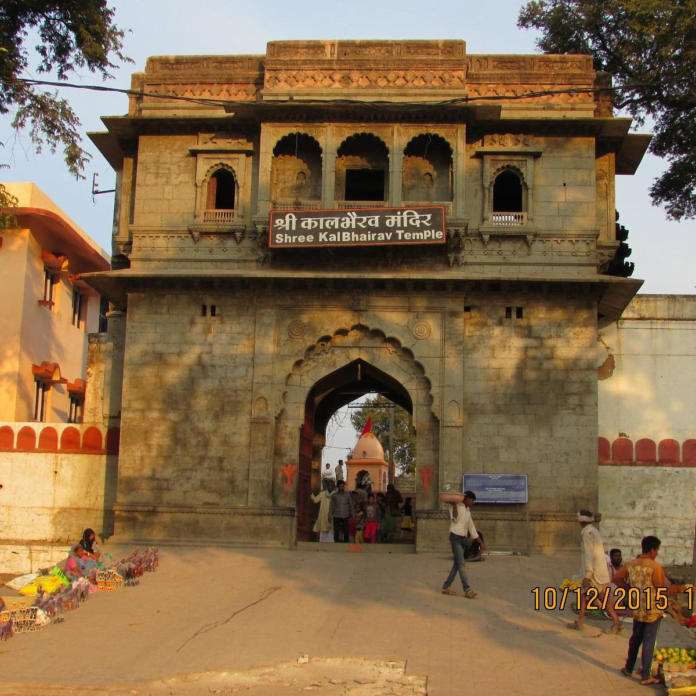
Kal Bhairav Temple in Ujjain: A Sacred Abode of Lord Shiva’s Fierce Manifestation

0

Priyanshi Pareek reports on the Kal Bhairav temple..

The Kal Bhairav temple, situated on the banks of the sacred River Shipra, stands as a prominent religious landmark in Ujjain, known as the “City of Temples” and the abode of Lord Mahakaal. This revered shrine is dedicated to Kal Bhairava, the formidable manifestation of Lord Shiva and the guardian deity of Ujjain. Its rich history dates back thousands of years and is steeped in spiritual significance.

Historical Roots and Renovation

According to ancient texts like the Skanda Purana, the presence of the Shri Kal Bhairav temple in Ujjain can be traced back over 6000 years. It holds deep connections with Tantric Vidhya and was revered by followers of Aghora and Kapalika sects. The temple, as we see it today, was initially built by King Bhadrasen in the 9th century and underwent significant renovations during the Maratha rule. The temple’s architecture is a testament to the Maratha style, with intricate paintings adorning its walls, reflecting the heritage of Malwa.

Unique Offerings and Rituals

A distinctive aspect of this temple is the offering of liquor as part of the Panchamakara ritual, one of the five tantric offerings. While traditionally all five offerings were made, today, only alcohol is presented to the deity. Devotees bring baskets filled with coconuts, flowers, and bottles of liquor, which are offered to the temple deity.

Mystical Devotion

Legend has it that the deity miraculously accepts the liquor offerings, despite claims of no physical cavity. The temple priests perform this ritual, and visitors believe that the deity swallows the liquor, with about one-third returned to devotees as prasad. The mystical aura surrounding this ritual adds to the temple’s uniqueness and spiritual allure.

Guardian of Ujjain

Kaal Bhairav, the chief of the eight Bhairav manifestations, holds the esteemed title of being the Kotwal (guardian) of Ujjain, a role assigned by Lord Mahakal himself. This temple serves as a symbol of protection and divine presence in the city, further enhancing its significance among devotees and visitors.

Shekhawati Sahitya Sangam Concludes with Enlightening Discussions on Indian Constitution and More

0

The five-day Shekhawati Sahitya Sangam concluded on a high note, with a series of stimulating discussions on contemporary topics, including the Indian Constitution, India’s identity, the Hindi language, and India’s global stature. The event brought together diverse voices and perspectives, enriching the literary and cultural landscape of the region.

During the concluding day’s first session, distinguished speakers, including Ruchi Shrimali, Anshul Saxena, Ayush Nadimpali, and Sangeeta Pranavendra, delved into the ‘Idea of India in Social Media Content.’ They explored the growing global appreciation for India, emphasizing its cultural richness and ethos of harmony, echoing Swami Vivekananda’s vision of India fostering unity among nations.

Ruchi Shrimali highlighted the transformative role of social media in shaping India’s image, noting that India has transitioned from being viewed as a third-world country to gaining global respect.

Anshul Saxena provided insights into the duality of India portrayed on social media: one that showcases India’s remarkable achievements, including its lunar mission, and another that perpetuates stereotypes of backwardness.

In the second session, ‘How to Read,’ Sangeeta Pranavendra and Ayush Nadimpali shared their perspectives, emphasizing the importance of reading and encouraging a culture of widespread reading.

The event continued with a discussion on ‘India Becoming Global,’ featuring Srikanth, Raghunandan, Amitabh Srivastava, and Sangeeta Pranavendra. The concluding session featured Bhagwat, a three-and-a-half-year-old devotee, reciting verses from the Geeta, captivating the audience and marking the end of the fourth edition of Shekhawati Sahitya Sangam.

The closing ceremony included the distribution of prizes to winners of various competitions, recognizing their literary and artistic talents.

Over the course of the five-day event, numerous thought-provoking sessions and activities unfolded. The first day witnessed discussions on ‘Revolution of Self-Based India,’ the book ‘Hanuman of Mahabharata,’ content writing, and ‘Youth Mental Health,’ which explored issues related to student stress and mental health.

The second day featured discussions on India’s self, the role of women in India’s development, and poetry readings in the Kavi Sammelan. Major Surendra Punia addressed the audience, discussing ideological scams and intellectual challenges.

On the third day, discussions centered on the Indian Constitution, India’s self, civil etiquette, and the perspective of Hindus in contemporary India. Major Poonia engaged with the youth in a dialogue session, emphasizing the importance of meaningful conversations.

On the fourth day, the dramatic staging of ‘Diver Yudh Vijay’ was presented, highlighting India’s historical achievements. The event also featured discussions on the Indian Constitution, social media narratives, the Indian film industry, and the idea of India.

In addition to intellectual discussions, the cultural evening showcased mesmerizing performances by the Crazy Hoppers dance group and captivating presentations in group dance competitions by school and college students.

The Shekhawati Sahitya Sangam left an indelible mark, fostering intellectual growth, cultural exchange, and a celebration of India’s rich heritage and potential for a brighter future.