Home Blog Page 614

Pushkar Fair 2023: Know dates, specialities and competitions

0

Pushkar is gearing up to host the world-renowned cattle fair which is a grand carnival where one will see captivating camel races to enchanting folk performances and bustling markets.

Pushkar dates: November 18-27

Pushkal festival specialities: Pushkar Camel Fair is basically livestock trading fair but it is a fair where one gets to experience spiritual rituals, and witnesses the unique culture of the Rajasthani people.

The Pushkar Fair was primarily a livestock fair, where traders as well as farmers from the Thar Desert region bought and sold camels, horses, cattle, and other animals. The fair’s primary purpose was to facilitate these transactions. Back then, the fair had a pretty agenda  to procure or sell off livestock. However, over the years, it has evolved into a multi-dimensional extravaganza.

Pushkar Fair Celebrations

Here you can see thousands of camels, all beautifully decorated with colourful bridles and accessories. This is also when you will get to witness camel races, camel dance performances, folk music and dance performances, acrobats, traditional puppet shows, and several other competitions. One of the biggest crowd-pullers is the moustache competition. The moustache competition, celebrates the magnificence of Rajasthani facial hair.

Tourists on board Palace on Wheels to celebrate Diwali in Jaisalmer

0

A total of 28 tourists who will be travelling in the luxury train Palace on Wheels will celebrate Diwali in Jaisalmer.

The train after leaving from Safdargunj railway station in evening will be reaching Jaisalmer on Diwali where tourists from different countries will celebrate the festival of lights.

This train will have 28 passengers from Netherlands, New Zealand, Italy, UK and others, confirmed officials.

Explore the famous Paintings of Rajasthan

0

Rajasthan, often referred to as the “Land of Kings,” is renowned for its rich culture, heritage, and vibrant art forms. One of the most captivating expressions of this cultural tapestry is the diverse range of painting styles that have flourished in the region over centuries. Let’s embark on a journey to explore nine popular painting styles of Rajasthan that have left an indelible mark on the world of art.

1. Phad Paintings: These ancient scroll paintings originating from Bhilwara, Rajasthan, narrate intricate stories of religion and deities. Often dubbed “mobile temples,” Phad artists would travel with their artworks, accompanied by singing and dancing, making these paintings a truly immersive experience.

2. Miniature Paintings: The 16th-century Miniature Paintings are known for their meticulous detailing and enchanting narratives. Some are created on paper, while others grace ivory canvases. Artists use fine brushes made from squirrel tails or bird feathers, and the use of natural colors continues to this day.

3. Gemstone Paintings: A relatively recent addition to Rajasthan’s artistic landscape, Gemstone Paintings emerged over the last two centuries. These unique artworks utilize semi-precious gemstones like agate, amethyst, and carnelian, ground into a paste and applied to surfaces like marble or acrylic sheets.

4. Kajali Paintings: This lesser-known ancient style is popular in eastern Rajasthan. Kajali, or carbon black, is the primary color used. The absence of paintbrushes is a distinctive feature as artists employ hands and cloth to create these remarkable works. Soot from burning oil lamps is the source of Kajali, enhancing the color’s absorption on cream-laminated paper.

5. Pichwai Paintings: Focusing on Krishna deities, Pichwai paintings grace temple walls and are crafted with natural colors, though modern iterations may use artificial brushes. Wealthy families opt for large backdrops, while others choose more modest versions beside their deities.

6. Bhitti Chitra Paintings: Utilizing mineral-based paint, Bhitti Chitra paintings, dating back 200 years, offer elaborate depictions of religious themes, adorned temples, patrons, and intricate embellishments. The Usta technique incorporates gold and silver embossing for added allure.

7. Kishangarh Paintings: Originating in the 18th century from the princely state of Kishangarh, these paintings stand out for their distinct facial features, sensitivity, and refined details. Unique serpentine hair locks and panoramic backgrounds contribute to their charm.

8. Sanjhi Paintings: Rooted in Krishna devotees’ folklore, this style was initially practiced by the priestly upper caste. Now, it’s a rare art form. Stencils are handcrafted and used to replicate designs on paper.

9. Bani Thani Paintings: Dedicated to Bani Thani, a beloved singer and poet in Kishangarh, these artworks replace Radha and Krishna with the King and Bani Thani. The paintings bear resemblance to Kishangarh school art, with one of her works gracing an Indian postal stamp.

Rajasthan’s painting styles not only capture its rich heritage but also showcase the enduring creativity and artistic mastery that has thrived through centuries. Each style offers a unique glimpse into the state’s culture, history, and the remarkable talents of its artists.

Dr. Zakir Hussain’s Oath to Bharat: A Review of “Bharat is My Home”

0

Dr. Zakir Hussain’s presidential address in 1967, famously titled “Bharat is My Home,” is a profound testament to his unwavering dedication to India’s rich cultural heritage and the ideals of unity and prosperity. In this remarkable speech, he unfolds his deep commitment to the nation and presents a vision for a harmonious and progressive India.

At the heart of Dr. Zakir Hussain’s address is his solemn promise to safeguard and nurture India’s culture. With a spirit of humanity and wholehearted dedication to the constitutional framework, he emphasizes the importance of upholding absolute values and fostering the growth of national culture and character. He posits that India’s cultural legacy is not a static relic but a dynamic force that shapes the present and future.

One of the most touching aspects of Dr. Zakir Hussain’s speech is his unwavering loyalty to both India’s past culture and the nation as a whole. He pledges to work for the welfare of all people, transcending barriers of caste, colour, and creed, boldly declaring, “The whole of Bharat is my home, and its people are my family.” His vision is to strengthen and embellish this vast familial home, ensuring that its inhabitants lead prosperous and dignified lives.

Hussain underlines the need for collective efforts to enhance the nation’s well-being. He stresses the importance of silent, sincere, solid, and steady work, recognizing two essential dimensions – the individual and the social. While individuals must strive to fulfil their personal, physical, and moral needs under strict discipline, he underscores the interdependence of individuals and society, where personal growth is intertwined with collective welfare.

The most compelling message of Hussain’s speech is his assertion that the state should not be just a mere organization of power but a moral institution. This echoes Mahatma Gandhi’s philosophy, emphasizing the use of state and individual power solely for moral purposes. He promises to dedicate his time to the welfare of the people of Bharat, highlighting the moral compass that guides his actions as the President.

“Dr. Zakir Hussain’s Oath to Bharat” is a powerful and inspiring speech, encapsulating his unwavering commitment to India’s culture and the well-being of its people. It is a call for unity, collective endeavour, and the pursuit of moral and ethical values in service to the nation. His words remain a timeless source of inspiration for those dedicated to the betterment of India and its diverse cultural heritage.

Diwali 2023: Jaipur Markets Shine Bright for 8 Days, Drawing Crowds Late into the Night

0

As the festive season of Diwali approaches, the city of Jaipur is adorned with the vibrant hues of celebration. The enthusiasm for Diwali is palpable in its markets, which are being transformed into mesmerizing spectacles of light and color. The magic of Diwali will come to life as the city’s markets flick the switch on November 8, and this year, they will remain illuminated for an extended period of 8 days, extending the festive spirit well into the night, until 1 am.

Festive Preparations:

Jaipur is buzzing with preparations for Diwali. The markets have been meticulously decorated, turning them into enchanting wonderlands. The streets of MI Road, Chandpol Bazaar, Tripolia Bazaar, Gangauri Bazaar, Chauda Rasta, and Johari Bazaar are all decked out for the festivities. This year, the markets will be illuminated for 7 to 8 days, with lights adorning the streets from November 8 to 13. MI Road, in particular, will continue to dazzle with its radiant lights until November 15, allowing visitors to revel in the splendor of the season well into the late hours of the night.

A Message of Civic Responsibility:

In the midst of the Diwali decorations, a valuable message is being conveyed to the people – the importance of voting. Banners promoting voter turnout will be prominently displayed at shops, and shopkeepers will encourage their customers to exercise their right to vote.

Chandpol Bazaar: An Artistic Extravaganza:

Chandpol Bazaar is in the final stages of elaborate decoration. The market will light up on November 9 and continue to gleam until November 13. Visitors can look forward to more than 15 beautifully crafted tableaux showcasing various deities. From a depiction of the churning of the ocean to a miniature Metro train and iconic landmarks like Hawa Mahal, Albert Hall, Mysore Palace, and even a Titanic ship – the market promises a feast for the eyes. Notably, a Pushpak Viman will also grace the market, adding a touch of mythology to the festivities.

MI Road: A Mile of Radiance:

MI Road, known for its timeless charm, will be illuminated for about three kilometers with natural milky light from November 8. The market is bedecked with special lights on both sides, stretching from Ajmeri Gate to the Government Hostel intersection. This year, MI Road will outshine all previous Diwali celebrations by continuing to glow until 1 am.

Johri Bazaar: Luminous Lampscape:

Johri Bazaar, known for its exquisite jewelry, is undergoing its final transformations to become a shimmering spectacle. The market will radiate with the brilliance of a thousand lamps, as one side is adorned with lights, giving the ambiance of Diwali itself. As the sun sets, the market will come alive with lamps, bringing an enchanting and warm glow to the surroundings. Lights in Johri Bazaar will shine from November 8 to 13.

Lalji Saand Ka Rasta: A Bridal Makeover:

Even in the smaller markets of Jaipur, there’s a friendly competition to deck the streets with Diwali glory. Lalji Saand Ka Rasta has been given a special bridal makeover, transforming the market into a bride itself. The streets are adorned with attractive decorations, and as night falls, the moon and stars twinkle amid the radiant lights.

Jaipur is all set to shine brighter than ever this Diwali, and the extended lighting hours provide an excellent opportunity for residents and visitors alike to immerse themselves in the joyous festivities of the season. Diwali in Jaipur is not just a festival; it’s a grand, illuminated celebration of life, culture, and tradition.

Top 5 places to visit in India during winters

0

India offers a diverse range of winter destinations, each with its unique charm and attractions. Here are the top 5 places to visit in India during the winter months:

Certainly, here are more detailed descriptions of the top 5 winter destinations in India:

1. Kashmir, Jammu, and Ladakh:

   – Kashmir: Often referred to as “Paradise on Earth,” Kashmir is a stunning winter destination. The region experiences heavy snowfall, creating a picturesque landscape. Srinagar, the summer capital, is equally enchanting in winter with its frozen Dal Lake, making it ideal for a shikara ride. Don’t miss the historic Mughal gardens covered in a blanket of snow.

   – Gulmarg: Just a short drive from Srinagar, Gulmarg is a paradise for snow sports enthusiasts. It offers excellent skiing and snowboarding opportunities, with the Gulmarg Gondola being one of the highest cable cars in the world.

   – Ladakh: While not easily accessible in winter due to harsh weather conditions, Ladakh offers a surreal and desolate beauty for the adventurous traveler. You can explore Buddhist monasteries like Thiksey and Hemis, or experience the frozen Pangong Lake.

2. Manali, Himachal Pradesh:

   – Manali is a renowned hill station in Himachal Pradesh, known for its scenic beauty. During winter, it transforms into a snowy wonderland, offering a range of winter activities, including skiing, snowboarding, and snowshoeing.

   – The Solang Valley and Rohtang Pass are nearby attractions, perfect for thrilling adventures in the snow. You can also soak in the Vashisht Hot Water Springs to warm up after a day of activities.

3. Auli, Uttarakhand:

   – Auli is a lesser-known gem for winter sports in India, located in Uttarakhand. It boasts pristine slopes that are perfect for skiing and snowboarding. The Garhwal Himalayas provide a breathtaking backdrop for these winter adventures.

   – The Auli Ropeway is one of the longest and highest cable cars in Asia, offering spectacular views of the surrounding mountains. The best time to visit for winter sports is from December to February.

4. Shimla, Himachal Pradesh:

   – Shimla, the capital of Himachal Pradesh, is a charming winter destination. The town’s colonial architecture, including the Ridge and the Mall Road, is beautifully adorned with snow, creating a fairy-tale-like atmosphere.

   – The Kalka-Shimla toy train ride is a delightful way to experience the winter wonderland. You can also explore nearby destinations like Kufri for its scenic beauty and Chail for its historic Chail Palace.

5. Rann of Kutch, Gujarat:

   – The Rann of Kutch is a unique winter destination. During winter, this otherwise arid region gets transformed into a vast, white salt desert. The Rann Utsav, a cultural festival that celebrates the region’s heritage, takes place during this time, featuring traditional music, dance, and handicrafts.

   – The salt desert provides an otherworldly experience, especially under the full moon, when the landscape sparkles. It’s a great place to stargaze and immerse yourself in the culture of Gujarat.

When planning your trip to these destinations, be sure to check weather conditions and accessibility, and consider any special activities or festivals happening during your visit to make the most of your winter experience in India.


Delimitation Commission shaping the political landscape of India. Know how…

0

The term “delimitation” might not be a common topic of conversation, but it plays a pivotal role in shaping the political landscape of a country. In essence, delimitation refers to the process of defining boundaries and limits for electoral constituencies. Its primary goal is to ensure fair representation of changing population dynamics, ultimately safeguarding the principle of “One Vote One Value.” Delimitation stands as a cornerstone of democratic governance, preventing any single political party from gaining an unfair advantage in elections.

In the Indian context, the responsibility for this essential process falls on the shoulders of the Delimitation Commission. Comprising a retired Supreme Court judge, the Chief Election Commissioner, and State Election Commissioners, this commission plays a crucial role in redrawing assembly and Lok Sabha constituency boundaries based on the most recent census data.

The significance of this exercise cannot be overstated. It serves as the bedrock of democratic principles, ensuring that every citizen’s vote carries an equal weight in the democratic process. This safeguards the essence of democracy, where each voice, regardless of location or demographic, is given equal importance in shaping the nation’s future.

Appointed by the President of India, the Delimitation Commission’s decisions hold legal authority, immune to challenge in any court of law. However, the process is not without its complexities and challenges. One notable issue is the freeze on the number of seats in Lok Sabha and state assemblies, which relies on outdated census data. This has led to concerns about unequal representation, as states with growing populations are still represented by a single legislator. This problem is set to persist until 2026.

The freeze on seat numbers has illuminated the need for a national consensus to address these concerns well before 2026. A discussion involving all stakeholders is imperative to adapt the delimitation process to the changing needs and demographics of India’s diverse population. A forward-looking approach can ensure that the spirit of democracy is preserved, and the electoral system remains a true reflection of the nation’s evolving landscape.

Delimitation is more than a technical process; it is a fundamental element of democratic governance, guaranteeing fair representation and equal voting power for all citizens. As India continues to progress and its population burgeons, the need to refine the delimitation process becomes increasingly apparent. In doing so, the nation can uphold its democratic values, empowering every citizen with a voice in shaping the nation’s future.

ETPBS helping service voters to cast their votes in India…

0

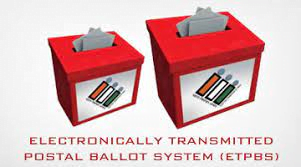
Do you know about ETPBS? Okay, then let’s know more on it from Priyanshi Pareek’s informative article..

What is ETPBS?

Electronically Transmitted Postal Ballot System (ETPBS) is the one-way electronic transmission of the Postal ballots to the Service Voters. The Service Voter then cast their vote and send it to the respective returning officer via Post. The complete process is secured by way of multiple checks and transmission protocol to ensure safe transmission. Upon receipt of the postal ballot at the counting centres, the returning officer validates the receipt by a series of QR codes with that of the transmitted system.

Who is a Service Voter?

Persons working in Central Forces under Arms Act and Government officials deployed in Embassies outside the country are classified as Service Voters and are provisioned for online enrolment. 

Features of ETPBS

  • Service voters can avail of the ETPBS service from anywhere outside their constituency.
  • System facilitates the creation of service voter electoral roll data.
  • It is easy, efficient and hassle-free.
  • It is a secure system, having two-layer security.
  • OTP is required to download an encrypted Electronically Transmitted Postal Ballot file.
  • Secrecy is maintained and no duplicacy is possible due to the QR code.
  • A PIN is required to decrypt, print and deliver ETPB.

ETPBS important facts

  • It was for the first time in 2019 that the Electronically Transmitted Postal Ballot System was used for registering the votes of the Service voters
  • While in the 2014 General Election, 13,27,627 registered Service Electors were enrolled. This IT flagship programme, ETPBS, enabled 18,02,646 service voters to register their votes in the 2019 General Elections
  • Of the total voters registered in 2019:
  • 10,16,245 were from the Ministry of Defence
  • 7,82,595 from the Ministry of Home Affairs (Central Armed Police Forces)
  • 3539 of Ministry of External Affairs
  • 267 of State Police
  • A total of 18,02,646 postal ballots were dispatched electronically through ETPBS for the 2019 General Elections and in return, 10,84,266 e-postal ballots were received indicating a 60.14% turnout. This was way more in comparison to the 4% turnout of service voters in the 2014 General Election

Understanding the Significance of Election Duty Certificates in Elections

0

An Election Duty Certificate, also known as an Election Duty Identity Card, is an official document issued to individuals who are assigned election-related duties. These duties typically include working as poll officials, election observers, or in various administrative roles during an election. Election Duty Certificates serve as proof of one’s authorized involvement in the electoral process and can provide various benefits. Here’s a sample article on the topic:

Elections are the cornerstone of any democratic society, and they require the dedicated efforts of countless individuals to ensure a fair and transparent voting process. Among these individuals are the unsung heroes of democracy who take on election-related duties. Election Duty Certificates play a vital role in acknowledging and facilitating their contribution.

What is an Election Duty Certificate?

An Election Duty Certificate also referred to as an Election Duty Identity Card, is an official document issued by election authorities to individuals assigned various election-related responsibilities. These responsibilities can encompass a wide range of roles, including polling officers, election observers, administrative staff, security personnel, and more. The certificate is a mark of recognition for the services rendered during the election process.

importance of Election Duty Certificates:

 Identification and Authorization:  Election Duty Certificates serve as proof of one’s authorized involvement in the election process. These documents contain essential information about the individual, including their name, photograph, role in the election, and the specific election they are assigned to.

 Access to Restricted Areas:  In the interest of security and maintaining the integrity of the electoral process, certain areas are restricted to authorized personnel only. Election Duty Certificates grant individuals access to such areas, allowing them to perform their duties effectively.

Facilitation and Support: Holding an Election Duty Certificate can make the election process more convenient for those performing election-related tasks. It may be required to avail of various facilities, such as transportation and accommodations, that are provided by election authorities.

Recognition of Service:  Election Duty Certificates also serve as a token of appreciation for individuals who contribute to the smooth conduct of elections. It acknowledges their service and dedication to upholding the democratic values of the nation.

Obtaining an Election Duty Certificate:

The process of obtaining an Election Duty Certificate typically involves the following steps:

Appointment: Individuals are appointed to election-related duties based on their qualifications and experience. They receive a formal letter of appointment, which specifies their role in the election.

Documentation: Once appointed, individuals are required to submit the necessary documents and photographs to the election authorities to facilitate the issuance of the Election Duty Certificate.

Distribution: Election Duty Certificates are distributed before the election, ensuring that individuals have their credentials ready before they begin their duties.

Election Duty Certificates are an essential part of the electoral process, recognizing the hard work and dedication of those involved in ensuring free and fair elections. They not only facilitate the performance of election-related duties but also stand as a testament to the commitment of individuals who play a crucial role in upholding democracy.

In the democratic journey of any nation, Election Duty Certificates serve as a badge of honour, symbolizing the commitment of countless individuals who work tirelessly behind the scenes to ensure that the voice of the people is heard through the ballot box.