Home Blog Page 615

Dubai Mall: Where Shopping Meets Grandeur

0

Dubai, a city renowned for its opulence and extravagance, is home to the world’s most colossal retail, entertainment, and leisure destination—the Dubai Mall. Nestled in the shadow of the Burj Khalifa, the world’s tallest building, this sprawling marvel beckons visitors from around the globe. It’s not just a mall; it’s an experience, and in this article, we’ll take you on a journey through the grandeur of the Dubai Mall.

Retail Paradise:

Covering over 1 million square meters, which is equivalent to 200 football pitches, Dubai Mall is a shopper’s paradise. With more than 1,200 retail stores, including two major department stores, and hundreds of food and beverage outlets, it’s easy to see why this mall is the world’s largest. For lovers of high fashion, over 70 signature outlets await your attention, including the first Middle Eastern outlets of renowned brands like Bloomingdale’s and Galeries Lafayette.

Fashion Avenue, a dedicated area, showcases the latest collections from world-famous brands like Versace and Burberry, ensuring fashion enthusiasts find their retail haven. If you’re looking for the finest gold jewelry or the latest in footwear, you’ll find it in the Gold Souk and Level Shoes, respectively.

Dubai Mall Zabeel: A Grand Expansion:

The grandeur of Dubai Mall expanded further in 2019 with the unveiling of Dubai Mall Zabeel. This significant expansion introduced new lifestyle experiences, dining options, retail choices, and 3,000 additional parking spaces. The Zabeel extension added almost 15,000 square meters of lifestyle space, adorned with an incredible array of art and linked to the main mall by a fully air-conditioned link bridge.

Entertainment Galore:

Dubai Mall is not just about shopping; it’s an ultimate family entertainment destination. The Dubai Aquarium and Underwater Zoo, an Olympic-sized Dubai Ice Rink, KidZania for children’s ‘edutainment,’ and a massive indoor cinema complex are just some of the ways to keep everyone busy. Be sure not to miss the indoor fountain, one of the mall’s most photographed spots, or The Village with its retractable roof that opens in the winter months to offer shoppers an outdoor experience.

Dining Delights:

With over 200 dining options, Dubai Mall caters to every palate. From fast food and snack stalls to delightful cafes and fine dining restaurants, you’ll find a vast range of dining choices. Some restaurants offer stunning views of The Dubai Fountain and the Burj Khalifa, making dining here an unforgettable experience.

In 2023, Dubai Mall introduced its Chinatown district, the first of its kind in Dubai. Adorned with traditional Chinese features, a giant panda sculpture, and striking neon lights, it’s home to a variety of Chinese and Asian street food, including the Dubai branch of Singapore’s Michelin-starred eatery, Hawker Chan.

Nearby Hotels:

The Dubai Mall is conveniently connected to the five-star Address Dubai Mall, offering easy access for both hotel guests and mall visitors. Several other hotels, such as Address Downtown and Palace Downtown, are located nearby, providing accommodation choices to suit every preference.

Getting to Dubai Mall:

Getting to Dubai Mall is a breeze, with various public transportation options, including the Dubai Metro, which has a dedicated station at the mall, and multiple bus routes with stops nearby. If you prefer driving, there are well-marked car parking entrances. Dubai Mall is easily accessible from prominent landmarks like Burj Khalifa, Souk Al Bahar, and Dubai Opera.

Dubai Mall is more than a shopping destination; it’s a testament to Dubai’s ambition and a hub for retail, entertainment, and leisure that embodies the city’s larger-than-life spirit. Whether you’re a fashion enthusiast, a family looking for a day of fun, or a gourmet explorer, the Dubai Mall has something to offer everyone. Don’t miss the chance to experience this monumental retail and entertainment haven on your next visit to Dubai.
Whale Shark: The Gentle Giant of India’s Waters

0

In the azure waters of India’s coastal regions, a magnificent and gentle giant reigns supreme—the Whale Shark (Rhincodon typus). As the largest fish species on the planet, these awe-inspiring creatures are not only remarkable for their colossal size but also for their intriguing biology and conservation significance. In this article, we delve into the world of the Whale Shark, exploring its characteristics, habitat, and the efforts being made to protect this charismatic species.

The Giant of the Seas:

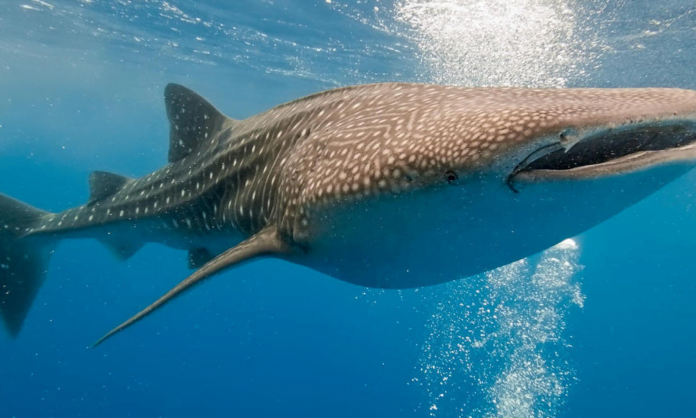
The Whale Shark is a true titan of the oceans. These majestic creatures can reach staggering lengths of up to 40 feet or more, with some individuals weighing as much as 20 tons. Their distinctive appearance, marked by a wide mouth, striking white spots on their dark skin, and a gracefully sweeping tail fin, makes them easily recognizable. Despite their massive size, Whale Sharks are docile filter feeders, subsisting primarily on plankton, small fish, and other microscopic organisms.

Indian Waters: A Heaven for Whale Sharks:

India boasts a diverse range of marine ecosystems, making it a vital habitat for the Whale Shark. These gentle giants are commonly found along the coasts of India, with specific hotspots that draw researchers, conservationists, and eco-tourists alike. Some of the prime locations for Whale Shark sightings in India include the Andaman and Nicobar Islands, Gujarat, and the Gulf of Kutch.

The Gulf of Kutch, in particular, is renowned for its significant population of Whale Sharks. Their presence in these waters has not only captivated marine enthusiasts but has also inspired a range of research and conservation efforts to ensure their survival.

Conservation Challenges:

While Whale Sharks are incredible and resilient creatures, they face numerous challenges in the modern world. The primary threats to their well-being include bycatch in fishing nets, habitat degradation, climate change, and pollution. These factors have led to a decline in Whale Shark populations globally.

Protecting the Gentle Giant:

Recognizing the importance of preserving this majestic species, India has taken several steps to protect the Whale Shark. The species is safeguarded under various national and international conservation regulations, such as the Wildlife Protection Act of 1972 and the Convention on International Trade in Endangered Species (CITES). These legal frameworks aim to restrict activities that harm or exploit these gentle giants.

Moreover, local communities, marine researchers, and environmental organizations have joined forces to establish marine protected areas, enforce fishing regulations, and promote sustainable tourism practices in regions frequented by Whale Sharks. This collaborative approach is vital to ensure the long-term survival of this iconic species.

The Significance of the Whale Shark:

The Whale Shark is not merely an emblematic species for India but a symbol of the country’s commitment to marine conservation. By safeguarding these gentle giants and their habitats, India is contributing to the global effort to protect marine biodiversity and ensure the well-being of these remarkable creatures.

In conclusion, the Whale Shark, the biggest fish in India, is a true marvel of the natural world. Its enormous size and gentle disposition make it a favorite subject of marine enthusiasts, conservationists, and researchers. The conservation efforts in place are a testament to the collective commitment to preserving these magnificent creatures and the marine ecosystems they call home. As we strive to protect the Whale Shark, we also send a message of hope for the future of our oceans and their magnificent inhabitants.

Ninth G20 Parliamentary Speakers’ Summit (P20) and Parliamentary Forum

0

Priyanshi Pareek reports on the 9th G20 Parliamentary Speakers’ Summit and Parliamentary Forum..

What is G20?

The Group of Twenty (G20) plays a key role in all major international economic issues. Collectively, G20 members represent 85% of global economic output, two-thirds of the world’s population and 75% of international trade. The forum initially focused on broad macroeconomic issues, but it has expanded its agenda to include trade, climate change, sustainable development, health, agriculture, energy, the environment and anti-corruption.

Aim of G20 Speakers’ Summits 

G20 Speakers’ Summits (P20) aim to bring a parliamentary dimension to global governance, raise awareness, build political support for international commitments, and ensure that these are effectively translated into national realities. The Summits also seek to promote inter-parliamentary cooperation, enhance engagement between governments, parliaments and other stakeholders in the implementation of various G20 outcomes, and advance the 2030 Agenda for Sustainable Development.

The host of Ninth P20 Summit

The Ninth P20 Summit was hosted by Parliament of India in cooperation with IPU on 13-14 October 2023 in New Delhi. The Summit was preceded by a Parliamentary Forum on 12 October 2023. The theme of the Summit is Parliaments for One Earth, One Family, One Future, which draws inspiration from the ancient Indian philosophy of Vasudhaiva Kutumbakam (The World is one Family).

The Summit hosted four high-level sessions on Accelerating SDGs; Sustainable Energy Transition; Women led Development; and Transformation in Peoples’ Lives through Public Digital Platforms. A Parliamentary Forum also organized on ‘LiFE’ (Lifestyle for Environment) as a pre-Summit event to promote adoption of sustainable lifestyles and sustainable patterns of production and consumption.

Inauguration

Prime Minister Shri Narendra Modi inaugurated the 9th G20 Parliamentary Speakers’ Summit (P20) on 13 October 2023 at Yashobhoomi, New Delhi at around 11 AM. The summit was hosted by the Parliament of India under the broader framework of India’s G20 Presidency.

Theme

The theme of the 9th P20 Summit was “Parliaments for One Earth, One Family, One Future.” The event was attended by Speakers of Parliaments of G20 members and invitee countries. The Pan-African Parliament took part in the P20 Summit for the first time after the African Union became a member of G20 at the New Delhi G20 Leaders’ Summit on 9-10 September 2023.

The thematic sessions during this P20 Summit focused on the following four subjects – Transformation in People’s Lives through Public Digital Platforms; Women-led development; Accelerating SDGs; and Sustainable Energy Transition.

A pre-summit Parliamentary Forum on LiFE (Lifestyle for Environment) was held on 12 October 2023 to deliberate upon initiatives towards a greener and sustainable future in harmony with nature.

Who is the father of Yoga?

0

Yoga, an ancient practice that encompasses physical, mental, and spiritual elements, has gained immense popularity worldwide for its transformative benefits. Rooted in India’s rich traditions, yoga has transcended cultural boundaries, bringing balance and wellness to countless lives. While the practice of yoga has evolved over the centuries, it remains deeply rooted in its origins. But who can be credited as the founder of yoga? The answer to this question depends on whether we consider it from a historical and scriptural perspective or from the lens of modern times.

Shiva: the ultimate beginner

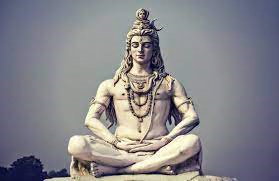
In the realm of scriptures and beliefs, Lord Shiva takes the center stage as the progenitor of yoga. He is often referred to as “Adiyogi Shiva,” signifying the first yogi. According to ancient texts and revered beliefs, Lord Shiva is the ultimate source of yoga. It is said that Shiva achieved complete enlightenment around 15 thousand years ago, as mentioned in a poem from that era. He is depicted as the embodiment of the perfect yogi, the one who illuminated the path of spiritual awakening and inner harmony.

Over time, the principles and teachings of yoga from the ancient scriptures have metamorphosed into what we now recognize as modern yoga. Modern yoga draws inspiration from the beliefs and practices of the yoga schools, incorporating a diverse array of methods, asanas (postures), and mindfulness activities.

Modern Yoga and Yogis

When it comes to identifying the father of modern yoga, two prominent figures are often mentioned: Patanjali and Tirumalai Krishnamacharya.

Patanjali, an iconic figure in the history of yoga, is credited with the authorship of the “Yoga Sutras.” These Sutras are a collection of aphoristic Sanskrit verses that delve into the philosophy and practice of ancient yoga. While they don’t go into detailed descriptions of the physical postures we commonly associate with yoga today, they provide profound insights into the mental and spiritual aspects of the practice. Patanjali’s Yoga Sutras are revered by modern yoga practitioners for their timeless wisdom and guidance.

Tirumalai Krishnamacharya, another prominent figure, is widely regarded as the father of modern yoga, especially in various regions of India. He was a multifaceted personality, serving as a yoga instructor, ayurvedic healer, and scholar. Krishnamacharya played a pivotal role in reviving and popularizing yoga in the 20th century. His teachings and innovations in yoga postures and techniques have left an indelible mark on the modern yoga landscape. His approach to yoga emphasized adapting the practice to suit individual needs, paving the way for the diverse styles of yoga that exist today.

In essence, the lineage of yoga is a rich tapestry woven with the contributions of ancient sages, scriptural wisdom, and the evolution of modern interpretations. Whether we acknowledge Lord Shiva as the original yogi, credit Patanjali for his profound philosophical insights, or honor Krishnamacharya for his pioneering efforts in modern yoga, it’s clear that yoga’s heritage is a fusion of timeless tradition and contemporary adaptation.

As yoga continues to flourish across the globe, practitioners are encouraged to explore its depths, appreciating the ancient wisdom while embracing the innovations of modern yoga. In doing so, they can experience the physical, mental, and spiritual benefits of this time-honored practice, which remains a timeless path to well-being.

Kerala on High Alert as Zika Virus Detected in Karnataka

0

The southern state of Kerala is on high alert as the Karnataka health department raises concerns about the Zika virus’s potential spread. This alert comes after the detection of the Zika virus in a mosquito in Chikkaballapur district, Karnataka, setting off alarm bells in the region. The virus was found in a sample taken from Talakayalabetta village in Sidlaghatta Taluk. In this article, we will delve into the details of the Zika virus, its symptoms, health risks, and what people need to be aware of in the wake of this alert.

Understanding the Zika Virus

Zika virus is primarily transmitted by the Aedes mosquito, which is also responsible for the spread of other diseases like dengue and chikungunya. The virus is known to cause a range of symptoms in those infected. These symptoms typically include a rash, fever, conjunctivitis (red eyes), muscle and joint pain, malaise, and headaches that can last for two to seven days. However, it’s important to note that many people who contract the virus may not develop any noticeable symptoms, making it challenging to identify and control its spread.

The Health Risks of Zika Virus

While Zika virus infection may seem mild in many cases, it can lead to severe health problems. Pregnant women are particularly vulnerable, as infection during pregnancy can lead to miscarriage, stillbirth, and birth defects. According to the World Health Organization (WHO), Zika infection during pregnancy can cause infants to be born with microcephaly and other congenital malformations. Microcephaly is a condition in which a baby’s brain growth slows down or stops in the womb, leading to significant developmental issues.

In addition to the risks to pregnant women, Zika virus infection is associated with Guillain-Barré syndrome, a neurological disorder that can cause muscle weakness and paralysis. This further highlights the need for vigilance and preventive measures to mitigate the virus’s impact.

Environmental Factors and the Spread of Zika

One factor contributing to the spread of vector-borne diseases, like Zika, is the rapidly changing climate. As global temperatures continue to rise, regions that were once unsuitable for disease-carrying mosquitoes are becoming more hospitable to them. These mosquitoes can thrive in warmer and more humid conditions, leading to an increased risk of disease transmission. As a result, we are witnessing the expansion of diseases like Zika to new geographic areas.

Prevention and the Absence of a Vaccine

Currently, there is no vaccine or specific treatment for Zika virus infection. In light of this, prevention becomes the most critical strategy for controlling its spread. Preventive measures include reducing mosquito breeding sites, using mosquito repellents, wearing protective clothing, and taking precautions to avoid mosquito bites. This is especially crucial for pregnant women and individuals living in or traveling to areas where Zika is known to be circulating.

The detection of Zika virus in Karnataka’s Chikkaballapur district has put the neighboring state of Kerala on high alert. With the potential health risks associated with Zika, particularly for pregnant women, it is crucial to take preventive measures seriously. In the absence of a vaccine or specific treatment, staying informed and implementing mosquito control measures is the best defense against this emerging threat. As experts point to climate change as a contributing factor to the spread of vector-borne diseases, addressing these environmental challenges is equally important in the fight against Zika and other similar diseases.

The Election Commission of India: Safeguarding the Essence of Democracy

0

The Election Commission of India, as an autonomous constitutional authority, plays an indispensable role in overseeing the electoral processes throughout the nation. This permanent constitutional body is entrusted with the crucial task of conducting elections in India’s diverse states and union territories, spanning elections for the Lok Sabha, Rajya Sabha, State Legislative Assemblies, and the prestigious offices of the President and Vice President of India.

Rooted in the venerable pages of the Indian Constitution, the Election Commission operates as an independent entity, committed to preserving the integrity of the electoral landscape. At the heart of its mission is the duty to ensure that elections remain free, fair, and transparent, thereby upholding the democratic ideals that form the bedrock of the Indian nation.

Services Empowering Indian Voters

Leveraging modern technology and a user-friendly approach, the Election Commission of India provides a suite of essential services to Indian voters, primarily accessible through its official website and the Voters’ Services Portal. These services are tailored to facilitate citizens’ participation in the electoral process, offering convenience and accessibility:

1. New Registration for General Electors: Any individual aged 18 years or above, or soon to reach this milestone, can register through Form 64, ensuring their inclusion in the electoral roll.

2. New Registration for Overseas (NRI) Electors: Indian citizens who haven’t acquired citizenship in any other country can utilize Form 6A to register as overseas electors, enabling them to engage in the democratic process even from afar.

3. Objection for Proposed Inclusion/Deletion of Name in Existing Roll: Form 7 allows citizens to voice their concerns and request the removal of their names from the existing electoral roll.

4. Shifting of Residence/Correction of Entries in Existing Electoral Roll/Replacement of EPIC/Marking of PwD: Form 8 simplifies the process of updating, replacing, or adding marks for Persons with Disabilities (PwD) on the Electoral Photo Identity Card (EPIC).

5. Aadhaar Collection: Through Form 6B, individuals can apply for their Aadhaar card, a critical document for various government and financial transactions, in conjunction with their Electoral Photo Identity Card (EPIC).

In addition, the official websites of the Chief Electoral Officers of all states and union territories have evolved to provide local statistics, information, and up-to-date electoral rolls with user-friendly search functionality. This comprehensive approach bolsters the transparency of the electoral process.

The Election Commission of India serves as the vanguard of democratic principles, ensuring the sanctity of the electoral system. Its array of services empowers citizens to actively engage in the democratic process and exercise their right to vote, contributing to the vibrant democracy that India proudly upholds. The Election Commission stands as a testament to India’s unwavering commitment to democratic values and the pursuit of free and fair elections.

Flying Surveillance Team (FST) – Guardians of Democracy in India

0

In the vibrant tapestry of India’s democracy, ensuring free and fair elections is paramount. To safeguard the sanctity of the electoral process, the Election Commission of India has established specialized teams known as the Flying Surveillance Team (FST). These teams play a pivotal role in monitoring elections and preventing any irregularities, especially in sensitive areas where the risk of electoral malpractice is higher.

The Flying Surveillance Team (FST) is a dynamic force equipped with state-of-the-art surveillance tools. Their arsenal includes cameras, drones, and other advanced equipment, enabling them to conduct round-the-clock vigilance over the electoral proceedings. FST’s primary objective is to ensure that elections remain untainted by any form of manipulation or undue influence, such as the distribution of money, liquor, or other items intended to sway voters.

The Role of FST in Indian Elections:

  1. Monitoring Candidates and Supporters: FST diligently tracks the movements of political candidates and their supporters during the election period. This helps prevent any illegal activities or unethical practices that could compromise the integrity of the democratic process.
  2. Preventing Electoral Malpractice: The FST teams act as vigilant sentinels, identifying any suspicious activities and reporting them promptly to the appropriate authorities. This proactive approach has been instrumental in curbing electoral malpractice and ensuring that the democratic ethos remains unblemished.
  3. Boosting Voter Confidence: By providing a sense of security during elections, the presence of FSTs increases voter confidence in the electoral process. Citizens can exercise their right to vote without fear of intimidation or unfair practices.
  4. Transparent Electoral Process: FSTs contribute significantly to maintaining the transparency of elections. Their presence and surveillance capabilities deter individuals or groups from attempting to subvert the democratic principles upon which India’s electoral system is built.

The contribution of the Flying Surveillance Team (FST) cannot be overstated. They have played a pivotal role in preserving the integrity of India’s elections, ensuring that the democratic values are upheld. In doing so, they have helped strengthen the trust of the public in the electoral process, and that is invaluable in a thriving democracy.

The Flying Surveillance Team (FST) serves as the guardians of democracy during India’s elections. These dedicated teams, equipped with cutting-edge technology, monitor the movements of candidates, their supporters, and the general public to prevent any electoral malpractice. Their unwavering commitment to a free and fair electoral process helps secure the essence of India’s democracy.

World Cup 2023: Sachin Tendulkar’s statue inaugurated in Wankhede stadium

0

The Mumbai Cricket Association (MCA) inaugurated the statue of Sachin Tendulkar at the Wankhede Stadium on Wednesday, November 1. The ceremony took place at 5:00 pm. Sachin’s statue has been installed near the Sachin Tendulkar stand in the stadium. This statue is dedicated to 50 years of his life. Sachin celebrated his 50th birthday in April this year.

Apart from Sachin Tendulkar, BCCI Secretary Jay Shah, BCCI Vice President Rajeev Shukla, Maharashtra Chief Minister Eknath Shinde and NCP leader Sharad Pawar were also present at the unveiling ceremony.

After a successful career spanning two decades, Sachin played his 200th and final Test at the Wankhede Stadium in November 2013.

Talking about the coming up of the statue, Sachin Tendulkar had said in March this year, ‘I am very happy. It all started in 1988 at Wankhede. This is where I played my first Ranji match. Before I became a professional player, it was here that coach Achrekar sir reprimanded me and after that I became a serious cricketer. This is a very special place for me, I have very special memories associated with this place. It is a big thing for my statue to be built in Wankhede Stadium.

The final of the 2011 ODI World Cup was played at the Wankhede Stadium in Mumbai. Here India defeated Sri Lanka and won the World Cup after 28 years. India became the first host team to win the World Cup. Before this, no team had won the World Cup on its own soil. With this, Sachin Tendulkar’s dream of winning the World Cup was also fulfilled.

Thailand Opens Its Doors: Visa-Free Entry for Indian Tourists from November 10

0

In exciting news for globetrotters, Thailand is set to offer visa-free entry to Indian tourists, marking the second country, after Sri Lanka, to do so. Starting from November 10, 2023, until May 10, 2024, visitors from India and Taiwan can enjoy the delights of Thailand without the hassle of obtaining a visa. This strategic decision aims to entice more travelers as the tourism season approaches, as revealed by a Thai government official in a conversation with Reuters.

Under the new policy, Indian and Taiwanese tourists can bask in the beauty of Thailand for up to 30 days, enhancing their vacation experience. Chai Wacharonke, a Thai government spokesperson, has also disclosed that this endeavor is anticipated to attract an additional 1.4 million tourists, which could generate an extra 55 billion baht, roughly equivalent to $1.5 billion, in revenue for the country.

Thai Prime Minister Srettha Thavisin, when asked about this momentous move, explained, “We will provide visa-free entry to India and Taiwan because a lot of their people like to travel to Thailand.” This announcement signifies a departure from the previous 15-day visa-on-arrival requirement at immigration checkpoints, which necessitated applicants to present bank statements and proof of accommodation.

This is a significant step towards making Thailand a more accessible and appealing destination for tourists from India and Taiwan. Furthermore, it aims to bolster the country’s tourism sector, which was severely impacted by the global pandemic.

Earlier in September this year, Thailand took a similar initiative by waiving tourist visa requirements for Chinese nationals, aiming to reclaim its position as a top tourism destination. Before the pandemic, China was the largest contributor to Thailand’s tourism industry, with 11 million out of a record 39 million arrivals in 2019.

Sri Lanka, another neighboring nation, had recently announced visa-free entry for visitors from seven countries, including India and China, as part of a pilot project to revitalize its tourism industry until March 31, 2024. This signifies a positive shift in the region, signaling a commitment to boost tourism and economic growth.

As per government data, from January to October 29, there were 22 million visitors to Thailand, contributing revenue worth 927.5 billion baht or $25.67 billion. Of this, nearly one million Russian tourists have visited Thailand since the beginning of 2023. This year, Thailand is aspiring to welcome around 28 million tourist arrivals, with the hope that the travel sector can offset the impact of weak exports that have adversely affected the country’s economic growth.

Thailand’s tourism sector is a vital contributor to its overall GDP, accounting for almost 20 percent. However, it has faced significant challenges in recovering since the COVID-19 pandemic. This new move is expected to not only boost tourism but also breathe fresh life into the country’s economy.

According to tourism ministry data, approximately 1.2 million Indians visited Thailand from January to September 2023, making India the fourth-largest source of tourists after Malaysia, China, and South Korea. With visa-free access and a renewed sense of openness, Thailand is poised to regain its status as a coveted travel destination for Indian tourists, forging closer ties between the two nations through shared experiences and cultural exchanges.

Jaipur’s Miniature Artist Crafts Record-Breaking 1.4 cm Statue of Sardar Vallabhbhai Patel on Pencil Tip

0

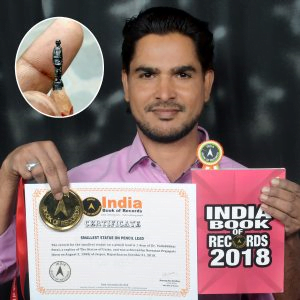
In a remarkable display of artistry and precision, Jaipur’s own miniature artist, Navratna Prajapati, has etched his name into the annals of creativity by crafting a 1.4 cm statue of Sardar Vallabhbhai Patel on the tip of a pencil. This extraordinary achievement was accomplished in just two days and is now claimed to be the smallest statue of the Iron Man of India.

Navratna Prajapati, born on August 2, 1985, has gained recognition for his incredible miniature creations. However, this recent endeavor, creating a minuscule rendition of the iconic Statue of Unity, was a unique challenge. The artist meticulously carved the statue, paying homage to the great leader Sardar Vallabhbhai Patel, whose own colossal statue was to be inaugurated in Gujarat on the same day.

The creation of this pint-sized masterpiece was not without its hurdles. Prajapati revealed that the tip of the pencil broke twice during the delicate process, underscoring the extraordinary precision and patience required for such a task. Nevertheless, he persevered, ensuring the tiny tribute was ready in time for Patel’s birthday.

Navratna Prajapati’s artistic journey has been marked by numerous notable achievements, each pushing the boundaries of what can be achieved on a miniature scale. In 2006, he famously crafted a tiny functioning lantern, capable of burning for 15 seconds, fueled by just three drops of kerosene. This feat alone showcased his incredible craftsmanship and innovation.

Furthermore, Prajapati has created intricate sculptures of historical figures like Maharana Pratap and Dr. Bhimrao Ambedkar, as well as the beloved deity, Lord Ganpati, all masterfully rendered on the tip of a pencil. These works are a testament to his unwavering dedication to his craft and his continuous quest to break new ground in the world of miniature art.

While the colossal Statue of Unity in Gujarat celebrates the legacy of Sardar Vallabhbhai Patel on a grand scale, Navratna Prajapati’s 1.4 cm masterpiece on a humble pencil tip pays its own unique tribute to the Iron Man of India. It serves as a reminder that art knows no bounds, and that the most extraordinary creations can emerge from the tiniest canvases. Navratna Prajapati’s dedication to his craft continues to inspire awe and admiration, proving that in the world of art, even the smallest works can make the biggest impact.