Home Blog Page 60

Testing Enterprise Applications: Critical Aspects for Success

0

Enterprise applications, which handle everything from financial transactions to customer connections, are the foundation of contemporary corporate operations. Specialized methods that are far different from typical software validation are needed to test these complicated systems. The stakes are high; indeed, failures can destroy whole companies, millions of dollars, and consumer confidence. Extensive testing enterprise applications ensures that such important programs are available to thousands of users without compromising the integrity of data and performance under real world conditions.

  1. Managing Complex Integration Points

Enterprise apps are seldom isolated in reality, but they are integrated with multiple databases, external services and other systems simultaneously. The movement of data between each of these integration points should be tested to ensure that it is correct, and that it is neither lost nor corrupted. Teams look at how systems recover from network disruptions, and manage connection failures gracefully, as well as interact throughout regular operations. Coordinated testing environments that precisely replicate production architecture are necessary due to this complexity. Verifying these links helps avoid expensive failures in which a fault in one system spreads to the entire company technology ecosystem.

  1. Handling Diverse User Roles and Permissions

Employees in large businesses have a wide range of duties, each of which calls for certain system access and capabilities. The testing should ensure that all types of users perceive the appropriate information, perform the appropriate actions as well as experience the appropriate restrictions when trying to do something that is not authorized. This involves the creation of comprehensive test cases that involve managers, executives, front-line employees and external partners. Sensitive information is safeguarded but functionality is still available to authorized users thanks to security testing. Comprehensive role-based testing guarantees adherence to legal rules controlling data access and stops security breaches.

  1. Performance Under Enterprise-Scale Loads

Enterprise apps must be capable of supporting hundreds or thousands of parallel users without becoming irresponsible or ineffective. To determine the performance limits, load testing gradually adds more users as it tries to recreate the real usage patterns. Teams examine how systems respond to seasonal demand surges, month-end processing, and peak business hours. Before they affect real users, testing identifies bottlenecks in database queries, network bandwidth, or application server capacity. This proactive strategy finds optimization opportunities that sustain acceptable performance levels and guarantees sufficient infrastructure provisioning.

  1. Data Migration and Accuracy Verification

Large volumes of historical data must frequently be transferred from legacy systems to new platforms in order to implement corporate applications. Testing confirms that migration procedures maintain completeness, accuracy, and record relationships. Teams confirm that referential integrity is maintained, client histories are fully transferred, and financial balances reconcile accurately. Millions of records are successfully moved thanks to sample verification and automated validation processes. Errors found during testing avert disastrous data problems that could jeopardize user trust and post-deployment business operations.

  1. Business Continuity and Disaster Recovery

In order to sustain corporate operations, enterprise applications must be resilient against cyberattacks, and natural catastrophes, along with malfunctions of hardware. Testing looks at recovery protocols, failover systems, and backup systems in crisis scenarios. Teams confirm that recovery time goals are met, redundant systems turn on automatically, and data replication works properly. By ensuring that vital business operations continue in an emergency, this testing safeguards income streams and client connections. Vulnerabilities are found through routine disaster recovery testing before actual disasters arise.

Conclusion

Comprehensive approaches that address integration complexity, security needs, performance scalability, data correctness, and business continuity are necessary for testing enterprise applications. To guarantee dependability when supporting crucial business operations, these vital systems need to be rigorously validated across several dimensions. 

Opkey gains a competitive edge with speed, accuracy and stability for testing enterprise applications. It gives you the strategic advantage you need with end-to-end enterprise application coverage, AI-powered self-healing, and no-code automation. Testing can start earlier and scale thanks to automation of manual test cases, auto-documentation of business processes, and out-of-the-box CI/CD integrations.
Republic Day Parade 2026 Winners: Indian Navy Wins Best Marching Contingent Award, Maharashtra Tops Tableau Competition

0

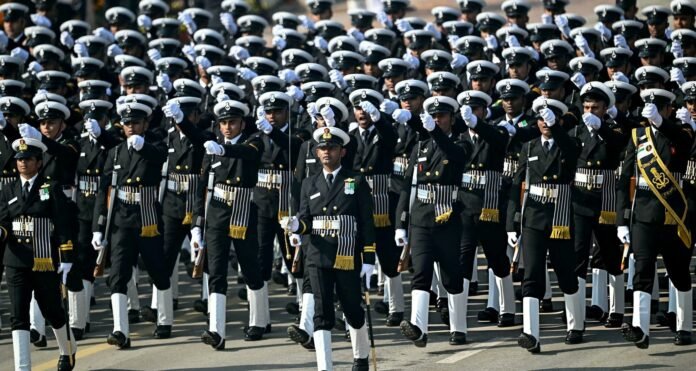
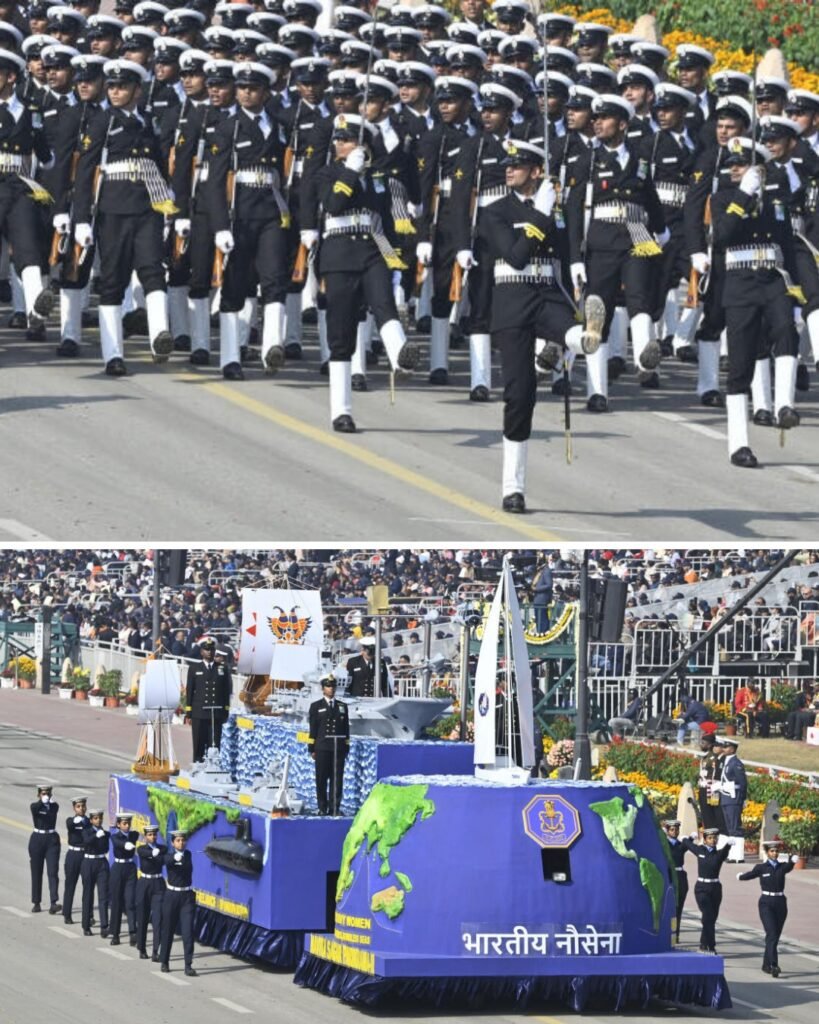
India’s 77th Republic Day Parade celebrations on Kartavya Path concluded not only with powerful displays of military strength and cultural diversity but also with recognition of outstanding performances across marching contingents and state tableaux. The Indian Navy was adjudged the Best Marching Contingent among the three armed services, while Maharashtra clinched the top honour in the tableau category for its vibrant cultural showcase.

Indian Navy excels in discipline and precision

In a display of synchronised drills and uniform precision, the Indian Navy’s marching contingent stood out among the Army, Air Force and other services. The 144-member team marched in flawless formation on Kartavya Path, projecting unity, strength and maritime professionalism earning them one of the most coveted honours of the parade awards. In addition, the Delhi Police contingent was recognised as the best among the Central Armed Police Forces (CAPFs) and auxiliary units.

Republic Day Parade 2026 Winners: Indian Navy Wins Best Marching Contingent Award, Maharashtra Tops Tableau Competition

Maharashtra’s Ganeshotsav tableau captures judges’ attention

In the States and Union Territories tableau category, Maharashtra emerged victorious for its presentation titled “Ganeshotsav: A Symbol of Aatmanirbharta”. The float beautifully blended cultural tradition with the theme of self-reliance, showing women dancers in traditional attire performing Lezim alongside depictions of Ganeshotsav festivities. Jammu and Kashmir took second place for its tableau celebrating handicrafts and folk dances, while Kerala secured third with a display highlighting the Water Metro and digital literacy achievements.

Republic Day Parade 2026 Winners: Indian Navy Wins Best Marching Contingent Award, Maharashtra Tops Tableau Competition

Ministry of Culture wins best central ministry tableau

Among central ministries and departments, the Ministry of Culture won the best tableau award for its presentation titled “Vande Mataram: The Soul-Cry of a Nation”, tracing the song’s journey from Bankim Chandra Chatterjee’s composition through historical and generational interpretations. Special prizes went to the Central Public Works Department and a dance group performance commemorating 150 years of Vande Mataram.

Republic Day Parade 2026 Winners: Indian Navy Wins Best Marching Contingent Award, Maharashtra Tops Tableau Competition
Popular choice recognitions reflect public sentiment

In the Popular Choice category, based on online voting via the MyGov portal, the Assam Regiment was selected as the favourite among the three services, while the CRPF topped the CAPF category. Gujarat’s tableau, themed “Mantra of Swadeshi – Self-Reliance – Freedom: Vande Mataram,” won the popular choice award among states, followed by Uttar Pradesh and Rajasthan.

Awards ceremony and national pride

Officials said the formal award presentation will take place on January 30 at the Rashtriya Rangshala Camp. These honours recognise excellence, creativity and discipline showcased during the parade reinforcing Republic Day’s spirit of unity, heritage and national strength.

Why Gen Z is choosing ‘hardballing’ in dating and saying goodbye to break-up anxiety

0

Dating culture is undergoing a visible shift, and Gen Z is at the centre of it. Tired of confusing situationships, mixed signals and emotionally exhausting break-ups, young daters are increasingly adopting a new approach known as hardballing. The trend focuses on honesty, clarity and stating expectations early and it is quickly becoming Gen Z’s way of reclaiming emotional peace in modern relationships.

What is hardballing in modern dating

Hardballing is a dating style where people are upfront about what they want right from the beginning. Instead of letting relationships drift or relying on vague signals, individuals clearly communicate whether they are looking for something serious, casual or long-term. The idea is simple: if intentions do not align, it is better to know early than invest months in uncertainty.

Why Gen Z prefers clarity over guessing games

For Gen Z, traditional dating patterns often feel emotionally draining. Growing up in a digital world shaped by dating apps, social media and constant comparison, many young people experienced anxiety due to unclear relationship dynamics. Hardballing appeals to them because it eliminates ambiguity and reduces the emotional toll of unanswered questions, ghosting or sudden break-ups.

Mental health plays a major role in this shift.

Gen Z is more vocal about emotional boundaries and prioritising well-being. Clear conversations about intentions help them feel more secure and reduce overthinking, which has long been associated with modern dating stress.

How hardballing reduces break-up anxiety

One of the biggest advantages of hardballing is that it sets expectations early. When both people know what they are signing up for, disappointment is less likely. Even if a relationship ends, it feels less personal and more like a mutual decision based on compatibility rather than rejection. This approach allows Gen Z daters to detach their self-worth from relationship outcomes.

Is hardballing too direct for everyone

While honesty is the core of hardballing, experts note that delivery matters. Being upfront does not mean being rigid or transactional. When done respectfully, it encourages healthier connections. However, extreme bluntness can sometimes feel overwhelming, especially in the early stages of getting to know someone.

A new dating mindset for a new generation

Hardballing reflects Gen Z’s desire for authentic, intentional relationships. By choosing clarity over confusion, young daters are rewriting dating norms and moving away from anxiety-driven romance. In a world of fast connections and fleeting attention, Gen Z’s hardballing approach is proving that honesty might just be the most attractive quality of all.

Mahatma Gandhi Death Anniversary 2026: Why Mahatma Gandhi Is Called ‘Bapu’

0

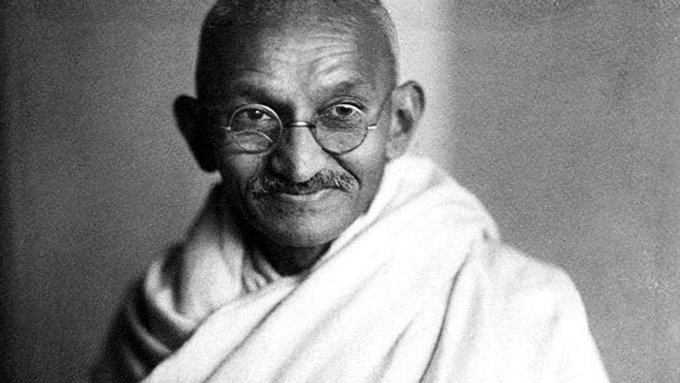
Mahatma Gandhi Death Anniversary 2026: There are some names in Indian history that are not confined to textbooks but live on in the hearts of the people. Mahatma Gandhi is one such name. His thoughts, ideals, and way of life continue to inspire people not only in India but across the world. While he is officially known as the Father of the Nation, millions fondly remember him as ‘Bapu’—a name that reflects deep affection and respect. Even people outside India often refer to him by this endearing title.

Mahatma Gandhi was not merely a leader recorded in history; he was a Bapu rooted in the collective conscience of society, guiding people to distinguish between right and wrong. His death anniversary reminds us that a nation is built not only on political freedom but also on moral values. At a time when violence, intolerance, and conflict are increasing, Gandhiji’s ideals appear more relevant than ever. He taught the world that resistance can be peaceful and protest can be dignified.

Mahatma Gandhi was born on October 2, 1869, and was assassinated on January 30, 1948, after India gained independence. His death anniversary is an occasion to reflect on his life, philosophy, and the reasons he came to be known as Bapu and the Father of the Nation.

When Is Mahatma Gandhi’s Death Anniversary Observed?

Mahatma Gandhi’s death anniversary is observed every year on January 30. He was shot dead on this day in 1948 at Birla Bhawan (now Gandhi Smriti) in New Delhi during an evening prayer meeting by Nathuram Godse. The day is observed as Martyrs’ Day in India, and a two-minute silence is observed nationwide to pay tribute to him.

Why Was Mahatma Gandhi Called ‘Bapu’?

The word Bapu means father. Gandhiji earned this title because of his deep emotional connection with the people.

The Leader of the Masses
Gandhiji was not a ruler driven by power but a guide who led the common people with compassion, discipline, and moral authority.

A Simple Life, Profound Ideals
His simple attire—just a dhoti, a walking stick, and round spectacles—symbolised humility and honesty, making people feel a personal bond with him.

Champion of Truth and Nonviolence
He led India’s freedom struggle through satya (truth) and ahimsa (nonviolence), teaching that true strength lies in character, not weapons.

Care for Every Section of Society
Gandhiji worked tirelessly for the poor, Dalits, women, and workers. His inclusive concern made people see him as the head of a large national family.

Why Is He Called the Father of the Nation?

Netaji Subhash Chandra Bose was the first to address Mahatma Gandhi as the Father of the Nation. The titles Bapu and Father of the Nation carry similar meanings, reflecting his role as the guiding force of India’s freedom movement and moral foundation.

What Is Special About His Death Anniversary?

  • The President, Prime Minister, and other leaders pay homage at Raj Ghat
  • Educational institutions hold discussions on Gandhian values
  • Messages of truth, nonviolence, and peace are promoted
  • A two-minute silence is observed across the country in his memory

Mahatma Gandhi’s life and ideals continue to remind us that real leadership is rooted in values, compassion, and moral courage.

India-EU Trade Deal: Complete List Of Foods And Beverages That Will Get Cheaper In India

0

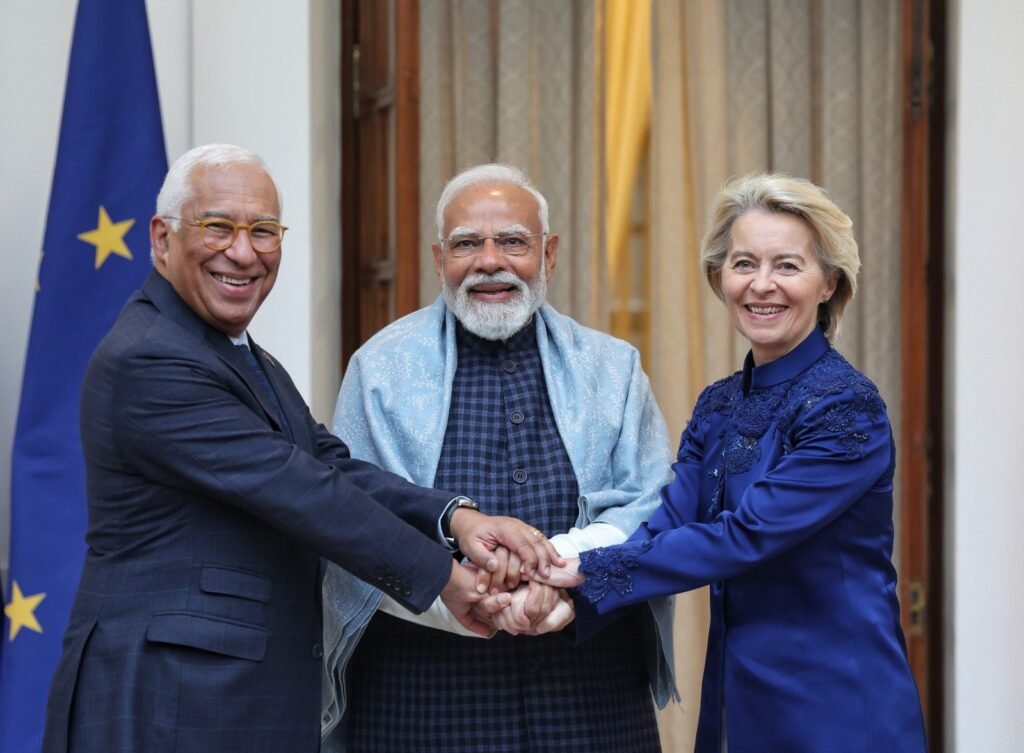
India and the European Union (EU) have finally signed a long-awaited Free Trade Agreement (FTA) after almost 18 years of negotiations a pact being called the “mother of all deals” that is set to reshape trade in goods, services and tariffs between the two blocs. One of the most visible benefits for Indian consumers will be lower prices on a wide range of imported foods and beverages from Europe, as heavy duties on many items are significantly cut or eliminated.

Olive oil and vegetable oils, zero tariffs soon

One of the biggest tariff wins for consumers comes in the form of olive oil, margarine and other European vegetable oils, which traditionally attracted import duties of up to 45%. Under the trade deal, these tariffs will be phased out and eventually reduced to 0 percent, making premium oils considerably more affordable for Indian households and restaurants.

Processed foods: pasta, chocolate, biscuits get cheaper

A large category of processed food items will also see duty elimination. This includes pasta, breads, pastries, biscuits, chocolate, pastries and even pet food. These products currently carry tariffs as high as 50 percent, but will become tariff-free under the new FTA, paving the way for cheaper European staples on Indian supermarket shelves.

Fruit juices and non-alcoholic beverages: duty-free access

Under the agreement, fruit juices and select non-alcoholic beverages, which faced tariffs of up to 55 percent, will now enter India without import duty. This means bottled European juices and premium soft drinks will face lower retail prices once the deal is implemented and fully in effect.

Fresh fruits and meat products: notable reductions

The FTA also brings price relief on select fresh fruits such as kiwis and pears, with tariffs dropping from 33 percent to 10 percent within quota limits. Meanwhile, processed meat products like sausages will see tariffs halve from 110 percent to 50 percent, and sheep meat will become duty-free, offering cheaper options in these segments too.

Alcoholic beverages: wine, beer, spirits become more affordable

Alcohol imports from the EU will benefit significantly as well. Import duties on European wines previously as high as 150 percent will be slashed, eventually going as low as around 20 percent for premium bottles and about 30 percent for mid-range options. Beer tariffs will be cut from 110 percent to 50 percent, and spirits (such as whisky or gin) will fall from around 150 percent to about 40 percent, making popular European brands cheaper for Indian drinkers.

Broader consumer impact and choice expansion

These tariff cuts are expected to benefit not just individual shoppers but also restaurants, hotels and speciality food businesses that source premium European ingredients. Over time, this could increase variety, availability and value across the Indian food and beverage market while making products previously seen as niche more accessible.

India-EU Trade Deal: Complete List Of Foods And Beverages That Will Get Cheaper In India

The India-EU Trade Deal is now awaiting procedural ratification and, if all goes according to plan, many of these tariff cuts will start taking effect by 2027, bringing European foods and drinks to Indian consumers at relatively lower prices compared with the past.

Which Country Owns All The Giant Pandas In The World And What Is Panda Diplomacy?

0
Which Country Owns All The Giant Pandas In The World And What Is Panda Diplomacy?

Giant pandas are adored around the world for their gentle appearance and rarity but very few people know that almost every panda outside China is technically owned by the Chinese government and that the presence of these animals in foreign zoos is not simply an act of goodwill, but a strategic diplomatic practice known as panda diplomacy. This unique practice ties wildlife conservation to international relations, soft power and national prestige.

China controls giant panda ownership globally

China is home to the only natural habitats of giant pandas, which live mainly in the mountainous forests of Sichuan, Shaanxi and Gansu provinces. Because of their uniqueness and cultural significance, the Chinese government retains ownership of nearly all giant pandas in the world. When pandas are seen in zoos abroad, they are usually there under long-term loan agreements, not permanent ownership.

How panda diplomacy works

Modern panda diplomacy dates back to the mid-20th century. In earlier decades, pandas were occasionally given as gifts to friendly nations. However, starting in 1984, China shifted its policy: instead of gifting pandas, it began leasing them on renewable contracts, typically around 10 years in duration. Zoos and institutions hosting foreign pandas pay significant fees sometimes around $1 million per year per panda pair and agree to specific terms set by Chinese authorities. Under these agreements, any cubs born abroad are considered the property of China and must be returned within a few years to contribute to conservation and breeding programs at Chinese research bases. This rule ensures that China maintains control over the species’ global lineage and reinforces the symbolic ownership of pandas.

Symbolism behind pandas as diplomatic tools

Pandas are more than just animals they are symbolic ambassadors of peace, friendship and cooperation. China has strategically loaned pandas to nations with which it seeks stronger ties or to celebrate diplomatic milestones. The arrival of pandas at a foreign zoo often corresponds with important state visits, strengthened bilateral deals or cultural exchanges.

Recent developments reflect changing geopolitics

For example, Japan recently returned its last pair of giant pandas to China after more than 50 years of hosting them, a move that has been linked to shifting diplomatic ties between Tokyo and Beijing. These developments illustrate how panda diplomacy continues to evolve with global politics.

Why China’s panda strategy matters

China’s control over giant panda ownership and movement combines soft power, conservation and international strategy in a way few other wildlife programs do. For other countries, hosting pandas is more than a tourist attraction; it is a symbol of friendship and diplomatic engagement with Beijing, anchored by agreements that underline China’s unique ownership rights over this beloved species.

The Young Pilot From Air Force Bal Bharati School Lost In Ajit Pawar Plane Crash

0

The tragic plane crash involving Maharashtra Deputy Chief Minister Ajit Pawar has drawn nationwide attention to the life of Captain Shambhavi Pathak, a young and accomplished pilot whose career ended abruptly. The Learjet 45 aircraft crashed near Baramati airport during a landing attempt, killing all five people on board. Pathak was serving as the first officer on the flight.

Who was Captain Shambhavi Pathak

Captain Shambhavi Pathak came from a defence background and was raised in an atmosphere of discipline and service. She studied at Air Force Bal Bharati School in New Delhi, an institution known for shaping children of armed forces personnel. Teachers and peers remember her as confident, focused and determined, with a clear sense of purpose from a young age.

Education and aviation training journey of Shambhavi

After completing her schooling, Pathak pursued higher education with a firm goal of entering the aviation sector. She earned a Bachelor of Science degree in Aeronautics, Aviation and Aerospace Science and Technology from the University of Mumbai. To strengthen her practical flying skills, she trained at the New Zealand International Commercial Pilot Academy, where she gained hands-on experience with advanced aircraft systems. She also qualified as a flight instructor, reflecting her technical expertise and commitment.

Professional career as a commercial pilot

Captain Pathak was associated with VSR Ventures Private Limited, which operates business jet services. She was part of the cockpit crew of the Learjet 45 that was flying from Mumbai to Baramati. The aircraft reportedly attempted to land twice before crashing near the runway and catching fire. Aviation authorities have initiated an investigation to determine the cause of the crash.

Tributes and reactions after the tragedy

The news of her death has left her family, friends and former teachers devastated. People from her Delhi neighbourhood described her as warm, disciplined and deeply passionate about flying. Many recalled how aviation was not just her profession but her lifelong dream.

A promising life cut short

At a young age, Captain Shambhavi Pathak had already established herself in a highly demanding profession. Her journey from an Air Force school classroom to the cockpit of a business jet symbolised ambition, discipline and courage. As the country mourns the loss, she is being remembered for the heights she achieved and the legacy she leaves behind.

Shaheed Diwas 2026: Know More on Mahatma Gandhi Death Anniversary, His Samadhi on Raj Ghat and More…

0

Shaheed Diwas 2026 is observed on 30 January to honour Mahatma Gandhi and India’s martyrs. Know its history, significance, ceremonies and Raj Ghat tributes.

Shaheed Diwas 2026: Know More on Mahatma Gandhi Death Anniversary, His Samadhi on Raj Ghat and More...

Shaheed Diwas 2026, also known nationally as Martyrs’ Day or Sarvodaya Diwas, is observed on 30 January to honour the supreme sacrifice of India’s martyrs, especially Mahatma Gandhi. This day commemorates the assassination of Gandhi in 1948 and serves as a reminder of the cost of freedom and the values of truth, non violence and national unity. Across India, citizens remember martyrs who laid down their lives for the nation’s independence, integrity and democratic ideals.

Shaheed Diwas 2026 Background


Shaheed Diwas is observed on 30 January due to Mahatma Gandhi’s assassination in 1948. The background of this day has been highlighted below:

The Government of India declared 30 January as Martyrs’ Day to honour Mahatma Gandhi’s martyrdom and acknowledge countless freedom fighters who sacrificed their lives for India’s independence and unity during colonial rule.


The observance began after 1948, when Gandhi’s assassination shocked the nation.


The day is also called Sarvodaya Day, reflecting Gandhi’s vision of upliftment of all sections of society, social justice and moral governance rooted in truth and non violence.


Shaheed Diwas institutionalised remembrance through state ceremonies, educational programs and public participation, ensuring intergenerational awareness of sacrifices behind India’s freedom and constitutional order.


While centred on Gandhi, the day honours all recognised martyrs, reinforcing the idea that freedom was achieved through collective sacrifice across regions, communities and ideologies.


Shaheed Diwas 2026 Observation


Shaheed Diwas 2026 is observed nationwide on 30 January through official ceremonies, silence, prayers and public tributes honouring India’s martyrs.

Two Minute Silence: At 11:00 AM, a two minute silence is observed across India, encouraging citizens to pause, reflect and pay collective respect to martyrs who sacrificed their lives for the nation.
National Ceremonies: The President, Vice President, Prime Minister, Defence Minister, Chief of Defence Staff and three Service Chiefs participate in official ceremonies, reflecting unified civil-military respect.
Bugle and Last Post: Armed forces personnel sound the Last Post using bugles, a traditional military honour signifying final respect to fallen soldiers and national martyrs.
Inter Services Tribute: The inter services contingent reverses arms during ceremonies, a symbolic military gesture representing mourning, humility and deep respect for supreme sacrifice.
All Religion Prayers: Multi faith prayer meetings are organised to reflect India’s pluralistic ethos and Gandhi’s belief in communal harmony and spiritual unity.
Educational Participation: Schools and institutions conduct assemblies, speeches, patriotic songs and poetry to instill historical awareness and civic values among students.
Community Service: Many organisations undertake cleanliness drives and social service activities inspired by Gandhian ideals of selfless service and national responsibility.


Mahatma Gandhi


Mahatma Gandhi was born on 2 October 1869 in Gujarat. He led India’s freedom struggle through non violence, civil disobedience and moral resistance. His principles of Ahimsa and Satyagraha shaped movements like the Salt March, Non Cooperation and Quit India. His teachings influenced global leaders such as Martin Luther King Jr. and Nelson Mandela. 

Mahatma Gandhi Death


Mahatma Gandhi was assassinated on 30 January 1948 in New Delhi, while walking to a prayer meeting.

He was shot by Nathuram Vinayak Godse at Birla House, now known as Gandhi Smriti, marking a tragic moment in independent India’s early history. Nathuram Godse, born in 1910 in Pune, was associated with Hindu nationalist organisations and opposed Gandhi’s views on partition and communal reconciliation.
Godse was tried, convicted and executed in 1949, reaffirming the rule of law and constitutional justice in independent India.
Gandhi’s death triggered nationwide mourning, reinforcing commitment to peace, unity and democratic governance despite deep emotional loss. International leaders and institutions paid tribute, recognising Gandhi as a universal symbol of peace and non violent resistance.


Shaheed Diwas 2026 Samadhi


Shaheed Diwas ceremonies are centred at Raj Ghat, Mahatma Gandhi’s samadhi, located on the banks of the Yamuna River in Delhi.

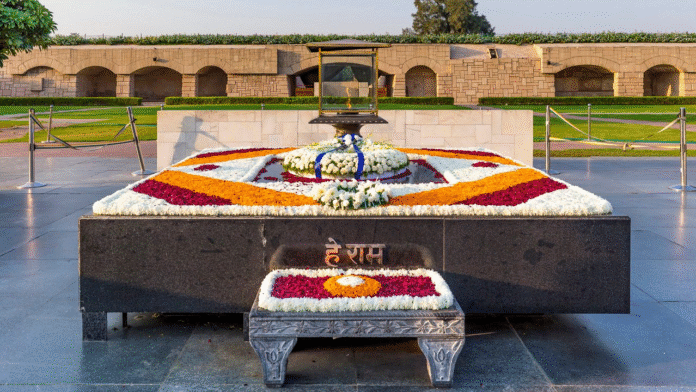
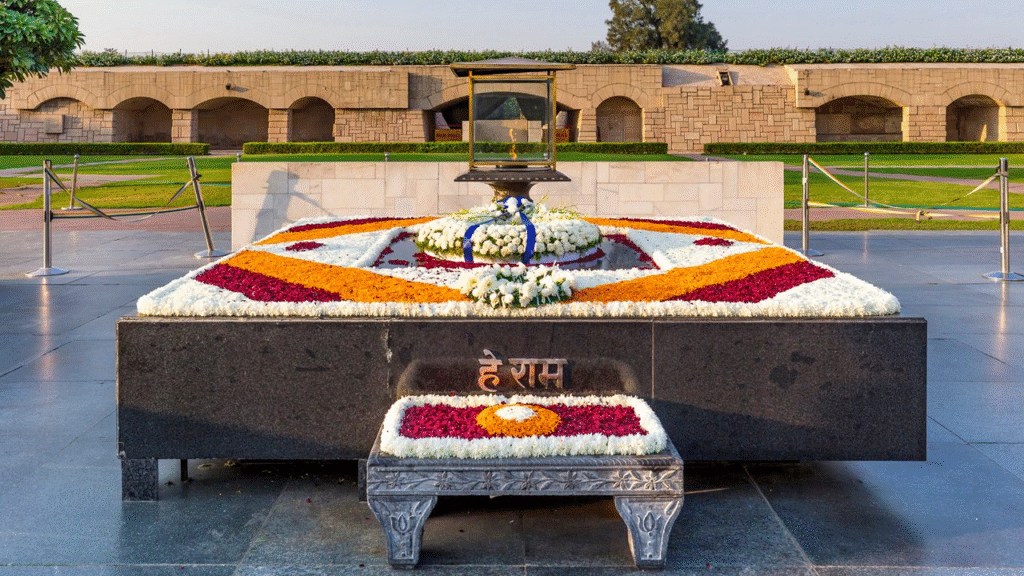
Raj Ghat is the cremation site of Mahatma Gandhi, featuring a simple black marble platform inscribed with his last words, “Hey Ram.” It is situated along the Yamuna River, Raj Ghat reflects simplicity, serenity and ecological harmony, mirroring Gandhi’s austere lifestyle and ethical philosophy.


National leaders lay wreaths decorated with multi colour flowers, symbolising respect, gratitude and remembrance of Gandhi’s supreme sacrifice.
Interfaith prayers held at Raj Ghat emphasise peace, tolerance and unity, aligning with Gandhi’s lifelong advocacy for communal harmony.
Citizens from across India visit Raj Ghat on Shaheed Diwas to offer floral tributes, observe silence and reflect on Gandhian values….

Top Skills Every PMP® Certified Project Manager Should Have in 2026 

0

What separates an average project manager from one who handles complexity with calm confidence? PMP® Training builds the structured thinking needed to manage uncertainty and resources with clarity. Yet, knowledge alone is not enough in real projects. Regular practice with PMP® Exam Questions helps professionals apply these concepts in practical situations. In 2026, organisations value PMP-certified managers who combine understanding with adaptable skills. These abilities guide teams and keep projects moving smoothly.  

In this blog, the essential skills every PMP professional should develop are discussed clearly. 

Table of Contents 

  • Essential Skills Every PMP® Certified Project Manager Needs in 2026 
  • Conclusion 

Essential Skills Every PMP® Certified Project Manager Needs in 2026 

Below are the key skills that define effective project leadership in modern project environments: 

Proactive Risk Identification Skills 

A competent PMP practitioner doesn’t wait for issues to arise. To identify vulnerabilities early, they examine schedules, dependencies, and resources. This enables action to be taken before problems become delays. Instead of being an emergency response, risk management becomes a daily routine. Early awareness maintains a peaceful, controlled project environment while establishing stability. Teams are able to work with confidence rather than uncertainty thanks to this consistent control. 

Practical Project Planning Skills 

Plans are only effective when they are practical and simple to implement. PMP-certified managers organise tasks logically and divide work into manageable segments. Everyone is aware of their function thanks to the meticulous assignment of responsibilities. This guarantees that the plan directs activities and maintains the organisation and purpose of daily labour. Teams are able to concentrate on execution without questioning priorities as a result. 

Clear and Structured Communication Skills 

When instructions are unclear, projects take longer to complete. Professionals in PMP speak with purpose and clarity. They listen to team input and communicate updates in plain language. This lessens misunderstanding and keeps everyone in agreement. People are encouraged to voice concerns early on, before they become issues, when there is open communication. The team develops a culture of trust as a result of this transparency. 

Confident Decision-Making Skills 

Projects frequently encounter unforeseen circumstances. PMPs maintain composure and thoroughly weigh their options. Instead of making snap decisions, they rely on methodical thought processes. Their choices help teams maintain confidence in the face of uncertainty and safeguard the project’s outcome even under duress. This composed strategy keeps fear from impeding advancement. 

Stakeholder Management Skills 

Expectations from various stakeholders are frequently varied. Managers with PMP certification handle these distinctions patiently and lucidly. Throughout the project, they inform stakeholders and set reasonable expectations. This promotes cooperation and increases trust. Project progress is facilitated by strong relationships with stakeholders. 

Change Control and Adaptability Skills 

In contemporary projects, change is inevitable. PMP experts manage change in a methodical manner. Before accepting it, they evaluate its impact on scope, time, and resources. This maintains the project’s flexibility without sacrificing its direction or structure. Controlled flexibility guarantees that advancement proceeds without misunderstanding. 

Time Cost and Quality Balancing Skills 

While concentrating solely on quality can result in higher costs, concentrating solely on speed can result in lower quality. PMP specialists are aware of the connections between these components. They strike a balance to provide results that live up to expectations without needless compromise. This equilibrium safeguards project resources and avoids rework. 

Team Leadership and Motivation Skills 

Leadership is about support and direction. Managers with PMP certification inspire their team and give clear instructions. Working under organised leadership gives people a sense of confidence. Morale, teamwork, and general productivity all increase as a result. Better project outcomes are a natural byproduct of motivated teams. 

Data Driven Monitoring and Reporting Skills 

Accurate data is essential to modern initiatives. Reports and progress tracking are used by PMP experts to inform choices. Instead of making assumptions, they base their decisions on facts. This increases trust in the project’s direction and draws attention to problem areas. Precise insights support consistent project performance. 

Lifecycle Discipline and Process Control Skills 

PMP professionals adhere to a defined process from start to finish. Every step of the process is documented and reviewed by them. This discipline guarantees that nothing crucial is overlooked and that project results are consistent and dependable. Long-term project success is supported by consistent process control. 

Conclusion 

Project management in 2026 demands more than knowledge of processes. It requires practical skills that guide teams through uncertainty with confidence. These abilities make PMP professionals reliable in complex environments. For those looking to strengthen these skills through structured learning, The Knowledge Academy offers practical support that turns knowledge into confident project leadership. 

Europe’s Largest Fire Festival: A 500-Year-Old Viking Tradition

0

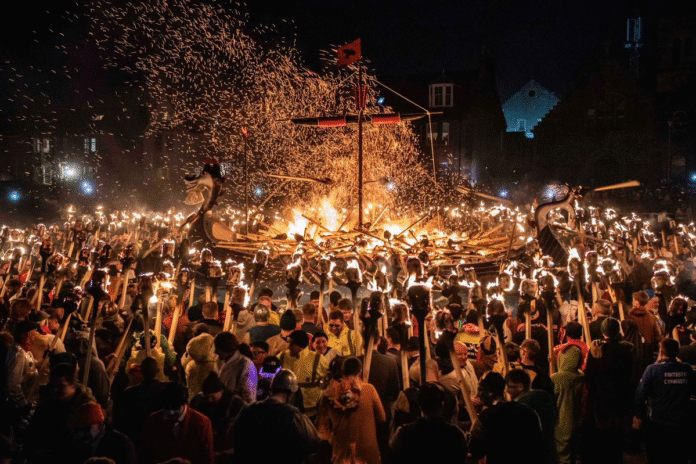
Firelight flickered across the winter sky as thousands gathered in Lerwick for Up Helly Aa, the world-famous fire festival that transforms Scotland’s Shetland Islands into a living tribute to Viking heritage. At the heart of the spectacle, members of the Jarl Squad marched through the town carrying blazing torches before setting a towering replica Viking longship alight in a dramatic ceremonial finale.

Up Helly Aa marks the official end of the Christmas season in Shetland and stands as a powerful symbol of the islands’ Norse roots, which stretch back nearly 500 years. Although its modern form dates to 1881, the festival draws heavily on Viking imagery, mythology, and ritual, celebrating the legacy left by Scandinavian settlers who once ruled the islands.

This year’s procession featured more than 1,000 costumed participants, known as Jarls, dressed in elaborate Viking-inspired armor and helmets. Singing traditional songs and chants, they hauled the longship through Lerwick’s streets, illuminating the night with a river of fire as spectators lined the route.

A historic milestone marked the 2024 celebrations, as women were officially permitted to join the Jarl Squad for the first time. The change signaled a significant cultural shift in what had long been a male-only tradition, reflecting a broader evolution in how heritage and inclusivity coexist in modern Shetland society.

After the longship was set ablaze, flames engulfed the vessel in a striking display of heat and light, drawing cheers from the crowd. The burning of the ship symbolizes both the passing of winter and the respectful farewell to the Viking past, before festivities continue long into the night with music, dancing, and community gatherings.

Today, Up Helly Aa is widely regarded as Europe’s largest fire festival—an unforgettable fusion of history, spectacle, and communal pride that continues to captivate locals and visitors alike.