Home Blog Page 59

Union Budget 2026: Foreign Travel and Cancer Drugs Cheaper, Liquor and Trading Costlier

0

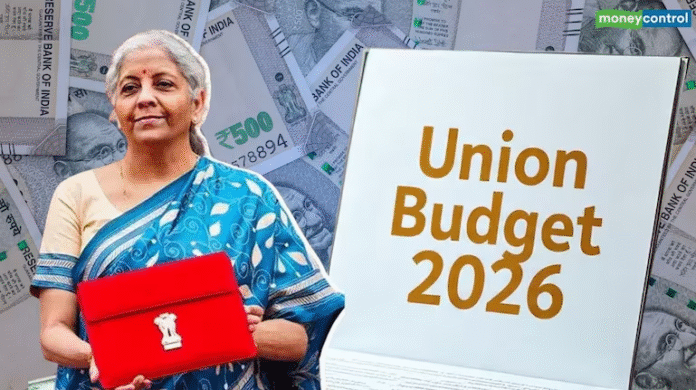
Union Budget 2026: Traveling abroad will be cheaper, the government has reduced taxes: 17 cancer medicines cheaper; alcohol may become more expensive, tax also increased on trading.
In the budget, the prices of goods now fluctuate only slightly due to increases and decreases in import duties. The prices of most items are decided by the GST Council.

Let’s understand what became cheaper and what became more expensive in this budget…

Cheaper

  1. Cancer medicines cheaper: Customs duty removed on 17 life-saving drugs

The government has removed the basic customs duty on 17 medicines used in the treatment of cancer. In addition, there will now be no tax on medicines and special foods imported from abroad for the treatment of 7 rare diseases. This will provide significant financial relief to families who depend on expensive foreign medicines for treatment.

  1. Microwave ovens cheaper: Duty reduced on parts, domestic manufacturing will increase

To promote domestic manufacturing, the government has made some important changes in the electronics sector. Customs duty has now been reduced on specific parts used in the manufacture of microwave ovens. This may lead to a reduction in the prices of microwaves in the coming days. The government aims for India to become a global hub for consumer electronics.

  1. EV batteries and solar panels cheaper: Raw materials for their manufacture are now tax-free

Considering the energy transition, the government has expanded the scope of tax exemptions available on machinery used to manufacture lithium-ion batteries. Now, there will be no duty on goods used for battery energy storage systems. Similarly, the duty has been removed on ‘sodium antimonate’ used in the manufacture of solar glass, which will make it cheaper to manufacture solar panels in the country.

  1. Shoes and clothes may become cheaper: Exemptions on raw materials to increase exports

Announcements have been made for the marine products, leather, and textile sectors to increase exports.

The duty-free import limit for seafood exports has been increased from 1% to 3%. Tax exemptions will now be available on the export of leather and synthetic shoes, including ‘shoe uppers’.
Why will it be cheaper: When companies get raw materials cheaper for manufacturing goods, the production cost will decrease. If companies pass on this benefit to customers, the prices of leather shoes, sports shoes, and seafood may decrease or at least remain stable.

  1. Foreign travel will be cheaper: Government reduces tax to 2%

Booking ‘tour packages’ for foreign travel will now be cheaper. Earlier, a 5% tax (TCS) was levied on expenses up to Rs 10 lakh and 20% on amounts exceeding that. This has now been reduced to a flat 2%. There is no longer any limit on the amount.

  1. Aircraft maintenance cheaper: Customs duty removed on parts

To promote civil aviation, customs duty has been removed on parts and components used in aircraft manufacturing. In the defense sector as well, there will be no tax on raw materials imported for aircraft maintenance and repair (MRO). This will reduce the cost of manufacturing and repairing aircraft in the country.

  1. Importing foreign goods cheaper: Tax reduced on items for personal use

Importing goods from abroad for personal use will become cheaper. The government has reduced the tax on such goods from 20% to 10%.

More expensive

TCS on liquor has been increased from 1% to 2%. This may increase the prices of liquor, as it will affect the retailer’s profit margin.
The Securities Transaction Tax (STT) on future trading has been increased from 0.02% to 0.05% and on options to 0.15%.
TCS stands for ‘Tax Collected at Source’. It is a type of advance income tax. The retailer who pays the 2% tax to the government now can adjust it while filing their Income Tax Return (ITR) at the end of the year. STT (Securities Transaction Tax) is a tax levied on every transaction (buying and selling). Due to the increase in tax rates, you will now have to pay more for the same transaction than before.

Knowledge Corner: The GST Council determines the prices of most goods.

From September 22, 2025, the four GST slabs were reduced to two. Now, GST is levied only in the 5% and 18% slabs. This decision was taken at the 56th meeting of the GST Council. This has made everything from buying ghee and paneer to cars and ACs cheaper.

Now, answers to two important questions…

Question 1: If duties are changed in the budget today, will goods become cheaper in stores from tomorrow?

Answer: No. This is the biggest misconception. The effect of tax changes in the budget applies to ‘new stock’. The goods already on the store shelves will be sold at the old prices. It takes time for the effects of the budget to be seen. Also, a price decrease or increase is not guaranteed. It depends entirely on the companies.

Sometimes, the government reduces duties, but companies do not lower prices to increase their profit margins. Similarly, if raw materials become expensive in the international market, prices may remain stable or even increase despite a reduction in taxes. In short, nothing is certain.

Question 2: Can the budget change the GST changes that came into effect on September 22, 2025?

Answer: No. The Finance Minister does not have the authority to change GST slabs in the budget. A separate meeting of the GST Council is required for this. The budget can only increase or decrease import duties.


WATCH OUT: Mount Everest Looks Like a Queue at a Theme Park and People Are Not Amused

0

A resurfaced video from a past spring climbing season is once again sparking outrage online, showing a massive human queue inching toward Mount Everest’s summit—at a staggering altitude of over 8,800 metres.

The clip, now going viral, shows climbers packed tightly along the narrow ridge near the top, waiting their turn to summit. Social media users wasted no time, comparing the scene to a “Disney ride line” or a “Starbucks queue in peak hours.”

hese bottlenecks happen during narrow May weather windows when teams crowd Nepal’s south-side route, trapping people in the dangerous ‘death zone’ where thin air leads to exhaustion and risks like hypothermia. Critics blame commercialization and unlimited permits for drawing less experienced climbers amid rising popularity, with over 13,700 summits since 1953, while defenders note the weather forces everyone together.

But this isn’t funny territory.

Gold and Silver May Get Cheaper After Budget 2026: Here’s What Investors Should Know

0

Buying gold and silver could become cheaper after the Union Budget on February 1, 2026. The government is considering a reduction in customs duty from 6% to 4% on precious metals. If announced, gold prices could fall by nearly ₹3,000 per 10 grams, while silver may become cheaper by around ₹6,000 per kilogram.

Gold and Silver May Get Cheaper After Budget 2026: Here’s What Investors Should Know

Current Gold and Silver Prices

After a sharp rally over the past year, precious metal prices are at record highs. In 2025, gold surged 75%, while silver jumped an astonishing 167%.
As of January 2026, 24-carat gold is trading at around ₹1.50 lakh per 10 grams, and silver is priced close to ₹3.50 lakh per kilogram.

5 Reasons Behind the Surge in Gold and Silver Prices

1. Global War and Uncertainty

Rising geopolitical tensions, trade wars, and global instability pushed investors towards gold as a safe-haven asset. According to JP Morgan, uncertainty has been the biggest driver of the rally.

2. Weak US Dollar

Interest rate cuts by the US Federal Reserve weakened the dollar. Since gold and silver are traded in dollars, a falling greenback made these metals more attractive, pushing prices higher.

3. Massive Central Bank Buying

By December 2025, central banks held a total of 32,140 tonnes of gold. According to the World Gold Council, central banks purchased:

  • 1,082 tonnes in 2022
  • 1,037 tonnes in 2023
  • A record 1,180 tonnes in 2024

Purchases are expected to cross 1,000 tonnes again in 2025, providing strong support to prices.

4. Rising Industrial Demand for Silver

More than 50% of silver demand comes from industrial uses such as solar panels, electric vehicle batteries, and semiconductor chips. Strong industrial growth has helped silver outperform gold.

5. Supply Constraints

Mining output of gold and silver has remained limited, while demand continues to rise. This supply-demand mismatch has significantly contributed to the price surge.

Should You Invest Before or After the Budget?

Market experts advise avoiding large lump-sum investments ahead of the February 1 Budget due to potential volatility.

Naveen Mathur, Director–Commodities at Anand Rathi Shares & Stock Brokers, recommends a “buy-on-dips” strategy, saying investors should avoid chasing the rally and instead accumulate gradually in small installments before and after the Budget.

Similarly, Navneet Damani, Head of Research (Commodities) at Motilal Oswal Financial Services, believes volatility may remain high in the first quarter of 2026, but the long-term outlook remains positive. He advises using “decent dips” in prices to increase exposure rather than investing all at once.

Two Ways to Invest in Gold and Silver

1. Physical Gold and Silver

Investors can buy coins or bars from trusted jewelers or banks. 24-carat gold is considered ideal for investment. However, physical storage involves risks such as theft, and bank lockers come with additional costs.

2. Gold and Silver ETFs

Gold and Silver ETFs can be bought through a demat account, just like shares. These offer assured purity, eliminate storage risks, and provide better liquidity, making them a popular choice among modern investors.

Union Budget 2026: Nirmala Sitharaman Set to Make History; Know India’s Longest-Serving Finance Ministers

0

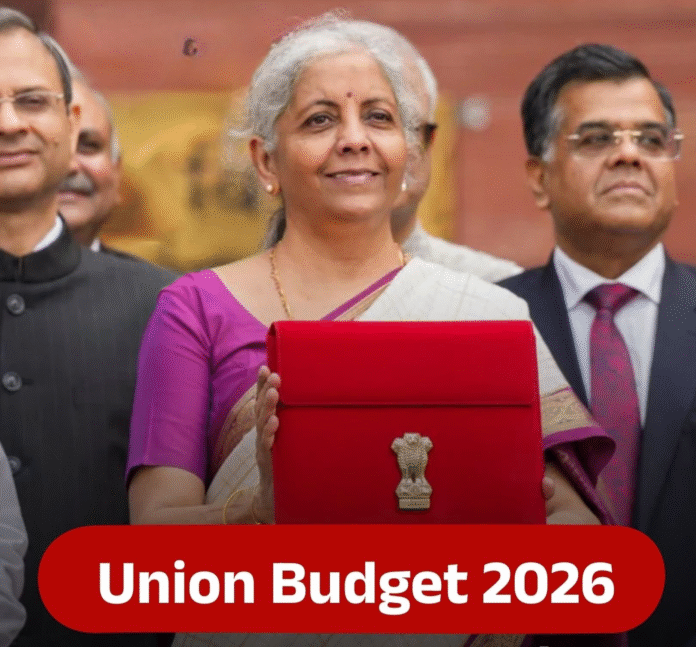
Finance Minister Nirmala Sitharaman is set to script history on February 1, 2026, when she presents the Union Budget for the ninth consecutive time, a feat no other Indian Finance Minister has achieved. With this, she will become the longest continuously serving Finance Minister of India.

Sitharaman assumed office on May 31, 2019, and as of January 31, 2026, she has completed six years and eight months in the role. Her uninterrupted tenure and consecutive budget presentations mark a unique milestone in India’s parliamentary and economic history.

Steering the Economy Through Turbulence

During her tenure, Sitharaman has guided the Indian economy through some of its most challenging phases—most notably the COVID-19 pandemic, global supply-chain disruptions, geopolitical tensions, and worldwide economic uncertainty. Despite these headwinds, India has retained its position as the fastest-growing major economy, a point frequently highlighted by the government.

Prime Minister Narendra Modi, ahead of the Budget Session of Parliament, praised her consistent leadership, noting that presenting the budget for the ninth straight time would permanently etch her name in India’s economic history.

How Sitharaman Compares With Past Finance Ministers

While several Finance Ministers have presented the Union Budget multiple times, none have done so nine times in a row.

  • Morarji Desai, former Prime Minister, presented the budget 10 times overall, but not consecutively.
  • P. Chidambaram presented nine budgets across four separate tenures, with a total Finance Ministry tenure of about eight years.
  • C.D. Deshmukh served as Finance Minister for six consecutive years and two months starting June 1, 1950.
  • Manmohan Singh served nearly five years as Finance Minister between 1991 and 1996 and briefly held the portfolio again during his time as Prime Minister.
  • Pranab Mukherjee served for six years and four months, while Arun Jaitley held the post for four years and eight months, and Yashwant Sinha for four years and four months.

India’s First Finance Minister

R.K. Shanmukham Chetty holds the distinction of being independent India’s first Finance Minister, presenting the country’s inaugural budget in 1947.

A Record Moment

While Morarji Desai still holds the record for the highest number of budgets presented, Sitharaman’s achievement of nine consecutive budgets sets her apart. As she rises to present the Union Budget on February 1, her tenure stands as a defining chapter in India’s economic and parliamentary legacy.

Apple Acquires Israeli AI Startup Q.ai to Strengthen Audio and Communication Technologies

0

Apple has quietly expanded its artificial intelligence portfolio with the acquisition of Q.ai, an Israel-based startup focused on advanced AI-driven audio and communication technologies. The company confirmed the acquisition on Thursday, though financial terms were not disclosed.

Founded in Israel, Q.ai has largely operated in stealth mode and has yet to launch a commercial product. According to information available on its website, the startup specialises in using artificial intelligence to enhance audio capture, processing, and communication experiences across devices.

Q.ai was led by Aviad Maizels, a veteran entrepreneur within Apple’s ecosystem. Maizels previously founded PrimeSense, the 3D sensing company Apple acquired in 2013, whose technology later became a cornerstone of Face ID.

Commenting on the acquisition, Johny Srouji, Apple’s Senior Vice President of Hardware Technologies, said the company is excited to bring Q.ai’s talent and technical expertise into Apple, calling the move an important step toward future innovation. Srouji oversees Apple’s in-house silicon development and core hardware platforms.

The startup had attracted investment from prominent firms including GV, Kleiner Perkins, and Spark Capital, signalling strong early confidence in its technological direction. Industry databases suggest Q.ai was developing solutions aimed at improving how devices capture, process, and enhance sound during real-time communication.

The acquisition aligns with Apple’s broader strategy of embedding intelligence deeply into its hardware. In recent years, the company has rolled out AI-powered features across products such as AirPods, including adaptive audio, advanced noise cancellation, and live translation.

While some investors have called for large, headline-grabbing AI acquisitions, Apple has traditionally favoured smaller, targeted purchases that allow it to integrate specialised talent and technology seamlessly into its ecosystem rather than operating standalone AI platforms.

Earlier this month, Apple also announced a partnership with Google, enabling the use of Gemini models for select Apple Intelligence features—highlighting Apple’s blended approach of in-house development and strategic collaboration.

With Q.ai now part of its portfolio, Apple appears to be reinforcing its long-term focus on intelligent, on-device AI experiences, particularly in audio, sensing, and communication technologies.

OpenAI Retires GPT-4o, Makes GPT-5.2 New Professional Standard

0

OpenAI has announced that it will retire GPT-4o and several related models on February 13, 2026, marking a significant shift in its artificial intelligence roadmap. The transition positions GPT-5.2 as the default model for professional and creative users, reflecting the company’s focus on consolidation, personalisation, and improved user control.

GPT-4o’s Role and User Attachment

Since its launch, GPT-4o earned strong user loyalty for its conversational warmth, casual tone, and perceived creativity. Writers, marketers, and researchers widely preferred it for brainstorming, ideation, and narrative tasks. Following earlier deprecation plans, GPT-4o was briefly restored after widespread user feedback seeking more time to adapt. OpenAI acknowledged that this feedback directly influenced the design priorities of subsequent GPT-5 updates.

Models Being Phased Out

According to OpenAI, GPT-4o will be retired alongside GPT-4.1, GPT-4.1 mini, and o4-mini. The company stated that usage of these models has declined sharply as newer systems became more capable. By retiring underused models, OpenAI aims to focus development resources on fewer, more versatile systems that meet the majority of user needs across professional and general use cases.

GPT-5.2 and Enhanced Personalisation

GPT-5.2 has now become the platform’s primary model for creative writing, casual conversation, and problem-solving. Users can directly adjust response tone, warmth, and enthusiasm without complex prompt engineering. OpenAI says the goal is to make ChatGPT feel more personal while remaining technically stronger. The update also reduces unnecessary refusals and improves flexibility, especially for creative and exploratory tasks.

Important Facts

  • GPT-4o will be officially retired on February 13, 2026.
  • GPT-5.2 is positioned as OpenAI’s default professional model.
  • Model retirement helps reduce maintenance and focus innovation.
  • User feedback directly influenced GPT-5 feature design.

Broader AI Policy and Safety Measures

The transition also aligns with OpenAI’s broader policy updates, including new age-prediction safeguards for users under 18. These measures aim to balance safety with flexibility, offering adults greater control over AI responses while increasing protections for minors. OpenAI said the GPT-5.2 rollout reflects its long-term strategy to improve both capability and personality in AI systems while simplifying choices for users.

India Launches First AI-Enabled University Pilot at CCSU

0

India has taken a major step towards integrating artificial intelligence into higher education with the launch of its first AI-enabled university pilot. The initiative, announced on Wednesday, aims to transform learning, teaching, and campus administration using advanced AI tools, starting with a pilot at Chaudhary Charan Singh University in Meerut.

Government–Industry Partnership for AI Education

The Ministry of Skill Development and Entrepreneurship (MSDE) has partnered with Google Cloud and Chaudhary Charan Singh University to build a scalable national model for AI-powered higher education. The programme was unveiled at Google’s AI for Learning Forum in Delhi in the presence of skill development minister Jayant Chaudhary. The pilot is designed to generate insights that can later be adopted by institutions across India.

CCSU as the National Pilot Campus

CCSU has been selected as the testing ground where AI tools will be implemented and evaluated before nationwide rollout. The university will also function as a centre of excellence, documenting best practices and sharing operational learnings with other colleges and universities. Technical implementation and on-ground deployment will be managed by Placecom.

Gemini Platform to Power Learning and Administration

The initiative will use Google Cloud’s Gemini AI platform to support both academic and administrative functions. Students will receive access to personalised AI tutors that adapt to individual learning speeds and identify skill gaps aligned with job market needs. Faculty members will be able to generate teaching material, simulations, and multilingual content using AI tools. University administration will deploy automation to reduce paperwork, improve efficiency, and accelerate routine processes.

Important Facts

  • MSDE is the nodal ministry for the AI-enabled university initiative.
  • CCSU, Meerut, is India’s first pilot AI-enabled university campus.
  • Google Cloud’s Gemini platform will be used for education and administration.
  • The project aims to create a national AI adoption framework for higher education.

Towards a National AI Framework for Higher Education

Officials stated that the broader objective is to improve access to quality education, particularly for regional institutions with limited exposure to advanced digital tools. By addressing barriers of language, location, and resources, the project seeks to prepare students for the future workforce. Google India country manager and vice president Preeti Lobana said CCSU would help test personalised learning models and AI-driven career guidance. Based on outcomes from the Meerut pilot, MSDE plans to develop a National Best Practice Framework to guide over 50,000 colleges and 1,200 universities in adopting AI across India’s higher education system.

Patna Bird Sanctuary in Etah district of Uttar Pradesh and Chhari-Dhand Wetland in Kutch, Gujarat, are New Ramsar Sites

0

Ahead of World Wetlands Day, Union Minister for Environment, Forest and Climate Change Bhupender Yadav announced the addition of two new wetlands to India’s growing list of Ramsar sites, marking another milestone in the country’s conservation efforts.

In a post on social media platform X, the minister said Patna Bird Sanctuary in Etah district of Uttar Pradesh and Chhari-Dhand Wetland in Kutch, Gujarat, have been included in the prestigious international Ramsar list. With these additions, India’s total number of Ramsar sites has risen to 98.

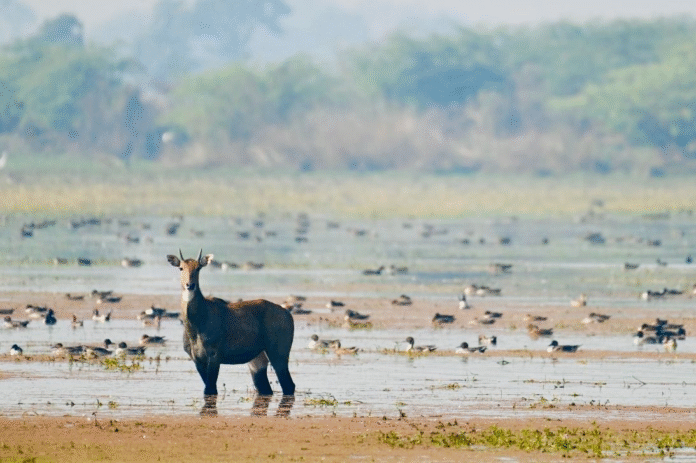
Calling it a moment of pride, Yadav said the international recognition reflects India’s strong commitment to environmental protection and wetland conservation. “Hundreds of migratory and resident bird species find shelter in these wetlands,” he noted, adding that they also serve as habitats for wildlife such as chinkara, wolves, caracal, desert cats, desert foxes, and several endangered bird species.

The Union Minister highlighted that under the leadership of Prime Minister Narendra Modi, India’s Ramsar network has witnessed an unprecedented expansion of over 276 per cent—growing from 26 Ramsar sites in 2014 to 98 today.

He said the expansion underscores the government’s focus on biodiversity conservation, ecological balance, and sustainable development. The newly recognised wetlands are expected to play a crucial role in preserving fragile ecosystems, supporting wildlife, and promoting eco-tourism.

World Wetlands Day is observed annually on February 2 to raise awareness about the importance of wetlands and their role in maintaining environmental health and biodiversity.

Khazana Mahal Shines Through Influencers’ Lenses; Himanshu Nathawat Bags Thailand Trip

0

The award ceremony of Reel Festival 2025–26 was successfully held at Khazana Mahal, Jaipur, on Friday, celebrating creativity in digital storytelling and social media content. More than 175 digital creators and influencers from across the country participated in the festival, making it one of the most vibrant creator-driven events of the year.

The festival aimed to provide a platform for young creators to showcase their talent while promoting Rajasthan’s culture, heritage, and tourism through short-form video reels. Participants created reels at the Khazana Mahal premises between December 20 and January 5 under the theme “Reel Toh Banti Hai”.

Founder Director of Khazana Mahal, Anup Srivastava, said the Reel Festival is more than just a competition. “It is a powerful platform for emerging digital creators and is helping take Rajasthan’s rich cultural heritage to audiences across the country and the world,” he said.

Khazana Mahal Shines Through Influencers’ Lenses; Himanshu Nathawat Bags Thailand Trip

Creators from states including Delhi, Uttar Pradesh, Maharashtra, Rajasthan, Gujarat, Madhya Pradesh, Haryana, Karnataka, Odisha, and Jharkhand took part, giving the festival a strong national presence. Their reels showcased the grandeur of Khazana Mahal, along with Rajasthan’s traditions, folk art, and tourist destinations, drawing wide appreciation on social media.

The award ceremony was attended by noted film distributor Raj Bansal and actor Shaji Chaudhary, known for his role as Maqbool in the web series Mirzapur. The jury panel featured prominent Bollywood personalities including Anukalp Goswami (writer-director of The Kapil Sharma Show), Atul Srivastava (Stree), Vishwajeet Pradhan (Aarya), and Shaji Chaudhary. Winners were selected based on creativity, presentation, and audience engagement.

A total of seven creators were honored in various categories. Himanshu Nathawat won the Best Reel Award, earning a sponsored trip to Thailand. Vikas Magadh and Azeem Khan secured the second and third positions respectively. The Critics’ Reel Award was presented to TRB Boys, Renu Soni, and Bhuparam, while Ashish Rai received the Director’s Choice Award. All participants were awarded certificates.

SEBI Clears NSE IPO After a Decade: 10 Key Facts You Need to Know

0

The Securities and Exchange Board of India (SEBI) has finally granted its long-pending No-Objection Certificate (NOC) to the National Stock Exchange (NSE) for its initial public offering (IPO), ending a wait of nearly a decade. Here are 10 important facts explaining what this approval means and why it matters:

  1. SEBI Clears NSE IPO After 10 Years
    SEBI on Friday approved NSE’s IPO proposal, paving the way for India’s largest stock exchange to get listed on the BSE after almost 10 years of delay.
  2. NSE Welcomes the Approval
    NSE Chairperson Srinivas Injeti said the approval marks a new phase of value creation and reinforces NSE’s role as a key pillar of the Indian economy and capital markets.
  3. Settlement Worth Over ₹2,000 Crore
    The NOC was granted after NSE agreed to settle a long-pending case with SEBI for an amount exceeding ₹2,000 crore, subject to final approvals. With 12% interest, the final payout could be higher.
  4. DRHP Likely in 3–4 Months
    Sources said NSE is expected to file its Draft Red Herring Prospectus (DRHP) within the next three to four months.
  5. Listing Expected in 8–9 Months
    If timelines remain on track, NSE’s much-awaited listing could take place in about 8 to 9 months.
  6. HPAC Clearance Not Awaited
    SEBI issued the NOC without waiting for approval from its High-Powered Advisory Committee (HPAC). The case will now be placed before HPAC and later reviewed by two whole-time SEBI members.
  7. Supreme Court Case to Be Withdrawn
    Following internal approvals, SEBI will move to withdraw the pending regulatory case from the Supreme Court, formally closing the matter.
  8. IPO Plans Date Back to 2016
    NSE first filed its IPO prospectus in 2016. SEBI had granted in-principle approval that year, subject to regulatory compliance. NSE’s board and shareholders had also approved the listing.
  9. Setback Due to Co-Location Case
    In 2019, SEBI barred NSE from accessing the securities market for six months due to the co-location controversy. While penalties were later modified, the restriction delayed the IPO.
  10. Co-Location Case Settled in 2024
    The major roadblock was cleared in October 2024, when NSE settled the co-location case by paying ₹643 crore, clearing the path for IPO approval.

Bottom Line:
SEBI’s green signal brings NSE closer to the stock market after years of regulatory hurdles. Once listed, it will mark a historic milestone for India’s capital markets and could be one of the most closely watched IPOs in recent times.