Home Blog Page 58

Gujarat Tops Charts as Largest Contributor to Renewable Energy Capacity…

0

Gujarat has emerged as India’s largest contributor to renewable energy capacity, accounting for 16.50 per cent of the national total. As of December 2025, the state’s installed renewable power capacity has reached 42.583 GW, placing Gujarat at the forefront of India’s clean energy transition and strengthening the country’s pathway towards its long-term climate commitments.

Top Ranking Among Indian States

Under the leadership of Chief Minister Bhupendra Patel, Gujarat ranks first among all Indian states in total installed renewable energy capacity and wind power capacity, and second in solar power capacity. Wind energy contributes 14,820.94 MW, while solar energy accounts for 25,529.40 MW. The remaining capacity is derived from hybrid and off-grid renewable sources.

Solar Power Expansion and Mega Parks

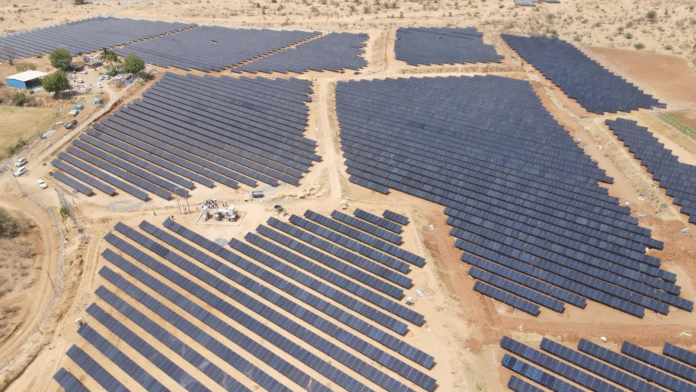
Gujarat’s solar capacity includes 17,771.21 MW from ground-mounted projects, 6,412.80 MW from rooftop installations, 1,172.38 MW from wind–solar hybrid projects, and 173.01 MW from off-grid systems, including those under the PM KUSUM scheme. Major operational solar parks include Charanka (749 MW), Radhanesda (700 MW), and Dholera (300 MW). The Khavda renewable energy park in Kutch, planned at 37.35 GW, has already commissioned 11.33 GW, making it the world’s largest renewable energy park under development.

Rooftop Solar and Wind Leadership

The state leads India in rooftop solar installations, with over 1.1 million systems generating 6,412.80 MW, accounting for more than 25 per cent of the national rooftop solar capacity. This includes installations under the Surya Gujarat scheme, the PM Surya Ghar Yojana, and other programmes. Wind energy installations stand at 14,820.64 MW, with Kutch alone contributing nearly half of the total capacity.

Important Facts

  • Gujarat contributes 16.50 per cent of India’s total renewable energy capacity.
  • The Khavda renewable energy park is the largest such project under development globally.
  • The state ranks first in wind power capacity and rooftop solar installations.
  • Gujarat targets 105 GW renewable capacity by 2030.

Employment and Future Targets

Officials estimate that renewable energy projects in Gujarat have generated around 2.37 lakh direct and indirect jobs. The state currently has 5,203 renewable projects under implementation and aims to achieve 105 GW of renewable energy capacity by 2030, contributing about 20 per cent to India’s planned 500 GW non-fossil fuel energy capacity.
India AI Impact Summit 2026: Know Dates, Scale and Fact That Why It is the Largest Global Summit

0

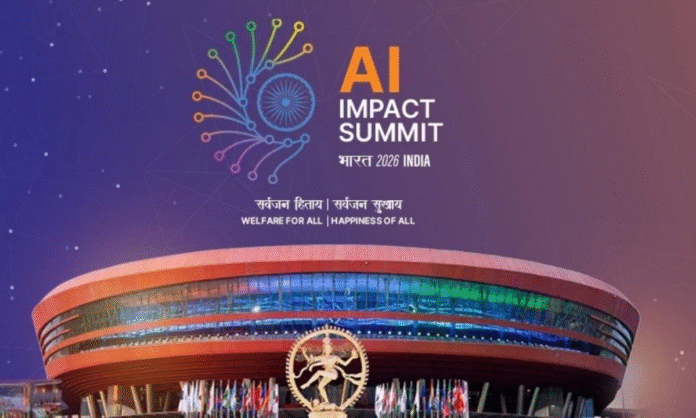
The India AI Impact Summit 2026, scheduled to be held in New Delhi from February 16 to 20, is set to become the largest global summit on artificial intelligence hosted to date. The event reflects growing international momentum around responsible, inclusive and impact-driven AI, with a strong focus on translating global vision into real-world implementation.

Scale and Global Participation

The summit has already recorded over 35,000 registrations, signalling unprecedented global interest. Participants are expected from more than 100 countries, including governments, industry leaders, researchers, civil society organisations and international institutions. The event is likely to witness participation from 15 to 20 Heads of Government, over 50 Ministers, more than 40 CEOs of leading global and Indian companies, and around 500 prominent figures from the global AI ecosystem.

Focus on Impact and Real-World Applications

Unlike earlier global AI discussions centred largely on risks and ethics, the India AI Impact Summit places emphasis on execution and outcomes. The agenda is designed to showcase practical applications of AI across sectors such as governance, industry, healthcare, education and climate action. Organisers have positioned the summit as a platform to operationalise shared global principles into deployable solutions.

Startups, Sessions and Pre-Summit Momentum

A major highlight of the summit will be a startup showcase featuring over 500 AI startups from India and abroad. Nearly 500 sessions are scheduled alongside the main programme, making it one of the most comprehensive AI convenings globally. Preparatory activities have also gained traction, with over 1,300 proposals received for pre-summit events and more than 500 such events already conducted across India and internationally.

Important Facts for Exams

  • India AI Impact Summit 2026 will be held in New Delhi from February 16–20.
  • The summit focuses on responsible, inclusive and impact-driven AI.
  • Over 35,000 registrations have been recorded ahead of the event.
  • It follows earlier global AI discussions at Bletchley Park, Seoul and Paris.

India’s Role in Global AI Governance

The summit framework includes seven flagship events that have collectively engaged more than three lakh participants, reflecting strong national and international interest. The evolving global AI process has progressed from risk assessment at Bletchley Park, to ethics and inclusion in Seoul, and operationalisation in Paris. The India AI Impact Summit underscores India’s expanding role in shaping global AI discourse. Media accreditation for the summit is currently open, with applications to be submitted online by February 8, 2026.

Migration Survey in India: Know Dates, Scope and Objective

0

The National Statistics Office will conduct a comprehensive Survey on Migration across India from July 2026 to June 2027 to generate updated and granular data on migration patterns. The initiative is aimed at strengthening the evidence base for policymaking in sectors closely linked to population mobility and labour dynamics.

Scope and Objectives of the Migration Survey

The survey will be undertaken by the National Statistics Office under the Ministry of Statistics and Programme Implementation. It will capture detailed information on the extent and nature of migration, including rural–urban movement, inter-state migration, seasonal and return migration, as well as the socio-economic and employment profiles of migrants. Reasons for migration will also be systematically documented.

Policy Relevance and Data Use

According to the Ministry, the data generated will assist policymakers, planners, researchers and development practitioners in designing targeted interventions. These include urban planning, housing, transport infrastructure, employment generation, social security coverage and skill development. Reliable migration data is critical for addressing pressures on cities and improving welfare delivery for migrant populations.

Earlier Migration Data and Trends

Migration surveys have been conducted periodically by the Ministry. The most recent migration-related datasets were drawn from the Periodic Labour Force Survey 2020–21 and the Multiple Indicator Survey 2020–21. As per PLFS 2020–21, India’s overall migration rate stood at 28.9 per cent, indicating significant population mobility across regions and sectors.

Important Facts for Exams

  • The Survey on Migration will be conducted during July 2026–June 2027.
  • It is undertaken by the National Statistics Office under MoSPI.
  • PLFS 2020–21 estimated India’s migration rate at 28.9 per cent.
  • Migration data supports planning in housing, employment and urban infrastructure.

Gender Dimensions of Migration in India

PLFS 2020–21 data revealed sharp gender differences in migration. At the all-India level, the migration rate was 10.7 per cent among males and 47.9 per cent among females. Marriage accounted for about 86.8 per cent of female migration, reflecting strong social drivers. In contrast, employment and better job opportunities were the leading reasons for male migration, accounting for 22.8 per cent. These patterns underscore the gender-specific nature of migration in India, a key focus area for the upcoming survey, as informed in Parliament by Union Minister Rao Inderjit Singh in the Rajya Sabha.

Blinkit Founder Dhindsa is Digital Person of the Year

0

The India Digital Awards recognised outstanding achievements across various categories and subcategories, honouring individuals and organisations making a significant impact in the digital domain.


Among the Special Category winners, Mr. Albinder Dhindsa, Founder & CEO, Blinkit, was adjudicated the Digital Person of the Year. The award recognises his visionary leadership and transformative contribution to India’s quick commerce and digital retail landscape, redefining consumer convenience through technology-driven innovation.


The award for Digital Startup of the Year was conferred upon Sarvam AI, in recognition of its pioneering work in the field of artificial intelligence. The startup has demonstrated remarkable innovation, strong execution, and the potential to shape the future of AI-led solutions from India for the world.


WPP won the award for the Digital Agency of the Year – Gold, followed by BigTrunk Communications with Silver and CollabX with Bronze.


About India Digital Awards
Started in 2009, the annual India Digital Awards (IDA) celebrate organizations, teams, and practitioners who have delivered exemplary business outcomes using digital as a medium. IDA stands as India’s most esteemed recognition in the digital domain – a true symbol of innovation and excellence.

National Golden Retriever Day 2026: Date, History, Significance, Facts & All You Need to Know

0

National Golden Retriever Day 2026 celebrates one of the most loved and popular dog breeds in the world—the Golden Retriever. Known for their gentle temperament, intelligence, and stunning golden coat, Golden Retrievers are cherished as family pets, therapy dogs, and loyal companions.

When Is National Golden Retriever Day Celebrated?

In several countries, National Golden Retriever Day is observed on February 3 each year. The day is dedicated to honoring the breed’s loving nature, loyalty, and contribution to human lives.

National Golden Retriever Day 2026: History

National Golden Retriever Day was founded by Kristen Shroyer, who realized there was no official day to celebrate this beloved breed. She chose the date in memory of her late Golden Retriever, Quincy, who tragically passed away from cancer at the age of seven. March 3 was Quincy’s birthday, and the day serves as both a tribute and a celebration of Golden Retrievers worldwide.

National Golden Retriever Day 2026: Significance

Golden Retrievers are admired not just for their beauty, but also for their exceptional personality traits:

  • They are ideal emotional support and therapy dogs due to their calm and affectionate nature.
  • Golden Retrievers rank fourth among the most intelligent dog breeds, after Border Collies, Poodles, and German Shepherds.
  • Their loyalty, friendliness, and adaptability make them one of the most popular dog breeds globally.

Why Should You Have a Golden Retriever?

Golden Retrievers are lively Scottish gundogs known for their charm and versatility. Here are some interesting facts about the breed:

  • They are widely used as therapy and service dogs, helping people cope with depression and anxiety.
  • Their positive attitude makes them excellent family pets, especially for households with children.
  • Golden Retrievers get along well with other pets and are easy to train.
  • Their top recorded running speed is 35 mph (56 km/h).
  • Average weight:
    • Male: 65–75 lb (29–34 kg)
    • Female: 55–65 lb (25–29 kg)
  • They shed heavily twice a year and have a double coat—an insulating inner layer and a water-resistant outer layer.

Golden Retrievers as Family Dogs

Golden Retrievers thrive when they live indoors, close to the people they love. They see themselves as part of the family and should be treated as such. Their tolerance for noise, activity, and commotion makes them especially good with children. True to their therapy-dog spirit, Golden Retrievers believe in the motto: “The more, the merrier.”

Bermuda Triangle Mystery Explained: New Scientific Theory Points to Natural Causes

0

For decades, the Bermuda Triangle has fueled speculation, myths, and conspiracy theories involving aliens, time warps, and supernatural forces. However, a new scientific theory is now gaining attention for offering a far more grounded explanation—one rooted in natural environmental phenomena rather than fiction.

What Is the Bermuda Triangle?

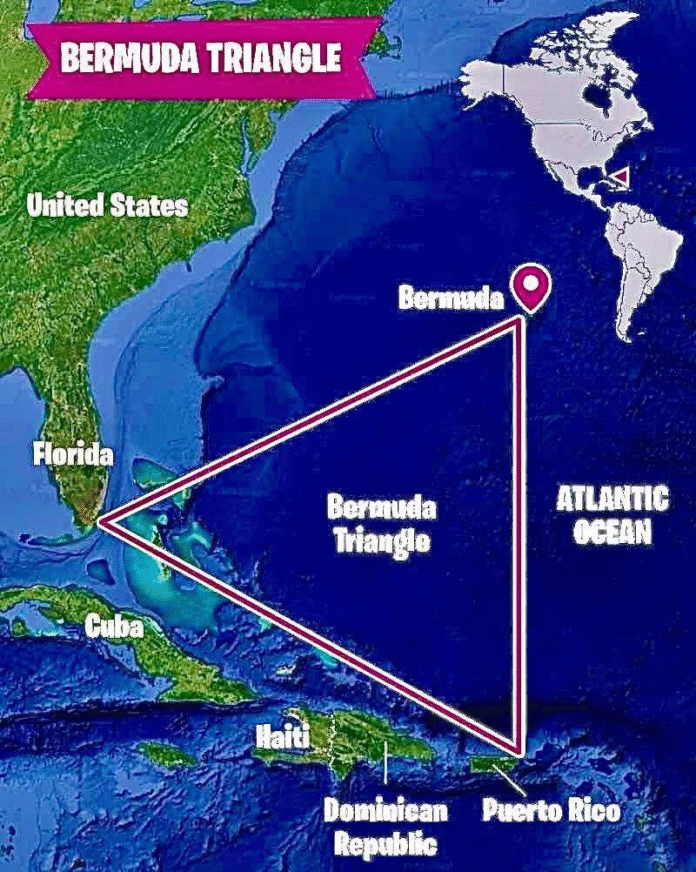
The Bermuda Triangle is a loosely defined region in the western North Atlantic Ocean, stretching between Florida, Bermuda, and Puerto Rico. Over the years, the area became infamous due to reports of ships and aircraft mysteriously disappearing, often without distress signals or wreckage.

These incidents sparked widespread theories ranging from magnetic anomalies to extraterrestrial activity. Scientists, however, have long argued that natural explanations were overlooked in favor of sensational storytelling.

New Scientific Theory: Methane Gas as the Key

According to the latest research-based theory, the mystery of the Bermuda Triangle may be linked to rare releases of methane gas from beneath the ocean floor. Methane hydrates, which are trapped under high pressure in seabed sediments, can occasionally erupt due to geological activity.

When large volumes of methane are suddenly released into the water, they drastically reduce water density. This loss of buoyancy can cause ships to sink rapidly, sometimes without warning. Computer simulations have shown that vessels caught in such conditions could be swallowed within minutes.

Impact on Aircraft and Navigation

Methane gas released into the atmosphere may also explain aviation incidents. Scientists suggest that methane clouds could interfere with aircraft engines, reduce lift due to lower air density, or disrupt navigation instruments. In earlier decades, when aviation technology was less advanced, such disruptions could have proven fatal.

Why Incidents Have Decreased

One of the strongest arguments supporting this theory is the sharp decline in unexplained disappearances in the Bermuda Triangle over the past few decades. Researchers believe that methane eruptions may no longer be active or now occur very rarely.

Additionally, modern navigation systems, satellite tracking, accurate weather forecasting, and improved communication technology have significantly reduced the risk of unexplained accidents.

Debunking Myths Around the Bermuda Triangle

Experts emphasize that many historical Bermuda Triangle cases were exaggerated, poorly documented, or misreported. Severe weather, strong ocean currents like the Gulf Stream, and human error likely accounted for many incidents.

A Scientific Perspective on a Global Mystery

While the new theory does not claim to solve every case associated with the Bermuda Triangle, it offers a logical, science-based explanation that challenges decades of myths. By focusing on natural forces rather than supernatural speculation, researchers hope to reshape public understanding of one of the world’s most famous mysteries.

As science continues to explore Earth’s oceans and atmosphere, the Bermuda Triangle may finally lose its reputation as an unsolvable enigma—and instead become a lesson in how nature, not myth, shapes reality.

From Indian Streets to US Highways: Aloka the Peace Dog Walks with Buddhist Monks to Spread Message of Peace

0

A former stray dog from India has captured hearts across the United States after becoming an unexpected companion to a group of Buddhist monks on a long-distance peace march. Known as Aloka the Peace Dog, the rescued canine is walking alongside the monks from Fort Worth, Texas, to Washington, DC, as part of the Walk for Peace, a journey aimed at spreading messages of compassion and global harmony.

Aloka, a brown-and-white dog with a distinctive heart-shaped mark on his forehead, has emerged as the unofficial mascot of the march. Videos and photographs of the dog calmly walking with the monks have gone viral on social media, drawing admiration from people across the world.

What Is the Walk for Peace?

The Walk for Peace is a cross-country march organised by the Huong Dao Vipassana Bhavana Center. Covering nearly 3,700 kilometres across 10 US states, the journey seeks to promote peace, loving-kindness, and compassion. According to organisers, the walk began on October 10 and is expected to take around 120 days, concluding in Washington, DC.

The initiative aims to raise awareness about non-violence and mindfulness, encouraging people to reflect on peace not just as a global ideal but as a daily practice.

Aloka’s Journey from India to the US

Aloka was once a stray dog in India. His life changed when he began walking alongside Buddhist monks during a similar peace march in the country. Over time, he formed a strong bond with the group and stayed with them for more than 100 days.

Now, Aloka has continued the journey overseas, accompanying the monks across the US. According to the Walk for Peace’s social media pages, he receives regular veterinary check-ups and is often greeted with food, treats, and affection from well-wishers who follow the march.

“Many people often ask about Aloka’s breed,” a post reads. “While we aren’t exactly sure, we estimate he is about four years old and likely an Indian Pariah dog.”

From the streets of India to American highways, Aloka the Peace Dog has become a powerful symbol of loyalty, compassion, and the universal language of peace.

February 2026 Calender: Holidays, Tithis, Festivals, Shivratri, Ekadashi, Purnima and important dates

0

February 2026 Calendar with Holidays: February 2026 is packed with significant events, starting with the Union Budget on the 1st, shaping economic policy. The Indian Coast Guard also celebrates its day. The month highlights science with National Science Day on the 28th, honoring CV Raman’s Nobel-winning discovery. Social reform and global awareness days also fill this busy period.

Key days and events in February 2026

Feb. 1 to 7: International Development Week

Feb. 1: Union Budget, Indian Coast Guard Day

Feb. 2: World Wetlands Day, Rheumatoid Arthritis Awareness Day

Feb. 3: National Golden Retriever Day (US)

Feb. 4: World Cancer Day, National Day of Sri Lanka

Feb. 6: International Day of Zero Tolerance for Female Genital Mutilation, World War Orphans Day

Feb. 8: National Opera Day (US)

Feb. 9: Baba Amte’s Death Anni ..

eb. 10: National Deworming Day, World Pulses Day, Safer Internet Day

Feb. 11: World Day of the Sick, International Day of Women and Girls in Science

Feb. 12: Darwin Day, National Productivity Day, Birth anniversaries of Maharishi Dayanand Saraswati and Abraham Lincoln

Feb. 13: World Radio Day, Sarojini Naidu Birth Anniversary

Feb. 14: Valentine’s Day, World Congenital Heart Defect Awareness Day

Feb. 15: Mahashivratri

Feb. 18 to 27: Taj Mahotsav

Feb. 19: World Anthropology Day, Beginning of Ramadan (date can vary)

Feb. 20: Arunachal Pradesh Foundation Day, Mizoram Foundation Day, World Day of Social Justice

Feb. 21: International Mother Language Day

Feb. 22: World Thinking Day

Feb. 23: World Peace and Understanding Day

Feb. 24: Central Excise Day

Feb. 26: Veer Savarkar’s Death Anniversary

Feb. 27: World NGO Day

Union Budget 2026 Announces SHE Marts to Help Women Entreprenuers

0

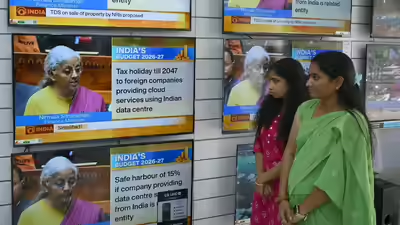
The Union Budget 2026-27 has announced the establishment of Self-Help Entrepreneur (SHE) Marts as community-owned retail outlets to strengthen women-led enterprises and deepen the self-help group ecosystem across states. The initiative is expected to provide a structured market platform for products made by women entrepreneurs, with Jharkhand emerging as a key beneficiary due to its strong SHG base.

From Credit-Led Livelihoods to Enterprise Ownership

Finance Minister Nirmala Sitharaman said the SHE Marts initiative builds on the success of the Lakhpati Didi Programme and aims to help women transition from credit-based livelihoods to ownership of enterprises. The proposed marts will be set up within cluster-level federations of self-help groups and supported through enhanced and innovative financing instruments. The focus is on enabling women to move up the value chain by accessing organised retail and stable demand.

Community-Owned Retail Model

SHE Marts are envisaged as community-owned retail outlets, allowing women-led SHGs to collectively market and sell their products. By aggregating production and linking it to assured retail spaces, the model seeks to reduce dependence on intermediaries and improve income realisation. The approach also aligns with broader efforts to formalise micro-enterprises and strengthen grassroots entrepreneurship.

Jharkhand’s Strong SHG Ecosystem

Jharkhand has already recorded significant progress in women’s economic empowerment, mobilising around 39 lakh rural SHG members through the Jharkhand State Livelihood Promotion Society. State officials said the SHE Marts proposal complements ongoing initiatives to transform rural women from borrowers into business owners. The state government expects the new retail model to strengthen existing market linkages and scale up women-led enterprises.

Important Facts

  • SHE Marts are community-owned retail outlets for women-led SHG products.
  • They build on the Lakhpati Didi Programme.
  • Marts will be set up through cluster-level federations.
  • Aim is to shift women from credit-led livelihoods to enterprise ownership.

Pakistan’s India Match Boycott: Group Exit Risk, Possible ICC Ban, and Future Hosting Woes

0

Pakistan’s decision to boycott its group-stage match against India in the upcoming T20 World Cup could have serious sporting, financial, and administrative consequences. On Sunday, the Pakistani government confirmed that the national team would participate in the tournament but would not play against India. Following the announcement, the International Cricket Council (ICC) asked the Pakistan Cricket Board (PCB) to reconsider its stance.

Pakistan’s India Match Boycott: Group Exit Risk, Possible ICC Ban, and Future Hosting Woes

Risk of Group-Stage Elimination

Under ICC playing conditions, a boycott can severely impact Pakistan’s net run rate. As per Clause 16.10.7, a team refusing to play is deemed to have scored zero runs in 20 overs, while the opponent’s overs are not counted. This could leave Pakistan with a significantly negative run rate, making qualification difficult even if it wins its remaining matches.

Group A includes India, Pakistan, the USA, Namibia, and the Netherlands. With only the top teams advancing, Pakistan’s margin for error is extremely small. Any defeat, combined with a damaged run rate, could result in early elimination. The USA and the Netherlands have previously caused major upsets in ICC events, adding to the challenge.

Possibility of ICC Action or Ban

The ICC has formally asked the PCB to explain its decision. If Pakistan fails to provide a satisfactory justification, the ICC could consider disciplinary action, including a possible ban from the tournament. In past World Cups, multiple teams have faced sanctions for boycotting matches.

Threat to PSL and Knockout Matches

Security concerns may not be accepted as a valid reason, as Pakistan is scheduled to play all its matches in Sri Lanka, not India. ICC sources indicate that if the PCB cites political solidarity as the reason, it may face consequences, including denial of a No Objection Certificate (NOC) for the Pakistan Super League (PSL).

Uncertainty also surrounds a potential India–Pakistan clash in the knockout stage. The PCB has not clarified whether Pakistan would play India if the teams meet later in the tournament. The ICC is expected to seek a clear response, with strict action likely if ambiguity continues.

Hosting Rights at Risk

Pakistan hosted the Champions Trophy in 2025, its first ICC event in nearly three decades. The current controversy may impact Pakistan’s chances of securing future ICC hosting rights. The India–Pakistan fixture is a major revenue generator, and its absence could lead to financial losses for the ICC, potentially affecting Pakistan’s revenue share as well.

Player Reaction

Pakistan captain Salman Ali Agha said the team would respect the government’s decision. “We want to play in the World Cup and will follow the government’s directive. Our focus is on giving our best in the tournament,” he said.