Home Blog Page 61

Jagoi Raas: Manipuri Raas Lila Captivates with Its Sacred Grace and Living Tradition

0

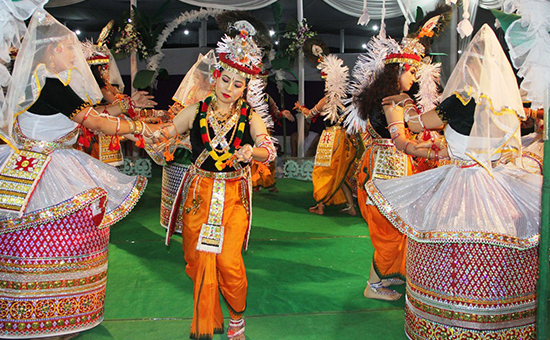
Jagoi Raas, the distinctive form of Manipuri Raas Lila, has once again drawn attention for its rare blend of devotion, discipline, and cultural continuity. A classical dance-drama rooted in the Radha-Krishna tradition, Jagoi Raas stands apart for preserving deep links with Manipur’s indigenous folk rituals and martial heritage, even as it evolves on contemporary stages. More than a performance, it remains a living expression of spiritual love and Manipuri identity.

Among India’s eight classical dance forms, Manipuri Raas Lila stands apart—not for spectacle or virtuosity alone, but for its quiet spiritual power. Rooted in devotion and community memory, this dance form is less a performance and more a living prayer, where movement becomes meditation and rhythm becomes remembrance.

Manipuri Raas Lila is a dance-drama that enacts the divine love of Radha and Krishna, drawing inspiration from the Vaishnavite Bhakti tradition that took deep root in Manipur in the 18th century. Yet, unlike other classical forms that evolved largely within courtly or temple frameworks, Raas Lila—also known as Jagoi Raas—has never severed its ties with indigenous traditions. Its aesthetic and spirit remain deeply intertwined with Lai Haraoba, the ancient folk ritual celebrating local deities and the creation of the universe.

This fusion of the classical and the indigenous gives Manipuri Raas Lila its distinctive character. Performed as a collective ensemble, the dance follows strict conventions of costume, movement, and spatial design. The iconic cylindrical skirts of the female dancers, the translucent veils, and the soft footwork create an illusion of floating grace. Every gesture is restrained, every movement inward-looking, reflecting the Manipuri worldview where devotion is expressed through subtlety rather than spectacle.

While the dance draws heavily on Abhinaya as described in the Natya Sastra, its vocabulary is uniquely enriched by Manipur’s ethnic martial arts culture. The rounded torso movements, controlled spins, and poised stances echo the discipline of traditional martial practices, lending the dance a quiet strength beneath its lyrical softness. This synthesis of grace and vigour mirrors the cultural fabric of Manipur itself—resilient, layered, and deeply rooted.

Over time, Manipuri Raas Lila has undergone a significant transformation. What began as a sacred ritual within temple spaces gradually found its way onto secular and commercial proscenium stages. This transition did more than widen its audience; it redefined the dance as a marker of cultural identity. Even outside its ritual setting, Raas Lila continues to carry the spiritual and philosophical ethos of Manipur, preserving its uniqueness amid changing times.

Today, Manipuri Raas Lila stands as a testament to how tradition can evolve without losing its soul—a dance form that continues to speak, softly yet profoundly, of love, devotion, and belonging.

India-EU FTA Deal: Know Key Facts, Benefits And Ambitious Service Commitments

0

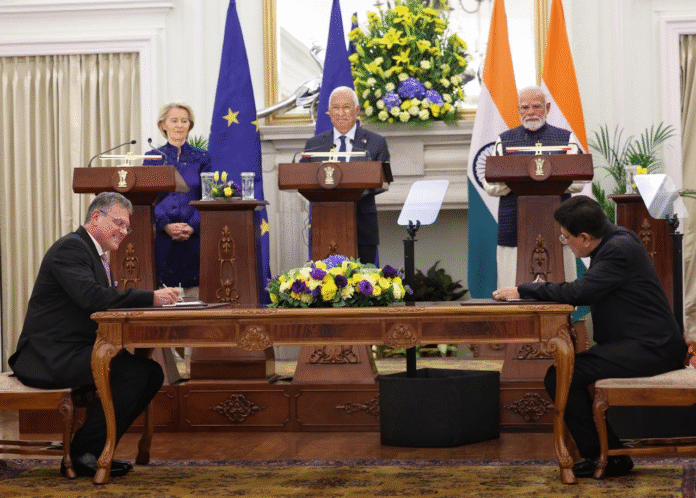
India-EU FTA deal has been signed while strengthening economic and political ties at a time of rising geopolitical tensions and global economic challenges. The EBNW Story brings in key facts:

  • * The largest trade agreement that both the EU and India have ever concluded.
  • * A market of two billion people and close to a quarter of global GDP.
  • * Cutting over 90% of tariffs: expected to double annual EU exports to India.
  • * Upholding European standards and promoting sustainable trade. 

Key facts about India

  1. 4th largest economy in the world.
  2. The EU’s 9th largest trading partner.
  3. Annual GDP: €3.4 trillion.
  4. Population: 1.45 billion people.
  5. EU exports: €75 billion –  goods: €48.8bn, services €26bn (2024)
  6. EU investment stocks: €140.1 billion (2023)
  7. EU jobs supported by EU exports to India: 800,000 

Top 10 European exports to India (2024 – billion euro)

EU exports to India in 2024

Key benefits for EU exporters

  • Saving up to €4 billion per year in duties on European products.
    • Tariffs on 96.6% of EU goods exports will be eliminated or reduced.
  • Competitive advantage for EU exporters, with the biggest trade opening India has given to any trade partner.
  • Privileged access to Indian services market in key sectors, e.g. financial services and maritime transport.
  • Simplification of customs procedures to make exports quicker and easier.
  • Protection of EU intellectual property, such as trademarks.
  • A dedicated chapter for small EU businesses.
Product2024 exports (EUR)Current tariffsFuture TariffsStaging
Machinery and electrical equipment€16.3 billion Up to 44% 0% for almost all productsUp to 10 years (mostly 5-7) 
Aircraft and spacecraft   €6.4 billion Up to 11% 0% for almost all productsUp to 10 years (mostly 5)
Optical, medical and surgical equipment€3.4 billion Up to 27,5% 0% for 90% of the productsUp to 10 years (mostly EIF, 5 or 7)
Plastics€2.2 billion Up to 16,5% 0% for almost all productsUp to 10 years (mostly 7)
Pearls, precious stones and metals€2.1 billion Up to 22,5% 0% for 20% of the products and tariff reduction for another 36% of the products Up to 10 years (mostly 5)
Chemicals€3.2 billion Up to 22%  0% for almost all productsUp to 10 years (mostly EIF)
Motor vehicles€1.6 billion 110%10% (quota of 250k) 
Iron and steel €1.5 billon Up to 22% 0% for almost all productsUp to 10 years (mostly EIF, 5 or 7)
Pharmaceuticals €1.1 billion 11%0% for almost all productsUp to 10 years (mostly 5 or 7)

Ambitious services commitments

  • * Binding of current level of liberalisation for services sectors exceeding India’s commitments with any other trading partner, including the UK and Australia
  • * Binding of dredging and maritime cable-laying services for the first time, satisfying key economic interests of the EU
  • * Enhanced transparency through obligations on senior management and boards of directors and local presence

Intellectual property protected

  • The agreement provides a high level of protection and enforcement of IP rights, including with respect to copyright, trademarks, designs, protection of trade secrets and undisclosed information, and plant varieties. It foresees that each Party will have measures, procedures and remedies to ensure the enforcement of intellectual property rights. 

QS Europe Rankings 2026: Oxford Leads, Top Universities Listed

0

The QS World University Rankings Europe 2026 have been released, offering a comprehensive snapshot of Europe’s leading higher education institutions. Compiled by Quacquarelli Symonds (QS), the rankings are designed to guide students planning to pursue higher studies across the continent. This year’s list reflects notable shifts at the top, underlining Europe’s competitive and evolving academic landscape.

Oxford Reclaims Top Position

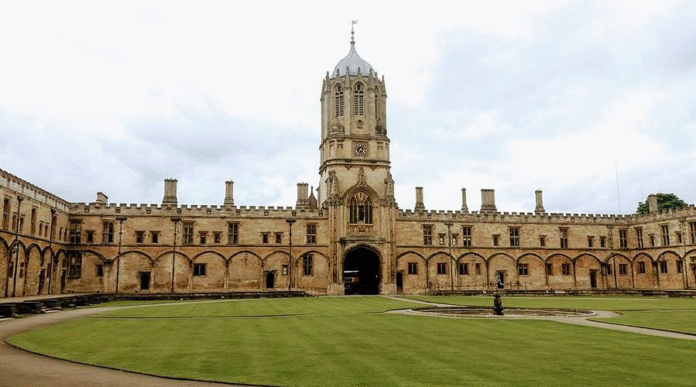
The University of Oxford has secured the first position in the QS Europe Rankings 2026, rising from third place last year. The achievement reinforces Oxford’s strength in research output, academic reputation, and global engagement. ETH Zurich followed closely at second place, maintaining its status as continental Europe’s highest-ranked institution, known for excellence in science, technology, and innovation.

Strong Showing by UK Universities

Universities from the United Kingdom continue to dominate the upper tiers of the rankings. Imperial College London and University College London (UCL) jointly occupy the third position, reflecting consistent performance in employability and international outlook. The University of Cambridge ranks fifth, while the University of Edinburgh and King’s College London secure sixth and seventh positions respectively, highlighting the UK’s continued academic influence in Europe.

Continental Europe in the Top Ten

Beyond the UK, several continental European institutions feature prominently. PSL University, Paris ranks eighth, showcasing France’s growing global academic presence. The University of Manchester stands at ninth place, while École Polytechnique completes the top ten, underlining the strength of elite engineering and research-focused institutions in Europe.

Important Facts

  • QS World University Rankings Europe are published annually by Quacquarelli Symonds.
  • The 2026 rankings assess universities across Europe only, separate from global QS rankings.
  • Key indicators include research and discovery, learning experience, employability, and global engagement.
  • The University of Oxford topped the Europe rankings for 2026 after ranking third in 2025.

Methodology and Student Relevance

QS evaluates universities using a balanced set of indicators, including academic reputation, employer reputation, research impact, internationalisation, and learning environment. The Europe-specific rankings aim to provide clearer regional insights, helping students compare institutions within similar academic and socio-economic contexts. For aspirants planning to study abroad, the QS Europe Rankings 2026 serve as a practical reference point for informed academic decision-making.

India’s First Menopause Clinics in Maharashtra: Know 5 Best Facts

0

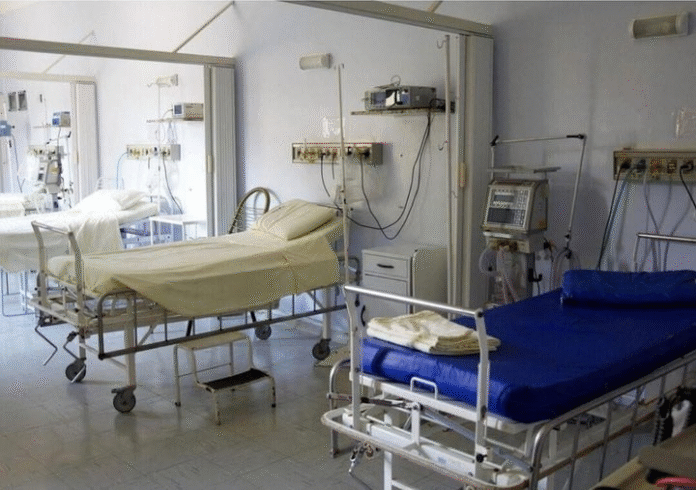
Maharashtra has created history by becoming the first state in India to launch dedicated menopause clinics within the public healthcare system. This pioneering initiative addresses the long-neglected physical and mental health needs of women during menopause and marks a major step toward women-centric preventive healthcare.

Top 5 Key Facts

  1. First-of-its-Kind Initiative
    Maharashtra is the first Indian state to establish exclusive menopause clinics in government hospitals and urban health facilities, setting a national precedent in women’s healthcare.
  2. Comprehensive Care at One Place
    The clinics provide integrated services under one roof, including medical consultations, mental health counselling, lifestyle guidance, and free essential medicines—reducing the need for multiple referrals.
  3. Focus on Critical Health Screenings
    Women attending the clinics undergo screening for hormonal imbalance, bone density (osteoporosis), cardiovascular health, and other menopause-related conditions.
  4. Official Launch and Leadership
    The programme was launched on January 14, 2026, coinciding with Makar Sankranti, under the guidance of Minister of State for Health Meghna Bordikar, who emphasized that menopause is a natural life transition requiring dignity and care—not stigma.
  5. Model for Other States
    The initiative has received a positive response from women across the state and is expected to become a replicable model for other states to strengthen India’s public health framework for mid-life women.

Why It Matters

Menopause, though a natural biological phase, is often accompanied by anxiety, depression, sleep disorders, and long-term health risks. By formally integrating menopause care into public health services, Maharashtra has taken a landmark step toward inclusive, preventive, and gender-sensitive healthcare.

Dollar Slides to Four-Year Low After Trump Signals Comfort With Weakness

0

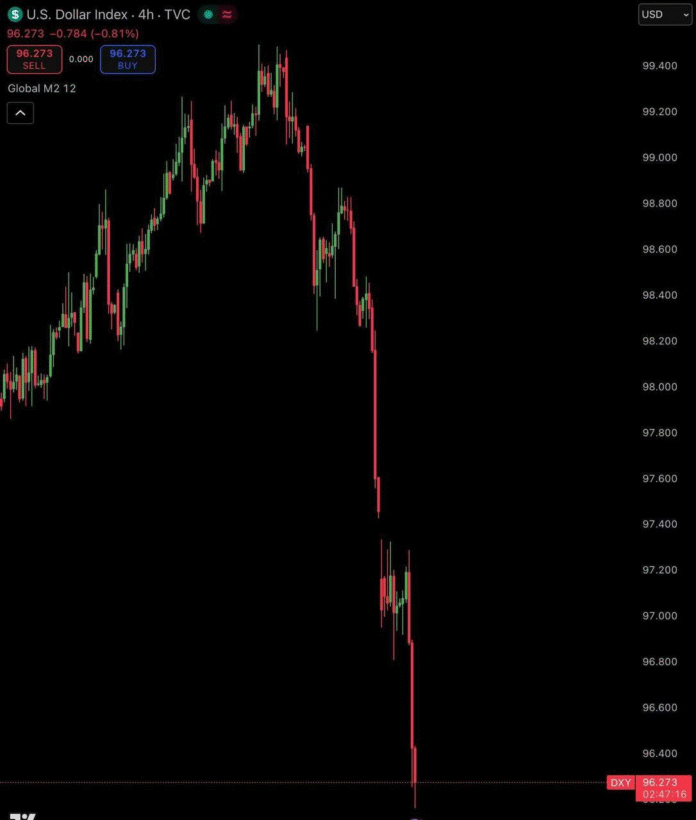
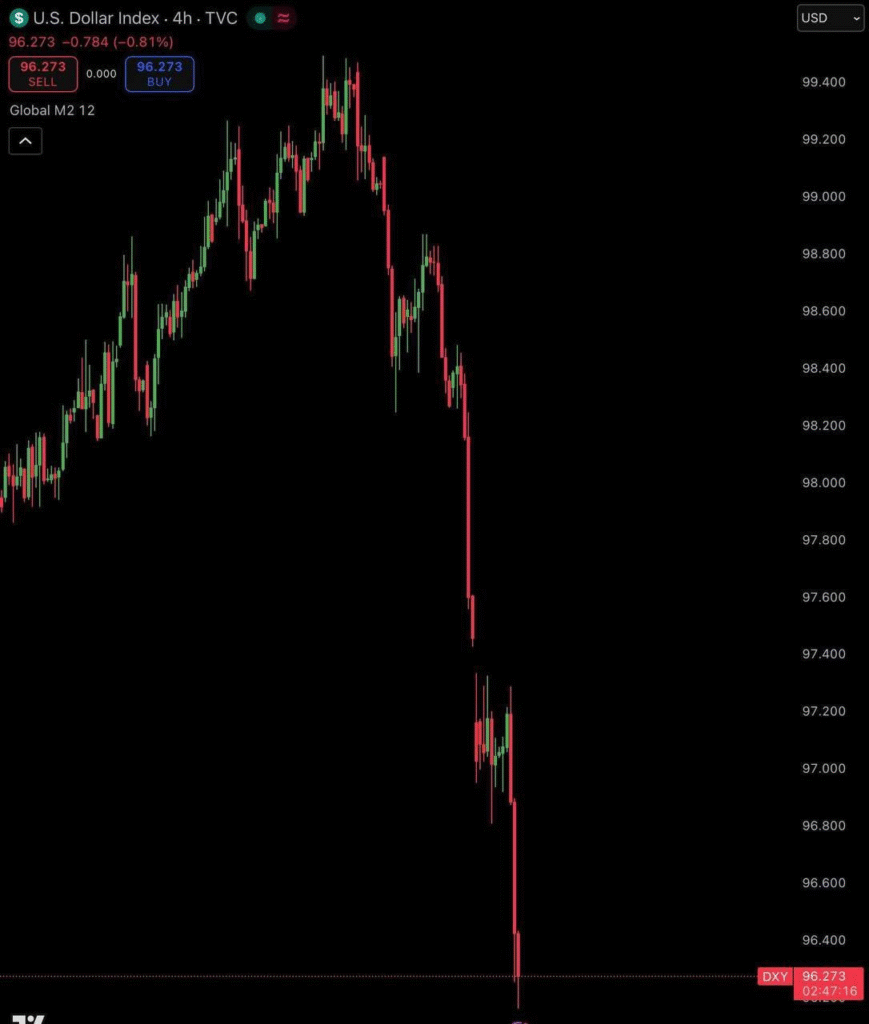
The U.S. dollar fell to a four-year low on Tuesday after remarks by President Donald Trump were interpreted by markets as tacit approval of a weaker currency. The decline reflects growing investor unease over rising trade tensions, political uncertainty, and concerns about the independence of U.S. monetary policy.

Dollar Slides to Four-Year Low After Trump Signals Comfort With Weakness

Trump remarks trigger fresh selling

The dollar extended recent losses after Trump described the currency’s value as “great” when asked whether it had fallen too much. The comments, made ahead of an economic speech in Iowa, were widely seen as signaling tolerance for further depreciation. Currency traders responded by accelerating dollar selling, pushing the U.S. Dollar Index down 1.4 percent to 95.77, its lowest level since February 2022.

Trade tensions and political risks weigh

Analysts said the dollar’s weakness stems from a combination of aggressive trade rhetoric and domestic political uncertainty. Trump has accused South Korea of failing to honor its trade commitments and announced plans to raise tariffs to 25 percent on South Korean imports, including automobiles, lumber, and pharmaceuticals. He has also threatened to impose a 100 percent tariff on Canadian goods if Ottawa proceeds with a trade agreement with China.

Meanwhile, partisan disputes in Washington over funding for the Department of Homeland Security have revived fears of another U.S. government shutdown, further denting investor confidence.

Federal Reserve independence under scrutiny

Concerns over the Federal Reserve’s autonomy have added to pressure on the dollar. Trump has repeatedly urged the central bank to cut interest rates and is expected to react negatively if policymakers keep rates unchanged at their ongoing meeting. Markets are also watching closely for any announcement regarding a successor to Federal Reserve Chair Jerome Powell, which could increase volatility if viewed as politically motivated.

Yen strengthens; dollar weakness broad-based

In global currency markets, attention has shifted to the Japanese yen, which strengthened sharply amid speculation of coordinated U.S.–Japan intervention. The yen traded near 152 per dollar after reports that the New York Federal Reserve checked dollar-yen rates with market participants.

The euro climbed above $1.20 for the first time since mid-2021, while sterling rose to its strongest level since September 2021, underscoring the broad-based nature of the dollar’s decline.

28 January, 127th Birth Anniversary Of Field Marshal K. M. Cariappa, India’s First Field Marshal And The Architect Of A Modern National Army

0

As India observes the birth anniversary of Field Marshal Kodandera Madappa Cariappa on 28 January, the nation remembers a leader whose vision went far beyond battlefield victories. Born in 1899 in Kodagu, Karnataka, Cariappa was not only India’s first Indian Commander-in-Chief but also the country’s first Field Marshal. His leadership laid the moral, structural and professional foundation of the Indian Army as it exists today.

Why Army Day is linked to Field Marshal Cariappa’s legacy

India celebrates Army Day every year on 15 January to mark a historic milestone in 1949, when General Cariappa took over as the first Indian Commander-in-Chief of the Indian Army from British General Sir Francis Butcher. This transfer of command symbolised India’s complete military independence, and the day continues to honour the values Cariappa stood for discipline, duty and national pride.

Rebuilding an army for a newly independent nation

After Independence, Cariappa faced the monumental task of transforming a colonial force into a national institution. He worked towards Indianising leadership roles, eliminating colonial-era hierarchies and instilling a sense of unity among troops drawn from diverse backgrounds. His insistence on professionalism and merit ensured that the army remained loyal to the Constitution rather than political interests.

28 January, 127th Birth Anniversary Of Field Marshal K. M. Cariappa, India’s First Field Marshal And The Architect Of A Modern National Army

Strategic importance during the 1947-48 Kashmir conflict

Cariappa played a significant role during the first India-Pakistan war over Jammu and Kashmir. As the General Officer Commanding the Western Command, he supervised critical military operations that helped secure large parts of the region for India. His calm, strategic approach during a period of uncertainty proved vital for the young nation’s territorial integrity.

Integrity that defined leadership beyond rank

One of the most powerful examples of Cariappa’s character came during the 1965 conflict, when his son was taken prisoner of war. When offered special treatment for his son, Cariappa firmly refused, stating that all soldiers were equal. This act reinforced the army’s core values of honour, fairness and duty above personal emotion.

What made India’s first Field Marshal truly exceptional

In 1986, Cariappa was awarded the rank of Field Marshal, becoming the first Indian officer to receive the honour. What set him apart was not just his rank, but his unwavering belief that the military must remain apolitical, disciplined and rooted in ethical leadership.

On his birth anniversary, Field Marshal K. M. Cariappa is remembered as more than a soldier he was a nation-builder whose principles continue to guide the Indian Army decades after his service.

Bollywood Actors Who Brought Real-Life Bravehearts To Life With Unforgettable Performances

0

Indian cinema has long played a vital role in retelling stories of courage, sacrifice and patriotism. From war heroes and intelligence officers to freedom fighters, several Bollywood actors have stepped into real-life roles that demanded not just physical transformation but emotional depth and historical responsibility. When done right, these films move beyond spectacle and become tributes to the nation’s bravehearts.

Vicky Kaushal’s evolution as a face of modern military cinema

Vicky Kaushal has emerged as one of the most reliable actors when it comes to portraying real-life heroes. In Uri: The Surgical Strike, he played Major Vihaan Singh Shergill, capturing the grit and strategic sharpness behind India’s 2016 surgical strike. His transformation into Field Marshal Sam Manekshaw in Sam Bahadur further proved his commitment, as the film carefully balanced military brilliance with personal charm, staying rooted in documented history.

Sidharth Malhotra’s emotionally grounded Captain Vikram Batra

Sidharth Malhotra’s portrayal of Captain Vikram Batra in Shershaah remains one of the most heartfelt depictions of a Kargil War hero. The film stayed close to real events, highlighting Batra’s courage, leadership and ultimate sacrifice. Malhotra’s restrained performance helped audiences connect deeply with the soldier’s journey rather than glorifying war.

Bollywood Actors Who Brought Real-Life Bravehearts To Life With Unforgettable Performances

Akshay Kumar’s repeated tributes to unsung heroes

Akshay Kumar has consistently headlined films inspired by true events. Kesari honoured the 21 Sikh soldiers of the Battle of Saragarhi, while Airlift depicted the daring evacuation of Indians from Kuwait during the Gulf War. His performances focused on leadership and resilience, ensuring the films remained respectful to historical realities.

Bollywood Actors Who Brought Real-Life Bravehearts To Life With Unforgettable Performances

Ajay Devgn, Sunny Deol and Hrithik Roshan in iconic war roles

Ajay Devgn’s Bhuj: The Pride of India highlighted the courage of IAF officers and civilian support during the 1971 war. Sunny Deol’s Border remains a timeless tribute to soldiers of the Longewala battle, while Hrithik Roshan’s Lakshya portrayed the transformation of an aimless youth into a disciplined army officer during the Kargil conflict, resonating strongly with audiences.

Bollywood Actors Who Brought Real-Life Bravehearts To Life With Unforgettable Performances

Female bravehearts and lesser-known stories on screen

Films like Gunjan Saxena: The Kargil Girl, starring Janhvi Kapoor, brought attention to India’s first female combat pilot in a war zone. Alia Bhatt’s Raazi portrayed an intelligence operative whose quiet courage proved as powerful as battlefield heroics.When cinema becomes historical responsibility. These performances show that when research, sensitivity and honesty guide storytelling, Bollywood can do justice to real events. By portraying bravehearts with dignity rather than exaggeration, these films preserve history and inspire generations beyond the screen.

Bollywood Actors Who Brought Real-Life Bravehearts To Life With Unforgettable Performances

French MPs Approve Social Media Ban For Children Under 15 Amid Online Safety Concerns

0

France has moved a step closer to restricting children’s access to social media after lawmakers in the country’s National Assembly approved a bill seeking to ban social media use for those below the age of 15. The proposed law aims to address growing concerns around the impact of excessive screen time, cyberbullying and algorithm-driven content on children’s mental health.

What the new French social media law proposes

The legislation would prohibit children under 15 from accessing social media platforms and interactive online services. If enacted, popular platforms such as Instagram, TikTok, Snapchat and Facebook would be required to block accounts belonging to underage users unless proper age verification is in place. The responsibility of enforcing the ban would largely fall on technology companies.

Why France is pushing for stricter online rules for children

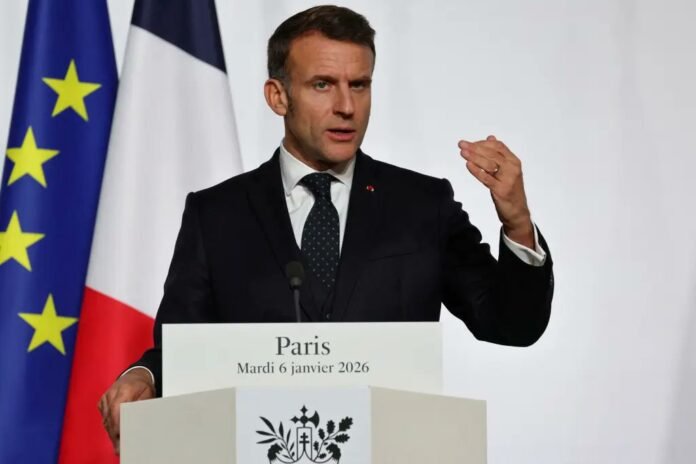
French lawmakers argue that social media platforms expose young users to harmful content, online harassment and addictive design features. President Emmanuel Macron has strongly backed the move, stating that children’s emotions should not be exploited by digital algorithms. The government believes early exposure to social media contributes to anxiety, low self-esteem and attention issues among adolescents.

Role of schools and smartphone restrictions

France already enforces restrictions on smartphone use in primary and middle schools. The new proposal seeks to strengthen this approach by extending limits to older students as well. Lawmakers believe reducing digital dependency within educational spaces can improve concentration, academic performance and social interaction among students.

French MPs Approve Social Media Ban For Children Under 15 Amid Online Safety Concerns
Age verification challenges for social media companies

A major aspect of the bill focuses on age verification mechanisms. Platforms would be required to introduce reliable systems to confirm users’ ages, a move that has sparked debate around privacy and data protection. Critics argue that enforcing such measures could be technically complex and raise concerns about collecting sensitive personal information.

Public support and global momentum

Public opinion in France largely supports the proposal, with many parents welcoming stronger protections for children online. The move also aligns with a growing international trend. Australia recently announced a ban on social media for users under 16, while several European nations and the UK are exploring similar regulations.

Debate over digital freedom and enforcement

Opponents of the bill caution that outright bans may push children towards unsafe online spaces or lead to widespread rule evasion. They stress the importance of parental guidance and digital literacy alongside regulation.The bill will now be debated in the French Senate. If approved, France could set a powerful precedent in the global conversation on child safety and social media regulation.

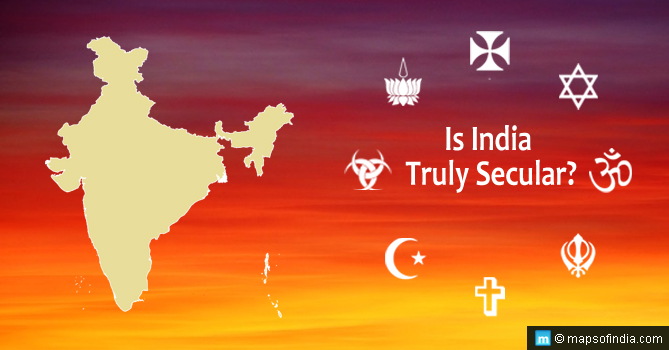
Is India Truly a Secular Nation? A Critical Inquiry into Constitutional Ideals and Social Realities

0

India identifies itself as a secular republic, with constitutional provisions designed to safeguard religious freedom and equality. However, the practical experience of citizens often reveals a significant disconnect between constitutional principles and societal behaviour. This paper critically examines the operationalisation of secularism in India, highlighting the contrast between legal frameworks and lived realities. Through selected examples—communal violence, caste-based discrimination, electoral use of religion, and housing discrimination—this analysis seeks to contextualise the challenges confronting Indian secularism in the post-independence period.

1. Introduction

Since gaining independence in 1947, India has projected itself as a pluralistic and secular state. The Constitution enshrines the principles of religious liberty, equality before law, and the non-establishment of any state religion. Yet, more than seventy-five years later, it is necessary to ask whether these ideals translate meaningfully into societal practices.

This paper explores the evolving nature of Indian secularism and assesses whether the lived experiences of citizens align with the constitutional vision.

2. Constitutional Framework of Secularism

India’s secularism differs fundamentally from the Western separationist model. Rather than enforcing strict separation between religion and the state, the Indian model promotes “principled equidistance”, allowing the state to intervene in religious matters to ensure social justice and equality.

Key constitutional provisions include:

Article 25–28: guarantee freedom of religion, religious practice, and propagation.

The Preamble: explicitly defines India as a secular republic.

Judicial interpretations: often reinforce the state’s duty to treat all religions impartially.

Thus, at the normative level, secularism forms a core component of India’s democratic identity.

3. Tensions Between Ideals and Social Behaviour

Despite strong constitutional foundations, the practical functioning of secularism remains inconsistent. Religious and caste-based identities continue to influence social relationships, political mobilisation, and public discourse.

The persistence of these divisions reveals that secularism in India is not merely a legal issue but a deeply social and cultural challenge.

4. Case Studies Illustrating Secularism’s Limitations

4.1 Communal Riots

Episodes of communal violence, including the 1984 anti-Sikh riots, the 1992–93 post-Babri riots, and the 2002 Gujarat riots, expose the fragility of inter-religious harmony. These events demonstrate that communal polarisation can override constitutional guarantees, leading to significant human and material losses.

Such recurring incidents reflect a societal vulnerability to identity-based mobilisation.

4.2 Caste-Based Discrimination

Despite constitutional safeguards, caste remains a powerful determinant of social hierarchy and discrimination.

Instances of untouchability, social exclusion, violence related to inter-caste unions, and educational or workplace biases illustrate the enduring influence of caste structures.

This shows that secularism cannot be fully realised without dismantling entrenched caste-based prejudices.

4.3 Religion in Electoral Politics

Political actors frequently invoke religious imagery, rhetoric, and symbolism during electoral campaigns.

This instrumentalisation of religion for political gain undermines the secular basis of democracy and intensifies communal divisions.

The practice blurs the distinction between political legitimacy and religious identity, challenging the neutrality expected of a secular state.

4.4 Housing Discrimination

Perhaps one of the most subtle yet pervasive manifestations of weakened secular values is housing discrimination.

Empirical observations indicate that individuals from certain religious groups or castes—such as Muslims, Dalits, or interfaith couples—often face difficulty securing rental accommodation.

These discriminatory practices, though less visible than communal violence, reveal systemic biases embedded within everyday social interactions.

5. Factors Contributing to the Persistence of Non-Secular Practices

5.1 Historical Legacies

India’s deeply layered religious and caste structures have persisted for centuries. Legal reforms alone cannot instantly reshape social consciousness.

5.2 Political Incentives

Electoral reliance on religious identity creates a conducive environment for communal politics, thereby weakening secular principles.

5.3 Social Misinterpretation of Secularism

Secularism is often misunderstood as being anti-religion or minority-centric, contributing to resistance and miscommunication.

5.4 Socio-Economic Inequalities

Economic insecurity, limited educational access, and lack of awareness make individuals more susceptible to divisive narratives.

6. Discussion

The evidence suggests that India functions as a secular state in its constitutional design, yet often falls short in its societal implementation.

Secularism in India operates within a complex intersection of law, identity, and politics. While the judiciary and constitutional framework uphold secularism, societal practices often challenge it.

The contrast between principle and practice underscores the need for a more robust engagement with secular values at the cultural and educational levels.7. Conclusion

India’s commitment to secularism remains constitutionally intact, but its realisation in everyday life is uneven and incomplete.

While the state continues to affirm its secular identity, social behaviour frequently reflects religious and caste-based biases.

The future of Indian secularism depends not only on legal safeguards but on the collective willingness of citizens to engage with diversity, challenge prejudice, and uphold the dignity of all communities.

Thus, India may be described as secular in principle, yet still evolving towards secularism in practice. Achieving true secularism requires ongoing social reform, political responsibility, and a sustained commitment to equality.

(The article has been written by Soniya yadav, a student of Kanoria Mahila Mahavidyalaya, Jaipur)


How USS Abraham Lincoln is navigating the Arabian Sea without GPS or radar

0
How USS Abraham Lincoln is navigating the Arabian Sea without GPS or radar

In an era dominated by satellite navigation and advanced radar systems, the US Navy’s nuclear-powered aircraft carrier USS Abraham Lincoln has reportedly adopted an old-school approach while operating in the Arabian Sea. The carrier strike group is navigating without active GPS or radar, relying instead on traditional navigation techniques to avoid electronic detection in a highly sensitive maritime zone.

Why USS Abraham Lincoln is avoiding GPS in the Arabian Sea

Modern naval ships depend heavily on GPS for precise positioning. However, GPS signals can be jammed, spoofed or manipulated, especially in regions where electronic warfare capabilities are actively deployed. In contested waters like the Arabian Sea, constant GPS use can expose a ship’s location to adversaries. By switching off these systems, the USS Abraham Lincoln significantly reduces its electronic footprint.

Celestial navigation techniques used by US Navy warships

To maintain course without satellite assistance, the carrier is reportedly using celestial navigation. This centuries-old method calculates a vessel’s position by observing celestial bodies such as the sun, moon and stars. Using sextants and manual calculations, trained naval officers can determine latitude and longitude with surprising accuracy. The technique remains reliable even when modern systems fail or are deliberately disabled.

How dead reckoning supports navigation without radar

When celestial observation is not possible due to weather conditions, the crew relies on dead reckoning. This method estimates the ship’s position based on speed, direction and time travelled, while factoring in wind and ocean currents. Though less precise over long distances, dead reckoning is effective for short-term navigation and serves as a crucial backup in radar-free operations.

Emission control strategy to avoid enemy surveillance

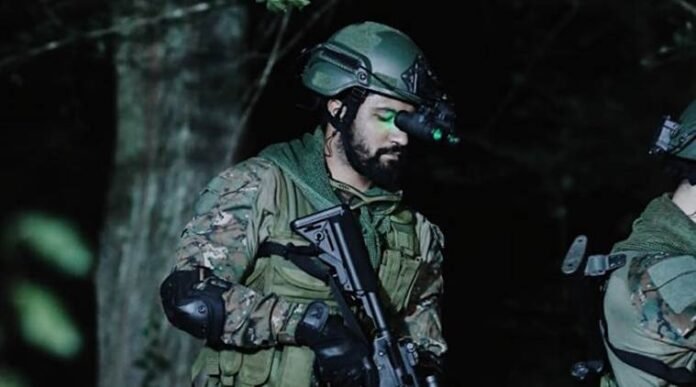
The USS Abraham Lincoln is believed to be operating under strict emission control protocols, often referred to as Ghost Mode. Radar systems, GPS transmitters and automatic identification signals are switched off to prevent detection by hostile surveillance systems. Instead, visual lookouts equipped with night-vision devices and coordination with escort vessels ensure situational awareness.

Why electronic warfare threats are reshaping naval operations

The move reflects growing concerns over electronic warfare in strategic sea routes. The Arabian Sea lies within a region of heightened geopolitical tension, where signal interference has become increasingly common. The US Navy has been re-emphasising traditional navigation training in recent years to prepare crews for such scenarios.

Old navigation skills proving vital in modern warfare

While the US Navy has not officially detailed the operation, the reported strategy highlights a key reality of modern military operations. Even the most advanced warships must be prepared to operate without digital systems. By blending traditional seamanship with modern firepower, the USS Abraham Lincoln showcases adaptability as a critical strength in contemporary naval warfare.