Home Blog Page 590

The Largest Tribal Fair Taking Place From 20th Feb

0

The Baneshwar Fair spans five days, commencing on Shukla Ekadashi of the Magh month in the Hindu calendar. This year it is taking place from 20th Feb – 24th Feb, 2024.

This distinctive and largest tribal fair in the country, held annually in Dungarpur, Rajasthan, draws in numerous devotees.

The fair derives its name from the sacred Shiva Linga situated in the Shiv temple of Dungarpur. In the local Vagdi language, ‘Baneshwar’ translates to ‘master of delta.’Located at the delta formed by the rivers Mahi and Som, the fair extends until Shukla Purnima of the Magh month. Baneshwar is located 24 kilometres away from Aspur, within the Dungarpur district.

The Baneshwar Fair intertwines two distinct events. One fair is dedicated to honouring Lord Shiva, referred to as Baneshwar Mahadev. Simultaneously, another fair marks the completion of the Vishnu temple construction, undertaken by Jankunwar, the daughter-in-law of Saint Mavji.The Mathadish, or head priest, arrives at the fair site in a grand procession from Sabha, taking a ceremonial dip in the river. Subsequently, an aarti ceremony is conducted for the Mathadish, followed by the reenactment of Raslila during the night at the Lakshmi Narayana temple.

The predominant assembly at the fair comprises Bhils and tribal communities from Dungarpur, Udaipur, and Banswara. Renowned for its widespread popularity, the fair is organised on a grand scale. The idols’ pran-pratishtha ceremony at the temple occurred on Magh Shukla Ekadashi, and since then, an annual fair has been held to commemorate this auspicious event.

Overview and History

Initially, two separate fairs were conducted—one venerating Lord Shiva and the other Saint Mavji, perceived as an incarnation of Lord Vishnu. Presently, a unified fair prevails, where tribal communities, especially the Bhils, pay homage to both deities. This popular event unfolds at the delta formed by the confluence of the Som and Mahi rivers, occurring every February and spanning five days annually.

Celebration

During the festival, ritualistic practices involve applying saffron to the Shiv Linga in the morning and Bhabhut (Ash) in the evening at the Baneshwar Mahadev temple. Aarti ceremonies are conducted at both intervals, accompanied by the resonating sound of a brass gong. Devotees present offerings such as flour, wheat, salt, chillies, coconut, and other auspicious items for prayer. Additionally, a highly revered priest known as the Mathadhish bathes in the holy water, and it is believed that the touch of Mathadhish purifies the water, prompting commoners to take a dip with profound faith.

Trilok Teerth Dham- A Jewel of Jain Architecture

0
Trilok Teerth Dham

Apeksha Agarwal

Uttar Pradesh, known for its rich cultural heritage and architectural wonders, boasts one of the nation’s most renowned Jain temples, Trilok Teerth Dham. Situated in the quaint village of Bada Gaon, Baghpat, this temple stands as a testament to the intricate craftsmanship and spiritual significance embedded in Jain architecture.

Trilok Teerth Dham, a sanctuary for followers of Jainism, captivates visitors with its distinctive architectural style and serene ambiance. Nestled amidst the verdant landscapes of Uttar Pradesh, this temple serves as a spiritual oasis for devotees seeking solace and enlightenment.

Architecture

The architecture of Trilok Teerth Dham is a captivating blend of influences from the Mughal and Sultanate eras, reflecting the diverse cultural landscape of India’s history. Rising majestically to a height of 317 feet, the temple commands attention with its imposing presence. At its pinnacle sits the idol of Rishabhnath, a revered figure in Jainism, crafted from ashtadhatu and seated in a meditative lotus position.

This unique temple embodies the essence of Jain beliefs, with its design intricately fashioned in the shape of the Jain emblem. Its structure, mirroring the concept of Trilok – the three realms of existence according to Jain philosophy (Adholok, Madhyalok, and Urdhvalok), offers a spiritual journey through its architectural symbolism.

Trilok Teerth Dham is not merely a temple; it is a multi-faceted complex designed to cater to the diverse needs of its visitors. With its 16 stories, it offers a myriad of facilities within its sprawling campus, including a library, hospital, mess, goshala (cow shelter), and more. The temple’s commitment to holistic well-being extends to the presence of a meditation center, providing seekers with a tranquil space for introspection and spiritual growth.

Within the temple premises, several sacred sites beckon devotees and tourists alike. The Samavasarana, Nandishwar Dweep, Trikaal Chaubisi, Meru Temple, Lotus Temple, Parshvanath Temple, and Jambudweep each hold their own significance, adding layers of spiritual depth to the experience. To enhance the allure of Trilok Teerth Dham, light and sound shows are organized, drawing in crowds to witness the temple’s magnificence illuminated in a mesmerizing spectacle.

Jaisalmer Desert Festival 2024 from February 22nd to February 24th

0
Jaisalmer Desert Festival

Jaisalmer Desert Festival, also known as Maru Mahotsav, stands as a vibrant testament to the rich cultural tapestry of Rajasthan, the land of kings and queens. Celebrated annually in the mesmerizing Thar Desert, this three-day extravaganza known as Jaisalmer Winter Festival takes place on the glittery sands of the Sam Sand Dunes, just 42 kilometers from the majestic city of Jaisalmer.

The festival, typically held in February, transforms the desert into a cultural spectacle, showcasing traditional Rajasthani performances, competitions, and activities. Turban-tying contests, puppet shows, fire dances, camel beauty contests, and thrilling camel races are just a glimpse of the diverse events that unfold during this celebration. The Jaisalmer Mela also features a traditional fair where visitors can immerse themselves in the allure of handicrafts, textiles, and ornaments.

The heartbeat of the festival is the enchanting local folk music and dances, a kaleidoscope of colors and rhythms that encapsulate the essence of Rajasthan’s cultural richness. The Jaisalmer Rann Utsav, with its blend of local customs and contemporary performances, offers a unique and unforgettable experience that attracts visitors from all corners of the globe.

The roots of the Jaisalmer Desert Festival trace back to 1156 AD when Raja Jaisal, a Rajput king from the Bhati dynasty, initiated the celebration. Today, the Rajasthan Tourism Department organizes the festival, drawing in crowds from across the world. Held in February around the full moon day of the Hindu calendar month of Magh, the Maru Mahotsav has evolved into one of Rajasthan’s most cherished cultural events.

The festival’s celebrations are a dynamic mix of traditional music and dance performances, camel races, turban-tying competitions, puppet shows, and even paragliding. The festival’s hallmark remains the camel race, a thrilling spectacle of these majestic creatures sprinting across the desert landscape. The turban-tying competition adds a touch of cultural flair, with participants competing to create the most exquisite turbans within a set timeframe.

The Maru Mahotsav also offers a plethora of attractions, from heritage walks and Deepdaan ceremonies to Rangoli & Mandna wall paintings. Visitors can relish the desert symphony, a mesmerizing display of local artists and musical evenings, culminating in a breathtaking fireworks display.

Beyond the festival grounds, visitors can indulge in various activities during their stay in Jaisalmer. Camel polo matches, cultural performances, and the exploration of local delicacies such as dal bati churma, ker sangri, and lassi are must-try experiences. The festival also features an array of handicraft stalls, allowing visitors to purchase traditional Rajasthani souvenirs.

Jaisalmer, with its iconic attractions like Jaisalmer Fort, Nathmal Ji Ki Haveli, and Gadisar Lake, provides a picturesque backdrop to the festival. Travel to Jaisalmer is accessible by air, with the nearest airport in Jodhpur, approximately 300 km away. The city also boasts its own well-connected railway station and a robust road network linking it to major cities in Rajasthan.

In 2024, the Maru Mahotsav is scheduled from February 22nd to February 24th, taking place at the Sam Sand Dunes, just 42 km from Jaisalmer. This edition promises to be a captivating celebration of Rajasthan’s cultural heritage, inviting visitors to immerse themselves in the grandeur of the desert landscape and the vibrant traditions of the region. In conclusion, the Jaisalmer Desert Festival is not just an event; it’s an invitation to witness the soul-stirring essence of Rajasthan, where history, culture, and festivities converge in a mesmerizing display.

Full Story of Sandipani Ashram- Ujjain Visit

0
Sandipani Ashram

Aishwarya Chouhan

Sandipani Ashram holds an important place in Indian culture and spirituality. Located in Ujjain, Madhya Pradesh, it is believed to be the place where Lord Krishna along with his childhood friend Sudama received education from Guru Sandipani. The Ashram stands as a symbol of traditional Indian education and spiritual learning. Established thousands of years ago, it still attracts devotees and seekers from all over the world who come to immerse themselves in its serene atmosphere and teachings.

During Lord Krishna’s education at Sandipani Ashram, he and his friend Sudama were taught various subjects by Guru Sandipani. These topics include a wide range of traditional Indian knowledge and skills:

Education at Sandipani Ashram was holistic, aiming to develop not only intellectual abilities but also the spiritual, moral and practical skills necessary to live a fulfilling life according to Hindu principles.

14 types of knowledge were taught in Sandipani Ashram. Which included Vedas and Vedangas. Vedas include 4 types of Vedas like Rigveda, Yajurveda, Samaveda, Atharvaveda.

Vedanga means “parts of the Veda”, which are as follows:-

1) Teaching:- Sandipani shows the pronunciation points of throat, nose, mouth etc. using his finger.

2. Chandashastra:- Sandipani explains by carving small Guru symbols on clay in front of Shri Krishna, Sudama, Balram.

3. Grammar:- Explaining Vyakaran Sutra and Maheshwar Sutra by Sandipani.

4. Nirukta (Etymology): Sandipani teaches invocation from the symbols of sky and sky deities, water, fire, air, sun.

5) Astronomy:- Showing new planets with one hand and counting them with the other hand.

6) Kalpa:- Method of ritual: Preparing the altar for Yagya.

Similarly, explaining the details of Manusmriti through Dharmashastra, mythological stories, logic, and review etc. are said to be the parts of Vedas, which were taught in the Ashram.

Ayurveda is called Ashtanga – eight limbs. If we talk in today’s language, then Pediatrics, Surgery, Toxicology, General Practice, Ophthalmology, Rasayan Tantra, Vajikaran (special field of reproductive system), Graha Chikitsa (how the invisible forces of the planets affect the body).

Apart from this, there is also a description of 64 skills in Sandipani Ashram which were included in the curriculum of that time.

Art means skill and attributes. A normal person has 5 skills. Shri Krishna had 16 skills.

Shri Krishna learned 64 skills in 64 days from his guru Maharishi Sandipani. Apart from this, he had acquired the knowledge of 4 Vedas in 4 days, 6 Shastras in 6 days, 16 Vidhyas in 16 days, 18 Puranas in 18 days and Geeta in 20 days.

Along with this, Lord Shri Krishna studied 64 arts, which include dance, theater arts, singing, playing musical instruments, painting, making puja gifts from vines, rice and flowers, making flower beds, making clothes and courtyards. Painting, making floors of gems, making beds, taming water, making clothes and jewellery, decorating with flower ornaments, making fragrances, perfumes, oils, magic, making desired disguises.

Apart from this, showing strange achievements, making necklaces, making ear and pointed flower ornaments, making various dishes, making beverages, making puppets, making puzzles, making sculptures, diplomacy, teaching strategies, drama composition, problem solving, bandage, bell. , arrow making, carpet making, carpentry workmanship, examining metals like gold and silver and gems like diamonds and emeralds, making gold and silver, recognizing the colors of gems.

Also, method of fighting with sheep, cock, quail etc., identification of mines, treatment of trees, speaking dialects of parrot-myna etc., method of pronunciation, skill of cleaning hair, knowing the mind, recognizing bad omens, answering questions. Telling good fortune by giving answers, making various types of Matrikantra, carving gems, making sign language, knowledge of all the treasures, deceitful work, gambling, attracting people or things from far away, method to control Betal. Is.

In the ashram of Maharishi Sandipani in Avantikapuri, where Shri Krishna got acquainted with the deep secrets of life, he also received education in politics and the state religion of monarchy. He did world welfare by using the knowledge gained from Mahakaleshwar city. The fragrance of rare memories of Yogeshwar Shri Krishna is present in every corner of Ujjain city situated on the banks of Punyasalila Shipra.

India was so civilized 5500 years ago and even before that that even today’s technology cannot compete with the instruments and knowledge of that time.

If we talk about India of 602-664 AD, then in Nalanda alone there were 10000 students and more than 3000 professors. Apart from his residence, the complex contained 10 temples, meditation halls, gardens, small lakes, and several ponds. 64 subjects were taught in Nalanda. Students go to distant countries like Iran, Turkey, Greece, Japan, Korea, Thailand, Indonesia, China and Tibet to gain knowledge of various subjects like Astronomy, Medicine, Surgery, Maths, Metallurgy, War Science, Language, Grammar, Music, Yoga, Spirituality, Politics etc. Came from. There were 90 lakh manuscripts.

There were many world class education centers spread all over India. Vikram Sheela of Magadha, Vallabhi of Saurashtra, Pushpagiri of Kalinga, Sharad Peeth of Kashmir, Nagarjunkonda of Andhra, Kanchipuram of Tamil Nadu, Manikhet of Karnataka etc. which are lost in time.


Drivers won’t have to stop at Toll Booths Anymore!

0

Monalika Medatwal

In a bid to modernize transportation infrastructure and streamline toll collection processes, India is embracing satellite-based toll systems. These innovative systems leverage satellite technology to enable efficient and hassle-free toll collection on highways and expressways across the country. Traditionally, toll collection in India has been plagued by long queues, delays, and revenue leakage due to manual collection processes. However, the introduction of satellite-based toll systems promises to revolutionize this aspect of transportation. By integrating satellite positioning technology with electronic toll collection (ETC) systems, vehicles equipped with RFID tags can seamlessly pass through toll booths without the need to stop or pay cash.

One of the primary benefits of satellite-based toll systems is the reduction in travel time and congestion. With vehicles able to pass through toll plazas without stopping, traffic flow is significantly improved, leading to smoother journeys and reduced fuel consumption. Moreover, the elimination of manual toll collection reduces the risk of human error and corruption, ensuring accurate revenue collection for infrastructure maintenance and development.

Additionally, satellite-based toll systems enhance convenience and accessibility for commuters. Drivers no longer need to carry cash or wait in long queues to pay tolls, making travel more convenient and efficient. Furthermore, these systems promote digital transactions, aligning with India’s broader goal of fostering a cashless economy.From a logistical standpoint, satellite-based toll systems offer scalability and flexibility. They can be easily deployed across various toll plazas, highways, and expressways, providing a standardized toll collection mechanism nationwide. Moreover, these systems can be integrated with existing transportation management systems, enabling real-time monitoring and data analytics for better decision-making and planning.

While satellite-based toll systems represent a significant advancement in transportation technology, their successful implementation requires robust infrastructure, regulatory support, and public awareness campaigns. As India continues to invest in its transportation infrastructure and embrace digital innovation, satellite-based toll systems are poised to play a pivotal role in shaping the future of transportation in the country.

Nagaur Cattle Fair: Tradition and Trade

0

Rajasthan, in northwest India, boasts a rich cultural heritage and hosts a variety of festivals. Among them, the Nagaur Cattle Fair in the town between Jodhpur and Bikaner stands out.

This significant event, held annually in January and February, draws numerous visitors nationally and internationally. This year it is celebrated from 15th – 18th February, 2024.

Farmers and livestock traders convene to engage in buying and selling a diverse range of animals, including cows, bullocks, bulls, camels, horses, and goats. The fair is a vibrant showcase of Rajasthan’s agricultural and cultural vitality.

Beyond being a bustling marketplace, the Nagaur Cattle Fair is a jubilant tribute to Rajasthan’s dynamic culture and heritage. The event features traditional performances like kuchamani khyal, cultural activities, and sports such as camel and horse races, acrobatics, turban tying competitions, and cultural contests. Enriching the experience are storytellers, jugglers, puppeteers, and more. Tourists can explore the mirchi bazaar, offering iron crafts and camel leather accessories, adding a diverse and vibrant dimension to the fair’s festive atmosphere.

The Nagaur Cattle Fair holds great importance for Rajasthan’s residents, providing farmers with a platform to sell livestock and sustain their livelihoods. Beyond economic aspects, it plays a vital role in preserving the traditional way of life and supporting the region’s cattle industry. This renowned fair serves as a communal gathering, fostering interaction and facilitating not only transactions but also the exchange of cultural and personal experiences among people from various parts of the nation. A unique and exciting event, the Nagaur Cattle Fair is an opportunity not to be missed, embodying the spirit of Rajasthan’s vibrant cultural tapestry.

History

The Nagaur Cattle Fair, also recognized as Ramdeoji Cattle Fair, is an annual event in the town of Nagaur, Rajasthan. Initiated approximately 55 years ago by King Umed Singh, who invited the renowned saint Shri Ramdeoji to showcase his powers, this festival has a rich history spanning over 1,000 years. Taking place in the Hindu month of Magha (January-February), the fair continues to draw thousands of visitors from across the country, making it a significant and enduring cultural tradition in the region.

How is it celebrated?

Spanning four days, the Nagaur Cattle Fair is a prominent and widely attended event, ranking among the largest in the country. Hosted annually in the charming Rajput town of Nagaur, the fair becomes a bustling marketplace for the trade of various animals, from cows and horses to bulls, goats, and camels. The vibrant atmosphere is accentuated by the adorned animals, featuring intricate designs and patterns crafted with paint, beads, and other materials. This visual spectacle enhances the overall festive ambiance of the Nagaur Cattle Fair.

Alongside the bustling livestock trading, the Nagaur Cattle Fair buzzes with diverse activities such as traditional dances, musical performances, and cultural demonstrations. The fairgrounds host stalls showcasing local handicrafts, tempting treats, and an array of items for visitors to explore and enjoy. This multifaceted event seamlessly blends commerce with cultural richness, making the Nagaur Cattle Fair a vibrant celebration of tradition, arts, and community.

Drawing visitors from across the nation and around the globe, the Nagaur Cattle Fair stands as a major attraction for both locals and international tourists. It serves as a unique celebration, spotlighting the rich cultural heritage of the region. Beyond commerce, the fair becomes a unifying platform for people to come together, emphasizing the significance of livestock in their daily lives and creating a shared experience that transcends boundaries.

Looking Into Spiritual Depths | Gumi Kund, Ujjain

0
Gumti Kund,Ujjain

-Mitali Mishra 

What is Gomti Kund? 

Once, in the ashram of Maharishi Sandeepani, there was a beautiful pond known as Gumti Kund. Lord Shri Krishna himself established it. One day, Lord Shri Krishna observed that Maharishi Sandeepani went to perform various morning rituals, including bathing in the Gomti River using his yogic powers. Lord Shri Krishna felt distressed seeing his guru having to travel such a distance every day for bathing. He requested Maharishi Sandeepani to explain the reason for his distant bathing ritual. Maharishi Sandeepani explained that since his childhood, he had grown up near the banks of the Gomti River by the grace of his gurus. He received his desired abilities through their blessings and hence, it became his custom to bathe in the waters of Gomti Maya every morning. 

Lord Shri Krishna offered to manifest the waters of Gomti Maya there itself through his grace and blessings, sparing Maharishi Sandeepani the need to travel. Initially sceptical, Maharishi Sandeepani agreed to Lord Shri Krishna’s proposal. After bathing in the Gomti River, Maharishi Sandeepani left his water pot and wooden sandals at the riverbank and returned to his ashram. Lord Shri Krishna, awaiting his return, greeted him with reverence and then invoked the presence of Gomti Maya’s waters. He shot an arrow so swiftly that it pierced through the Earth to the netherworld, creating a massive chasm resembling a cow’s mouth, from which a stream of water flowed. This stream gradually formed a large reservoir, later known as Gumti Kund. 

Upon seeing the miraculous transformation, Maharishi Sandeepani realised the sanctity of Gomti Maya’s waters. Since then, he revered Lord Shri Krishna and Lord Shiva inwardly, acknowledging their blessings. The spot where Lord Shri Krishna used to wash his angavastram and where his footprints naturally appeared on a stone slab still exists in Gumti Kund. This legendary site is where Maharishi Sandeepani and Lord Shri Krishna used to meditate together. 

Architectural Beauty 

The architecture surrounding the Kund reflects the rich cultural heritage of Ujjain, with intricate carvings and sculptures adorning its periphery. Devotees often offer prayers and light lamps around its serene banks, creating an aura of spirituality and reverence. The structures surrounding the Kund often include pavilions, known as mandapas, where devotees can sit and meditate, seek blessings from priests, or participate in religious ceremonies. These mandapas are adorned with elaborate pillars, domes, and arches, showcasing the architectural prowess of ancient artisans. 

The Serenity 

It’s a serene spot where people gather to establish a connection with something greater than themselves; it’s not just any pond. 

With the passage of time, Gumti Kund has stood vigilant over the city for ages. It is more than just a body of water; it is a haven of calm and understanding as well as a symbol of faith.

The ability of Gumti Kund to unite people is what makes it unique. When you visit Gumti Kund, you feel that you’re a part of something bigger, regardless of who you are or where you’re from. It serves as a reminder that everyone in this vast planet is connected. It seems as though time slows down at Gumti Kund. You can pause to reflect on life, ponder the secrets of the cosmos, and experience a greater sense of divine connection. But Gumti Kund is more than just a location—it’s a place brimming with legends and recollections. Every ripple in the water represents a person who has found serenity or a sense of community. 

It serves as a reminder that there is always somewhere to turn for comfort and hope, regardless of the difficulties we encounter. 

The Visit Guide 

Located in Ujjain, Madhya Pradesh, it’s accessible by road, rail, or air. Indore Airport is the nearest, about 55 km away, with taxis and buses readily available. From Ujjain Railway Station, it’s a short drive. Numerous accommodations are available in Ujjain for a convenient stay. Timing and transport options ensure a hassle-free visit to the sacred Gomti Kund. 

The best time to visit the Gumti Kund in Ujjain is during the Kumbh Mela, which occurs every 12 years, attracting millions of pilgrims. Other auspicious times include major Hindu festivals like Mahashivaratri and Navratri. Cooler months, from October to March, offer more comfortable weather for sightseeing. These times provide an opportunity to experience the spiritual ambiance and vibrant atmosphere surrounding the Kund. Ultimately, the choice depends on personal preferences, but attending during festivals or the Kumbh Mela ensures an unforgettable experience of devotion and cultural richness.

Amer Kunda Craft Village- A New Place to Explore in Jaipur

0
Amer Kunda Craft Village

Monalika Medatwal

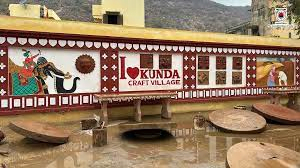
Amer Kunda craft village, located near Jaipur in the state of Rajasthan, has a rich history deeply rooted in traditional craftsmanship. The village is renowned for its skilled artisans who have been practicing their crafts for generations.

The history of Amer Kunda dates back centuries, to the time when the Amer Fort, one of Jaipur’s most iconic landmarks, was constructed by Raja Man Singh I in the late 16th century. The artisans who worked on the fort settled in the surrounding areas, including Amer Kunda, and began practicing their crafts, passing down their knowledge and skills from one generation to the next.

Over time, the village became known for its exquisite handicrafts, including block printing, pottery, jewelry making, and textile weaving. These crafts flourished under the patronage of the royal families of Rajasthan, who valued and supported the artisans’ work.

During the British colonial period, the Amer Kunda artisans faced challenges as industrialization and modernization began to impact traditional craftsmanship. However, the artisans persevered, adapting their techniques to meet changing market demands while still preserving the authenticity of their crafts.

 Present Day -In recent decades, with renewed interest in traditional Indian handicrafts both domestically and internationally, Amer Kunda has experienced a revival. Artisans continue to produce high-quality handmade products that showcase the rich cultural heritage of Rajasthan.

Today, Amer Kunda craft village attracts visitors from around the world who come to admire the artisans at work and purchase unique handmade items. The village serves as a testament to the enduring legacy of craftsmanship in Rajasthan and the importance of preserving traditional arts and culture.

Popular things at Amer Kunda craft village for visitors- Among its most famous offerings are exquisite block-printed textiles, intricately crafted pottery, dazzling jewelry, and finely woven textiles. These artisanal creations showcase the rich cultural heritage of Rajasthan, characterized by bold colors, intricate designs, and skilled craftsmanship passed down through generations. Visitors to Amer Kunda can explore bustling markets filled with these unique handmade treasures, offering a glimpse into the timeless traditions of the region. With its remarkable craftsmanship and cultural significance, Amer Kunda craft village stands as a testament to Rajasthan’s enduring artistic legacy.

Rajasthan’s Architectural Gem: Doodh Talai Musical Garden

0

The perfect holiday destination varies for everyone; some seek tranquillity, others crave nature or music. Imagine a place where calmness fills the air, water brings serenity, nature surrounds you, and music sets the rhythm – Dudh Talai Musical Garden offers this unique experience.

Dudh Talai Musical Garden, crafted by the Urban Development Trust of Udaipur, is a captivating rock and musical fountain garden providing breathtaking city views. Witness the mesmerizing sunset and the beauty of Lake Pichola, enhancing your cherished experience. Situated near Maharana Fateh Singh’s residence, Shiva Niwas Palace, it offers a blend of scenic charm and cultural richness.

Architecture

Dudh Talai Musical Garden stands as a striking example of modern architecture in Rajasthan, nestled amidst small hillocks. This stunning attraction is part of Dudh Talai Lake, sharing a common link road with Manikya Lal Verma Garden, Pandit Deendayal Upadhyay Park, and Karni Mata Temple. Adjacent to Manikya Lal Verma Garden, the musical fountain within Pandit Deendayal Upadhyay Park, crafted by ‘Yagnik Mechanical Engineering Works,’ adds to the allure of this cultural and architectural marvel.

History

Dudh Talai Musical Garden, also known as Pandit Deendayal Upadhyay Park, holds the distinction of being the first garden in Rajasthan featuring a musical fountain. This fountain serves as a captivating source of entertainment, providing a visually delightful experience when accompanied by lights and music.

Entry fees and timings

Dudh Talai Musical Garden welcomes visitors every day from 9 AM to 10 PM. During the summer, the musical fountain operates at 7:00 PM, and in winter, it starts at 6:30 PM.

For entry, the fee for Indian adults is Rs. 20, and for children, it’s Rs. 10. Foreign citizens are charged Rs. 30 per person for admission.

Things to do at the Musical Garden

  • Dudh Talai Lake provides a diverse range of activities, including camel riding, savouring authentic Rajasthani cuisine, boating, and horse riding options.
  • Explore Manikya Lal Verma Garden, established in 1995, which conveniently connects to Dudh Talai Musical Garden and Karni Mata Temple through a link road.
  • Indulge in the joy of a ropeway ride, seamlessly connecting Pandit Deendayal Upadhyay Park to the Karni Mata Temple.

Knowing the Mystries of Bharthari Caves in Ujjain

0
Bhathari Cave

Khushi Sharma: Ujjain a city steeped deep into history and spirituality has been a destination for pilgrims and seekers of knowledge from a while ago. Nestled within this ancient city lies a hidden gem tucked away on the outskirts the Bharthari Caves, a site shrouded in mystery and allure. As a curious student, eager to explore the lesser-known facets of India’s cultural history I embarked on a journey to explore these caves. Intent is to unravel its hidden stories and discover the essence of ancient allure. 

Here I am going to unveil the mystery and take all of you on very interesting cave expedition full of astonishing facts and stories of the place.

 Arrival in Ujjain

Journey begins with the bustling streets of Ujjain, where the fragrance of incense sticks and sounds of temple bells filled the air. Known for rich cultural heritage and a significant pilgrimage site, Ujjain served as the perfect backdrop for the adventure. Now comes the time to set out towards heart of the city Bharthari Caves, located approximately 5 to 6 km from the city center.

Historical Background of Bharthari Caves

Before venturing into the heart of the city, it was essential to understand the historical significance of the Bharthari Caves. Named after the sage Bharthari, the caves are believed to have been his abode during period of self-imposed exile for 12 years. He retreated to these caves to pursue a life of asceticism and meditation. Bharthari was the younger brother of the renowned King Vikramaditya. He was a revered poet and philosopher. The evidence of human habitation has been found dating back to the 6th century BCE (Gupta period).

Bharthari, a revered figure in Indian literature, philosophy, and spirituality, left an indelible mark on these Caves. His renowned work, “Vairagya Shatak,” reflects the essence of renunciation and detachment, themes that perfectly resonate within the silent corridors of the caves.

Exploring the Caves

Upon reaching Bharthari it left me awe-struck. Situated amidst rocky terrain, the caves exuded an ancient charm that hinted at stories they held within. 

On approaching towards the entrance to Bharthari Caves, the air seemed to change, laden with a sense of mystery. Caves have been revered as sacred site by devotees and pilgrims. Pilgrims often visit the caves to pay homage to Bharthari and seek blessings for health, prosperity, and spiritual fulfillment. The place was full of devotees reached there with curiosity in their heart and sparkle of astonishment in their eyes after having the glimpse of caves. 

One of the striking features was the simplicity of the caves, in stark contrast to the ornate temples dotting landscape of Ujjain. The quietude within these rock walls served as reminder of the ascetic life that Bharthari is said to have led. These caves are divided into multiple chambers, each holding its own secrets and stories within them.

After navigating through the interconnected chambers, I couldn’t help but to appreciate marvel of timeless beauty encapsulated in these ancient rock-cut structures.

Mysteries Unveiled

After interacting with the locals knowing their stories and beliefs about the caves many mysterious things have come to my knowledge adding a good touch to exploration. Many shared anecdotes passed down through generations, highlighting the significance of various stories about Sage Bharthari and that place. 

Story of reason behind asceticism of Bharthari

There are many interesting stories about the asceticism of Bharthari. People say he had two wives but became enamoured with beautiful Pingala and married her. 

One day  Guru Gorakhnath reached court of Raja Bharthari was honoured in grand manner as per scriptural authorities. Pleased with his service, Guru offered him a fruit that when eaten will always keep young, youthful and virile.

Raja Bharthari at receiving divine fruit decided to give that to his lovely Pingala he wished her to always remain beautiful. Pingala had her heart on Kotwal (Chief guard) of kingdom which Bharthari was unaware of. She decided to give fruit to Kotwal thinking that he will continue to fulfil her desires for long time.

But Kotwal was in love with a prostitute and gave the fruit to her thinking that his wants and needs will be fulfilled by her. The prostitute thought that if she eat this fruit, the hellish existence that she lived in would haunt her forever and thought that king is the most deserving contender for this miraculous fruit as he would take care of all his subjects for a long time.

Prostitute surrendered the fruit to him. Raja was bewildered and asked how she came into possession of fruit. Once the mystery was unravelled, Raja realizing betrayal of his wife developed vairagya (dispassion) at once and handed over his entire kingdom to Vikramaditya.

He went away to do penance in cave on the banks of holy Kshipra river and it was here that the great king turned ascetic sat for tapaha for 12 years. Seeing the shakti (energy) of his tapas it is said that Indra, king of the Devas became fearful suspecting Bharthari wanting to snatch his title and kingdom. Indra used his thunderbolt to strike cave where sage was meditating causing stone to fall. Sage using his tapobala held stone in his hand

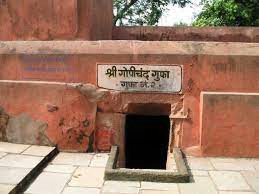
At end of cave is the statue of Bharthari and near the statue if looked carefully, is another cave that is believed to be the way to the Char Daams from here.

 Journey provided not only glimpse into past but also opportunity for self-reflection. It underscored the importance of preserving our cultural heritage and the need for continued exploration and documentation of such lesser-known sites.

Final Thoughts

My exploration of Bhartari Caves in Ujjain was a journey of self-discovery and cultural immersion. The ancient caves, with their historical significance and spiritual ambiance, offered a unique perspective on India’s rich tapestry of traditions. The experience served as a testament to the importance of unearthing and preserving these hidden gems that contribute to the mosaic of our cultural heritage. As I left Bhartari Caves, I carried with me not only memories of a captivating adventure but also a deepened appreciation for the historical treasures that lie scattered across the landscapes of India

Expedition into Ujjain, proved to be a transformative experience. From spiritual ambience to  encounters with locals and the quest for hidden truths, every aspect of the journey contributed to a deeper understanding of this historical site. The Bhartari Caves stand as a testament to the confluence of history, spirituality, and the enduring human quest for meaning.