Home Blog Page 589

Saudi Arabia To Launch Dream Of The Desert, The Middle East’s First Luxury Train

0
Saudi Arabia To Launch Dream Of The Desert, The Middle East’s First Luxury Train

Saudi Arabia is set to unveil a remarkable addition to the world of luxury travel with the launch of “Dream of the Desert,” the Middle East’s inaugural luxury train. This opulent journey is poised to rival iconic train experiences such as the Venice Simplon-Orient-Express and Africa’s Rovos Rail, marking a significant leap in the region’s tourism offerings.

Embarking on an 800-mile odyssey from the heart of Riyadh, the capital of Saudi Arabia, the Dream of the Desert will traverse northwest, unveiling a mesmerizing panorama of the country’s vast deserts and UNESCO World Heritage archaeological wonders. The meticulously curated route includes stops at Ha’il, the Al-Qassim province, and the awe-inspiring King Salman bin Abdulaziz Royal Natural Reserve in Al Jouf, culminating in the enchanting destination of Al-Qurayat near the Jordanian border. Adventurous travelers can choose between one or two-night excursions, immersing themselves in the rich cultural tapestry of Saudi Arabia.

This groundbreaking luxury train venture is a collaborative effort between the state-owned railway company Saudi Arabia Railways (SAR) and the esteemed Italian hospitality entity, the Arsenale Group. The partnership, valued at an impressive 200 million Saudi riyals ($53.32 million), reflects the commitment to creating an unparalleled travel experience. The Arsenale Group, renowned for its opulent portfolio including Soho House Roma, Hotel Santavenere Maratea, and the recently launched Orient Express La Dolce Vita train in Italy, brings its expertise to redefine travel through the Arabian deserts.

The Dream of the Desert is not merely a train journey; it is a symphony of luxury, comfort, and cultural exploration. Labeled as “luxury train cruising” by the Arsenale Group, passengers can anticipate a seamless blend of top-notch service, sumptuous amenities, and the chance to relish the timeless beauty of Saudi Arabia’s landscapes. As the train winds its way through the dunes and historical landmarks, travelers are in for an extraordinary odyssey, replete with captivating vistas and unforgettable moments.

With the Dream of the Desert, Saudi Arabia not only introduces a lavish travel experience but also positions itself as a premier destination for discerning global travelers seeking a harmonious blend of luxury and cultural immersion. As the wheels of this majestic train start turning, a new chapter in Middle Eastern luxury travel is about to be written, inviting travelers to embark on an enchanting sojourn through the mesmerizing landscapes of the Arabian Peninsula.

Katrina Kaif becomes the new face of CSK in IPL 2024

0

The IPL caravan is gearing up for its start in March, with franchise owners actively preparing for the upcoming season. In a groundbreaking move, CSK has enlisted the renowned Bollywood actress Katrina Kaif as their brand ambassador for the IPL 2024 season.

Chennai Super Kings (CSK) have created ripples in the cricketing sphere with their recent revelation. Bollywood luminary Katrina Kaif has officially joined the franchise as a brand ambassador for the upcoming Indian Premier League (IPL) 2024 season. This strategic decision not only infuses glamour and star allure into the CSK brand but also amplifies its marketing and promotional endeavours, with the goal of captivating a wider audience.

Katrina Kaif, the esteemed Bollywood actress celebrated for her versatility and charm, brings her widespread popularity and devoted fan following to the CSK camp.

With an expansive social media footprint and global appeal, Kaif’s collaboration with the franchise is poised to create substantial buzz and interest, resonating both domestically and on the international stage.

Her presence will undoubtedly bring a fresh dimension to CSK’s promotional campaigns, fostering stronger connections with fans across diverse demographics.

CSK, the reigning champions, are gearing up for the upcoming season under the guidance of the accomplished Indian captain, MS Dhoni, who is reportedly recovering from a knee injury. Despite this, CSK leadership expresses confidence in his imminent return.

With a stellar performance in the auction, CSK has successfully crafted a formidable roster. Under Dhoni’s leadership, every player is poised for success, raising the possibility of defending the title.

In the broader context, Katrina Kaif’s appointment as a brand ambassador for Chennai Super Kings in IPL 2024 underscores a strategic move to fortify the franchise’s brand identity and extend its influence in the fiercely competitive cricketing landscape.

The revelation of Katrina Kaif as the brand ambassador coincides with CSK’s recent sponsorship agreement with Etihad Airways. This strategic partnership aligns seamlessly with the team’s vision of broadening its global presence and elevating its brand image. Notably, Katrina Kaif’s dual role as the brand ambassador for both CSK and Etihad Airways adds a cohesive synergy to this collaboration, benefiting all parties involved.

Ahead of the IPL 2024 season, the Chennai Super Kings have revealed a revitalized jersey logo. This enhancement underscores the team’s dedication to evolving its brand identity while remaining rooted in its core values and legacy. Fans can anticipate witnessing their beloved players sporting the new jersey, signifying a fresh beginning and rekindled aspirations for championship success.

Over 1.33 crore participate in “Surya Namaskar” event in Rajasthan, created world record

0
Surya Namaskar World Record

A monumental achievement unfolded in Rajasthan as a staggering 1.33 crore participants, encompassing students and more, etched their names in history by setting a world record during a synchronized ‘surya namaskar’ event. This unprecedented feat unfolded across both government and non-government schools, where the rhythmic flow of ‘surya namaskar’ echoed simultaneously throughout the entire state on a momentous Thursday.

The resounding success of this event has been duly acknowledged by the Rajasthan Edition of the World Book of Records, London, adding another layer of prestige to this remarkable accomplishment. Education Minister Madan Dilawar was honored with the provisional certificate of the record, a testament to the collective dedication of all involved. Pratham Bhalla, Vice President (Rajasthan) of the World Book of Records, London, presented this recognition to the esteemed minister.

Expressing his elation, Dilawar lauded this “special achievement” and extended his heartfelt gratitude to the myriad contributors who played pivotal roles in making this event a resounding success. Students, teachers, parents, public representatives, heads of institutions, and individuals from diverse walks of life all contributed to the grandeur of this record-breaking endeavor. Dilawar specifically commended the tireless efforts of the entire team within the School Education Department.

Naveen Jain, the Secretary of the School Education Department, shed light on the synchronized nature of the ‘surya namaskar’ practice. Simultaneously, from 10:30 am to 11 am, the rhythmic sequence resonated across all government and non-government schools in the state. A staggering 1.14 crore students from 88,974 schools actively participated in this synchronized event, contributing to the overall count of over 1.33 crore individuals who became part of this historic achievement. The resonance of ‘surya namaskar’ reverberated, not just as a physical exercise but as a symbol of unity and collective accomplishment.

Noida recognized as “Water Warrior” City for Wastewater Treatment

0
Water Warrior City

Noida has recently earned acclaim as a frontrunner in water conservation, acknowledged by the Ministry of Jal Shakti at the prestigious World Water Award 2023-24. The city, nestled in the National Capital Region, is being commended for its exemplary achievements in sewage treatment and water reuse, marking a significant milestone in water management efforts. The Union Water Ministry’s Department of Water Resources, River Development, and Ganga Rejuvenation have bestowed upon Noida the prestigious title of a “Water Warrior” city, recognizing its commitment to wastewater treatment and its multifaceted reuse, notably in irrigation.

During a ceremony held in Delhi, Noida was recognized in two key categories at the World Water Award 2023-24. The city secured the title for the best sewage treatment plant (STP) and garnered praise for its innovative water reuse project. Accepting these accolades on behalf of Noida were Satish Pal, the additional chief executive officer of the Noida Authority, and RP Singh, the deputy general manager of the authority’s water department.

Noida currently boasts eight cutting-edge sewage treatment plants with a daily capacity of 411 million liters, actively involved in treating sewage with an impressive output of 260 MLD. The city efficiently repurposes 70-75 MLD of treated water for diverse applications, spanning from irrigating green belt parks and golf courses to supporting construction activities and firefighting efforts.

Looking forward to the fiscal year 2024-25, the Noida Authority has set ambitious targets to enhance the utilization of treated water, aiming to achieve 125 MLD. The city is poised to maximize the potential of its sewage treatment infrastructure. To uphold the quality of treated water to the highest standards, the authority is implementing upgrades, including the integration of tertiary treatment plants and establishing online connectivity with the Central Pollution Control Board server.

Acknowledging the significance of preserving waterways, the Noida Authority has formulated comprehensive strategies for drainage management. Plans are underway to construct STPs along major drains, coupled with an equal number undergoing in-situ cleaning methods. These proactive initiatives are designed to preserve water purity before it reaches the Yamuna River, aligning with the broader objectives of river conservation and environmental sustainability.

Rajasthan Government Launches Daily Bus Services for Devotees Visiting Ram Lala

0

Apeksha Agarwal

In a significant move aimed at enhancing accessibility for devotees, the Rajasthan government, under the leadership of Chief Minister Bhajan Lal Sharma, has initiated daily bus services for pilgrims eager to visit the revered Ram Lala shrine. This decision marks a transition from the traditional mode of transportation, with the state government opting to introduce a more convenient and efficient means of travel.

On the afternoon of February 15, 2024, amidst a backdrop of fervent anticipation, Chief Minister Bhajan Lal Sharma ceremoniously flagged off the inaugural daily bus service. This initiative underscores the government’s commitment to facilitating the spiritual journey of devotees, ensuring that they can pay homage to their revered deity without the constraints of transportation hurdles.

Timings and bookings

In a move aimed at enhancing pilgrimage accessibility, the Rajasthan State Road Transportation Corporation (RSRTC) has announced the launch of daily bus services to Ayodhya, the revered city of Lord Ram. This initiative, spearheaded by the state government, aims to facilitate the spiritual journey of devotees from various parts of Rajasthan, ensuring convenient travel arrangements and hospitality services.

The RSRTC, the official government booking portal for bus services, has declared that online booking services will commence from Sunday onwards, allowing passengers to reserve their seats in advance. Additionally, tickets can also be purchased from designated windows for those preferring offline transactions.

Under this initiative, RSRTC will operate one daily bus service from seven different divisions across the state, including Jaipur, Udaipur, Jodhpur, Bharatpur, Kota, Bikaner, and Ajmer. Passengers traveling to Ayodhya can expect to be greeted with exemplary hospitality and well-organized arrangements throughout their journey.

Furthermore, RSRTC has released details regarding the fare and timings of bus departures from each designated location. The prices vary depending on the departure point, with fares ranging from Rs. 836 for Bharatpur to Rs. 1480 for Udaipur. For Jaipur, the fare for the bus service is set at Rs. 1079.

The timings of each bus departure also differ, with official announcements specifying the schedule for each route. For instance, the departure timing for the Jaipur bus is set at 1:30 PM, with an estimated arrival time of 6:30 am in Ayodhya. The return journey from Ayodhya to Jaipur is scheduled for 11:30am, reaching Jaipur at 4:30amthe following morning. Notably, the route includes stops at three destinations: Agra, Lucknow, and Faridabad.

This comprehensive initiative by RSRTC reflects the government’s commitment to promoting pilgrimage tourism and ensuring the comfort and convenience of devotees embarking on this sacred journey. By offering reliable transportation services, affordable fares, and well-planned itineraries, RSRTC aims to facilitate a seamless pilgrimage experience for all passengers.

Why Jaipur is known as “Chhoti Kashi”?

0
Why Jaipur is known as "Choti Kashi"?

Jaipur (Monalika Medatwal), the capital city of the Indian state of Rajasthan, is not only renowned for its vibrant culture, majestic forts, and palaces but also for its spiritual significance. Often referred to as the “Pink City” due to the distinct color of its buildings, Jaipur has another moniker that highlights its religious importance “Choti Kashi,” which translates to “Mini Kashi” or “Little Kashi.” The City got this name in relation with the ancient Shiva temple located here.

History

The nickname “Choti Kashi” draws parallels between Jaipur and the ancient city of Kashi, also known as Varanasi, one of the oldest continuously inhabited cities in the world and a major religious hub in Hinduism. Kashi is revered for its ghats along the sacred Ganges River, its numerous temples, and its significance as a center for spirituality, learning, and culture.

Religious Significance

1. Abundance of Temples- Jaipur boasts a plethora of temples dedicated to various Hindu deities. From the iconic Govind Dev Ji Temple in the City Palace complex to the intricate architecture of the Birla Mandir and the historic Galta Ji Temple, the city is dotted with places of worship that attract devotees and tourists alike.

2. Spiritual Atmosphere – Just like Kashi, Jaipur exudes a spiritual ambiance that resonates with visitors. The chanting of hymns, the fragrance of incense, and the sound of bells create an atmosphere of devotion and tranquility, making it a sanctuary for spiritual seekers.

3. Religious Festivals- The city celebrates religious festivals with  fervor, further emphasizing its cultural and spiritual heritage. Events like Diwali, Navratri, and Teej are observed with traditional rituals, processions, and elaborate decorations, reinforcing the city’s connection to its religious roots.

Cultural Parallels

1. Art and Architecture – Both Jaipur and Kashi boast splendid examples of traditional Indian art and architecture. While Kashi is known for its intricate stone carvings and ancient temples, Jaipur showcases exquisite craftsmanship in its palaces, forts, and havelis, reflecting the rich cultural heritage of Rajasthan.

2. Traditional Practices – From the performance of daily rituals to the observance of religious customs, Jaipur shares many cultural practices with Kashi. The reverence for sacred sites, the importance of pilgrimage, and the preservation of age-old traditions contribute to the city’s reputation as a spiritual center.

Educational and Cultural Hub

1. Learning Centers – Like Kashi, Jaipur has been a hub of education and intellectual discourse for centuries. The city is home to prestigious institutions such as the University of Rajasthan and the Rajasthan University of Health Sciences, fostering academic excellence and cultural exchange.

2. Artistic Expression –  Jaipur’s vibrant arts and crafts scene mirrors the creative spirit of Kashi. From traditional Rajasthani paintings and handcrafted textiles to folk music and dance performances, the city is a melting pot of artistic expression, nurturing talent and preserving cultural heritage.

The epithet “Choti Kashi” encapsulates Jaipur’s multifaceted identity as a city of historical significance, cultural vibrancy, and spiritual resonance. Just as Kashi has served as a beacon of spirituality and enlightenment for millennia, Jaipur continues to inspire awe and reverence, earning its place as a “Mini Kashi” where tradition meets modernity, and spirituality thrives amidst architectural splendor.

Through its temples, festivals, and cultural traditions, Jaipur beckons visitors to embark on a spiritual journey, immersing themselves in the timeless charm of “Choti Kashi” – a city that echoes the soul of India’s rich heritage and timeless wisdom.

Who is Devnarayan? Know all about Devnarayan Jayanti!

0
Devnarayan Jayanti

Shri Devnarayan, the venerable Gurjar warrior hailed as the incarnation of Bhagavan Vishnu, is deeply revered in the heartlands of Rajasthan and Madhya Pradesh. As the auspicious Devnarayan Jayanti of 2024 approaches on February 16, it marks the 1112th anniversary of his birth, a celebration held with great devotion and festivity. In Rajasthan, 16th February has been declared a pubic holiday since last year.

Devnarayan, a valiant defender of justice, rose against the injustices perpetrated upon his family and followers, leaving an indelible mark on the annals of folklore. The annual observance of his birth anniversary aligns with Magh Shukla Paksha Saptami Tithi, the seventh day of the waxing moon in the month of Magh.

The epic tale of Devnarayan, rooted in the vibrant tapestry of Rajasthan’s folk traditions, unfolds in two captivating parts. The saga begins with the heroic exploits of the 24 Gurjar brothers, born to the formidable man-lion, Baghji Gurjar. Their destined journey leads them to a formidable battle against the powerful chieftain of Ran city, resulting in a tragic end after 12 years of unrelenting conflict.

The narrative takes a poignant turn in the second part, focusing on the divine incarnation of Bhagavan as Devnarayan. Miraculous feats and profound revenge against the chieftain of Ran city characterize this phase. Devnarayan’s lineage, traced to Sadu Mata and Savai Bhoj, unfolds a story of resilience and bravery, with Savai Bhoj recognized as the bravest among the 24 Bagaravats.

The first part, marked by suffering and mortality, gives way to a thematic reversal in the second phase. Birth and creation emerge from the ashes of defeat, ushering in a narrative shift towards reunion, miracles, and divine testimony. This transformative journey establishes Devnarayan’s revered image among his ardent followers, showcasing the triumph of good over adversity.

The overarching narrative structure of Bagaravat Bharat encapsulates the cyclical nature of life, weaving together themes of resilience, divine intervention, and the ultimate victory of good in the folklore surrounding Devnarayan in Rajasthan. As the 1112th birth anniversary unfolds, it serves as a reminder of the enduring legacy and spiritual significance associated with the divine warrior.

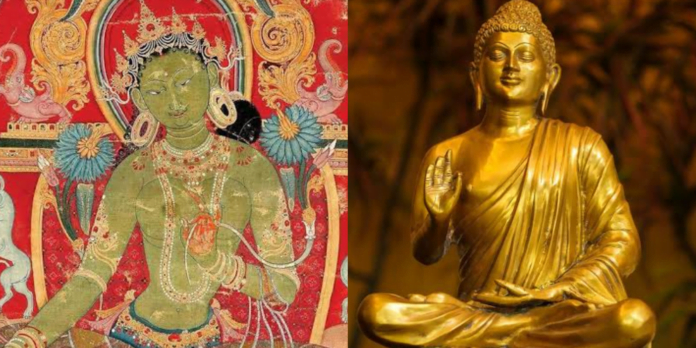
Buddhist Art: Northern, Southern, History

0

Buddhist art encompasses visual representations linked to Buddhism, featuring depictions of Gautama Buddha, bodhisattvas, historical and mythical figures, narrative scenes from their lives, mandalas, and objects tied to Buddhist practice like vajras, bells, stupas, and temple architecture. Its roots trace back to the northern Indian subcontinent, particularly in modern-day India, Pakistan, and Afghanistan, with surviving artefacts dating from a few centuries after Siddhartha Gautama’s historical existence in the 6th to 5th century BCE.

As Buddhism spread and adapted in various host countries, Buddhist art evolved alongside it. The Northern branch of Buddhist art emerged as it extended through Central Asia into Eastern Asia, while the Southern branch reached as far as Southeast Asia. In India, Buddhist art thrived, coexisting and influencing Hindu and Jain art within shared cave temple complexes. Initially centered on devotional statues and detailed reliefs depicting the life of the historical Buddha, the focus shifted over time. The Buddhist pantheon expanded, leading to devotional images of bodhisattvas and other figures becoming primary subjects in Northern Buddhist art by the late first millennium, rather than mere attendants of the Buddha.

History

Pre-iconic Phase (5th – 1st century BCE)

Between the 2nd and 1st century BCE, explicit sculptures illustrating episodes from the Buddha’s life emerged, mainly as votive tablets or friezes on stupas. Despite India’s sculptural tradition, artists hesitated to portray the Buddha anthropomorphically, relying on aniconic symbols until the 2nd century CE, notably in the Amaravati School. Speculation surrounds earlier human representations, possibly in wood, but lacks archaeological support.

Buddhist art in India originated in the 1st century BCE, exemplified by the Mahabodhi Temple in Bodh Gaya, influencing structures in Burma and Indonesia. Notably, Sigiriya’s frescoes are considered older than those at the Ajanta Caves.

Iconic phase (1st century BCE – present)

The historical narrative traces back to Zhang Qian’s 130 BCE travels and Emperor Han Wudi’s 2nd century BCE worship of Buddha statues, suggesting their existence in the 2nd century BCE. Anthropomorphic Buddha representations emerged in Northern India from the 1st century CE, with key centers in Gandhara, Amaravati, and Mathura. The Indo-Greek and Greco-Bactrian Kingdoms propagated Greco-Buddhist art in north-western India, with King Menander I as a notable Buddhist patron.

Persecution under Pushyamitra Shunga led to the decline of Buddhist art east of Mathura. Gandharan Buddhist sculpture, influenced by Hellenistic art, featured larger and more naturalistic figures. Mathura’s art, rooted in Indian tradition, introduced distinctive features.

Mathura and Gandhara influenced each other during the Kushan Empire, and the origin of anthropomorphic Buddha representations is debated between local evolution in Mathura and Greco-Buddhist syncretism in Gandhara.

Early iconic Buddhist art set a standard portraying the Buddha with realistic human features. Surviving paintings, mainly from Ajanta Caves, showcased sophistication until around 480 CE. Gupta period sculptures in Mathura influenced Asia. By the 12th century CE, Buddhism thrived in the Himalayan regions, with influences from Tibet and China evident in Ladakh’s art. As Buddhism spread beyond India from the 1st century CE, its artistic expressions blended with diverse influences, resulting in a gradual divergence among adopting countries.

Northern Buddhist Art

The transmission of Buddhism along the Silk Road began in the 1st century CE, with an embassy sent by the Chinese Emperor Ming. However, significant contacts started in the 2nd century CE due to the expansion of the Kushan Empire into the Chinese Tarim Basin. Central Asian Buddhist monks, including Parthian, Kushan, Sogdian, and Kuchean, played a pivotal role as missionaries and translators, with figures like Lokaksema.

This cultural exchange also influenced Serindian art in the Tarim Basin, reflecting Greco-Buddhist styles from the Gandhara district, combining Indian, Greek, and Roman elements. The northern route’s art, shaped by Mahāyāna Buddhism, embraced a broader perspective, emphasizing the bodhisattva path and featuring a diverse pantheon devoted to ultimate knowledge, enlightenment, and the liberation of all sentient beings.

Northern Buddhist art is characterized by a rich and syncretic pantheon, showcasing various buddhas, bodhisattvas, and heavenly beings, reflecting the Mahāyāna emphasis on transcendent and infinite aspects of Buddhism. This artistic and cultural interchange along the Silk Road left a lasting impact, with potential influences on the Japanese god Fūjin.

Southern Buddhist Art

Over a millennium, Southern Buddhism, practiced in Sri Lanka, Myanmar, Thailand, Laos, and Cambodia, flourished through Indian influence. The overland Silk Road faced constraints due to the Parthian Empire’s rise, prompting a shift to sea connections, driven by Rome’s increasing demand for Asian luxuries. India played a crucial role in transmitting languages, Buddhism, Brahmanism, and Hinduism to Southeast Asia, shaping the region’s cultural unity and artistic evolution.

Between the 1st and 8th centuries, various kingdoms, like Cambodian Funan and Burmese Mon, competed, contributing diverse artistic features rooted in the Indian Gupta style. Under the Pala dynasty (8th-12th century), Buddhism and Hinduism intertwined. The Muslim invasion led by the 14th century contributed to the decline of Buddhism in India.

In the 8th-9th centuries, Shailendran Buddhist art thrived in Central Java, Indonesia, with monuments like Borobudur. From the 9th-13th centuries, powerful Southeast Asian empires, Sri Vijaya and Khmer, competed, expressing Mahayana Buddhism’s pantheon. Theravada Buddhism was introduced in the 13th century, influencing the Thai kingdom of Sukhothai. Temple complexes played a vital role in artistic expression.

By the 14th century, Islam spread in maritime Southeast Asia, impacting Malaysia and Indonesia. In continental areas, Theravada Buddhism expanded into Burma, Laos, and Cambodia.


Popular Paintings of Rajasthan

0
9 Popular Paintings of Rajasthan

Rajasthan, a vibrant state known for its rich culture, has given birth to a myriad of painting styles over the centuries. Each style reflects the unique artistic heritage and stories deeply rooted in the traditions of the region. Let’s delve into the tapestry of colors that defines the nine popular painting styles of Rajasthan!

Nine Popular Painting Styles of Rajasthan

  1. Phad Paintings: Rooted in Bhilwara, Rajasthan, Phad paintings are an ancient technique dating back seven centuries. These scroll paintings serve as mobile temples, narrating intricate tales of religious significance. Artists, often referred to as storytellers, travel with their Phad paintings, presenting stories through vibrant visuals accompanied by traditional singing and dancing.
  2. Miniature Paintings: Originating in the 16th century, Miniature paintings showcase exquisite detailing and captivating narratives. Passed down through generations, artists often learned this style from family members who served as painters for royalty. These small-scale masterpieces, sometimes crafted on ivory, utilize fine brushes made from squirrel tails or bird feathers, with only natural colors being employed.
  3. Gemstone Paintings: A relatively recent addition, Gemstone paintings emerged in the last two centuries. Utilizing semi-precious stones like agate, bloodstone, and jade instead of traditional paint, this style creates colorful masterpieces on marble, acrylic, or glass sheets. The abundance of semi-precious gemstones in Rajasthan led to the development of this unique and visually striking painting style.
  4. Kajali Paintings: Hailing from the eastern parts of Rajasthan, Kajali paintings are an ancient and lesser-known style. Derived from ‘kajal’ or carbon black, these paintings use only shades of grey. The distinctive feature of this style is the absence of paintbrushes; instead, artists employ hands and cloth. Soot from burning oil lamps provides the Kajali, creating monochromatic marvels on cream-laminated paper.
  5. Pichwai Paintings: Focused on Krishna deities, Pichwai paintings grace the walls of temples or adorn the space behind the deity. Originating from Rajasthan, these paintings maintain the tradition of using natural colors. While wealthier families invest in large backdrops, others opt for smaller versions, creating a visual spectacle in their homes.
  6. Bhitti Chitra Paintings: Dating back 200 years, Bhitti Chitra paintings utilized mineral-based paints and were known for their crowded depictions of religious themes. Some argue that this style influenced gemstone paintings. The use of the Usta technique, embellishing paintings with gold and silver, added a touch of opulence to these elaborate artworks.
  7. Kishangarh Paintings: Originating in the 18th century from the princely state of Kishangarh, this painting style is characterized by its distinctive portrayal of faces. Sensitive and refined features, with sharply drawn chins, eyebrows, and noses, create a unique aesthetic. Serpentine locks of hair and large panoramic backgrounds further distinguish Kishangarh paintings.
  8. Sanjhi Paintings: Deeply rooted in folk culture and originating from Krishna devotees, Sanjhi paintings were once exclusive to the priestly upper caste. Today, this art form is nearly extinct and practiced by a select few. Creating intricate designs using handcrafted stencils, Sanjhi paintings replicate divine imagery on paper.
  9. Bani Thani Paintings: Dedicated to the widely loved singer and poet Bani Thani, this school of paintings emerged in Kishangarh. Featuring the King and Bani Thani instead of Radha and Krishna, these paintings share similarities with the Kishangarh school. One of Bani Thani’s portraits even found its way onto an Indian postal stamp, immortalizing the rich cultural legacy of Rajasthan.

The diverse and vibrant state of Rajasthan stands as a testament to a rich cultural heritage, expressed through a kaleidoscope of painting styles that have evolved over the centuries. As we explore the nine popular painting styles of Rajasthan, we unravel a cultural treasure trove that immortalizes the stories and traditions deeply ingrained in the colorful fabric of this enchanting region.

Nagaur Fair is the second largest cattle fair in India

0
Nagaur Fair 2024

Monalika Medatwal

The Nagaur Fair, also known as the Cattle Fair of Nagaur, is one of the largest and most renowned cattle fairs in India. It takes place in the town of Nagaur, located in the state of Rajasthan. The fair is believed to have a history dating back several centuries, with its origins rooted in the trading of animals, particularly cattle.

History of Nagaur Fair

The Nagaur Fair is an annual event that typically comes in the months of January or February. It attracts thousands of traders, farmers, and tourists from various parts of India and abroad. The main highlight of the fair is the buying and selling of livestock, including camels, horses, bullocks, and oxen.

 Activities in Fair

Apart from trading activities, the Nagaur Fair also features various cultural events and entertainment activities, such as folk music and dance performances, puppet shows, camel races, and other traditional Rajasthani festivities. The fair provides a platform for people to come together, socialize, and celebrate the rich cultural heritage of Rajasthan.

Over the years, the Nagaur Fair has evolved into a significant tourist attraction, drawing visitors not only for its commercial aspects but also for its vibrant atmosphere and cultural experiences. It continues to be an integral part of Rajasthan’s cultural calendar, showcasing the state’s rural life, traditions, and customs.

Nagaur Cattle Fair 2024

A Nagaur cattle Fair is an annual festival, which is celebrated in the historic town of Nagaur, which is located between Bikaner and Jodhpur. This fair is also called as the Ramdeoji cattle fair. Every year more than 75,000 camels, horses and bullocks are traded in this fair. Apart from traders and buyers, a large number of tourists visit to enjoy this sheer cultural beauty.

This second-largest cattle fair of the country lasts for four to ten days.

Each day, the fair begins with cattle activities and attractions to make the sellers show off their cattle. Each dealer will have his own shed or camp where he stores his animals. The buyers walk through the sheds to choose and bargain. By sunset, most of the buyers would leave the place and the sellers will stay back with their animals. After sunset, the cultural programs and celebration starts. The games and markets will be open during the day time.

How to reach Nagaur?

The nearest railway station to Nagaur is located in Merta, which is 80km away from the town. The nearest airport to Nagaur is located in Jodhpur, which is 140 km away. Once you reach Jodhpur airport, you can find cabs and buses from Jodhpur to Nagaur. If you are flying from international destinations, you can enter India via Delhi, Jaipur or Mumbai airports and find connecting flights to Jodhpur.

If you are choosing road transportation, you can find buses and private cabs from many parts of Rajasthan and surrounding regions to Jodhpur. You can find direct buses to Nagaur from Pushkar, Jodhpur, Jaisalmer, Udaipur, Bikaner and others.