Home Blog Page 583

Who is Sunil Bharti Mittal?

0
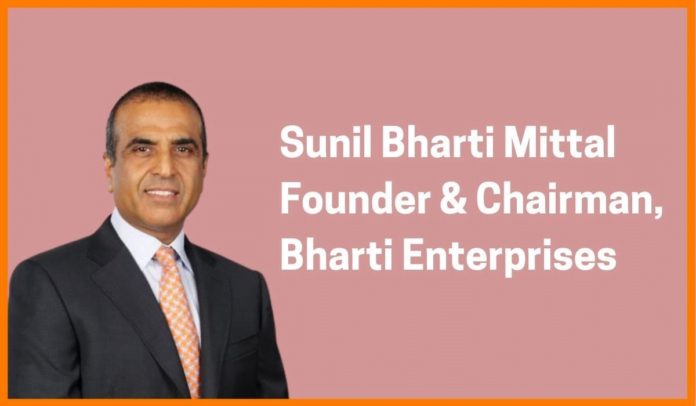
Sunil Bharti Mittal

Sunil Bharti Mittal stands as a visionary entrepreneur, the Founder, and Chairman of Bharti Enterprises, a conglomerate that has left an indelible mark on India’s business landscape. With diversified interests in Telecom, Space Communications, Digital Solutions, Real Estate, and Hospitality, Bharti Enterprises has become a symbol of innovation and success under Mittal’s leadership.

At the heart of Bharti Enterprises is Bharti Airtel, the flagship company and a telecommunications powerhouse with a global footprint. Operating in 17 countries, Bharti Airtel is recognized among the top three mobile operators globally. In India, it reigns supreme as the largest integrated communications solutions provider, serving over half a billion customers. Beyond borders, it holds the position of Sub-Saharan Africa’s second-largest mobile operator, showcasing the international reach achieved under Mittal’s strategic direction.

Mittal’s influence extends to the realm of satellite communications, where he serves as the Co-Chairperson of Eutelsat Group, a global leader in the field. Listed on the Euronext Paris Stock Exchange, Eutelsat Group benefits from Mittal’s guidance as its single largest shareholder.

Acknowledging his outstanding contributions, Sunil Bharti Mittal has been honored with the prestigious Padma Bhushan, one of India’s highest civilian awards. His achievements also earned him the Harvard Business School’s Alumni Achievement Award, a testament to his impact on the business world.

A trailblazer in the telecommunications industry, Mittal received the GSM Association’s Chairman’s Award and has been bestowed with Honorary Doctorates by leading universities in India and Europe. His commitment to excellence is further reflected in his role on Harvard University’s Global Advisory Council and service on the Board of Dean’s Advisors at Harvard Business School.

Mittal’s global leadership extends beyond corporate realms. He served as the Chairman of the International Chamber of Commerce and the Chairman of GSM Association concurrently from 2016 to 2018. His commitment to international relations is further exemplified by his tenure as a Trustee at the Carnegie Endowment for International Peace from 2009 to 2021. Additionally, he holds a Commissioner position at the International Telecommunication Union/UNESCO Broadband Commission for Sustainable Development.

An influential voice in various global forums, Mittal is a member of the World Economic Forum’s International Business Council and a key figure on the Global Board of Advisors at the Council on Foreign Relations. His diverse boardroom experience includes roles in multinational companies such as Unilever PLC, Standard Chartered Bank PLC, and SoftBank Corp.

Beyond his corporate achievements, Sunil Bharti Mittal remains deeply committed to societal well-being. His belief in corporate social responsibility materialized in the form of the Bharti Foundation, an organization dedicated to education. Operating more than 173 Satya Bharti Schools and supporting over 800 government schools through its Quality Support Program, the foundation underlines Mittal’s conviction that responsible corporate entities have a duty to give back to the communities they operate in.

Mittal’s leadership extends into the realms of global trade and investments. He has been the President of the Confederation of Indian Industry, serving on the Prime Minister of India’s Council on Trade and Industry. As Co-Chair of the ICT and Emerging Technologies Working Group of the India-US CEO Forum and a member of various other CEO Forums, Mittal continues to shape India’s role in the global economic landscape.

In conclusion, Sunil Bharti Mittal’s journey is not just a tale of corporate success but a narrative of transformative leadership, global impact, and a steadfast commitment to social responsibility. His multifaceted contributions have not only shaped Bharti Enterprises into a powerhouse but have also left an indelible mark on the global business stage.


India’s First Underwater Metro: Kolkata Takes the Plunge into Urban Connectivity

0
India’s First Underwater Metro

In a historic moment for Indian infrastructure, Prime Minister Narendra Modi inaugurated the nation’s pioneering underwater metro train service in Kolkata, solidifying a landmark achievement in urban development. This cutting-edge addition to the Kolkata Metro’s East-West corridor promises to revolutionize connectivity between the twin cities of Howrah and Salt Lake, marking a significant leap forward in India’s transportation landscape.

The Technological Marvel Beneath the Hooghly River

The jewel in the crown of the Kolkata Metro’s ambitious East-West corridor is the underwater metro route, a 16.6 km stretch connecting Howrah Maidan to Esplanade. Nestled beneath the Hooghly River, the metro boasts three underground stations and an impressive 520-meter stretch under the river that takes a mere 45 seconds to traverse, showcasing remarkable engineering feats and technological advancements.

The inauguration ceremony, attended by Bengal Governor Dr. CV Ananda Bose, Leader of the Opposition Suvendu Adhikari, and other dignitaries, turned this achievement into a vibrant celebration. The presence of students from various schools on the inaugural metro journey added youthful exuberance to this historic occasion.

Delving into Engineering Excellence

Positioned 26 meters below the river’s surface, the underwater tunnel allows metro trains to operate a groundbreaking 16 meters beneath the riverbed, marking India’s first foray into metro trains navigating under a river. This engineering marvel is poised to alleviate traffic congestion in Kolkata significantly, providing a sustainable and efficient alternative to road transport.

The Ministry of Railways revealed that the East-West Metro route encompasses 10.8 kilometers of underground sections complemented by 5.75 kilometers of elevated tracks. This strategic combination is expected to revolutionize urban mobility in Kolkata, offering commuters a seamless and efficient mode of transportation.

Overcoming Challenges for a Greener Tomorrow

While the ambitious Kolkata Metro project faced delays, including a setback during tunnelling work in Bowbazar, the inauguration of the underwater metro service stands as a monumental achievement. Prime Minister Modi is set to inaugurate additional metro sections in Kolkata, further expanding the city’s metro network and bolstering public transportation facilities.

Initiated in 2009, with tunnelling under the Hooghly River commencing in 2017, the underwater metro project encountered challenges such as an aquifer burst and ground subsidence in Bowbazar. Despite these hurdles, the completion of this transformative project represents a giant stride toward addressing traffic congestion and air pollution, paving the way for a greener and more connected Kolkata.

Key Milestones and Future Prospects

The East-West Metro corridor’s journey began in 2009, with tunneling under the River Hooghly initiating in 2017. The completion of the project faced delays due to various challenges, including an aquifer burst and ground subsidence incidents. However, with the Salt Lake Sector V to Sealdah stretch currently operational, the underwater metro service adds another feather to Kolkata’s urban mobility cap.

Prime Minister Modi’s inauguration of additional metro sections signals promising prospects for Kolkata’s metro network, promising improved connectivity and accessibility for its residents. As the city takes the plunge into the depths of technological innovation, the underwater metro serves as a symbol of progress, addressing longstanding issues and propelling Kolkata towards a greener and more efficient urban future.

Real-life ‘superheroes’ fly in the world’s first jet suit race

0
world's first jet suit race

Dubai recently played host to the world’s first-ever jet suit race, a groundbreaking event organized by Gravity Industries in partnership with the Dubai Sports Council. Against the backdrop of Dubai Marina’s iconic skyscrapers, the city-state witnessed real-life ‘Iron Men’ soaring through the skies in jet suits that mirrored a futuristic fusion of technology and athleticism.

Futuristic Marvel in the Heart of Dubai

Transforming the skyline of Dubai Marina into a futuristic racecourse, the jet suit race was a visual spectacle that captured the imagination of onlookers. Pilots, equipped with jet engines on their hands and backs, exhibited their prowess in navigating a challenging course, creating an event that blended cutting-edge technology with the breathtaking aesthetics of Dubai’s architectural marvels.

Jet Suits: The Epitome of Power

At the core of this spectacle were the jet suits themselves, boasting an astonishing 1,500 horsepower that eclipsed the capabilities of many luxury sports cars. Fueled by aviation-grade fuel used by the renowned Emirates airline for its commercial aircraft, including the massive Airbus A380s and Boeing 777s, these jet suits epitomized the pinnacle of technological advancement.

High-Octane Action with Safety at the Forefront

Despite the jet suits’ capability to reach speeds of up to 80 mph (128 km/h), safety remained a paramount concern during the event. Pilots skillfully maneuvered around obstacles in a water channel, showcasing both control and agility. The decision to prioritize safety over sheer speed ensured a thrilling yet secure competition. Minor collisions between racers added a dash of drama, with only one pilot taking an unexpected dip into the water. Astonishingly, the Emirati pilot, with just 12 days of training, swiftly recovered and signaled a thumbs-up to rescuers, highlighting the effectiveness of safety measures in place.

Gravity Industries: Pioneering New Frontiers

For Gravity Industries, known for its groundbreaking work in jet suit technology, this event marked another milestone. Having previously outfitted a UK Royal Marine with a jet suit for a daring sea landing, the collaboration with the Dubai Sports Council underscored the company’s commitment to exploring the potential of jet suit technology beyond military applications. As Gravity Industries continues to push the boundaries of what is possible, the Dubai jet suit race stands as a testament to the convergence of innovation, sport, and the boundless skies.

In the ever-evolving landscape of technology and adventure, the jet suit race in Dubai signifies a thrilling leap into the future, where human flight is not just a fantasy but a tangible and exhilarating reality. Gravity Industries has once again proven that the sky is not the limit but a canvas for the next generation of airborne excitement.

India’s Filter Coffee Ranks 2nd Best in the World

0

Coffee is like magic in a cup that wakes up people all over the world. Whether you’re in a busy café in New Delhi or enjoying the peaceful hills of Colombia, coffee is more than just a drink. It’s a special moment, a time to relax, and a reason to chat with others.

Taste Atlas, a famous food guide, recently shared a list of the ’10 Best Rated Coffees’ worldwide. The first spot went to ‘Café Cubano,’ a sugary espresso shot made with dark roast coffee and sugar. Our beloved ‘Indian filter coffee’ proudly secured the second position on the list.

‘Cuban Espresso’ stands out because it’s a sweet espresso shot made by mixing sugar with dark roast coffee while brewing. You can make it using a regular stovetop espresso maker or an electric one, and it’ll have a lovely light foam on top of each cup.

Now, let’s get to know about our filter coffee, better knowns as “filter kaapi” in South India. So, what exactly makes this coffee so special? The brewing process is the key. In the traditional way, chunky coffee beans are brewed in a metal filter called a dawara. Hot water slowly drips through the grounds, making a strong and yummy coffee liquid. People usually mix this liquid with hot milk and sweeten it with milkmaid or condensed milk and the outcome is a creamy, slightly sweet and strong coffee.

So? Curious about the other contenders too? Here’s the list of top 10 coffees on TasteAtlas’s list:

1. Cuban Espresso (Cuba)

2. Indian Filter Coffee (India)

3. Espresso freddo (Greece)

4. Freddo cappuccino (Greece)

5. Cafe Bombon (Spain)

6. Cappuccino (Italy)

7. Turkish Coffee (Turkiye)

8. Ristretto (Italy)

9. Frappe Coffee (Greece)

10. Vietnamese Iced Coffee (Vietnam)

South Eastern Coalfield Limited’s (SECL) Gevra mine

0
Gevra Mine in Chhattisgarh Poised to Become Asia's Largest Coal Mine

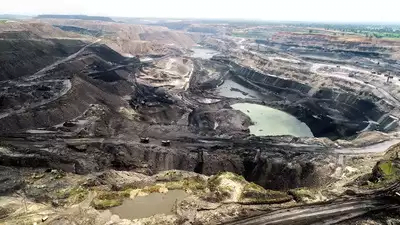
In a significant stride towards meeting the nation’s energy demands, South Eastern Coalfield Limited’s (SECL) Gevra mine, based in Chhattisgarh, is on the verge of becoming the largest coal mine in Asia. The Ministry of Environment, Forest, and Climate Change (MoEFCC) has granted environmental clearance for the mine to expand its production capacity to an impressive 70 million tons per annum, up from the current 52.5 million tons.

This groundbreaking achievement is the result of the concerted efforts of the Ministry of Coal, which collaborated seamlessly with MoEFCC to ensure the timely environmental clearance for Gevra’s expanded production. Recognizing the mine’s pivotal role as one of SECL’s megaprojects, geared towards addressing the nation’s energy needs, the Ministry of Coal played a crucial role in this record-breaking accomplishment.

Prem Sagar Misha, CMD, SECL, expressed his appreciation for the historic milestone, stating, “Under the guidance of the Ministry of Coal, a historic milestone has been achieved by the Coal India team today. We have a vision for Gevra to become the largest coal mine in the world with state-of-art mining operations, and this is a significant milestone towards that journey.”

The SECL management extended their gratitude to the Ministry for its unwavering support in obtaining environmental clearance for Gevra, marking a historic day for both SECL and the state of Chhattisgarh. They also acknowledged the swift action and support from MoEFCC, central and state agencies, and the Chhattisgarh Government.

About Gevra: Gevra stands as one of the megaprojects under South Eastern Coalfields Limited, achieving the status of the largest coal mine in the country in the fiscal year 2022-2023, with an annual production of 52.5 million tons. With a striking length of approximately 10 KM and a breadth of 4 KM, Gevra employs eco-friendly blast-free mining technology, including Surface Miner and Ripper Mining. The mine boasts a remarkable first-mile connectivity system equipped with a conveyor belt, silos, and a Rapid Loading System for efficient and eco-friendly coal evacuation.

The expansion of Gevra’s annual production to 70 million tons reflects SECL’s commitment to sustainable and advanced mining practices. As the mine gears up to become the largest in Asia, it is poised to play a crucial role in ensuring the energy security of the nation for years to come.

Gevra Mine Set to Become Asia’s Largest Coal Mine

0

The Gevra coal mine in Chhattisgarh, operated by Coal India’s South Eastern Coalfield Limited (SECL), got approval to increase its yearly coal production from 52.5 million to 70 million tonnes. This expansion will make it the biggest coal mine in Asia.

The Gevra coal mine’s growth to 70 million tonnes was made possible because the coal and environment ministries worked together swiftly. This quick approval highlights the mine’s crucial role in India’s energy sector.

The Coal India team, led by the Ministry of Coal, reached a historic milestone at the Gevra coal mine. The goal is to make Gevra the world’s largest coal mine with advanced mining operations. According to Prem Sagar Misha, CMD of SECL, this achievement marks a big step in that direction.

The SECL management thanked the Ministry for helping get approval for the Gevra mine. They mentioned that it’s a historic day because soon, SECL and Chhattisgarh will have the biggest coal mine in Asia.

He also thanked the Ministry of Environment, Forest, and Climate Change (MoEFCC) for quickly giving the necessary approval. He expressed gratitude to the central and state agencies, as well as the Chhattisgarh Government, for their support.

Gevra, a huge project of SECL, became India’s biggest coal mine last year by producing 52.5 million tonnes in the fiscal year 22-23. This mine has been working for more than 40 years and covers about 10 kilometers in length and 4 kilometers in width.

Gevra uses eco-friendly mining methods like Surface Miner and Ripper Mining, avoiding blasts. It also employs powerful machinery for removing layers of soil. The mine is eco-conscious with conveyor belts, silos, and a Rapid Loading System for efficient coal evacuation.

Welcoming India’s First AI Teacher

0

A school in Kerala has introduced Iris, a humanoid teacher, which is a big step forward in educational technology. They worked with Makerlabs Edutech Private Limited to create Iris, aiming to make learning more fun and easy for everyone. It’s a new and exciting way to make education interactive and accessible.

The AI teacher Iris is super cool for students! It can talk in at least three languages, answer tough questions, and has cool features like being a voice assistant, making learning fun, doing stuff with its hands, and moving around.

Makerlabs shared a video of Iris on their Instagram, and people are really liking it! They say that Iris, the AI Teacher Robot, is going to change how we learn – like a big makeover for education!

“By adapting to each student’s needs and preferences, IRIS empowers educators to deliver engaging and effective lessons like never before,” wrote Makerlabs on the post.

The Capabilities of Iris

Multi-language Communication – This makes learning super cool for students who speak different languages, so everyone can join in and have fun together.

Voice Assistance and Interactive Learning – Iris is like a helpful friend because it can talk to students, help with lessons, answer questions, and have cool conversations about learning stuff.

Manipulation and Mobility – Iris can do cool things with its hands and move around using wheels, making it really good at getting around the classroom. So, it can go wherever it’s needed to help students learn better.

Technology Integration – Iris is super smart because it mixes robots with smart thinking (AI). It has a special Intel brain and helper to do lots of teaching jobs really well. So, Iris can do all kinds of cool things to help students learn.

User-Friendly Interface – Using an easy Android app, you can talk to Iris and learn in a way that’s just right for you. It’s like having a special learning buddy that understands what you need and makes learning super easy.

Leopard Population in India Witnesses an 8% Surge from 2018 to 2022

0
Leopard Population Report 2022

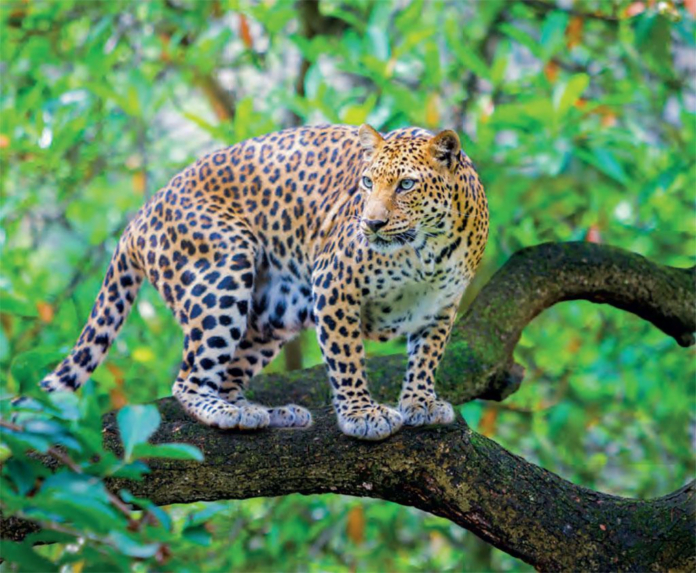
India’s leopard population has experienced an 8% increase, rising from 12,852 in 2018 to 13,874 in 2022, as per a report released by the Environment Ministry on Thursday. The comprehensive survey, covering nearly 6.5 lakh km across 20 states, reveals both positive and concerning trends in the leopard population.

State-wise Overview

Madhya Pradesh leads with the highest number of leopards at 3,907, followed by Maharashtra (1,985), Karnataka (1,879), and Tamil Nadu (1,070). However, Uttarakhand witnessed a 22% decline, attributed to factors like poaching and human-wildlife conflict. Arunachal Pradesh, Assam, and West Bengal collectively experienced a 150% rise, reaching 349 animals.

Survey Details

Covering 20 states and focusing on 70% of the expected habitat, including tiger reserves and protected forest areas, the survey was coordinated by the Wildlife Institute of India. Leopards, being adaptable and found in various landscapes, often coexist with human settlements, leading to increased conflicts and mortalities. Qamar Qureshi from the Wildlife Institute of India emphasized the importance of conserving leopard habitats within tiger reserves.

Regional Analysis

The Shivalik hills and Gangetic plains witnessed a 3.4% yearly decline, while Central India, Eastern Ghats, Western Ghats, and the hills of the northeast, along with the Brahmaputra flood plains, recorded growth of 1.5%, 1%, 1%, and 1.3% per annum, respectively. The report suggests a stable overall population in the last four years, indicating minimal growth. Unlike tigers, leopards face challenges in multiple-use areas due to human interaction.

Challenges and Conservation

In the Ramnagar forest division (Uttarakhand), leopard numbers have declined, contrasting the steep growth in tiger numbers. Approximately 65% of the leopard population resides outside protected areas in the Shivalik landscape. Uttar Pradesh has seen an increase in both leopard and tiger numbers, highlighting the complex dynamics between big cats and human settlements.

Survey Methodology

Forest surveyors covered extensive distances, traveling 6,41,449 km to identify carnivore signs and estimate prey abundance. Camera traps were strategically placed at 32,803 locations, capturing 4,70,81,881 photographs.

Sampling Artefact in the Northeast

Dr. Qamar Qureshi explained the significant rise in leopard numbers in northeastern states as a “sampling artefact,” suggesting that systematic surveys and camera installations were limited in previous years.

Final Thoughts

While the overall leopard population remains stable, the survey sheds light on the challenges and nuances faced by these adaptable big cats, emphasizing the need for conservation efforts and sustainable coexistence between leopards and human populations.

World Gold Council

0

The inception of the World Gold Council dates back to 1987 when it was established by a group of visionary mining companies from around the world. The World Gold Council serves as the market development organization for the gold industry, actively engaging in various facets, including gold mining and investment. Its mission is to encourage and maintain demand for gold across the industry.

The World Gold Council consistently releases research promoting gold as a wealth preserver, offering industry analysis to understand gold demand drivers. Additionally, it has introduced products like SPDR Gold Shares and gold accumulation plans in India and China.

As an association, the World Gold Council comprises leading global gold mining companies. It actively supports responsible mining practices among its members and has pioneered the Conflict-Free Gold Standard.

Discover more about the World Gold Council’s mission through the three main areas dedicated to serving the gold market and its participants. Three areas are:

Improving understanding

Gold is significant in finance, healthcare, technology, and culture. We’re actively working to make people more aware of how gold is evolving to address new challenges and meet society’s changing needs.

Our info and tools help both big investors and regular folks use gold wisely in different economic and world conditions.

Improving Access

Teaming up with State Street Global Advisors, the World Gold Council introduced SPDR® Gold Shares (GLD) in 2004, offering a convenient way to invest in gold. Over 90 gold-backed ETFs have been launched globally since then, including SPDR® Gold Mini Shares (GLDMSM), a budget-friendly option alongside GLD.

Improving Trust

They make sure everyone plays fair! Working together with our members and others in the market, we create and stick to rules that make sure the gold market is open and honest. This builds trust by matching our words with our actions.

Headquartered in London, United Kingdom, the Council extends its influence with offices in India, China, Singapore, UAE, and the United States. David Harquail assumes the role of the new president, while David Tait takes on the position of CEO.

What is World Trade Organization (WTO)?

0
World Trade Organization (WTO): What It Is and What It Does

Established in 1995, the World Trade Organization (WTO) stands as a paramount international institution, governing the intricate rules that guide global trade interactions among nations. Born out of the ashes of the 1947 General Agreement on Tariffs and Trade (GATT) following World War II, the WTO serves as a linchpin in the world’s economic landscape, with a mission to foster communication, resolve disputes, and oversee the conduct of international trade. In this article, we delve into the core functions of the WTO, its leadership, and the ongoing debate surrounding its impact on the global economy.

Understanding the World Trade Organization

At its core, the WTO functions as a mediator, providing a platform for member nations to negotiate and resolve trade issues. With 164 member countries as of 2021, the WTO facilitates open lines of communication, promoting the exchange of goods and services while maintaining a balance that suits the global context. Through negotiations, the organization has succeeded in both lowering and maintaining trade barriers, steering the course of international commerce.

The WTO Leadership

The appointment of Ngozi Okonjo-Iweala, a two-time Nigerian finance minister, as the WTO’s director-general in 2021 marked a historic moment. She became the first woman and the first African to hold this prestigious position, ushering in a new era of leadership for the organization. The director-general plays a crucial role in steering negotiations, mediations, and ensuring the adherence to the foundational agreements that govern international commerce.

Foundational Agreements: The Backbone of the WTO

The WTO’s authority lies in the foundational agreements that set the legal ground rules for international commerce. These agreements bind governments to specific constraints, providing a framework for future trade policies. In addition to protecting producers, importers, and exporters, these agreements encourage adherence to social and environmental standards, creating a comprehensive system for global trade governance.

Advantages and Disadvantages of the WTO

The WTO’s historical role in fueling globalization brings both positive and negative consequences. Proponents, often multinational corporations, laud the organization for stimulating free trade and reducing disputes, viewing it as a catalyst for global economic growth. However, skeptics argue that the WTO undermines democratic principles and widens the international wealth gap. Concerns also surround the negative impact on domestic industries and the increasing influence of foreign powers in the world economy.

Importance of the World Trade Organization

In a world where global trade is the lifeblood of economies, the WTO plays a pivotal role in keeping the wheels of commerce turning smoothly. With 164 member nations and 25 observer nations, it serves as a vital forum for administering trade agreements and mediating disputes, ensuring a harmonious global economic landscape.

Summing Up

The World Trade Organization, born out of the need for a structured global trade system, remains a dynamic force in the international arena. As it navigates the complexities of the modern world, the WTO continues to adapt, mediate, and foster global economic growth, all while facing scrutiny and debate over its impact on democracy, wealth distribution, and local industries. In the ever-evolving landscape of global trade, the role of the WTO remains a crucial aspect of ensuring a balanced and cooperative international economic system.