Nestled amidst the lush greenery near Rawatbhata in Rajasthan, Padajhar Waterfall is a captivating cascade shrouded in serenity. This hidden gem, also known as Padajhar Mahadev Waterfall, offers a welcome respite from the urban chaos, attracting nature enthusiasts and adventure seekers alike.
A Cascading Beauty
The cascading waters of Padajhar plunge down a rocky outcrop, creating a mesmerizing spectacle. Especially during the monsoon season, the waterfall transforms into a majestic torrent, enthralling visitors with its forceful beauty. The milky-white water gushing down the rocks creates a picture-perfect scene, leaving a lasting impression on tourists.
Adventure Awaits
Reaching Padajhar Waterfall requires a short journey, with the approach road offering a glimpse into the raw beauty of the region. While the path might be a bit rough, it’s recommended to use a vehicle with good ground clearance. The adventurous spirit will be rewarded with a captivating landscape, perfect for capturing memories.
A Perfect Picnic Spot
Padajhar Waterfall is more than just a scenic wonder. The area surrounding the falls serves as an ideal picnic spot, where families and friends can unwind and reconnect with nature. Imagine spreading a blanket under the shade of trees, listening to the symphony of cascading water, and enjoying a delightful meal in the company of loved ones.
Planning Your Visit
Located around 10 kilometers from Rawatbhata and 60 kilometers from Kota, Padajhar Waterfall is easily accessible for those seeking a quick getaway. The waterfall remains open throughout the year, although the monsoon season (July to September) presents the most captivating sight.
So, if you’re looking for an escape into the lap of nature, consider adding Padajhar Waterfall to your itinerary. This hidden gem promises a refreshing experience and a chance to create lasting memories.
JeetBuzz BD’s verification process includes email and phone verification. Follow the steps from the manual to complete JeetBuzz verification, ensuring secure withdrawals and account safety.
How to Verify JeetBuzz Account in Bangladesh?
Jeetbuzz platform has been providing various betting opportunities to casino and sports betting enthusiasts in Bangladesh over the past few years. This betting platform holds the Curacao Gaming Commission license while also being able to protect the personal information given by the users with the help of its latest security methods. Players can complete the registration process on the betting platform https://jeetbuzzbet.net/ to start playing their favorite casino games and to receive withdrawals of the winnings that they have secured. It is necessary for the users to complete the account verification process. In this guide, players will be able to learn about the step-by-step instructions to complete their account verification on the betting platform.
JeetBuzz Verification Process
Players can complete the verification process on the Jeetbuzz betting platform within a few minutes and wait for the platform to verify it. But to verify their betting account on this platform, it is necessary for the users to go through the account registration process via the official website. Once the players have registered their accounts, they can complete the account verification process by following the steps given below:
Head over to the official website for Bangladeshi users and log in to your betting account.
Now the players can head over to their profile and select the Personal Info option.
In the personal information section, the Not Verified option will appear which the users will have to click to start their account verification process.
Now the betting platform will send a verification code to the registered email and phone number of the user, which they will have to enter in the desired sections within five minutes.
Once the players have entered the OTP sent by the betting platform, they will be almost done with the verification process.
Now the players will have to enter their birth date to complete their verification process.
By simply following the steps mentioned above, players will be able to complete their account verification process on this betting platform and also be able to receive withdrawals. If the users still face any issues with the verification process, they can contact the customer support via Live Chat or email (support.bd@jeetbuzz.com).
How to Check Verification Mail?
There can be cases when the players may not be able to receive the verification mail from the betting platform to complete their verification process. It should be noted that the betting platform is able to send the verification code within a few seconds, which lasts for five minutes. Players can check the verification code from their email via the following methods:
Check the spam section of the email, as there are cases when the verification mail is marked as spam.
Players can delete the existing emails to ensure that they are able to receive the verification mail to verify their betting account.
It is necessary for the users to ensure that they have provided the correct email at the time of verification.
There may be cases when the verification email is delayed due to network issues, where the players are recommended to wait for a few seconds and refresh constantly to receive the email.
The users will be able to receive the verification code on their email and phone number, through which they will be able to complete the verification process.
The use of technology is transforming the future of cricket coaching, making training sessions more efficient and fun. New devices such as wearable tech, virtual reality, and data analytics have been developed, thus enabling players and coaches to hone their skills like never before. These advances not only improve performance but also change how the game is played and taught.
History of Cricket Coaching
Cricket coaching has changed drastically over time from its traditional methods. Today, integration with technology has revolutionised player training methods as well as helping them improve their games. Coaches now have access to tools that give deep insights into any area of a player’s performance.
For example, using a sports betting app in India, coaches can collect data on match outcomes and player statistics, which are useful while planning for future games. Video analysis, among other technologies, allows for detailed breakdowns of batting or bowling techniques, which help coaches provide accurate feedback. This combination ensures that there is constant growth for every player, who always faces new challenges during their time in the field due to both old-school teachings mixed up with modern approaches.
Technology has several advantages when used during cricket training since it improves all aspects related to developing players. One may include:
Better performance monitoring: It enables real-time tracking of physical conditions and stats for each player.
Injury prevention: Identifying risk factors, hence preventing injuries before they happen.
Training programme personalisation: Designing programmes based on individual player information.
Technique analysis (In-depth): Skills can be fine-tuned through video/data analysis together with strategies formulation such as these ones.
These benefits keep athletes at their optimal levels, ready to perform at the highest stage possible. Integration between training programmes and technology streamlines coaching processes, thereby setting the foundations for future cricket maestros.
Different Forms of Technology Used
To improve player performance and training efficiency, modern cricket coaching uses numerous technologies. These instruments allow for more accurate feedback from coaches and the creation of better training programmes, which make sure that players can reach their full potential.
Performance Monitoring Through Wearable Tech
Cricket is being transformed by wearable technology in terms of performance tracking and enhancement. Devices such as fitness trackers, smartwatches, and clothing embedded with sensors are among the many things that collect real-time data on a player’s physical well-being as well as their performance. This information comprises heart rate statistics, patterns of movement, and levels of exertion – all these give a broader outlook into an individual’s general fitness.
For example, during practice sessions, a fitness tracker can watch over the player’s heart rate, and in case they overexert themselves or need to adjust their pace, it will warn the coach about this. Muscular activity and tiredness can be tracked by clothing, which is smartly designed with built-in sensors, thus indicating when rest should be taken to avoid injury occurring. Such immediate responses are important since they help one personalise training programmes according to what suits them best, thus ensuring maximum performance while minimising chances for injuries.
Tools for Analysing Videos
Cricket coaching has been facilitated by video analysis tools, which provide in-depth feedback on the techniques and movements of players. Coaches take their time to record practice sessions and matches using high-definition cameras coupled with specialised software so that they can break down every single part of a player’s performance. Through this detailed scrutiny, weak points are identified, and skills are sharpened.
Take, for example, a cricketer’s swing can be recorded and slowed down until the exact point where their technique is found wanting is determined. Similarly, bowlers can also look at their delivery, which may reveal problems with grip, posture, or follow-through, among other things. Players who review such footage end up having a better understanding of what they do well as opposed to areas where improvements need to be made, hence enabling them to practise smarter, not harder. These visual responses act as powerful means for effecting accurate adjustments that would go a long way in boosting field performances.
Data-Driven Strategies for Coaching
Cricket has been the subject of a revolution in data-driven coaching strategies. Coaches are now able to design highly efficient training plans thanks to detailed information. They may include:
Performance metrics: For example, track batting averages, bowling speeds, or fielding accuracy.
Injury prevention: Overtraining can be prevented, and injury risks can be reduced by monitoring physical condition.
Match analysis: By examining past games, strengths and weaknesses can be identified, leading to improved future tactics.
Personalised feedback: Provide players with specific insights based on data that will help them perform better individually.
These methods guarantee that all areas of training are adapted so as to optimise the potential of each player, thereby strengthening the team as a whole.
Cricket is being transformed by virtual reality (VR) and augmented reality (AR) as they provide a way of training that is immersive and interactive. Through VR, players can participate in their practices within simulated environments that closely resemble real-life settings. It works well as a tool for visualisation of various match situations or different conditions under which one could practise. This greatly improves both spatial awareness and decision-making.
On the other hand, AR overlays digital information onto the real world, hence enabling immediate feedback during practice sessions. For example, it may highlight correct body positions or best ball trajectories, therefore helping players make necessary adjustments to their techniques on the spot. These two technologies offer new ways of engaging people in training while also pushing beyond traditional coaching methods, thus making them more effective.
Final Words
The use of technology has made cricket coaching much more accurate and personalised than ever before. Coaches are now able to give deeper insights into what needs to be done based on data analytics recorded through wearable tech, among others like VR. This means that players will always show improvement, hence readying themselves to face any challenge posed while playing on the field. There have never been brighter days ahead for cricket coaching, which promises enhanced performance levels coupled with strategic excellence during matches.
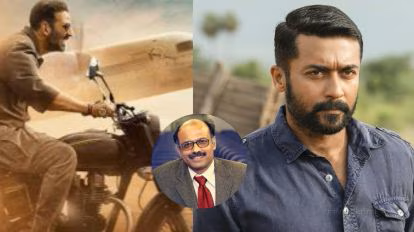
The story of Gorur Ramaswamy Iyengar Gopinath, widely known as Capt. Gopinath, is nothing short of extraordinary. As the founder of Air Deccan, India’s first low-cost airline, he revolutionized the aviation industry, making air travel accessible to millions who had never dreamed of flying. His life story described in the critically acclaimed Tamil film “Soorarai Pottru” and the upcoming Bollywood film “Sarfira,” starring Akshay Kumar.
Early Life and Education
Born in 1951 to a poor teacher in Karnataka’s Haasan district, Gopinath’s early life was marked by humble beginnings. He was home-schooled by his father until he joined a Kannada medium school in the fifth grade. At the age of 11, Gopinath cleared the admission test for Sainik School, Bijapur. This institution played a pivotal role in shaping his future, helping him clear the National Defence Academy (NDA) entrance exams. He later graduated from the Indian Military Academy, Dehradun, and spent eight years in the Indian Army, fighting in the 1971-72 Bangladesh Liberation War and earning the rank of captain.
The Path to Entrepreneurship
Despite his successful military career, Gopinath felt unfulfilled and retired at 28. As he described in his biography, “Simply Fly,” he was “forever seeking and forever striving.” This restless spirit led him to explore various ventures, from cattle rearing and poultry farming to becoming a motorcycle dealer, stock broker, and agriculture consultant. Each venture was a stepping stone, teaching him valuable lessons that he would later apply in the aviation industry.
The Birth of Air Deccan
Inspired by the story of a Vietnamese orphan girl who flew helicopters to help rebuild her country, Gopinath envisioned an airline that could make flying affordable for everyone. His motto was clear: “It is not the elite that I consider as my customers. It is the humble cleaning women of my office, the auto-rickshaw driver and other such people that we would like to cater to. We want them to dream that they too can fly, and we want to make that dream happen.”
On August 25, 2003, Air Deccan launched its first flight from Bengaluru to Hubbali. The airline’s low fares and extensive network appealed to middle-class travelers and quickly gained popularity. By 2007, Air Deccan had become India’s second-largest carrier, spurring the growth of other low-cost airlines such as SpiceJet, GoAir, IndiGo, and JetLite.
Overcoming Challenges
Gopinath’s journey was fraught with challenges. From securing funding to navigating regulatory hurdles, he faced numerous obstacles. However, his never-give-up attitude and relentless hard work ensured his dream came to fruition. The success of Air Deccan was not just a personal triumph but a transformative moment for the Indian aviation industry.
From Real Life to Reel Life
Capt. Gopinath’s inspiring story caught the attention of filmmaker Sudha Kongara, who adapted it into the Tamil film “Soorarai Pottru.” The movie received critical acclaim, bagging seven National Film Awards, including Best Actor and Actress for Suriya and Aparna Balamurali, respectively. Now, the same director is bringing the story to a wider audience with the Hindi adaptation, “Sarfira,” starring Akshay Kumar, Radhika Madan, Seema Biswas, and Paresh Rawal.
In an interview with Galatta Plus, Kongara expressed her admiration for Gopinath: “Here is this man who never gives up. For 10 years straight, the man keeps going to get his license. Everybody is telling him, ‘all you need to do is bribe,’ he said, ‘I can’t look at my face, I won’t bribe’. His wife was sponsoring him. When I heard his story, I was like ‘I love this guy, he is just fabulous’. He gets angry, he is short-tempered and because he is intelligent, he has little patience with people who are not moving at the same speed as him. All these qualities of Gopinath really intrigued and interested me.”
Legacy and Impact
Capt. Gopinath’s story is a testament to the power of perseverance and the impact of visionary thinking. His contributions to the aviation industry democratized air travel in India, enabling millions to experience the joy of flying. As his life continues to inspire films and narratives, Gopinath remains a symbol of resilience and innovation, embodying the spirit of dreaming big and achieving the impossible.
Under the visionary guidance of Raghushree Poddar, Chairperson of FICCI FLO Jaipur Chapter 2024-25, the much-anticipated launch of Startup Series 1 took place at the Bhamashah Techno Hub. This pioneering initiative, in collaboration with iStart Rajasthan and powered by Innovher, aims to bolster the entrepreneurial ecosystem and empower women entrepreneurs in the region.
A Stellar Beginning
The launch event was graced by esteemed speakers, including Shweta Choudhary, Founder and Director of Innovher, and Disha Toshniwal, Advisor for the Investment and Legal team at Innovher. These accomplished women shared their wealth of experience and knowledge, delivering powerful and insightful sessions on critical aspects of startups, equity, investment, and business strategies.
Insights from the Experts
Shweta Choudhary, with her extensive background in entrepreneurship, provided invaluable insights into the journey of starting and scaling a business. She shared inspiring stories of women entrepreneurs who, through sheer dedication and hard work, have achieved remarkable success. Her narratives underscored the potential for impact that entrepreneurs can have, not only in creating successful businesses but also in providing livelihoods and improving communities.
Disha Toshniwal focused on the legal and investment facets of entrepreneurship. She provided detailed guidance on navigating the complexities of equity and investment, offering practical advice for securing funding and ensuring legal compliance. Her session was particularly beneficial for budding entrepreneurs looking to understand the intricacies of the startup ecosystem.
A Diverse and Engaged Audience
The event attracted a diverse audience, including Executive Committee members, FLO members, and representatives from iStart Rajasthan. Attendees found the sessions profoundly enlightening and motivating. The knowledge gained from the discussions has inspired many participants to invest more in their innovative ideas and pursue their entrepreneurial dreams with renewed vigor.
Networking and Community Building
Following the insightful sessions, the FLO team organized a delightful high-tea session featuring a variety of delicious delicacies. This provided a perfect opportunity for members to network and build connections in a relaxed and enjoyable setting.
A Commitment to Economic Growth
The success of this event reflects the dedication of FICCI FLO Jaipur Chapter under Raghushree Poddar’s leadership to create impactful programs that benefit the community and drive economic growth. The collaboration with iStart Rajasthan and the support from Innovher underscore a shared commitment to fostering an environment where entrepreneurs, especially women, can thrive and contribute to the region’s prosperity.
Looking Ahead
Startup Series 1 at Bhamashah Techno Hub marks the beginning of a transformative journey for many aspiring entrepreneurs. With continued support and guidance from experienced leaders and a strong network of collaborators, the future looks promising for the entrepreneurial landscape in Jaipur.
Further he says that calling a tiger a violent animal is the biggest mistake which humans are making. “It is wrong to call a tiger a violent animal. Tiger is the most modest animal in the jungle who walks with pride and discipline and gives a space to everyone to walk along in its periphery. It is just like a king who gives space to its people to walk and work along, says Singh. There can be no more intelligent man than a tiger, he says adding.
Tiger is like Hanuman who himself was unaware of the kind of energy and power he had. Same thing goes with tiger. It has so much power, but it behaves like a simple animal. It is wrong to term him violent. Now we all know that there are 80 tigers in Ranthambore and around 2000 people visit the jungle daily but he never attacks the visitors to his home. He gives you space to walk along. Even if he sees so many vehicles passing, he makes sure these vehicles pass off peacefully.
Even for his attack he witnessed in 2010, he doesn’t blame the tiger but blames the crowd which had gathered there who he says made the tiger panicked and hence he attacked, says Singh adding that tigers never attack in a first instant. It will roar, will make noise, then will act weird and at last attacks.
In fact, tiger is king of the jungle, so he gives you freedom to roam freely in its periphery being the king. Like a powerful man who keeps showing his six abs, the tiger never over shows his power and stays humble in its approach, more like a disciplined and noble king, he adds. So it is necessary to conserve this king, he opines.
As there are silent whispers of one nation, one rate scheme reportedly being launched in India for gold prices, jewellers say that the yellow metal will get cheaper. Sources from the jewellery industry confirmed that leading jewellers from across the nation have given their consent in this regard and an official announcement will be made in this reference somewhere in September.
Speaking to EBNW, leading jeweller Sanjay Kala, who has been ex-president of Jewellery Association of Jaipur said that the customers will definitely benefit out of this announcement and the market hence will become strong, he added.
Another leading jeweller, Ajay Jain confirmed to EBNW that the new initiative will prove good for customers as well as the industry. Customers will get confidence in buying the yellow metal from the market if there is one price across the nation, he added.
Meanwhile, another leading jeweller, Sushil Parwani from Nand Kishore Meghraj Jewels raised his doubt for its implementation and said that this discussion has been going on since years but has never been implemented. If it is done, it will be good, however, loads of challenges are there in its ground implementation. There are jewellers in Jaipur who will cut off the price to win over their competitor. If Gold is available at Rs 70000 per 10 grams, he will sell it for Rs 69000 to win over the customer.
Now if this is the competition in Jaipur, imagine how it will get implemented across the nation. The officials associated with this task are talking big but have never implemented it, he added. Meanwhile, sources said that the central government has set up a scheme to launch a national bullion exchange under a one nation, one rate scheme. This exchange will set gold rates and jewellers from across the nation will have to sell gold at the same price.
Do you know what happened in Rajasthan at the time of emergency? Where is the treasure of Jaigarh Fort? Did Indira Gandhi was the mastermind behind all this?
This focus on treasure and symbols of wealth brings to mind a historical episode from 1976 when then Prime Minister Indira Gandhi ordered a massive treasure hunt at Jaipur’s Jaigarh Fort. In an unexpected twist, Pakistan’s Prime Minister at the time, Zulfikar Ali Bhutto, laid claim to a share of the treasure.
The Treasure Hunt Unfolds
In August 1976, a letter undersigned by Prime Minister Zulfikar Ali Bhutto of Pakistan arrived in New Delhi. Addressed to Indira Gandhi, the letter began with discussions on bilateral cooperation before quickly shifting to a bold demand. Bhutto’s letter read, “I am writing to you about the treasure which is being unearthed in Jaipur under your Government’s orders… I would urge you to remain cognisant of Pakistan’s claim to its due share of this wealth…” Bhutto’s claim was based on the treasure being unearthed in Jaipur’s Jaigarh Fort under Gandhi’s directive.
The Origins of the Jaigarh Treasure Story
The hunt, which lasted five months, had its roots in the late 16th century. In 1581, Mughal Emperor Akbar sent his commander-in-chief, Raja Man Singh I of Jaipur, to subdue rebel kingdoms in the northwest frontier, including parts of modern-day Afghanistan. During this campaign, Raja Man Singh amassed a vast treasure trove of gold, which he allegedly brought back to India and hid in the 16th-century Amber Fort.
This treasure remained hidden for centuries, becoming part of local lore and even making its way into an Arabian book, “Haft Tilismat-e-Amberi” (Seven Magical Treasuries of Amber). British colonial explorers also sought the treasure but were unsuccessful.
Indira’s Treasure Hunt Amid the Emergency
Fast forward to the Emergency imposed by Indira Gandhi in 1975. Civil liberties were suspended, the press was censored, and political opponents were imprisoned. Among those detained was Gayatri Devi, the former Maharani of Jaipur and a political adversary of Indira Gandhi. Following her arrest under the COFEPOSA Act, the treasure hunt at Jaigarh Fort commenced.
Advised by her son, Sanjay Gandhi, Indira initiated a comprehensive search involving the Income Tax Department, the Army, local police, and the Archaeological Survey of India. The fort, which had not seen such attention in centuries, became the focal point of global interest as the search for the legendary treasure unfolded.
The Claim from Pakistan
As the treasure hunt intensified, it caught the attention of Zulfikar Ali Bhutto, who saw an opportunity to claim a share of the supposed wealth. His letter to Indira Gandhi reflected the tension and curiosity surrounding the treasure. Indira’s response came only after the hunt ended in November 1976. She wrote, “I had asked our legal experts to give careful consideration to the claim you made on behalf of Pakistan. They are of the clear opinion that the claim has no legal basis.” She added, “Incidentally, the ‘treasure’ has turned out to be non-existent.”
The Outcome and Lingering Mysteries
Despite the exhaustive search, the treasure hunt yielded only 230 kg of silver, far from the gold trove envisioned. Gayatri Devi was released from Tihar Jail after the Emergency was lifted. However, questions lingered. Why was Jaigarh Fort, built in 1726, raided if the treasure was hidden in the Amber Fort? Speculations about tunnels connecting the forts and unexplained truck movements fueled rumors of a hidden treasure.
A Wild Goose Chase?
The treasure hunt during the Emergency remains a controversial chapter in India’s history. Some viewed it as a genuine search for hidden wealth, while others saw it as a political maneuver against a rival. Authors RS Khangarot and PS Nathawat, in their book “Jaigarh, The Invincible Fort of Amber,” concluded it was “a wild goose hunt.”
As the 2024 Lok Sabha elections bring the topics of gold and mangalsutra to the forefront, the echoes of Indira Gandhi’s treasure hunt remind us of the complex interplay between politics, history, and legend.
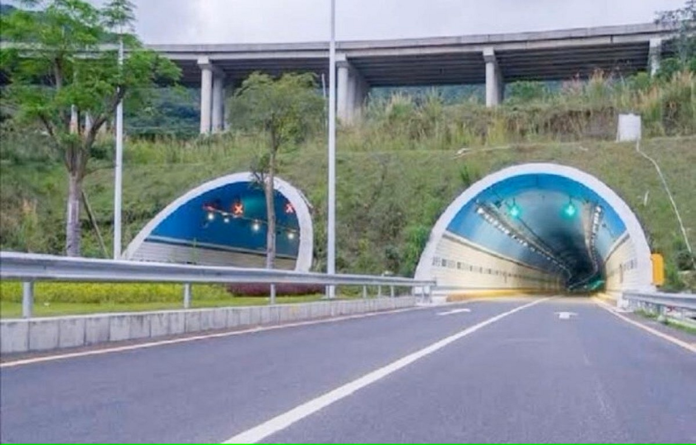
On July 13, 2024, Prime Minister Narendra Modi led the groundbreaking ceremony for the Thane-Borivali Twin Tunnel project in Mumbai. This ambitious Rs. 16,600 crore project is a significant component of a larger Rs. 29,000 crore initiative aimed at enhancing Mumbai’s infrastructure, facilitating smoother travel, and improving connectivity within the city.
Overview of the Thane-Borivali Twin Tunnel Project
The Thane-Borivali Twin Tunnel stands as India’s longest and largest urban tunnel project, with an estimated cost of Rs. 16,600 crore. This direct subway line will stretch 11.8 km, linking Thane with Borivali on National Highway 8. The tunnel will feature two regular lanes and one emergency lane, drastically reducing travel time from over an hour to just 12 minutes and cutting the distance by 12 km.
Strategic Implications and Benefits
The tunnel’s strategic significance extends beyond mere connectivity. It is poised to alleviate congestion on Ghodbundar Road and the Western Express Highway, creating a swift and direct route that enhances east-west suburban connectivity. This improvement will ease commuting challenges and prevent overcrowding on existing roadways.
Environmental and Technical Details
The Mumbai Metropolitan Region Development Authority (MMRDA) assures that the construction of the tunnel will be environmentally friendly, having no adverse impact on the nearby Sanjay Gandhi National Park. The project will employ India’s longest tunnel-boring machine, capable of boring a 10.25 km tunnel with cross passages every 300 meters for safety and maintenance. Additionally, it is projected to reduce carbon emissions by 150,000 metric tons annually.
About Mumbai Metropolitan Region Development Authority (MMRDA)
Established in 1975, the Mumbai Metropolitan Region Development Authority (MMRDA) is responsible for planning and overseeing development in the Mumbai Metropolitan Region. The MMRDA’s first significant project was the Bandra-Kurla Complex, which has since become a major commercial hub. In 2014, the MMRDA launched Mumbai’s first metro train and continues to oversee the construction of multiple metro lines to mitigate traffic congestion. The Mumbai Urban Infrastructure Project and the Mumbai Trans-Harbour Link, which aims to facilitate travel between Mumbai and Navi Mumbai, are also under the MMRDA’s purview.
The Thane-Borivali Twin Tunnel project marks a significant milestone in Mumbai’s journey towards improved urban infrastructure and connectivity. By drastically reducing travel time and easing traffic congestion, it promises to enhance the quality of life for commuters and contribute to the city’s sustainable development goals.
Just 65 kilometers from Bhopal lies the historic Vijay Temple of Vidisha, a monument that was dismantled by Aurangzeb’s artillery in 1682. Today, the government of Madhya Pradesh is set to breathe new life into this ancient site, transforming it into a major tourist destination.
For centuries, the Vijay Temple lay buried under debris and soil until it was revealed by the floods of 1992. Local historian Kailash Deoria narrates the temple’s origin, explaining that it was constructed in the 10th century by Vachaspati, the prime minister of the Chalukya dynasty, as a symbol of their victory over the Pratihars. Dedicated to the Chalukyas’ family deity, Bhillaswamini, the temple complex also included a Sun Temple, akin to the grandeur of Konark. The renowned scholar Al-Biruni documented that the temple once stood 105 yards (315 feet) tall, a monumental height that echoes the design of India’s new parliament building.
Dharmendra Singh, the Minister of Culture for Madhya Pradesh, revealed plans for the temple’s restoration in collaboration with the Archaeological Survey of India (ASI). “We are preparing to restore temples and famous landmarks like Vijaypur. Our collaboration with ASI aims to develop them into prominent tourist destinations,” Singh said.
The revival of the Vijay Temple not only seeks to preserve its historical and architectural significance but also aims to boost local tourism. This initiative offers visitors a chance to immerse themselves in India’s rich cultural heritage, experiencing firsthand the magnificence of a bygone era.
With careful planning and dedication, the Vijay Temple is set to reclaim its former glory, standing tall once again as a beacon of history and culture in Madhya Pradesh.