Home Blog Page 524

What is the story of Mangarh Dham? Who are Bhil Tribals?

0

A horrifying tragedy occurred in Mangarh (Banswara, Rajasthan) on 17th November 1913, claiming the lives of over 1,500 Bhil tribals. The Mangarh hillock, situated at the Gujarat-Rajasthan border, is often referred to as the Adivasi Jallianwala Bagh, highlighting its historical significance and the brutality faced by the Bhil community.

What Led to the Mangarh Massacre?

The Bhils, a tribal community, faced severe oppression from both the rulers of the princely states and the British colonial administration. By the end of the 19th century, many Bhils in Rajasthan and Gujarat were reduced to bonded labor. The great famine of 1899-1900, which killed over six lakh people, exacerbated their suffering.

Mobilized and trained by social activist Guru Govindgiri, also known as Govind Guru, the Bhils placed a charter of 33 demands before the British by 1910. These demands primarily related to forced labor, high taxes, and the harassment of Govind Guru’s followers. When the Bhils refused to leave Mangarh Hill, vowing to declare their freedom from British rule, the British set a deadline of 15th November 1913 for their departure. When the Bhils did not comply, the British Indian Army fired indiscriminately on the peaceful protesters on 17th November 1913, resulting in the deaths of over 1,500 people, including women and children.

Who was Govind Guru?

Govind Guru was a revolutionary leader of the tribals in Mangarh, which includes present-day Udaipur, Dungarpur, and Banswara in Rajasthan, Gujarat’s Idar, and Malwa in Madhya Pradesh. A living legend among the Bhil and Garasiya tribal communities, Govind Guru united thousands of tribals with his voice.

Before becoming a leader in India’s freedom struggle, he played a significant role in India’s renaissance movement, impressing Swami Dayanand Saraswati, a central figure in the movement. Together, they initiated a wave of social reforms in the tribal areas, focusing on eradicating social evils, boycotting foreign goods, ending forced labor, educating girls, and resolving mutual disputes among tribes. This led to the creation of a Sump (Unity) Sabha, whose first meeting was held on the hilltop in Mangarh.

The Bhagat movement initiated in 1908 by Govind Guru, where tribals gathered around the fire to reaffirm their oath, was seen by the British as a threat. The consequences of the Mangarh massacre were severe: Govind Guru was sentenced to death, and his wife was arrested. However, fearing that the tribal Bhils’ movement would turn violent, the British commuted his sentence to 20 years of imprisonment on an isolated island. Upon release, all the princely states exiled him, and he lived his last years in Kamboi, Gujarat, where he died on October 30, 1931.

Who Are the Bhils?

The Bhils, commonly referred to as Rajasthan’s bowmen, are one of India’s most widely dispersed tribal communities. According to the 2011 Census, Bhils are India’s largest tribe. They are broadly classified into Central or Pure Bhils and Eastern or Rajput Bhils, residing in the mountain regions of Madhya Pradesh, Maharashtra, Gujarat, and Rajasthan, and Tripura’s northwestern regions. They are considered a Scheduled Tribe in various states, including Andhra Pradesh, Chhattisgarh, Gujarat, Karnataka, Madhya Pradesh, Maharashtra, Rajasthan, and Tripura.

Historical Perspective

The Bhils are members of the pre-Aryan race, with their name derived from the word “villu” or “billu,” meaning bow in the Dravidian language. The Bhils are mentioned in ancient epics like the Mahabharata and Ramayana.

The Blood-Washed Mangarh Hills: A Haunting Reminder of Oppression

The Mangarh Hill Massacre is a stark reminder of the oppression faced by marginalized communities. During the event at Mangarh Dham, thousands of devotees from Rajasthan, Gujarat, and Madhya Pradesh gathered under the leadership of Govind Guru. The peaceful gathering turned into a tragic loss of approximately 1,500 lives when the British Indian Army opened fire on the unarmed Bhil protesters.

Oral Accounts of the Descendants

Survivors of the massacre, such as Mogaji Bhagat, Dhirabhai Bhagat, and Hirabhai Khant, shared their traumatic experiences, which have been preserved through oral accounts. These stories serve as a reminder of the sacrifices made by those who fought for India’s freedom.

State Efforts to Recognize the Martyrs

Recognizing the significance of the incident, the Rajasthan government has taken steps to preserve the memory of the Mangarh Hill Massacre. A panorama was constructed in 2018 as a tribute to the martyrs. Recently, Chief Minister Ashok Gehlot appealed to Prime Minister Narendra Modi to declare the Mangarh Dham memorial a national monument. While PM Modi did not make an official announcement, he suggested that efforts should be made to develop the site of historical importance.

The Mangarh Hill Massacre is a testament to the valour, sacrifice, and resilience of the Bhil community and the legacy of Govind Guru, who continues to inspire millions today.

Exclusive Interview: Effective time management and innovative initiatives can help women balance their work and personal lives, says Somya Gurjar

0

In a recent exclusive interview with EBNW Story, Somya Gurjar, Mayor of Jaipur Greater, shared her insights on achieving a balance between work and personal life. Reflecting on the strength of women, she likened their resilience to the nine forms of Durga Mata. As a mother and a working woman, Somya Gurjar has become a role model, inspiring others to find harmony between their professional and personal responsibilities. The interview was conducted by Dimple Arora.

Q1: You worked until the last day of your pregnancy, which is truly inspirational. How did you manage it all?

Somya Gurjar: I believe that women, even in rural areas, often work until their due date of pregnancy. It’s not something unique; it’s part of our strength and resilience. Managing the city’s work felt like worship to me, and being a mother, I felt it was my duty to be responsible for both my child and my city. Time management is crucial in such situations. I often had my baby with me while working, and I believe in learning from the earliest stages, just like Abhimanyu, who started learning in his mother’s womb. I returned to work three days after delivery because the city is my responsibility. Women make things easier by becoming perfectionists in whatever they do.

Q2: What is your message for upcoming women entrepreneurs whose numbers are increasing day by day?

Somya Gurjar: In the Vedic era, women were self-sufficient and empowered. It was during the middle ages, to protect women from invaders, that customs like parda pratha came into existence, which eventually backstabbed women’s position in society. But now, women are once again working with full energy and responsibility. Being a woman and a mother is not easy; it involves different roles, challenges, and struggles. Women have to become ‘SHAKTI’. As I always say, “Sangarsh bhara jeevan tera, sangarsho se ghabrana nahi, jab raat ho kali to samjho hone wali hai shubh diwali. Jeevan ke iss rann me tumko vishwas atal rakhna hoga, sau bar giro phir bhi lakshay bhedh tabhi hoga, hai agneepath sa yeh jeevan tu nirbhig needar iss par chal, charan pakhaegi manzil tu nishchit hogi teri vijay. Parcham tu hi lehraegi, ho ekagra bas chalti chal, bas chalti chal. Vijay sunichit hai teri aaj nahi to kal.”

Q3: How should women manage their health with work-life and home responsibilities?

Somya Gurjar: Being a woman is like embodying Durga’s nine forms, each connected to nine Vedic medicines. Vedic texts describe what women should eat and consume at various life stages—childhood, teenage, adulthood, or old age. Vedic knowledge teaches us how to maintain our health, which is crucial because when women stay healthy, the entire family and the entire country become healthy.

Q4: Jaipur Greater has established crèches and e-libraries. Do you think this will increase the number of working women?

Somya Gurjar: Absolutely. Since the inception of the crèches, women no longer have to sacrifice their duties as mothers. Working women can now be carefree about their children’s upbringing. The crèches are located in the same buildings, allowing mothers to keep an eye on their children. This initiative has made women more effective in their work. Additionally, the e-library and free Wi-Fi zones help women stay connected to digital media. We are also planning to develop sports complexes and auditoriums to ensure children receive what they need. This is how we plan to proceed further.

In this insightful interview, Mayor Somya Gurjar demonstrates how dedication, effective time management, and innovative initiatives can help women balance their work and personal lives, leading to a more empowered and inclusive society.

Experience The Grandeur Of ‘Dashavatar’: Nita Ambani’s Tribute To Hindu Heritage At NMACC

0

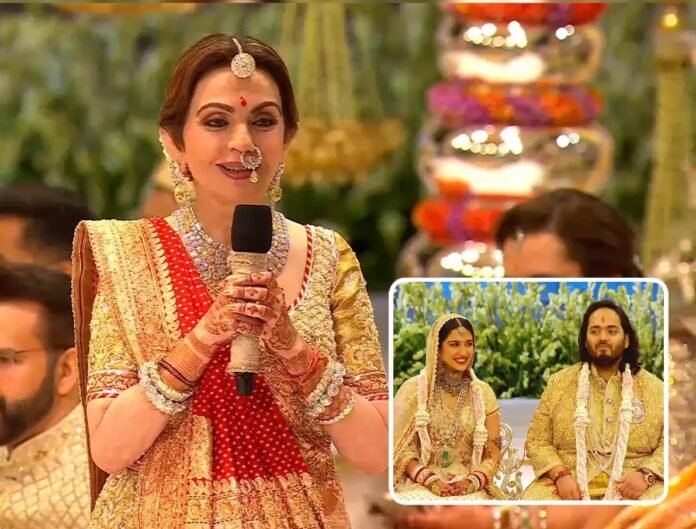
Reliance Foundation Chairperson, Nita M. Ambani, has unveiled ‘Dashavatar,’ an awe-inspiring audio-visual journey that vividly showcases the ten incarnations of Bhagwan Shri Vishnu. This mesmerizing fusion of sights and sounds, set against the spiritual backdrop of Banaras, takes center stage at the Nita Mukesh Ambani Cultural Centre (#NMACC). Curated for the wedding festivities of Anant and Radhika Ambani, ‘Dashavatar’ resonates deeply with the essence of Kashi, offering a captivating exploration through art and mythology.

Unveiling ‘Dashavatar’

‘Dashavatar’ is a spectacular audiovisual experience that pays homage to the ten incarnations of Lord Vishnu. The Ambani family’s deep spiritual roots were evident during Anant and Radhika Ambani’s recent wedding, where this cultural extravaganza was first introduced. Held at the Jio World Centre in Mumbai, this special curation brings the grandeur of Hindu traditions to life.

A Tribute to Kashi

Inspired by the holy city of Kashi, ‘Dashavatar’ was specially curated for the wedding celebrations of Anant and Radhika. The Nita Mukesh Ambani Cultural Centre (NMACC), a hub for the arts and artists, has made this cultural experience available for public viewing, further extending the spirit of inclusivity and cultural richness for all to witness.

Booking and Venue Information

The shows are available in both English and Hindi at the Ground Level of NMACC. Mumbaikars and visitors can book their tickets now at nmacc.com and bookmyshow.com.

NMACC: A Hub of Artistic Excellence

The Nita Mukesh Ambani Cultural Centre is a pioneering, multi-disciplinary space dedicated to the arts, located within the Jio World Centre in Mumbai’s Bandra-Kurla Complex. It features three performing arts spaces:

  • The Grand Theatre: A majestic 2,000-seater venue.
  • The Studio Theatre: A technologically advanced 250-seater space.
  • The Cube: A dynamic 125-seater venue.

Additionally, the Cultural Centre houses the Art House, a four-storey visual arts space built to global museum standards, showcasing an array of exhibits and installations from the finest artistic talents across India and the world.

Public Art and Cultural Treasures

Spread across its concourses is a captivating mix of public art by renowned Indian and global artists. Among these is ‘Kamal Kunj,’ one of the largest Pichwai paintings in India, further enriching the cultural landscape of NMACC.

An Invitation to Experience ‘Dashavatar’

Nita Ambani’s ‘Dashavatar’ is more than a tribute; it is an invitation to immerse oneself in the cultural and spiritual richness of Hindu heritage. Through this spectacular audiovisual experience, visitors can embark on a journey through the ten incarnations of Lord Vishnu, experiencing the profound narratives and traditions that have shaped Hindu culture.

Book your tickets now and be a part of this grand celebration at the Nita Mukesh Ambani Cultural Centre.

International Day of Friendship 2024: Date, History, Significance, Wishes, Quotes,

0

Celebrate the bonds of friendship on International Day of Friendship, observed annually on July 30th. This day goes beyond just greeting cards and cheesy quotes – it’s a UN-recognized observance promoting the power of friendship to bridge cultures, inspire peace efforts, and build bridges between communities.

A Look Back: History of International Day of Friendship

The concept of a day dedicated to friendship can be traced back to the 1930s. However, the official recognition came much later. The idea gained momentum in Asia, where it became a popular custom to celebrate friendships. In 1958, the World Friendship Crusade, an organization promoting peace through friendship, proposed July 30th as World Friendship Day. Finally, in 2011, the UN General Assembly declared July 30th as the International Day of Friendship.

Significance of International Day of Friendship

In today’s world, fraught with conflict and division, International Day of Friendship serves as a powerful reminder of the importance of friendship. It promotes:

  • Understanding and Tolerance: Friendships bridge cultural divides and foster acceptance of different backgrounds and perspectives.
  • Peace and Reconciliation: Strong bonds of friendship can inspire peace efforts and encourage a culture of dialogue and understanding.
  • Solidarity and Support: Friends provide a network of support, helping us navigate life’s challenges and celebrate successes.

How to Celebrate International Day of Friendship

There are countless ways to celebrate this special day:

  • Reach out to friends and family: Send heartfelt messages, make a phone call, or plan a get-together.
  • Organize a community event: Host a potluck, a game night, or a volunteer activity that brings people together.
  • Share your appreciation on social media: Use relevant hashtags like #InternationalDayofFriendship and post photos with your friends along with quotes or messages of appreciation.
  • Engage in random acts of kindness: Spread some friendship cheer by doing something nice for someone – a simple gesture can brighten their day.

Wishes, Quotes, Captions, and SMS for International Day of Friendship

  • Wishes: Happy International Day of Friendship! Here’s to the friends who make life brighter.
  • Quotes: “One loyal friend is worth ten thousand acquaintances.” – Publilius Syrus (Roman writer)
  • Captions: Celebrating the best friendships with the best people! #InternationalDayofFriendship
  • SMS: Thinking of you today and all the laughter we’ve shared. Happy International Day of Friendship!

Make International Day of Friendship a day to cherish the people who make your life richer. Let’s celebrate the power of friendship and its positive impact on our world!

Discovering Spiritual Serenity at Sree Ayyappa Temple, Jaipur

0

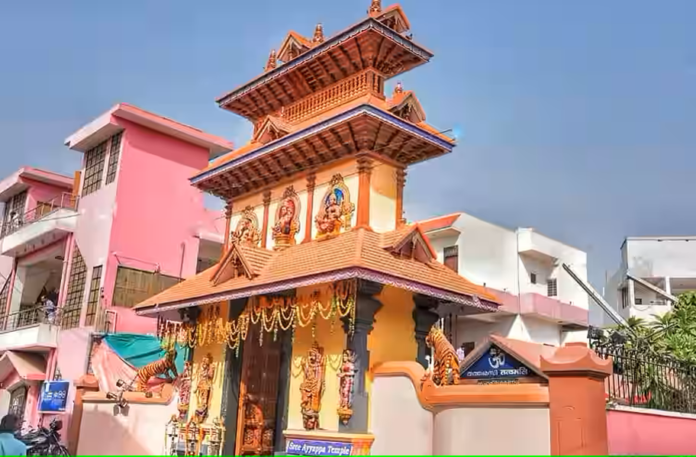
The Sree Ayyappa Temple in Jaipur is a serene sanctuary that offers visitors a taste of the famed Sabarimala Temple in Kerala. Nestled in the heart of Jaipur at Khatipura Road, Jaswant Nagar, this temple is a beacon of spirituality and devotion for many.

A Tribute to Kerala’s Mahakshetram

Built under the guidance of the Sree Dharma Shastha Sewa Samiti, the foundation stone of the Sree Ayyappa Temple was laid by Shri Attupurathu Govindan in 1986. This temple is a spiritual haven that draws numerous devotees seeking religious fulfillment and a deeper connection to their faith. The temple is adorned with idols of Ganesha, Shiva, Devi Bhadrakali, and the Navagrahas, reminiscent of the traditional Mahakshetram (great temples) of Kerala.

Embracing Kerala’s Traditions

A visit to this temple, especially during certain festivals and special occasions, provides an immersive experience of Kerala’s rich cultural and religious heritage. The temple’s architecture, rituals, and the serene ambiance offer a unique glimpse into the traditions of the southern state.

Travel Tips for Visitors

When visiting the Sree Ayyappa Temple, it is important to follow Hindu rituals and customs. This includes dress codes and respectful behavior inside the temple premises.

Entrance and Timings

  • Entrance Ticket Details: Entry to the temple is free.
  • Summer Timings: Daily Pooja from 05:45 AM to 09:30 AM and 06:00 PM to 08:45 PM
  • Winter Timings: Daily Pooja from 06:00 AM to 09:45 AM and 05:30 PM to 08:30 PM

For detailed timings, it is advisable to refer to the temple’s official website.

Getting There

The Sree Ayyappa Temple is accessible via various modes of transportation. The nearest bus station is Chandbihari Bus Stop, making it convenient for visitors to reach the temple.

Planning Your Visit

Jaipur, with its vibrant culture and historic landmarks, offers numerous attractions. After a spiritually enriching visit to the Sree Ayyappa Temple, visitors can explore other notable sites in the city. Whether you are on a spiritual journey or a cultural exploration, Jaipur has something to offer for everyone.

Contact Information

  • Address: Ayyappa Temple, Khatipura Rd, Jaswant Nagar, Jaipur, Rajasthan 302012, India
  • Contact Number: +91-1412549788
  • Visiting Hours: 06:00 AM – 08:45 PM

For a restful night after a day of exploration, Jaipur offers a variety of accommodations to suit your preferences and budget.

Embrace the spiritual tranquility and cultural richness of the Sree Ayyappa Temple on your next visit to Jaipur.

Insta-Divorce! Dubai Princess Shaikha Mahra Announces Separation on Instagram: ‘Dear Husband, Take Care’

0

In a surprising turn of events, Shaikha Mahra Bint Mohammed Bin Rashid Al Maktoum, daughter of Dubai’s ruler, Sheikh Mohammed Bin Rashid Al Maktoum, has announced her divorce from her husband, Sheikh Mana Bin Mohammed Bin Rashid bin Mana Al Maktoum, via Instagram. This announcement comes just two months after the birth of their first child.

A Public Declaration

On July 14, 2024, Shaikha Mahra took to Instagram to share the news with her followers. In a heartfelt post, she wrote, “Dear Husband, as you are occupied with other companions, I hereby declare our divorce. I divorce you, I divorce you, and I divorce you. Take care. Your ex-wife.” The couple, who married in May of last year, welcomed their daughter twelve months later.

Joy of Motherhood

Shaikha Mahra had previously expressed immense joy over becoming a mother, describing it as her “most memorable experience.” She had extended her gratitude to her medical team and hospital staff for their diligent care during childbirth. Photographs shared by Shaikha Mahra, which have since been deleted, showed Sheikh Mana tenderly holding their newborn daughter and standing by her side during the birth.

Signs of Trouble?

In February, the couple had celebrated with a joyous gender reveal party. However, just weeks ago, Shaikha Mahra posted a cryptic message on Instagram, cuddling with her baby and captioning it, “Just the two of us.” This post, now seen as a potential hint at underlying issues, sparked curiosity among her followers.

Netizens React

The news of their separation quickly went viral on social media, particularly on Instagram, where users noticed that the couple had unfollowed each other and removed all photos together from their profiles. Some speculated that they had blocked each other, while others wondered if Shaikha Mahra’s account had been hacked.

Comments poured in, with one user stating, “Bad news. God bless you,” while another expressed support, writing, “I am proud. Your decision.”

Who is Shaikha Mahra?

Shaikha Mahra is the daughter of the Vice President and Prime Minister of the United Arab Emirates and the Ruler of Dubai, Sheikh Mohammed Bin Rashid Al Maktoum. She is known for her advocacy in women’s empowerment and her support for local UAE designers. She holds a degree in International Relations from a UK university and has studied at the Mohammed bin Rashid Government Administration College.

Shaikha Mahra is one of the 26 children of the Dubai ruler and has Emirati and Greek roots, with her mother, Zoe Grigorakos, hailing from Greece. Sheikh Mohammed divorced Grigorakos years ago.

Moving Forward

As the news continues to circulate, it remains to be seen how this high-profile separation will unfold. Shaikha Mahra’s candid and public announcement marks a significant moment in her life, reflecting her strength and determination to move forward.

INS Delhi Wins Best Ship of Eastern Fleet 2024

0

On July 14, 2024, in Visakhapatnam, the Eastern Fleet celebrated its tactical successes at the prestigious Fleet Awards Function. This annual event honors the fleet’s exceptional performance over the past year, and this year, INS Delhi was proudly named the Best Ship of the Eastern Fleet.

Acknowledgment of Excellence

The Fleet Awards Function recognizes the outstanding performance of various ships across different categories. INS Kavaratti was honored as the Best Ship in the category of Corvettes, Offshore Patrol Vessels (OPVs), and Landing Ship Tanks (LSTs). Additionally, INS Shivalik, INS Sumedha, and INS Sumitra were commended for their spirited efforts and tackling diverse challenges throughout the year, showcasing the fleet’s versatility and resilience.

Guests of Honour

The ceremony was graced by distinguished naval officers, including Vice-Admiral Rajesh Pendharkar, the Flag Officer Commanding-in-Chief of Eastern Naval Command, who served as the Chief Guest. Rear Admiral Rajesh Dhankhar, Flag Officer Commanding Eastern Fleet, hosted the event, emphasizing the unity and teamwork within the fleet.

Operational Achievements and Activities

Throughout the year, the Eastern Fleet was actively engaged in operations to safeguard naval interests in and around the Indian Ocean Region. The fleet demonstrated its combat prowess through multiple successful weapon firings in aerial, surface, and subsurface domains. Collaborative efforts with the Indian Army and the Indian Air Force were also notable, involving numerous joint naval exercises, amphibious operations, and Humanitarian Assistance and Disaster Relief (HADR) exercises.

Cultural Celebrations

Beyond the formal awards, the Fleet Awards Function featured a cultural program that fostered camaraderie, boosted morale, and celebrated the dedication and rich heritage of the Indian Navy. This annual event not only acknowledges remarkable naval achievements but also strengthens the Eastern Fleet’s readiness to fulfill its strategic roles.

About INS Delhi

Commissioned into the Indian Navy on November 15, 1997, INS Delhi is a formidable guided-missile frigate and the lead ship of the Delhi class. Designed by the Indian Navy’s Directorate of Naval Design and constructed by Mazagon Dock Limited in Mumbai, the ship boasts impressive specifications. Weighing approximately 6,200 tons and measuring 163 meters in length, INS Delhi is equipped with a variety of weaponry, including surface-to-surface missiles, surface-to-air missiles, anti-submarine torpedoes, and a main gun. Additionally, the ship features advanced electronic warfare and sensor systems, enhancing its effectiveness in diverse maritime scenarios.

INS Delhi’s recognition as the Best Ship of the Eastern Fleet underscores its excellence in operational performance and its vital role in bolstering India’s naval capabilities.

Which Planet is Known as the Red Planet? Know

0

Have you ever gazed up at the night sky and marveled at the twinkling points of light? Among these celestial bodies, one stands out with a distinctive reddish hue – Mars, the aptly named “Red Planet.” But what gives Mars its rusty color, and why has this nickname stuck for centuries?

The answer lies in the Martian landscape. The surface of Mars is covered in iron oxide-rich dust, commonly known as rust. When sunlight interacts with these iron oxides, it reflects back reddish wavelengths, giving the planet its characteristic color. This phenomenon can be observed even with the naked eye, making Mars a readily identifiable sight in the night sky.

The reddish color of Mars wasn’t lost on ancient astronomers. The Romans named the planet after Mars, their god of war, likely due to the planet’s fiery appearance. This association stuck, and the nickname “Red Planet” has been in use for millennia.

Beyond the Red Hue: Exploring Mars

Mars is not just a pretty (or rusty) red dot in the sky. It’s a planet of immense scientific interest, and with its potential to harbor life, it has captured the imagination of researchers and space enthusiasts alike.

Here are some reasons why Mars is so fascinating:

  • Possibility of Past or Present Life: The presence of water ice on Mars, along with past evidence of flowing water, suggests that the planet may have once been capable of supporting life. Ongoing research is actively searching for biosignatures, chemical signatures that could point to past or present microbial life.
  • A Potential Second Home for Humanity: With its similarities to Earth in size and the presence of potential water resources, Mars is a prime candidate for future human habitation.
  • A Stepping Stone to Deep Space Exploration: Understanding and colonizing Mars would be a giant leap forward in our ability to explore the cosmos.

The Red Planet Beckons

The mysteries of Mars continue to intrigue us. With ongoing robotic exploration and the possibility of future human missions, the Red Planet is poised to play a significant role in unraveling the secrets of our solar system and potentially revealing if we are alone in the universe.

Cosmic Crushers : The fascinating world of black holes..

0

Muskan, student of Saksham Sanchar Foundation wrote an informative article on black holes..

Black holes mainly formed when the centre of a very massive star collapses upon itself.

Centre of stars contain some material and due to which there are nuclear fission reactions that take place ,which produce heat and light but one day the fuel ends and the star will collapse.

There is a chart related to life cycles of stars.

Cosmic Crushers : The fascinating world of black holes..

It is a region where gravity is so strong that nothing , not even light and other electromagnetic waves are capable of possessing enough energy to escape it.

It acts like an ideal black body and grows by absorbing mass from its surroundings.

The first image of black hole was captured on 10th April 2019,which proved its existence.

Cosmic Crushers : The fascinating world of black holes..

One important feature of black hole is its Accretion Disk.

As gravitational force increases in black holes , the gaseous matter and objects attract towards it and start revolving.It emits Electromagnetic radiations.

This astonishing idea was first announced in 1784 by John Michell. He was also the first to apply the new mathematics of statics to astronomy.

The idea of black hole was rediscovered in 1916, after Einstein published his theory of gravity. Karl Schwarzschild then solved Einstein’s equation for the case of a blackhole which he envisioned as a spherical volume of warped space surrounding a concentrated mass and completely invisible to the outside world.

The term blackhole was coined by Princeton physicist John Wheeler in 1968.

Einstein’s theory of relativity:

It was basically divided into two parts

  1. A Special theory of relativity: published in 1905 , tells us how speed influences time. As we move faster , time slows down and it is called kinematic time dilation.
  2. General theory of relativity: Published in 1915 , it states that as gravitational force increases, time slows down.

So from it we conclude that gravity affects everything. At that time the concept of black holes was only theoretical.Later on this theory also states the centre of black hole as Singularity – A region where spacetime is infinite.

Photonsphere – A region where light can travel in circles and gravity is too strong. Everything beyond it is black.

Cosmic Crushers : The fascinating world of black holes..

Later on there were so many theories and discoveries which leads to discovery of black holes :

  1. By David Finkelstein : Published modern interpretation of black hole in 1958.
  2. Jocelyn Bell Burnell : Discovered neutron stars in 1967 , which leads to further research on black holes.
  3. Robert Oppenheimer and Hartland Snyder : Predict the existence of black holes in 1939.
  4. Subrahmanyan Chandrashekhar : Realised that these stars would have to collapse after they ran out of fuel.

There were also so many other theories related to black holes.

Astrophysical theory allows black holes to come in many sizes , size is simply directly proportional to its mass. Larger the black hole, lower its average density and it is conceivable that our entire observable universe is a supermassive black hole .

Types of black holes :

  1. Stellar black holes : most common type, formed due to stars and there are mainly 10 million to 1 billion stellar black holes in our Milky way galaxy.
  2. Primordial black holes : they are present theoretically only, but as scientists believe they are as small as atoms and their mass is as much as mountains.
  3. Supermassive black holes : their mass is more than equal to the mass of 1 million Suns. Every galaxy contains a supermassive black hole . In Milky way galaxy it is named Sagittarius-A*.
  4. Intermediate black holes : As scientists said that maybe there are black holes present between Stellar black holes and supermassive black holes.

The first object which was discovered and accepted as black hole was Cggnus X-1 in 1971 by Paul Murdin and Louise Webster.

The black hole conundrum: Science has scratched the surface, but the depths remain unexplored.It is also true because no one knows what is behind the event horizon. Space is also a mystery in itself .

Devkund Waterfall, full itenary at one place

0

Aditi Shinde, student of Saksham Sanchar Foundation shared her experience of visiting Devkund Waterall. Let’s see her full itenary in her recent blog..

Just imagine yourself near a fall. A glorious view of heavenly nature. You won’t hear anything but cozy wind, sound of water falling. Everything around you is at peace which calms your soul, this imagination fells exciting right?


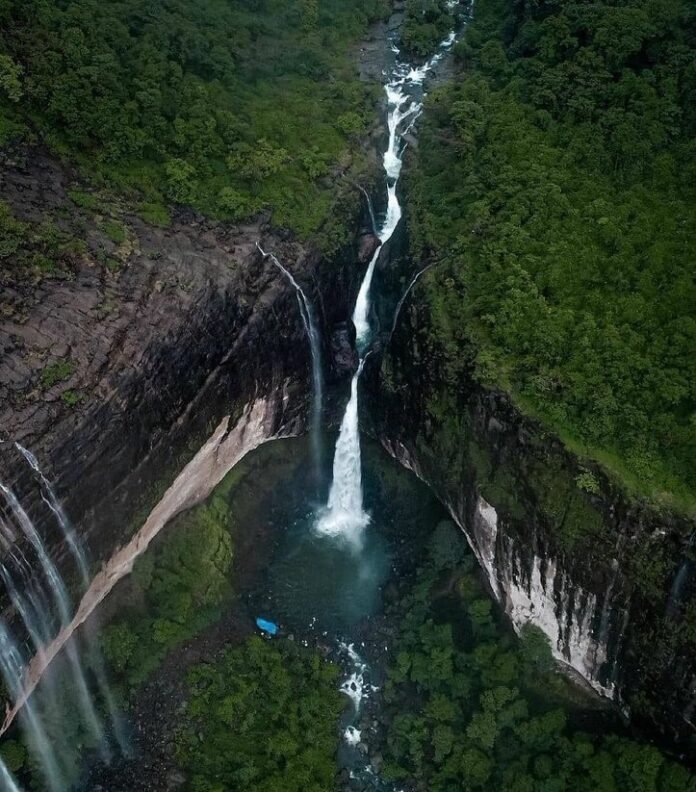
The Devkund waterfall is a heavenly place. This means that the fall pour down with strong gush on rocky surface right into the pool. You experience this in devkund, a majestic one.

Devkund Waterfall, full itenary at one place

Devkund is situated near Bhira dam in Raigad district of Maharashtra. It is best to visit this fall during the monsoon between September- October. The atmosphere is perfect for a trek and memorable photos!!


HOW TO REACH?
It is about 170 kilometres from Mumbai. There is no direct transport available to reach Devkund from Mumbai. So, you can hire a car of your own. In Bhira, finding a parking spot might difficult.


ABOUT DEVKUND
To get a crystal clear waterfall, pouring persistently the dense forest, trek to Devkund. It is a dream trek as I visited it last year during October, it was a moderate hike which leads to an outstanding beautiful waterfall.

Devkund Waterfall, full itenary at one place

It’s a bit crowded place. The treak begins from the parking area Bhira. The best landmark for devkund waterfall is Tata power plant at Bhira Dam. It took 2 hours to finish the devkund trek and reach the top, overall way to reach is easy but get bit slipary at the stone area of the river. The destination was mesmerizing.

Devkund Waterfall, full itenary at one place


It is the confluence of three waterfalls and is said to be origin of Kundalika river. It is about three hour trek from base village along the dam backwater. A guide is required to be taken during the trek as there is dense forest around.

TREK DETAILS
Entry charge (per person) Rs100
altitude: 2000ft
Time took: 1.5 hours each way
Water sources: none, carry two litres of water

The trail begins from the ope parking area at Bhira. It is well path with direction boards at regular intervel. In case you wish ton stay overnight, this is a good place to set up camp as camping is not allowed near waterfall. The backdrop is a perfect camping location. For the trek good amount of energy is required. In the first 45 mins, you have to cross 2 dries up streams. The terrain  is a mix of open meadows and overgrowth.

Point to be noted

  • Lunch/dinner is available at the base village.
  • Camping near waterfall is not allowed. However you can camp near the reservoir. Also can stay at bhira village
  • There is  a parking fee of INR 50.
  • Carry your water along with you.
  • Wear terk shoes or good quality of shoes.

Distance from Pune: 110 km
Distance from Mumbai: 170 km
Distance from Lonavala: 52 km  

Devkund Waterfall, full itenary at one place