Home Blog Page 51

Sattriya Dance: Assam’s Sacred Symphony of Devotion and Art

0

From monastery rituals to the modern stage, a classical tradition rooted in faith and storytelling

Among India’s diverse classical dance traditions, Sattriya holds a unique place—where art becomes devotion and performance becomes prayer. Originating in the northeastern state of Assam, Sattriya is deeply intertwined with spirituality, evolving within monastic institutions before emerging onto the global cultural stage.

Origins in Faith: The Legacy of Sankardev

Sattriya traces its origins to the 15th century and the teachings of Srimanta Sankardev, the saint-scholar who founded the Ekasarana Dharma—a neo-Vaishnavite movement centered on devotion to Lord Krishna. He introduced Sattriya as a medium to communicate religious teachings, moral values, and philosophical ideas to the masses.

Performed in Sattras (Vaishnavite monasteries), the dance was initially an integral part of ritual worship. It was traditionally performed by male monks, known as bhokots, as a form of devotional service.

From Sacred Spaces to Classical Recognition

Over time, Sattriya moved beyond monastery walls and embraced the proscenium stage, allowing both men and women to perform. Its evolution from a ritual practice to a performing art form led to its formal recognition in 2000 by the Sangeet Natak Akademi as one of India’s eight classical dances.

This recognition brought national and global attention to a tradition that had quietly flourished in Assam for centuries.

Technique, Form, and Expression

Sattriya is a complete dance form, harmoniously blending:
●Nritta (pure dance)
●Nritya (expressive storytelling)
●Natya (dramatic representation)

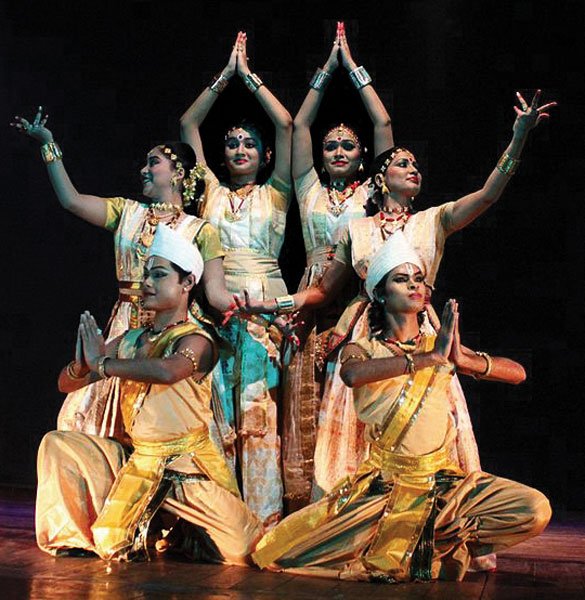
It is characterized by precise hand gestures (mudras), rhythmic footwork, and expressive facial movements. Two distinct stylistic streams define its technique:
●Purush Pak (vigorous, masculine style)
●Prakriti Pak (graceful, feminine style)

The themes are predominantly drawn from Krishna-centric texts, especially the Bhagavata Purana, portraying episodes from the life of Lord Krishna and other Vaishnavite narratives.

Music, Costume, and Aesthetic Appeal

The dance is accompanied by devotional compositions known as Borgeet, also attributed to Sankardev. Traditional instruments such as the khol (drum), cymbals, and flute create a rhythmic and spiritual ambiance.

Costumes reflect Assam’s rich textile heritage, featuring paat, muga, and endi silk, adorned with traditional jewellery. The visual elegance of Sattriya lies in its balance of vibrant attire, fluid movements, and disciplined technique.

Spiritual Essence and Contemporary Relevance

What distinguishes Sattriya is its enduring spiritual core. Even as it has adapted to contemporary stages, it retains its devotional essence—serving as a bridge between ritual and performance, faith and art.

A Living Tradition

Today, Sattriya continues to evolve while preserving its sacred roots. From monastery courtyards to international festivals, it stands as a testament to Assam’s cultural richness and India’s artistic diversity.
More than just a dance, Sattriya is a living tradition—where every gesture tells a story, and every movement echoes centuries of devotion.
Eiffel Tower Day: Celebrating Paris’ Timeless Iron Marvel

0

From a bold experiment to a global icon of art, engineering, and romance

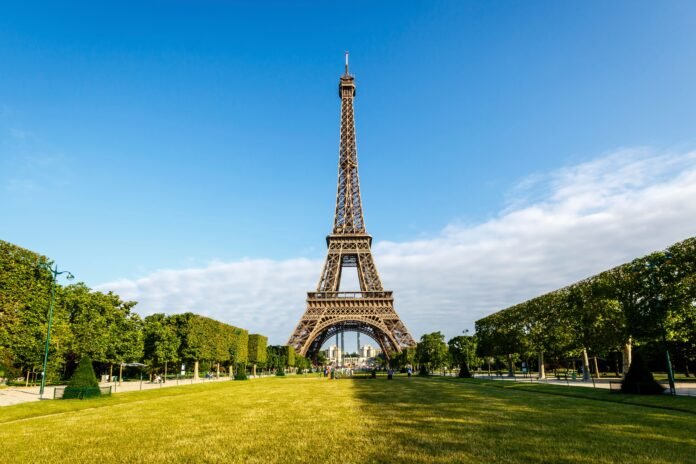
Every year on March 31, the world celebrates Eiffel Tower Day, marking the completion of the iconic Eiffel Tower in 1889. Rising gracefully above the skyline of Paris, this iron masterpiece has transcended its original purpose to become one of the most recognized and admired structures in the world—a symbol of innovation, elegance, and timeless charm.

The Birth of an Unlikely Icon

Designed by visionary engineer Gustave Eiffel, the tower was constructed as the centerpiece of the 1889 Exposition Universelle, commemorating the centenary of the French Revolution. Yet, its journey began with controversy. Many prominent artists and intellectuals of the time fiercely criticized its design, calling it an eyesore that would scar the beauty of Paris.

What they could not foresee was that this daring iron lattice structure would soon capture the imagination of the world. Its innovative engineering and unprecedented height—originally 300 meters, now approximately 330 meters including antennas—made it a marvel of its time.

From Temporary Structure to Permanent Legacy

Interestingly, the Eiffel Tower was never meant to last. It was initially granted a permit to stand for just 20 years. However, its utility as a radio and telecommunication tower proved invaluable, ultimately saving it from demolition. This transformation from a temporary exhibit to a permanent landmark reflects the power of innovation to redefine purpose.

Fascinating Lesser-Known Facts

●Gustave Eiffel maintained a private apartment at the top, where he hosted distinguished guests like Thomas Edison.

●The tower expands by up to 15 cm in summer due to thermal expansion of iron.

●During World War II , its lifts were disabled, forcing occupying forces to climb its stairs.

●It was the tallest man-made structure in the world until the completion of the Chrysler Building in 1930.

●The tower is repainted roughly every seven years, requiring about 60 tonnes of paint.

●It has featured in countless films and artworks, cementing its place in global pop culture.

●At night, it sparkles for five minutes every hour, creating a magical spectacle for visitors.

Why the World Remains Enchanted

Today, the Eiffel Tower attracts millions of visitors annually, making it one of the most visited monuments on Earth. Whether admired from the banks of the Seine or experienced up close, it offers breathtaking panoramic views of Paris. Beyond tourism, it has come to symbolize romance, artistic brilliance, and the spirit of France itself.

A Timeless Symbol of Vision and Courage

The story of the Eiffel Tower is one of resilience and transformation—from harsh criticism to universal admiration. It stands as a reminder that bold, unconventional ideas often shape the future.
On Eiffel Tower Day, we celebrate more than a monument; we celebrate human creativity, courage, and the enduring beauty of dreaming beyond limits.

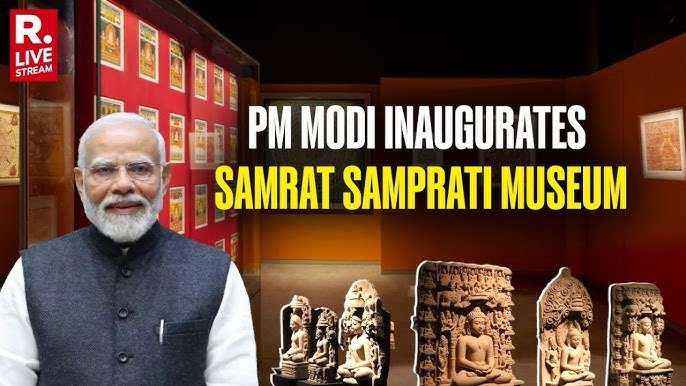
PM inaugurates the Samrat Samprati Museum: A Landmark Tribute to Jain Heritage Cultural Legacy

0

Prime Minister Narendra Modi dedicates a unique centre of knowledge, spirituality, and history on Mahavir Jayanti

On the sacred occasion of MahavirJayanti, Prime Minister Narendra Modi inaugurated the Samrat Samprati Museum at Koba Tirth in Gandhinagar, marking a significant addition to India’s cultural and spiritual landscape. The inauguration not only celebrates India’s rich Jain heritage but also reinforces the importance of preserving ancient knowledge systems for future generations

Koba Tirth: A Centre of Spiritual Learning

The museum is situated within the Mahavir Jain Aradhana Kendra at Koba, a renowned spiritual and educational hub. Over the years, Koba Tirth has become a focal point for Jain studies, meditation, and scriptural learning. Its serene environment and long-standing association with the preservation of Jain philosophy make it an ideal home for a museum of such national importance.

Honouring the Legacy of Samrat Samprati

The museum is named after Samprati, the grandson of Ashoka. Revered in Jain tradition, Samprati is often remembered for his patronage of Jainism and his efforts to spread the principles of ahimsa, compassion, and ethical governance across his empire. By dedicating the museum to him, the institution pays tribute to a ruler who used power to promote peace and spirituality.

A Journey Through Jainism’s Rich Heritage

The Samrat Samprati Museum houses an extensive and carefully curated collection of over 2,000 artefacts, offering visitors a deep insight into the evolution of Jain philosophy, art, and culture. Spread across seven galleries, the exhibits include rare manuscripts, intricately crafted stone and metal idols, miniature paintings, ancient coins, and ritual objects.
What makes the museum particularly engaging is its integration of modern audio-visual technology, which enhances storytelling and creates an immersive experience for visitors, scholars, and researchers alike.

Highlights of the Inauguration

During his visit, Prime Minister Modi toured the galleries and interacted with scholars and attendees. In his address, he described the museum as a confluence of knowledge, spirituality, and self-discipline, values that form the foundation of Indian civilisation. He emphasized the need to preserve ancient manuscripts and traditional knowledge, calling it a collective responsibility of society.

The inauguration formed part of his broader visit to Gujarat, which also included the launch and foundation of various development projects—symbolizing a balanced vision of cultural preservation alongside modern progress.

Why This Museum Matters

The Samrat Samprati Museum is not merely a repository of historical artefacts; it is a living testament to India’s philosophical depth and cultural continuity. At a time when the world grapples with conflict and material excess, the museum’s focus on ahimsa, non-possession, and harmony offers timeless guidance.

By bringing together history, spirituality, and innovation, the museum stands as a bridge between the past and the present—ensuring that the teachings of Jainism continue to inspire generations to come.

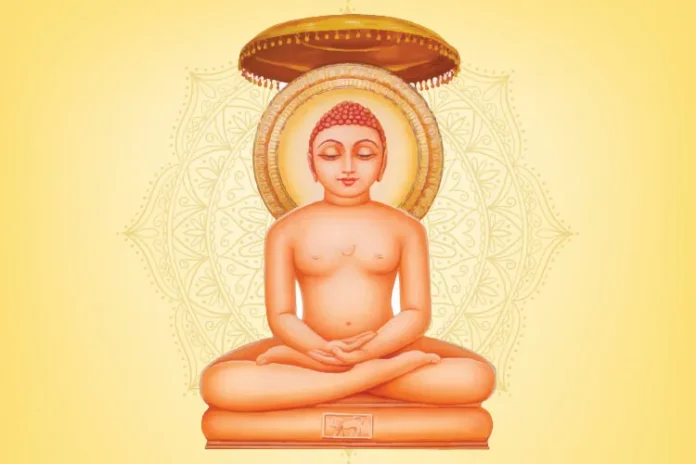
Mahavira’s Timeless Wisdom: Lessons for Modern Life on Mahavir Jayanti

0

Revisiting the teachings of Bhagwan Mahavira in a restless, fast-paced world

On the auspicious occasion of Mahavira Jayanti, we celebrate the birth of Mahavir, whose life continues to offer profound guidance in today’s complex and ever-changing world. Born in 599 BCE into a royal family, Mahavira chose the path of renunciation at the age of 30, leaving behind comfort and privilege in search of truth. Through years of intense meditation, discipline, and self-restraint, he attained Keval Gyan (omniscience), dedicating his life to spreading the message of peace, compassion, and liberation.

Ahimsa: The Power of Non-Violence

Mahavira’s most fundamental teaching, Ahimsa (non-violence), extends far beyond the absence of physical harm. It calls for purity in thoughts, words, and actions. In a world often divided by conflict, aggression, and digital hostility, this principle reminds us that true strength lies in compassion, empathy, and restraint. Practicing Ahimsa today can mean choosing kindness over criticism and understanding over anger.

Aparigraha: Letting Go in a Material World

Another cornerstone of his philosophy is Aparigraha (non-possessiveness). In an age dominated by consumerism and constant desire for more, Mahavira’s teaching encourages a simpler, more mindful way of living. By reducing attachment to material possessions, we not only find inner peace but also contribute to sustainability and a more balanced life.

Anekantavada: Embracing Multiple Perspectives

Mahavira’s principle of Anekantavada—the idea that truth is multifaceted—is especially relevant in today’s polarized world. It teaches us to respect differing opinions and acknowledge that no single perspective holds absolute truth. This philosophy fosters tolerance, dialogue, and harmony, values that are essential in both personal relationships and society at large.

Self-Discipline and Inner Strength

The life of Mahavira is a testament to extraordinary self-discipline and inner resilience. His journey highlights that true victory is achieved not by conquering others, but by mastering oneself. In a time of instant gratification and constant distractions, his teachings inspire patience, focus, and self-awareness.

Compassion for All Living Beings

Mahavira emphasized universal compassion—not just towards humans, but all living beings. This holistic view of life encourages us to adopt more ethical choices in our daily lives, from how we treat others to how we interact with nature.

A Message for Today

Mahavira’s life is not merely a spiritual narrative; it is a timeless guide for ethical and meaningful living. His teachings encourage us to cultivate empathy, think with clarity, and act with responsibility in every sphere of life.

As we celebrate Mahavir Jayanti, his message resonates more powerfully than ever: true liberation comes from within, and true victory lies in conquering one’s own desires, ego, and ignorance.

IndiGo Appoints Former British Airways Chief Willie Walsh as New CEO

0

IndiGo: Weeks after the abrupt resignation of Pieter Elbers, India’s largest airline IndiGo has appointed William “Willie” Walsh, former British Airways chief, as its new Chief Executive Officer. The announcement was made on Tuesday, marking a significant leadership shift at the airline.

In an official statement, IndiGo said, “Mr Walsh, popularly known as Willie, is currently the Director General of the International Air Transport Association (IATA). He has previously served as CEO of British Airways and International Airlines Group (IAG), which owns Aer Lingus, British Airways, Iberia, Level, and Vueling.”

Welcoming the appointment, IndiGo Chairman Vikram Singh Mehta said, “I am thrilled that Willie will be at the helm of IndiGo. He is an exceptional global aviation leader with a stellar track record across several airlines. His experience in managing large-scale operations and navigating complex market dynamics makes him ideally suited to lead IndiGo in a highly competitive global aviation environment.”

Mehta added that Walsh’s appointment marks a “new chapter” for IndiGo as it continues its growth in one of the world’s fastest-expanding aviation markets.

Walsh is widely regarded as one of the most influential figures in global aviation, bringing decades of leadership experience to IndiGo at a time when the airline is expanding its international footprint.

Anwar Khan Manganiyar: Voice of the Desert Elevated to National Cultural Leadership

0

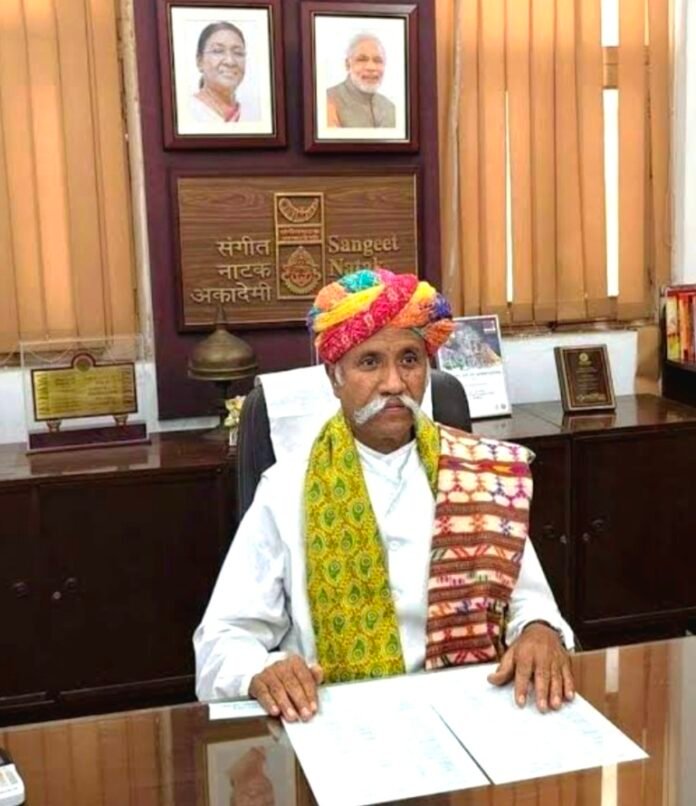
From the sands of Rajasthan to a national cultural stage, Anwar Khan Manganiyar stands today as one of India’s most celebrated custodians of traditional music. His recent appointment as Vice Chairman of the Sangeet Natak Akademi marks both a personal milestone and a significant moment for Indian folk traditions.

Born in the desert region of Rajasthan, Anwar Khan belongs to the Manganiyar community, hereditary musicians known for preserving centuries-old oral traditions. Over decades, he has emerged as a leading voice of Rajasthani folk and Sufi music, mastering instruments like the kamayacha and khartal while carrying forward compositions passed down through generations.

His artistry is deeply rooted in the cultural fabric of the Thar desert, yet it has resonated far beyond, earning him national and international acclaim. In recognition of his immense contribution to the arts, he was awarded the Padma Shri in 2024, one of India’s highest civilian honours. His performances—often associated with iconic renditions like Kesariya Balam—have helped bring Rajasthan’s folk heritage to global audiences.

In March 2026, Anwar Khan was appointed Vice Chairman of the Sangeet Natak Akademi, the apex institution dedicated to promoting music, dance, and drama in India. This appointment is historic: he is the first artist from the Manganiyar community to hold such a position, symbolizing long-overdue institutional recognition of folk traditions.

His elevation is being widely celebrated not just as an individual achievement, but as a moment of pride for Rajasthan and for India’s diverse folk heritage. It reflects a broader cultural shift—where grassroots artists are finally finding representation in national platforms.

Anwar Khan’s journey is, therefore, more than a success story; it is a testament to the enduring power of tradition, and a reminder that India’s cultural soul lies as much in its villages and deserts as in its grand institutions.

India Census 2026: First Fully Digital Population Census to Begin April 1; Self-Enumeration, Mobile Apps Introduced

0

India is set to launch its first fully digital population census, with the initial phase beginning on April 1, 2026. Announced by the Registrar General and Census Commissioner, this will be the 16th census since inception and the eighth after Independence. Touted as the world’s largest enumeration exercise, it will involve over 3 million officials, including enumerators and supervisors, across the country.

Digital Census 2026: Mobile Apps and Self-Enumeration

In a major digital shift, Census 2026 will use mobile applications for data collection. For the first time, citizens can opt for self-enumeration through a secure online portal available in 16 languages. After submitting details, households will receive a unique Self-Enumeration ID, which will be verified during an enumerator’s visit. This hybrid model blends traditional door-to-door surveys with digital convenience, aiming to boost accuracy, transparency, and participation.

Legal Framework and Census Reference Dates

The census will be conducted under the Census Act, 1948 and the Census Rules, 1990. The reference date for most parts of India is March 1, 2027. However, snow-bound regions such as Ladakh and parts of Jammu & Kashmir, Himachal Pradesh, and Uttarakhand will follow an earlier reference date of October 1, 2026, due to harsh weather conditions.

Two-Phase Structure of India Census

The census will be carried out in two phases:

  • Phase I (April–September 2026): House listing and housing census, covering amenities, assets, and living conditions.
  • Phase II (February 2027): Population enumeration, including demographic, socio-economic, educational data, and caste details.

The inclusion of caste enumeration in Phase II makes this exercise particularly significant for governance, welfare policies, and data-driven decision-making.

Key Highlights

  • India’s first census was conducted in 1872; regular decennial censuses began in 1881.
  • Census 2026 will be India’s first fully digital census.
  • Self-enumeration is being introduced for the first time.
  • The Registrar General and Census Commissioner functions under the Ministry of Home Affairs.

Budget, Scale, and Implementation

The government has allocated ₹11,718.24 crore for Census 2026, covering all 36 States and Union Territories, over 7,000 sub-districts, and nearly 6.4 lakh villages. A robust digital infrastructure—including mobile apps, GIS-based mapping tools, and real-time monitoring dashboards—has been developed.

To ensure smooth execution, a multi-tier training system involving national trainers, master trainers, and field-level trainers has been rolled out. A nationwide pre-test conducted in November 2025 successfully validated the digital systems and methodology, setting the stage for a faster, more accurate, and technology-driven census.

Jannik Sinner Wins Miami Open, Completes Sunshine Double

0

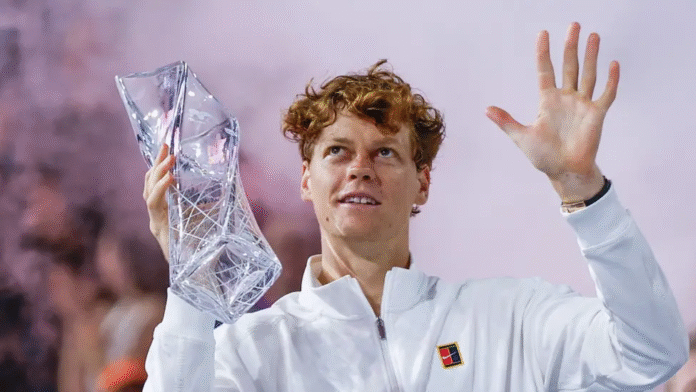
Italy’s Jannik Sinner secured a landmark victory at the Miami Open 2026, defeating Jiri Lehecka 6–4, 6–4 in the final. With this win, Sinner completed the prestigious ‘Sunshine Double’, claiming both Indian Wells and Miami titles in the same season—an achievement that underscores his growing dominance on the ATP Tour.

Historic Sunshine Double feat
Sinner became the first player since Roger Federer in 2017 to win both tournaments in a single season. Remarkably, he is the first to achieve this without dropping a single set across the two events. The run also included his maiden Indian Wells title, marking a significant milestone in his career.

Elite company in tennis history
The ‘Sunshine Double’ is among tennis’s toughest accomplishments, previously achieved by legends such as Jim Courier, Michael Chang, Pete Sampras, Marcelo Rios, and Andre Agassi. Federer and Novak Djokovic have completed it multiple times. Sinner now becomes the eighth player to join this exclusive list, reinforcing his place among the sport’s elite.

Dominant form and season record
The 24-year-old extended his streak to 34 consecutive sets won at the ATP Masters 1000 level, dating back to the Paris Masters last year. He has also improved his season record to 19 wins and just 2 losses. His consistent performances have brought him closer to World No. 1 Carlos Alcaraz in the ATP rankings, significantly narrowing the points gap.

Key facts

  • The ‘Sunshine Double’ refers to winning Indian Wells and the Miami Open in the same season.
  • ATP Masters 1000 tournaments are among the most prestigious events after the Grand Slams.
  • Roger Federer was the last player to complete the Sunshine Double in 2017 before Sinner.
  • Novak Djokovic holds multiple Sunshine Double titles, including a streak from 2014 to 2016.

Parallel success in women’s tennis
On the women’s side, Aryna Sabalenka also completed the Sunshine Double this year. This marks only the fourth instance in history when both ATP and WTA players achieved the feat in the same season, with previous occurrences in 1994, 2005, and 2016 featuring legends such as Steffi Graf, Kim Clijsters, and Victoria Azarenka.

11-Year-Old Karnataka Girl’s Sharp Eyes Uncover 12th-13th Century Hero Stone

0

PC(Instagram)

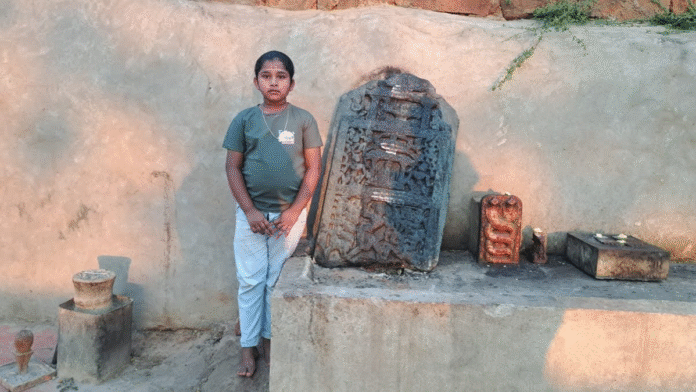
Worshipped as Shani Dev for Centuries in a heartwarming tale of curiosity and observation, an 11-year-old Class 5 student from a small village in Karnataka has stunned historians and locals alike. Lakshmi Prakash Humbi from Mallammana Belawadi (also referred to as Halalmanna Belawadi or Belwadi) village in Bailhongal taluk, Belagavi district, identified a centuries-old Veeragallu (hero stone) that the entire village had been worshipping as an idol of Shani Dev.

The ancient stone, lying outside the local Hanuman temple, had been revered for generations as a deity. But Lakshmi’s keen observation revealed its true historical identity a 12th or 13th-century memorial commemorating a brave warrior who died protecting cattle.
Lakshmi’s family was observing an 11-day vow suggested by a visiting devotee (Jogamma). Every day, she visited the Hanuman temple with her mother and brother. Before entering the temple, they would offer prayers to the stone placed outside, which the village priest Balamma Poojari and others believed was a Shani Dev idol. On the final day (March 3, 2026), accompanied by her father Prakash Humbi, Lakshmi boldly pointed out that the stone was not a deity but depicted a battle scene. She drew attention to the carvings of a warrior fighting to protect cows scenes that reminded her of the inspiring stories of the legendary Veera Rani. Belawadi Mallamma, a 17th-century warrior queen from the region known for bravely rescuing cattle from invaders.

Initially skeptical, her father and village elders cleaned the stone and examined it closely. They soon realized the young girl was right. Historians, including Dr. Balappa Eerappa Chinagudi (also referred to as Balappa Irappa Chinagudi) from Bengaluru University and other epigraphists from Dharwad, confirmed the find as a Turugol Veeragallu (a hero stone dedicated to someone who sacrificed their life while protecting cattle). Intricate Carvings on the Ancient Stone the hero stone features beautifully carved panels that narrate a heroic tale first p anel a brave warrior fighting enemies while protecting livestock (cows). Second Panel Apsaras (celestial nymphs) carrying the martyred hero to heaven.Third Panel: The hero depicted in the divine realm near a Shivling and Nandi bull.

Experts believe the stone may date back to the 12th or 13th century, possibly even predating the era of Rani Belawadi Mallamma. It stands as a powerful reminder of the courageous warriors who laid down their lives to safeguard villages and cattle from threats. Veeragallu (or hero stones) are traditional memorial stones erected in South India, particularly in Karnataka, to honor individuals who displayed extraordinary bravery. These stones typically commemorate: Warriors who died in battle. Heroes who sacrificed their lives protecting villages, temples, or cattle from thieves, invaders, or wild animals. Such memorials are rich in symbolic carvings depicting the hero’s valour, journey to heaven, and divine reception.


Lakshmi, daughter of Prakash Humbi, has a younger brother. Growing up in the village, she was deeply influenced by local folklore about Veera Rani Belawadi Mallamma, who fought fearlessly to rescue cattle. These stories sharpened her ability to recognize the carvings on the stone. After the discovery, Lakshmi expressed her wish that the hero stone be properly preserved and studied so that future generations can learn about their rich local history and the bravery of their ancestors.

A Proud Moment for the Village and Beyond This extraordinary discovery by a fifth-grader has not only corrected a long-standing misconception but also revived interest in the forgotten history of Mallammana Belawadi village. Historians have praised Lakshmi’s sharp observation skills, calling her an inspiration for students everywhere. In a world dominated by screens and gadgets, Lakshmi’s story reminds us of the power of curiosity, traditional storytelling, and paying attention to our surroundings.

350-Year-Old Bundela Palace in Madhya Pradesh Named Among TIME Magazine’s World’s Greatest Places 2026

0

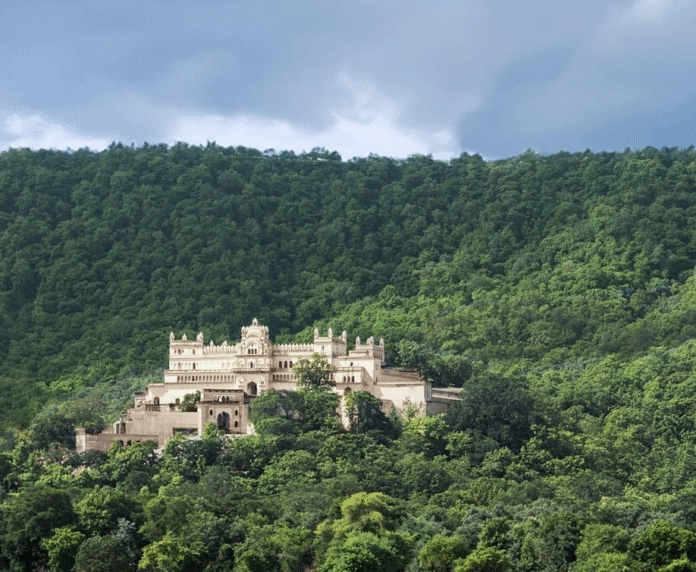
India’s Royal Heritage Shines on Global Stage.In a proud moment for India’s cultural tourism, The Oberoi Rajgarh Palace in Khajuraho, Madhya Pradesh, has been included in TIME Magazine’s prestigious World’s Greatest Places 2026 list. The list celebrates extraordinary destinations known for their unique experiences, design, and cultural significance.

Once the majestic residence of the Bundela dynasty, this 350-year-old palace has been meticulously restored and transformed into a luxurious heritage resort by the Oberoi Group. Nestled in the Maniyagarh Hills overlooking a rain-fed lake surrounded by lush greenery, the palace beautifully blends history, nature, and modern luxury.

A Perfect Fusion of History, Wildlife & Culture what makes The Oberoi Rajgarh Palace truly special is not just its grandeur, but the unforgettable experiences it offers. Located just 20-30 minutes away are the iconic Khajuraho Temples – a UNESCO World Heritage Site famous for its intricate carvings and ancient Hindu and Jain architecture. The palace’s in-house historian takes guests on guided tours of these magnificent monuments.

350-Year-Old Bundela Palace in Madhya Pradesh Named Among TIME Magazine's World's Greatest Places 2026

On the other side lies Panna National Park, a sprawling 200-square-mile sanctuary renowned for its successful Bengal tiger reintroduction program, along with leopards and sloth bears. Guests can enjoy private safaris and guided tours to the stunning Raneh Gorge, where a dramatic pink granite canyon ends in waterfalls and a protected gharial habitat.

Originally built in the late 17th century by Bundela King Raja Hindupat Singh as a fort, the palace later became the residence of Chandela King Maharaja Chhatrasal. It still features the historic Mastani Gate, named after Chhatrasal’s daughter Mastani, famously known as the wife of Peshwa Bajirao.

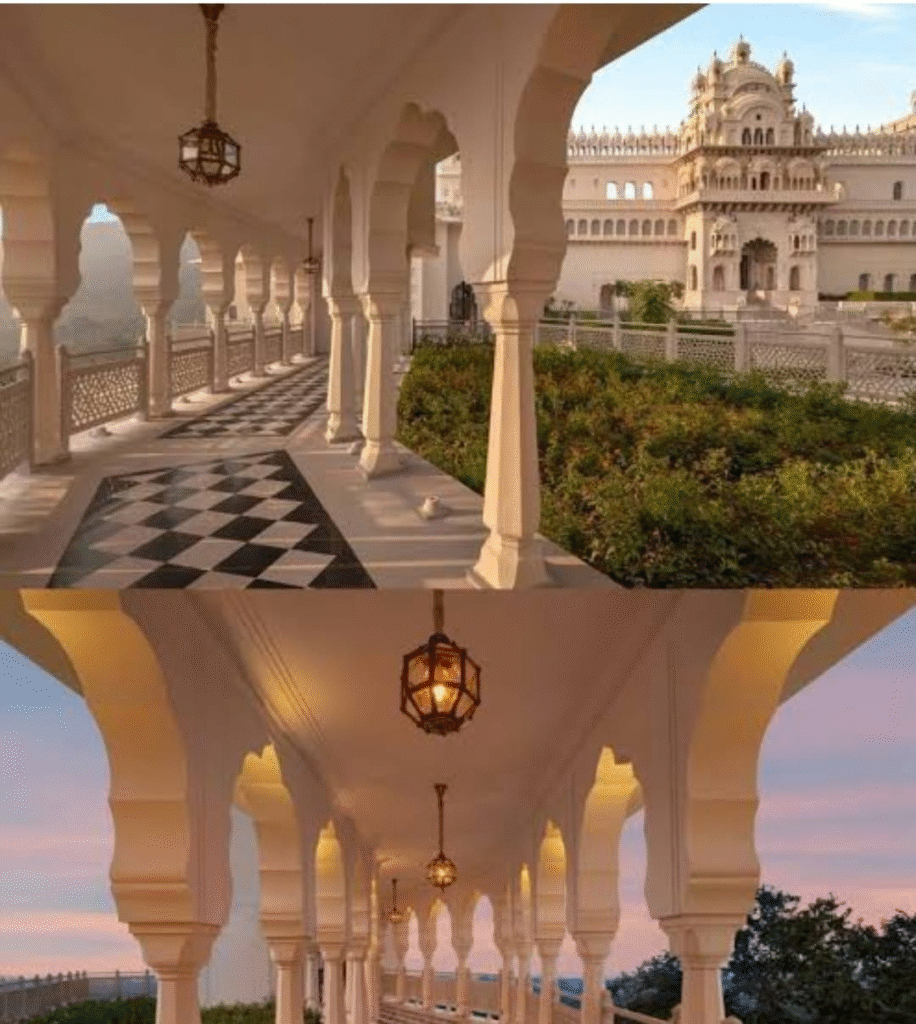
After nearly a decade of careful conservation work by expert architects and local craftsmen, the palace reopened in November 2025 as a 65-room luxury resort. It showcases classic Bundelkhand architecture with hand-carved stone pillars, grand arches, vaulted ceilings, intricate frescoes, traditional lime plaster walls, and beautiful regional arts including Chanderi textiles and tribal crafts.

The resort also hosts “Palace Evenings” featuring vibrant Bundelkhand folk performances and traditional Indian dance, bringing the region’s rich cultural heritage to life. A Milestone for Indian Heritage Tourism Being featured in TIME Magazine’s World’s Greatest Places 2026 is not just an honour for one hotel – it is a global recognition of India’s rich royal heritage, successful conservation efforts, and growing appeal as a luxury cultural destination. For travellers seeking a perfect blend of history, wildlife adventures, and world-class hospitality in a serene setting, The Oberoi Rajgarh Palace has now earned its place among the world’s most extraordinary destinations.