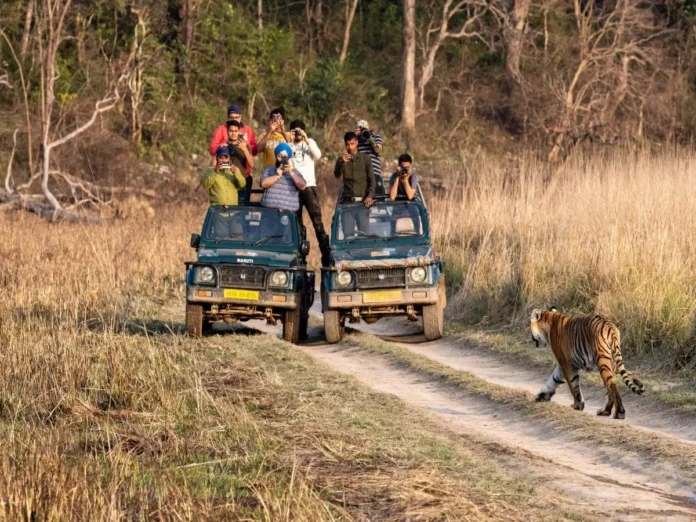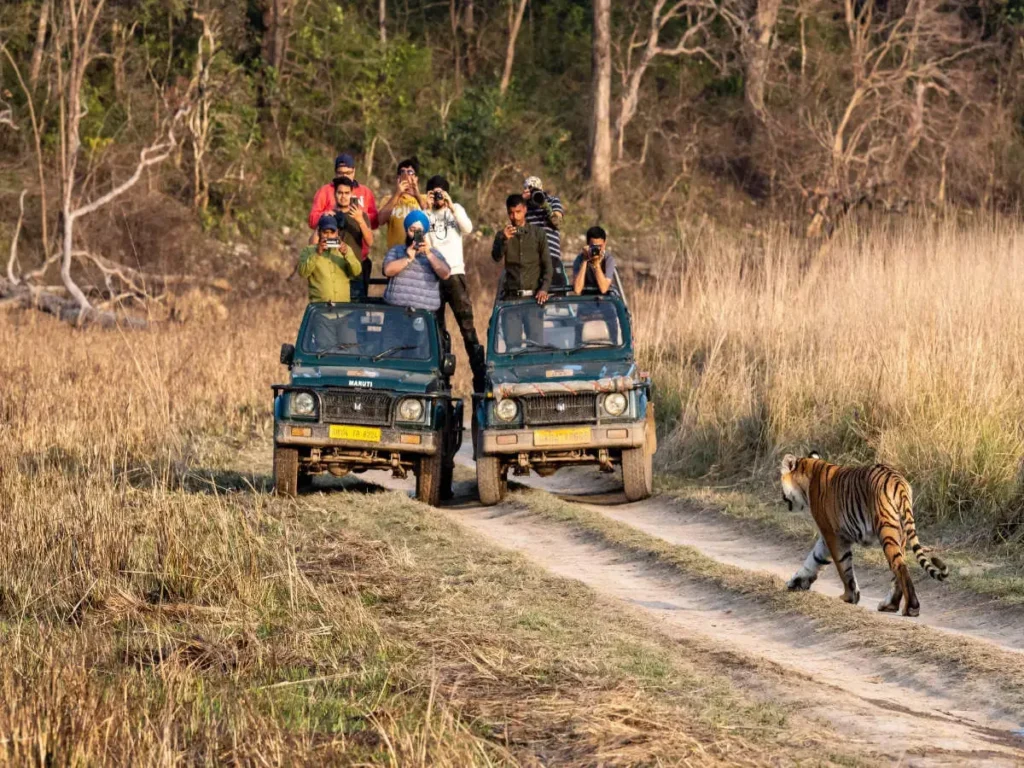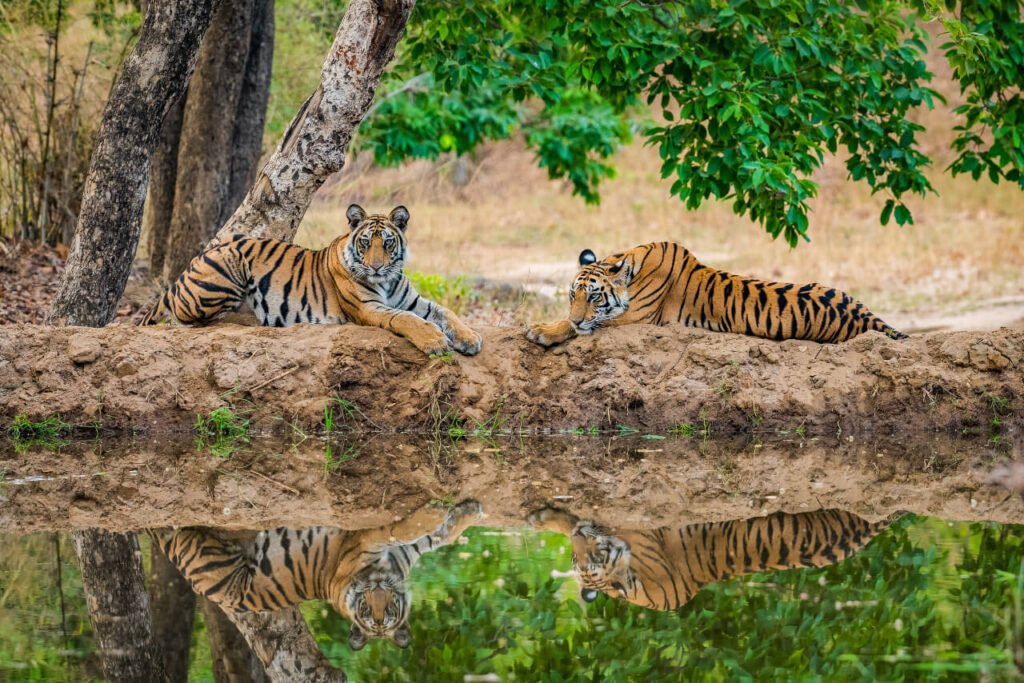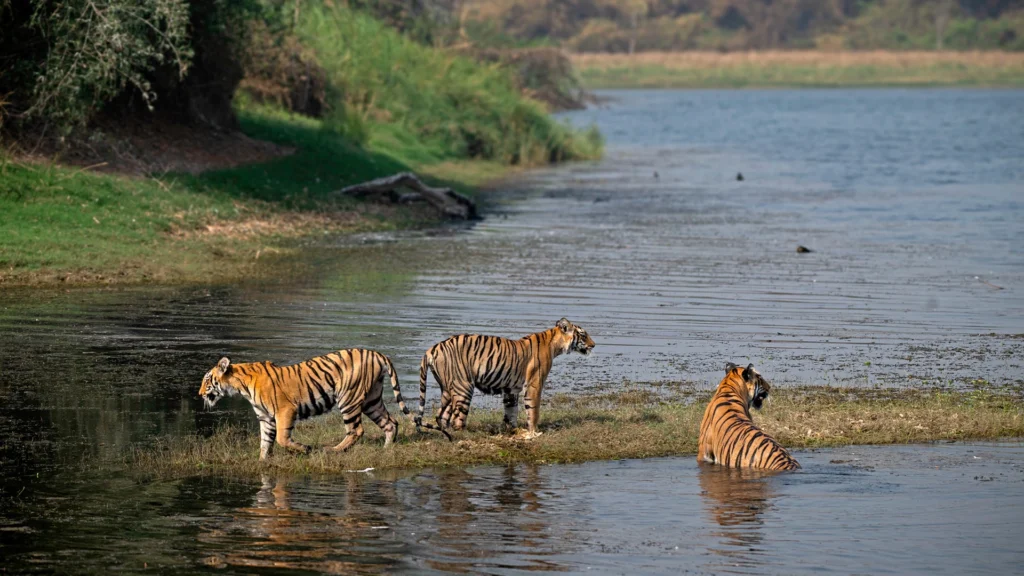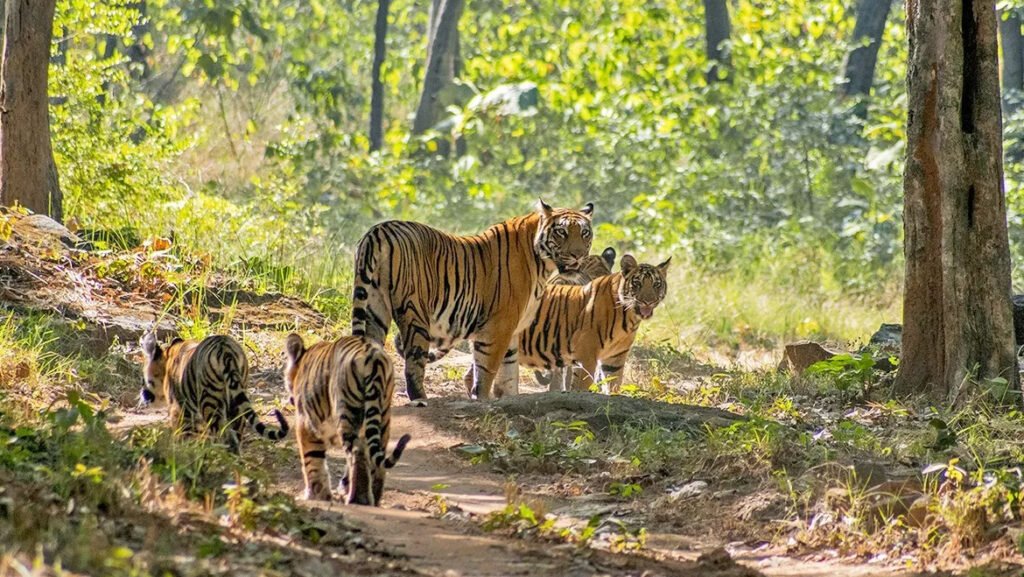
Jwala, the Namibian Cheetah, gave birth to five cubs on Monday at the Kuno National Park, in Madhya Pradesh’s Sheopur district, taking India’s Cheetah population to 53, Union Environment Minister Bhupender Yadav said.
Of these, 50 are now in Kuno National Park, and three are in Gandhi Sagar Sanctuary in Madhya Pradesh.
In an X post, Union Minister Bhupender Yadav said the number of Indian-born thriving cubs has risen to 33, and lauded the veterinarians and field staff taking care of the big cats at the Kuno National Park.
Cheetahs cross half-century 🐆
A moment of great pride for Project Cheetah as Jwala, the Namibian Cheetah and a successful third-time mother, gave birth to five cubs today at the Kuno National Park.
He wrote, “Cheetahs cross half-century. A moment of great pride for Project Cheetah as Jwala, the Namibian Cheetah and a successful third-time mother, gave birth to five cubs today at the Kuno National Park. With this birth, the number of Indian-born thriving cubs has risen to 33, marking the 10th successful cheetah litter on Indian soil another important milestone in India’s cheetah conservation journey.”
“This achievement reflects the dedicated efforts, skill, and commitment of the veterinarians, field staff and all involved who continue to work tirelessly on the ground. With the arrival of these cubs, the total cheetah population in India has now reached 53. A historic and heart-warming moment for wildlife conservation. May Jwala and her cubs grow strong and race ahead, carrying India’s cheetah story to even greater heights,” the X post read.
In one of the largest graduating cohorts of Indian medical students from a single overseas medical institution in recent years, 1,015 Indian-origin students were awarded Doctor of Medicine (MD) degrees at the 25th International Medical Doctors Graduation Ceremony of Davao Medical School Foundation Inc. (DMSF) held in Davao City.
The Doctor of Medicine (MD) degree awarded by DMSF is equivalent to the MBBS degree in India, marking one of the largest cohorts of Indian students graduating from an overseas medical institution in recent years.
Over the years, the Davao Medical School Foundation has emerged as a prominent destination for Indian students seeking medical education abroad. Nearly 12,000 Indian students have graduated from the institution, with many now practicing medicine across India and internationally.
Students graduating this year represent a diverse cross-section of India, with aspiring doctors travelling from across the country to pursue their medical education at DMSF, reflecting the institution’s growing appeal among Indian medical aspirants.
Speaking on the occasion, Dr. David Pillai, CEO and Founding Chairman, Transworld Educare, said: “This graduation ceremony marks a proud milestone for the students, their families and the broader ecosystem supporting Indian students pursuing medical education overseas. The Philippines has long been a trusted destination for Indian medical aspirants due to its strong academic standards, English-medium instruction and globally recognised medical training.
Seeing over a thousand Indian students graduate from Davao Medical School Foundation this year reflects the growing aspirations of Indian students seeking quality global medical education and their commitment to strengthening healthcare systems in India and worldwide.”
DMSF has also built a strong academic reputation for its graduates’ performance in the Foreign Medical Graduate Examination (FMGE) — the qualifying examination required for overseas medical graduates seeking to practice medicine in India. Over the past decade, DMSF graduates have consistently featured among top FMGE rankers, reflecting the institution’s robust academic and clinical training.
The Philippines has emerged as an important destination for Indian students pursuing medical education abroad due to several key factors:
• English-medium medical education, making it accessible for Indian students • Strong clinical exposure and hospital-based training • Established Indian student community across several medical institutions • Relatively affordable education compared to many global destinations
The growing presence of Indian students in Philippine medical universities reflects the strengthening academic engagement between India and the Philippines, particularly in the field of medical education.
Erwin Rommel N. Hontiveros, OIC Dean of Colleges, Davao Medical School Foundation said: “For decades, Davao Medical School Foundation has welcomed Indian students and supported them throughout their journey to becoming skilled medical professionals. The achievements of our graduates, including their performance in the FMGE examination, reflect the strong academic and clinical training provided by the institution.”
The graduation ceremony brought together academic leaders, faculty members, graduating students and their families, celebrating the achievements of Indian medical aspirants and highlighting the growing educational collaboration between India and the Philippines.
The escalating tensions involving Israel, Iran, and the United States have once again turned West Asia into a focal point of global geopolitical instability. As a region that controls vital energy supplies and trade routes, any conflict here quickly produces ripple effects across the global economy. For India, which maintains deep economic and strategic connections with West Asian countries, the consequences are already becoming visible in sectors such as industry, agriculture, and international trade.
Strategic Energy Routes Under Pressure
One of the most critical concerns arising from the conflict is the potential disruption of global energy routes. A large share of the world’s crude oil passes through the Strait of Hormuz, a narrow but strategically vital maritime corridor located near Iran. Any escalation that threatens this passage could push global oil prices upward. For India, which imports the majority of its crude oil requirements, such fluctuations directly translate into higher transportation costs, increased inflation, and pressure on the national economy.
Industrial Disruptions: The Case of Morbi’s Ceramic Sector
The consequences of the conflict are not limited to energy markets alone. India’s industrial sector has also begun to experience disruptions. The ceramic manufacturing hub in Morbi, widely recognized as the ceramic capital of India, has faced operational challenges due to irregular fuel supplies and rising energy costs. Since ceramic kilns require continuous high-temperature operations powered by natural gas or propane, supply interruptions have forced several units to temporarily halt production. Such disruptions threaten employment and export competitiveness in one of India’s key manufacturing clusters.
Agricultural Concerns: Rising Fertilizer Costs
The agricultural sector is also vulnerable to the indirect effects of geopolitical instability. Fertilizers such as Urea and Diammonium Phosphate (DAP) rely heavily on natural gas and global supply chains. As energy prices rise and shipping routes become uncertain, fertilizer prices tend to increase in international markets. For Indian farmers, this translates into higher input costs, which could influence crop production decisions and affect agricultural profitability in upcoming seasons.
Trade Disruptions and the Rice Export Challenge
India is one of the world’s largest exporters of rice, particularly basmati rice, to West Asian markets. Countries such as Iran, Saudi Arabia, and the United Arab Emirates constitute important destinations for Indian rice exports. However, ongoing conflict in the region has complicated shipping logistics and payment mechanisms. These disruptions have slowed export activity and created fluctuations in domestic rice prices, highlighting the vulnerability of trade flows during geopolitical crises.
Broader Economic Implications
Beyond individual sectors, the conflict carries broader macroeconomic implications for India. Rising oil prices can increase the country’s import bill, widen the current account deficit, and exert upward pressure on inflation. At the same time, uncertainty in global markets may affect investor confidence and financial stability. These developments underline the interconnected nature of geopolitics and economic resilience in an increasingly globalized world.
Conclusion
The unfolding conflict in West Asia serves as a reminder that regional tensions can have far-reaching economic consequences. For India, the situation underscores the importance of strengthening energy security, diversifying trade partnerships, and building resilient supply chains. As global uncertainties continue to shape the international landscape, proactive economic and diplomatic strategies will be essential for safeguarding India’s long-term stability and growth.
((The article has been written by: Soniya Yadav, Student, Kanoria Mahila Mahavidyalaya)
For centuries, the land of Mewar has been synonymous with valour, art and regal splendour. Among its most enduring cultural symbols is its extraordinary jewellery tradition, an art form that reflects the region’s history, craftsmanship and social identity. Here comes the report from The EBNW Story written by Kanan Rathore...
Royal Roots of Ornamentation Jewellery in Mewar flourished under the patronage of the Rajput courts, especially during the reign of the Maharanas of Udaipur. Royal families adorned themselves with intricate pieces crafted from gold, silver, pearls, emeralds and precious gemstones. Techniques such as kundan, jadau, meenakari and thewa evolved and flourished across the region, blending artistry with luxury.
Dr. Uttama Singh Rao, a historian of regional culture, explains, “Jewellery has always been an integral part of the culture and traditions of Mewar. From royal households to prosperous families, owning intricately crafted ornaments was a symbol of prestige, heritage and identity.”
Jewellery in Everyday Culture While the royal courts popularised elaborate jewellery, the tradition was equally visible in rural communities. Women across villages adorned themselves with distinctive ornaments made of gold or silver, reflecting both aesthetics and practicality. Many ornaments were also believed to have Ayurvedic and acupressure benefits, enhancing circulation and balancing the body’s energy points.
A Symbol of Celebration Jewellery holds deep importance in the cultural life of Mewar, particularly during weddings and festivals. Brides traditionally wear elaborate sets including necklaces, bangles, anklets and head ornaments, while men too historically wore jewellery such as earrings, necklaces and rings.
According to senior history scholar Divyansh Saxena, “The jewellery traditions of Mewar reveal a fascinating social hierarchy. While royal families wore the most elaborate pieces with precious stones, common households and tribal communities developed their own distinctive styles and materials.”
A Heritage Passed Through Generations More than adornment, jewellery in Mewar is considered family heritage or ‘viraasat’. Passed down through generations, these ornaments carry memories, stories and cultural pride, ensuring that the glitter of Mewar’s past continues to shine in the present.
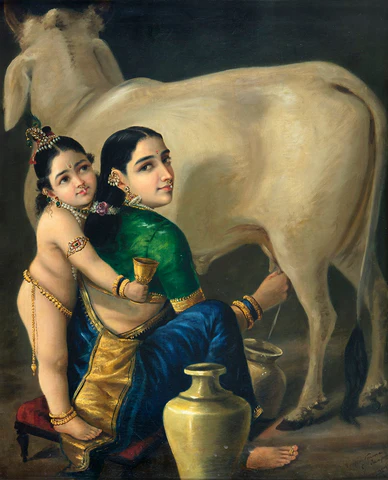
While the royal courts popularised elaborate jewellery, the tradition was equally visible in rural communities. Women across villages adorned themselves with distinctive ornaments made of gold or silver, reflecting both aesthetics and practicality. Many ornaments were also believed to have Ayurvedic and acupressure benefits, enhancing circulation and balancing the body’s energy points.
In many parts of North and Western India, especially in Rajasthan, devotees observe Sheetala Saptami or Sheetala Ashtami, a traditional festival dedicated to Goddess Sheetala, the deity believed to protect people from diseases and epidemics. The festival is usually celebrated 7 to 8 days after Holi during the Hindu month of Chaitra. The word “Sheetala” means cool or calm, symbolizing healing and protection. Historically, the goddess has been worshipped as the protector from diseases such as smallpox, measles, and other infections. The festival therefore carries a strong message of health, cleanliness, and well-being within communities.
Mythological Beliefs and Stories According to traditional beliefs and folklore, Goddess Sheetala travels from house to house on this day blessing families that maintain cleanliness and devotion. It is believed that the goddess prefers a calm and cool environment, which is why the kitchen fire is not lit on the festival day. Several folk stories associated with the festival highlight the importance of hygiene and respect for the goddess. It is said that families who observe the rituals properly receive protection from illness and misfortune, while those who neglect the traditions risk inviting the goddess’s displeasure.
Unique Ritual of ‘Basoda’ or Pre-Cooked Food One of the most distinctive customs of the festival is that no fresh food is prepared on the day of Sheetala Saptami or Ashtami. Instead, families cook all the meals the previous day, a practice popularly known as Basoda or Basioda. On the morning of the festival, devotees offer these pre-prepared dishes to the goddess as bhog and then consume them with family members. The ritual symbolizes allowing the hearth to rest and maintaining a “cool” kitchen, in accordance with the goddess’s association with calmness and healing.
Temple Visits and Community Celebrations Devotees wake up early in the morning, bathe, and visit temples dedicated to Sheetala Mata to offer prayers, flowers, and food. In several towns and villages of Rajasthan, special gatherings and small fairs are also organized near temples where families come together to celebrate the occasion.
Traditional Foods Prepared for the Festival Food is an essential part of the celebration. A variety of dishes are prepared a day earlier and offered to the goddess. Popular items include puri, aloo ki sabzi, pachkuta, kairi ki lonji, dahi bada, sweet preparations, and snacks. One of the most commonly consumed dishes in Rajasthan on this day is dahi-chawal, locally known as “Oliya”, which is considered cooling and simple, perfectly reflecting the essence of the festival.
Regions Where It Is Celebrated While the festival is especially prominent in Rajasthan, it is also widely observed in Gujarat, Madhya Pradesh, Uttar Pradesh, and Haryana. The rituals and food traditions may vary slightly from region to region, but the central belief of worshipping Goddess Sheetala for protection and well-being remains the same.
A Tradition Rooted in Faith and Cultural Wisdom Sheetala Saptami–Ashtami beautifully reflects the blend of faith, seasonal wisdom, and community traditions in Indian culture. By honouring Goddess Sheetala and sharing food prepared with devotion, families celebrate a ritual that has been passed down for generations, one that emphasizes hygiene, harmony, and gratitude for health and protection.
In the heart of Bhopal, amidst the serene Shyamala Hills, the Madhya Pradesh Tribal Museum is currently hosting a captivating exhibition-cum-sale of paintings by Lalita Tahed, a prominent artist from the Bhil community. instagram.com This event, part of the museum’s “Shalaka” series-the 70th and 71st installments-runs from March 3 to March 30, 2026, at the Likhandra Exhibition Gallery. The “Shalaka” initiative is a monthly program designed to empower tribal artists by providing them a dedicated platform to showcase and sell their works directly to art enthusiasts and collectors. It underscores the museum’s commitment to preserving and promoting India’s indigenous art forms.
About the Artist: Lalita Tahed
Lalita Tahed, a young and talented Bhil tribal artist hailing from the Jhabua district of Madhya Pradesh, was born in Antarvelia village. Growing up enveloped by nature without formal education, she developed an early affinity for traditional wall art. Her artistic journey took a significant turn after relocating to Bhopal, where she honed her skills in the traditional Bhil style under the mentorship of her mother-in-law, the esteemed Padma Shri awardee Lado Bai. As a resident artist at the museum and associated with spaces like Pratibha Veethi, Lalita’s paintings vividly capture the stories, traditions, and lived experiences of the Bhil community. Her style is marked by vibrant colors, intricate lines, and the signature use of multi-hued dots to depict themes of nature, wildlife, spirituality, and tribal customs.
This exhibition marks her first solo
show, a milestone in her career. Her works have previously been displayed in major Indian cities such as New Delhi and Hyderabad, with pieces adorning international collections in France, the USA, and Australia. Among her accolades is a Gold Medal from an art competition at the Manikarnika Art Gallery in Delhi.
The Essence of Bhil Art
Bhil painting stands as one of India’s oldest tribal art forms, practiced by the Bhil community across Madhya Pradesh, Rajasthan, Gujarat, and Maharashtra. Its defining characteristic is the intricate dot patterns that fill large, bold shapes-these dots symbolize ancestors, deities, grains like maize, or raindrops, embodying life and prosperity. Traditionally, Bhil art utilized a vibrant palette derived from natural materials: turmeric for yellow, clay for red, and leaves for green. Today, contemporary artists like Lalita incorporate bright acrylics on canvas, blending ancient techniques with modern narratives. The paintings serve as visual records of tribal life, folklore, and spiritual beliefs, often eschewing Western perspectives for a more narrative, flat style.
Common themes include: Nature and Wildlife: Depictions of trees, peacocks, horses, and tigers, highlighting the community’s profound environmental bond.
Daily Tribal Life: Scenes of farming, hunting, dancing (such as the Ghoomar), and community rituals.
Rituals: Particularly the Pithora ritual-sacred wall murals painted by men known as Likhandras to invoke blessings for homes.
The term “Likhandra” honors the traditional Bhil painters who created ritualistic murals on tribal home walls. The museum’s gallery name pays homage to this storytelling heritage.
Historical Evolution of Bhil Art
The roots of Bhil art trace back to ancient times, with scholars linking it to prehistoric rock paintings in the Bhimbetka caves. Tribal lore attributes its origins to a divine gift from Goddess Parvati, inspired by the Bhils’ harmony with nature. Historically ritualistic, Pithora paintings adorned mud walls plastered with cow dung and clay, using neem twigs as brushes and natural pigments. These ephemeral artworks were created for occasions like births, weddings, or festivals, with ritualistic murals traditionally handled by men (Lakharas) and everyday art passed matrilineally from mothers to daughters. The modern evolution began in the 1980s at Bharat Bhavan in Bhopal, where artist J. Swaminathan encouraged tribal talents like Bhuri Bai and Lado Bai to transition to paper and canvas using acrylics. Bhuri Bai pioneered painting on paper, paving the way for artists like Lalita Tahed to professionalize their heritage. Contemporary Bhil art now integrates modern elements like airplanes, buses, and cell phones alongside traditional motifs, reflecting the community’s evolving lifestyle.
Exhibition Details and Visitor Information
Venue: Likhandra Exhibition Gallery, Madhya Pradesh Tribal Museum, Shyamala Hills, Bhopal. Dates: March 3 – March 30, 2026.
CISF Raising Day: India observes CISF Raising Day every year on March 10 to mark the establishment of the Central Industrial Security Force (CISF) in 1969 under the CISF Act, 1968. In 2026, the force will celebrate its 57th Raising Day, honouring more than five decades of service in safeguarding India’s critical infrastructure and strategic institutions.
Functioning under the Ministry of Home Affairs, CISF has evolved into one of the country’s most specialized security forces, playing a crucial role in protecting national assets and ensuring public safety.
Role of CISF in National Security
Over the years, CISF has expanded significantly in both size and responsibility. Today, the force secures 361 vital installations across the country, including about 70 airports, along with major government buildings, industrial units, metro networks, and energy facilities. It has also been designated as the nodal agency for drone security, reflecting its growing role in addressing emerging security challenges.
Apart from infrastructure protection, CISF contributes to disaster management, fire services, and counter-insurgency support, making it a key pillar of India’s internal security architecture.
Major Event Held Ahead of Raising Day
As part of this year’s celebrations, a major ceremony for the 57th CISF Raising Day was held earlier at the CISF Training Centre, Mundali in Cuttack, Odisha, where Amit Shah, India’s Union Home Minister, attended as the chief guest.
During the event, he praised the CISF for its bravery, dedication, and modernization over the past decades, calling the force a “shield safeguarding the nation’s security.” Several dignitaries, including Odisha Chief Minister Mohan Charan Majhi and Union Minister Dharmendra Pradhan, were also present.
Announcements and Developments
On the occasion, the Home Minister laid the foundation stone for three residential complexes for CISF personnel in Kamrup, Nashik, and Sehore, and inaugurated two completed residential complexes in Rajarhat and Delhi. These projects, worth around ₹890 crore, aim to improve housing facilities for CISF personnel and their families.
The government also highlighted that CISF will increasingly take on new responsibilities, including security of ports and private industrial establishments through a hybrid security model, reflecting the expanding scope of the force.
A Tribute to the Guardians of India’s Infrastructure
As the nation prepares to mark CISF Raising Day 2026, the occasion serves as a tribute to the dedication, courage, and professionalism of thousands of CISF personnel who protect India’s economic and strategic lifelines every day. With growing responsibilities and modernization, the CISF continues to stand as a vital guardian of the nation’s security and development.
Mojtaba Khamenei, son of Iran’s late Supreme Leader Ali Khamenei, has been chosen as the country’s new Supreme Leader, according to an announcement broadcast on Iranian state television early Monday.
The development comes amid escalating tensions in the Middle East following the death of Ali Khamenei in an alleged U.S.–Israeli attack on February 28. His death has significantly intensified the ongoing regional conflict involving Iran, Israel, and the United States.
Mojtaba Khamenei had long been viewed as a strong contender to succeed his father, despite never holding any elected or formal government position. His selection marks a historic and controversial transition in Iran’s political and religious leadership.
Trump and Israel react
Following the announcement, Donald Trump, President of the United States, said that Iran should not appoint a new Supreme Leader without U.S. involvement. Meanwhile, Israel issued a warning that it would target Khamenei’s successor, further raising fears of escalation in the region.
Ali Khamenei’s 35-year rule
Ali Khamenei had held supreme authority in Iran for 35 years. He became the country’s Supreme Leader in 1989, following the death of Ruhollah Khomeini, the founder of the Islamic Republic.
Khamenei had earlier served as President of Iran from 1981 to 1989. He was a key figure in the Iranian Revolution of 1979, which led to the overthrow of Mohammad Reza Pahlavi, the Shah of Iran.
In Iran’s political system, the title “Ayatollah” refers to a high-ranking Shiite religious authority. Under Iran’s Islamic governance structure, the Supreme Leader is traditionally a senior religious scholar, and the title reflects significant religious authority.
Escalating conflict in the region
Meanwhile, the ongoing conflict between Iran, Israel and the United States has intensified:
A building caught fire in Kuwait City after an alleged Iranian drone strike on Saturday night.
Videos circulating online showed Israeli airstrikes in Tehran, the capital of Iran.
Iran reportedly launched cluster bomb attacks on Israel late Saturday.
Following Israeli strikes on oil storage facilities in Tehran, large quantities of oil spilled into the city’s drainage systems, creating river-like flows along nearby roads.
The developments signal a rapidly escalating geopolitical crisis in the Middle East, with analysts warning that the conflict could widen further in the coming days.
The Consulate General of India Toronto celebrated International Women’s Day in partnership with the Elspeth Heyworth Centre for Women (EHCW), to honor women’s achievements while spotlighting the critical support systems for Indian women in need.
Addressing the gathering, Acting Consul General Kapidhwaja Pratap Singh highlighted the Consulate’s continued engagement with the community. He also introduced the Consulate’s One Stop Centre (OSCW) – a round-the-clock service for women in distress providing counseling services and resources for legal guidance, financial aid, medical care and safe shelter.
The event brought together community leaders, civic partners, representatives from law enforcement, speakers from community services & diverse professional fields who shared insights on safety, empowerment, and well-being of women. The event received a tremendous response and was well attended by members of the Indian diaspora.
As the escalating Iran-Israel war in the Middle East disrupts shipping through the Strait of Hormuz, squeezes global oil supplies, and drives prices higher, the Trump administration appears to be softening its tone on international energy cooperation.
Two recent posts on X-one from the White House and another from Treasury Secretary Scott Bessent-posted within a day of each other, highlight this shift. While no explicit policy change has been announced, the evolution in language-from commanding to collaborative-suggests a pragmatic recalibration in how Washington engages with key global players amid crisis.
The White House shared a photograph of President Donald Trump flanked by leaders from across Latin America at the Shield of the Americas Summit. The image projected hemispheric solidarity at a time when energy markets face acute strain, emphasizing unity with regional oil producers and partners in the Western Hemisphere (Venezuela’s situation notwithstanding).
“The United States is the biggest and most powerful economy in the world. Under President Trump’s leadership we are working with the world’s largest producers, consumers, and refiners to maintain stability in the world’s energy markets while we eliminate threats to our safety and security. This is a shared purpose towards which we are all working, and we thank our international partners sharing this same goal.” This stands in sharp contrast to Bessent’s earlier statement regarding a 30-day waiver allowing Indian refiners to purchase stranded Russian oil. In that instance, the language was authoritative: the U.S. was “issuing” waivers, “allowing” actions, and “anticipating” compliance from New Delhi in return. It framed Washington as a gatekeeper granting conditional access.
The latest messaging eliminates that hierarchical tone. The U.S. is no longer “permitting”-it is partnering. It is not “allowing”-it is thanking. The emphasis on a “shared purpose” and collective effort marks a meaningful departure, signaling recognition that unilateral pressure is counterproductive in a volatile market.
The trigger appears clear: the Middle East conflict has closed key routes, surged oil prices, and exposed the limits of U.S. unilateral action. Stabilizing global energy flows requires cooperation from producers, refiners, and major consumers alike-coercive rhetoric risks alienating essential allies. India, which sources nearly 40% of its crude from the Middle East and faced U.S. pressure to halt Russian oil imports, received the short-term waiver. Far from a mere concession, it reflects pragmatic acknowledgment: disrupting a major refining partner during a supply crunch benefits no one. This broader pivot extends to Latin America, where the Shield of the Americas Summit engaged key oil-producing neighbors to foster alignment rather than alienation. In a world where the U.S. cannot single-handedly control energy markets, partnership has become a strategic necessity. The shift in tone may be subtle, but in diplomacy, words are rarely accidental. As the Gulf crisis persists, Washington’s evolving language could pave the way for more collaborative-and effective-global energy stability efforts.