Home Blog Page 51

Dark Oxygen Discovery In Pacific Ocean Deep Seafloor: Know Its Significance For Environment

0

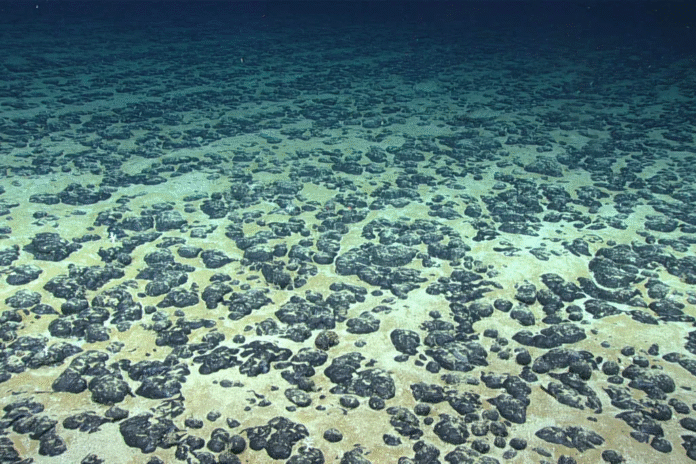
Scientists exploring the deep Pacific Ocean have reported the discovery of what they describe as “dark oxygen,” detected nearly 4,000 metres below the ocean surface in regions where sunlight does not penetrate. The finding challenges the long-standing scientific understanding that oxygen on Earth is produced primarily through photosynthesis, a light-dependent process. The discovery emerged during research on polymetallic nodules scattered across the Pacific seabed and has sparked fresh debate about oxygen generation in extreme, lightless environments.

What Is “Dark Oxygen”?

“Dark oxygen” refers to oxygen detected in deep-sea environments where sunlight is completely absent. Traditionally, oxygen production has been associated with photosynthesis, a biological process carried out by plants, algae, and certain bacteria that use sunlight to convert water and carbon dioxide into oxygen and energy-rich compounds.

However, researchers recorded measurable increases in oxygen levels in parts of the deep ocean where photosynthesis cannot occur. The study, published in the journal Nature Geoscience, reported that oxygen concentrations near polymetallic nodules rose over time during experiments conducted in sealed chambers placed on the seafloor.

How Scientists Detected Oxygen in the Deep Sea

The research was carried out in the Clarion–Clipperton Zone, a vast and mineral-rich region of the Pacific Ocean seabed. Scientists deployed specialised instruments known as benthic chambers to isolate small sections of the ocean floor and monitor chemical changes over time.

Unexpectedly, oxygen levels inside these sealed chambers increased rather than decreased. Under normal conditions, oxygen in deep-sea sediments is consumed by microbes and chemical reactions. The observed increase indicated that some process within the seabed environment was generating oxygen despite complete darkness.

To confirm the findings, researchers repeated measurements multiple times and conducted controlled laboratory simulations to rule out equipment malfunction or contamination.

Role of Polymetallic Nodules

Polymetallic nodules are rock-like mineral deposits found on abyssal plains of the ocean floor. They contain economically important metals such as manganese, nickel, and cobalt and form extremely slowly over millions of years.

Researchers propose that these nodules may function like natural electrochemical cells. Minerals within the nodules could facilitate reactions capable of splitting seawater molecules into hydrogen and oxygen, even without sunlight. Although the precise mechanism remains under investigation, such electrochemical processes could explain the unexpected oxygen production observed in deep-sea conditions.

Key Points

  • Photosynthesis is the primary natural process responsible for oxygen production on Earth and requires sunlight.
  • The Clarion–Clipperton Zone in the Pacific Ocean is known for its extensive deposits of polymetallic nodules.
  • Polymetallic nodules form over millions of years on deep ocean abyssal plains.
  • Nature Geoscience is a prominent peer-reviewed journal publishing research on Earth and environmental sciences.

Implications for Science and Astrobiology

This discovery could significantly reshape scientific understanding of Earth’s oxygen cycle. If oxygen can be generated through non-biological, light-independent chemical reactions, it expands knowledge of how essential elements circulate in extreme environments.

The findings also carry implications for astrobiology. Oxygen in a planet’s atmosphere has often been considered a potential biosignature indicating life. However, if oxygen can be produced abiotically in dark environments, scientists may need to reassess how they interpret atmospheric oxygen on other planets.

Additionally, the research raises environmental concerns regarding deep-sea mining. Since polymetallic nodules may play an active chemical role in deep-ocean ecosystems, their removal could disrupt fragile and poorly understood marine environments.
Arjun Tendulkar & Saaniya Chandhok To Say I Do on March 5; Know More Details…

0

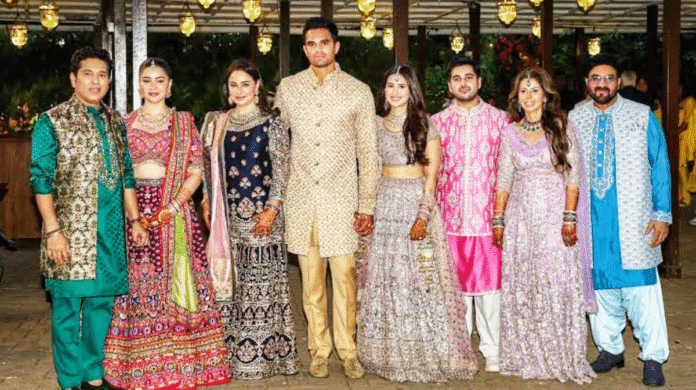
The wedding season has officially begun for one of India’s most talked-about couples! Arjun Tendulkar, son of cricket legend Sachin Tendulkar, and Saaniya Chandhok have started their grand pre-wedding celebrations in Mumbai, just days before their big day on March 5, 2026.

Grand Venue, Stylish Start

The festivities kicked off on March 3 with a dazzling Mehendi and Sangeet night hosted at the Royal Western India Turf Club, a venue that blended old-world charm with modern celebration vibes. Outside the beautifully lit entrance, photographers captured the couple posing with wide smiles, giving fans a first taste of the wedding atmosphere.

From rhythmic dhol beats to colorful decor, the ambience set the tone for what promises to be a week full of memorable moments. And if you missed it, here’s a glimpse from social media that’s been going viral:

The Couple & Their Style

Arjun looked elegant in a classic ivory embroidered sherwani, while Saaniya dazzled in a silver-embellished lehenga that perfectly reflected the festive spirit. The couple’s chemistry was unmistakable as they welcomed guests with warm smiles and gracious gestures.

A Star-Studded Guest List

The celebrations saw an impressive lineup of cricket legends and celebrity friends pouring in to bless the couple. Big names like Yuvraj Singh, Irfan Pathan, Harbhajan Singh, and Zaheer Khan were spotted, along with political personality Raj Thackeray, making the evening glamorous and deeply personal at the same time.

Family members were equally in the spotlight. Sachin Tendulkar, beaming with pride, joined by his wife Anjali and daughter Sara Tendulkar, who stole attention with her vibrant lehenga and joyful energy.

Ahead: The Big Day

With these celebratory nights underway, all eyes are now on March 5, when Arjun and Saaniya will tie the knot in a private Mumbai ceremony. The blend of tradition, star power, and heartfelt family moments has already made these wedding festivities the talk of the town and the perfect start to this joyful union.

Maruti 800 Coverted Into Lamborghini Replica By This Mechanic By Spending Rs 4 Lakh

0

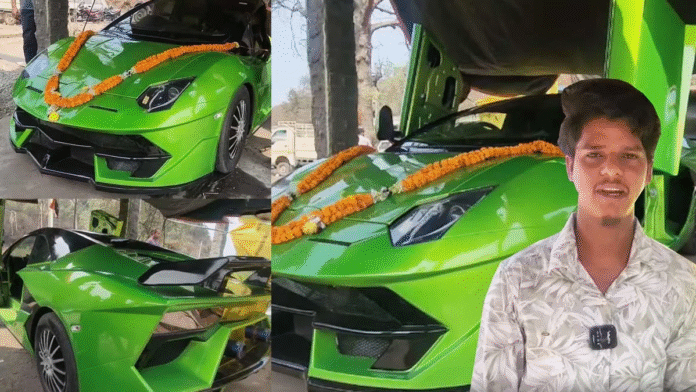
In a modest workshop near Jamshedpur, where the smell of grease mixes with welding sparks, a dream quietly took shape. What began as an old, worn-out Maruti 800 ended up turning heads like a roaring Lamborghini — and it cost just ₹4 lakh.

Meet Mohammad Arif, a self-taught mechanic and the creative force behind Tarzan Garage. Without formal automotive training or a luxury budget, he spent nearly two years transforming a humble hatchback into a vibrant supercar lookalike. His mission? To prove that passion and persistence can rival price tags.

The Transformation

Arif didn’t import exotic parts or high-end kits. Instead, he relied on local materials, custom metal fabrication, and carefully shaped fiberglass panels. Piece by piece, he sculpted the body to mimic the sharp lines and aggressive styling of a Lamborghini — complete with dramatic air vents and a massive rear wing that commands attention from afar.

Under the hood, however, the original Maruti 800 engine remains. This isn’t about speed records or track performance. It’s about style, imagination, and engineering creativity. As Arif puts it, “It’s not about horsepower. It’s about heart.”

Internet Sensation

When videos of the bright, low-slung replica cruising through local roads surfaced online, they quickly went viral. Crowds gathered wherever the car stopped. Social media users hailed it as a masterpiece of Indian “jugaad” — a symbol of innovation born from limited resources.

Car enthusiasts across platforms praised Arif’s craftsmanship, calling it proof that talent doesn’t need expensive tools — just determination. Some viewers did raise practical concerns about RTO approvals and modification regulations, but that hasn’t dimmed the admiration pouring in.

A Symbol Of Grassroots Innovation

In a country where the automotive customization scene is still evolving, Arif’s creation has become more than just a car. It’s a statement — that skill can flourish in small garages, that dreams don’t need imported budgets, and that creativity can turn scrap into spectacle.

From a simple Maruti 800 to a head-turning supercar replica, this is not just a modification story. It’s the story of a mechanic who dared to redesign his destiny — one weld at a time.

Splash into Renewal – How Holi’s Colors, Fire, and Joy Purify Your Life and Spark Springtime Magic!

0

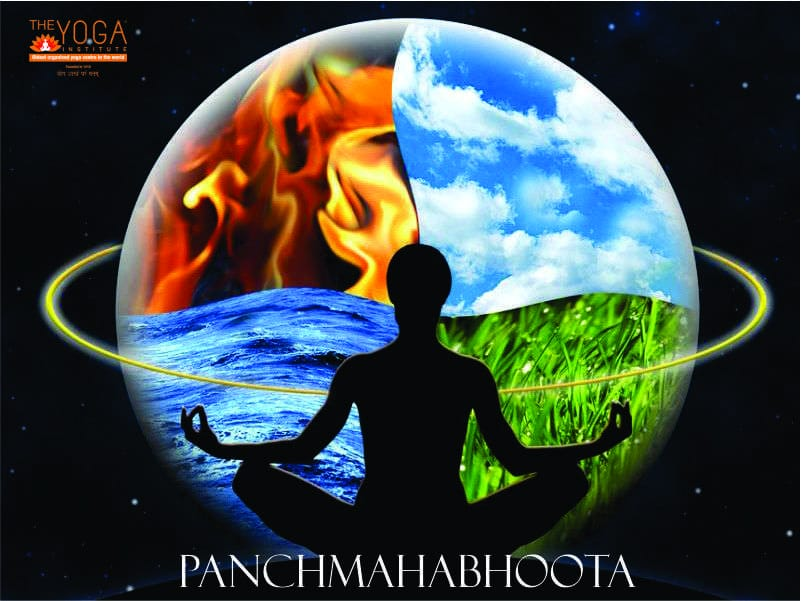
PC: (Png tree, The Yoga Institute )

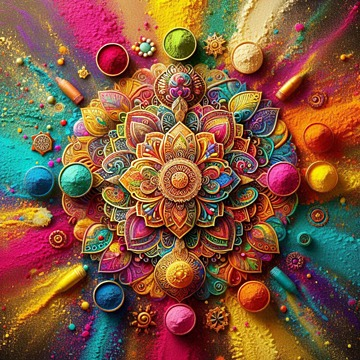
Holi, the joyous Hindu festival of colors, marks the triumphant arrival of spring (Vasanta) and celebrates the eternal victory of good over evil, divine love, and the renewal of nature. Beyond the playful throwing of colors and lively gatherings, Holi weaves together profound spiritual symbolism, ancient wisdom from the five elements (Panch Mahabhuta), and tangible health benefits that rejuvenate both body and spirit.

The Deep Spiritual Essence: Triumph, Forgiveness, and Inner Cleansing

At its core, Holi commemorates the legendary victory of young devotee Prahlada over the demon king Hiranyakashipu, symbolizing the eternal triumph of righteousness and devotion. The night before the main celebration features Holika Dahan, a sacred bonfire that burns away negativity, ego, grudges, jealousy, and past conflicts-much like purifying the soul for a fresh start.

This ritual paves the way for the colorful day of Rang wali Holi, where people come together, blurring social boundaries of caste, class, and status. It promotes forgiveness, reconciliation, and unconditional love, encouraging participants to let go of resentment and embrace unity. Spiritually, it’s an invitation to “color” one’s inner self with virtues like peace, joy, and compassion, fostering emotional release, mindfulness, and a sense of community through shared laughter and celebration.

The Five Elements in Holi: A Cosmic Harmony of Purification and Balance

Splash into Renewal - How Holi's Colors, Fire, and Joy Purify Your Life and Spark Springtime Magic!

Holi beautifully integrates the five fundamental elements (Panch Mahabhuta) that form the universe and the human body, according to Vedic and Ayurvedic traditions. These elements symbolize purification, renewal, and harmony with nature:

Agni (Fire): Embodied in the Holika Dahan bonfire, it represents transformation and the burning of evil, purifying the atmosphere and igniting inner energy while protecting righteousness.

Jal (Water): Seen in the splashing of colored water (rang), it symbolizes emotional cleansing-washing away grudges, negativity, and conflicts to promote unity and emotional flow.

colored powders (gulal): into the breeze, creating a vibrant, joyful atmosphere that carries energy, joy, and even medicinal herbal benefits through the air.

Prithvi (Earth): Honored through natural, plant-based pigments from herbs like neem, turmeric, palash (tesu), and bilva, connecting the festival to the earth and offering therapeutic, detoxifying properties for the skin.

Aakash (Ether/Space): Reflected in the open-air, cosmic nature of the celebrations, signifying vast potential, a fresh spiritual beginning, and the universal interconnectedness of all beings.

The extended celebration on Rang Panchami (the fifth day) specifically activates these five elements within the body and environment, enhancing spiritual growth and balance.

Health and Wellness Benefits: A Natural Boost for Body and Mind

Holi isn’t just fun-it’s a holistic wellness ritual, especially when celebrated with traditional natural colors. The shift from winter to spring often brings sluggishness or seasonal vulnerabilities, and Holi counters this through joyful activity and healing ingredients.

Skin Rejuvenation and Detoxification: Herbal gulal from neem, turmeric, bilva, and palash offers antibacterial, anti-inflammatory, and moisturizing effects. These natural pigments detoxify the skin, remove impurities, balance doshas (like Kapha and Pitta), and leave it glowing and healthy-far safer than synthetic alternatives.

Immune Boost and Seasonal Protection: The medicinal herbs in traditional colors strengthen immunity against spring allergies and infections, while the bonfire and active play help eliminate accumulated winter toxins.

Physical Exercise and Vitality: Dancing, running, and playing provide a full-body workout that improves circulation, flexibility, cardiovascular health, and energy levels.

Mental Well-Being Through Color Therapy (Chromotherapy): Vibrant hues trigger positive psychological effects-red energizes and stimulates circulation, yellow uplifts mood and happiness, green promotes balance, and blue calms the mind. Socializing and play release feel-good hormones like dopamine, serotonin, and endorphins, reducing stress, anxiety, and promoting relaxation and joy.

Overall Renewal: The festival encourages

shedding winter lethargy, emotional detox, and a playful release of tension, leaving participants refreshed physically and mentally. Holi is more than a festival-it’s a powerful, therapeutic celebration of life’s renewal. By embracing its colors, rituals, and spirit of forgiveness, we honor nature’s cycles, balance the elements within us, and step into spring with renewed energy, joy, and harmony. This Holi, let the colors not just paint your face, but uplift your soul!

Vrindavan’s Widow Holi: A Celebration of Dignity, Inclusion, and Breaking Centuries-Old Taboos

0

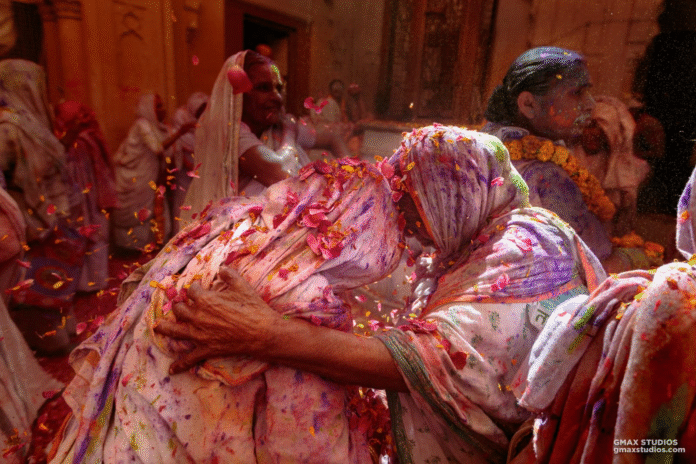
PC: (TCO Journey, GMAX STUDIOS)

Holi, the festival of colours, love, and springtime renewal, holds special significance in the sacred region of Braj – encompassing Mathura, Vrindavan, and surrounding areas. Known as the land of Lord Krishna’s childhood and his divine Raslila with Radha, Vrindavan’s Holi celebrations are steeped in mythology, devotion, and vibrant traditions. Yet for generations, one group was excluded from this joy: widows. Historically, Indian societal norms forced widows into lives of austerity and isolation. They were expected to wear only white sarees, shun festivities, avoid public celebrations like Holi, and often seen as inauspicious. In Vrindavan, thousands of widows have lived in ashrams for decades – distanced from family, financial security, and the simple pleasures of life. Joy, it seemed, was no longer theirs to claim.

Colour as Resistance

All that began to change with Widow Holi – a modern tradition that shatters these taboos. What started as a quiet assertion has grown into a powerful symbol: grief does not erase a woman’s right to celebration, community, and visibility in public spaces.

The Catalyst for Change

The turning point came in 2012, when the Supreme Court of India issued a directive urging better welfare and social inclusion for widows in Vrindavan. This legal push aligned with the efforts of social reformer Dr. Bindeshwar Pathak, founder of Sulabh International – an NGO dedicated to dignity, sanitation, and women’s empowerment. Sulabh encouraged widows to reclaim Holi, linking the festival to dignity, welfare, and broader social reform.

A Historic Shift in 2013

Until 2013, widows could only offer colours to “Thakurji” (Lord Krishna) but were barred from participating themselves. That year marked the first true Widow Holi among the women. a gentle, empowering celebration

Vrindavan's Widow Holi: A Celebration of Dignity, Inclusion, and Breaking Centuries-Old Taboos

Holi in Full Bloom

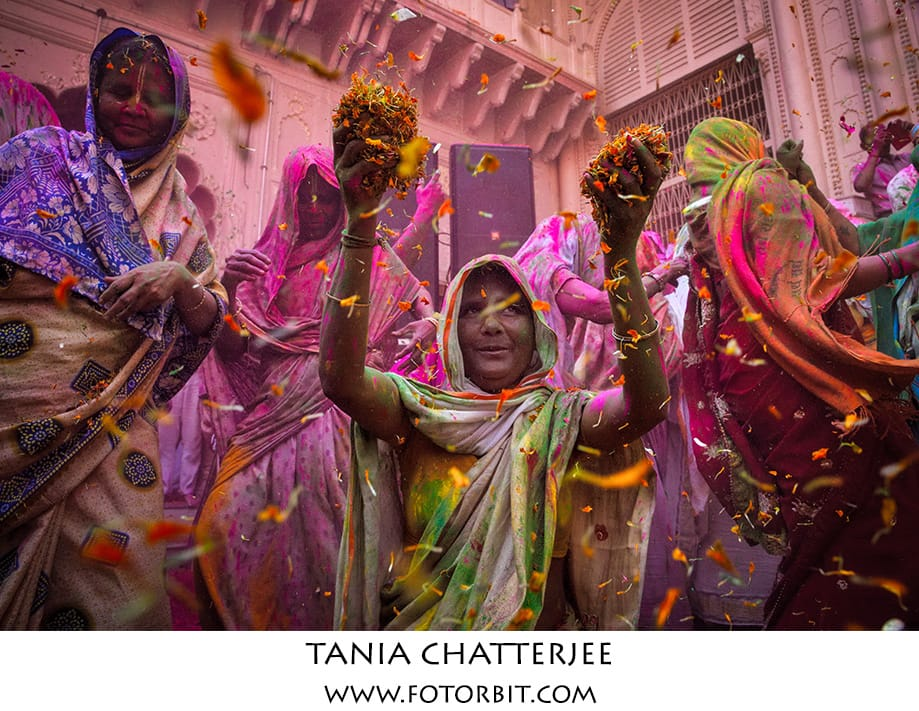
Held annually at the historic Gopinath Temple (and sometimes other ashrams like Pagal Baba), Widow Holi – often called Phoolon ki Holi – fills the air with marigold and rose petals, dry gulal (coloured powders), devotional bhajans, and heartfelt hugs. Thousands of kilograms of flower petals rain down, creating a sattvic (pure and gentle) spectacle distinct from the street-side revelry. Widows, once confined to white, emerge drenched in vibrant hues a visual metaphor for reclaiming identity, joy, and belonging.

Widow Holi 2026: A Growing Movement

In 2026, the celebration reached new heights. Over 200 widows from multiple ashrams gathered on March 2 (a few days before main Holi on March 4), marking one of the most vibrant and widely attended events yet. The premises of Gopinath Temple bloomed with colours, flowers, and smiles as women danced, sang, and embraced – turning what was once seen as rebellion into an accepted, cherished tradition.

Shifting Mindsets and Faith Without Exclusion

What began as a challenge to deep-rooted stigma is now steadily becoming part of Vrindavan’s cultural fabric. Widow Holi proves that spiritual devotion and social reform can coexist – honouring faith in Lord Krishna while making space for equality, compassion, and shared celebration.

A Symbol of Dignity and Belonging

This is more than a festival; it’s a profound statement of inclusion. In a place where widows once lived in the shadows, they now stand at the center – colourful, visible, and joyful. Vrindavan’s widows are not just playing Holi; they are reshaping tradition itself, proving that dignity and belonging belong to everyone.

(With inputs from recent reports and ongoing social initiatives by Sulabh International.)

World Day of the Fight Against Sexual Exploitation:Breaking the Silence on March 4

0

PC: (Shutterstock, Global Survivor Network)

Since 2009, March 4 has been designated as the World Day of the Fight Against Sexual Exploitation. Every year on this day, hundreds of thousands of activists, community members, and leaders around the globe recognize the importance of combating this heinous violation of human rights and reaffirm their commitment to fight it and expand services and protections for survivors.

What the Law Says: Defining Sexual Exploitation

In international law, “sexual exploitation” is defined as any actual or attempted abuse of a position of vulnerability, differential power, or trust, for sexual purposes, including – but not limited to monetarily, socially, or politically from the sexual profiting exploitation of another.

The Scale of the Crisis: Millions Trapped Worldwide

According to the International Labour Organization, close to 5 million people annually, predominantly women, are victims of forced sexual exploitation. Children comprise more than a fifth of all victims of commercial sexual exploitation. Male individuals are not immune either a significant number of boys and young men get trapped in sexual exploitation as well. Members of the LGBT community are especially vulnerable due to stigma and lack of specialized services.

A Gendered Crime Rooted in Inequality

While understanding that sexual exploitation can affect any individual, we recognize that this grave violation of human rights – often amounting to the crime of human trafficking – is gendered and rooted in structural discrimination and inequalities.

CEDAW’s Landmark Recognition of Gender-Based Trafficking

We support the General Recommendation on Trafficking of Women and Girls in the Context of Global Migration, adopted by the CEDAW Committee on 6 November 2020. It acknowledged that widespread trafficking in women and girls persists because of a lack of appreciation of the gender dimensions of trafficking, which leaves women and girls exposed to different types of exploitation, including sexual exploitation.

Holding Perpetrators Accountable Not Victims

The CEDAW Committee’s affirmation that trafficking in women and girls is rooted in sex-based discrimination and is a form of gender-based violence and consequently a function of abuse of male power and privilege – is critical to ensuring that responsibility and accountability is placed on perpetrators, and not on women and girls whose rights are being violated and need to be supported to exit sexual exploitation.

World Day of the Fight Against Sexual Exploitation:Breaking the Silence on March 4

The Demand That Fuels the Market

Across all societies, persisting norms and stereotypes regarding male domination, and their control and power over women and girls, enforce patriarchal gender roles and male sexual entitlement which generate the demand.

Governments Must Address Root Causes and Demand

We support the CEDAW Committee’s analysis and recommendation, which encourages governments to address underlying structural gender and socio-economic inequalities that make women and girls vulnerable to exploitation. We also applaud the committee’s call on governments to address the demand that fuels the criminal market of human beings for sexual exploitation.

Key Messages of the World Day of the Fight Against Sexual Exploitation

Since 2009, March 4 has been recognized annually as the World Day of the Fight Against Sexual Exploitation, focusing on raising awareness about sexual abuse, trafficking, and the protection of victims. The initiative seeks to combat the trafficking of women and children, with reports estimating that the vast majority of victims are women and children.

This structure makes the article easier to scan, more professional, and suitable for blogs, awareness campaigns, or advocacy materials. Let me know if you’d like any section expanded, shortened, or further refined!

Malwa Region Basks Under Colourful Spirit of Duleti and Ger Celebrating Colour, Excitement, and Joy

0

In the Malwa region, Holi is not merely a one-day festival of colours but a vibrant, multi-day celebration rooted in rich folk traditions. Duleti, also known as Rang Panchami, which follows Dhulendi, is observed with extraordinary enthusiasm. The highlight of this celebration is the iconic “Ger” procession, held across towns and villages of Malwa — a tradition that stands out for its scale, spirit, and cultural uniqueness.

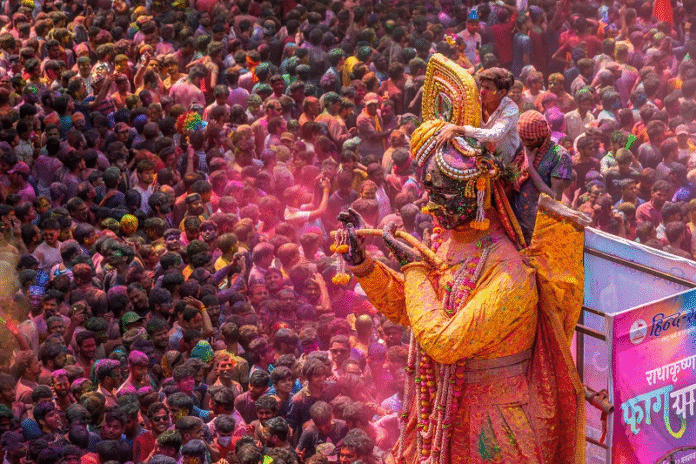
Ger is essentially a grand folk rally where people from all walks of life participate, setting aside social distinctions. The rhythmic beats of drums and trumpets echo through the streets as clouds of gulal fill the air. Large tankers spray coloured water over cheering crowds, who dance, laugh, and sing traditional folk songs. In some places, showers of gulal create a mist of pink and red; in others, flowers rain down from rooftops, transforming the surroundings into a living canvas of colour and joy.

A distinctive feature of the Ger is the presence of participants dressed in humorous and imaginative costumes. Some portray mythological characters, others use creative attire to convey social messages, while many simply don quirky outfits to spread laughter. In this playful celebration, the line between spectator and participant disappears — everyone becomes an integral part of the festival.

Beyond the exuberance, the Ger of Malwa symbolises collective harmony and social unity. There are no barriers of caste, class, age, or status; people apply colour to one another in a gesture of warmth and belonging. The celebration reflects how folk festivals serve not just as entertainment, but as powerful cultural bonds that strengthen community ties.

Participating in the Ger during Duleti offers a rare sense of uninhibited joy — a moment free from the constraints of routine life. Faces smeared with colour, clothes soaked in bright hues, feet moving instinctively to the beat of the drum, and gulal swirling in the air create scenes that remain etched in memory long after the festival ends.

Undoubtedly, Malwa’s Duleti and Ger represent the spirited essence of Indian folk culture — where colours do not merely adorn the body, but touch the heart. The festival reminds us that shared happiness, spontaneous humour, and mutual affection are the truest colours of life.

Malwa Region Basks Under Colourful Spirit of Duleti and Ger Celebrating Colour, Excitement, and Joy

(Writer of this article is Bhagyashree from Ratlam)

US–Iran–Israel Conflict: If Iran War Continues For 10 More Days, Could The US Face A Crisis? Report Makes Big Claim

0

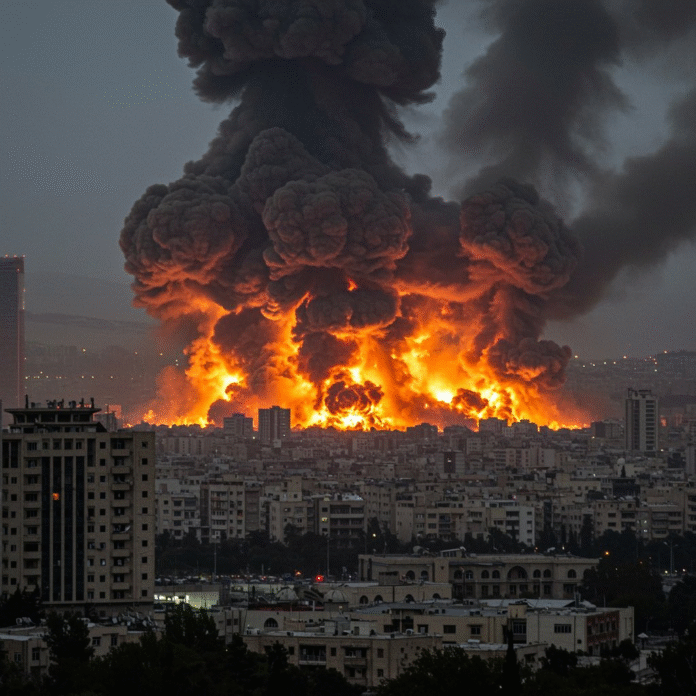
US–Iran–Israel Conflict: As tensions escalate between the United States, Israel, and Iran, a new report has raised concerns about America’s military preparedness if the conflict continues at its current intensity.

Pentagon Warning

According to a report by Al Jazeera, the Pentagon has warned US President Donald Trump that if the military campaign against Iran continues at a rapid pace for another 10 days or more, the US could begin to face shortages of key munitions and interceptor missiles.

However, Trump dismissed concerns on his social media platform Truth Social, claiming that the United States has an “almost unlimited” stockpile of medium- and high-grade weapons capable of sustaining a prolonged conflict.

Secretary of State’s Remarks

US Secretary of State Marco Rubio said that Iran is producing more than 100 missiles per month, while the US is reportedly able to manufacture only 6 to 7 interceptor missiles in the same period. Defense analysts say this imbalance could create long-term pressure if hostilities persist.

Rising Costs Of War

The financial toll is also mounting. Reports suggest that in the first 24 hours of operations alone, the US spent approximately $779 million (around ₹6,900 crore).

According to the Center for a New American Security, operating an aircraft carrier strike group such as the USS Gerald R. Ford costs roughly $6.5 million per day. Before the conflict escalated, two carrier strike groups were deployed, with total preparation costs estimated at around $630 million.

Pressure On Interceptor Missiles

Analysts say interceptor missiles are likely to face the greatest strain. During previous tensions with Iran last year, the US reportedly used nearly 25% of its THAAD interceptor missile stockpile. Additionally, Joint Direct Attack Munitions (JDAMs) — GPS-guided “smart bombs” — are being consumed rapidly.

The report also warned that advanced anti-ballistic systems such as the Standard Missile-3 (SM-3) have limited inventories, raising concerns about sustainability in a prolonged conflict.

Escalation And Retaliation

Earlier, President Trump expressed dissatisfaction with the progress of nuclear negotiations with Iran. Hours later, he approved a military operation targeting senior Iranian leadership, including Supreme Leader Ali Khamenei and top military officials.

In retaliation, Iran launched missile and drone attacks on US bases located in Bahrain, Saudi Arabia, Qatar, the UAE, and Iraq.

What Lies Ahead?

Defense experts caution that if the conflict drags on, the United States could face mounting military and economic pressure. Beyond battlefield logistics, prolonged hostilities may strain defense manufacturing capacity, federal budgets, and global energy markets.

The coming days are likely to determine whether this confrontation remains contained — or evolves into a more prolonged and costly war.

Strait of Hormuz: Why This Narrow Waterway Is Asia’s Trade Lifeline

0

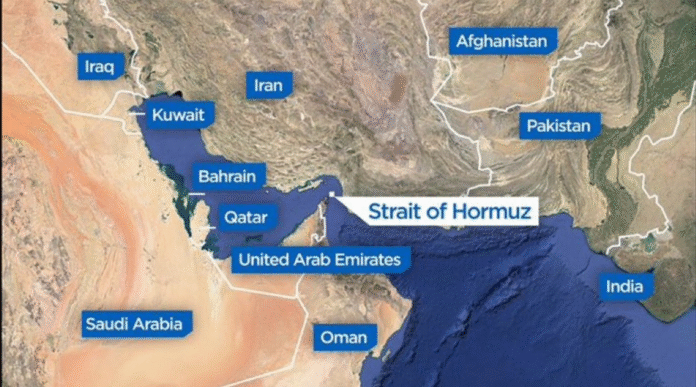
Distant maritime corridors are not abstract lines on a map; they are economic lifelines. Few passages illustrate this more clearly than the Strait of Hormuz — a narrow stretch of water between Iran and Oman that quietly dictates the economic rhythm of much of Asia.

At its narrowest point, Hormuz is barely 33 kilometres wide, with designated shipping lanes only a few kilometres across. Yet nearly one-fifth of the world’s oil supply and a significant share of global liquefied natural gas (LNG) pass through this slender maritime corridor every day. For energy-hungry Asian economies — including India, China, Japan and South Korea — this makes Hormuz less a transit route and more a strategic artery.

Energy Artery Of Asia

Asia is the world’s largest energy-consuming region, but it is heavily dependent on imported hydrocarbons, particularly from the Gulf. Crude oil and LNG exports from Saudi Arabia, Iraq, the UAE, Kuwait and Qatar must first pass through Hormuz before reaching Asian refineries and power plants.

For India specifically, over 80 per cent of crude requirements are met through imports, with a substantial portion sourced from Gulf producers. A large share of that oil transits Hormuz before heading toward refining hubs such as Jamnagar, Mumbai, Mangalore and Kochi. Any disruption — even temporary — can tighten supplies, push up global benchmark prices, and translate directly into higher fuel costs and inflation at home.

A Chokepoint With Global Consequences

What makes Hormuz uniquely powerful is not just volume but concentration. There are limited alternative routes. While Saudi Arabia has pipelines to the Red Sea, their capacity cannot fully compensate for a sustained maritime blockage. The result is that even the threat of instability in the strait can rattle global markets.

Insurance premiums for tankers surge, freight costs rise, and energy-importing nations are forced to dip into strategic reserves. In Asia, where manufacturing, transport, aviation and power generation depend on stable fuel supplies, the ripple effects can be swift and wide-ranging.

Beyond Oil: Trade And Supply Chains

The strait’s importance extends beyond crude. Petrochemicals, refined fuels and LNG cargoes vital to electricity grids across Asia move through the same corridor. When tensions escalate in the Gulf, Asian stock markets often react immediately — a reminder that geography and finance are tightly linked.

Moreover, Hormuz connects to other fragile maritime chokepoints such as the Bab el-Mandeb and the Suez Canal. A disruption at one node can cascade across supply chains, forcing ships to take longer routes and inflating global shipping costs.

Why It Dictates India’s Economic Weather

For India, the Strait of Hormuz is effectively a pressure valve for inflation and fiscal stability. A spike in crude prices widens the current account deficit, strains government subsidy budgets, and increases input costs for industries ranging from transport to fertilisers.

Strategic Petroleum Reserves and supplier diversification — including increased purchases from Russia and the United States — provide partial insulation. But the geographic reality remains unchanged: the bulk of Gulf energy exports must pass through Hormuz.

In times of geopolitical calm, the strait fades into the background of global trade. In moments of conflict, it becomes the world’s most closely watched waterway. For Asia — and particularly for India — Hormuz is not merely a maritime passage; it is the narrow gateway through which economic stability flows.

March 4 in History: When Roosevelt was Inaugurated as 32nd US President…

0

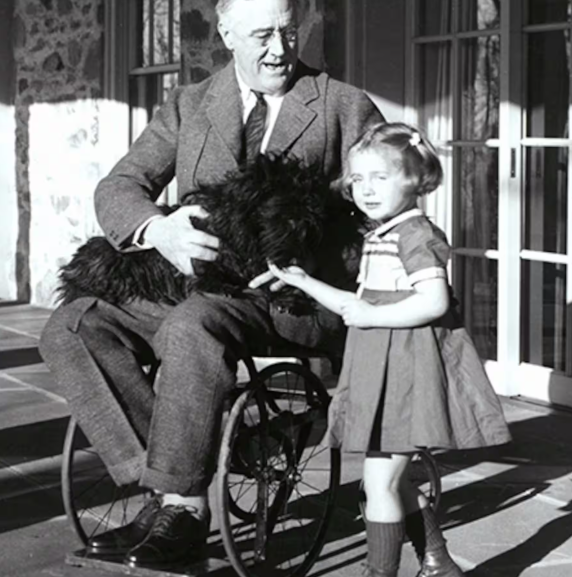
On March 4, 1933, at the height of the Great Depression, Franklin D. Roosevelt was inaugurated as the 32nd U.S. president. In his first inaugural address, he promised “prompt, vigorous action,” famously declaring, “the only thing we have to fear is fear itself,” and immediately launched the “New Deal” to guide the nation..

Key Details of FDR’s First Inauguration:

  • Context: The country was in the worst part of the Depression, with a March 4 in History: When Roosevelt was Inaugurated as 32nd US President... unemployment rate, a banking crisis, and 32 of 48 states having closed their banks by inauguration day.
  • The Address: Roosevelt focused on restoring confidence and proposed the “New Deal”—an expansion of federal power to provide relief, recovery, and reform.
  • Historical Significance: This was the last inauguration held on March 4, before the 20th Amendment moved it to January 20.
  • Legacy: FDR went on to lead the U.S. through the rest of the Depression and into victory in World War II.