Home Blog Page 50

Finn Allen’s Explosive 33-Ball Century Powers New Zealand into T20 World Cup 2026 Final

0

PC: (Sky Sports, NDTV Sports)

Record-Breaking Ton Shatters Records as Black Caps Crush South Africa in Semi-Final

In a breathtaking display of aggressive batting, New Zealand opener Finn Allen smashed an unbeaten century off just 33 balls against South Africa in the first semi-final of the 2026 T20 World Cup on March 4, 2026, at Eden Gardens, Kolkata. His explosive 100* guided the Black Caps to a commanding nine-wicket victory, chasing down a target of 170 in only 12.5 overs and securing their place in the final.

Historic Records Tumble in Allen’s Knockout Masterclass

Allen’s performance rewrote the record books in spectacular fashion. His 33-ball century became the fastest in T20 World Cup history, surpassing Chris Gayle’s previous tournament record of 47 balls set in 2016. He also became the first player ever to score a century in a T20 World Cup knockout match (semi-final or final). Adding to the milestones, his half-century arrived in just 19 deliveries-the quickest in any T20 World Cup knockout game-while he finished with a blistering strike rate of 303.03, featuring 10 fours and 8 sixes. Allen’s 20 sixes in the 2026 edition set a new record for the most by any player in a single tournament.

Dominant Opening Partnership and Powerplay Fireworks

The chase was ignited by a record-breaking 117-run opening stand between Allen and Tim Seifert (58 off 33 balls) in just 9.1 overs. New Zealand dominated the powerplay, racing to 84/0 in the first six overs-the highest powerplay score ever in a T20 World Cup knockout match. This explosive start turned the semi-final into a one-sided affair, showcasing New Zealand’s intent from ball one.

Finn Allen's Explosive 33-Ball Century Powers New Zealand into T20 World Cup 2026 Final

Ending a Long Drought Against the Proteas

This victory marked New Zealand’s first-ever T20 World Cup win over South Africa, snapping a five-match losing streak against the Proteas in the tournament. The Black Caps’ clinical performance not only avenged past defeats but also propelled them into the final against the winner of the India vs. England semi-final, scheduled for Sunday, March 8, 2026, at the Narendra Modi Stadium in Ahmedabad.

Finn Allen – The Power-Hitting Phenomenon

Finnley Hugh Allen, the 26-year-old New Zealand opening batter born on April 22, 1999, in Auckland, is renowned for his high-impact, aggressive style. A right-handed opener and occasional wicket-keeper, he attended Saint Kentigern College and represented New Zealand in the U19 World Cups of 2016 and 2018, topping his team’s scoring in 2018 with 338 runs. Known as one of the hardest hitters in modern cricket, Allen attacks from the first ball and has built a reputation across domestic and franchise cricket.

Journey from Domestic Star to Global Sensation

Allen began his domestic career with Auckland (2017-2020), moved to Wellington (2020-2023) where he won a Super Smash title, and returned to Auckland in 2023. He made his T201 debut against Bangladesh in March 2021 and has since featured in major leagues, including the IPL (signed by Kolkata Knight Riders for the 2026 season after time with Royal Challengers Bengaluru), Major League Cricket with San Francisco Unicorns, Big Bash League with Perth Scorchers, and The Hundred with Southern Brave. He holds the world record for the most sixes in a single T20 innings (19 during a 151-run knock in MLC 2025) and New Zealand’s highest T201 score (137 vs Pakistan in 2024).
Cannons Roar: 451-Year-Old ‘Gunpowder Holi’ Tradition in Menar Draws Thousands

0

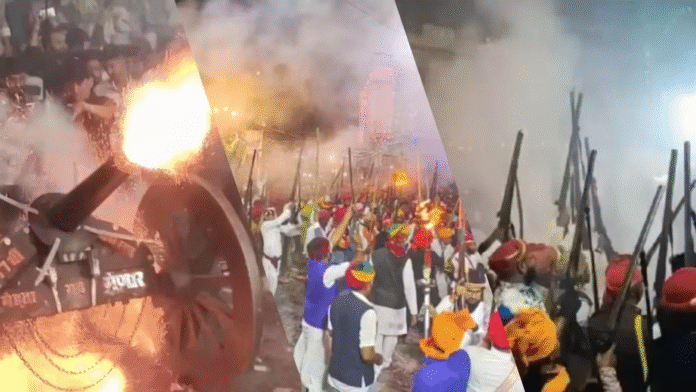
The quiet village of Menar in Rajasthan transformed into a dramatic spectacle of fire, sound, and tradition on Wednesday night as thousands gathered to witness the centuries-old celebration known as Gunpowder Holi. Cannons thundered, gunshots echoed through the night, and swords flashed in the air as the Menaria Brahmin community reenacted a historic victory dating back 451 years.

The unique celebration took place around midnight in Menar village, located about 45 km from Udaipur on the Udaipur–Chittorgarh National Highway. Dressed in traditional attire—white dhoti-kurta and bright red turbans—men marched through the village carrying swords, torches, and guns. The atmosphere resembled a battlefield as cannons fired bursts of gunpowder and celebratory gunshots rang out across the area.

The ritual commemorates the destruction of a Mughal military outpost by villagers centuries ago. According to local history, during the reign of Maharana Amar Singh, several Mughal cantonments were established across Mewar. One such outpost existed on the eastern edge of Menar village and was said to have caused hardship for residents. Inspired by news of a victory at Vallabhnagar, villagers gathered at the Omkareshwar Temple and launched a coordinated attack that destroyed the Mughal camp. Since then, the Menaria community has marked the victory each year with Gunpowder Holi.

The celebrations began in the afternoon with rituals at Omkareshwar Temple, where community elders were welcomed with traditional honours. The festivities intensified late at night when groups dressed as warriors marched from different parts of the village toward Omkareshwar Chowk, firing in the air and waving swords.

Five routes into the village were ceremonially barricaded by torch-bearing contingents, symbolically recreating the historic attack. Drums and trumpets echoed as men performed the traditional Gair dance with swords and wooden sticks.

Women also played a key role in the rituals, carrying mangal kalash on their heads and singing heroic folk songs celebrating the historic victory. Fireworks lit up the night sky while cannons loaded with gunpowder were fired in unison.

The event attracts visitors from across India and even overseas. This year, people arrived from cities in Rajasthan as well as parts of Madhya Pradesh, Gujarat and Mumbai to witness the spectacle. Vehicles lined the highway as many visitors walked nearly a kilometre to reach the venue.

For the people of Menar, Gunpowder Holi is not just a festival—it is a living tribute to their history, bravery, and community pride.

Bhagoria: The Vibrant Tribal Harvest Festival of Madhya Pradesh’s Heartland

0

PC: (X, Madhyapradeshdmc.com, noblehousetours.com)

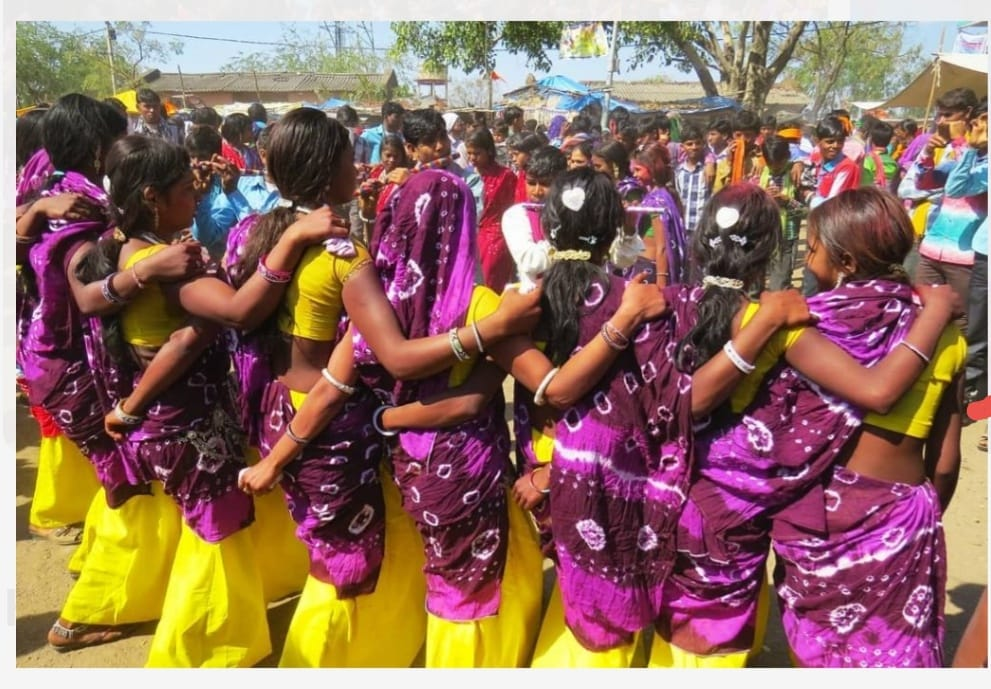
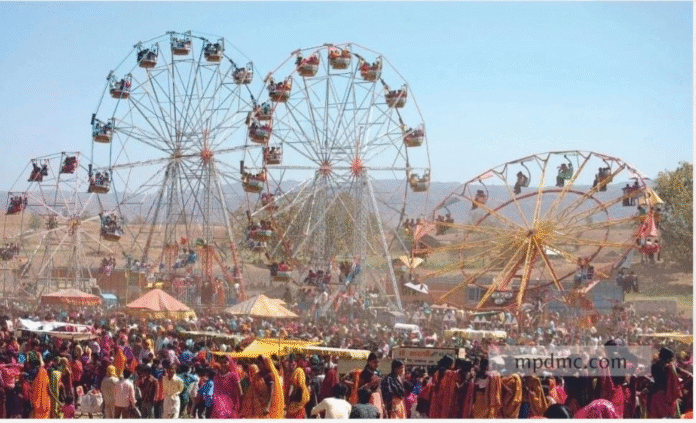
These days, the regions of Nimar and Malwa in Madhya Pradesh are buzzing with the spirit of Bhagoria (also known as Bhagoriya, Bhangoria, or Bhagoria Haat). This major tribal fair and festival, deeply rooted among the Bhil, Bhilala, Barela, Patelia, and other indigenous communities, takes place in districts like Jhabua, Alirajpur, Dhar, Barwani, and Khargone, typically a week before Holi in late February or early March.

A Festival of Harvest, Joy, and Cultural Pride

Bhagoria is fundamentally a harvest festival, marking the end of the Rabi crop season and the arrival of new grain in homes. Tribal communities express gratitude to nature through music, dance, and communal celebrations. It blends agricultural joy with social bonding, as young people from different villages gather in these lively haats (markets) to socialize, often leading to match-making traditions in a spirit of freedom and mutual choice.

The festival features the energetic Dohiya (or Dedhiya) dance, where young men and women face each other, moving forward and backward, swaying side to side with graceful arm movements to the rhythmic beats of mandal, dhol, and other traditional instruments.

Bhagoria: The Vibrant Tribal Harvest Festival of Madhya Pradesh's Heartland

Historical Roots and Legends

According to folklore, the name “Bhagoria” derives from “Bhag” (to elope or flee), reflecting its association with youthful romance, or from “Bhav-Gauri” (Lord Shiva and Goddess Parvati), symbolizing divine union. Some trace its origins to the time of Raja Bhoj, when Bhil kings Kasumra and Baloon started fairs in Bhagor village. Historians link it to ancient sites near Jhabua, where a settlement called Bhagor (tied to sage Bhrigu) was abandoned due to famine, leading to the saying: “Bhagyo Bhagor aur basiyo Ratlam” (Fled from Bhagor and settled in Ratlam).
Around 450 years ago, a ruler named Bhagga Nayak organized the area, and the tradition of pre-Holi haats with worship of Shiva-Parvati began, spreading across regions.A week before the main event, preparatory markets called Tihwariya or Tyohariya Haat (pre-festival fairs) are held, historically known as Gulaliya Haat for the gulal (colored powder) thrown around. Post-Holi, Ujadiya Haat fairs continue the tradition.

The Festive Atmosphere and Delights

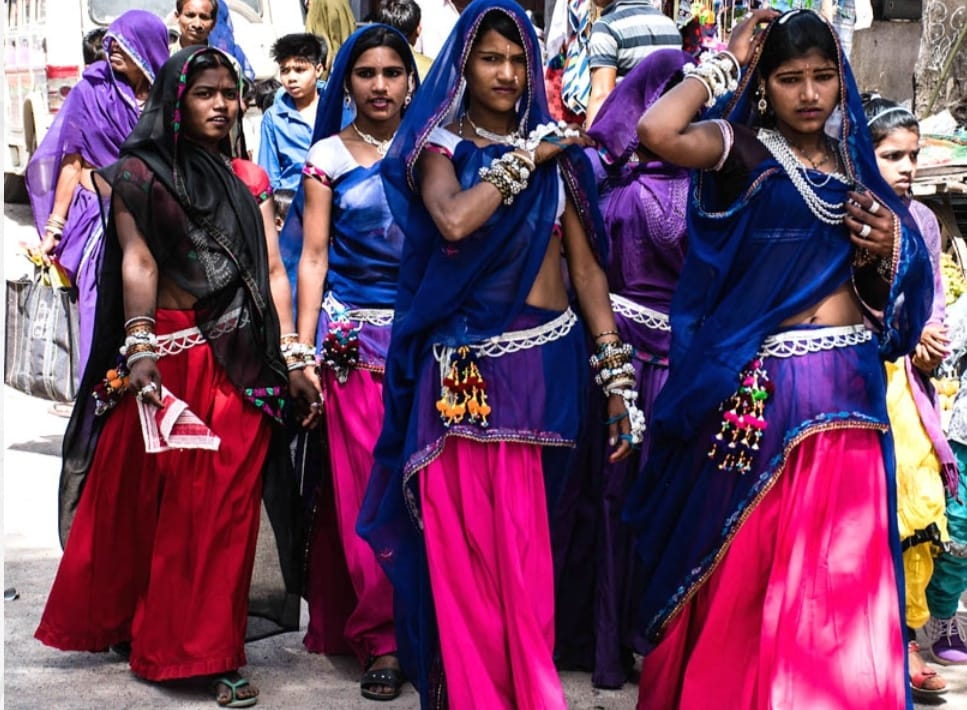
Tribal participants dress in vibrant traditional attire, adorned with jewelry and accessories. The haats buzz with shopping for daily needs, Holi essentials, and festive treats like jalebi made with jaggery, bhajiyas, savory snacks (kharie or sew), paan, and kulfi.
Drinks like toddy and mahua hold cultural significance-not just as beverages, but as parts of livelihood, deity worship, and nature-based economy.The air fills with the thump of drums, folk songs, and laughter, creating a perfect fusion of fun and heritage.

Bhagoria: The Vibrant Tribal Harvest Festival of Madhya Pradesh's Heartland

Relevance in Modern Times

As many tribal youth migrate to cities for work, Bhagoria remains a vital opportunity to reconnect with roots, strengthen family ties, and revive cultural identity. With growing education and awareness, communities balance modernity while preserving songs, attire, and rituals.
Bhagoria stands as a living symbol of India’s enduring tribal heritage-one that has weathered modern changes while keeping traditions vibrant. It reminds us that culture is not just memory; it’s a living practice.

Jai Johar! May the colors and rhythms of Bhagoria touch your heart too.

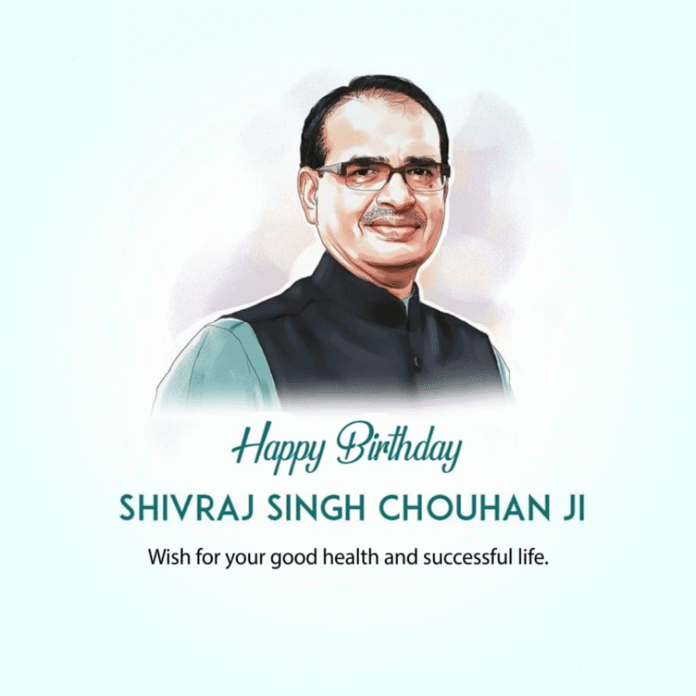
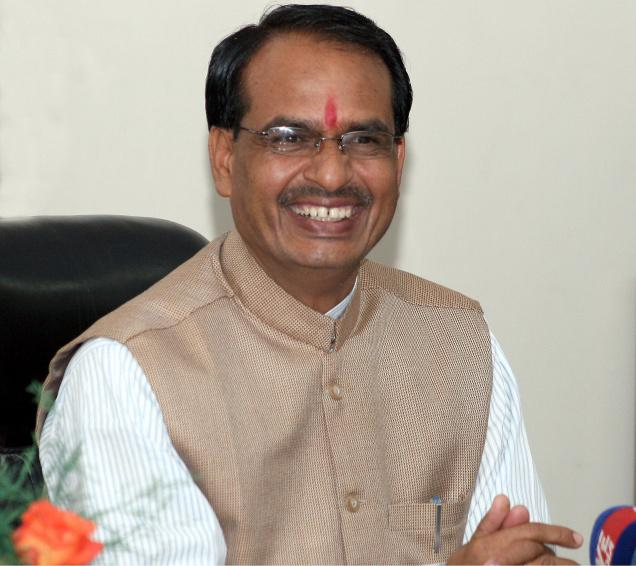
Today is the birthday of Madhya Pradesh’s beloved “Mama Ji,” Shivraj Singh Chouhan.

0

PC: (WEF, KuchhBhi.in)

On March 5, 2026, senior Indian politician and Union Minister of Agriculture and Farmers’ Welfare as well as Union Minister of Rural Development, Shivraj Singh Chouhan, turns 67. Widely known as “Mama Ji” (maternal uncle) among the people of Madhya Pradesh, he was born on March 5, 1959, in Jait village, Sehore district, into a humble farming family.

Historic Tenure as Chief Minister

Chouhan served as Chief Minister of Madhya Pradesh for over 16 years across four terms (2005-2018 and 2020-2023). During his leadership, he transformed the state from a backward “BIMARU” category to one with strong growth, through massive investments in irrigation, agriculture, power supply (24-hour household electricity), roads, and infrastructure. Cities like Indore earned “cleanest city” accolades under his governance, and agricultural production, especially soybeans, pulses, and gram, reached record levels.

Special Birthday Celebrations as ‘Prem-Seva Sankalp Diwas’

Mama Coaching Centres: Free coaching classes will be launched in his Vidisha parliamentary constituency (covering Vidisha, Raisen, and Bhairunda areas) for economically weaker and talented students preparing for competitive exams like SSC, banking, MPPSC, and others.

Mama Chalit Aspatal (Mobile Hospitals): Mobile hospital vans equipped with modern diagnostic facilities and qualified doctors will be introduced across all eight assembly segments in the Vidisha constituency. These vans will provide free healthcare services by visiting rural areas door-to-door.

Five Pledges (Panch Pran): Chouhan has taken five major resolutions focused on environment, education, service, assistance, and talent promotion. Prem-Sundar Pratibha Samman: In memory of his parents, top performers in 10th and 12th board exams will receive cash awards of up to *51,000, with special recognition for the top three students at the Lok Sabha level.

Major Schemes for Women and Girl Child Empowerment

Chouhan earned the affectionate title “Mama” due to his strong focus on women and girls. Key initiatives include:Mukhyamantri Ladli Laxmi Yojana (2007) Financial deposits in girls’ names, maturing to around 1.43 lakh at age 21, conditional on education and delayed marriage.
Ladli Behna Yojana (2023) Monthly direct benefit transfers to eligible women (increased over time) for financial independence.Beti Bachao Abhiyan and campaigns to improve child sex ratios.Free bicycles, uniforms, and textbooks for schoolgirls; schemes like Gaon Ki Beti Yojana for higher education aid.Financial help for marriages via Kanyadaan Yojana; reduced stamp duty for women property owners.
50% reservation for women in local bodies and significant quotas in jobs like police and teaching.These programs significantly improved girls’ education, safety, and societal status.

Today is the birthday of Madhya Pradesh's beloved "Mama Ji," Shivraj Singh Chouhan.

Current Role and Contributions

Since June 2024, following his victory in the Lok Sabha elections from Vidisha, Chouhan has served in the Union Cabinet as Minister of Agriculture and Farmers’ Welfare and Minister of Rural Development. He continues advancing farmer-centric policies, including crop insurance under Pradhan Mantri Fasal Bima Yojana (recently releasing ₹3,900 crore in claims) and rural infrastructure development.

Birthday Message and Environmental Appeal

This year, Chouhan has appealed to the public to celebrate his birthday as “Prem-Seva Sankalp Diwas” (Day of Love and Service Pledge). He requested no banners, garlands, shawls, or gifts-instead, people should plant a sapling and share the photo with him or on social media. He emphasized environmental protection as a lifelong commitment, urging everyone to plant trees on their own birthdays too. He marked the day by planting saplings with his family in Bhopal.Prime Minister Narendra Modi and other leaders extended warm wishes, praising his humble nature, deep connection with people, and tireless work for farmers and rural India.

Happy Birthday to Mama Ji! Wishing you good health, long life, and continued success in serving the nation and its farmers.

Gangaur 2026 Date: When Is the Gangaur Festival This Year? Know the Procession, Traditions, and Special Features

0

Gangaur 2026 Date: The traditional Isar-Gangaur puja will begin on March 4, 2026, and continue for 18 days. During this period, women and young girls will pray for a happy married life and a suitable husband. Across the city, vibrant processions and cultural events will also be organized.

Gangaur in Rajasthan is not just a religious festival but also a colorful celebration of folk culture, women’s devotion, and the region’s cultural identity. This year, the traditional Isar-Gangaur worship will begin on March 4, marking the start of the 18-day festival celebrated with great enthusiasm.

According to tradition, Lord Shiva (Isar) and Goddess Parvati (Gangaur) are worshipped during this festival. Women, unmarried girls, and young girls listen to religious stories in their homes and temples as part of the rituals.

Married women pray for the long life and prosperity of their husbands, while unmarried girls pray for a good and suitable life partner.

Pandit Ghanshyam Acharya, priest at the Agra Gate Ganesh Temple, said that the Isar-Gangaur puja will begin on March 4, as both the Purnima and Pratipada tithi fall on that day. The main Gangaur celebration will be held on March 21, 2026.

Women Perform Sixteen Adornments

During Gangaur, the idols of Isar and Gangaur are dressed in beautiful clothes and offered all the traditional Suhaag items. Devotees worship them with sandalwood, rice grains, incense, lamps, durva grass, and flowers.

As part of the ritual, sixteen symbolic dots are applied on the wall using roli, henna, turmeric, and kajal. Water is sprinkled sixteen times using green durva grass, representing the sixteen adornments (Solah Shringar) performed by women.

Famous Gangaur Processions

Every year, grand processions of Rathore Baba and Gangaur are organized under the auspices of Solthamba Fariken, while the Isar-Gangaur processions are conducted by the Agrawal Panchayat Ghaseti Dhara.

During the celebrations, areas such as Naya Bazaar, Agra Gate, and Ganj are beautifully decorated. In the processions, rose petals and perfume are sprinkled, and bands play traditional music, creating a festive atmosphere.

The day after the procession, mehndi and lac bangles (lac jewellery) are distributed among women as part of the celebrations.

Dashamata Vrat on March 13

The Dashamata Vrat story will begin on the second day after Holika Dahan. Dashamata is worshipped on the tenth day of the Krishna Paksha of Chaitra month.

According to the calendar, Dashamata Vrat will be observed on March 13, 2026. On this day, women worship the Peepal tree using kumkum, mehndi, laccha, betel nut, and sacred thread, praying for financial prosperity and peace in the family.

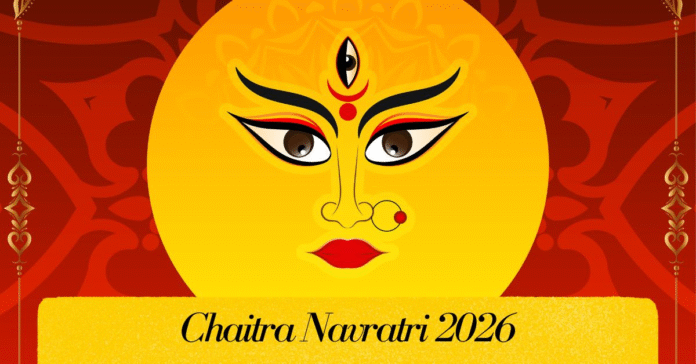
Chaitra Navratri 2026 Calendar: Know Date and Muhurt For GhatSthapna…

0

The sacred festival of Chaitra Navratri, which follows Holi, is considered extremely special for devotees of Shakti. According to the Hindu calendar, this nine-day festival is celebrated from the first day of the bright fortnight (Shukla Paksha) of the Chaitra month until the ninth day and is dedicated to the worship of Goddess Durga. Devotees eagerly wait for these nine days throughout the year.

It is believed that worshipping, fasting, and meditating on Goddess Durga during Navratri is highly auspicious and brings quick blessings. During this period, devotees worship the nine forms of Goddess Durga and perform Ghatasthapana (Kalash Sthapana) in their homes. Let’s find out which form of the Goddess will be worshipped on each day of Chaitra Navratri 2026 along with the complete calendar.

Auspicious Time for Chaitra Navratri 2026

According to the Panchang, Chaitra Navratri in 2026 will begin on Thursday, March 19, 2026, and conclude on Friday, March 27, 2026. During these nine days, devotees observe fasts, perform rituals, and worship the nine forms of Goddess Durga with devotion.

It is believed that worshipping the Goddess during this period brings happiness, prosperity, and positive energy into one’s life.

According to astrological calculations, the Pratipada Tithi of the Shukla Paksha of Chaitra month will begin at 6:52 AM on March 19, 2026, and end at 4:52 AM on March 20, 2026. Ghatasthapana (Kalash installation), which marks the beginning of Navratri, is performed on this day.

Chaitra Navratri 2026 Calendar

DateDayRitual / Goddess Worship
March 19, 2026ThursdayFirst day of Chaitra Navratri – Kalash Sthapana, Worship of Goddess Shailputri
March 20, 2026FridaySecond day – Worship of Goddess Brahmacharini
March 21, 2026SaturdayThird day – Worship of Goddess Chandraghanta
March 22, 2026SundayFourth day – Worship of Goddess Kushmanda
March 23, 2026MondayFifth day – Worship of Goddess Skandamata
March 24, 2026TuesdaySixth day – Worship of Goddess Katyayani
March 25, 2026WednesdaySeventh day – Worship of Goddess Kalaratri
March 26, 2026ThursdayEighth day – Worship of Goddess Mahagauri, Ashtami Kanya Pujan
March 27, 2026FridayNinth day – Worship of Goddess Siddhidatri, Navami Kanya Pujan
March 28, 2026SaturdayOpening of the Chaitra Navratri fast

Watch Pics: Krishna and Balram Sit on Hydraulic Lotus Flower During Grand Abhishekam in Gupt Vrindavan Dham in Jaipur

0

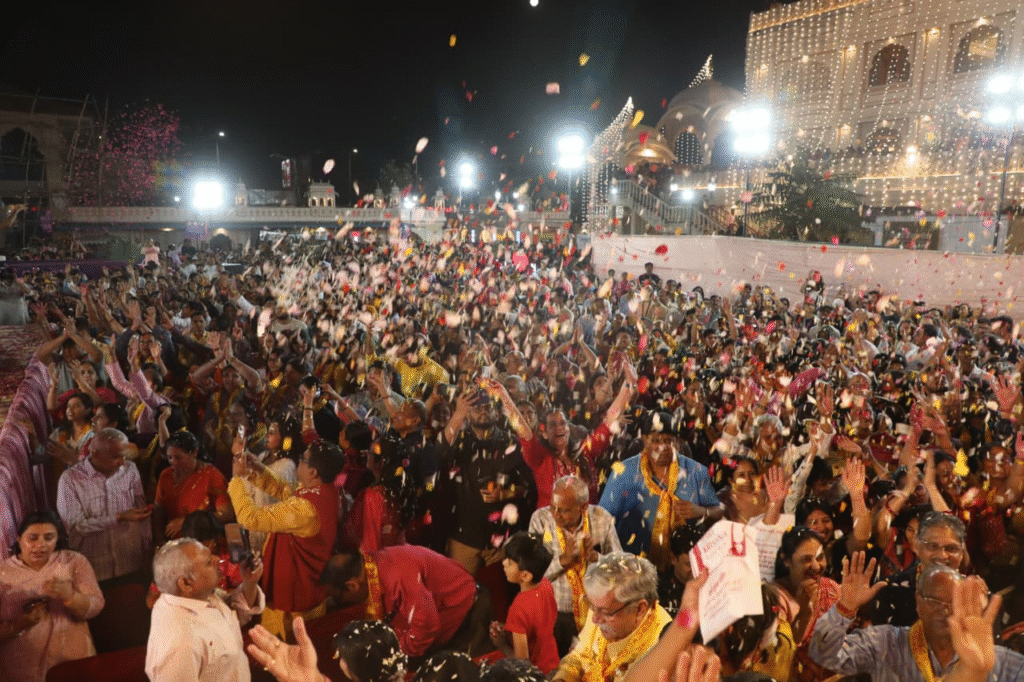
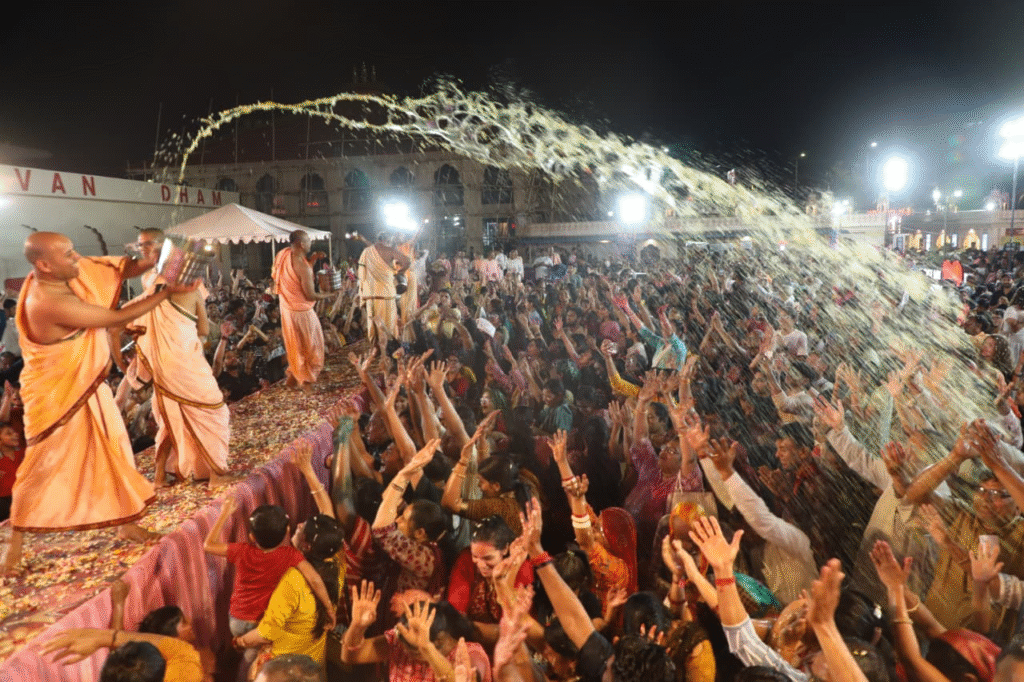
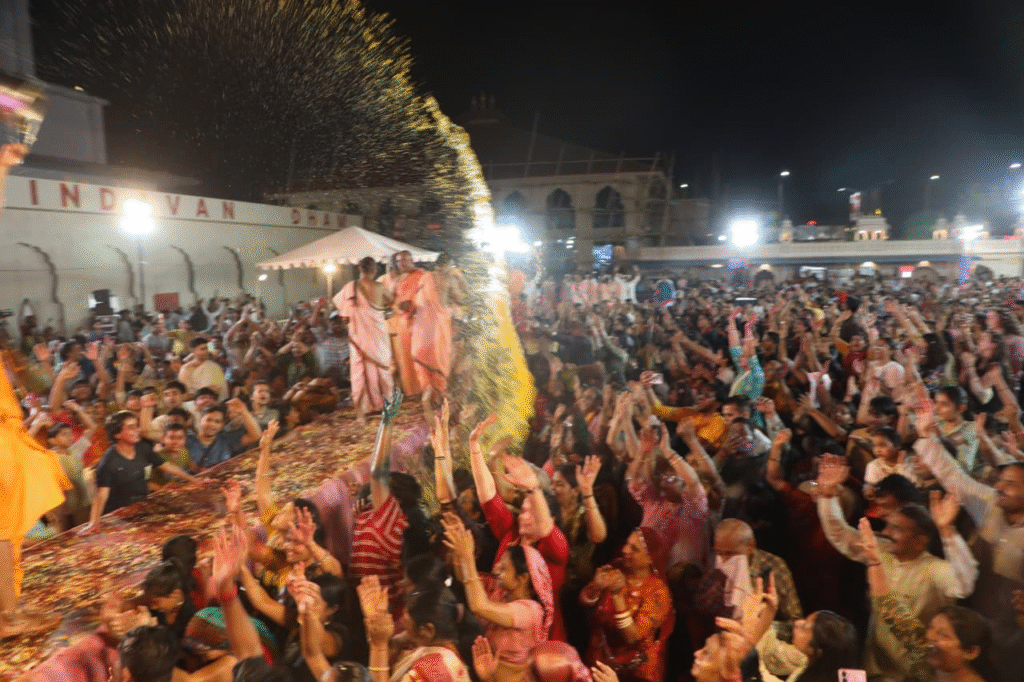
Gaur Purnima, the appearance day of Sri Chaitanya Mahaprabhu—revered as an incarnation of Lord Krishna—was celebrated with great devotion and splendour at Gupt Vrindavan Dham in Jaipur.

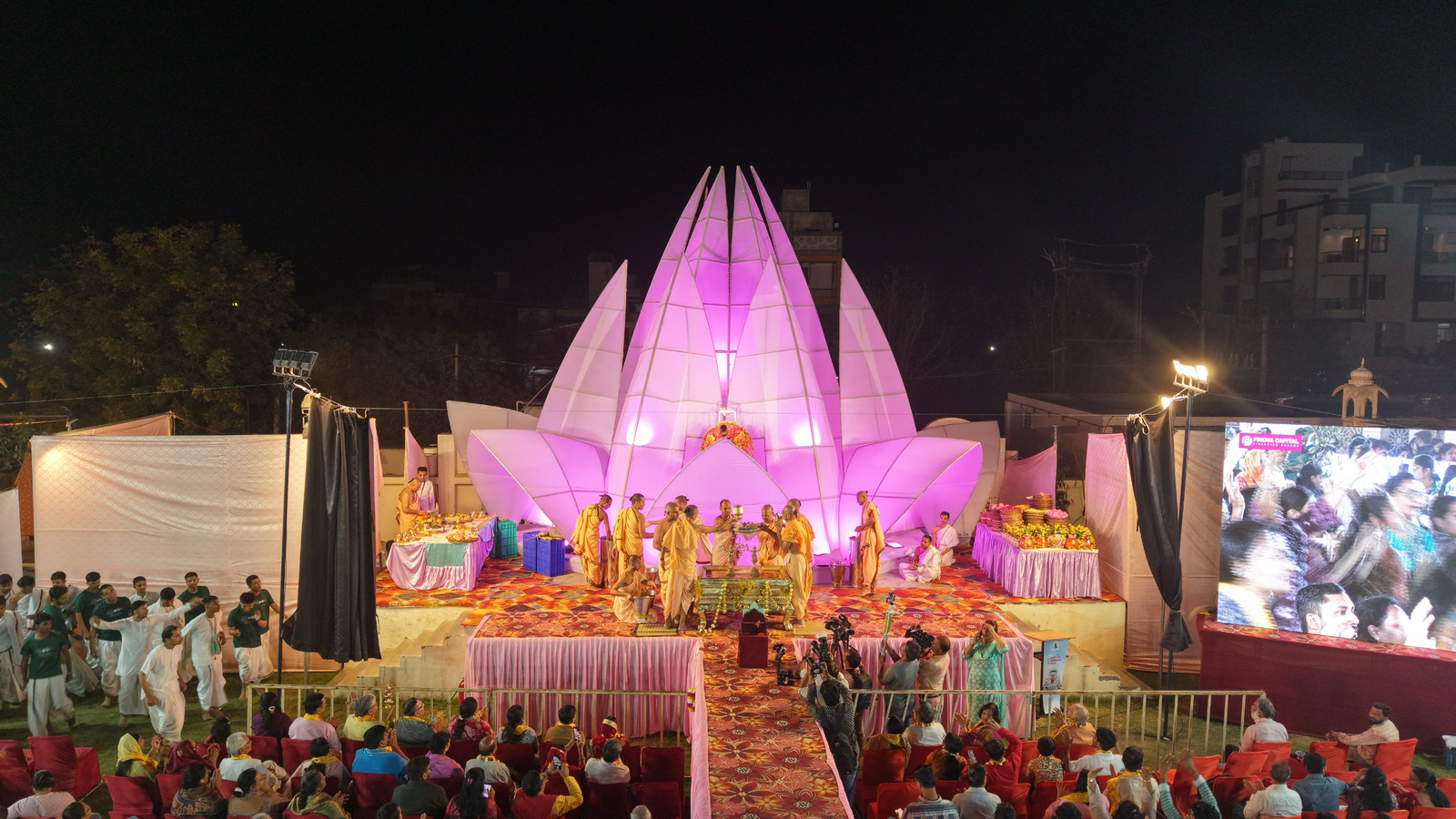
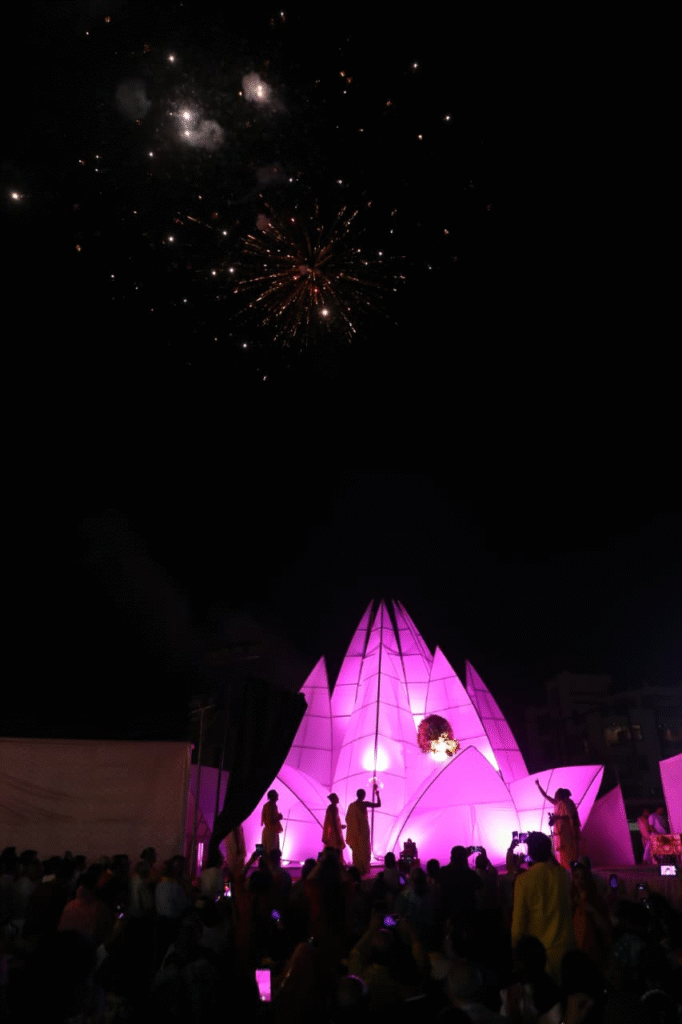
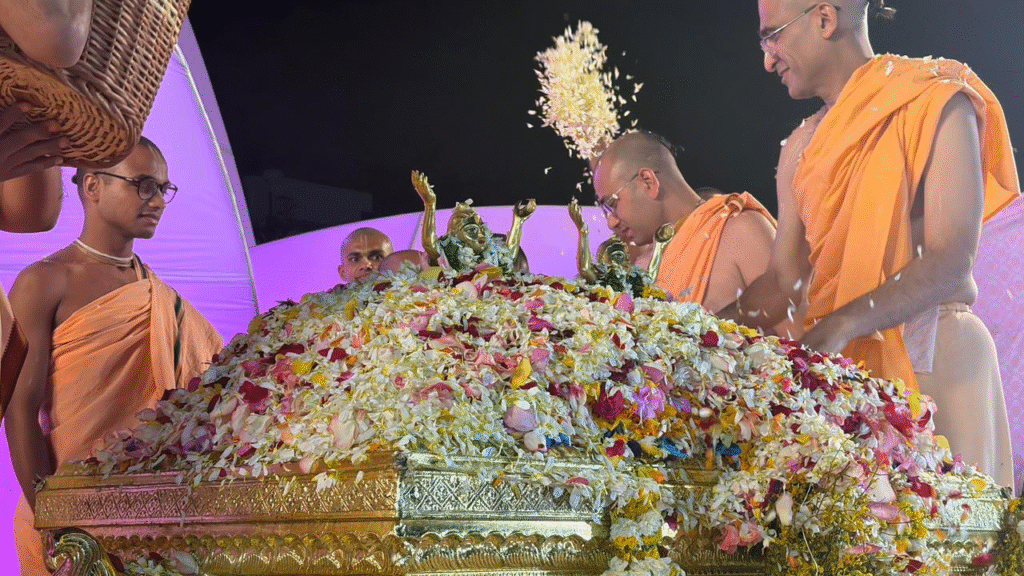
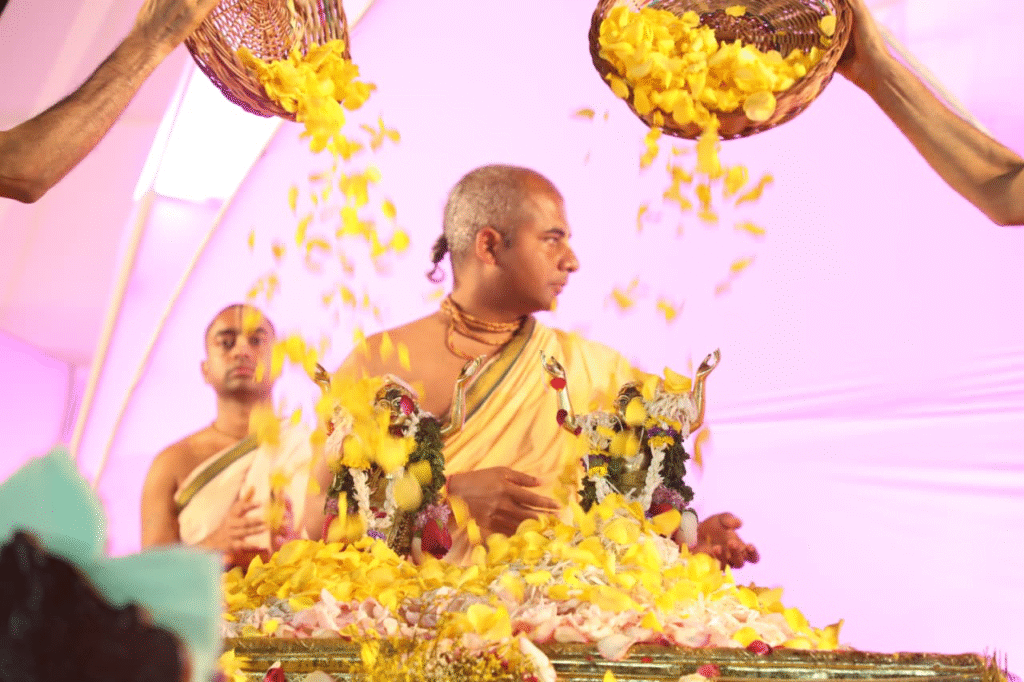
On the auspicious occasion, a special lotus-themed structure was created for the grand abhishekam of Sri Sri Gaur Nitai (Krishna Balarama). A ceremonial bathing ritual was performed with Panchamrit, a variety of fruit juices, and holy water from 108 sacred pots. The celebration also included the traditional offering of Chhappan Bhog (56 food offerings) to the deities.

Watch Pics: Krishna and Balram Sit on Hydraulic Lotus Flower During Grand Abhishekam in Gupt Vrindavan Dham in Jaipur

As Sri Chaitanya Mahaprabhu was born in Navdeep, a sacred region comprising nine islands arranged in the shape of a lotus, the stage was artistically designed to reflect a lotus motif. During the aarti, a hydraulic lift elevated the Lord’s palanquin above the stage, accompanied by the resonant sound of conch shells, enabling devotees to have a divine darshan.

Watch Pics: Krishna and Balram Sit on Hydraulic Lotus Flower During Grand Abhishekam in Gupt Vrindavan Dham in Jaipur

Special flowers were sourced from Jaipur, Delhi, Bangalore, and Mathura for the celebrations. Marking the festive spirit, the deities symbolically played Holi with devotees using flowers, creating a vibrant and devotional atmosphere.

Watch Pics: Krishna and Balram Sit on Hydraulic Lotus Flower During Grand Abhishekam in Gupt Vrindavan Dham in Jaipur

President of Gupta Vrindavan Dham, Shri Amitasana Das, said that Sri Chaitanya Mahaprabhu represents the golden combined form of Radha and Krishna. He added that Mahaprabhu united the world in devotion and peace through the propagation of Harinam Sankirtan.

Watch Pics: Krishna and Balram Sit on Hydraulic Lotus Flower During Grand Abhishekam in Gupt Vrindavan Dham in Jaipur

Watch Pics: Krishna and Balram Sit on Hydraulic Lotus Flower During Grand Abhishekam in Gupt Vrindavan Dham in Jaipur

Mojtaba Khamenei Emerges As Iran’s Next Supreme Leader

0

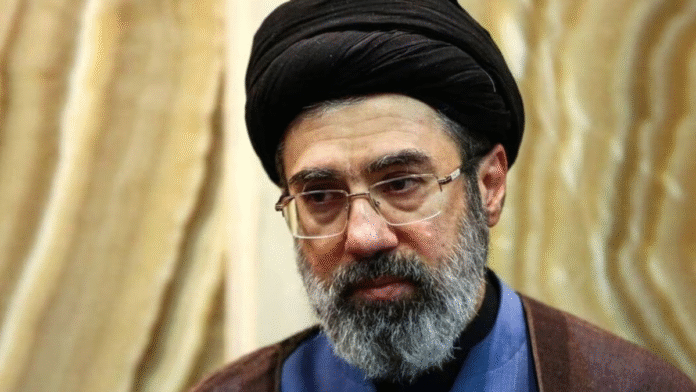
Mojtaba Hosseini Khamenei, the son of Iran’s long-time Supreme Leader Ayatollah Ali Khamenei, has reportedly been chosen as the country’s next Supreme Leader following his father’s death in a joint United States–Israel strike. According to reports, Iran’s powerful Assembly of Experts selected Mojtaba to assume the position, placing him at the centre of Iran’s political and religious leadership during a period of escalating regional tensions.

Early Life and Religious Background

Mojtaba Hosseini Khamenei was born in 1969 in Mashhad, Iran. He is the second-eldest son of Ayatollah Ali Khamenei and grew up during a period of major political transformation in Iran. His family became influential after the 1979 Islamic Revolution that overthrew Shah Mohammad Reza Pahlavi and established the Islamic Republic.

After the revolution, Mojtaba moved to Tehran and studied at Alavi High School, an institution known for producing members of Iran’s ruling establishment. He later pursued religious education in the seminary city of Qom under conservative clerics. Despite decades of theological study, he has not achieved the clerical rank of ayatollah, which traditionally strengthens a candidate’s legitimacy for the role of Supreme Leader.

Connections With Iran’s Security Establishment

During the Iran–Iraq War in the 1980s, Mojtaba served in the Habib Battalion. This experience helped him build relationships with individuals who later rose to senior positions within Iran’s security and intelligence apparatus.

Over the years, analysts have described him as a key behind-the-scenes figure within the Office of the Supreme Leader. His influence is widely believed to stem from close ties with the Islamic Revolutionary Guard Corps (IRGC), a powerful military and economic institution in Iran that plays a major role in shaping national security and political strategy.

Controversies and International Scrutiny

Mojtaba Khamenei has been the subject of international attention and criticism. In 2019, the United States imposed sanctions on him, alleging that his father had delegated parts of his authority to him without formal accountability. Reformist politicians and foreign governments have also accused him of influencing elections and supporting security crackdowns, although Iranian authorities have rejected these allegations.

Reports have also suggested that he is linked to a wide investment network and global property holdings, though the scale of his wealth remains unclear.

Important Facts

  • The Supreme Leader is the highest authority in Iran, overseeing the military, judiciary, and key state institutions.
  • The Assembly of Experts, an 88-member clerical body, is responsible for selecting and supervising the Supreme Leader.
  • The Islamic Revolutionary Guard Corps (IRGC) is a powerful military force with major political and economic influence in Iran.
  • The 1979 Islamic Revolution replaced the monarchy with the Islamic Republic led by clerical leadership.

Significance of a Potential Dynastic Succession

If Mojtaba Khamenei formally assumes leadership, it would mark a controversial moment in Iran’s political system. The Islamic Republic was founded on opposition to hereditary monarchy, yet a father-to-son transition would resemble dynastic succession. Observers note that the durability of his leadership may depend on support from influential clerical networks and security institutions within the Iranian state.

Raisina Dialogue 2026: Know Dates, Chief Guest, Theme and Other Guests

0

The Raisina Dialogue, India’s flagship multilateral conference on geopolitics and geo-economics, starting from March 5 will bring together global leaders, policymakers, and experts to deliberate on pressing international issues and strategic cooperation. Earlier today, President Alexander Stubb of Finland arrived in India for a state visit during which he will attend the 11th edition of Raisina Dialogue 2026 as the Chief Guest and Keynote Speaker.

In addition to his engagement at the Raisina Dialogue, President Stubb will hold discussions with the Prime Minister, focusing on strengthening bilateral relations and addressing regional and global issues of mutual interest.

His presence underscores Finland’s growing engagement with Indo-Pacific affairs and its expanding strategic dialogue with India.

He will be accompanied by a high-level delegation comprising ministers, senior officials and business leaders, reflecting the intent to broaden cooperation across political and economic domains.

Bilateral Talks and Diplomatic Engagements

During the visit, President Stubb will hold discussions with Prime Minister Narendra Modi to review the full spectrum of bilateral ties. The talks are expected to focus on trade, digital innovation, clean technologies, education and emerging technologies. Regional and global issues of mutual interest will also feature prominently.

Prime Minister Modi will host a luncheon in honour of the visiting leader. President Stubb is also scheduled to meet President Droupadi Murmu, Vice President C.P. Radhakrishnan and External Affairs Minister S. Jaishankar, highlighting the diplomatic importance attached to the visit.

Strategic and Multilateral Cooperation

India and Finland share strong democratic values and support a rules-based international order. Finland remains an important partner for India within the European Union and the Nordic region. The visit aims to strengthen cooperation in multilateral forums and deepen people-to-people ties.

The Raisina Dialogue will commence from March 5 to March 7 in the national capital.

US Deputy Secretary of State Christopher Landau will also be leading a US delegation to the Raisina Dialogue 2026.

The Raisina Dialogue is India’s premier conference on geopolitics and geoeconomics, held annually in New Delhi since 2016.

Organised by the Observer Research Foundation (ORF) in partnership with the Ministry of External Affairs, this three-day event convenes global leaders, policymakers, academics, industry experts, and journalists to discuss critical international issues.

Samskara represents the legacy of identity that allows civilisations to assert themselves, embrace diversity, and progress through continuous refinement.

Several foreign dignitaries across the world are set to arrive in India to participate in the Raisina Dialogue 2026, the Ministry of External Affairs (MEA) said on Wednesday.

According to the MEA, the Minister for Foreign Affairs of Bhutan, Lyonpo Dina Nath Dhungyel, arrived in India today (March 4, 2026) to attend India’s flagship conference on geopolitics and geo-economics.

Other key delegations scheduled to arrive include Minister of Foreign Affairs, Regional Integration & International Trade of Mauritius, Dhananjay Ramful; Minister for Foreign Affairs & Diaspora of Seychelles, Barry Faure; and Minister of Foreign Affairs, Foreign Employment & Tourism of Sri Lanka, Vijitha Herath, all of whom will be arriving on March 5.

Important Facts

  • Raisina Dialogue is India’s flagship geopolitics and geo-economics conference held annually in New Delhi.
  • Finland is a member of the European Union and NATO.
  • India and Finland established diplomatic relations in 1949.
  • The Nordic region includes Finland, Sweden, Norway, Denmark and Iceland.

Water Cremation: Scotland First UK Nation to Legalise It; Know Its Scientific Advantages…

0

Scotland has become the first nation in the United Kingdom to legalise water cremation, formally known as alkaline hydrolysis. The move represents the most significant reform in Scottish funeral legislation since cremation was first introduced in 1902. The new regulations were approved by the Scottish Parliament in response to growing public demand for environmentally sustainable end-of-life options.

Water cremation is widely regarded as a greener alternative to traditional burial and flame-based cremation. The decision reflects changing public attitudes towards sustainability, including within the funeral sector.

How Alkaline Hydrolysis Works

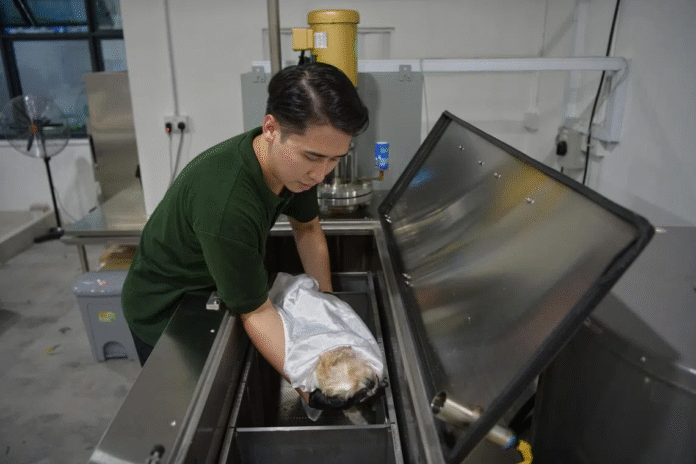
Alkaline hydrolysis involves placing a body in a sealed, pressurised chamber filled with water and potassium hydroxide, an alkaline solution. The chamber is heated to approximately 150°C for about 90 minutes. The combination of heat, water and alkali accelerates the natural decomposition process.

During the procedure, soft tissues dissolve, leaving only the bones. These are then rinsed, dried, and processed in a cremulator to produce ashes similar in appearance to those from conventional cremation. The remaining liquid by-product is treated and disposed of safely in accordance with environmental regulations.

Environmental Advantages

Supporters argue that alkaline hydrolysis has a lower carbon footprint compared to flame cremation. It generally consumes less energy and does not produce direct emissions such as carbon dioxide or mercury released from dental fillings during traditional cremation. Burial, meanwhile, requires land use and can pose risks of soil and groundwater contamination.

Scotland’s Public Health Minister, Jenni Minto, described the reform as a response to strong public support for greater funeral choice. A 2023 public consultation found that 84 per cent of respondents supported the introduction of alkaline hydrolysis as a legal option.

Global Adoption and Industry Perspective

Although new to the UK, alkaline hydrolysis is already legal in 28 states in the United States and is available in countries such as Canada, Ireland, South Africa, Australia and New Zealand. Industry providers maintain that the technology broadens consumer choice rather than replacing burial or flame cremation.

Key Facts

  • Alkaline hydrolysis is also known as water cremation or aquamation.
  • Scotland is the first UK nation to legalise the practice.
  • Cremation was first introduced in Scotland in 1902.
  • The process uses potassium hydroxide, heat and water to accelerate decomposition.

Broader Implications

The legalisation signals a broader shift towards sustainable funeral practices in the United Kingdom. As environmental considerations increasingly influence personal and policy decisions, Scotland’s move may trigger similar legislative discussions in England, Wales and Northern Ireland.