Home Blog Page 502

MLOps: Bridging the Gap Between Data Science and IT

0

MLOps, short for Machine Learning Operations, is a transpiring discipline that bridges the gap between data science and IT operations. It focuses on the structured organization, examination, and administration of machine learning models in production environments. MLOps makes sure that machine learning models are not only developed but also continuously integrated, deployed, and maintained, allowing them to evolve with changing data and business needs.


The core of MLOps lies in automating the whole machine learning lifecycle, from data preparation and model training to deployment and monitoring. By adopting MLOps practices, organizations can achieve faster model development cycles, improve collaboration between data science and IT teams, and ensure the scalability and reliability of their AI systems.
MLOps is increasingly becoming essential for businesses aiming to harness the full potential of AI, as it helps them move from experimental projects to production-ready solutions, driving real-world impact and value.
Understanding the concept of MLOPS
MLOps, or Machine Learning Operations, is a discipline that combines machine learning (ML) with DevOps practices to manage and make the smooth functioning of the entire lifecycle of machine learning models. The concept of MLOps revolves around automating and optimizing the processes involved in deploying, monitoring, and maintaining ML models in production environments.
 It integrates data engineering, model training, version control, continuous integration/continuous deployment (CI/CD), and monitoring into a unified framework, enabling seamless collaboration between data scientists and IT operations teams.


The basics of MLOps include:
* Automating data pipelines,
* Tracking model performance,
* Managing model versions and
* Ensuring reproducibility across environments.
Key components involve data preprocessing, model training and validation, deployment pipelines, and monitoring systems. MLOps also emphasizes continuous integration and continuous delivery (CI/CD) for ML models, allowing organizations to rapidly iterate and improve models while minimizing the risk of deployment errors.

An MLOps course is beneficial as it equips professionals with the skills needed to apply and manage ML models effectively in production environments. By mastering MLOps, individuals can ensure that their machine learning projects move from experimentation to real-world application efficiently, with improved collaboration, faster deployment, and better scalability. This makes them valuable assets in the fast-growing field of AI and machine learning.

Key components of MLOps:
The key components of MLOps encompass various stages of the machine learning lifecycle, ensuring efficient model development, deployment, and management in production environments. These components include:
Version Control:
Managing and tracking versions of data, code, and models to ensure reproducibility and consistency across different environments.
Automated Data Pipelines:
Creating and managing data pipelines that automate data collection, preprocessing, and transformation, ensuring that models are trained on the most up-to-date and clean data.
Model Training and Validation:
Automating the process of training and validating models using the latest data. This often includes hyperparameter tuning, model evaluation, and selection of the best-performing model.
Continuous Integration/Continuous Deployment (CI/CD):
Applying CI/CD practices to machine learning models, allowing for frequent updates and deployments to production environments. This ensures that models can be continuously improved and updated with minimal disruption.
Model Deployment:
Moving trained models from development to production, where they can be accessed and used by applications in real-time or batch-processing environments.
Monitoring and Logging:
Continuously monitor model performance, data drift, and system health in production. This involves tracking metrics such as accuracy, latency, and resource usage and logging any anomalies or issues.
Model Governance:
Implementing policies and practices to manage and govern models throughout their lifecycle, ensuring compliance with regulations, ethical standards, and best practices.
Scalability and Resource Management:
Ensuring that the infrastructure can scale to handle varying loads and efficiently manage computational resources, whether on-premises or in the cloud.
By integrating these components, MLOps provides a structured and automated approach to managing the end-to-end machine learning lifecycle, from development to arrangement and beyond.
 
Benefits of MLOPS
MLOps offers several benefits by streamlining the deployment and management of machine learning models. Key advantages include:
Improved Collaboration: MLOps fosters better teamwork between data scientists and IT operations, ensuring smoother transitions from model development to deployment.
Automation and Efficiency: Automating data pipelines, model training, and deployment reduces manual errors and accelerates the entire machine learning lifecycle.
Scalability: MLOps enables models to scale efficiently, handling increased workloads and data volumes without compromising performance.
Continuous Improvement: By integrating CI/CD practices, MLOps allows for frequent updates and improvements to models, keeping them relevant and effective.
Enhanced Monitoring: Continuous monitoring ensures that models perform optimally in production, with the ability to detect and address issues like data drift quickly.
 
Why are coding skills essential for MLOps?
 
Coding skills are essential for MLOps because they enable professionals to automate processes, manage complex data pipelines, and combine machine learning models into production environments. MLOps involves writing scripts for data preprocessing, model training, deployment, and monitoring, often using languages like Python, Bash, and scripting tools like Docker and Kubernetes. Strong coding skills allow MLOps engineers to customize workflows, troubleshoot issues, and optimize the performance of machine learning systems.
 
Proper MLOps training enhances these skills by providing practical experience in building, deploying, and maintaining models within a structured framework. It helps professionals understand the end-to-end lifecycle of machine learning projects, from development to production. This training not only improves technical competence but also makes professionals more valuable to organizations, as they can effectively bridge the gap between data science and IT operations. Ultimately, this leads to accelerated career growth and more opportunities in the rapidly expanding field of AI and machine learning.
 
Conclusion
 
MLOps is a transformative practice that bridges the difference between data science and IT operations, enabling organizations to efficiently deploy, manage, and scale machine learning models in production. By integrating automation, collaboration, and continuous monitoring, MLOps ensures that AI models are not only developed but also maintained and improved in real time, meeting business needs effectively. This approach reduces the time from model creation to deployment, enhances reliability, and fosters seamless collaboration between data scientists and IT teams. Ultimately, MLOps empowers organizations to fully realize the power of AI, driving innovation and competitive advantage.

 

India approves new eye drops that will eliminate glasses: A medication to improve vision impairment

0

Starting in the first week of October, a revolutionary new eye drop that could eliminate the need for reading glasses will be available across pharmacies in India. Priced at ₹350, these prescription-based drops, named “PresVu,” are specifically designed to treat mild to intermediate presbyopia in individuals aged 40 to 55 years. The drug, which has been under development and scrutiny for over two years, marks India’s first approved eye drops aimed at reducing reliance on reading glasses.

A Breakthrough in Presbyopia Treatment

On Tuesday, Entod Pharmaceuticals, a Mumbai-based company, announced the launch of “PresVu” eye drops. The drops utilize pilocarpine, a medication that addresses presbyopia by reducing the size of the pupils, thereby enhancing the ability to see objects up close. Presbyopia, a condition associated with aging, is characterized by the gradual loss of the eyes’ ability to focus on nearby objects, typically becoming noticeable in the mid-40s and progressively worsening until around the late 60s.

In an interview with News18, Nikkhil K. Masurkar, CEO of Entod Pharmaceuticals, explained that a single drop of “PresVu” begins to work within just 15 minutes, with effects lasting up to six hours. For prolonged effectiveness, a second drop can be administered three to six hours after the first, extending the duration of its benefits.

“Until now, the only solutions for blurry near vision were reading glasses, contact lenses, or surgical interventions,” said Masurkar. Entod Pharmaceuticals, known for its specialization in ophthalmic, ENT, and dermatology medicines, exports its products to over 60 countries.

Who Can Use “PresVu”?

Beginning in October, “PresVu” eye drops will be available at pharmacies, but only with a prescription from a registered medical practitioner. The medicine is specifically indicated for individuals between the ages of 40 and 55 who suffer from mild to intermediate presbyopia.

Masurkar emphasized that “PresVu” is the first of its kind in India, tailored specifically for Indian eyes and adapted to the genetic makeup of the Indian population. “Similar medications are available in other countries, but those formulations have not been tested on Indian eyes, which differ significantly from Caucasian eyes. We have made several modifications to the formulation,” Masurkar noted.

To ensure that healthcare professionals are well-informed about this new product, Entod Pharmaceuticals has begun training its field force to educate doctors on the usage and benefits of “PresVu.”

Clinical Trials and Regulatory Approval

Masurkar revealed that the company applied for approval from the Drug Controller General of India (DCGI) in early 2022 and was required to conduct phase III clinical trials. These trials were conducted at ten sites across India, involving over 250 patients. The results, which were submitted to the regulatory agency, led to the approval of “PresVu” by the subject expert committee.

The clinical trials showed that 82% of the 274 subjects experienced no side effects. The remaining participants reported minor, transient side effects such as eye irritation, redness, blurred vision, and headaches, all of which resolved within a few days. “These side effects were temporary, and once the patients adapted, there were no further issues. No patients were discontinued from the trial,” Masurkar stated.

Although the results of the study have yet to be published in a peer-reviewed journal, Entod Pharmaceuticals is planning post-marketing surveillance at major eye-care centers across India, including the All India Institute of Medical Sciences (AIIMS) in New Delhi. “We will publish the results in medical journals, but our current focus is on preparing for post-marketing surveillance, which will help us better understand the various aspects of the medicine,” added Masurkar.

With the launch of “PresVu,” India is set to enter a new era of eye care, offering millions of people a convenient and non-invasive solution to presbyopia, potentially reducing the need for reading glasses.

India’s AI Pioneers and Leaders Take Center Stage at the Global AI Summit

0

India’s growing influence in the global AI landscape will be prominently showcased at the upcoming Global AI Summit (GAIN) 2024, hosted by the Saudi Data & Artificial Intelligence Authority (SDAIA) from September 10-12 in Riyadh. The summit will feature an impressive lineup of Indian AI pioneers and global leaders of Indian origin, highlighting the nation’s dual focus on global AI governance and grassroots innovation.


Leading the Indian contingent are Amandeep Singh Gill, UN Technology Envoy, and Dr. Deepak Chopra, Founder of the Chopra Foundation. They will be joined by a diverse group of innovators and thought leaders, including:

  • Krishna Kumar, Founder & CEO of Cropin Technology
  • Tanuj Bhojwani, Head of People+AI
  • Dr. Dinesh Babu Jayagopi from the Data Science & AI Department at IIIT-Bangalore
  • Dr. Ruchi Saxena, Founder-Director of Caerobotics
  • Arvind Sethumadhavan, Senior Partner at Gain Theory
  • Priya Nagpurkar, Vice President of Hybrid Cloud and AI Platform at IBM Research
  • Shashank Kumar, Co-founder & CEO of DeHaat

His Excellency Dr. Abdullah bin Sharaf Alghamdi, President of SDAIA, emphasized the significance of India’s participation, “India’s strong presence at GAIN 2024 underscores the growing collaboration between our nations in the field of AI. Their expertise spans from global governance to agricultural innovation, reflecting India’s holistic approach to AI development. This aligns perfectly with Saudi Arabia’s vision for responsible and inclusive AI growth.”

The Indian speakers will contribute to various sessions, covering topics such as:

  • Global AI governance and ethics
  • AI-driven solutions in agriculture and rural development
  • The intersection of AI with healthcare and wellness
  • People-centric AI innovations
  • AI applications in hybrid cloud environments
  • The role of AI in sustainable development


Saudi Arabia is India’s second-largest trading partner. In 2022-23, India’s imports from Saudi Arabia reached US $ 42.03 billion and exports to Saudi Arabia were worth US$ 10.72 billion registering an increase of 22.48% over last year. Total trade with Saudi Arabia accounted for 4.53% of India’s total trade. 


During his visit to India in February 2019, Saudi Crown Prince had announced that the Kingdom would be investing US $100 billion in India in diversified sectors such as energy, refining, petrochemicals, infrastructure, agriculture, minerals and mining, manufacturing, education, and health in the forthcoming years. 


Indian technology leaders’ participation in the Global AI Summit builds upon the strengthening ties between India and Saudi Arabia in the technology sector. 


GAIN 2024, under the theme “Now, Next, Never,” will bring together over 300 speakers from more than 100 countries to discuss the current state of AI, its future trajectory, and the ethical considerations necessary to ensure responsible AI development across all sectors.


Indian attendees will join other global leaders in AI and technology at the Summit, including:

  • Cristiano Amon, President & CEO of Qualcomm Incorporated
  • Nick Studer, President & CEO of Oliver Wyman Group
  • Julie Sweet, CEO of Accenture
  • Dr. Marc Raibert, Chairperson of Boston Dynamics
  • Alex Smola, CEO of Boson AI
  • Caroline Yap, Global Managing Director at Google Cloud


For more information about the Global AI Summit and to register, please visit: globalaisummit.org.


About SDAIA

The Saudi Data & Artificial Intelligence Authority (SDAIA) is at the forefront of Saudi Arabia’s transformation into a leading data-driven economy. SDAIA aims to unlock the value of data as a national asset, driving innovation and economic growth through the power of data and AI.

Rajasthan Government Wins National e-Governance Gold Award for Pioneering Tele-Radiology and AI in Silicosis Management

0

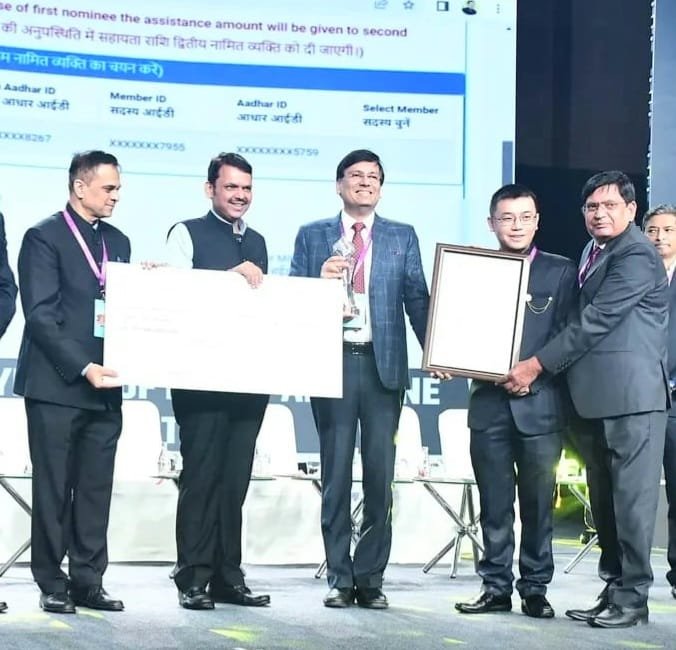
The Rajasthan Government has been honored with the prestigious National e-Governance Gold Award 2024 for its groundbreaking use of Tele-Radiology and Artificial Intelligence (AI) in diagnosing Silicosis and providing timely relief to affected individuals through an innovative Direct Benefit Transfer (DBT) self-approval portal. The award was presented during the 27th National e-Governance Conference held in Mumbai on Tuesday.

Revolutionizing Silicosis Diagnosis and Relief

Rajasthan’s state government has set a new benchmark in public health management by developing an advanced IT solution that leverages digital X-rays, Tele-Radiology, and AI to streamline the diagnosis of Silicosis, a debilitating lung disease caused by inhaling silica dust. By training an AI model on a vast dataset of over 29,000 labeled chest X-rays, the government has enabled the automatic detection of Silicosis, making the diagnostic process both faster and more accurate.

This innovative approach has significantly improved the identification and treatment of Silicosis patients. The introduction of the DBT self-approval portal allows these patients to receive financial assistance directly into their bank accounts, bypassing the previously cumbersome administrative procedures. This system ensures that those affected by Silicosis receive the necessary relief with greater speed and dignity.

Ensuring Timely Assistance with Dignity

The DBT self-approval portal has been a game-changer for Silicosis patients, simplifying the process of receiving financial aid. By removing bureaucratic hurdles, the system guarantees timely assistance, ensuring that citizens receive the public services they need with respect and efficiency.

Setting a National Standard in Public Health Solutions

Under the leadership of Dr. Samit Sharma, Secretary of the Public Health Engineering and Ground Water Department, Rajasthan has established itself as a leader in addressing complex public health challenges using cutting-edge technology. Dr. Sharma’s vision and dedication have been instrumental in setting new national standards for health care delivery, particularly in the realm of e-Governance.

Recognition at the National e-Governance Conference

During the conference, Dr. Samit Sharma delivered a compelling presentation on the state’s innovative approach to diagnosing Silicosis using Tele-Radiology and AI. He emphasized that this award reflects the Rajasthan Government’s unwavering commitment to fairness, equality, and justice in public administration, with a strong focus on citizen welfare. The recognition also underscores Rajasthan’s vital role in the Digital India initiative, which aims to empower citizens, enhance transparency, and deliver high-quality public services efficiently.

About the National e-Governance Awards

The National e-Governance Awards are annually conferred by the Department of Administrative Reforms and Public Grievances, Government of India, to celebrate excellence in the implementation of e-Governance innovations. These awards recognize central ministries, state governments, union territories, local bodies, public sector enterprises, and academic institutions that have made significant contributions to improving governance through technology.

A Legacy of Innovation and Excellence

Dr. Samit Sharma is no stranger to accolades, having previously received the State IT Award for developing the e-Aushadhi software and the Prime Minister’s Excellence Award for his work on a low-cost generic medicines scheme. His continued efforts in leveraging technology to improve public health services have positioned Rajasthan as a beacon of innovation in the country.

The National e-Governance Gold Award 2024 is a testament to Rajasthan’s forward-thinking approach and its commitment to improving the lives of its citizens through the intelligent use of technology.

Retreat Ceremony Similar to Wagah Border to Start at Tanot Rai Mata Temple

0

In a move that promises to boost tourism and national pride, the Border Security Force (BSF) is set to launch a retreat ceremony at the Tanot Rai Mata Temple complex in Jaisalmer, similar to the iconic ceremony at the Wagah Border in Punjab’s Amritsar. Scheduled to begin early next year, the retreat ceremony will be a daily event, with BSF personnel ceremoniously lowering the Indian flag each evening.

To accommodate the ceremony, construction of an amphitheater at Tanot is in full swing. The facility will have seating for 1,030 people, ensuring that visitors can comfortably watch the evening parade, which will include a camel show and other cultural programs, making the event a significant attraction.

Tanot’s Strategic Importance

Tanot is situated just 20 kilometers from the Pakistan border, making it a location of strategic and historical significance. Although, unlike Wagah, there will not be Pakistani Rangers on the opposite side, the ceremony at Tanot will still replicate much of the grandeur and patriotism associated with the Wagah Border ceremony. This initiative aims to highlight the valor of the BSF and bring attention to the historical importance of this border area.

Key Attractions at the Tanot Complex

The amphitheater will be the centerpiece of the Tanot complex, hosting the daily parade and other ceremonies. Visitors can also explore a museum featuring a gallery of weapons, a Shaheed Wall, and a Mural Wall, honoring the bravery and sacrifices of Indian soldiers. The complex will also include a children’s recreation area, interaction zones, an audio-visual system, and stage lighting, enhancing the overall experience for tourists.

For convenience, the complex will offer a food court, surveillance systems, and solar-powered LED streetlights, ensuring a comfortable and secure environment for visitors.

Government Investment in Border Tourism

Recognizing the potential of border tourism, the Central Government has sanctioned a project worth INR 17.67 crore for the development of the Tanot complex. Approved last year by the Ministry of Tourism, this project is expected to be completed within a year. The BSF has already completed 70% of the work, and the project spans 457 acres. The development includes a 434-square-meter amphitheater, a 686-square-meter interpretation center, a 434-square-meter cafeteria, a 183-square-meter VIP block, a souvenir shop, and toilet facilities.

Completion Expected by Year-End

The BSF is optimistic that the entire Tanot complex, including the retreat ceremony infrastructure, will be completed by the end of this year. According to Yogendra Singh Rathore, DIG, BSF Jaisalmer, the upcoming retreat ceremony at Tanot will not only enhance the area’s cultural and historical significance but will also provide a new avenue for tourism in the region.

The Tanot retreat ceremony, with its unique blend of tradition, patriotism, and cultural activities, is set to become a major draw for visitors, offering an experience that mirrors the spirit of the Wagah Border, while adding its own distinct flavor to the border tourism circuit.

IIT Delhi Inaugurates Its First International Campus in Abu Dhabi with 52 Students

0

In a significant milestone for global education and innovation, the Indian Institute of Technology (IIT) Delhi has officially inaugurated its first international campus in Abu Dhabi. This historic event, marked by the presence of Sheikh Khaled bin Mohamed, Crown Prince of Abu Dhabi, signals a new era in educational collaboration between India and the United Arab Emirates (UAE). The campus welcomed its inaugural batch of 52 students, setting the stage for an ambitious future in academic excellence and research.

A Landmark Inauguration

The inauguration ceremony, held on a momentous Monday, was graced by Sheikh Khaled bin Mohamed, who lauded the establishment of IIT Delhi’s Abu Dhabi campus as a pivotal step in bolstering the UAE’s reputation as a global hub for education and innovation. The new campus marks the second international foray for an IIT, following the establishment of IIT Madras’s campus in Zanzibar.

Sheikh Khaled’s presence underscored the importance of this initiative in the broader context of UAE’s educational aspirations. During the event, he announced strategic partnerships between IIT Delhi Abu Dhabi and several leading universities in Abu Dhabi, including Khalifa University, Mohamed bin Zayed University of Artificial Intelligence, Sorbonne University Abu Dhabi, and Zayed University. These collaborations are poised to enhance academic cooperation, foster joint research projects, and create exchange opportunities for students and faculty members.

Strategic Partnerships and Collaborative Ventures

The partnerships between IIT Delhi Abu Dhabi and prominent Abu Dhabi universities represent a significant advancement in international academic collaboration. For instance, the partnership with Sorbonne University Abu Dhabi will focus on postgraduate student exchanges and the organization of scientific seminars, paving the way for interdisciplinary learning and research.

These collaborations aim to leverage the strengths of each institution, creating a synergistic environment that fosters innovation and knowledge exchange. The alliances are expected to catalyze a range of academic programs, joint research initiatives, and exchange programs, further cementing the UAE’s position as a leader in global education.

Inaugural Batch and Future Plans

The inaugural cohort at IIT Delhi Abu Dhabi comprises 52 students pursuing undergraduate degrees in Computer Science and Energy Engineering. These students, selected through the rigorous JEE Advanced exam and the Combined Admission Entrance Test (CAET) for international candidates, hail from diverse backgrounds, including Indian, Emirati, and other international students.

Earlier this year, IIT Delhi Abu Dhabi launched its first Master of Technology (MTech) program in Energy Transition and Sustainability, reflecting the institution’s commitment to addressing global challenges through cutting-edge research and education.

A Symbol of India-UAE Relations

The establishment of IIT Delhi Abu Dhabi is not just a milestone for the institute but also a testament to the deepening ties between India and the UAE. This initiative is a key achievement under the Vision Document signed by Indian Prime Minister Narendra Modi and UAE President Sheikh Mohamed bin Zayed Al Nahyan in February 2022. The new campus symbolizes the shared vision of both nations to harness knowledge, science, and technology for global prosperity.

Education Minister Dharmendra Pradhan praised the new campus as a “symbol of India-UAE friendship,” highlighting the role of education in strengthening bilateral relations. The campus stands as a beacon of the collaborative spirit between the two countries, reflecting their mutual commitment to advancing global education and innovation.

Summing Up

The inauguration of IIT Delhi’s Abu Dhabi campus marks a new chapter in the institute’s storied history, expanding its reach and influence on the global stage. With strategic partnerships, a diverse inaugural cohort, and a focus on cutting-edge research and innovation, IIT Delhi Abu Dhabi is set to play a pivotal role in shaping the future of education in the UAE and beyond. This new campus not only strengthens India-UAE relations but also reaffirms the commitment of both nations to leverage education as a driving force for global progress.

Vithya Ramraj Breaks 39-Year-Old 400m Hurdles Record at the National Open Athletics Championships

0

At the 63rd National Open Athletics Championships, held at the iconic Sree Kanteerava Stadium in Bengaluru, history was made when Vithya Ramraj shattered a 39-year-old record in the women’s 400m hurdles. Vithya completed the race in a remarkable 56.23 seconds, breaking the long-standing record of 56.80 seconds set by the legendary Indian athlete P.T. Usha in 1985.

The Significance of Vithya’s Achievement

Vithya Ramraj’s achievement is a monumental milestone in Indian athletics, not just as a personal triumph but also in the broader context of the sport’s history in the country. P.T. Usha, often hailed as the “Queen of Indian Track and Field,” set the original record during an era when Indian athletics was just beginning to gain international recognition. For nearly four decades, Usha’s record remained unchallenged, a testament to her prowess and enduring legacy.

By breaking this historic record, Vithya Ramraj has carved her name alongside one of India’s most celebrated athletes, bringing renewed attention to Indian athletics. Her achievement is a symbol of the evolving talent in the nation’s track and field scene, inspiring a new generation of athletes to push the boundaries of what is possible.

Outstanding Performances in Men’s Events

The championships were a showcase of athletic excellence across various events, with several records being challenged and broken. In the men’s 200m, Nithin from Tamil Nadu delivered a standout performance, breaking the meet record with a time of 20.66 seconds, surpassing the previous mark set by Animesh Kujur. This was just one of many impressive displays of athleticism throughout the championships.

Other notable performances in the men’s events included:

  • 800m: P. Mohammed completed the race in 1:48.10.
  • 10,000m: Abhishek crossed the finish line in 29:48.18.
  • 400m hurdles: Aman recorded a time of 50.52 seconds.

Highlights from the Women’s Events

The women’s events also featured exceptional performances, with athletes setting new benchmarks in their respective disciplines. Ancy Sojan emerged as a star in the long jump, achieving a leap of 6.71 meters, which earned her the title of the best woman athlete of the championships. Her performance highlighted the growing competitiveness in Indian women’s athletics.

Other key performances in the women’s events included:

  • 200m: Nithya Gandhe completed the race in 23.51 seconds.
  • 800m: Chanda clocked in at 2:01.16.
  • 10,000m: Seema finished the race in 33:56.86.

Awards and Overall Achievements

The championships concluded with the recognition of several athletes who delivered outstanding performances. Vithya Ramraj, for her record-breaking run in the 400m hurdles, and Nithin, for his remarkable 200m sprint, were highlighted as standout athletes of the event.

In the team championships, the Railways emerged victorious in the women’s category, while Services claimed the title in the men’s category. The Railways team also took home the overall championship title, underscoring their dominance in this year’s competition.

Summing Up

Vithya Ramraj’s record-breaking performance at the 63rd National Open Athletics Championships marks a significant chapter in Indian sports history. Her achievement, along with the stellar performances of other athletes, reflects the growing talent and competitive spirit within Indian athletics. As these athletes continue to push the limits, they inspire hope and excitement for the future of Indian sports on both national and international stages.

4o

Ancient Ice Core Yields Genomes of 1,700 Viruses

0

In a groundbreaking discovery, scientists from the United States have uncovered over 1,700 ancient viruses preserved in ice core samples extracted from the Guliya Glacier on the Tibetan Plateau. Some of these viruses are estimated to be over 40,000 years old, offering a rare glimpse into the history of viral evolution and survival in response to climatic shifts. The study, led by Zhi-Ping Zhong of Ohio State University, provides invaluable insights into the intricate relationship between viruses and the environment over millennia.

Ice Core Sampling

Ice cores are cylindrical samples drilled from glaciers, and they serve as time capsules, preserving layers of ice that have accumulated over thousands of years. Each layer holds a wealth of environmental information, including microorganisms like viruses, that have been trapped and preserved in the ice. The ice core from the Guliya Glacier, measuring 310 meters in length, spans different climatic periods, making it an exceptional resource for studying ancient climates and the history of viral activity.

Decoding Ancient Viruses

Using advanced genomic techniques, the research team successfully extracted DNA from the ice and sequenced the genomes of the viruses embedded within it. Their efforts resulted in the identification of 1,705 distinct viral species, each displaying significant genetic differences that correspond to the climate conditions during their period of activity. This level of detail provides a deeper understanding of how viruses have adapted and evolved in response to changing environmental factors over tens of thousands of years.

Survival in a Changing World

The study revealed that some viral communities found in the ice core were unique to the region and showed heightened activity approximately 11,000 years ago, a period marked by significant climate change. These viruses demonstrated remarkable adaptability, with some acquiring genetic material from the bacteria they infected—such as Flavobacterium—to enhance their survival and metabolic functions. This process, known as horizontal gene transfer, highlights the dynamic interactions between viruses and their hosts, particularly in times of environmental stress.

The Impact of Climate on Viral Evolution

One of the key findings of the research is the strong correlation between viral activity and climatic shifts. As the climate changed, new viral strains emerged, exerting evolutionary pressure on existing populations to adapt or perish. This evolutionary arms race likely played a crucial role in shaping the diversity and complexity of viral communities over time.

The study’s findings also raise important concerns about the potential release of these ancient viruses as glaciers and permafrost continue to melt due to global warming. As these long-dormant viruses re-enter modern environments, they could interact with current ecosystems in unpredictable and potentially harmful ways. This possibility underscores the need for further research to better understand the behavior and adaptability of these ancient pathogens.

Preserving Knowledge in a Melting World

This research highlights the critical importance of collecting and analyzing ice core samples from glaciers worldwide, particularly as these ice reserves dwindle in the face of climate change. Ice cores hold irreplaceable records of past viral and climatic interactions, which could be lost forever if not studied in time. Understanding these ancient viruses is not only crucial for piecing together the history of life on Earth but also for predicting how they might respond to the unprecedented climate changes occurring in the Anthropocene era—the current geological epoch characterized by significant human impact on the planet.

As the world continues to grapple with the effects of global warming, studies like this one remind us of the complex and often unforeseen consequences of environmental change. The ancient viruses preserved in ice cores serve as both a record of the past and a potential warning for the future, emphasizing the need for continued vigilance and research in the face of an ever-changing world.

Understanding the ‘Nambike Nakshe’ Scheme

0

In an effort to streamline the building approval process and reduce bureaucratic hurdles, Bengaluru’s Deputy Chief Minister, D.K. Shivakumar, has introduced a new scheme called ‘Nambike Nakshe.’ This initiative is designed to make it simpler and faster for property owners to get building approvals, particularly for structures up to 4,000 square feet within areas managed by the Bruhat Bengaluru Mahanagara Palike (BBMP).

Scheme Overview

The ‘Nambike Nakshe’ scheme allows property owners to obtain temporary or provisional approval for their building plans directly from authorized architects or engineers. This marks a significant departure from the traditional, often cumbersome, multi-step approval process. By enabling property owners to begin planning their buildings without initially navigating a complex web of approvals, the scheme aims to expedite construction projects and reduce the administrative burden on both the government and the citizens.

Target Audience

This scheme is particularly beneficial for those who own land in areas developed by the Bangalore Development Authority (BDA) and the Karnataka Housing Board. Many of these plots, typically around 50×80 feet in size, fall well within the scheme’s 4,000-square-foot limit, making the process considerably easier for a substantial number of property owners.

Provisional Approval Process

Under the ‘Nambike Nakshe’ scheme, property owners can receive provisional approval, which allows them to commence construction almost immediately. Once this provisional approval is granted, the owners must upload their building plans online for final approval by the BBMP. This digital approach not only accelerates the process but also makes it more transparent and user-friendly.

The primary objective of this initiative is to cut through the red tape that often delays construction projects. By allowing direct approvals from qualified professionals such as architects or engineers, the government aims to simplify the process, thus enabling quicker initiation of construction activities.

Ensuring Compliance

Despite the streamlined approval process, compliance with existing building standards and regulations remains a top priority. BBMP engineers will continue to inspect ongoing construction to ensure that all projects adhere to the required norms. Currently, the ‘Nambike Nakshe’ scheme is being piloted in two zones within BBMP’s jurisdiction. If the pilot proves successful, there are plans to expand the scheme across the entire city. This expansion could significantly reduce the challenges property owners face, making it easier and more efficient for them to launch construction projects.

Digitalizing Land Records

Interestingly, the ‘Nambike Nakshe’ initiative builds upon a foundation laid by an earlier scheme of the same name, launched in Karnataka in 2020. The original ‘Nambike Nakshe’ was created to digitize land records, making it easier for people to access information about their land holdings. This digitalization effort also helped resolve land disputes and supported better land management, contributing to improved urban planning and rural development in the state.

Summing Up

The introduction of the ‘Nambike Nakshe’ scheme reflects the Karnataka government’s commitment to simplifying administrative processes and leveraging digital tools to enhance efficiency. By offering provisional building approvals through a streamlined, digital platform, the scheme stands to significantly benefit property owners, particularly in Bengaluru, by reducing delays and facilitating quicker construction starts. If successfully implemented city-wide, ‘Nambike Nakshe’ could become a model for other cities looking to modernize and simplify their building approval processes.

Now, a college student wins Bronze in Paralympic Games

0

Galgotias University proudly announces that its student, Rakesh Kumar, alongside Sheetal Devi, has made history by clinching the bronze medal in the mixed compound open archery event at the Paris 2024 Paralympic Games. The Indian duo secured a nail-biting victory against Italy’s Eleonora Sarti and Matteo Bonacina, with a scoreline of 156-155, marking a monumental achievement for India on the global stage. 

Now, a college student wins Bronze in Paralympic Games

Galgotias University proudly announces that its student, Rakesh Kumar, alongside Sheetal Devi, has made history by clinching the bronze medal in the mixed compound open archery event at the Paris 2024 Paralympic Games. The Indian duo secured a nail-biting victory against Italy’s Eleonora Sarti and Matteo Bonacina, with a scoreline of 156-155, marking a monumental achievement for India on the global stage.