Home Blog Page 492

What is Ladki Bahin Yojana Scheme?

0

Prime Minister Narendra Modi recently addressed a rally in Nashik, where he highlighted the Mahayuti government’s ‘Ladki Bahin Yojana,’ a social welfare scheme aimed at empowering underprivileged women across Maharashtra. Speaking ahead of the state assembly elections scheduled for November 20, Modi’s address emphasized the scheme’s focus on women’s welfare, economic support for farmers, and regional infrastructure development.

An Overview of the ‘Ladki Bahin Yojana’

The ‘Ladki Bahin Yojana’ aims to provide financial stability to women from economically disadvantaged backgrounds in Maharashtra. Through this scheme, eligible women between the ages of 21 and 65 receive a monthly stipend of Rs 1,500, with the income eligibility capped at Rs 2.5 lakh annually for each household. Chief Minister Eknath Shinde also announced that the stipend could increase to Rs 2,100 if the coalition secures victory in the upcoming elections, a move that has garnered national attention for its focus on women’s economic empowerment and independence.

A Broader Commitment to Women’s Empowerment

In his speech, the Prime Minister underscored his administration’s commitment to advancing women’s welfare and economic security. He mentioned that three crore women across India, known as Lakhpati Didi, have achieved financial stability through self-help groups, each earning an annual income of Rs 1 lakh or more. He also noted that the PM Awas Yojana, the government’s housing initiative, has ensured that homes are registered in women’s names, further empowering them with property ownership and financial security.

Support for Farmers and Agricultural Development

Modi also addressed issues affecting Maharashtra’s agricultural sector, particularly the plight of farmers. He discussed the PM Shetkari Yojana and the NaMo Shetkari Yojana, both of which provide Rs 12,000 annually to support farmers. Should his government be re-elected, he pledged to increase this amount to Rs 15,000. Addressing the challenges faced by onion farmers, Modi stated that policy reforms are in progress to facilitate export opportunities and ensure that farmers receive fair prices.

Infrastructure Development and Economic Growth

The Prime Minister highlighted his administration’s efforts in bolstering infrastructure in Maharashtra, pointing to projects like the Nagpur-Mumbai Samruddhi Highway, which he argued is essential for connecting regions and supporting economic growth. He also spoke of Nashik’s emerging role as a defense manufacturing hub and preparations for hosting the 2026 Simhastha Kumbh Mela, an event expected to draw significant tourism and boost local economic activity.

Unity and Progress for OBC Communities

Addressing the importance of unity among Maharashtra’s OBC communities, Modi called on groups such as the Kumbhar, Sonar, and others to stay united in the face of divisive tactics. He accused the Congress party of attempting to create discord within these communities for political gain, urging them to focus on collective progress and resilience against external influences.

Key Takeaways and Facts for Exams

  • Ladki Bahin Yojana: This scheme supports underprivileged women in Maharashtra by providing a monthly stipend to women aged 21-65, aiming to foster financial independence and stability.
  • Lakhpati Didi: A term used to describe members of self-help groups who have achieved economic independence, with each member earning over Rs 1 lakh annually. This initiative plays a crucial role in women’s empowerment.
  • Maha Vikas Aghadi (MVA): An opposition coalition in Maharashtra comprising Congress, Shiv Sena, and NCP. The MVA aims to challenge the ruling Mahayuti government in the upcoming elections.

The Ladki Bahin Yojana represents a significant step in Maharashtra’s efforts to uplift women economically and create a more inclusive society. With elections approaching, this scheme, along with the government’s focus on women’s empowerment, farmer welfare, and infrastructure projects, underscores the importance of inclusive policies that benefit all sections of society.

Assam’s New Healthcare Innovation Institute Paves the Way for Indigenous Medical Advancements

0

The Assam Advanced Healthcare Innovation Institute (AAHII) was recently launched as a collaborative effort between IIT Guwahati and the Assam Government, marking a significant milestone in India’s pursuit of healthcare self-reliance. The initiative aims to foster innovation in medical technology, reduce reliance on imported equipment, and enhance the accessibility and affordability of healthcare across the country. This launch aligns closely with the Make in India initiative, as AAHII seeks to spearhead the development of indigenous healthcare solutions.

Driving Objectives of AAHII

The primary goal of AAHII is to lessen India’s dependence on foreign healthcare technologies by fostering the development of locally engineered solutions. To achieve this, AAHII will establish world-class research facilities and a super-specialty hospital to bridge the gap between medical and engineering disciplines. This partnership between IIT Guwahati and the Assam Government is expected to foster groundbreaking innovation in healthcare solutions, ultimately making healthcare more accessible and affordable.

Cutting-Edge Facilities and Centers of Excellence

The AAHII campus will feature a 400-bed super-specialty teaching hospital alongside advanced research labs equipped with the latest technology. The campus will also house residential facilities for healthcare professionals, ensuring a conducive environment for continuous learning and practice. Six dedicated Centers of Excellence will concentrate on key areas, including stem cell research, digital health, therapeutics, precision medicine, robotics, and affordable diagnostics, positioning AAHII at the forefront of medical technology innovation in India.

Government Support and Vision

The symposium inaugurating AAHII was led by Ravi Kota, Chief Secretary of Assam, who highlighted the government’s commitment to advancing the healthcare ecosystem through local resources. He noted that this initiative reflects Assam’s and India’s determination to build a healthcare infrastructure that is both self-sufficient and capable of addressing modern healthcare challenges. By collaborating with academia and healthcare professionals, the Assam Government aims to create a model of sustainable healthcare innovation that can serve as an example nationwide.

Insights from Healthcare Leaders and Experts

Professor Devendra Jalihal, Director of IIT Guwahati, expressed his enthusiasm for the collaboration, underscoring the importance of integrating healthcare professionals into the research process from the onset. His approach aligns with AAHII’s mission to develop indigenous solutions tailored to India’s healthcare needs. Professor Ashok K. Puranik, Executive Director of AIIMS Guwahati, also extended his support to AAHII, affirming the vision of Design in India, Design for the World. Both leaders emphasized that this initiative has the potential to set new benchmarks in healthcare technology.

Strengthening Industry-Academia Partnerships

During the symposium, the need for robust partnerships between industry and academia was a focal point. U.S.-based cardiologist Dr. Naba Goswami highlighted the challenges of rural healthcare, advocating for collaborative efforts that address these specific needs. AAHII aims to bring together experts from diverse fields to build a healthcare ecosystem that is not only self-reliant but also equipped to tackle healthcare challenges unique to India.

The Foundation of AGIHF

The Assam Government IIT Guwahati Healthcare Foundation (AGIHF) was established in 2022 to support initiatives like AAHII by fostering partnerships with industry stakeholders. As a Section 8 company jointly managed by IIT Guwahati and the Assam Government, AGIHF plays a vital role in advancing healthcare technology in Assam and positioning the region as a leader in indigenous medical innovations.

Key Takeaways for Students and Professionals

  • AAHII: The Assam Advanced Healthcare Innovation Institute focuses on indigenous healthcare solutions, aiming to reduce reliance on imported medical technology and improve healthcare accessibility and affordability across India.
  • AGIHF: The Assam Government IIT Guwahati Healthcare Foundation, founded in 2022, operates as a Section 8 company and promotes partnerships to advance healthcare innovation.
  • Prof. Devendra Jalihal: Director of IIT Guwahati, who advocates early involvement of healthcare professionals in research, aligning with AAHII’s mission to make India self-sufficient in healthcare technology.
  • AIIMS Guwahati: The All India Institute of Medical Sciences in Guwahati supports AAHII’s vision, with Executive Director Prof. Ashok K. Puranik championing the goal of Design in India, Design for the World to create innovative, globally applicable healthcare solutions.

The launch of AAHII represents a bold and promising stride in India’s healthcare landscape, with Assam leading the charge in building a resilient and innovative healthcare system.

2024 Becomes the Hottest Year on Record

0

The year 2024 is on track to be the hottest year ever recorded, surpassing previous global temperature records and highlighting the dire state of our climate. The World Meteorological Organization (WMO) and the Copernicus Climate Change Service (C3S) report unprecedented temperature increases, with preliminary data indicating that average global temperatures may exceed 1.5°C above preindustrial levels. This trend marks a critical point in climate history, signaling an urgent need for strengthened climate action.

Record-Breaking Temperatures in 2024

Data from the first ten months of 2024 suggests that this year will likely set a new global temperature record. October alone registered 1.65°C above preindustrial levels, pushing the monthly temperature beyond the critical 1.5°C threshold for the fifteenth time in the past sixteen months. These findings underscore a continuous upward trajectory in global temperature anomalies, and experts are sounding the alarm about the consequences of this trend.

How the Data Is Compiled

The WMO’s analysis relies on datasets from multiple reputable sources, including NOAA, NASA, and the UK Met Office, which use observational data combined with advanced weather models. This approach provides a comprehensive look at global temperatures, even in areas lacking observational sites, giving an accurate overview of global warming patterns.

Ocean Temperatures at Historic Highs

Not only are land temperatures rising; ocean temperatures are climbing as well. In October 2024, average sea surface temperatures in tropical and subtropical regions reached 20.68°C. Warmer oceans contribute to increased atmospheric moisture, a factor that fuels extreme weather events such as hurricanes and floods, further intensifying the climate crisis.

Extreme Weather Events on the Rise

The impact of rising temperatures is evident in the surge of extreme weather events observed in 2024. Catastrophic floods in Spain led to over 200 fatalities, while Hurricane Milton devastated Florida with unprecedented ferocity. Cyclone Asna, which ravaged parts of India, also highlights the immediate and severe consequences of climate change. These extreme events are stark reminders of the increasingly direct consequences of a warming planet.

Implications for Climate Policy at COP29

As the world prepares for the 29th Climate Change Conference (COP29), these findings demand urgent discussions about enhanced climate action. Samantha Burgess of C3S emphasizes that the repeated breaches of the 1.5°C threshold call for a renewed commitment to climate goals, with a critical need to adhere to the Paris Agreement’s objectives to limit global warming. The stark reality of the current climate trajectory underscores the urgency for countries to commit to stronger climate policies.

Projections and the Threat of Continued Warming

If warming trends persist, 2024 could end with average temperatures exceeding 1.55°C above preindustrial levels. The Clasius-Clapeyron equation, which links temperature to atmospheric moisture, suggests that a 1°C increase in global temperature results in a 7% increase in atmospheric moisture. This direct relationship foreshadows an increase in the frequency and intensity of extreme weather events, amplifying the effects of climate change across the globe.

The Need for a Global Response

Global cooperation and immediate action are vital to address climate change effectively. Awareness of the continued increase in global temperatures is essential to drive stakeholders into action, from policymakers to local communities. The urgency of the climate crisis calls for discussions, innovative strategies, and a commitment to reversing the trend before the impacts of warming become irreversible.

Key Takeaways for Climate Awareness

  • C3S: The Copernicus Climate Change Service plays an essential role in monitoring temperature trends and assessing climate impacts, providing data critical to understanding global warming.
  • Clasius-Clapeyron Equation: This principle links temperature with atmospheric moisture, indicating that for each degree increase in temperature, atmospheric moisture rises by 7%, increasing the likelihood of extreme weather.
  • NOAA: The National Oceanic and Atmospheric Administration collects and monitors oceanic and atmospheric data, essential for tracking climate trends and contributing to global research.
  • COP29: The upcoming Climate Change Conference will focus on strategies to mitigate global warming, with urgent discussions needed to address these unprecedented temperature increases and catalyze robust climate action.

As the year 2024 unfolds, its status as the hottest year on record should serve as a stark call to action, underscoring the need for urgent, united efforts to protect our planet from the accelerating impacts of climate change.

Saudi Arabia’s 8 most breathtaking spots to visit..

0

Vaidehi Bhargava

Saudi Arabia has become an increasingly popular destination for travellers looking to experience a unique blend of heritage, luxury, and breathtaking desert landscapes. Here’s a closer look at some key locations that showcase the country’s natural beauty, rich history, and modern appeal.

  1. Habitas AlUla

Nestled in the ancient Ashar Valley, Habitas AlUla is more than just a place to stay; it’s an eco-conscious sanctuary. Built with sustainability in mind, this luxury retreat minimizes its environmental impact by using locally sourced materials and renewable energy.

Amenities and Experiences: Habitas AlUla offers wellness programs, including meditation and yoga sessions set against dramatic desert vistas. Art installations, inspired by the natural landscape, are found throughout the property. The on-site restaurant focuses on locally sourced ingredients, creating a dining experience that reflects the region’s flavors.

Why Visit: Habitas AlUla provides an immersive experience that connects visitors to the desert and its tranquility, while also offering luxurious comforts.

  1. Ashar Valley

Known for its stunning, rugged landscape, Ashar Valley is home to majestic sandstone cliffs, hidden canyons, and ancient rock formations.

Hot Air Balloon Rides: Taking a hot air balloon ride at sunrise allows visitors to experience the full scope of the valley’s beauty, with panoramic views of rock formations and vast desert plains. This activity offers a peaceful yet exhilarating way to explore the area.

Why Visit: The Ashar Valley embodies the serenity and raw beauty of Saudi Arabia’s desert landscapes, making it an ideal spot for nature enthusiasts.

  1. Elephant Rock (Jabal Alfil)

This striking sandstone formation has been shaped by wind and rain over thousands of years, resulting in a massive structure that resembles an elephant.

Best Time to Visit: The rock formation is most popular at sunset when it takes on a glowing, golden hue. The site is also beautifully lit at night, adding an ethereal quality.

Why Visit: Elephant Rock is an iconic symbol of AlUla’s unique natural beauty and is a favorite spot for photography.

  1. Old Town Castle, AlUla

Located in the heart of AlUla, Old Town Castle offers a window into Saudi Arabia’s past, showcasing a preserved mudbrick village that was once part of historic pilgrimage and trade routes.

Historical Significance: The castle, along with surrounding buildings, provides insight into the daily lives of those who lived there centuries ago, with traditional architecture and cultural artifacts.

Why Visit: It’s a must-see for history buffs and those interested in Saudi Arabia’s cultural heritage.

  1. Banyan Tree AlUla

This luxury resort draws inspiration from the ancient Nabatean civilization, with architecture designed to blend harmoniously into the desert landscape.

Highlights: Private villas offer desert views, while the Rock Pool—a serene, naturally-inspired pool area—allows for relaxation among stunning cliffs. Fine dining options showcase local and international cuisine.

Why Visit: Banyan Tree AlUla combines luxury and tranquility, providing guests with a private, immersive experience in the heart of the desert.

  1. Rainbow Rock

Known for its striking colors, Rainbow Rock is a multi-hued sandstone formation that showcases nature’s artistic side, with layers of red, pink, and orange.

Photography Opportunities: This natural wonder is especially appealing to photographers and nature lovers who appreciate unique geological formations.

Why Visit: Rainbow Rock offers an eye-catching display of color, bringing vibrancy to the desert landscape.

  1. Maraya Concert Hall

Maraya, meaning “mirror” in Arabic, holds the record for the world’s largest mirrored building. Its reflective surfaces blend seamlessly with the desert, creating a surreal, ever-changing view of the surroundings.

Events and Experiences: Hosting concerts and cultural events, Maraya is a cultural hub that introduces modern architecture into a historic landscape. It’s a space where art, music, and architecture merge.

Why Visit: Maraya is a symbol of Saudi Arabia’s modern artistic ambitions and offers a stunning setting for unique cultural experiences.

  1. Hegra Archaeological Site (Madain Salih)

Hegra, also known as Madain Salih, is a UNESCO World Heritage site that was part of the Nabatean civilization, which also built Petra in Jordan. Hegra is home to over 90 rock-cut tombs, each intricately carved.

Historical Significance: These tombs, some dating back to the 1st century, are remarkably preserved, offering insights into the architectural and cultural achievements of the Nabateans.

Why Visit: For history and archaeology enthusiasts, Hegra is a must-visit, providing a tangible connection to ancient civilizations and their legacy.

These destinations highlight Saudi Arabia’s commitment to preserving its heritage while embracing modernity. Whether you’re drawn to the luxury of eco-resorts, the ancient charm of archaeological sites, or the beauty of natural rock formations, each of these spots offers an unforgettable experience in the heart of the desert.

Why Italy was ranked 1st for the best food in the World?

0

Vaidehi Bhargava

Italian, Spanish, Mexican, Thai, and Greek cuisines are celebrated globally for their rich flavors and strong cultural roots, consistently topping world cuisine rankings. Italian food, often ranked the highest, is renowned for its focus on quality ingredients and timeless simplicity, with dishes like pasta and pizza at its core. Italy’s commitment to regional, seasonal ingredients—like fresh basil, tomatoes, and olives—embodies its culinary philosophy of balancing flavors and textures.

Spain’s cuisine, ranked just behind Italy, is known for its bold flavors and communal dining style. Staples like tapas and paella highlight Spain’s cultural emphasis on shared meals, showcasing ingredients such as saffron and seafood. Spanish cuisine’s appeal also lies in its adaptability, merging tradition with modern culinary techniques.

Mexican food, influenced by indigenous and Spanish culinary traditions, is beloved for its vibrant flavors and spices, from earthy moles to fresh tacos. Rich with ingredients like corn, beans, and chili, Mexican cuisine has gained popularity worldwide for its robust, layered tastes.

Thai cuisine’s appeal is rooted in its unique balance of sweet, sour, salty, and spicy elements. Known for dishes like pad Thai and green curry, Thai food is famous for its freshness, incorporating ingredients such as lemongrass, lime, and chili. The country’s street food culture adds to the vibrancy and accessibility of Thai cuisine globally.

Greek cuisine, ranked highly alongside these culinary giants, emphasizes simple, fresh ingredients like olive oil, feta, and seafood. Dishes such as moussaka and souvlaki capture Greece’s Mediterranean flavors, and its emphasis on healthy, balanced meals has earned Greek food a growing fanbase worldwide.

These cuisines not only offer delicious dishes but also reflect their cultures’ values, traditions, and agricultural heritage, securing their places among the world’s best.

Why Elon Musk is Supporting Donald Trump? Is the reason social changes?

0

As the world can see, Elon Musk, CEO of Tesla and SpaceX, has thrown his support behind former President Donald Trump in the upcoming election. Now he has won the elections and gonna be the next President of US, we all have seen the happiness of Musk on SpaceX tweets.

Despite having previously dismissed Trump, saying in 2022 that the former president should “hang up his hat and sail into the sunset,” Musk has become one of Trump’s most visible advocates. His decision has raised eyebrows, not only for its timing but also for the sizable financial backing Musk has directed toward Trump’s campaign and affiliated initiatives. Let’s take a closer look at Musk’s motivations, which extend beyond mere partisan politics and reflect his evolving stance on social issues and government efficiency.

A Change of Heart?

Since 2022, Musk has transitioned into a more active role within the Republican Party. He registered as a Republican ahead of the 2022 midterm elections, marking a departure from his previously more liberal affiliations. This political realignment became even clearer with his financial commitment of over $119 million to America PAC, a political action committee he created to boost Trump’s campaign. Additionally, Musk’s voter registration drive included a daily $1 million giveaway to swing-state voters during the final stretch of the campaign. These actions show a marked shift from a CEO known for tech innovation to one who now openly aligns with conservative causes and Trump’s platform.

Personal Motivations and Family Tensions

Musk’s shifting political alignment may be connected to personal experiences. In a public statement, Musk spoke about his daughter’s transition and ideological shift. In an interview, he described his daughter as having moved “beyond socialism to a full communist” worldview, framing her ideology as one hostile to wealth and the affluent class—a demographic Musk undeniably belongs to. He expressed his frustration with what he calls the “woke mind virus,” and his opposition to its perceived impact on society, which he sees as harmful. His use of his daughter’s birth name, an act known as “deadnaming,” has been criticized as insensitive and has added fuel to his conflict with social movements supporting LGBTQ+ rights.

Musk’s frustration has contributed to his vocal opposition against “woke” ideologies, which he associates with increasing acceptance of transgender identities, especially among younger generations. A report by the CDC indicates a sharp rise in the number of young people identifying as transgender in the U.S., a generational shift Musk seems to view with apprehension. His perception of societal changes and personal experiences appears to be a driving force behind his alliance with Trump, who similarly opposes “woke” politics.

Shared Vision for Government Reform

One practical reason behind Musk’s support for Trump lies in a shared vision for reshaping the federal government. Trump and Musk have discussed the possibility of creating a new government agency called the “Department of Government Efficiency” (DOGE). The proposed agency would aim to cut bureaucratic red tape, streamline operations, and reduce what both Musk and Trump refer to as a “suffocating federal bureaucracy.” Notably, the acronym DOGE echoes the “Doge” meme and the cryptocurrency Musk has famously promoted, underscoring Musk’s characteristic use of humor to popularize ideas.

The proposed department would give Musk, a tech mogul known for his disruptive business models, a role in shaping government policy. For a CEO who prizes efficiency and innovative approaches, a platform centered around cutting government waste resonates with Musk’s broader vision for streamlined governance. Trump’s proposed agency could offer Musk an avenue to impact U.S. governmental functions, merging his corporate philosophy with public sector reform.

Musk’s Emphasis on Social Issues

Musk’s outspoken stance on various social issues—particularly around immigration and transgender rights—has also aligned with Trump’s conservative base. Musk’s comments on issues like immigration and gender identity reveal his discomfort with what he sees as excessive political correctness. His objections to “woke” policies align with Trump’s narrative, appealing to voters who feel similarly alienated by these shifts in social norms.

Summing Up

Elon Musk’s support for Donald Trump is not merely a political endorsement but a complex alignment of personal convictions, ideological values, and visions for government reform. Musk’s journey from tech innovator to one of Trump’s prominent backers reflects a transformation influenced by personal beliefs and disagreements with what he considers “woke” cultural norms. His alliance with Trump presents a confluence of business acumen and conservative social ideology, underscoring Musk’s growing role in the political landscape.

$2 Trillion spending by 2035: Gen Z is set to become a major force in the nation’s economy

0

Vaidehi Bhargava

India’s Gen Z generation, which includes over 377 million individuals born between 1997 and 2012, is set to be a transformative force in the nation’s economy. According to a report by Snap Inc. and Boston Consulting Group (BCG), Gen Z’s influence on consumer spending is already significant, amounting to around $860 billion, or nearly half of India’s total consumption. This impact is projected to grow to an astounding $2 trillion by 2035, meaning Gen Z will drive half of all consumer spending in India.

Gen Z’s spending patterns and behaviors reveal some unique trends. Compared to previous generations, Gen Z is more likely to focus on trends over specific brands, and they highly value visual experiences. For instance, 77% of Gen Z find interactive visuals like augmented reality more engaging, which is influencing trends such as “shopcializing,” where they share shopping experiences with friends through images and videos. Moreover, their reliance on “inner circles” for advice—where 70% seek guidance from friends and family on purchasing decisions—demonstrates a collective approach to shopping and decision-making.

By 2035, Gen Z’s direct spending power alone is expected to hit $1.8 trillion. Already, one in four members of Gen Z are in the workforce, with nearly half expected to be working by 2035. This income, combined with their tech-savvy nature and preference for personalized and omnichannel shopping experiences, is prompting businesses to adapt their strategies. However, there is a disconnect: only 15% of brands are actively engaging this demographic, despite recognizing their potential impact.

For businesses, effectively reaching Gen Z will involve offering immersive and visually rich experiences, leveraging social and digital platforms, and connecting through influencers. Brands that adapt to Gen Z’s preferences and align with their values are likely to succeed in tapping into this generational shift in India’s economy.

A New Dawn for Yogasana in the Netherlands

0

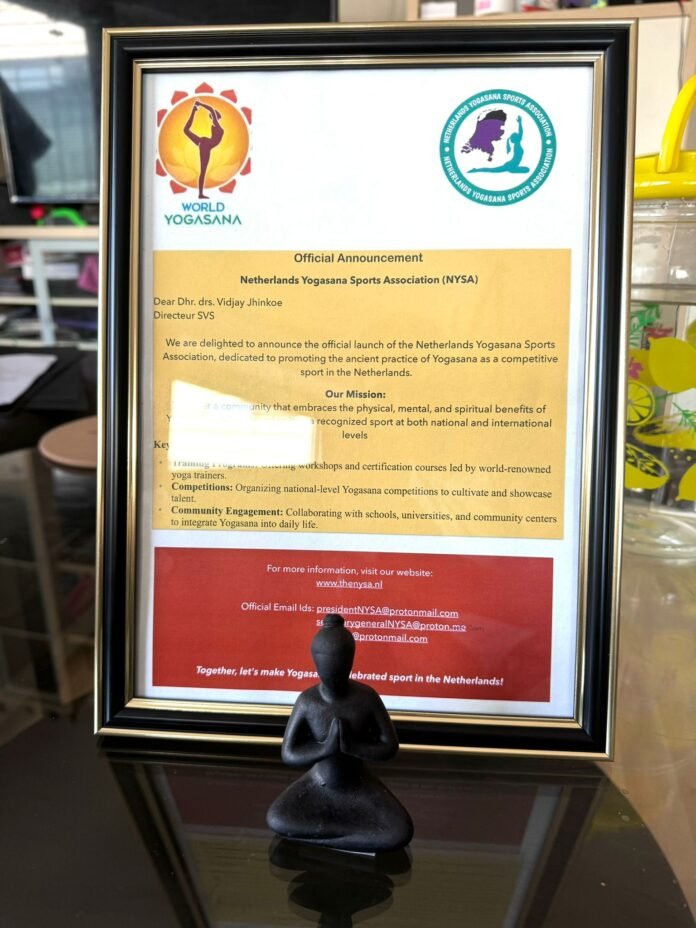
The Dutch landscape has entered a new era with the establishment of the Stichting Netherlands Yogasana Sports Association (SNYSA), a pioneering organization committed to promoting Yogasana as both a competitive sport and a pathway to holistic wellness. Affiliated with World Yogasana, SNYSA aspires to transform Yogasana into a celebrated national and international sport while cultivating its ancient practices to foster physical and mental well-being.

Mission and Vision

At its core, SNYSA seeks to inspire a vibrant Yogasana community, embracing the practice’s multi-faceted benefits and building a supportive environment that merges tradition with contemporary athleticism. As Yogasana prepares for its historic inclusion in the 2026 Asian Games, the association is dedicated to enhancing the sport’s status in the Netherlands and beyond.

To accomplish these goals, SNYSA is focused on:

  • Community Building: Cultivating an engaged and supportive community of Yogasana practitioners and enthusiasts across the Netherlands.
  • Sport Recognition: Elevating Yogasana as a recognized and respected sport at national and global levels.
  • Skill Development: Hosting certified training programs led by expert trainers to ensure quality instruction.
  • Talent Promotion: Organizing national-level competitions to identify promising athletes and support their growth.
  • Educational Outreach: Collaborating with schools, universities, and community centers to introduce Yogasana into everyday life.
  • Global Partnerships: Forging relationships with international Yogasana organizations and industry experts to align Dutch efforts with global standards.

Leadership Team: Driving the Mission Forward

The association’s mission is powered by a dedicated leadership team:

  • President: Ms. Pranita Adwait Deshpande
  • Secretary General: Ms. Manasi Mohril
  • Director of Public Relations: Mr. Mayur Muley
  • Zonal Head: Ms. Harvinder Chahal
  • Members: Ms. Pinky Ratan Slager and Mr. Richard Lucien Slager

This team brings together years of expertise, passion, and commitment to ensure SNYSA’s objectives resonate at every level of Dutch society. They are actively working to build a strong network of practitioners, trainers, and Yogasana advocates dedicated to advancing the sport.

A New Dawn for Yogasana in the Netherlands

A Collective Vision for Yogasana in the Netherlands

By uniting Yogasana enthusiasts, practitioners, and professionals, the Stichting Netherlands Yogasana Sports Association aims to make a profound impact on the Dutch community. With its strategic focus on nurturing Yogasana both as a sport and a means of self-care, SNYSA is poised to contribute meaningfully to the global growth of Yogasana, marking a transformative chapter in the world of yoga and competitive sports.

A New Dawn for Yogasana in the Netherlands

3 year old kid from Kolkata becomes world’s youngest chess player with a FIDE rating, scripts history

0

Vaidehi Bhargava

Three-year-old Anish Sarkar from Kolkata has recently become the world’s youngest chess player to achieve an official FIDE rating, surpassing the previous record held by a five-year-old. Born on January 26, 2021, Anish developed a fascination with chess from a young age. His parents, from a lower-middle-class background with little knowledge of chess, initially introduced him to educational videos on YouTube. However, Anish’s natural curiosity led him to gravitate towards chess content, particularly videos from influencers like GothamChess and games by his idol, Magnus Carlsen. Recognizing his growing interest, his mother purchased a chessboard for him to play with, setting him on a remarkable journey at an age when most children are just beginning to explore toys.

Anish’s first competitive experience was in October 2024 at the West Bengal state Under-9 Open, where he impressed with 5.5 out of 8 points, even defeating two rated players. Soon after, he competed in the state Under-13 Open and met the requirement of facing five rated players, ultimately earning a rating of 1555. His accomplishments have drawn attention from chess enthusiasts, and Anish now trains for up to eight hours daily under the guidance of Grandmaster Dibyendu Barua. Barua sees immense potential in him, though he emphasizes the long journey Anish still has ahead.

Despite his rapid progress, Anish’s family is determined to keep a low profile. His mother, who holds a master’s degree, has chosen to stay home to fully support his development, stating that their primary wish is for him to enjoy the game without pressure. They hope to reveal their identities more openly if Anish achieves a grandmaster title someday. For now, they focus on encouraging his passion quietly while helping him make his mark as India’s youngest chess prodigy.

When is Uttarakhand Foundation Day?

0

Vaidehi Bhargava

Uttarakhand Foundation Day, celebrated annually on November 9, marks the creation of India’s 27th state, Uttarakhand, in the year 2000. This day holds significant importance for the people of Uttarakhand, as it commemorates their long and determined struggle for a separate state that recognized their unique culture, geographical conditions, and socio-economic needs.

The demand for Uttarakhand as a separate state was born out of the challenges faced by the people of the Garhwal and Kumaon regions. Despite being a part of Uttar Pradesh, these regions felt neglected in terms of development and governance. The challenging terrain of the Himalayas, combined with issues such as lack of infrastructure, limited access to healthcare and education, and unemployment, exacerbated the hardships faced by the local people. Furthermore, the distinct cultural and linguistic identity of the region, which is influenced by its mountainous topography, created a strong sense of belonging among the people and a desire for a state that would cater specifically to their needs.

The call for a separate state gained momentum in the 1990s when various social and political groups united under the Uttarakhand movement. Activists, intellectuals, students, and the local population came together to voice their demand for a distinct administrative entity. The movement saw several protests and demonstrations, many of which were met with resistance and, at times, violence. A tragic incident in 1994, where several protesters were killed in Muzaffarnagar during a rally, became a pivotal moment that intensified the resolve of the people to secure a separate state. This incident highlighted the sacrifices and hardships endured by the people in their quest for Uttarakhand and created national awareness about their struggle.

In response to this persistent movement and the growing demand for recognition, the Indian government took steps toward statehood. Finally, on November 9, 2000, the state of Uttarakhand was officially carved out from the Himalayan and adjoining northern districts of Uttar Pradesh. Initially named Uttaranchal, the state’s name was changed back to Uttarakhand in 2007 to reflect its cultural heritage. The name “Uttarakhand” is derived from the Sanskrit words “uttara” (north) and “khand” (land), meaning the “northern land.”

The significance of Uttarakhand Foundation Day lies not only in the achievement of statehood but also in honoring the identity and aspirations of the people. Since its formation, Uttarakhand has grown considerably in terms of infrastructure, tourism, and agriculture. Known as the “Land of Gods” due to its numerous pilgrimage sites like Kedarnath, Badrinath, and Haridwar, it has become a prominent tourist destination. Its natural beauty, rich cultural traditions, and strategic location have made it a region with immense potential.

Foundation Day celebrations across Uttarakhand are marked with cultural programs, processions, and commemorative events that showcase the state’s journey and progress. The day serves as a reminder of the resilience and dedication of those who fought for Uttarakhand’s recognition, as well as a moment to reflect on its future growth.