Home Blog Page 42

Amaravati Declared Andhra Pradesh’s Capital- Parliament Ends a 12-Year Wait

0

Final Seal of Approval from the President

In a decisive and historic development, Droupadi Murmu, the President of India, has given her assent to the Andhra Pradesh Reorganisation (Amendment) Bill, 2026, officially declaring Amaravati as the sole and permanent capital of Andhra Pradesh. With this final constitutional step, a prolonged chapter of uncertainty surrounding the state’s capital has come to a close.

The Bill had earlier been passed by both Houses of Parliament during the Budget session, and the President’s assent now gives it full legal force.

A Long Journey Since Bifurcation

The origins of the issue trace back to the Andhra Pradesh Reorganisation Act, 2014, which led to the bifurcation of the state and the creation of Telangana. At the time, Hyderabad was designated as a temporary joint capital for up to ten years, leaving Andhra Pradesh to identify and develop a new administrative centre.

Amaravati was soon chosen under the leadership of N. Chandrababu Naidu , envisioned as a modern, greenfield capital city. The project saw unprecedented participation from farmers, who pooled large tracts of land in anticipation of rapid development and growth.

Years of Policy Reversals and Delay

However, the capital project faced a major setback after the change in government in 2019, when Chief Minister Y.S. Jagan Mohan Reddy proposed a decentralised governance model. The plan aimed to distribute capital functions across three cities— Vishakhapatnam (executive), Amaravati (legislative), and Kurnool (judicial).

This proposal triggered widespread protests, especially from farmers in Amaravati, and led to prolonged legal battles and political disagreements. Although the three-capital proposal was eventually withdrawn, the absence of a clear policy direction left the state without a firmly established capital for over a decade.

The 2026 Amendment: Restoring Certainty

The 2026 Amendment to the Reorganisation Act decisively resolves this ambiguity by granting Amaravati exclusive legal status as the capital. It ensures a single, stable administrative centre and puts an end to years of policy inconsistency. The move follows a resolution passed by the Andhra Pradesh Legislative Assembly earlier this year, urging the Centre to formalise Amaravati’s position.

Political Reactions and the Road Ahead

The decision has been welcomed by the ruling leadership as a historic milestone that will restore investor confidence and accelerate infrastructure development. At the same time, opposition parties have expressed concerns over the financial viability and execution challenges of building a world-class capital city.

Despite differing political views, the development is widely seen as a turning point for Andhra Pradesh. With legal clarity now in place, the focus is expected to shift towards the long-delayed task of building Amaravati into a fully functional administrative and economic hub.

A New Chapter Begins

With the President’s assent, Amaravati’s status is no longer a matter of debate but of implementation. For a state that has navigated uncertainty since its bifurcation in 2014, this moment marks both the end of a prolonged wait and the beginning of a more stable future.

A Script from the Past: 200-Year-Old Ramayana Manuscript discovered in Ayodhya

0

In a discovery that beautifully intertwines history, language, and faith, a rare manuscript linked to the Ramayana tradition has been found in Ayodhya. Estimated to be around 150–200 years old, the manuscript offers a valuable window into India’s literary past and the evolution of its writing systems.

What Has Been Found?

The manuscript contains portions from the Ramayana tradition—most likely associated with the widely revered Ramcharitramanas, composed by Tulsidas. This version of the epic has historically been the most popular in North India, making it a probable source of the text.

What makes this discovery particularly significant is the script. The manuscript is written in an early form of the Devanagari Script, showing noticeable differences from its modern standardized form. Experts suggest that the letter formations and vowel markings reflect a transitional phase in script development, offering clues about how written language evolved during the 19th century.

The manuscript is being transferred to the International Ram Katha Museum, where it will undergo preservation, study, and possibly be displayed for the public.

Why Is This Discovery Important?

This find holds significance across multiple domains:

●Linguistic Insight: It provides rare material for scholars to study the evolution of Devanagari from earlier Nagari forms.
●Cultural Heritage: Ayodhya’s historical and spiritual importance is further enriched by such discoveries.
●Religious Continuity: Manuscripts like these reveal how sacred texts were copied, preserved, and passed down through generations.
●Historical Record: As primary sources, manuscripts help historians reconstruct the literary and social fabric of their time.

What Are Manuscripts?

Manuscripts are handwritten documents created before the widespread use of printing technology. The term originates from the Latin manu scriptus, meaning “written by hand.”

In India, manuscripts were traditionally written on materials such as palm leaves, birch bark, or handmade paper. They have preserved centuries of knowledge—ranging from epics and scriptures to science, medicine, and poetry. Each manuscript is unique, often reflecting regional styles, linguistic variations, and the individuality of the scribe.

Understanding the Devanagari Script

The Devanagari Script is one of India’s most widely used writing systems today, employed for languages such as Hindi, Sanskrit, and Marathi.

It is an abugida, where each consonant carries an inherent vowel sound that can be modified using diacritical marks. Its origins can be traced back to ancient Brahmi script, evolving through Gupta and Nagari forms before reaching its present-day structure. Studying older forms, like the one seen in this manuscript, helps scholars map this long and fascinating journey of script evolution.

A Living Link to India’s Past

Discoveries like this are far more than historical curiosities—they are living bridges to India’s intellectual and spiritual heritage. This manuscript from Ayodhya not only deepens our understanding of script development but also reaffirms the enduring legacy of the Ramayana tradition in shaping Indian culture.

As it is carefully preserved and studied, it promises to reveal even more about a time when knowledge was painstakingly written by hand—ensuring that stories of faith, morality, and devotion would endure across generations.

Artemis II: Farthest Journey from Earth, 40 Minutes of Silence, and the Voyage Home

0

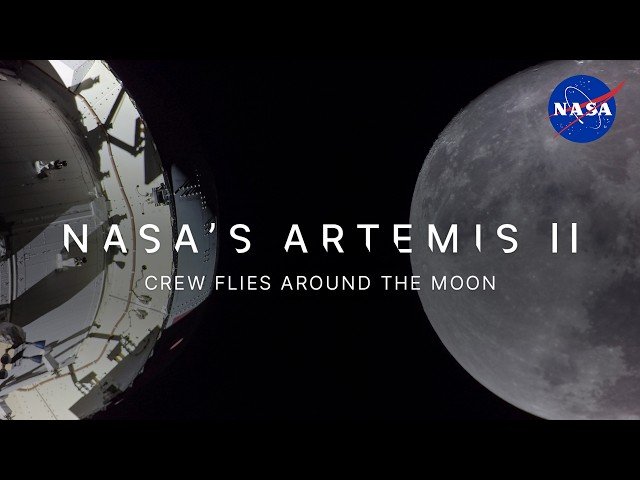
NASA’s Artemis II has reached a defining moment in human spaceflight, achieving record-breaking distance, enduring a dramatic communication blackout, and now beginning its journey back to Earth after a successful lunar flyby.

A Record-Breaking Distance in Deep Space

In a historic milestone, the Artemis II crew has travelled farther from Earth than any humans before, surpassing the record set by Apollo 13.

The Orion spacecraft reached a distance of over 252,000 miles (around 406,000 km) from Earth during its journey around the Moon—marking humanity’s deepest venture into space in over five decades.

40 Minutes of Complete Silence

One of the most gripping moments of the mission came as Orion passed behind the Moon, resulting in a planned 40-minute communication blackout.

During this period, all contact between the spacecraft and NASA was lost, as the Moon blocked radio signals. While expected, the silence underscored the challenges of deep-space travel, with astronauts relying entirely on onboard systems and training until communication was restored.

Rare Views of the Moon

As Artemis II flew thousands of miles beyond the Moon, astronauts captured remarkable images of the lunar far side—a region never visible from Earth.

The visuals reveal a rugged landscape of ancient craters and stark terrain, offering fresh perspectives that continue to deepen scientific understanding and public fascination alike.

The Journey Back to Earth

Following its successful lunar flyby, Orion has now entered the return phase of its mission, using the Moon’s gravity to slingshot back toward Earth along a free-return trajectory.

The spacecraft is expected to complete its mission with a Pacific Ocean splashdown in the coming days, bringing to a close a journey of roughly 10 days.

A Defining Step for the Future

Artemis II is more than a mission—it is a powerful step toward the future of human exploration. By testing critical systems and proving the capability to send astronauts safely to the Moon and back, it lays the groundwork for upcoming missions like Artemis III.

As the spacecraft heads home, Artemis II stands as a reminder of humanity’s enduring quest to explore the unknown—while offering a renewed perspective on our place in the universe.

Payal Nag’s Golden Breakthrough: A Victory of Grit and a Moment of Grace

0

In a story that has captured the imagination of the nation, Payal Nag has emerged as one of India’s most inspiring sporting figures. The teenage para-archer from Odisha has not only overcome extraordinary odds but also announced herself on the global stage with a historic victory in April 2026.

From Tragedy to Triumph

Hailing from Balangir district in Odisha, Payal Nag lost all four limbs at a young age due to a severe electrocution accident. Despite this life-altering setback, she rebuilt her life with remarkable determination—learning to write, paint, and perform daily tasks using her mouth.

Her journey into archery began after being inspired by videos of Sheetal Devi, who would later become her idol—and competitor. With the support of coach Kuldeep Vedwan and customised equipment, Payal developed a unique technique using her mouth and upper body to shoot arrows.

Golden Victory in Bangkok

Payal Nag’s defining moment came at the World Archery Para Series 2026 in Bangkok, held in early April. In the women’s compound final on April 4, 2026, she stunned the world by defeating world No. 1 Sheetal Devi with a score of 139–136 to win gold.

This victory marked her first major senior international title and established her as one of the brightest emerging stars in para-archery.

Who is Sheetal Devi?

Sheetal Devi, just a teenager herself, is one of India’s most celebrated para-archers. Born without arms due to a rare condition, she has achieved global recognition—becoming a world champion, a Paralympic medallist, and one of the top-ranked archers in the world.

Her journey has inspired countless athletes, including Payal Nag, making their Bangkok final not just a contest, but a powerful meeting of inspiration and achievement.

A Moment That Won Hearts

While Payal’s victory was historic, what truly resonated worldwide was the moment that followed. During the medal ceremony, Sheetal Devi displayed extraordinary sportsmanship by gently helping Payal turn toward the national flag during the anthem.

The gesture, simple yet deeply moving, symbolised respect, empathy, and the true spirit of sport—where humanity rises above competition.

More Than Just a Win

Payal Nag’s journey is not just about a gold medal—it is about resilience, courage, and redefining limits. As one of the world’s few quadruple amputee archers competing internationally, she represents a new era of possibility in sports.

Together, the stories of Payal Nag and Sheetal Devi remind us that true victory lies not just in winning, but in inspiring others and uplifting one another along the way.

IIT Baba Abhay Singh Marries Preetika; Wedding Held in Himachal Pradesh. Know Who His Wife Is…

0

Abhay Singh, popularly known as “IIT Wale Baba,” who rose to prominence during the 2025 Prayagraj Mahakumbh, has tied the knot with Preetika. News of the marriage surfaced after he arrived in his hometown Jhajjar, Haryana, accompanied by his wife. According to reports, the wedding took place around two months ago.

Abhay Singh revealed that the couple got married on February 15 at the Angjar Mahadev Temple in Himachal Pradesh, followed by a civil ceremony on February 19. He returned to Jhajjar after nearly one-and-a-half years and visited his family to seek their blessings.

Rose to Fame During Mahakumbh

A native of Jhajjar, Abhay Singh is an IIT Bombay alumnus who came into the spotlight during the 2025 Mahakumbh in Prayagraj, where he was seen in the attire of an ascetic. His claim of being an IIT graduate drew widespread attention, and videos of him went viral on social media.

Who is Preetika?

Preetika, originally from Mangaluru, Karnataka, is also an engineer. Abhay Singh shared that he met her at Sadhguru’s Adiyogi Ashram in Coimbatore during Mahashivratri celebrations after the Mahakumbh.

Future Plans: ‘Shri University’ Initiative

Speaking about his plans, Abhay Singh said the couple is working on a project called “Shri University,” aimed at creating a platform that brings together various paths of spirituality and reconnects people with deeper knowledge and sadhana.

On being asked about family ties, he remarked that excessive attachment to worldly matters can hinder spiritual growth.

Educational and Professional Background

Abhay Singh completed his schooling in Jhajjar and secured an All India Rank of 731 in JEE (2008). He pursued Aerospace Engineering at IIT Bombay (2008–2012) and later earned a Master of Design (M.Des).

He reportedly worked in photography and spent around three years in Canada with an annual package of ₹36 lakh before turning towards spirituality. He has often emphasized the importance of balancing intelligence (IQ) with emotional awareness (EQ) for a fulfilling life.

Healing the World Together: How the WHO Became the Backbone of Global Health

0

A Vision Born from Crisis

In the shadow of World War II, the world stood at a crossroads—grappling with disease, inequality, and fragile healthcare systems. It was in this moment of urgency that the World Health Organization (WHO) was established on April 7, 1948, with its headquarters in Geneva. The idea was simple yet powerful: health should not be a privilege, but a universal right. This founding date now lives on as World Health Day, a reminder of the shared responsibility to protect and promote well-being.

Redefining What It Means to Be Healthy

From the very beginning, WHO set itself apart with a revolutionary definition of health—not merely the absence of illness, but a state of complete physical, mental, and social well-being. Guided by pioneers like Brock Chisholm, its first Director-General, the organization embraced a holistic approach that continues to shape global health policies today.

A Global Force for Change

Over the decades, WHO has emerged as a unifying force, bringing countries together to tackle health challenges that know no borders. Its landmark achievements include the eradication of smallpox and ongoing efforts to combat diseases such as polio and malaria. Beyond disease control, WHO sets international health standards, supports vaccination drives, and strengthens healthcare systems—especially in developing nations.

Navigating a Complex, Modern World

In today’s rapidly changing world, the role of WHO has only grown more critical. From leading the global response to pandemics like COVID-19 to addressing mental health crises and the health impacts of climate change, the organization stands at the frontline of humanity’s biggest challenges. It champions science, equity, and collaboration—ensuring that even the most vulnerable populations are not left behind.

World Health Day: A Call to Collective Action

Every year, World Health Day transforms WHO’s mission into a global movement. Observed on April 7, it shines a spotlight on pressing health issues and inspires action across communities and nations. The 2026 theme, “Together for Health: Stand with Science,” reinforces a vital message—progress in health is only possible when the world stands united, guided by knowledge and compassion.

A Continuing Promise

More than just an institution, WHO represents a promise—a commitment to a healthier, fairer future for all. As new challenges emerge, its mission remains unwavering: to lead the world toward better health, one life at a time.

Amaravati Declared Sole Capital of Andhra Pradesh After Presidential Assent

0

Amaravati has been granted statutory status as the sole and permanent capital of Andhra Pradesh, following a gazette notification issued by the Government of India on Monday, April 7. The move comes after President Droupadi Murmu assented to the Andhra Pradesh Reorganisation (Amendment) Bill, 2026, which was passed by Parliament last week.

According to the Ministry of Law and Justice notification, the Act is deemed to have come into force from June 2, 2024. The amendment modifies Section 5(2) of the Andhra Pradesh Reorganisation Act, 2014, replacing the phrase “and there shall be a new capital” with “and Amaravati shall be the new capital.” The term “Amaravati” includes areas notified under the Andhra Pradesh Capital Region Development Authority Act, 2014.

Parliament approved the Bill on April 2, with the Rajya Sabha passing it by voice vote a day after its clearance in the Lok Sabha. A total of 35 MPs participated in the debate, with all but two YSR Congress Party members supporting the legislation.

The enactment ends years of uncertainty following the state’s bifurcation in 2014 and effectively rules out any revival of the proposed three-capital model. While the YSRCP opposed the Bill citing concerns of farmers who contributed land for the capital project, the TDP-led NDA government, which returned to power in 2024, has reaffirmed its commitment to developing Amaravati. The project, first initiated in 2015, was revived last year after a prolonged halt under the previous regime.

World Health Day 2026: “Together for Health. Stand with Science”

0

Observed every year on April 7, World Health Day marks the founding anniversary of the World Health Organization (WHO) in 1948. Celebrated globally since 1950, this day serves as a powerful platform to raise awareness about critical health issues and mobilise action at local, national, and international levels.

What is World Health Day?

World Health Day is an annual global health awareness campaign led by WHO. Each year, it highlights a specific health priority, encouraging governments, institutions, and individuals to work collectively toward improving health outcomes worldwide.

It is not just a symbolic observance—it is a call to action, prompting discussions, policy initiatives, and community-driven efforts to address pressing health challenges.

Theme of World Health Day 2026

The official theme for 2026 is:
“Together for health. Stand with science.”
This theme emphasises the importance of science, evidence-based decision-making, and global collaboration in protecting and improving health.

The campaign highlights:
●The role of scientific research and innovation in solving health challenges
●The need to rebuild trust in science and public health systems
●The importance of fact-based information in combating misinformation
●Global cooperation through the One Health approach, linking human, animal, and environmental health

Why World Health Day Matters

World Health Day reflects a fundamental idea: health is a basic human right. Yet, millions around the world still lack access to essential healthcare services.

The day brings attention to:
●Health inequalities across countries and communities
●The need for strong, resilient healthcare systems
●The importance of preventive care and public awareness
●Emerging global threats like pandemics, climate change, and antimicrobial resistance

In today’s world—especially after the COVID-19 pandemic—the importance of science-led healthcare has become more evident than ever.

The Core Message: Stand with Science

2026 theme sends a clear and timely message: science saves lives. From vaccines and diagnostics to public health policies, scientific evidence forms the backbone of modern healthcare.

WHO’s campaign urges people to:
●Trust credible, science-based information
●Support healthcare workers and researchers
●Promote informed decision-making in health practices
●Engage in conversations that strengthen public understanding of health

It also encourages global participation through awareness campaigns and social media initiatives like #StandWithScience.

A Global Responsibility

World Health Day is not just about awareness—it is about collective responsibility. Governments must invest in healthcare systems, communities must promote healthy practices, and individuals must make informed lifestyle choices.

In an interconnected world, health challenges do not remain confined to borders. The message of World Health Day 2026 is clear: only through collaboration, trust in science, and shared responsibility can we build a healthier future for all.

When Vaccines Were Not Sold: Meet The Man Jonas Sulk Who Refused to Patent the Sun

0

In a time when fear traveled faster than hope, there was a disease that stole childhoods. It came quietly. One day, a boy would be running across a field, laughing, chasing a ball under the summer sun. The next day, he would lie still—his small body trapped inside a cold metal shell, an iron lung breathing for him. Mothers stopped letting their children play outside. Fathers carried a silent dread. Summer was no longer a season of joy—it was a season of waiting.

The disease was Poliomyelitis. And the world had no cure. No protection. No answers.

Hospitals were filled with the sound of machines and muffled cries. Nurses washed their hands until their skin cracked and bled, because that was all they could do. There were no vaccines to buy, no medicines to trust—only fear to endure.

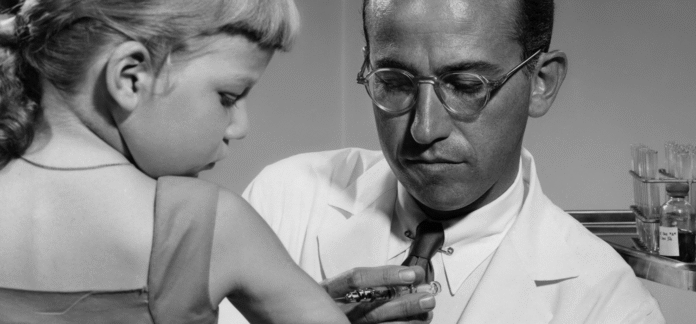
Then, in a quiet laboratory in Pittsburgh, a man chose a different path. His name was Jonas Salk.

He wasn’t the only one searching for answers. Many brilliant minds were working carefully, slowly, methodically. But Salk believed something different that sometimes, when the world is suffering, you cannot afford to wait. He worked relentlessly. Days blurred into nights. Failures came often.

But to him, failure wasn’t the end. “Blind alleys are always opportunities,” he would later say.

Every mistake was a clue. Every dead end, a new direction. While others hesitated, he moved forward—with courage, with urgency, and with an unshakable belief that children deserved a future free from fear. In a bold act of faith, he tested the vaccine not just on volunteers—but on himself, his wife, and his children. In his own home, with boiled syringes and trembling hope, he chose trust over doubt.

And then, the moment came. On April 12, 1955, the world held its breath. The announcement spread like sunlight after a long storm—the vaccine was safe. It worked. Church bells rang. Strangers embraced. Grown men wept in the streets. For the first time in years, parents exhaled. Humanity had been given a second chance.

But the most extraordinary part of this story came next. In a world where such a discovery could have made him unimaginably wealthy, Salk was asked a simple question:

Who owns the patent? His answer was even simpler. “The people,” he said. Then he added something the world would never forget: “Could you patent the sun?” He refused to profit.

There were no price tags on hope. No ownership over life-saving science. At a time when vaccines were not sold, but given, he chose humanity over wealth. Because to him, this was never about recognition. It was about relief—the quiet, priceless relief of a world no longer afraid.

Cases of polio fell dramatically. Within years, a disease that once haunted millions began to disappear. And Salk? He did not chase fame. He built a place for future dreamers—a sanctuary for science, where curiosity and compassion could grow together. His legacy was not just a vaccine.

It was a reminder. That the greatest breakthroughs are not always born from perfect paths—but from courage in uncertainty. That blind alleys are not the end. And that sometimes, the most powerful thing a human being can say is: This belongs to everyone.

Air India CEO Campbell Wilson Steps Down Before End of Tenure

0

Campbell Wilson, Chief Executive Officer and Managing Director of Air India, has reportedly stepped down from his position before completing his contractual tenure, which was scheduled to run until July 2027. The development comes at a crucial time for the airline, which has been undergoing a major transformation following its acquisition by the Tata Group.

Sources indicate that the resignation was submitted recently, though official confirmation and detailed reasons remain limited.

Leadership Tenure and Appointment Background

Wilson was appointed as CEO and Managing Director of Air India in 2022 on a five-year contract. His appointment was widely viewed as a strategic move aimed at revitalising the airline, leveraging his extensive global aviation experience. He brought with him over three decades of industry expertise across both full-service and low-cost airline operations.

Professional Experience in the Aviation Sector

Prior to joining Air India, Wilson served as the Chief Executive Officer of Scoot, the low-cost subsidiary of Singapore Airlines.

His association with Singapore Airlines began in 1996 as a management trainee in New Zealand. Over the years, he held several international roles across Canada, Hong Kong, and Japan. He later became the founding CEO of Scoot in 2011 and returned for a second stint in 2020. Additionally, he held a senior leadership role overseeing global sales and marketing functions at Singapore Airlines.

Implications for Air India’s Transformation Plan

Wilson’s departure may have significant implications for Air India’s ongoing restructuring and expansion plans. Under his leadership, the airline initiated major reforms, including fleet modernisation, service upgrades, and operational restructuring.

His exit raises questions about leadership continuity and the future pace of reforms within the organisation.

Important Facts

  • Air India was acquired by the Tata Group in January 2022.
  • Scoot is a low-cost subsidiary of Singapore Airlines.
  • Singapore Airlines is the flag carrier of Singapore.
  • University of Canterbury is located in New Zealand.

Educational Background and Industry Profile

Campbell Wilson holds a Master of Commerce degree with First Class Honours in Business Administration from the University of Canterbury, New Zealand. Known for his strategic and operational expertise, he has played key roles in shaping airline business models and global aviation practices.

His resignation marks a notable leadership change in India’s aviation sector.