Home Blog Page 40

Kuldeep Yadav Marries Childhood Friend Vanshika Singh in Grand Mussoorie Wedding

0

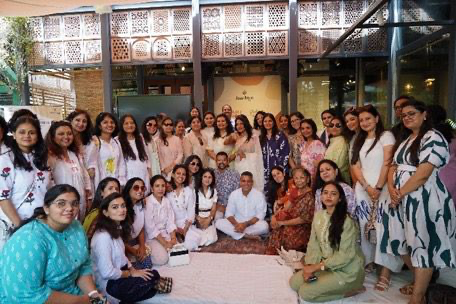
Indian cricketer Kuldeep Yadav tied the knot with his childhood friend Vanshika Singh on March 14 in a grand ceremony at the ITC Savoy. The wedding festivities had been underway at the venue for the past three days.

Kuldeep and Vanshika walked hand-in-hand to the stage for the Jaimala ceremony, where they exchanged garlands before later completing the traditional Saat Pheras late at night.

Kuldeep Yadav Marries Childhood Friend Vanshika Singh in Grand Mussoorie Wedding

Earlier in the day, the cricketer—dressed in a golden sherwani—set out on horseback with his baraat to bring home his bride. Friends, guests and fellow cricketers wearing pink and white turbans danced enthusiastically to the beats of drums and traditional instruments. A six-member drumming troupe from Delhi had arrived specially to perform during the celebrations.

The wedding mandap inside the hotel was decorated with elaborate floral arrangements flown in from Kolkata. Before the ceremony, Kuldeep also sought blessings from Jagadguru Rambhadracharya through a video call.

Kuldeep Yadav Marries Childhood Friend Vanshika Singh in Grand Mussoorie Wedding

Among the notable guests was Dhirendra Shastri, the Peethadhishwar of Bageshwar Dham, who arrived at the venue in a luxury car.

Kuldeep Yadav Marries Childhood Friend Vanshika Singh in Grand Mussoorie Wedding

The celebrations began with a Sangeet and cocktail ceremony on Friday night, where cricketers Suresh Raina, Rinku Singh and Yuzvendra Chahal danced alongside the groom. Sufi singer Bismil, who travelled from Delhi, also performed live at the event.

The Haldi ceremony held on Friday morning turned lively with Chahal grabbing attention by playfully applying turmeric to Kuldeep and dancing to the drumbeats. The bride and groom also joined the guests on the dance floor after the ceremony.

Kuldeep Yadav Marries Childhood Friend Vanshika Singh in Grand Mussoorie Wedding

A lavish lunch followed the Haldi ceremony, where guests were served an elaborate menu featuring both vegetarian and non-vegetarian dishes. Reports suggest that the cost per plate exceeded ₹20,000. The menu included premium salads, soups, appetizers and main courses, while the bar featured luxury labels such as Dom Pérignon Champagne and high-end single malt Scotch whiskies.

Cricketer Mohammed Shami also arrived in Mussoorie on Saturday morning to attend the wedding celebrations. Guests were treated to special breakfast delicacies including Kanpur’s famous khasta kachori and dal ke bade.

Several other cricket stars, including Rohit Sharma and Suryakumar Yadav, were also expected to attend the celebrations.

Silverpit Crater Confirmed as Ancient Asteroid Impact Site

0

Recent research has confirmed that the Silverpit Crater in the North Sea was formed by a massive asteroid impact millions of years ago. Scientists analysed geological samples and identified minerals typically associated with high-energy space impacts. This finding strengthens earlier theories that the structure beneath the seabed is a genuine impact crater rather than a geological formation created by other processes.

The discovery provides valuable insights into Earth’s impact history and the geological evolution of the North Sea region.

Location and Discovery of the Crater

The Silverpit Crater lies approximately 700 metres beneath the seabed in the North Sea, about 80 miles off the coast of Yorkshire in the United Kingdom. For millions of years, the crater remained hidden under thick layers of sediment.

It was first discovered in 2002 during seismic surveys conducted for oil and gas exploration. Advanced imaging techniques revealed a circular geological structure beneath the seabed, prompting scientists to investigate whether it might be an ancient meteorite impact site.

Formation by a High-Velocity Asteroid Impact

Scientists estimate that the Silverpit Crater formed around 43–46 million years ago, when a large asteroid struck the seabed at extremely high velocity. Such impacts release enormous energy, instantly compressing and heating surrounding rocks.

Recent research identified shocked quartz and feldspar crystals in rock samples obtained from a nearby oil well. These minerals develop distinctive internal structures only under intense pressure created during high-velocity impacts. Their presence provides strong evidence that the crater was formed by an asteroid collision.

Distinctive Geological Features

The Silverpit Crater measures about 3 kilometres in width and is surrounded by a system of concentric faults extending up to 20 kilometres in diameter. These circular fractures formed as shock waves from the asteroid impact propagated through the surrounding rocks.

The crater’s circular structure and central peak resemble classic hypervelocity impact craters observed on Earth and other planetary bodies. Its exceptional preservation beneath sediment layers has allowed scientists to study its geological structure in remarkable detail.

Hormuz Transit Relief: Iran Permits Two India-Bound LPG Tankers Amid Regional Tensions

0

In a significant development amid rising tensions in West Asia, Iran has permitted two India-bound LPG carriers to pass through the strategically crucial Strait of Hormuz, offering relief to India’s energy supply concerns. The decision came at a time when maritime traffic in the region has been heavily restricted due to ongoing geopolitical tensions and military conflict.

According to reports, the two Indian-flagged vessels were allowed to transit the narrow waterway after diplomatic engagement between India and Iran. The move ensured that the ships carrying liquefied petroleum gas (LPG) could safely continue their journey towards Indian ports despite heightened security risks in the region.

How Much LPG Is on Board?

The two ships together are believed to be carrying LPG equivalent to around 60 lakh domestic cooking gas cylinders, making the cargo highly significant for India’s household energy needs.

Liquefied petroleum gas is one of India’s most widely used cooking fuels, and a substantial portion of the country’s LPG supply is imported from the Middle East. Even a small disruption in tanker movement through Hormuz can therefore affect supply chains and price stability.

Why the Strait of Hormuz Is So Critical

The Strait of Hormuz, located between Iran and Oman, is one of the world’s most important maritime chokepoints. Roughly one-fifth of global oil consumption passes through this narrow sea route every day, along with large volumes of liquefied natural gas. Because of this, any tension or disruption in the strait can quickly affect global energy markets and shipping routes.

What It Means for India

For India, the safe passage of these LPG carriers highlights two important factors:

1. Energy security: Ensuring uninterrupted supplies of cooking gas for millions of households.

2. Diplomatic balancing: Maintaining strong relations with key West Asian partners even during regional conflicts.

In a volatile geopolitical environment, the movement of just two ships may seem small—but in the global energy trade, even a single tanker passing safely through Hormuz can carry enormous economic and strategic importance.

The Echo of Dhrupad: Baiju Bawra Festival 2026 in Chanderi – A Magical Tribute to the Legendary Musician

0

PC(Scroll.in)

Baiju Bawra the Enigmatic Genius of Indian Classical Music in the annals of Indian classical music, Baiju Bawra (Baijnath Mishra) stands as a mythical figure whose name evokes wonder and reverence. A master of Dhrupad – one of the oldest and most profound styles of Hindustani classical music – Baiju is believed to have been born and to have passed away in Chanderi, Madhya Pradesh, where his samadhi (memorial) still exists today.

Legends attribute miraculous powers to his singing: he could light lamps with Raga Deepak, summon rain through Raga Megh Malhar, and even melt stones with Raga Malkauns. A contemporary and “guru-bhai” (fellow disciple) of the legendary Tansen under Swami Haridas, Baiju is famously said to have defeated Tansen in a musical duel yet spared his life in an act of generosity.

The iconic 1952 Bollywood film Baiju Bawra, starring Bharat Bhushan and Meena Kumari, immortalized his story of love, rivalry, and musical devotion, with its timeless classical-based songs still echoing through generations. Chanderi from Saree Heritage to a Hub of Classical Music Famous worldwide for its exquisite handwoven Chanderi sarees, historic fort, and Raja-Rani Mahal, Chanderi has evolved into a cultural beacon thanks to the Baiju Bawra Festival. This event revives and promotes the ancient Dhrupad tradition, which has faced near-extinction, while spotlighting Chanderi as a destination for art, history, and spiritual tourism.

The Festival’s Journey: Reviving a Forgotten Legacy initiated by enthusiasts and the Achal Eshwar Mahadev Mandir Foundation (SAMMF), informal tributes to Baiju date back to the 1980s, with stalwarts like Ustad Zia Fariduddin Dagar performing. In recent years, the Madhya Pradesh Government’s Department of Culture and Ustad Allauddin Khan Music and Arts Academy have elevated it to a grand annual celebration, held around Baiju’s punya tithi (death anniversary), traditionally near Basant Panchami.

This year’s Baiju Bawra Samroh runs from March 15 to 17, 2026, with performances starting daily at 7:00 PM at the Mela Ground, Chanderi (Ashoknagar district, Madhya Pradesh). Organized by the Madhya Pradesh Culture Department and the academy, it features renowned Dhrupad exponents, instrumentalists, and classical dancers from across India, including the Gundecha Brothers and other gharana masters.

Day 1 (March 15) opening with group Dhrupad recitals, local ensembles, and a special Sufi-Bhajan presentation by Padmashri Anup Jalota. Union Minister Jyotiraditya Scindia is expected as chief guest for the inauguration. Artists like Deepika Purohit will offer traditional Bundeli bhajans. Day 2 (March 16): Solo performances by celebrated classical vocalists and instrumentalists (santoor, pakhawaj, tabla, etc.). Day 3 (March 17) grand finale with Kathak dance, majestic Dhrupad sessions, and closing tributes. The event draws national participation and celebrates Baiju’s enduring legacy in his hometown. Why This Festival Matters: Multiple Layers of Impact. Preserving Heritage Keeps Dhrupad alive and introduces younger audiences to Baiju Bawra’s contributions. Boosting Tourism attracts visitors to Chanderi’s fort, Raja-Rani Mahal, Baiju’s samadhi, and other landmarks. Economic Uplift increases demand for Chanderi sarees and local handicrafts, benefiting weavers and artisans.

Platform for Artists emerging talents perform alongside legends, fostering the next generation. Spiritual Draw baiju’s samadhi is revered as a site for love, devotion, and musical sadhana, drawing pilgrims and seekers. The Baiju Bawra Festival is more than a music event-it’s a living bridge to India’s classical roots, where melodies still carry the power to move hearts and, as legends say, even stones. If you’re passionate about classical music, history, or Chanderi’s timeless charm, plan a visit to Chanderi this March 2026-where the echoes of Baiju Bawra continue to enchant

Kharg Island: The Tiny Island That Powers Iran’s Oil Economy

0

In the geopolitics of energy, sometimes the most influential places are not large cities or powerful capitals, but small pieces of land that hold immense strategic value. One such place is Kharg Island, a rocky island located just about 24 kilometres off the coast of Iran in the Persian Gulf. Despite its modest size, Kharg Island has long been considered the heart of Iran’s oil export system, making it one of the most strategically significant locations in the region.

Why Kharg Island Matters So Much

Kharg Island handles the majority of Iran’s crude oil exports. Massive oil storage tanks, export terminals, and loading facilities are located here, allowing oil tankers to transport Iranian crude to markets across Asia and other parts of the world. Because of this, the island plays a crucial role in sustaining Iran’s economy, which relies heavily on energy exports.

In many ways, Kharg Island acts as a gateway between Iran’s oil fields and global energy markets. Any disruption to its infrastructure can significantly affect the country’s oil supply chain.

A Strategic Target Through History

Kharg Island has been at the centre of geopolitical tensions before. During the Iran–Iraq War in the 1980s, the island was repeatedly attacked because it was vital to Iran’s oil exports. Protecting Kharg Island became a major priority for Tehran, highlighting how energy infrastructure can become a key target in conflicts.

Energy, Geography and Global Impact

The island’s importance is also linked to its location near the Strait of Hormuz, one of the world’s most crucial maritime routes for oil shipments. A significant portion of global crude oil trade passes through this narrow waterway, meaning that any development around Kharg Island can attract international attention.

Why the World Watches This Small Island

Though small and relatively unknown to many, Kharg Island demonstrates how energy infrastructure can shape global geopolitics. A single island can influence oil markets, regional security, and diplomatic tensions across the Middle East.

For readers trying to understand global energy politics, Kharg Island serves as a reminder that sometimes the world’s biggest strategic stories are centred on the smallest places on the map.

Virat Kohli’s London Life: A Glimpse Into the Cricketer’s Calm Away From the Pitch

0

When he is not commanding the cricket field, Virat Kohli is often seen enjoying a quieter, more personal life in London with his wife Anushka Sharma and their children. For fans who are used to his intense on-field presence, glimpses of his London life reveal a calmer and deeply family-oriented side of the Indian cricket star.

Over the past few years, London has become one of the couple’s favourite places to spend time, especially during cricket tours in England or during breaks from the busy cricket calendar. Through occasional social media posts, Kohli and Anushka have shared snapshots of simple yet meaningful moments — walks through leafy neighbourhoods, coffee dates, and peaceful evenings in the city.

One moment that particularly caught fans’ attention was when Kohli was reportedly seen dropping his young son Akaay at school, a rare public glimpse into the cricketer’s everyday parenting routine. The sight of one of the world’s most famous athletes doing something as ordinary as a school run made the moment even more endearing for fans.

The couple’s daughter Vamika Kohli is also occasionally part of their quiet family outings, though both parents remain careful about maintaining their children’s privacy. Their London days often include visits to parks, outdoor strolls, and exploring the city’s cultural and scenic spots.

For Kohli, whose career has largely unfolded under intense public scrutiny in India, London offers something rare — privacy and normalcy. Away from the constant spotlight, the city allows him to slow down, spend uninterrupted time with his family, and recharge before returning to the demands of international cricket.

These small glimpses into Kohli’s London life show fans a different side of the cricket icon — not just the fierce competitor, but also a devoted husband and father enjoying the simple pleasures of family life.

Spring Escapes: Top Hill Stations in India to Visit in March-April

0

As temperatures begin to rise across the plains of India, the months of March and April offer the perfect opportunity to escape to the hills. Spring arrives in the mountains during this period, bringing pleasant weather, blooming flowers, and clear skies, making it an ideal time for sightseeing, nature walks, and adventure activities.

Here are some of the most beautiful hill stations in India to explore during thisseason.

1. Gulmarg, Jammu & Kashmir – Meadows and Late Snow

Spring Escapes: Top Hill Stations in India to Visit in March-April

During this time, Gulmarg still retains patches of snow while spring flowers begin to appear, creating a stunning mix of white landscapes and green meadows.

•Major attractions:

•Gulmarg Gondola, one of the world’s highest cable cars

•Skiing and snow activities in thesurrounding slopes

•Panoramic views of the Pir Panjal mountain range

Visitors can enjoy snow adventures along with breathtaking Himalayan scenery.

2. Shimla, Himachal Pradesh – Charm in the Hills

Spring Escapes: Top Hill Stations in India to Visit in March-April

The weather is mild and pleasant, perfect for exploring the town without the extreme winter cold.

•Major attractions:

•Mall Road and The Ridge

•Jakhoo Temple with panoramic hill views

•Kufri for nature walks and adventure activities

Springtime also brings blooming trees and clear mountain views.

3. Manali, Himachal Pradesh – Adventure in the Himalayas

Spring Escapes: Top Hill Stations in India to Visit in March-April

The region offers cool temperatures with some snow still visible at higher altitudes.

•Major attractions:

•Solang Valley for paragliding andadventure sports

•Hadimba Devi Temple surrounded by cedar forests

•Scenic drives towards Rohtang Pass

It’s a perfect destination for both nature lovers and adventure seekers.

4. Darjeeling, West Bengal – The Queen of the Hills

Spring Escapes: Top Hill Stations in India to Visit in March-April

Spring makes the famous tea gardens lush and green while the weather remains comfortable.

•Major attractions:

•Sunrise views of Kanchenjunga from Tiger Hill

•The historic Darjeeling Himalayan Railway

•Scenic tea plantations and monasteries

The season offers stunning views and vibrant landscapes.

5. Munnar, Kerala – Misty Hills and Tea Estates

Spring Escapes: Top Hill Stations in India to Visit in March-April

The weather is cool and refreshing, making it perfect for exploring the rolling tea gardens.

•Major attractions:

•Eravikulam National Park, home to the Nilgiri tahr

•Mattupetty Dam and scenic viewpoints

•Endless stretches of tea plantations

Springtime adds freshness and colour to the hills.

Why Spring Is the Best Time for Hill Travel

•Comfortable temperatures ideal for sightseeing

•Blooming flowers and fresh greenery across valleys

•Clear skies offering spectacular mountain views

•Ideal conditions for trekking, boating and outdoor activities

From the snow-kissed landscapes of Jammu & Kashmir to the lush tea gardens of South India, hill stations across the country come alive in spring. A trip during March and April allows travellers to experience the mountains at their most colourful, refreshing and picturesque.

India’s Fuel Prices Hold Steady Amid Global Turmoil: A Testament to Strategic Foresight

0

PC (Ilkha)

While G20 Nations Face 15-22% Petrol Price Surges from West Asia Crisis, India’s Rates Remain Unchanged – Thanks to Diversified Sourcing, Reserves, and Government Shielding.

In the face of escalating geopolitical tensions in West Asia, particularly the US-Israel conflict with Iran that began on February 28, 2026, global oil markets have been thrown into chaos. The effective closure or severe disruption of the Strait of Hormuz-a critical chokepoint handling about 20% of the world’s oil trade-has triggered sharp spikes in crude prices, pushing Brent crude toward peaks near $120 per barrel before partially stabilizing around $90-100 in early March. This has led to significant retail fuel price increases across many G20 countries, with surges of 12-22% reported between early February and mid-March 2026.

India stands out as a beacon of stability. As of March 14, 2026, petrol prices in major cities like Delhi remain fixed at ₹94.77 per litre, with diesel at ₹87.67 per litre-unchanged for months despite the global storm. This remarkable steadiness has drawn praise from government sources and supporters, who attribute it to the Modi government’s proactive energy policies.

Diversification of crude oil sources: India has expanded imports from over 40 countries, reducing heavy reliance on Middle Eastern supplies vulnerable to Hormuz disruptions. Increased sourcing from non-disrupted regions, including Russia, has helped buffer against supply shocks. Strategic Petroleum Reserves: Built up to cover approximately 50-60 days (or 7-8 weeks) of consumption, these reserves have been tapped to maintain supply continuity without immediate market pass-through. Government and OMC intervention oil Marketing Companies (OMCs) have absorbed much of the higher international crude costs (with the Indian basket crossing $100-109 per barrel in March), preventing retail price hikes. This reflects a deliberate policy to protect consumers from geopolitical volatility. Smart diplomacy and long-term planning years of forward-thinking energy security measures under the “Viksit Bharat” vision have positioned India to weather such crises better than many peers.

In contrast, other G20 nations have seen sharp retail petrol price jumps amid the crisis:
United States: From ~$0.77 per litre to ~$0.94 per litre (+22%)Canada: From CAD 1.29 to CAD 1.56 per litre (+21%)Germany: From ~EUR 1.80 to EUR 2.07 per litre (+15%)Italy: From EUR 1.56 to EUR 1.80 per litre (+15%)South Korea: From KRW 1,747 to KRW 1,944 per litre (+12%)These hikes stem directly from the rapid 40%+ surge in global crude within weeks, compounded by halted tanker traffic through Hormuz, drone attacks on vessels, and broader supply fears. The International Energy Agency (IEA) even released a record 400 million barrels from emergency stocks in early March to ease pressures, but volatility persists.

India’s approach-prioritizing citizen protection amid chaos-highlights effective crisis management. As global headlines scream of energy shocks and economic strain, India’s unchanged pump prices underscore how strategic preparation and decisive leadership can keep the nation’s engine running smoothly, even when storms rage elsewhere. This stability not only shields households and businesses from inflation but also reinforces confidence in India’s energy security framework for the future.

Pi Day: Celebrating the Infinite Number That Shapes Our World

0

Every year on March 14, mathematicians, scientists and students around the world celebrate Pi Day, honouring one of the most fascinating numbers in mathematics — Pi. The date 3/14 reflects the first three digits of pi (3.14), making it the perfect day to recognise the importance of this remarkable constant.

Pi represents the ratio of a circle’s circumference to its diameter, a relationship that remains constant for every circle, regardless of its size.

\pi = \frac{C}{D}

The value of pi begins with 3.14159, but its decimal digits continue infinitely without repeating. Because of this, pi is known as an irrational number, making it both mathematically intriguing and endlessly complex.

The idea of pi dates back thousands of years. Ancient civilizations such as the Babylonians and Egyptians used early approximations while studying circles and geometry. However, the Greek mathematician Archimedes made one of the earliest accurate calculations of pi around 250 BCE using geometric methods.

The symbol π itself was introduced in 1706 by Welsh mathematician William Jones and later popularised by Swiss mathematician Leonhard Euler, helping it become the universal symbol used today.

Despite being discovered in ancient geometry, pi plays a crucial role in modern science and technology. It is used in fields ranging from physics and engineering to astronomy and computer science. Whether calculating the orbits of planets, designing bridges, or modelling waves and signals, pi remains essential to understanding the natural world.

Across the globe, Pi Day is marked with puzzles, competitions and even pie-themed events — proving that numbers can inspire curiosity and joy.

PM Modi Performs Bhoomi-Poojan of Shillong–Silchar Corridor, Assam Mala 3.0 and Kopili Hydro-Electric Project Giving Rs 47,600-Crore Development Push in Assam

0

Prime Minister Narendra Modi began a two-day visit to Assam on March 13–14, announcing and inaugurating development projects worth more than ₹47,600 crore aimed at boosting infrastructure, connectivity, and welfare in the northeastern state. During the visit, the Prime Minister is covering key locations including Kokrajhar, Guwahati and Silchar .

PM Modi Performs Bhoomi-Poojan of Shillong–Silchar Corridor, Assam Mala 3.0 and Kopili Hydro-Electric Project Giving Rs 47,600-Crore Development Push in Assam

One of the major highlights of the visit is the Bhoomi Poojan of the Shillong–Silchar Corridor, which will be the first access-controlled greenfield four-lane high-speed corridor in Northeast India. The project is expected to significantly enhance connectivity between Assam and Meghalaya while improving the movement of goods and passengers across the region.

The Prime Minister will also perform the Bhoomi Poojan of Assam Mala 3.0 , a major road infrastructure initiative aimed at expanding and strengthening the state’s road network. The programme will focus on building and upgrading roads across Assam to improve connectivity between towns, rural areas and national highways, boosting trade, tourism and economic activity.

In a significant welfare measure, Modi will distribute land pattas (ownership deeds) to tea garden workers, marking a historic step in providing homestead land rights to members of the tea garden community. For decades, many tea workers in Assam have lived in plantation areas without legal ownership of their land. The new initiative will grant them land rights, offering greater housing security and improved access to government welfare schemes, financial services and social benefits.

The visit also includes several key energy infrastructure initiatives . The Prime Minister will dedicate the Kopili Hydro-Electric Project , the capacity enhancement of the Numaligarh–Siliguri pipeline, and inaugurate Phase-1 of the North East Gas Grid , all aimed at strengthening the region’s energy supply and supporting industrial growth.

Another major announcement during the visit is the release of the 22nd instalment of the PM-KISAN scheme , under which financial assistance will be transferred to more than 9.3 crore farmers across the country.

With major investments in transport, energy and social welfare, the projects announced during the visit are expected to play a key role in accelerating development and improving livelihoods in Assam and the wider Northeast region.