
Home Blog Page 354

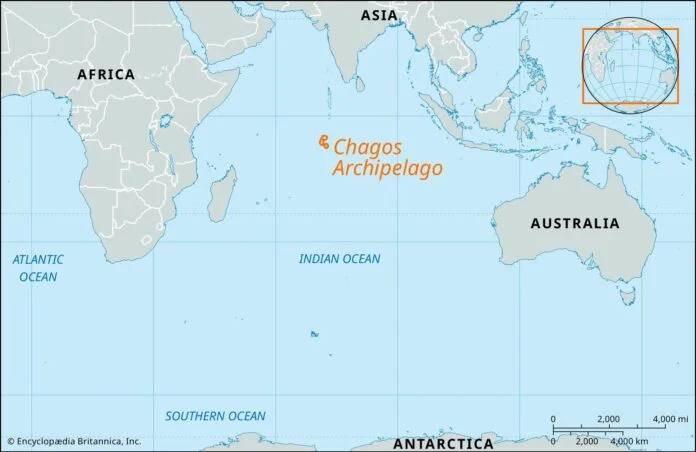
What is Chagos Archipelago?

0

The Chagos Archipelago, situated in the Indian Ocean, has long been at the center of a territorial dispute between Mauritius and the United Kingdom. Although Mauritius gained independence in 1968, the UK retained control over the islands, leading to decades of diplomatic tensions. Recent developments have seen the UK formally acknowledge Mauritius’ claims over the archipelago, yet key concerns remain—particularly regarding Diego Garcia, which hosts a strategic military base.

Historical Background

The Chagos Archipelago consists of over 60 islands, with Diego Garcia being the largest. Originally uninhabited, the archipelago saw its first permanent settlements in the 18th century. The French laid claim to the islands in the 1700s, but British control was established following the Napoleonic Wars. Over time, the islands were used for plantations, heavily relying on slave and indentured labor.

Creation of the British Indian Ocean Territory

In 1965, the UK formed the British Indian Ocean Territory (BIOT), which included the Chagos Archipelago. This move was part of a broader strategy to maintain a military presence in the Indian Ocean during the Cold War. As part of the agreement, the UK paid Mauritius £3 million for the detachment of Chagos, a decision that remains contentious to this day.

Strategic Importance of Diego Garcia

The United States established a military base on Diego Garcia in the 1970s, leading to the forced expulsion of the indigenous Chagossian population, who were relocated to Mauritius and Seychelles. By 1986, the base was fully operational, playing a crucial role in US military operations, particularly in the Middle East and the Indo-Pacific region.

International Legal Challenges

Mauritius has long contested British control over Chagos. In 2017, the United Nations General Assembly sought an advisory opinion from the International Court of Justice (ICJ) regarding the legal status of the islands. In 2019, the ICJ ruled that the UK must end its administration of Chagos. Following this, the UN General Assembly passed a resolution calling for the UK’s withdrawal.

Recent Developments

In 2024, the UK and Mauritius reached a historic agreement recognizing Mauritius’ sovereignty over Chagos while permitting the UK to maintain control over Diego Garcia for 99 years. However, this agreement has sparked controversy, particularly among the Chagossians, who feel excluded from discussions about their future and potential resettlement.

Geopolitical Concerns and Future Prospects

The agreement has raised concerns over China’s growing influence in the Indian Ocean, especially as Mauritius strengthens economic and strategic ties with Beijing. Critics argue that the deal could shift the region’s power dynamics. Meanwhile, the future of the displaced Chagossian community remains uncertain, with ongoing debates about resettlement and compensation.

As diplomatic negotiations continue, the Chagos Archipelago remains a symbol of colonial legacy, military strategy, and unresolved historical grievances. The world will closely watch how this agreement shapes regional stability and the fate of the Chagossian people.

Astra Missile Test Launch: A Significant Leap in India’s Defence Capabilities

0

Recently, the Aeronautical Development Agency (ADA) successfully conducted a test launch of the Astra missile from the Light Combat Aircraft (LCA) AF MK1 prototype. This milestone event took place off the coast of Chandipur, Odisha. The successful launch demonstrated the missile’s accuracy and effectiveness, marking significant progress in India’s indigenous defence capabilities.

About the Astra Missile

The Astra is a state-of-the-art Beyond Visual Range Air-to-Air Missile (BVRAAM) developed by the Defence Research and Development Organisation (DRDO). It is designed to engage and neutralize aerial threats at distances exceeding 100 kilometres. Equipped with advanced guidance and navigation systems, the Astra missile ensures high precision in striking enemy targets, reinforcing India’s aerial combat superiority.

Integration with Indian Air Force

The Astra missile has already been inducted into the Indian Air Force (IAF), significantly enhancing India’s air defence capabilities. As part of a phased deployment strategy, the missile is being integrated not only with the indigenous LCA Tejas but also with the Indian Navy’s Mig-29 fighter jets, boosting India’s operational readiness across multiple platforms.

Test Launch Details

During the recent test, the Astra missile successfully engaged and destroyed a designated flying target. All subsystems performed optimally, meeting mission parameters and objectives. This test follows the maiden launch of Astra from the LCA in August 2023, further validating the missile’s advanced capabilities and reliability.

Collaboration and Development

The development of the Astra missile is a testament to India’s strong research and development ecosystem. The project has been a collaborative effort involving multiple organisations, including ADA, DRDO, Hindustan Aeronautics Limited (HAL), the Centre for Military Airworthiness and Certification (CEMILAC), and the Directorate General of Aeronautical Quality Assurance (DG-AQA). Their joint efforts have played a crucial role in advancing India’s indigenous defence systems.

Significance of Beyond Visual Range (BVR) Missiles

Beyond Visual Range (BVR) missiles are crucial in modern air combat scenarios. They allow fighter aircraft to engage enemy targets from distances exceeding 20 nautical miles (approximately 37 kilometres), ensuring a strategic advantage. This capability enables aircraft to neutralize threats while minimizing exposure to enemy air defences, a key factor in modern warfare.

Future Prospects

Further trials of the Astra missile are planned to enhance performance evaluation and operational effectiveness. The successful test launch marks a crucial step in India’s journey toward self-reliance in advanced defence technologies. Defence Minister Rajnath Singh and DRDO Chairman Dr Samir V. Kamat have lauded the collaborative efforts of all teams involved in the Astra project, reaffirming India’s commitment to strengthening its indigenous defence capabilities.

RBI Announces ‘On Tap’ Cohort Within Regulatory Sandbox

0

RBI Governor Sanjay Malhotra recently unveiled plans for a dedicated ‘On Tap’ cohort within the Reserve Bank of India’s (RBI) Regulatory Sandbox. This initiative is designed to foster innovation in the financial sector, particularly in addressing climate change and promoting sustainable finance.

Regulatory Sandbox and Financial Innovations

The RBI’s Regulatory Sandbox serves as a controlled environment for fintech companies to test and refine new financial products before full-scale deployment. Over time, this initiative has facilitated various technological advancements in the financial ecosystem. The introduction of the ‘On Tap’ cohort specifically targets climate change risks and sustainable finance, encouraging solutions that address these pressing global concerns.

Understanding Climate Change Risks in Finance

Climate change poses a multifaceted challenge to the financial sector, requiring a dual approach:

  1. Facilitative Dimension: This involves building capacity and creating an ecosystem conducive to green finance, ensuring that financial institutions are equipped to support sustainable initiatives.
  2. Prudential Dimension: This focuses on managing the risks associated with climate change in the financial sector, helping institutions navigate regulatory and economic uncertainties.

Both aspects are critical for ensuring financial stability and regulatory preparedness in the face of environmental changes.

The Role of Central Banks in Climate Risk Management

Globally, central banks are increasingly acknowledging their role in addressing climate-related financial risks. In advanced economies, central banks tend to adopt an asset-neutral approach, ensuring that financial markets operate without bias towards specific sectors. In contrast, emerging markets and developing economies (EMDEs) often implement directed lending policies to support key industries such as renewable energy. This targeted approach aims to align financial systems with broader sustainability goals.

Prudential Risks in Financial Markets

Climate change introduces a range of financial risks, including:

  • Credit Risk: Increased default rates due to climate-related disruptions.
  • Market Risk: Fluctuations in asset values driven by environmental policies and market sentiment.
  • Operational Risk: Infrastructure vulnerabilities due to extreme weather events.

Recognizing these threats, the RBI seeks to strengthen its regulatory framework and support capacity building among financial institutions to mitigate climate-related financial risks.

Challenges in Green Financing

One of the primary hurdles in advancing green finance is the elevated credit risk associated with emerging technologies. Many sustainable innovations lack an extensive performance history, making it difficult for financial institutions to assess their reliability. Consequently, lenders must develop expertise in evaluating green projects to ensure sound financial decision-making.

Impact on the Real Economy

The implications of climate change extend beyond the financial sector, affecting industries such as manufacturing, agriculture, and small and medium enterprises (SMEs). To address these widespread challenges, coordinated efforts between financial regulators, government agencies, and corporate entities are essential. The RBI’s new ‘On Tap’ cohort represents a proactive step in fostering financial resilience against climate-related disruptions, ensuring that India’s economy remains robust and sustainable in the long run.

With this initiative, the RBI reaffirms its commitment to integrating climate risk considerations into the financial system, paving the way for a more sustainable and resilient economy.

India’s Space De-Docking Breakthrough: ISRO’s Historic Achievement

0

On January 16, 2025, the Indian Space Research Organisation (ISRO) achieved a major milestone in space exploration by successfully docking two satellites, SDX01 and SDX02. Just two weeks later, on January 30, ISRO completed a complex de-docking process, further demonstrating its growing expertise in space operations. With this accomplishment, India joins an elite group of nations capable of executing advanced space docking and de-docking maneuvers, a crucial step toward future space missions.

Understanding Docking and De-Docking

Docking is a precise space operation where two spacecraft connect in orbit, requiring meticulous alignment of speed and orientation. It is a key capability for space station operations, refueling, and deep-space missions. While docking itself is a highly controlled maneuver, de-docking presents its own set of challenges. It involves the careful separation of spacecraft without causing unintended drift or collision in the microgravity environment of space.

The Complexity of De-Docking

Unlike a simple disengagement, de-docking requires remote execution of multiple steps. Latches and hooks must be carefully released, and if a pressurized tunnel connects the spacecraft, it must be safely decompressed before separation. The process demands precision to ensure that even minimal forces do not lead to unexpected drift, making low-force separation techniques critical.

The SpaDex Mission and Its Significance

The SpaDex (Space Docking Experiment) mission, launched on December 30, 2024, was designed to demonstrate India’s ability to execute autonomous docking and de-docking with small spacecraft. The mission, carried out using a Polar Satellite Launch Vehicle (PSLV), involved SDX01 and SDX02 working in tandem to perform these sophisticated maneuvers. This mission paves the way for future advancements in satellite servicing, space station development, and interplanetary exploration.

Future Missions and Applications

ISRO’s success in docking and de-docking is expected to play a critical role in upcoming missions, including:

  • Chandrayaan-4: A lunar sample return mission requiring advanced docking capabilities.
  • Gaganyaan: India’s first crewed spaceflight, which will need docking technology for orbital maneuvers and future space station missions.
  • In-Space Refueling: Mastering docking will allow satellites to refuel in orbit, significantly extending their operational lifetimes and reducing the cost of launching replacements.

What Lies Ahead

Following this achievement, ISRO plans to conduct additional experiments starting March 15, 2025. The unified satellite system remains in an elliptical orbit, offering periodic opportunities to refine docking technologies every two months. These future tests will further strengthen India’s position in the global space industry and prepare ISRO for more ambitious missions in the years to come.

With this technological leap, ISRO not only enhances India’s space capabilities but also positions itself as a leader in autonomous satellite operations, setting the stage for a new era of space exploration.

ISRO Achieves Historic Milestone with Successful Space Docking and De-Docking

0

The Indian Space Research Organisation (ISRO) has once again demonstrated its prowess in space exploration by successfully achieving docking and de-docking operations with two satellites, SDX01 and SDX02. This remarkable achievement, which took place in January 2025, positions India among the elite nations capable of executing such advanced space maneuvers.

A New Era in Indian Space Technology

On January 16, 2025, ISRO accomplished its first-ever satellite docking operation, a feat requiring extreme precision in speed and orientation alignment. Following this milestone, the organization successfully executed the complex de-docking process on January 30, further solidifying its capabilities in advanced orbital mechanics. These achievements are crucial for future space missions involving in-orbit servicing, space station operations, and deep-space exploration.

Understanding Docking and De-Docking

Docking is the process of two spacecraft connecting in space, demanding precise synchronization of speed, trajectory, and orientation. It is a crucial capability for space stations, in-orbit satellite servicing, and deep-space missions. While de-docking might seem simpler, it is equally challenging. The process involves controlled separation to prevent unintended drift in the microgravity environment of space. Even minor miscalculations can lead to collisions or loss of trajectory control.

De-docking is not merely about unhooking the spacecraft. It requires careful disengagement of latches and hooks, often conducted remotely. Additionally, in cases where a pressurized tunnel connects the two spacecraft, proper decompression is essential to ensure a smooth separation. The key to successful de-docking is a precisely controlled, low-force detachment to prevent instability.

The SpaDex Mission: A Technological Leap

The Space Docking Experiment (SpaDex) mission, which enabled these pioneering maneuvers, was launched on December 30, 2024. It involved two small satellites, SDX01 and SDX02, deployed into orbit aboard ISRO’s trusted Polar Satellite Launch Vehicle (PSLV). The primary objective of the SpaDex mission was to demonstrate and validate docking technology with small spacecraft, a crucial step towards developing more sophisticated space missions, including human spaceflight.

Future Missions and Applications

ISRO’s success in docking and de-docking paves the way for a host of ambitious future missions. Among them is Chandrayaan-4, which aims to bring lunar samples back to Earth, furthering India’s exploration of the Moon. Another significant mission, Gaganyaan, India’s first human spaceflight program, will benefit greatly from docking technology, as it is essential for crewed spacecraft operations and potential space station development.

Beyond human spaceflight, mastering docking techniques enables in-space refueling, a game-changing capability that can significantly extend the operational lifespan of satellites. This innovation reduces the need for frequent new satellite launches, making space exploration and operations more sustainable and cost-effective.

What Lies Ahead?

ISRO is set to conduct further experiments starting March 15, 2025. Currently, the unified satellite system remains in an elliptical orbit, providing a limited window every two months for additional tests and refinements. These ongoing experiments will help ISRO fine-tune its docking and de-docking processes, ultimately contributing to more complex and long-term space missions.

As India continues to push the boundaries of space technology, the successful execution of docking and de-docking operations marks a significant milestone. With each breakthrough, ISRO solidifies its position as a global leader in space exploration, inching closer to ambitious goals such as a sustainable human presence in space and interplanetary missions.

The future of Indian space exploration has never looked more promising.

Who is Arvind Singh Mewar? Maharana Pratap’s Descendant Laid to Rest in Udaipur

0

Udaipur, Rajasthan – The city of lakes bid a solemn farewell to Arvind Singh Mewar, a distinguished descendant of the legendary Rajput king Maharana Pratap. The 81-year-old royal passed away early on Sunday after a prolonged illness. His funeral is scheduled to take place on Monday in Udaipur, with the City Palace—his residence—remaining closed for tourists as a mark of respect.

Arvind Singh Mewar is survived by his wife, Vijayraj Kumari, son Lakshyaraj Singh Mewar, and daughters Bhargavi Kumari Mewar and Padmaja Kumari Parmar. His passing marks the end of an era, leaving behind a legacy deeply intertwined with Rajasthan’s heritage, culture, and tourism.

A Legacy of Royalty and Hospitality

Arvind Singh Mewar was not only a custodian of Mewar’s royal history but also a visionary entrepreneur who played a crucial role in the hospitality sector. As the chairman of the HRH Group of Hotels, he successfully transformed the family’s heritage properties into a globally recognized hospitality brand.

Born into the illustrious Mewar dynasty, Arvind Singh was the younger son of Bhagwant Singh Mewar and Sushila Kumari. His elder brother, Mahendra Singh Mewar, passed away in November last year. He completed his early education at Mayo College, Ajmer, before pursuing hotel management courses in the UK and the US. His extensive training in the hospitality industry included hands-on experience at international hotels, and he even lived and worked in Chicago for several years before returning to India to establish HRH Group of Hotels as a professionally managed corporate organization.

A Passion for Sports and Aviation

Arvind Singh Mewar was not just a hotelier; he had a deep passion for sports and aviation. He made his debut in the Ranji Trophy as Rajasthan’s captain in the 1945-46 season and remained active in the sport for nearly two decades.

His love for polo saw him take up the sport in the 1970s, though he later had to retire from it due to medical reasons. However, his commitment to the game remained strong. He founded the prestigious Udaipur Cup at the Cambridge and Newmarket Polo Club and established Mewar Polo in Udaipur, a team comprising professional players trained for Indian tournaments. The team went on to win the esteemed President’s Cup in 1991.

In addition to his contributions to sports, Arvind Singh Mewar was a qualified pilot. His aviation skills were exemplified when he completed solo flights across India in a microlight aircraft, adding another feather to his multifaceted persona.

Tributes Pour In

Rajasthan Chief Minister Bhajanlal Sharma paid tribute to Arvind Singh Mewar, acknowledging his significant contributions in preserving Mewar’s “glorious legacy” and promoting the region’s heritage. Former Chief Minister Vasundhara Raje also expressed her condolences, recalling his relentless efforts in making Udaipur a global tourism hub. She stated that his contributions to the hospitality and cultural preservation sectors would always be remembered.

Arvind Singh Mewar’s passing leaves a void in the royal and cultural landscape of Rajasthan. His vision, leadership, and unwavering dedication to the legacy of Mewar will continue to inspire generations to come. As Udaipur mourns the loss of one of its most iconic figures, his indelible mark on history, hospitality, and heritage remains immortal.

Amritsar’s Harmandir Sahib, Golden Temple

0

Nestled in the heart of Amritsar, Punjab, the Golden Temple stands as a beacon of spirituality, unity, and service. Floating like a shimmering mirage of gold on the tranquil waters of Amrit Sarovar, the temple is not just a place of worship but a symbol of Sikh values—equality, service, and community. It derives its name from the astonishing 400 kilograms of pure gold leaf that adorn its dome, radiating divinity and grandeur.

A Legacy of Faith and Devotion

Approaching the gurdwara, also known as Harmandir Sahib, visitors are captivated by its majestic golden dome glistening in the sunlight. The name ‘Shri Harmandir Sahib’ originates from ‘Hari’ (signifying God) and ‘mandir’ (meaning temple), with ‘Sahib’ denoting reverence within Sikh tradition.

The temple’s history is woven with devotion and resilience. Founded by Guru Ramdas Sahib, the fourth Sikh Guru, its construction was continued by Guru Arjan Dev, the fifth Sikh Guru, in 1588. Over centuries, it has witnessed faith, turmoil, and triumph, standing as a testament to Sikhism’s inclusive ethos. The architecture, a fusion of Islamic and Hindu styles, reflects the universality of Sikh teachings, welcoming people from all religions to seek solace. The temple has undergone several renovations, with Maharaja Ranjit Singh covering its upper floors in 750 kilograms of pure gold during the early 19th century, adding to its magnificence.

Beyond its stunning beauty, the Golden Temple represents Sikh philosophy, emphasizing the equality of all people, regardless of caste, creed, or gender. Sikhs around the world recite their daily Ardas (prayer), wishing to pay obeisance at Sri Harmandir Sahib.

A Sacred Haven of Spirituality and Architecture

Stepping through the ornate entrance gates, visitors are greeted by intricate frescoes, floral motifs, and sacred verses from Sikh scripture etched in gold lettering. A profound sense of reverence envelops devotees as they gaze upon the Amrit Sarovar (Pool of Nectar), the tranquil water body surrounding the temple. The Sarovar’s waters are believed to possess healing properties, inviting pilgrims to cleanse their souls and renew their spirits.

The shimmering reflection of the gold-encrusted dome in the clear water of the Sarovar welcomes visitors entering through the northern gate, the most impressive of all four entrances. Walking along the marble pathway encircling the pool offers a meditative experience, with devotional hymns, meditating devotees, and golden carp swimming gracefully in the sacred waters.

The temple complex comprises several structures, each significant in Sikhism. The Akal Takht, one of the five seats of Sikh authority, holds a place of prominence, while a museum, clock tower, and the renowned community kitchen, Langar, complete this sacred haven.

Festivals like Vaisakhi, Guru Nanak’s birthday, Guru Teg Bahadur’s martyrdom day, and Guru Ram Das’s birthday are celebrated with great fervor. During Diwali, thousands of earthen lamps illuminate the Golden Temple, creating a mesmerizing spectacle of light.

Where Tranquility Meets Grandeur

Inside the sanctum, the Guru Granth Sahib, the eternal Guru of Sikhism, is enshrined in the Darbar Sahib (central worship hall). Hymns and prayers reverberate through the halls, echoing the timeless teachings of the Sikh Gurus.

The queue to visit the Darbar Sahib is often long, making late afternoon and early evening the best times to visit. The illuminated temple at night is a breathtaking sight, culminating in a meal at the Langar, where the aroma of freshly cooked food fills the air.

The Spirit of Seva: A Community United in Service

Walking through the temple corridors leads to the Langar, the world’s largest free community kitchen, where volunteers tirelessly prepare and serve meals to all visitors, embodying the Sikh principles of seva (selfless service) and equality. Here, pilgrims sit cross-legged on the floor, sharing a simple yet nourishing meal, experiencing a profound sense of unity and humility. Every Sikh gurdwara operates a free kitchen, but Harmandir Sahib’s Langar serves approximately 100,000 vegetarian meals daily—a true testament to the spirit of selfless giving.

Beyond the Temple: The Charms of Amritsar

A visit to the Golden Temple is incomplete without exploring the vibrant city of Amritsar. The bustling streets offer a sensory delight—from the rich flavors of Punjabi cuisine to the colorful displays of Phulkari textiles, intricately embroidered juttis, and handcrafted artifacts. History enthusiasts can visit the Partition Museum, while the architectural splendor of Akal Takht Sahib and Gobindgarh Fort adds to the city’s allure.

The Golden Temple is more than a religious site; it is a living testament to the core values of Sikhism—compassion, humility, and service to humanity. Its rich history, exquisite architecture, spiritual significance, and the profound sense of belonging it imparts leave an indelible mark on every visitor. Whether seeking spiritual enlightenment, historical insights, or a cultural experience, a journey to the Golden Temple is an unforgettable pilgrimage into the heart of Sikhism.

Shanti Stupa, Leh: A Breathtaking Spiritual Landmark

0

Perched atop the Chanspa Hill, overlooking the picturesque Ladakh Valley, Shanti Stupa stands as a stunning white-domed monument against the crisp blue sky. A symbol of world peace, this architectural marvel attracts thousands of tourists and spiritual seekers alike, offering not only deep religious significance but also breathtaking panoramic views of Leh and the majestic Himalayas.

A Vision of Peace and Harmony

The concept behind Shanti Stupa dates back to 1914, when Nichidatsu Fujii, also known as Fuji Guruji, envisioned a sacred monument to commemorate 2,500 years of Buddhism. With the collaborative efforts of Tibetan and Japanese monks, alongside Kushok Bakula, the Lama of Ladakh, the idea took shape, blending spiritual depth with architectural grandeur.

In 1991, under the guidance of Bhikshu Gyomyo Nakamura, a revered Buddhist Bhikshu from Japan, the stupa was finally completed. The 14th Dalai Lama, Tenzin Gyatso, led its grand inauguration, cementing its significance as a place of worship and meditation for Buddhists worldwide.

Journey to the Stupa

Reaching the Shanti Stupa is an experience in itself. A 500-step climb leads visitors to the summit, where they are rewarded with an awe-inspiring vista of Leh’s township and the surrounding snow-capped peaks. The ascent, though challenging, is a pilgrimage in its own right, drawing visitors closer to the tranquillity that awaits at the top.

Exploring the Stupa

Shanti Stupa is a two-level structure, accessible by spiraling flights of stairs.

  • Level One: The base houses priceless Buddha relics and a revered photograph of the Dalai Lama, infusing the site with deep spiritual energy.
  • Level Two: Ascending further, visitors encounter a Dharmachakra (Wheel of Dharma), similar to the one on the Indian national flag, flanked by two serene deer and a golden statue of Lord Buddha in a meditative pose.
  • Upper Terrace: The final level features an intricately painted depiction of Buddha’s life, illustrating his birth, enlightenment, and passage into Nirvana. Meditative Buddha images invite devotees to embrace inner peace amidst the ethereal setting.

Timings

  • Opening time: 5:00 AM
  • Closing time: 9:00 PM

Experience Leh Beyond Shanti Stupa

A visit to Shanti Stupa is best complemented with exploring other attractions in Leh:

  • Leh Market: Discover exquisite pashmina shawls, handwoven carpets, and Tibetan handicrafts.
  • Sankar Gompa: A sacred Buddhist monastery housing a magnificent statue of Avalokitesvara.
  • Leh Palace: The former royal residence, renowned for its historic architecture.
  • Spituk Monastery: Perched atop a hill, this monastery is steeped in Buddhist traditions and rituals.

A Timeless Symbol of Peace

Beyond its spiritual essence, Shanti Stupa stands as a testament to universal harmony and prosperity, enshrined in the profound teachings of Buddhism. Whether you seek peace, culture, or natural beauty, this stunning landmark promises an unforgettable experience in the heart of Ladakh.

Holi Special Story: When Lord Dwarkadhish Travelled From Dwarka to Pali’ Jhitda

0

Nestled in the village of Jhitda, in Pali, Rajasthan, lies an ancient temple dedicated to Lord Dwarkadhish. According to legend, the deity was so pleased with the devotion of Kubaji Maharaj that he accompanied him to Jhitda on Dhulandi, the second day of Holi. This divine event has since been commemorated with a grand fair and religious festivities.

The village is home to the revered Janrai temple of Radha-Krishna and Lord Dwarkadhish, which has stood for over a century. On the second day of Holi, devotees believe that Lord Dwarkadhish leaves his abode in Dwarka to visit Jhitda. In recognition of this, a sign is placed in Dwarka, stating that the Lord has departed for Jhitda.

The celebrations in Jhitda begin with a grand procession. On Dhulandi, the palanquin of Lord Dwarkadhish sets out from the Janrai temple and makes its way to the village pond. It is believed that when the water level rises by one and a quarter hands, it signifies the divine presence of Lord Dwarkadhish in Jhitda. The festivities continue throughout the day, drawing thousands of devotees. By evening, the grand procession returns to the temple, marking the conclusion of the sacred journey.

Kevalprasad Maharaj, also known as Kubaji Maharaj, was a saint from the Kumawat community and a devout follower of Lord Dwarkadhish. It is said that Lord Janrai himself appeared before him in Jhitda, granting him divine blessings. Despite never traveling to Dwarka, Kubaji Maharaj bore the sacred symbol of Dwarka on his hand. Miraculously, he even emerged unharmed after being buried in the soil, further solidifying his spiritual significance.

On the day of Dhulandi, devotees from far and wide gather in Jhitda to witness the divine presence of Lord Dwarkadhish. Since the Lord is believed to be in Jhitda on this day, pilgrims receive the same spiritual merit here as they would in Dwarka. The event culminates with the return of Dwarkadhish’s Rewari (procession) to the Janrai temple, amidst great reverence and celebration.

This annual tradition continues to uphold the deep spiritual connection between Jhitda and Dwarkadhish, making it a sacred destination for countless devotees.

Holi 2025 OTT Watchlist: Must-Watch Releases on Netflix, Prime Video, JioHotstar, Zee5, and More on this long weekend

0

As Holi 2025 approaches, streaming platforms are set to deliver an exciting lineup of movies and series, making the festive long weekend a perfect time to indulge in entertainment. From action-packed thrillers to animated adventures and intense political dramas, this Holi season has something for everyone. Whether you prefer edge-of-the-seat storytelling or lighthearted family dramas, here’s a curated list of must-watch releases on OTT platforms.

1. Emergency (Netflix – March 17, 2025)

Kangana Ranaut’s much-discussed political drama, Emergency, finally makes its way to Netflix. The film, which portrays the controversial Emergency period in India under Prime Minister Indira Gandhi, faced delays before its theatrical release in January 2025. While it received mixed-to-negative reviews and underperformed at the box office, Emergency is expected to find a new audience on OTT, providing an insightful take on one of India’s most debated historical events.

2. Ponman (Netflix – March 14, 2025)

This Malayalam-language dark comedy, directed by Jothish Shankar, was a sleeper hit in theaters. Based on GR Indugopan’s novel Naalanchu Cheruppakar, Ponman follows an unconventional narrative filled with wit and gripping drama. The film, featuring Basil Joseph, Sajin Gopu, and Lijomol Jose, is known for its exceptional performances and engaging storyline. Shot in the scenic locales of Kollam, this critically acclaimed film is a must-watch for fans of regional cinema.

3. Moana 2 (JioHotstar – March 14, 2025)

Disney’s beloved adventurer returns in Moana 2, bringing another thrilling journey across the ocean. Following its billion-dollar box office success, the animated sequel is set to make its digital debut on JioHotstar. While the soundtrack may not surpass the original, the film promises breathtaking visuals, new challenges, and heartwarming moments as Moana and Maui set out to discover the lost island of Motufetu.

4. Agent (Sony LIV – March 14, 2025)

The much-delayed OTT release of Agent is finally happening on Sony LIV. The 2023 Telugu-language spy thriller starring Akhil Akkineni faced setbacks due to its poor box office performance. However, with its high-octane action sequences and thrilling espionage elements, Agent is still worth a watch for fans of the genre. After missing its initial digital premiere, the film is ready to find a new audience on streaming.

5. Vanvaas (ZEE5 – March 14, 2025)

This emotionally charged family drama, starring veteran actor Nana Patekar and Utkarsh Sharma, is set to make its digital debut on ZEE5. Following its theatrical release in December 2024, Vanvaas quickly became a favorite among audiences for its gripping storyline and powerful performances. To build excitement, ZEE5 recently unveiled a fresh poster for the film, hinting at its much-anticipated streaming release.

6. Anora (JioHotstar – March 17, 2025)

Winner of multiple Academy Awards, Anora is a gripping tale of love, ambition, and conflict. The story follows a Brooklyn stripper, played by Mikey Madison, who becomes entangled in a whirlwind romance with the son of a Russian oligarch. As their relationship escalates, unexpected twists turn their lives upside down. Featuring a stellar cast, including Mark Eidelstein and Yuri Borisov, Anora is a must-watch for fans of intense drama and award-winning storytelling.

More Recent Releases to Explore:

  • Dabba Cartel (Netflix – February 28, 2025) – A thrilling drama packed with crime and suspense.
  • Naadaniyan (Netflix) – A lighthearted comedy perfect for family viewing.
  • Doo Pahiya (Amazon Prime) – A heartwarming family-friendly film.
  • Be Happy (Amazon Prime Video) – An uplifting tale of self-discovery and happiness.

With this diverse lineup of films and series, the Holi 2025 long weekend promises a binge-worthy celebration. Whether you’re looking for a compelling political thriller, a delightful animated adventure, or an intense drama, these OTT releases have something special to offer. Grab your colors, gather your loved ones, and get ready for an entertaining Holi weekend!

ALSO READ: Must-Watch Political Crime Thrillers on OTT: Hathya, Suzhal The Vortex, Jai Bhim, Scoop, and More on Netflix, Prime Video, SonyLIV