Home Blog Page 35

The End of a 40-Year Odyssey: World’s Largest Iceberg A23a Is Rapidly Breaking Apart

0

PC( The Guardian, CNN)

After drifting across the Southern Ocean for nearly four decades, the colossal iceberg A23a – once bigger than many countries – is now in its final days. Shrinking dramatically in the warmer waters near South Georgia, this Antarctic giant is disintegrating before our eyes, releasing nutrients that could boost marine life even as it fades away.

A23a: The Giant Iceberg That’s Finally Melting After 40 Years at Sea

In 1986, during the era of Ronald Reagan and the original Top Gun, a massive slab of ice calved from Antarctica’s Filchner-Ronne Ice Shelf. Named A23a, it measured around 4,000 square kilometres roughly the size of Mallorca or twice the area of Greater London – and weighed nearly a trillion tonnes. It even carried away a Soviet research station, Druzhnaya 1, as it broke free.

For decades, A23a remained largely motionless, grounded on the seabed in the Weddell Sea. Then, in 2020, it began to move. By 2023-2024, it spun free, flipped upside down at one point (revealing barnacle-encrusted undersides), and raced nearly 1,000 km in just months, carried by ocean gyres. It briefly regained the title of the world’s largest iceberg before losing it in late 2025 to D15A (now around 3,100 sq km).

By early 2026, A23a had entered the warmer waters of the South Atlantic, northeast of South Georgia Island. As of March 2026, it has shrunk to roughly 180 square kilometres a tiny fraction of its original size – and is breaking apart rapidly. Scientists from the British Antarctic Survey (BAS) and NASA say it is in its “death throes” and could disappear entirely within weeks, once its area falls below the 70 sq km tracking threshold.

The End of a 40-Year Odyssey: World's Largest Iceberg A23a Is Rapidly Breaking Apart

Why A23a Is Breaking Up So Dramatically

Satellite images show the iceberg heavily waterlogged, covered in brilliant blue meltwater pools. Warmer air and ocean currents (around 10°C) have triggered hydrofracturing: meltwater seeps into surface cracks, its weight forces them deeper, and the ice shatters from within.
Dr Andrew Meijers, an oceanographer at the British Antarctic Survey, explained: the South Atlantic waters are simply too warm for such a giant to survive. Waves, warmer temperatures, and constant erosion have turned the once-solid megaberg into a “blue mush” surrounded by smaller fragments and ice mélange.

Ecological Impacts: Threat and Opportunity for South Georgia

South Georgia, a remote sub-Antarctic island, is a vital breeding ground for millions of penguins, seals, and seabirds. Large icebergs in the past have acted as physical barriers, forcing animals to take longer routes to feeding grounds. This extra energy expenditure can lead to starvation of chicks and pups during the critical breeding season a tragedy seen in 2004 in the Ross Sea area. Fortunately, A23a began fragmenting before causing major disruption. Its smaller “bergy bits” are less likely to ground and block routes.
Dharamshala’s Secret Red Paradise: When Buransh Blooms, the Hills Catch Fire

0

PC( X, Pinterest)

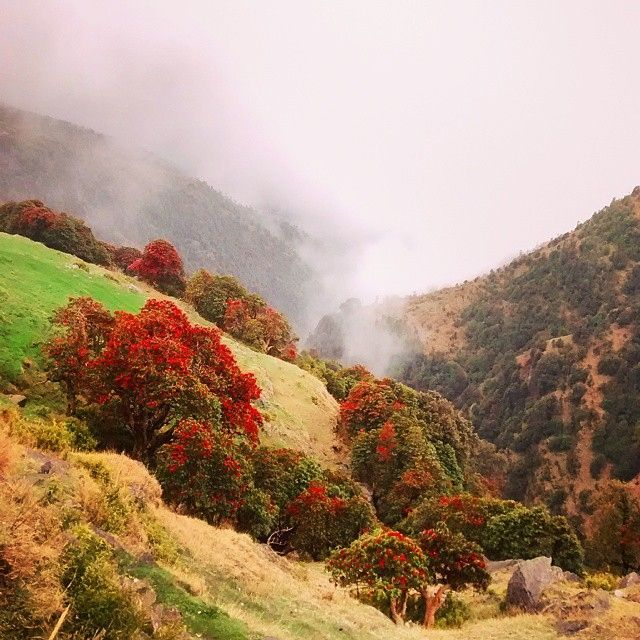
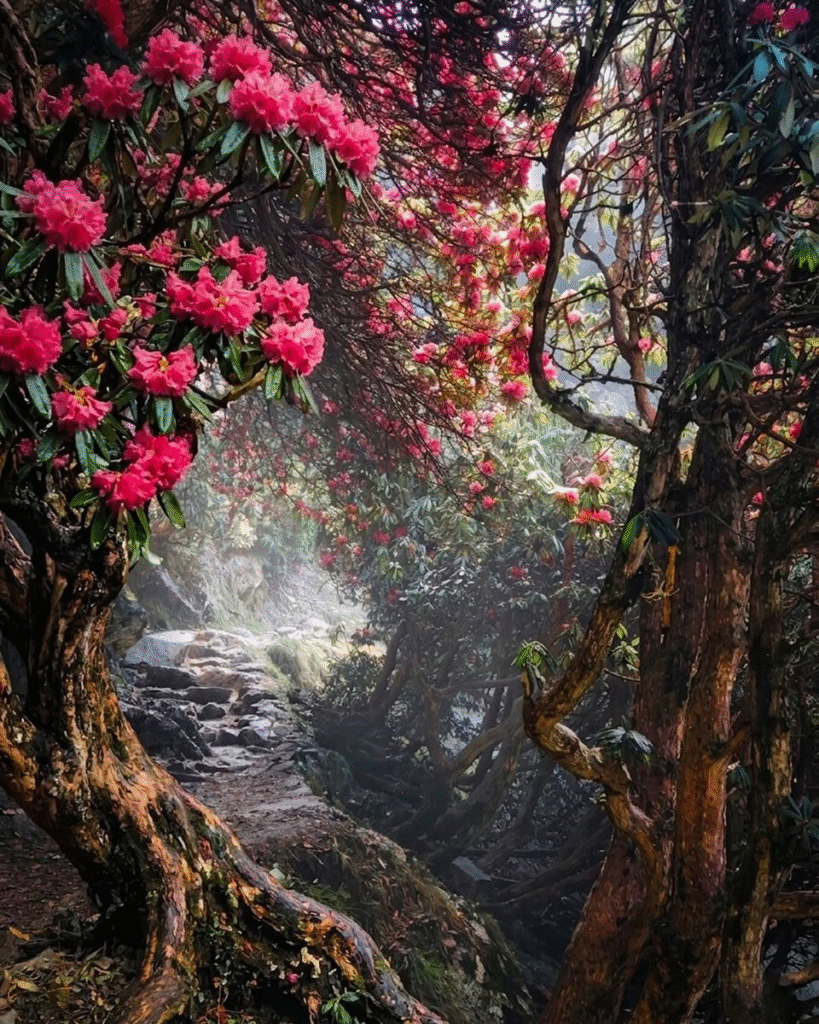
Every spring, the forests around Dharamshala transform into a breathtaking sea of crimson as vibrant rhododendron flowers (locally called Buransh) paint the hillsides in vivid shades of red. This fleeting natural spectacle is not just a photographer’s dream – it’s a living tradition where locals harvest the blooms to create refreshing juices, jams, and time-honored remedies.

Dharamshala Turns Crimson: The Magical Buransh Bloom

Nestled in the lap of the majestic Dhauladhar range, Dharamshala is famous for its serene Tibetan culture, colonial charm, and spiritual vibes. But come spring (typically late February to April), the town and its surrounding hills reveal a hidden, fiery side that few travelers witness in full glory.

The star of the season is Rhododendron arboreum, known locally as Buransh – Himachal Pradesh’s state flower. These striking red blossoms blanket the oak and pine forests, turning the green Himalayan landscape into a “hidden red paradise.” The bloom usually peaks in March and April, creating a short, magical window when the hills look dramatically different from their usual snow-capped or lush-green avatar.

The sight is truly legendary. Bright red clusters stand out against the deep green foliage, making even routine trails and viewpoints feel like walking through a living painting. This brief spectacle offers a refreshing contrast to the region’s more familiar snowy or verdant scenery.

Beyond Beauty: A Flower with Tradition and Health Benefits

For locals, Buransh is far more than a visual delight. Generations have harvested these flowers to create antioxidant-rich treats and remedies refreshing Buransh Juice/Squash A tangy, cooling drink that appears in local shops and homestays during the season. Jams, Chutneys & More – Sweet preserves and spicy accompaniments that capture the flower’s unique flavor. Traditional Remedies – Used for digestive health, reducing inflammation, supporting heart health, and even as a remedy for headaches or high-altitude discomfort. The flowers are rich in flavonoids like quercetin and rutin. The process is simple yet cherished: petals are carefully collected, cleaned, and turned into squash using traditional recipes passed down through families. Many small entrepreneurs and self-help groups now process and sell these products, adding an economic boost to the community.

Dharamshala's Secret Red Paradise: When Buransh Blooms, the Hills Catch Fire

Perfect Time to Visit & What to Do

Best Months: March to April (peak bloom often hits mid-March to early April, though it can start as early as late February depending on altitude and weather). Where to See the Blooms: Hillsides around Dharamshala, McLeodganj, and trails leading into the Dhauladhar mountains. Offbeat paths offer quieter, more immersive experiences. Combine with Exploration: While chasing the red blooms, don’t miss Dharamshala’s other treasures: McLeodganj Little Tibet – The Tsuglagkhang Complex, Namgyal Monastery, and the chance to witness monks debating.

Norbulingka Institute – Beautiful gardens and traditional Tibetan arts. Tibetan Museum – A moving insight into the Tibetan exile story. Nearby Trails short hikes from Dharamkot or towards Triund for stunning valley views framed by rhododendrons.Practical Tips for Your Red Paradise Getaway how to reach fly into Kangra Airport (DHM) or Chandigarh (IXC), then drive or take a taxi. Nearest railhead is Pathankot.

Chamayavilakku: When Devotion Transcends Gender at Kerala’s Sacred Festival

0

A luminous celebration of faith, identity and inclusivity

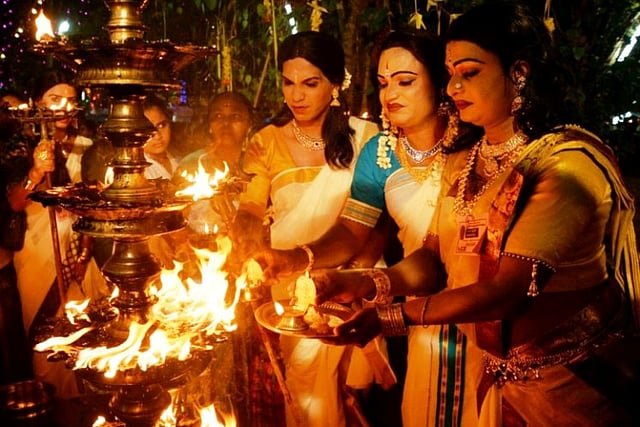
In the coastal town of Kollam in Kerala, the Kottankulangara Devi Temple hosts one of India’s most unique and thought-provoking festivals—the Chamayavilakku. At first glance, the sight is striking: thousands of men dressed in sarees, adorned with jewellery and flowers, holding traditional lamps. But beyond its visual spectacle lies a deeply spiritual and cultural narrative.

A Ritual Rooted in Legend

The origins of Chamayavilakku are steeped in local folklore. According to tradition, cowherd boys once worshipped a stone as a manifestation of the Goddess, dressing as girls during their rituals. It is believed that the Goddess appeared before them, sanctifying the practice and giving birth to the temple and its unique custom.

Since then, the ritual has evolved into an annual festival, held during the Malayalam month of Meenam (March), drawing thousands of devotees from across Kerala and beyond.

The Ritual of Light and Transformation

The defining feature of Chamayavilakku is its central ritual—male devotees dressing as women and carrying vilakku (traditional oil lamps) as offerings to the Goddess Bhagavathy. Draped in vibrant sarees, wearing jasmine garlands and elaborate makeup, devotees walk in procession through the temple premises, their lamps glowing against the night sky.

This transformation is not theatrical—it is an act of surrender. It symbolises the belief that in the eyes of the divine, identity transcends gender, caste or social roles. Devotion, in its purest form, is beyond physical distinctions.

A Space of Inclusivity and Expression

What makes Chamayavilakku especially remarkable is its inclusive spirit. The festival has become one of the largest gatherings of the transgender community in Kerala, offering a rare space where identity is not judged but embraced.

Participants come from diverse backgrounds—young and old, across communities and regions—united by a shared faith. The ritual stands as a powerful statement of acceptance, where spirituality dissolves societal boundaries.

A Festival Alive with Culture

Beyond the central ritual, Chamayavilakku is a vibrant cultural celebration. The temple, known for its unique open-sky sanctum, comes alive with music, traditional performances, processions and dazzling fireworks.

The final nights of the festival, when the lamp-bearing procession takes place, are particularly mesmerizing—transforming the temple grounds into a sea of shimmering lights and devotion.

Beyond Ritual: A Message for Modern Times

In a world increasingly engaged in conversations about identity and inclusion, Chamayavilakku offers a timeless perspective. It reminds us that Indian traditions have long embraced fluidity and diversity in ways that are both spiritual and deeply human.

Here, dressing as a woman is not an act of defiance—it is an act of devotion.
It is a reminder that faith has no boundaries, and that before the divine, all are equal.

And as thousands of lamps flicker under the open sky, Chamayavilakku becomes more than a festival—it becomes a glowing testament to unity, acceptance and the transformative power of belief.

Sentinels of the Northeast: 191 Years of the Assam Rifles’ Service and Sacrifice

0

A legacy of courage, resilience and unwavering duty

On March 24, 2026, the Assam Rifles marked its 191st Raising Day—celebrating nearly two centuries of dedicated service to the nation. Known as the “Sentinels of the Northeast,” this force stands as one of India’s oldest and most distinguished paramilitary organisations, guarding some of the country’s most challenging frontiers.

From Cachar Levy to a Modern Force

The origins of the Assam Rifles date back to 1835, when it was raised as the Cachar Levy during British rule. Its initial mandate was to protect tea estates and maintain order in the region. Over time, as geopolitical and internal security challenges evolved, so did the force—transforming into a highly specialised unit adept in counter-insurgency and border security

Today, the Assam Rifles operates under the administrative control of the Ministry of Home Affairs, while its operational command rests with the Indian Army—making it unique in structure and highly effective in coordination.

Guardians of a Sensitive Frontier

Stationed primarily across the northeastern states and along the Indo-Myanmar border, the Assam Rifles plays a crucial role in safeguarding national security.

Its responsibilities include:
●Border surveillance and protection
●Counter-insurgency operations
●Maintaining law and order in remote regions
●Facilitating development and humanitarian assistance

For decades, the force has acted as a stabilising presence in a region marked by complex terrain, diverse communities and strategic sensitivities. Its deep engagement with local populations has also helped build trust and promote peace.

A Legacy of Service and Sacrifice

Over its 191-year journey, the Assam Rifles has been at the forefront of numerous operations—both in times of conflict and peace. From supporting military campaigns in earlier eras to combating insurgency in independent India, the force has consistently demonstrated exceptional courage and discipline.

Its contributions extend beyond security. Personnel of the Assam Rifles have been instrumental in disaster relief, infrastructure support and community outreach—often serving as the first responders in remote and inaccessible areas.

Raising Day 2026: A Nation’s Tribute

The 191st Raising Day celebrations were held with pride and solemnity, particularly at the force’s headquarters in Shillong. The occasion honoured the bravery, dedication and sacrifices of its personnel.

Union Home Minister Amit Shah and Defence Minister Rajnath Singh extended their greetings, commending the force for its unwavering commitment to national security. They praised the Assam Rifles for its role in guarding India’s borders under demanding conditions and for maintaining peace in the Northeast.

An Enduring Symbol of Strength

As it steps into its 192nd year, the Assam Rifles continues to embody resilience, adaptability and service. Its journey from a colonial-era unit to a modern paramilitary force reflects not just institutional evolution, but also a deep-rooted commitment to the nation.

In the dense forests, rugged hills and remote outposts of the Northeast, the Assam Rifles remains ever vigilant—quietly and steadfastly protecting India’s frontiers.
A legacy nearly two centuries strong, and still standing guard.

India’s Ancient Board Game Legacy: Strategy, Philosophy and Play

0

Long before the rise of digital entertainment, India nurtured a rich tradition of board games that were not merely pastimes, but reflections of life, morality and intellect. From royal courts to village courtyards, these games shaped thinking, storytelling and even global gaming culture. Many of the world’s most beloved games today quietly trace their origins back to ancient India.

The Birth of Strategy: Chaturanga

Emerging around the 6th century during the Gupta Empire, Chaturanga is widely recognised as the ancestor of modern chess. The game represented the four divisions of the Indian army—infantry, cavalry, elephants and chariots—and was used to teach warfare strategy to princes. Over centuries, it travelled across Persia and Europe, eventually evolving into chess, making it one of India’s most influential intellectual exports.

The Game of Kings: Pachisi

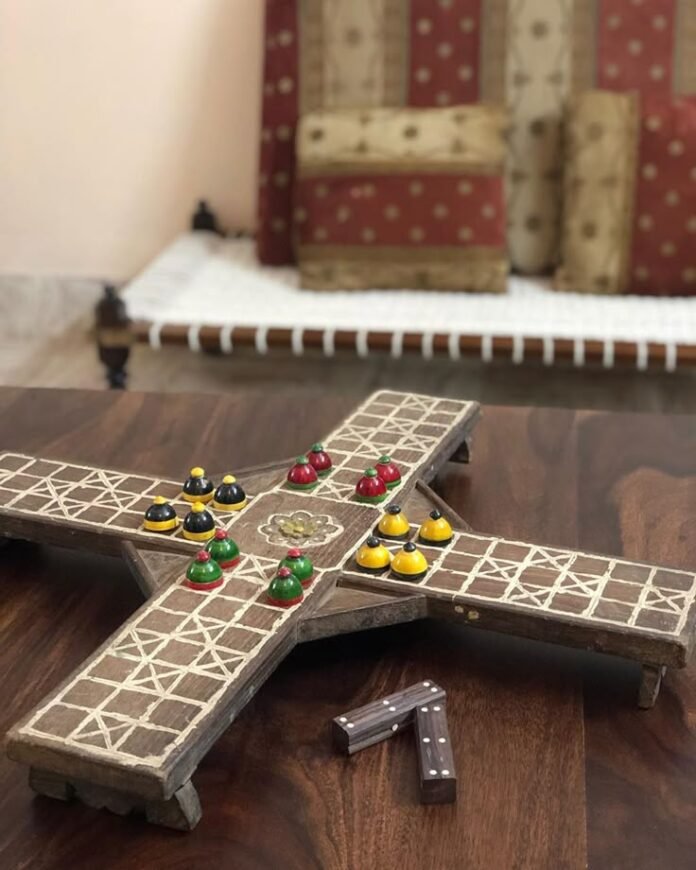
Dating back to at least 200 BCE, Pachisi was played on a cross-shaped board using cowrie shells as dice. It gained immense popularity during the Mughal era, with emperors like Akbar playing life-sized versions in palace courtyards.
Today, its simplified version lives on globally as Ludo—played in millions of homes, often without the awareness of its royal Indian origins.

The Moral Map: Moksha Patam

Before becoming the playful Snakes and Ladders, this game was a profound spiritual tool. Known as Moksha Patam, it symbolised the journey of the soul—where virtues lifted you upward and vices pulled you down. Originating in ancient India, it was designed to teach karma and ethical living, a meaning that was diluted when it spread to the West.

The Forgotten Board: Ashtapada

Predating chess, Ashtapada was played on an 8×8 grid and may have served as the foundation for later strategy games. References to it appear in ancient texts, even in discussions of games discouraged by spiritual leaders like the Buddha.
Though its exact rules are lost, its influence on the evolution of board games is undeniable.

The Social Game: Chaupar

A close relative of Pachisi, Chaupar has been played across North India, especially Rajasthan, for centuries. Found in epics and folklore, it blended luck with strategy and was often a communal activity—played during gatherings, festivals and family events. Its cultural presence remains strong in rural India even today.

Games of Skill and Nature

India also developed mathematically rich and nature-inspired games. Variants of the mancala family—such as Pallankuzhi in South India—trained players in counting and planning. Meanwhile, hunt games like Adu Puli Aattam (goats and tigers) reflected ecological relationships, where strategy depended on survival instincts and positioning.

A Global Legacy

What makes these games extraordinary is their journey beyond India. Through trade, migration and cultural exchange, they spread across Asia, the Middle East and Europe. Chess, Ludo and Snakes & Ladders—now global staples—carry within them echoes of Indian philosophy, mathematics and storytelling.

More Than Just Games

Ancient Indian board games were never just about winning or losing. They taught discipline, ethics, foresight and patience. They mirrored life—sometimes governed by skill, sometimes by chance, but always rich in meaning.

Today, as the world rediscovers traditional knowledge systems, these games are making a quiet comeback. In their simple boards and timeless rules lies a profound truth: long before modern education systems, India was already teaching life—one move at a time.

The Great Shift: Why Students Are Turning Away from the US and UK

0

Rethinking the Global Dream of Higher Education

For decades, the United States and United Kingdom stood as the ultimate destinations for higher education—symbols of prestige, opportunity and global exposure. Yet today, a quiet but significant shift is underway. Increasingly, students across the world are rethinking this traditional aspiration.

The Cost Factor: Education Becoming Unaffordable

One of the most pressing concerns is the soaring cost of education. Tuition fees in both countries have risen sharply, with additional expenses such as accommodation, healthcare and daily living making the overall cost overwhelming. For many families, the return on investment is no longer guaranteed, especially amid uncertain job prospects.

Visa Uncertainty and Immigration Barriers

Stricter visa policies and unpredictable immigration pathways have further discouraged students. Delays, rejections and changing regulations—particularly around post-study work visas—have created an atmosphere of uncertainty. In fact, student visa issuances and approvals have seen notable declines, reflecting this growing hesitation.

Declining Job Opportunities After Graduation

Earlier, the promise of global careers attracted students to these countries. Today, that promise feels fragile. Limited job availability, complex work visa systems and increasing competition have made it harder for international graduates to secure stable employment.

Political Climate and Perception of Unwelcoming Environments

Shifts in political rhetoric, immigration debates and instances of discrimination have also impacted perceptions. Many students now question whether these destinations are as welcoming as they once were.

Post-Pandemic Realities and Safety Concerns

The COVID-19 pandemic reshaped global mobility. Travel restrictions, health concerns and disruptions in campus life have made students more cautious. Confidence in studying abroad—especially in distant countries—has been affected.

A Structural Shift in Global Education

Perhaps most importantly, the monopoly of the US and UK is fading. Countries across Europe and Asia are strengthening their universities, offering high-quality education at lower costs. Surveys indicate a growing preference for regional or alternative destinations, signalling a broader transformation in global education trends.

Where Are Students Going Instead?

As aspirations evolve, students are exploring newer, more practical options. Countries like Germany and France offer affordable or even tuition-free education. Canada and Australia continue to attract students with clearer immigration pathways, while emerging hubs like Singapore and United Arab Emirates provide globally competitive programmes closer to home.

Additionally, many students are now choosing to study within their own regions or enroll in international programmes offered locally—reducing costs while retaining global exposure.

A New Era of Choices

The shift away from the US and UK is not a rejection of their academic excellence, but a reflection of changing priorities. Today’s students are more pragmatic, weighing cost, safety, opportunity and long-term stability.

In this evolving landscape, higher education is no longer about chasing traditional destinations—it is about choosing the right destination.

Gold Beyond Ornament: The Economic Significance of Jewellery

0

Why Gold Has Always Been Rajasthan’s Most Trusted Form of Wealth

In Rajasthan, jewellery has never been merely an aesthetic expression—it has long functioned as a deeply embedded economic system. Across regions from Mewar to Marwar, gold jewellery has served as a reliable store of value, a safeguard against uncertainty, and a tangible form of wealth that remains within the household.

For generations, families have invested in gold not through formal financial institutions, but through cultural practices that seamlessly blend tradition with economic foresight. In this sense, jewellery becomes both adornment and asset—worn with pride, yet preserved with purpose.

Gold and the Ritual Calendar

One of the most distinctive aspects of Rajasthan’s relationship with gold is its connection to the ritual calendar. Festivals such as Dhanteras, Akshaya Tritiya, Navratri, and Diwali are considered especially auspicious for purchasing gold. These occasions are not random—they are culturally structured moments that encourage disciplined, periodic investment.

Historian Dr. Itiraj Sharma explains this with striking clarity:
“Gold buying in Rajasthan is embedded in a carefully structured ritual calendar that effectively functions as an institutionalised form of forced saving. Each occasion—whether Dhanteras, Akshaya Tritiya or life-cycle events—carries its own economic logic. Over time, these periodic purchases transform what appears to be a cultural practice into disciplined wealth accumulation across the lifecycle. Importantly, gold also offers superior liquidity in rural contexts, often more accessible than formal banking systems, while its public display during festivals and weddings signals credibility and enables participation in informal credit networks.”

Gold Beyond Ornament: The Economic Significance of Jewellery

This cyclical pattern ensures that wealth is steadily built over time, without the need for formal financial planning—making it especially relevant in rural and semi-urban settings.

The Tradition of Stridhan

Weddings mark another crucial moment in the economic life of jewellery. The age-old tradition of Stridhan—where gold jewellery is gifted to the bride—serves as more than a ceremonial gesture. It represents a form of financial autonomy and security for women.

In many households, this jewellery remains exclusively owned by the woman, acting as a personal reserve that can be relied upon in times of need. In a socio-economic context where access to independent financial resources has historically been limited, Stridhan has played a vital role in safeguarding women’s economic agency.

Jewellery as Household Wealth

In Rajasthan, gold is often described as “wealth you can wear.” Unlike immovable assets, jewellery is portable, discreet and instantly liquid. It can be pledged, sold or exchanged during emergencies—whether for healthcare, agriculture, or family obligations.

This dual function—ornamental and financial—has ensured that gold remains deeply trusted across generations. In many families, jewellery is not only inherited but also continuously added to, creating a living repository of wealth that evolves with time.

Even today, it is not uncommon for households to prioritise gold purchases over other forms of investment, particularly in regions where trust in formal financial systems may be limited or access remains uneven.

A Living Financial Tradition

What makes Rajasthan’s gold culture truly remarkable is its seamless blending of emotion and economics. Festivals, marriages and traditions are not separate from financial behaviour—they actively shape it.
In this landscape, gold jewellery becomes more than an object. It is security in uncertain times, status in social spaces, and continuity across generations.

And perhaps that is why, even today, the glow of gold in Rajasthan is not just about beauty—it is about resilience, trust and a deeply rooted understanding of wealth.

World Tuberculosis Day 2026: Theme, Significance & Government Initiatives

0

World Tuberculosis Day 2026 is observed on March 24 every year to raise awareness about one of the world’s deadliest infectious diseases—tuberculosis (TB). The day commemorates the landmark discovery of the TB-causing bacterium by Robert Koch in 1882, a breakthrough that transformed medical science.

Despite being preventable and curable, TB continues to affect millions globally, especially in countries like India. The day plays a crucial role in spreading awareness, reducing stigma, and promoting early diagnosis and treatment.

Theme for 2026

The theme for World Tuberculosis Day 2026 continues the global call:
“Yes! We Can End TB: Commit, Invest, Deliver.”

It emphasizes:

  • Strong commitment from governments and communities
  • Increased investment in healthcare systems
  • Improved access to diagnosis and treatment
  • Collective global action to eliminate TB

Government Initiatives to Eliminate TB

The Government of India has launched several initiatives aiming to eliminate TB by 2025, ahead of global targets:

  • National Tuberculosis Elimination Programme (NTEP): Ensures free diagnosis, treatment, and monitoring across public health systems.
  • Nikshay Portal: A digital platform for tracking TB patients and monitoring treatment adherence.
  • Nikshay Poshan Yojana: Provides ₹1000 per month to TB patients for nutritional support.
  • Pradhan Mantri TB Mukt Bharat Abhiyaan: Encourages individuals and organizations to support TB patients with nutrition and care.
  • TB Harega Desh Jeetega Campaign: Focuses on awareness, stigma reduction, and early testing.
  • Active Case Finding (ACF): Door-to-door screening in high-risk populations.
  • Free TB Diagnosis and Treatment: Available at government facilities using advanced diagnostics.
  • Universal Drug Susceptibility Testing (UDST): Ensures proper treatment, especially for drug-resistant TB.
  • Private Sector Engagement: Integrates private healthcare providers into TB control efforts.

Importance of World Tuberculosis Day

  • Raises awareness about TB as a major public health issue
  • Promotes early detection and timely treatment
  • Encourages completion of treatment to prevent drug resistance
  • Helps reduce stigma and discrimination against patients
  • Supports national and global TB elimination programs
  • Highlights the role of nutrition, hygiene, and living conditions
  • Strengthens global partnerships to eliminate TB by 2030
  • Encourages policy support, funding, and research

About Tuberculosis

Tuberculosis (TB) is a contagious bacterial disease caused by Mycobacterium tuberculosis, primarily affecting the lungs.

Key Facts:

  • Transmission: Spreads through airborne droplets when an infected person coughs, sneezes, or speaks
  • High-risk groups: People with weak immunity (e.g., HIV, diabetes, malnutrition)
  • Types:
    • Latent TB (inactive, no symptoms)
    • Active TB (symptomatic and infectious)

Common Symptoms:

  • Persistent cough (more than 2 weeks)
  • Fever and night sweats
  • Chest pain
  • Fatigue and weight loss

Diagnosis:

  • Sputum tests
  • Chest X-rays
  • Molecular tests like CBNAAT

Treatment:

  • Standard 6–9 month antibiotic regimen
  • Common drugs include isoniazid, rifampicin, pyrazinamide, and ethambutol

Prevention:

  • Early detection and complete treatment
  • Proper ventilation and hygiene
  • Use of masks in high-risk settings
  • Vaccination (BCG)

Conclusion

World Tuberculosis Day 2026 serves as a reminder that eliminating TB requires sustained global commitment, stronger healthcare systems, and active community participation. With coordinated efforts and continued investment, achieving a TB-free world is an attainable goal.

US Lawmakers Introduce Bill to Protect OPT Programme; Major Relief for International Students

0

A bipartisan group of United States lawmakers has introduced a new bill aimed at safeguarding the Optional Practical Training (OPT) programme—an important pathway that allows international students to gain work experience after completing their studies. The move comes amid growing uncertainty around post-study work policies and seeks to ensure long-term stability for both students and employers.

What is the OPT Programme?

The Optional Practical Training (OPT) allows international students on an F-1 visa to work in the United States for up to 12 months after graduation. Students in Science, Technology, Engineering, and Mathematics (STEM) fields are eligible for an additional two-year extension.

The programme is widely seen as a stepping stone to long-term employment opportunities, particularly through visas like the H-1B visa, which is commonly used by skilled professionals.

Key Features of the Proposed Bill

The proposed legislation, titled the Keep Innovators in America Act, seeks to formally codify the OPT programme into law. This would provide statutory backing for the first time, reducing the risk of sudden policy changes.

The bill aims to:

  • Ensure continuity and stability of the OPT programme
  • Strengthen the US talent pipeline
  • Support industries dependent on skilled international graduates

Why It Matters for Indian Students

Students from India represent the largest group of international students in the US. As per recent data, over 3.63 lakh Indian students were enrolled in US institutions in 2024–25, with around 1.43 lakh participating in OPT.

For Indian students, the bill is significant as it:

  • Secures post-study work opportunities
  • Enhances global career prospects
  • Provides clarity amid changing immigration policies

Key Points

  • OPT allows international students to work in the US after graduation
  • STEM graduates can extend OPT by up to two years
  • F-1 visa is issued to international students
  • H-1B visa is a common work visa for skilled professionals

Economic and Policy Implications

Supporters of the bill argue that international students contribute significantly to the US economy and innovation ecosystem. Retaining skilled graduates helps strengthen the country’s competitiveness in sectors like technology and research.

The move also reflects growing global competition, as countries increasingly adopt favourable immigration policies to attract and retain top international talent.

Terafab Project: Elon Musk Launches Semi-Conductor Facility to Scale Up Chip Production

0

Elon Musk has announced an ambitious semiconductor initiative named “Terafab” in Austin, aimed at scaling up artificial intelligence chip production. The project—linked to Tesla, SpaceX, and xAI—seeks to address the growing demand for advanced chips required for autonomous driving, robotics, and AI systems.

What is the Terafab Project?

Terafab is envisioned as a massive semiconductor fabrication facility, significantly larger than Tesla’s existing gigafactories. It will function as an advanced technology hub capable of designing, manufacturing, and testing next-generation chips. The project reflects concerns that current global chip production capacity may not keep pace with the rapidly increasing demand for AI-driven applications.

Focus on AI5 Chip Development

The facility will primarily produce Tesla’s fifth-generation AI chip, known as AI5. This chip is expected to power Full Self-Driving (FSD) systems and future robotics platforms. The AI5 chip represents Tesla’s push toward greater vertical integration, reducing reliance on external semiconductor suppliers.

Need for In-House Chip Manufacturing

Musk has emphasized that existing suppliers such as Samsung Electronics, TSMC, and Micron Technology may not be able to meet Tesla’s projected chip requirements. Terafab is thus aimed at ensuring a stable and scalable supply of semiconductors. The initiative aligns with a broader industry trend where major tech companies are investing in in-house chip capabilities.

Important Facts

  • Terafab is a proposed large-scale semiconductor fabrication facility in Texas.
  • It focuses on AI chip production, especially Tesla’s AI5 chip.
  • Semiconductor fabs require high investment and long gestation periods.
  • AI chips are critical for autonomous vehicles and robotics.

Challenges and Future Vision

Building semiconductor fabrication plants involves extremely high capital costs—often running into tens of billions of dollars—and requires several years to become operational. Elon Musk has also hinted at future technological ambitions, including space-based AI computing through satellite networks. Despite uncertainties in timelines, Terafab represents a strategic step toward meeting future AI and computing demands at scale.