Home Blog Page 347

Sheetala Ashtami 2025: When is Sheetala Ashtami – March 22 or 23? Know the Date, Significance, and the Tradition of Offering Stale Food

0

Sheetala Ashtami 2025 Date: Sheetala Ashtami holds great significance in Hinduism. According to the Hindu calendar, this fast is observed on the Ashtami (eighth) day of the Krishna Paksha in the Chaitra month, also known as Basoda Puja. In 2025, Sheetala Ashtami will be observed on March 22. On this day, devotees offer stale food (prepared the previous day) to Goddess Sheetala. It is believed that worshiping the goddess on this day helps protect devotees from various diseases.

Goddess Sheetala’s Form and Importance Goddess Sheetala is considered the deity of smallpox and contagious diseases. She is regarded as a symbol of cleanliness and is believed to protect people from heat-induced illnesses. Worshiping her is said to provide relief from epidemics and skin diseases.

Why is Stale Food Offered? According to religious beliefs, Goddess Sheetala prefers stale food. Therefore, devotees do not prepare fresh meals on this day and instead offer food cooked the previous day. Scientifically, this tradition also holds significance. The month of Chaitra marks the transition from winter to summer, increasing the risk of illnesses. Consuming cold food during this time is believed to be beneficial for digestion and overall health. Additionally, households refrain from lighting the stove, promoting cleanliness and hygiene.

Foods Offered on Sheetala Ashtami During the puja, devotees offer the following stale food items to the goddess:

  • Sweet rice
  • Unsalted puris
  • Pua (sweet fried bread)
  • Gul-gule (sweet fritters)
  • Pakoras (fritters)
  • Kadhi (yogurt-based curry)
  • Chana dal (Bengal gram lentils)
  • Halwa (sweet pudding)
  • Rabri (thickened sweet milk)

Rituals and Traditions of Sheetala Ashtami

  • Devotees take a holy bath before sunrise and wear clean clothes.
  • They light a lamp and worship Goddess Sheetala’s idol or image.
  • The stale food is offered as prasad and later consumed by the family.
  • Special emphasis is placed on cleanliness, as Goddess Sheetala is believed to favor hygiene.

Sheetala Ashtami is not only significant from a religious perspective but also has scientific relevance. This festival keeps traditions alive while promoting a healthy and hygienic lifestyle.

International Day of Happiness 2025: Date, History, Significance, and Celebrations

0

Happiness is a universal pursuit, a feeling that connects people across cultures, backgrounds, and geographies. Every year, March 20th marks the International Day of Happiness, a day dedicated to celebrating joy, gratitude, and the well-being of individuals and communities. The United Nations established this observance to highlight the importance of happiness in global development, recognizing that human well-being should be prioritized alongside economic progress. In 2025, the theme for this special day is “Caring and Sharing”, emphasizing the power of compassion, connection, and collective happiness.

History and Origin of International Day of Happiness

The United Nations General Assembly established the International Day of Happiness in 2012, inspired by Bhutan—a country that measures its progress not just by Gross Domestic Product (GDP) but by Gross National Happiness (GNH). Recognizing happiness as a fundamental human goal, the UN declared March 20th as a day to focus on global well-being and encourage positive actions that lead to a more inclusive, compassionate world.

Since its inception, this day has been a reminder that happiness is more than a fleeting emotion; it is an essential aspect of human life, influenced by mental health, social relationships, economic stability, and emotional resilience. The annual observance encourages individuals, organizations, and governments to take meaningful steps toward a happier, healthier world.

Significance of International Day of Happiness 2025

The International Day of Happiness serves as an opportunity to reflect on what truly brings joy and fulfillment. It is a day to appreciate the small moments of happiness, such as spending quality time with loved ones, helping those in need, practicing gratitude, or simply embracing life’s little pleasures.

In a fast-paced world filled with challenges and uncertainties, this day is a gentle yet powerful reminder that happiness is not just a personal feeling but a universal aspiration that connects people. Prioritizing emotional well-being, mental peace, and acts of kindness can make a significant difference in one’s life and the world at large.

Theme for International Day of Happiness 2025: “Caring and Sharing”

Each year, the International Day of Happiness is celebrated with a unique theme that captures its essence. For 2025, the theme “Caring and Sharing” highlights the importance of spreading kindness, compassion, and joy. It encourages people to look beyond themselves and extend their warmth and generosity to others, reinforcing the idea that happiness grows when shared.

Caring for others—whether through simple acts of kindness, volunteering, or checking in on a friend—creates a ripple effect of positivity. Sharing happiness can be as simple as expressing gratitude, lending a helping hand, or supporting a good cause. The 2025 theme inspires people to embrace a more empathetic and community-driven approach to life.

How People Celebrate International Day of Happiness

The International Day of Happiness is celebrated worldwide in diverse and meaningful ways. Here are some of the most common ways individuals, schools, workplaces, and communities observe this day:

  • Spending Time with Loved Ones: Connecting with family, friends, and colleagues to share laughter and create memorable moments.
  • Practicing Gratitude: Taking time to appreciate the blessings in life and expressing thanks for the people and experiences that bring joy.
  • Acts of Kindness: Engaging in small yet impactful actions such as complimenting someone, donating to charity, or helping a neighbor.
  • Mental Well-Being Activities: Participating in meditation, mindfulness exercises, or self-care practices to promote emotional health.
  • Community Events: Schools and organizations host activities like happiness workshops, team-building exercises, and interactive discussions about emotional well-being.
  • Social Media Initiatives: Many people use platforms like Twitter, Instagram, and Facebook to share uplifting stories, positive messages, and the importance of happiness using hashtags like #InternationalDayOfHappiness and #Happiness2025.

Summing Up

The International Day of Happiness 2025 is more than just a date on the calendar—it is a global movement that reminds us of the significance of joy, gratitude, and emotional well-being. This year’s theme, “Caring and Sharing,” encourages everyone to spread happiness, foster meaningful connections, and make the world a more compassionate place. Whether through small gestures or grand celebrations, every action that brings a smile contributes to a happier and more harmonious world.

So, as March 20th approaches, take a moment to reflect, cherish the simple joys, and share happiness with those around you—because happiness is truly contagious!

World Sparrow Day 2025: Let’ Pledge to Save These Cheerful, Chirpy Species Who Are Now a Rare Sight

0

From the peaceful mornings in villages to the hustle and bustle of cities, sparrows once filled the air with their cheerful chirps. Flocks of these tiny birds, uninvited yet welcome, created unforgettable memories. In India, sparrows are not just birds; they are a symbol of shared history and culture. Known by various names such as “Goraiya” in Hindi, “Kuruvi” in Tamil and “Chirya” in Urdu, sparrows have been a part of daily life for generations. They used to fill the air with their cheerful songs, especially in villages, creating memories for many.

But over time, these little friends have vanished from our lives. Once abundant, the house sparrow is now a rare sight and a mystery in many places. To raise awareness and protect these small creatures, World Sparrow Day is celebrated every year on March 20th.

World Sparrow Day 2025: Let' Pledge to Save These Cheerful, Chirpy Species Who Are Now a Rare Sight

World Sparrow Day was initiated by “Nature Forever,” a bird conservation organization in 2010. The aim was to raise awareness about the declining sparrow population. The event has spread to over 50 countries. The goal is to protect sparrows and stop their decline. In 2012, the house sparrow became Delhi’s state bird. Since then, the event has gained global attention. People everywhere celebrate sparrows and work to protect them.

Sparrows are small but significant birds that play an essential role in maintaining ecological balance. They help control insect populations by feeding on various bugs and pests. Additionally, sparrows are key players in pollination and seed dispersal. Their presence enhances biodiversity, making them crucial for the health of both rural and urban ecosystems.

Despite their importance, sparrows have been disappearing at an alarming rate. Several factors contribute to this decline. The use of unleaded petrol has led to toxic compounds that harm the insects, sparrows depend on for food. Urbanization has also taken away their natural nesting spaces. Modern buildings lack the spaces sparrows need for nesting, reducing places to raise their young.

Additionally, pesticide use in agriculture has reduced the number of insects, further impacting sparrows’ food supply. The increasing presence of crows and cats, along with a lack of green spaces has added to the problem. These factors, along with lifestyle changes have made it difficult for sparrows to thrive.

Amid these challenges, there are several inspiring efforts to protect sparrows and bring them back into our lives. One such initiative is the “Save the Sparrow” campaign led by environmental conservationist Jagat Kinkhabwala. He emphasizes the need to balance development with environmental protection. PM Modi’s support for this campaign in 2017 has significantly increased awareness.

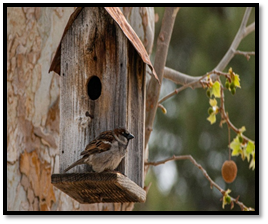
Another remarkable initiative is by the Koodugal Trust in Chennai. This organization has involved school children in creating sparrow nests. The children build small wooden houses, providing food and shelter for sparrows. From 2020 to 2024, the trust built over 10,000 nests leading to a rise in sparrow numbers. Such efforts highlight the importance of involving the younger generation in conservation.

 In Mysuru, Karnataka, the “Early Bird” campaign introduces children to the world of birds. The program includes a library, activity kits and trips to villages to observe birds. These educational efforts are helping children recognize and understand the importance of sparrows and other birds in nature.

Rajya Sabha MP Brij Lal has also contributed significantly to sparrow conservation. He has set up 50 nests in his home, where sparrows return every year to lay their eggs. He ensures that they are fed and taken care of. His efforts were even praised by PM Modi, who highlighted the importance of such initiatives in protecting sparrows.

World Sparrow Day is a reminder of the importance of preserving our tiny feathered friends. Whether it’s by planting more greenery, reducing pesticide use or creating safe nesting spaces, every small effort counts. By celebrating World Sparrow Day, we can help bring these little birds back into our lives and preserve the harmony between nature and humanity.

What is the significance of Jagannath Temple?

0

On the eastern coast of India lies the sacred town of Puri, a name synonymous with the iconic Jagannath Temple. This ancient shrine, dedicated to Lord Jagannath, has drawn pilgrims and seekers from across the world for nearly a millennium. Built in the 12th century AD, the temple stands as the beating heart of the Jagannath cult, its towering spire a beacon of faith visible for miles around. Rising majestically from a raised platform, this architectural marvel is more than just a place of worship; it is a symbol of unwavering devotion, history, and spiritual grandeur.

A Celestial Marvel in Stone

Unlike other temples in the region, the walls of Jagannath Temple are adorned predominantly with divine figures, creating a celestial pantheon in stone. The entire complex, enclosed within two concentric walls known as the Kuruma Bheda and Meghnad Pachira, tells a story of continuous evolution, with additions enhancing its grandeur well into the 16th century. As you approach the main entrance, the grand Singhadwara on the eastern face, you step into a space where ancient traditions remain vibrantly alive, and where every stone resonates with centuries of faith and cultural heritage.

Steeped in Historical Significance

The history of Sri Jagannath Temple dates back over a millennium, with its origins shrouded in mythological lore and historical accounts. According to legend, the temple was originally built by King Indradyumna, a devout ruler who received divine guidance to construct a grand abode for Lord Jagannath. Over the centuries, the temple has undergone several renovations and expansions, each adding to its architectural magnificence and cultural significance. Today, Sri Jagannath Temple stands as a testament to the enduring legacy of Hindu spirituality and the devotion of countless worshippers.

An Architectural Wonder

The Jagannath Temple in Puri is not just a revered spiritual site but also a testament to the architectural and engineering prowess of ancient India. Its design is a harmonious blend of devotion and scientific precision that continues to awe visitors and experts alike. Perhaps the most striking feature is the temple’s mystical interaction with light—constructed with such ingenuity that it casts no shadow on the ground at any time of day, as if defying the very laws of nature.

Perched atop the temple’s soaring spire is the Nilachakra, a blue wheel crafted from an alloy of eight metals, known as asta dhatu. This isn’t merely ornamental; in the eyes of devotees, catching a glimpse of the Nilachakra is equivalent to beholding Lord Jagannath himself, infusing even the temple’s highest point with profound spiritual significance.

The daily ritual of changing the temple’s flag, known as the Patitapabana, is a spectacle that embodies both devotion and daring. In a feat that has been ongoing for over eight centuries, members of a specially appointed family climb 165 feet barefoot to replace the flag at sunset. Adding to the mystery, the flag consistently flutters in the opposite direction of the prevailing wind, as if guided by an unseen divine hand.

A Sacred Site Steeped in Spiritual Significance

At the core of Jagannath Temple’s spiritual significance lies its role as the earthly abode of Lord Jagannath, a manifestation of Lord Vishnu revered as ‘the Lord of the Universe.’ This sacred site stands as one of the most hallowed pilgrimage destinations for Hindus, forming an integral part of the Char Dham Yatra alongside Badrinath, Dwarka, and Rameshwaram. The temple’s inner sanctum houses a divine trio: Lord Jagannath, his sister Subhadra, and his elder brother Balabhadra. Carved from sacred neem logs, known as daru, their distinctive appearance is said to embody deep spiritual symbolism. Seated upon the resplendent Ratnabedi, a bejeweled platform, these wooden icons radiate an aura of divine simplicity and profound mystery. The presence of these deities, crafted through ancient rituals and imbued with centuries of devotion, creates a palpable spiritual energy within the temple.

Divine Flavours and Festive Fervour

The Jagannath Temple experience extends far beyond its architectural marvels and spiritual significance, encompassing rich culinary traditions and vibrant festivals. At the heart of this sensory journey is the temple’s Mahaprasad, a sacred offering prepared in one of India’s largest temple kitchens. This blessed food is cooked daily in traditional earthen pots, catering to thousands of devotees.

Complementing this culinary spectacle is Puri’s calendar of colourful religious festivals, with the Rath Yatra standing out as the crown jewel. This grand chariot festival, celebrating Lord Jagannath’s annual journey, transforms the town into a sea of devotion and excitement. The streets come alive with the rhythmic pull of massive, ornate chariots, the air filled with chants and the sound of traditional instruments. The palpable energy, the intricate rituals, and the sheer number of pilgrims create an atmosphere that is both spiritually uplifting and visually stunning.

Explore Beyond the Temple

As your visit to the Jagannath Temple draws to a close, you’ll find that Puri’s spiritual essence extends far beyond the temple walls, weaving experiences that will linger in your memory long after you’ve left. Step out from the divine abode into the bustling Ananda Bazaar, where the air is thick with the aroma of freshly prepared prasad and the chatter of pilgrims and locals alike. Here, amidst colourful stalls, you can browse traditional handicrafts, intricate religious items, and unique souvenirs that capture the spirit of Odisha.

If you seek a moment of tranquillity, the nearby Puri beach offers a perfect retreat. Feel the soft golden sand between your toes as you walk along the shore, with the rhythmic waves of the Bay of Bengal providing a soothing backdrop for reflection.

Whether you’re drawn by faith, fascinated by culture, or simply in search of new experiences, Puri offers a journey that touches both the soul and the senses. From the architectural marvels of the Jagannath Temple to the serene coastline, every moment in this sacred town is an opportunity to connect with India’s spiritual heart and timeless traditions.


Har Ki Pauri: Itenary for the Ghat of Legends

0

Haridwar is synonymous with Har Ki Pauri, a spiritual landmark on the banks of the holy Ganga River that draws devotees from far and wide. The name Har Ki Pauri translates to the “Steps of Lord Vishnu” (Har meaning God and Pauri meaning steps). This revered ghat is believed to be the very place where the sacred Ganga emerges from the mountains, marking the transition from the divine to the earthly realm.

A Divine Legacy

Legend has it that Lord Vishnu appeared at this very spot during the Vedic period, leaving his footprints beneath the waters of the Ganga. Within Har Ki Pauri lies Brahmakund, the most sacred section, where the evening Ganga Aarti takes place. According to mythology, drops of Amrit (the elixir of immortality) fell here when Garuda, Lord Vishnu’s mount, carried the pitcher during the Samudra Manthan (churning of the ocean). It is also believed that the holy trinity—Brahma, Vishnu, and Mahesh—once graced Brahmakund with their divine presence.

With such immense spiritual significance, Har Ki Pauri has become the epicenter of grand Hindu gatherings. It hosts the colossal Kumbh Mela and Ardh Kumbh Mela, where millions of pilgrims gather to partake in sacred rituals and take a holy dip in the river to cleanse their souls. Over the years, the ghats have undergone significant expansions and renovations to accommodate the growing number of devotees attending these events.

Witness the Magic of Ganga Aarti

Har Ki Pauri is among the few sacred places in India where the grandeur of the Ganga Aarti can be witnessed. Devotees can experience the Mangala Aarti (morning aarti) or the Shringar Aarti (evening aarti), both equally mesmerizing.

As twilight descends, conch shells echo through the air, signaling the commencement of the divine ceremony. Ancient priestly chants rise in unison, carrying prayers to the heavens. Then, as if by magic, the flickering flames of a thousand oil lamps pierce the darkness, illuminating the riverbanks. The rhythmic movements of the priests, waving massive fire lamps in devotion, create a hypnotic spectacle. The sight of these golden flames reflecting on the shimmering waters of the Ganga is an unforgettable experience—one that lingers in the hearts of devotees long after the night fades into dawn.

The Origins of the Ghat

The origins of Har Ki Pauri trace back to ancient times. According to legend, King Vikramaditya constructed the ghat in honor of his beloved brother, Bharthari, a devout Shiva devotee who meditated at this sacred site. After Bharthari’s passing, his mortal remains were consigned to the river, and in his memory, the ghat was built as a tribute to his unwavering devotion.

A Celebration of Faith and Spirituality

Har Ki Pauri welcomes travelers and devotees to immerse themselves in its vibrant festivals. The Kumbh Mela, held every 12 years, and the Ardh Kumbh Mela, held every 6 years, are among the grandest spiritual congregations in the world, drawing millions who seek the blessings of the holy waters.

Apart from the Kumbh celebrations, the month of Shravan (July-August) witnesses a surge of Shiva devotees, known as Kanwariyas, embarking on their sacred Kanwar Yatra from Har Ki Pauri. The festival of Somvati Amavasya, which occurs monthly, is another significant event when devotees take a dip in the Ganga, believing it purifies their souls.

With each passing festival, Har Ki Pauri weaves a timeless tale of reverence and devotion, inviting people from all walks of life to experience its divine essence.

Beyond the Ghats of Har Ki Pauri

The spiritual charm of Har Ki Pauri extends beyond its ghats. The surrounding areas offer a treasure trove of cultural and religious experiences:

  • Maya Devi Temple: A revered Shakti Peeth, dedicated to Goddess Maya, located within walking distance.
  • Mansa Devi Temple: Situated atop Bilwa Parvat, accessible by cable car or trekking, offering panoramic views of the city and river.
  • Chandi Devi Temple: Perched on Neel Parvat, dedicated to Goddess Chandi, another sacred pilgrimage site.
  • Bara Bazaar: A bustling market filled with religious artifacts, souvenirs, and delectable street food.

Har Ki Pauri is more than just a pilgrimage site; it is an experience—an invitation to embark on a soul-stirring journey where faith, devotion, and divine energy converge. Whether you seek spiritual enlightenment or simply wish to soak in the mystical aura, Har Ki Pauri promises a glimpse into the eternal flow of divinity. Welcome to Har Ki Pauri, where every step is a sacred journey, and every moment is a glimpse of the divine.

Brahma Sarovar: Not Just Water, But Salvation of the Soul

0

Amidst the sacred lands of Kurukshetra lies Brahma Sarovar, an ancient water reservoir that is not just a body of water but a symbol of purity, salvation, and the very genesis of existence. As one of Hinduism’s most revered water bodies, this massive sarovar attracts devotees from across the world who seek spiritual cleansing in its divine waters.

A Sacred Pool of Immense Grandeur

Stretching 3,600 feet in length, 1,500 feet in breadth, and 45 feet deep, Brahma Sarovar is among the largest man-made ponds in Asia. According to legend, Lord Brahma performed the first yajna (sacrificial ritual) here, marking the beginning of the universe. This profound mythological significance makes Brahma Sarovar more than just a historical landmark—it is an emblem of cosmic creation.

Throughout history, travelers and scholars have marvelled at its vastness. Abul Fazl, the court historian of Emperor Akbar, likened it to a miniature sea, while the 11th-century Persian scholar Al-Biruni documented its significance in his Kitab-ul-Hind. Even the Mahabharata references this sacred tank, where Duryodhana is said to have taken refuge after the great war, under the divine protection of Dharam.

People believe that taking a dip in Brahma Sarovar, especially during solar eclipses, is equivalent to performing a thousand Ashwamedha Yajnas (horse sacrifices), making it a place of unparalleled spiritual merit.

Legends and Celebrations

It is said that King Kuru, the legendary ancestor of the Kauravas and Pandavas, originally excavated this tank. Local traditions also narrate that Brahma himself performed the first sacrifice at this very site.

At the heart of the sarovar stands a picturesque island with a grand monument commemorating Yudhishthira’s victory in the Mahabharata war. A concrete bridge leads to this sacred space, where an enormous black stone chariot of Lord Krishna and Arjuna is enshrined. Nearby, Draupadi’s Well reminds visitors of the legend that she washed her hair with the blood of Dushasana in the aftermath of the Kurukshetra war. On the northern bank, the Sarveshwar Mahadev Temple stands as an ancient tribute to Lord Shiva, believed to have been consecrated by Brahma himself.

Every year, during the last week of November and early December, Brahma Sarovar comes alive with the vibrant Gita Jayanti celebrations. Devotees gather for the mesmerizing deep daan (floating lamps) and soulful aarti, creating a celestial ambiance as the water shimmers under the glow of thousands of flames. This sacred time also welcomes migratory birds from distant lands, adding to the sarovar’s enchanting aura.

Beyond the Sacred Waters

Brahma Sarovar is not just an isolated pilgrimage site; it is surrounded by numerous spiritual and historical landmarks that enrich its significance. Adjacent to the sarovar, visitors can explore the Birla Gita Mandir and Baba Nath’s Haveli and Temple. A short distance away, the Buddha Stupa complex near Kurukshetra University stands as a testimony to the region’s diverse spiritual heritage.

Not far from Brahma Sarovar lies Jyotisar, the revered site where Lord Krishna is believed to have delivered the Bhagavad Gita to Arjuna. Another sacred water body nearby is Sannihit Sarovar, considered one of the holiest lakes in Hinduism, where devotees gather to perform rituals for their ancestors.

A Journey to Serenity and Enlightenment

Brahma Sarovar is more than just an ancient reservoir—it is a gateway to divine wisdom, historical grandeur, and unparalleled tranquility. Whether you seek spiritual awakening, historical intrigue, or simply a moment of peace by its reflective waters, this sacred site invites you to pause, reflect, and connect with something far greater than yourself.

A visit to Brahma Sarovar is not merely a journey—it is an experience of the soul’s transcendence.

Rock Garden: A World of Artistic Wonders

0

Amid the modern marvels of Chandigarh’s urban landscape, a hidden gem beckons those seeking an enchanting escape into a realm where discarded remnants are transformed into breathtaking works of art. The Rock Garden, a sprawling open-air exhibition, stands as a testament to the boundless creativity of the human spirit.

Crafted by former road inspector Nek Chand in 1957, this extraordinary garden—also known as Nek Chand’s Rock Garden—spans a massive 40-acre wonderland. A kaleidoscope of sculptures and mosaics, it redefines the boundaries of artistic ingenuity. Every corner reveals a masterpiece crafted from repurposed materials like terracotta pots, light fixtures, and even broken toilet pieces, proving that art can emerge from the most unexpected sources.

A Man with a Mission

In 1957, Nek Chand embarked on a mission to leave an indelible mark on Chandigarh’s cultural heritage. Fueled by a vision of creating a sanctuary mirroring the celestial kingdom of Sukarni, he began collecting discarded materials from the city’s streets. Secretly, he transformed a barren forest area near Sukhna Lake into a hidden wonderland of interlinked courtyards spanning 12 acres.

For 18 years, Nek Chand’s passion project remained a secret until authorities discovered it in 1975. Rather than demolish it, the public rallied to save this extraordinary site. Recognizing its artistic and cultural significance, Nek Chand was granted a team of artisans to continue his mission, and in 1976, the Rock Garden officially opened to the public.

A Tour Through the Rock Garden

Visitors to the Rock Garden embark on a journey through a surreal world of human imagination. Divided into three phases, each section presents a unique artistic experience.

Phase 1: A World of Recycled Art

This section features an intricate collection of terracotta pots, chambers, and niches adorned with mirrors, tiles, broken bangles, and even repurposed toilet fixtures. Life-sized statues of animals, birds, and human figures, all crafted from waste materials, showcase the brilliance of creative reuse.

Phase 2: A Breathtaking Spectacle

The second phase unveils a stunning waterfall cascading into lush amphitheaters and courtyards. Pathways lead through a miniature village where cultural programs bring the space to life, merging art with heritage.

Phase 3: A Grand Finale

In the final section, visitors encounter majestic courtyards adorned with miniature camel and elephant sculptures carved into stone. This phase embodies the ultimate transformation of discarded materials into an artistic paradise, inspiring visitors to see beauty in the unexpected.

More Than Just Art

Beyond its remarkable sculptures, the Rock Garden offers a variety of engaging experiences:

  • Laughing Mirror Display: Distorted reflections create amusing optical illusions, bringing smiles to visitors of all ages.
  • Camel & Train Rides: A fun-filled adventure perfect for families and children.
  • Food Court: A culinary delight offering regional and local delicacies.
  • Dolls Museum: Showcasing an extensive collection of handcrafted dolls.
  • Souvenir Shop: Take home a piece of the Rock Garden’s magic with artistic keepsakes.

Beyond the Rock Garden

Chandigarh’s strategic planning makes it easy to explore other nearby attractions:

  • Sukhna Lake: A tranquil retreat perfect for boating and nature walks.
  • Capitol Complex: A UNESCO World Heritage Site featuring Le Corbusier’s architectural brilliance.
  • Zakir Hussain Rose Garden: Asia’s largest rose garden with over 1,600 varieties of roses.
  • Botanical Garden: A lush haven showcasing diverse plant species.
  • Sectors 17 & 22: A paradise for shopaholics, offering handicrafts, clothing, and dining experiences.

Plan Your Visit

  • Timings:
    • April – September: 9:00 AM – 7:00 PM
    • October – March: 9:00 AM – 6:00 PM

So, what are you waiting for? Let the magic of the Rock Garden cast its spell on you. Plan your journey to Chandigarh and witness the breathtaking artistry that has transformed the discarded into the extraordinary.

Things to experience at Rohtang Pass

0

Nestled in the eastern Pir Panjal range of the Himalayas, Rohtang Pass is a breathtaking high-altitude gateway located approximately 51 km from Manali in Himachal Pradesh. Standing tall at an elevation of 3,978 meters, this natural wonder forms a crucial link between the verdant Kullu Valley and the stark, rugged landscapes of Lahaul and Spiti. With its awe-inspiring views, Rohtang Pass continues to captivate adventurers and nature enthusiasts alike.

A Dark History

The name ‘Rohtang’ translates to ‘pile of dead bodies’ in Persian, alluding to the pass’s treacherous past. Historically, this route was a vital trade passage, yet it remained perilous due to its unpredictable weather and arduous terrain. Many travelers and traders lost their lives attempting to cross it, adding an eerie legacy to its historical significance.

The Enchanting Beauty

Rohtang Pass is renowned for its unparalleled natural splendor. The landscape is a mesmerizing blend of lush greenery set against a backdrop of snow-clad peaks. The journey to the pass itself is a spectacle, offering panoramic views that make it a paradise for nature lovers and photography enthusiasts.

Thrilling Adventures at Rohtang

For adventure seekers, Rohtang Pass is nothing short of a haven, offering an array of exhilarating activities:

  • Trekking: Trails around Rohtang boast mesmerizing views of glaciers, waterfalls, and towering peaks. Popular treks include the Manali-Lahaul Pass and excursions to the serene Bhrigu Lake.
  • Sled Rides & Skiing: Experience the thrill of sliding down snow-covered slopes, whether on a wooden toboggan or a pair of skis.
  • Mountain Biking: Cyclists can take on the challenging yet rewarding mountain trails for an unforgettable biking experience.
  • Rehala Falls: En route to Rohtang, this stunning waterfall is a must-visit for its breathtaking scenery and tranquil surroundings.

A Step Towards Sustainability

With the growing influx of tourists, Rohtang Pass has been making strides toward sustainable tourism. One major initiative is the proposed ropeway connecting Kothi village in Manali to Rohtang, aiming to significantly reduce carbon emissions from vehicles and promote eco-friendly travel.

Exploring Beyond Rohtang

The surrounding areas of Rohtang Pass offer equally fascinating experiences:

  • Atal Tunnel: This recently inaugurated tunnel has revolutionized travel, making Lahaul and Spiti accessible year-round by cutting down travel time significantly.
  • Vashisht Hot Springs: Just a short drive from Manali, these natural hot springs are perfect for rejuvenating weary muscles.
  • Solang Valley: Known as an adventure hub, Solang Valley is famous for its paragliding, skiing, and other adrenaline-pumping activities.

Best Time to Visit

The ideal time to explore Rohtang Pass is between May and October, when the roads are open, and the weather is at its most inviting.

With its breathtaking landscapes, thrilling activities, and historical significance, Rohtang Pass remains a jewel of Himachal Pradesh. Whether you seek adventure, serenity, or a glimpse into history, this iconic destination has something for every traveler.

Exploring the Tribal Heartland of Jharkhand: A Journey Through Dumka’s Enchanting Villages

0

Jharkhand, a land of pristine beauty and rich tribal heritage, remains one of India’s best-kept secrets. With lush green landscapes, vibrant mud houses, and roads that stretch like silk ribbons across the countryside, the state offers a breathtaking escape from the hustle and bustle of city life.

My connection with Jharkhand began when my parents moved to Dumka in 2014, near Rabindranath Tagore’s Shantiniketan, seeking a tranquil retirement. Since then, every visit has been an exploration of nature’s untouched beauty and the fascinating tribal culture that thrives here.

A Walk Through the Tribal Village

On my recent visit to Dumka, I set out with friends on an early morning walk to a nearby tribal village. As we strolled through the narrow pathways, we were welcomed by an enchanting sight – children playing with marbles, villagers drawing water from tube wells, and the warmth of morning life unfolding in the most picturesque way.

What stood out was the cleanliness of the village. Every house was immaculately maintained, adorned with vibrant floral designs painted in organic colors. Hens and goats roamed freely, adding to the rustic charm of the place. Unlike the chaotic mornings of metro cities, this village exuded a calming rhythm, with the chirping of birds providing a melodious backdrop to everyday life.

The Road Back: A Mesmerizing Drive

Later that day, we set off for Kolkata, passing through Shantiniketan. The drive was nothing short of spectacular. The landscape was painted with fields of mustard and paddy, punctuated by tall leafless Palash trees blazing with fiery red flowers. The highlight was crossing the newly inaugurated 2.34 km-long bridge over the Mayurakshi River near Kumrabad – an engineering marvel and a symbol of Jharkhand’s progress.

As we entered West Bengal, the landscape transformed – towering concrete buildings replaced the endless greenery, and the charm of Jharkhand was left behind like a beautiful dream.


Plan Your Trip: Itinerary for a Tribal Village Tour in Jharkhand

Day 1: Arrival in Dumka

  • Arrive in Dumka (via train, road, or flight to Ranchi followed by a drive)
  • Explore Dumka town, visit local markets, and try authentic tribal cuisine
  • Overnight stay at a guesthouse or eco-resort

Day 2: Village Tour & Cultural Immersion

  • Early morning walk to a nearby tribal village
  • Interact with locals and witness traditional tribal art and handicrafts
  • Visit the village temple and community gathering spots
  • Enjoy a homemade tribal meal (arrange with a local host if possible)
  • Return to Dumka for the night

Day 3: Road Trip & Departure

  • Take a scenic drive through Jharkhand’s countryside
  • Stop at the Mayurakshi River bridge for breathtaking views
  • Visit Shantiniketan before heading back to Kolkata

How to Reach Dumka, Jharkhand

  • By Air: The nearest airport is in Ranchi (250 km), from where you can hire a cab.
  • By Train: Trains from Kolkata and other major cities connect to Dumka.
  • By Road: A scenic 5-6 hour drive from Kolkata via Shantiniketan, with excellent road conditions.

What to Carry for Your Village Tour

  • Comfortable walking shoes for exploring villages
  • Sunscreen and hat for sun protection
  • Basic first-aid kit
  • Reusable water bottle to stay hydrated
  • Camera or smartphone to capture the stunning landscapes
  • Snacks and energy bars for the journey
  • Light jacket (if visiting in winter)

Jharkhand’s tribal villages offer an experience like no other – a blend of natural splendor, cultural richness, and deep-rooted traditions. Whether you’re a nature enthusiast, history lover, or simply seeking a break from urban chaos, this hidden gem of eastern India is sure to leave an everlasting impression.

Lost for 20 Years, This Elusive Wild Cat Has Finally Reappeared in India’s Wildlife!

0

In a thrilling discovery, a critically endangered caracal has been spotted in Rajasthan’s Mukundra Hills Tiger Reserve after two decades. This sighting, captured during a Phase IV survey, has sparked excitement among conservationists and wildlife enthusiasts, offering renewed hope for the survival of this rare feline in India.

The Caracal: India’s Vanishing Wild Cat

Caracals are medium-sized wild cats known for their sleek, reddish-gold coats and distinctive black ear tufts, which may enhance their hearing and aid in communication. Unlike other spotted or striped felines, caracals stand out due to their solid-colored coats and striking facial features.

Agile and stealthy, these nocturnal predators are built for speed and precision. Their powerful hind legs allow them to leap up to six feet in the air, enabling them to snatch birds in mid-flight—a skill that has earned them the nickname ‘desert lynx.’ Their diet includes birds, rodents, rabbits, and small antelopes, making them an essential part of the ecosystem.

Once widespread across Africa, the Middle East, Central Asia, and India, the caracal population in India has drastically declined. Current estimates suggest fewer than 50 individuals remain, primarily in Rajasthan and Gujarat.

The Fight for Survival: Why Caracals Are Disappearing

Caracals face multiple threats, including:

  • Habitat Destruction: Agricultural expansion, urbanization, and infrastructure projects have fragmented their natural habitat.
  • Human-Wildlife Conflict: Caracals are sometimes killed for preying on livestock.
  • Poaching and Illegal Trade: Unregulated hunting and the illegal wildlife trade have accelerated their decline.

Due to these pressures, caracals are listed as critically endangered in India, making conservation efforts more urgent than ever.

Why This Sighting Matters

The recent photographic evidence of a caracal in Mukundra Hills Tiger Reserve is a groundbreaking development for several reasons:

  • Expanding Their Known Range: This sighting confirms that caracals may inhabit previously undocumented areas in India.
  • Highlighting the Importance of Protected Areas: It reinforces the critical role of reserves and conservation programs in preserving endangered species.
  • Sparking Renewed Interest in Caracal Conservation: This discovery has reignited attention on the species, potentially driving more research and policy initiatives.

What’s Next for Caracal Conservation?

Moving forward, conservationists will need to:

  • Conduct further surveys to determine if a stable caracal population exists in Mukundra Hills.
  • Strengthen legal protections to safeguard caracal habitats from encroachment.
  • Reduce human-wildlife conflict by promoting awareness and coexistence strategies.

But why should we care? The presence of a top predator like the caracal signals a balanced ecosystem. By controlling rodent and small prey populations, they play a crucial role in maintaining ecological stability. Their survival is not just about saving one species—it’s about preserving the health of India’s wilderness as a whole.

With continued efforts in research and conservation, we can ensure that the elusive caracal remains a part of India’s rich biodiversity for generations to come.