Home Blog Page 331

From Treasure Hunts to DIY Crafts: 6 Indoor Activities to Beat the Summer Heat With Your Kids

0

As the summer sun blazes outside, turning playgrounds into hot plates and parks into saunas, it’s time to bring the fun indoors. But don’t worry, staying inside doesn’t have to mean screens and snoozes. With a dash of creativity and a sprinkle of imagination, your home can become the ultimate fun zone where boredom dares not enter.

Here are six exciting, hands-on activities that promise laughter, learning, and memory-making for the whole family. Ready to transform your living room into a stadium, a studio, or a mystery mansion? Let’s dive in.

1. Mini Olympics at Home Where: Living room or any open indoor space

From Treasure Hunts to DIY Crafts: 6 Indoor Activities to Beat the Summer Heat With Your Kids

Why just watch the Olympics when you can host your own? Use everyday items to create Olympic events tailored for kids. Roll socks into a ball for sock bowling, knock down plastic cups, or toss paper plates like frisbees through a DIY hoop.

Don’t forget the spoon-and-ball race (a safer, no-egg version of the classic)! Spice things up with a stopwatch for timed events, and craft shiny medals from cardboard and foil. Let the games begin!

2. DIY Tie-Dye Clothing Where: Kitchen or utility room (just remember to protect surfaces!)

From Treasure Hunts to DIY Crafts: 6 Indoor Activities to Beat the Summer Heat With Your Kids

Nothing screams summer quite like a splash of tie-dye. All you need are white cotton t-shirts, fabric dye, rubber bands, gloves, and a little mess-friendly attitude. Twist and tie your shirts into fun patterns—spirals, stripes, or anything abstract—then add colour with squeeze bottles.

Wrap the masterpieces in plastic, let them sit, rinse, and voila! Unique, wearable art that turns a summer day into a fashion show.

3. Indoor Treasure Hunt Where: All over the house

From Treasure Hunts to DIY Crafts: 6 Indoor Activities to Beat the Summer Heat With Your Kids

Transform your home into an exciting labyrinth of clues and surprises with a good old-fashioned treasure hunt. Create a map or write clever riddles that lead your kids from room to room, hunting for small goodies, toys, or even a “treasure chest” at the end.

Want to raise the stakes? Choose a theme—pirate adventure, jungle expedition, or secret spy mission—to add narrative flair to the hunt. One example clue: “Look where the shoes go to sleep.” Spoiler: it’s the shoe rack.

4. Homemade Ice Cream in a Bag Where: Kitchen or wipe-friendly surface
From Treasure Hunts to DIY Crafts: 6 Indoor Activities to Beat the Summer Heat With Your Kids

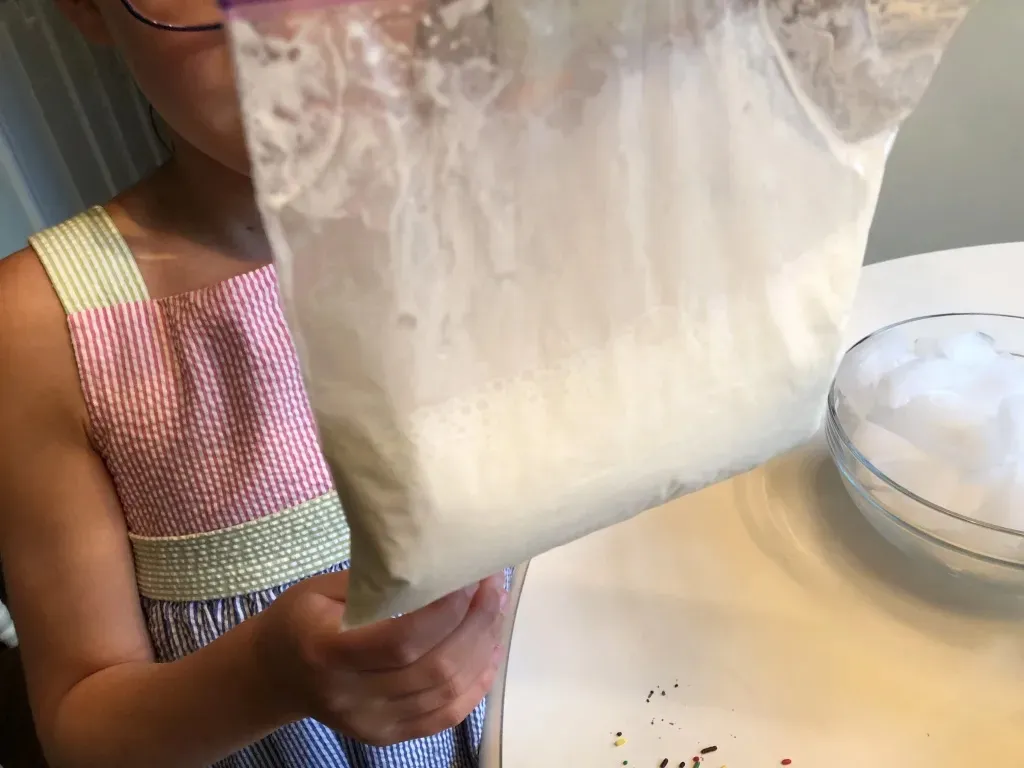
Beat the heat literally with this edible science experiment. Mix milk, sugar, and vanilla in a small zip-lock bag. Place it in a larger bag filled with ice and salt, then shake, shake, shake!

In 5–10 minutes, you’ll have delicious, creamy ice cream. Top with sprinkles, chocolate chips, or fruit, and you’ve got yourself the coolest treat around.

5. DIY Shadow Art Where: A sunny room or one with a good lamp

From Treasure Hunts to DIY Crafts: 6 Indoor Activities to Beat the Summer Heat With Your Kids

Turn art class into a science lesson with shadow tracing. Set up a light source and place toys or objects to cast shadows on a piece of paper. Have your kids trace the outlines and then get creative, turning those silhouettes into wild animals, superheroes, or family portraits.

It’s a great way to explore how light works while sharpening those artistic skills.

6. Create a Summer Scrapbook Where: Craft table or cozy corner

Capture the magic of summer by building a scrapbook full of photos, postcards, doodles, and souvenirs. Whether your adventures are in the backyard or the living room, your kids can glue, sticker, and decorate their way through a creative memory-making session.

Bonus: It’s a calming activity that helps reflect on joyful moments and builds anticipation for the next big fun day.


With these six indoor adventures, summer fun is just a room away. So grab your glue, gather your gear, and turn your home into a hub of imagination and joy. Because the best memories often start right at home.
Last rites for Delhi’s forgotten: the woman who cremates strangers

0

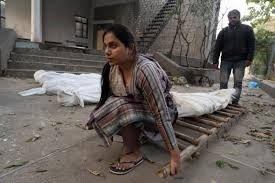
In the bustling heart of Delhi, among honking traffic and the ever-churning rhythm of urban life, a quiet act of defiance and compassion unfolds each day. Pooja Sharma, a 26-year-old woman, walks into mortuaries not to mourn her loved ones, but to claim those who have been forgotten. The bodies she lifts onto bamboo stretchers are unknown to her—men and women who have died alone, unclaimed, and unseen.

Yet, through her hands, they are given one final gesture of dignity.

Pooja Sharma has cremated nearly 4,000 unclaimed bodies since she began her extraordinary journey two years ago. Often handling two to ten corpses a day, she has dedicated herself to ensuring that even the most invisible among us are not discarded like refuse. For her, the final rites are not just religious obligations but affirmations of human worth.

Her journey began with personal tragedy. In 2019, Sharma was preparing for a conventional life of marriage and family when her mother suddenly passed away due to a brain haemorrhage. The grief was soon compounded by her brother’s brutal murder in 2022. With her father paralyzed by sorrow and tradition barring women from performing funeral rites, Sharma stepped into the role herself.

“The day I cremated my brother, I was overwhelmed. I smeared his ashes on my face and in my hair,” she recalls. That intimate moment changed her life forever.

She left her job as an HIV counselor and embraced a new vocation: to offer a final farewell to those who would otherwise vanish into anonymity. Despite the mental and financial toll, Sharma presses on. Her family—her father, a metro driver, and her grandmother, a soldier’s widow—pitch in to cover the 120,000 rupees she needs each month for ambulance rentals and funeral expenses.

But her commitment comes at a steep personal cost. When her engagement was broken off, the groom’s family cited her work as too morbid. “We don’t want a daughter-in-law who roams around cremation grounds with dead bodies,” they told her.

Sharma sold the jewellery her late mother had bought for her wedding to continue financing the funerals. Friends and relatives now shun her, branding her the “companion of ghosts.”

“No one comes to our house anymore,” she says, a wistful look crossing her young face. But her voice is steady: “This work gives me sukoon—tranquility.”

The unclaimed bodies are often those of migrant workers, far from their homes, their identities lost in the shuffle of urban hardship. Delhi police data from 2018 to 2022 records over 11,000 unidentified bodies, with less than 1,500 ever named.

When police protocols allow, Sharma is called to collect the dead. She personally shrouds them, carries them into the crematorium, and recites prayers. No task is too menial; she insists on carrying one end of the stretcher, as if to shoulder some of their untold stories.

She has since founded the Bright the Soul Foundation, a nonprofit aimed at expanding her mission. The foundation helps low-income families afford transport to take their dead home or pay for their cremation.

Still, the resources are scarce. On a recent call, she told a donor that an ambulance was her most pressing need—a vehicle to reduce her dependency on costly rentals.

After the flames consume the bodies, her service continues. Each month, Sharma collects the ashes from crematoriums across the city and undertakes a 120-mile journey to Haridwar, one of Hinduism’s holiest cities. There, she performs the final immersion in the Ganges River—the sacred conclusion to the journey of the soul.

“When they were born, there must have been such joy,” she reflects during these solemn pilgrimages. “Now their lives end alone, zipped in a bag, with no one even knowing they are gone. Just me, and the river.”

In a world often indifferent to the poor and the dead, Pooja Sharma is a reminder of what humanity can look like when it is quiet, unflinching, and resolute. Her story is not just about death, but about the dignity of life—even in its final moments.

Kachchatheevu: A Pilgrimage Beyond Borders

0

Part Sacred Sanctuary, Part Diplomatic Flashpoint

Welcome to Kachchatheevu—a modest coral island nestled in the Palk Strait between India and Sri Lanka. Though small in size, its historical, cultural, and geopolitical weight is immense. This guide will walk you through the logistical journey to the island and delve into the layers of its significance to both India and Sri Lanka.


Kachchatheevu Travel Guide: Plan, Pack, and Pilgrimage

How to Reach Kachchatheevu

Access to Kachchatheevu is limited to a specific annual event—the St. Anthony’s Festival, held typically in February or March.

Step-by-Step Itinerary:

  1. Travel to Rameswaram, Tamil Nadu:
    • Nearest Airport: Madurai (170 km away)
    • Train: Direct connections from Chennai, Madurai, and other major cities
    • Road: Accessible by car or bus, including the scenic Pamban Bridge
  2. Journey to Kachchatheevu:
    • During the festival, ferries operated by the Indian Navy and Coast Guard transport pilgrims from Rameswaram or Dhanushkodi
    • Indian citizens do not need a visa or passport, but prior registration is mandatory

Note: Outside the festival period, civilian access to the island is restricted


What Should You Carry? (Packing Checklist)

Kachchatheevu is uninhabited, with no infrastructure or services. Visitors should be prepared for a bare-essentials pilgrimage.

Essentials include:

  • Valid ID (Aadhaar, PAN, or Passport)
  • Registration confirmation for the pilgrimage
  • Reusable water bottles
  • Power bank
  • Sunscreen, cap, and sunglasses
  • Medications and a basic first aid kit
  • Modest, breathable clothing
  • Torch or headlamp
  • Sleeping mat or light blanket
  • Dry snacks or energy bars

Note: The island observes religious customs during the event—only vegetarian food is served, and alcohol is strictly prohibited.


2 Nights/3 Days Sample Itinerary

Day 1: Arrival in Rameswaram

  • Check into a hotel
  • Visit Ramanathaswamy Temple
  • Complete or confirm pilgrimage registration
  • Rest early in preparation for the sea journey

Day 2: Journey to Kachchatheevu

  • Depart early for Dhanushkodi port
  • Ferry ride to Kachchatheevu (approximately 2–3 hours)
  • Participate in religious services and community interactions
  • Enjoy communal meals and overnight stay on the beach

Day 3: Return to Rameswaram

  • Optional morning mass
  • Ferry back to the mainland
  • Continue onward travel or explore coastal Tamil Nadu

Gastronomy: Meals on the Island

During the festival, simple vegetarian meals are served by community volunteers and religious organizers.

Typical offerings include:

  • Pongal (rice and lentil porridge)
  • Tamarind rice and lemon rice
  • Upma or khichdi
  • Coconut chutney
  • Bananas and dry snacks

Visitors with special dietary needs are encouraged to carry their own provisions, as there are no commercial food outlets.


Accommodation Options

On the Island:

No formal accommodation is available. Pilgrims must bring their own mats or blankets and be prepared to sleep outdoors.

In Rameswaram:

  • Budget: Hotel Harish, Hotel Aryaas
  • Mid-range: Jiwan Residency, Hotel Pearl Residency
  • Premium: Daiwik Hotels, Hyatt Place Rameswaram

Advance booking is strongly recommended during the festival period.


Practical Travel Tips

  • No passport is required for Indian citizens
  • Mobile network coverage on the island is limited or non-existent
  • Pilgrims are expected to carry back all waste to preserve the environment
  • Photography is permitted but should be done respectfully during religious ceremonies
  • Tamil is the predominant language, though English and Malayalam may also be spoken

Kachchatheevu’s Strategic and Cultural Importance

Impact on Tamil Fishermen

For centuries, fishermen from Tamil Nadu have relied on Kachchatheevu as a rest point during long fishing expeditions. After the island was ceded to Sri Lanka, these communities began facing:

  • Arrests for alleged illegal fishing
  • Confiscation of boats
  • Diminished access to traditional fishing zones

Religious and Cultural Bonds

The St. Anthony’s Shrine is a unique spiritual symbol shared by Indian and Sri Lankan Tamil Catholics. The annual pilgrimage fosters cross-border religious unity and cultural continuity despite political boundaries.

Maritime Relevance

Kachchatheevu is strategically located in the Palk Strait, a vital maritime zone. Critics argue that India’s control over the region diminished following the island’s transfer to Sri Lanka.


Historical Overview: The Cession Controversy

Pre-1947: Colonial Usage

Under British colonial rule, both Indian and Sri Lankan fishermen accessed Kachchatheevu without restriction. The island’s ownership remained undefined.

Post-Independence Dispute

After gaining independence, both countries staked claim to the island due to its geographic proximity and economic value.

1974: The Formal Transfer

In 1974, the Indian government, under Prime Minister Indira Gandhi, signed the Indo-Sri Lankan Maritime Boundary Agreement, recognizing Kachchatheevu as Sri Lankan territory. This was done without parliamentary approval, leading to political backlash in Tamil Nadu.

1976: Restrictions on Fishing

A subsequent agreement barred Indian fishermen from entering Sri Lankan territorial waters, effectively removing their access to the region around Kachchatheevu.

Ongoing Legal Challenges

The legitimacy of the 1974 agreement has been challenged in the Indian Supreme Court. Petitions argue that the transfer was unconstitutional and detrimental to the rights of Indian citizens, especially fishermen.


Conclusion: A Complex Legacy

Kachchatheevu is more than a remote island. It is a place where faith, tradition, and diplomacy intersect. Its unassuming shores have become the site of annual reconciliation, religious unity, and ongoing political discourse.

Whether you are visiting for spiritual fulfillment, cultural interest, or historical inquiry, Kachchatheevu offers a rare glimpse into the region’s intricate relationship with land, sea, and sovereignty.

For further exploration, assistance with travel planning, or content creation such as a travelogue or photo essay, feel free to reach out.

The Story Behind Cricketer Washington Sundar’s Unique Name

0

Indian cricketer Washington Sundar carries a name with a heartfelt story rooted in gratitude and legacy. He was named after his father’s mentor and godfather, P.D. Washington, an ex-army man and ardent cricket lover who played a crucial role in shaping the elder Sundar’s life.

P.D. Washington recognized M. Sundar’s cricketing talent early on and stepped in to support him when opportunities were scarce. He helped him financially—paying for his education, buying him books, and even accompanying him to the cricket ground. His guidance and generosity left a lasting impact.

In a tribute to this unwavering support, M. Sundar named his firstborn “Washington” after his late mentor. A cricketer himself, M. Sundar had once made it to the Ranji probables for Tamil Nadu, and his passion for the game clearly influenced his son.

Today, Washington Sundar is a professional cricketer who has represented India across formats and built a solid presence in the Indian Premier League (IPL). In the 2025 IPL auction, he was picked up by the Gujarat Titans, continuing the legacy of cricket that started with a bond of mentorship and deep respect.

World Health Day: Tahira Kashyap Writes An Emotional Note on Instagram. Know Why?

0

Tahira Kashyap, wife of Ayushmann Khurrana, shared an emotional post on Instagram which read, “Seven year itch or the power of regular screening- it’s a perspective, I had like to go with the latter and suggest the same for everyone who needs to get regular mammograms. Round 2 for me…I still got this.”

The reason is her cancer relapsed after seven years. She was diagnosed with breast cancer in 2018 and Khurrana termed her as His Hero.

Tahira captioned the post, “When life gives you lemons, make lemonade. When life becomes too generous and throws them again at you, you squeeze them calmly into your favourite kala khatta drink and sip it with all the good intentions. Because for one it’s a better drink and two you know you will give it your best once again (red heart emoji).”

“#regularscreening #mammogram not shying away from saying it #breastcancer #onemoretime #letsgo. Ironically or not, today is #WorldHealthDay. Let’s do whatever we can in our capacity to take care of ourselves. #gratitude through and through (folded hands emoji),” concluded her note.

https://www.instagram.com/p/DIImSZjzk3P/?utm_source=ig_web_copy_link

FTSE 100 Drops As Global Stock Markets Crash After Trump’s Tariff Warning

0

Stock markets around the world suffered steep losses after former U.S. President Donald Trump warned that foreign governments would need to pay “a lot of money” to have sweeping tariffs lifted. His comments triggered panic across global financial markets, pushing major indices into sharp declines.

London’s FTSE 100 dropped as much as 6.3%, hitting a one-year low, while Germany’s DAX plunged 10.4%. In Asia, Hong Kong’s Hang Seng Index collapsed nearly 13%, marking its worst single-day drop since 1997. This steep fall pushed the index into a bear market, having now fallen more than 20% from its record highs in March—when it was the world’s top-performing stock market.

Japan’s Nikkei 225 also suffered a severe blow, falling 7.8% in a single day. The index is now down over 20% from its December peak, also placing it in bear market territory.

Despite the trillions of dollars wiped from global stock values, Trump appeared unfazed. Speaking to reporters aboard Air Force One on Sunday night, he compared the tariffs to “medicine” and showed no concern over the financial turmoil his comments had triggered.

Why April 2025 Is Already Scorching: Trapped Ocean Heat May Push Temperatures to Record Highs

0

India experienced one of its hottest years in 2024, but 2025 may surpass it. With heatwave conditions setting in as early as April, the Indian Meteorological Department (IMD) has already issued red alerts in several states. The rising temperatures are being linked to heat trapped due to the warming of sea water, a trend that could make this year one of the hottest on record.

According to the IMD, Gujarat is on red alert from April 6 to 10, with severe heatwave conditions expected in the Saurashtra and Kutch regions on April 6 and 7. Rajasthan is under an orange alert for the same period, where some areas are likely to face severe heatwave spells between April 7 and 9. Yellow alerts have also been issued for Himachal Pradesh, Haryana, Chandigarh, Punjab, Delhi, western Uttar Pradesh, and Madhya Pradesh in the coming days.

With heatwaves starting in early April, concerns are growing over what May and June may bring. The IMD has warned that the number of heatwave days in northwest India—covering Haryana, Punjab, Rajasthan, Himachal Pradesh, Jammu and Kashmir, Uttarakhand, and Delhi—could double this year. Typically, heatwaves last 5 to 6 days, but this summer may see extended spells of 10 to 12 days. If this trend continues, 2025 could become the hottest year ever recorded in India, with temperatures rising 5°C or more above the seasonal average.

A heatwave is defined by the IMD as a period when the temperature in plains exceeds 40°C, in coastal areas exceeds 37°C, and in hilly regions crosses 30°C. A deviation of 4.5°C above the normal constitutes a heatwave, while an increase of 6.4°C or more is classified as a severe heatwave. According to the World Meteorological Organization (WMO), a heatwave occurs when the maximum temperature of an area remains at least 5°C above average for five or more consecutive days.

In recent years, India has been experiencing more frequent and longer-lasting heatwaves. For instance, eastern Rajasthan faced 23 heatwave days in 2024, while western Rajasthan saw 29. Uttar Pradesh was hit hardest, enduring 32 heatwave days. This marks a significant rise from the historical average of 8 to 12 heatwave days in states like Rajasthan and UP.

The IMD has identified 13 states as highly vulnerable to heatwaves. These include Rajasthan, Punjab, Haryana, Chandigarh, Delhi, West Madhya Pradesh, Uttar Pradesh, Chhattisgarh, Odisha, Vidarbha, coastal Andhra Pradesh, Telangana, and parts of Gangetic West Bengal. These regions lie within the Core Heatwave Zone (CHZ), which typically experiences extreme temperatures from March to June, and sometimes even in July. In 2024, records were already broken in April.

This year, the IMD predicts a higher-than-normal number of heatwave days across most of North, Central, and East India. The only exceptions are expected to be the far southern states, parts of the Northeast, Jammu and Kashmir, and Himachal Pradesh.

Scientific studies confirm that heatwaves in India are becoming more intense and frequent. Research from the Indian Institute of Tropical Meteorology in Pune indicates that since 2000, heatwave days have increased by three per decade in many parts of the country. The impact is far-reaching, affecting public health, agriculture, and entire ecosystems. In 2024 alone, India recorded 554 heatwave days nationwide, making it the hottest year on record. By comparison, 2023 had 230 heatwave days.

With early signs pointing to a prolonged and more intense summer, 2025 could see heat levels and records that surpass anything experienced so far.

India and China Lead Developing Nations in AI Investments, Says UN Report Highlights Technology Readiness

0

India and China have emerged as the only developing nations with significant private investments in Artificial Intelligence (AI), according to the latest UNCTAD Frontier Technologies Readiness Index. The report highlights India’s progress in technology readiness and AI capabilities, placing it among the top countries globally. This is a crucial development, as AI is expected to have a transformative impact on global economies and job markets.

India’s Rise in the UNCTAD Readiness Index

India has moved up from 48th in 2022 to 36th in the 2023 UNCTAD Frontier Technologies Readiness Index. The index assesses countries on five key parameters: ICT, skills, R&D, industrial capacity, and financial access. India, along with Bhutan, Morocco, Moldova, and Timor-Leste, showed improvement due to gains in human capital—primarily higher education and high-skill employment.

CategoryIndia’s Rank
ICT (Information & Communication Tech)99th
Skills113th
Research & Development (R&D)3rd
Industrial Capacity10th
Access to Finance70th

Global AI Investment Landscape

The United States leads AI investment globally, contributing $67 billion (70%) of the total global AI funding in 2023. China ranks second with $7.8 billion, while India comes in at 10th place with $1.4 billion. While the gap in funding highlights challenges for developing nations, India’s position reflects a growing interest and capability in AI.

AI’s Impact on Employment and the Economy

The AI industry is projected to reach $4.8 trillion by 2033 and affect nearly 40% of global jobs, raising concerns around automation and job displacement. The report underscores the need for reskilling and upskilling to ensure AI enhances productivity while creating new job opportunities instead of eliminating them.

India’s Policy Push for AI Development

The Indian government has taken an active role in fostering AI growth through public-private partnerships and academic collaboration. Initiatives like the India AI Mission are designed to build a strong AI ecosystem by expanding access to AI education and setting up Centres of Excellence in key tech areas.

Technological Specialisation Around the World

Different countries are focusing on specific tech sectors. India is recognised for its advancements in nanotechnology, while Germany leads in wind energy. Such specialisation showcases how countries are aligning their technological growth with their economic strengths and resources.

Stock Market Bleeds As Sensex Plunges 3,200 Points, Nifty Falls 4.5% to 21,850; Asian Markets Tumble up to 10%

0

The Indian stock market witnessed its second major crash of the year on Monday, April 7. The Sensex tumbled by 3,200 points, or 4.20%, to trade around 72,150, while the Nifty dropped by 1,000 points or 4.50%, slipping below the 22,000 mark. This marks the biggest fall since June 4, 2024, when the market declined by 5.74%.

Stock Market Bleeds As Sensex Plunges 3,200 Points, Nifty Falls 4.5% to 21,850; Asian Markets Tumble up to 10%

All 30 stocks in the Sensex are trading in the red. Tata Steel, Tata Motors, and Infosys have plummeted by nearly 10%, while Tech Mahindra, HCL Tech, and L&T are down by over 8%.

Sectoral Bloodbath

Among the NSE sectoral indices, Nifty Metal took the biggest hit, falling 8%. The IT, Oil & Gas, and Healthcare sectors declined by around 7%, while Auto, Realty, and Media were down by approximately 5%.

Global Sell-Off & Crude Oil Slump

Crude oil prices have also taken a hit, falling 12.11% since April 2. Brent crude is down 4% today, slipping below $64 per barrel, marking its lowest level in the past four years.

Three Major Reasons Behind the Market Crash

  1. Trump’s Global Tariff Move
    The U.S. has announced sweeping tariffs, including a 26% tariff on Indian imports. Other countries facing tariffs include China (34%), the EU (20%), South Korea (25%), Japan (24%), Vietnam (46%), and Taiwan (32%).
  2. China’s Retaliatory Tariff
    In response, China has imposed a 34% retaliatory tariff on U.S. imports, effective from April 10. This escalation follows President Trump’s April 3 announcement of tit-for-tat tariffs targeting multiple global trading partners.
  3. Fears of Global Economic Slowdown
    The surge in tariffs is expected to raise prices and reduce consumer demand, leading to concerns about a slowdown in global economic activity. The declining demand is also reflected in plummeting crude oil prices, triggering panic among investors.

Midcap and Smallcap Indices Also Plunge

The BSE Midcap Index fell 1,850 points (4.60%) to 38,630, while the Smallcap Index declined 2,860 points (6.20%) to 42,999.82.

Investors Lose ₹20 Lakh Crore in Market Value

The sharp sell-off wiped out nearly ₹20 lakh crore of investor wealth. On April 4 (Friday), the total market capitalization of BSE-listed companies was ₹404 lakh crore, which dropped to ₹383 lakh crore by 10 AM on April 7.

Asian and U.S. Markets Join the Meltdown

Asian markets witnessed a synchronized decline:

  • Hong Kong’s Hang Seng: down 10%
  • China’s Shanghai Index: down 6.50%
  • Japan’s Nikkei: down 6%
  • Korea’s Kospi Index: down 4.50%

The Nifty traded on the NSE International Exchange dropped by 800 points (3.60%), now at 22,180.

U.S. markets closed sharply lower on April 3:

  • Dow Jones: down 3.98% to 40,545
  • S&P 500: down 4.84%
  • Nasdaq Composite: down 5.97%

Jim Cramer Predicts ‘Black Monday’-Style Crash

CNBC’s Mad Money host Jim Cramer warned of a potential repeat of 1987’s Black Monday, predicting a 22% single-day drop if global tensions escalate further.
“If President Trump doesn’t offer relief to rule-abiding nations, we could be looking at a 1987-style meltdown—three days of decline followed by a dramatic crash on Monday,” Cramer said.

Recent Market Movement Recap

On April 4, the Sensex had already fallen by 930 points (1.22%), closing at 75,364, while the Nifty dropped 345 points (1.49%) to end at 22,904.
Among NSE sectors, Metal lost 6.56%, and Pharma, Realty, IT, Auto, and Media sectors dropped by 3–4%.

“Ek-ek chai hojaaye?” Because Panchayat Season 4 is Brewing and It Drops July 2!

0

Hold onto your lathis and hide the tank, because Phulera’s most chaotic panchayat office is back in business! That’s right—after three back-to-back hit seasons, the superhit desi dramedy Panchayat is returning for Season 4, and it’s officially dropping on July 2, 2025, exclusively on Prime Video.

The internet is already losing its collective chill—and for good reason. The makers didn’t just announce the season, they dropped a whole vibe with it.


The Promo: Meme Dreams and Meta Madness

Prime Video took the announcement game to another level with a laugh-out-loud video featuring influencers like Bhupendra Jogi, Darshan Magdum, and the internet’s OG Gopi Bahu, Gia Manek.

Gia opened the video by washing books (don’t ask why, just go with it) while roasting Panchayat for allegedly stealing all the good memes. She wasn’t impressed by the now-iconic “Ek-ek chai hojaaye?” either, dismissing it with a sassy, “It’s just a sentence.” Yeah… try telling that to meme-loving India.

Cue Jitendra Kumar—first as calm, collected Abhishek Tripathi, then shapeshifting into fan-favorite Jeetu Bhaiya from Kota Factory. He looked directly into the metaphorical camera and dropped this philosophical bomb:

“Don’t run after going viral, create a moment.”

Mic. Drop.

And just when we thought this multiverse couldn’t get madder, Jeetu teased that Panchayat Season 4 is coming this year. Gia shot back, “So can we drink green tea while sitting on a tank?”
Classic.

He didn’t answer. He just… ran. Because how do you even top that?


Fan Reactions: Chaos, Crying, and Chai Cravings

The comment section? Absolute pandemonium.

“Is universe ko kya naam du?”
“Prime is doing the real multiverse of madness.”
“We got this collab before GTA 6!”
“Brainrot final boss.”

Forget Hollywood. Phulera Cinematic Universe is where the action is.


Wait, You’ve Never Watched Panchayat?

First of all: Kya kar rahe ho, bhai?

If you’ve somehow missed this gem, here’s the scoop: Abhishek, a fresh-out-of-college engineering grad, ends up as the secretary of a panchayat office in rural Uttar Pradesh. What starts as a reluctant government job becomes an unexpectedly emotional ride through village drama, unlikely friendships, hilarious power struggles, and slow-burn life lessons.

And yes, there’s chai. Lots of chai.


The Minds Behind the Madness

Created by Deepak Kumar Mishra and Chandan Kumar, and produced by the internet’s storytelling wizardry team—The Viral Fever (TVF)Panchayat hits that sweet spot between gut-busting comedy and tear-jerking realism.

The dream team cast includes:

  • Jitendra Kumar as the tortured city boy turned reluctant hero
  • Neena Gupta as the lowkey highkey boss
  • Raghubir Yadav as the eternal Pradhan Ji
  • Faisal Malik, Chandan Roy, Sanvikaa, and the entire quirky crew that makes Phulera feel like home

Mark the Date. Mute the World. It’s Phulera Time.

Whether you watch for the wisecracks, the soul-hitting moments, or just to see Abhishek’s slow descent into small-town madness—Season 4 is about to give us more of everything we love.

So grab your chai, prep your memes, and maybe don’t sit on tanks unless you’re cleared for it—because July 2nd, we’re all moving (virtually) to Phulera.

Panchayat Season 4 is coming. And this time, it’s personal.