Home Blog Page 299

World Cartoonist Day 2025: Know Who Was the First Cartoonist, History, Significance, Wishes & Quotes

0

World Cartoonist Day, celebrated annually on May 5, honors the creative minds who bring stories, humor, and commentary to life through the art of cartoons. These artists have long used wit and illustration to communicate complex ideas in powerful and accessible ways—engaging audiences, provoking thought, and often sparking change.

From political satire to cultural commentary, cartoonists continue to influence public opinion and connect with readers across generations. World Cartoonist Day recognizes both their historical contributions and their enduring role in storytelling and visual expression.

History and Origins

The exact origins of cartooning date back centuries, with early forms of caricature and visual storytelling found in ancient civilizations. However, a significant milestone came on May 5, 1895, when Richard F. Outcault’s Hogan’s Alley debuted in the New York World newspaper. Featuring the iconic character later known as The Yellow Kid, this strip is widely regarded as one of the first modern comic strips, marking a turning point in cartoon history.

During World War II, cartoonists like Gus Edson, Otto Soglow, Clarence D. Russell, and Bob Dunn boosted morale by entertaining wounded soldiers in hospitals. On one such trip, Russell suggested forming a group to maintain their camaraderie after the war—leading to the founding of the National Cartoonists Society (NCS) in 1946.

National Cartoonists Day was officially launched in 1999 by Polly Keener and Ken Alvine of the NCS, commemorating the anniversary of The Yellow Kid’s debut.

Why It Matters

World Cartoonist Day is more than a celebration—it’s a tribute to the storytelling power of visual art. Iconic figures like Charles Schulz, Walt Disney, and Dr. Seuss have shaped generations with their imaginative worlds and enduring characters. Their legacy continues to inspire aspiring cartoonists to explore this unique and powerful medium.

Wishes and Messages

  • Wishing you a very Happy Cartoonist Day! Let’s celebrate the creativity and hard work behind every cartoon that makes us smile.
  • Cartooning is an art that requires imagination, skill, and humor. Kudos to all the talented cartoonists out there!
  • Happy Cartoonist Day to those who bring laughter, insight, and color into our world—one panel at a time.
  • Even the most serious topics can be addressed with humor and depth through a cartoonist’s pen. Here’s to the artists behind the lines!

Famous Quotes About Cartoonists and Cartoons

“I think it’s best to know about lots of different things besides comics. I don’t think you can become a cartoonist if you look at nothing but cartoons.” — Akira Toriyama

“I never saw myself so much as an actor. I wanted to be a cartoonist like Charles M. Schulz and create my own world.” — Mark Hamill

“People still think of me as a cartoonist, but the only thing I lift a pen or pencil for these days is to sign a contract, a check, or an autograph.” — Walt Disney

“I don’t think of myself as an illustrator. I think of myself as a cartoonist. I write the story with pictures – I don’t illustrate the story with the pictures.” — Chris Ware

“If you want to find out what a writer or a cartoonist really feels, look at his work. That’s enough.” — Shel Silverstein

Maahi Roj Celebrates Earth Day with Intelligent, Conscious, and Earthy Creations in Jaipur

0

Anantaya presented Maahi Roj 2025: Padarth, the 11th edition of Jaipur’s pioneering festival which celebrated sustainability in design and craft.

Held on the 3rd and 4th of May at the Kanota Courtyard in the historic Narain Niwas Palace, Jaipur, this year’s festival explored the theme Pad Arth – The Soul of Material. The event brought together an inspiring community of architects, designers, educators, entrepreneurs, and eco-conscious citizens, united by their commitment to mindful creation and material innovation.

The festival opened with an evocative keynote by the founder, Ar. Geetanjali Kasliwal, who passionately called for a design ethos rooted in ethics, ecology, and material memory. She described Maahi Roj as “a gentle rebellion,” inviting all to “design with new eyes and old wisdom.”

The morning of May 3rd featured The Swaraj Session, led by sustainability educator Gaurav Shorey and curated specially for FICCI FLO Jaipur in collaboration with Dhun Life. Through the lens of the five Bs—Bhasha (language), Bhajan (devotion), Bhesh (attire), Bhojan (food), and Bhawan (dwelling)—Shorey delivered a compelling call to reclaim indigenous systems of knowledge. The session emphasized the harmony between sustainability and cultural resilience, resonating deeply with the engaged FLO audience.

Maahi Roj Celebrates Earth Day with Intelligent, Conscious, and Earthy Creations in Jaipur

In the afternoon, Shubhi Sachan from the Material Library of India led the session Mate-Reality of Everyday Life, encouraging participants to critically examine the misleading narratives surrounding so-called sustainable products. Her talk, in collaboration with IWN and BNI Jaipur, reframed sustainability as a process of discernment and unlearning.

This was followed by an engaging segment titled Case Study Capsules, where innovators Arpit Dhupar (Dharaksha/Shark Tank 3), Shubham Singh (Craste/TEDx), and Kushagra Juneja (Design2Occupancy) showcased real-world alternatives to plastic, wood, and high-energy construction. Their presentations on fungal packaging, agro-waste panels, and passive energy systems highlighted actionable solutions for a more sustainable future. The session was held in collaboration with ADI Jaipur.

Maahi Roj Celebrates Earth Day with Intelligent, Conscious, and Earthy Creations in Jaipur

Later in the evening, Jailaxmi Rathore of Earthen Kriya presented Rammed Earth: Revived Futures, a session exploring the artistic and technical promise of building with lime and earth. The day concluded with a powerful panel discussion titled From Dust to Dwelling, moderated by Ar. Manisha Sharma of Dhun Life. The panel included Anand Mishra (Trimurty Builders), Ar. Sushant Koolwal (D2O Services), Ar. Kavita Jain, and Ar. Shreya Srivastava (Studio Shunya), all of whom advocated for integrating natural materials into mainstream urban architecture.

Complementing these thought-provoking sessions was the all-day Hands-on Padarth Lab and a pop-up bazaar, offering a rich sensory experience of circular, bio-based living. Visitors explored offerings by makers such as Birds Nest of India (Material Lab by ADI Jaipur, Manoj Kuldeep), Golden Feathers (Radhesh), Tillotam (Vibra Crafts), Dukool (Aparna Verma), Patchouli (Namrata Rana), Sanghmitra (Sadhna Vyas), and Cocoloop, known for their natural air fresheners. Together, they demonstrated how mindful materials can transform everyday life.

Maahi Roj Celebrates Earth Day with Intelligent, Conscious, and Earthy Creations in Jaipur

Day One of Maahi Roj 2025 was more than a gathering—it was a meaningful shift in perspective. Attendees left equipped with a new vocabulary of textures, values, and intentions. The sessions empowered citizens to make informed material choices, challenged the trend of greenwashing, and inspired professionals to embrace circular innovation and natural building systems.

On Sunday, 4 May 2025, the second day of the festival began with a tranquil Bioreserve Walk at Dhun, Jaipur, led by ecological restoration expert Vijay Dhasmana. Participants explored the regenerating landscape and engaged deeply with concepts of land stewardship and natural biodiversity.

Maahi Roj Celebrates Earth Day with Intelligent, Conscious, and Earthy Creations in Jaipur
Bioreserve walk to Dhun with Ecological restorer Vijay dhasmana

Late morning saw a special Film Screening of Life is Beautiful by Mohammed Jabaly at TOSS Jaipur. The moving documentary depicted stories of displacement, hope, and resilience in Gaza, revealing the emotional depth and power of material memory through cinema.

In the afternoon, the festival concluded with a hands-on workshop titled Padaarth in Your Palm, led by Kiranjeet Kaur of AKFD. Participants created their own pieces of “clay grammar,” connecting material to meaning through direct engagement with the earth.

Maahi Roj 2025 was made possible through the support of Strategic Partner Dhun Jaipur, and Associate Partners including FICCI FLO Jaipur, WICCI Architects Rajasthan, IWN, ADI Jaipur Chapter, BNI Female Forum, Trimurty Builders, EBNW Story, Dharaksha Ecosolutions, and Neewara Academy of Design

Prominent Ppl who attended the event included Meenakshi singh (chairperson ADI), Shamini Shanker, Rekha Nemani (chairperson WICCI Raj Architecture), Nivedita Sarda (chairperson IWN), Anand Mishra, Ar Manisha sharma, Dr Alka Gaur, Ar Kavita & Nischal, Samta Baid, Ar megha bhatnagar and Kalpana Goyal (chairperson COWE),
Many prestigious institutions partnered with the event included WICCI architecture Rajasthan, ADI Jaipur, IWN, TOSS, Trimurty, FICCI Flo jaipur , Neewara Academy among others.

IAS Ashok Khemka Retires After 57 Transfers in 34 Years. Know His Profile, Controversies Which Surrounded Him And Challenges He Faced With Integrity and Resistance

0

Ashok Khemka, a 1991-batch IAS officer from the Haryana cadre, officially retired on 30 April 2025, marking the end of a career spanning over 34 years. Khemka became a household name in India due to his unyielding integrity, fight against corruption, and frequent transfers — a record 57 transfers, often politically motivated.

Early Life and Education

Born on 30 April 1965 in Kolkata, Ashok Khemka comes from a humble background. His father worked as a clerk in a jute mill, but Khemka excelled academically. He graduated in Computer Science from IIT Kharagpur, earned a PhD in Computer Science, and completed an MBA in Finance and Business Administration from the Tata Institute of Fundamental Research.

He cleared the UPSC Civil Services Exam in 1990, joining the IAS in 1991.

57 Transfers: The Price of Integrity

Throughout his career, Ashok Khemka faced 57 transfers across various departments. Notably, he:

  • Was transferred 8 times within a month of taking charge
  • Had his longest tenure (July 2008 – April 2010) as MD of Haryana State Warehousing Corporation

These frequent postings were a direct consequence of his zero-tolerance stance on corruption, regardless of which political party was in power.

“No matter which party was in power, I had to suffer the punishment for my honesty every time because I have been continuously exposing scams and frauds.” — Ashok Khemka

Defying Political Orders

In 2004, Khemka refused to comply with an order by then-CM Om Prakash Chautala to transfer teachers mid-session, citing negative impacts on students. In retaliation, his official vehicle was withdrawn — but Khemka chose to walk or cycle to the secretariat.

The Robert Vadra Land Deal Controversy

Ashok Khemka gained national attention in 2012 when he cancelled the mutation of a controversial land deal between Robert Vadra’s Skylight Hospitality and DLF in Gurugram. At that time, Vadra was the son-in-law of Congress President Sonia Gandhi. This move brought immense political backlash and led to Khemka’s swift transfer.

Final Posting Before Retirement

Five months before retiring, Khemka was appointed as Additional Chief Secretary in the Transport Department, replacing 1994-batch IAS Navdeep Virk. The appointment was made following a recommendation by Anil Vij, the minister in charge of the department.

Prior to this, he served in the Printing and Stationery Department.

A Legacy of Uncompromising Ethics

Ashok Khemka’s legacy stands out in the Indian bureaucracy. Despite political pressure, threats, and career instability, he consistently upheld values of transparency, accountability, and justice.

His career raises a crucial question about the plight of honest officers in India — punished not for wrongdoing, but for doing the right thing.

Conclusion

As Ashok Khemka retires, India bids farewell to a rare civil servant who chose ethics over convenience, truth over politics, and service over silence. While his journey may have been turbulent, it will undoubtedly serve as an inspiration for future bureaucrats

Kanya Pujan Ceremony Performed, Community Meal Served at Anchal Balika Griha By Bharat Vikas Parishad, Vaishali Branch

0

The Vaishali Branch of Bharat Vikas Parishad organized a Kanya Pujan ceremony and community meal today at Anchal Balika Griha, honoring and serving the resident girls.

A total of 35 girls were worshipped as part of the traditional ritual and were served satvik (pure vegetarian) food. The event aimed to promote the cultural value of respecting and nurturing the girl child.

The program saw the presence of distinguished members, including Mr. Gunjan Saxena from the Province, Project Head (Environment) Mr. Manoj Kumar Mittal, Branch President Mr. Govardhan Sharma, Secretary Mr. Chaina Ram Sepat, Branch Environment Coordinator Mr. Vijay Juneja, Deputy Secretary Ms. Hema Chauhan, Member Ms. Priya Singha, Project Head Ms. Neelu Bhati, among others.

The meal arrangement was graciously sponsored by Mrs. Rakhi Saxena.

We extend our heartfelt gratitude to all participants and supporters who contributed to the success of this meaningful event, said Chaina Ram Sepat, Secretary, Bharat Vikas Parishad – Vaishali Branch

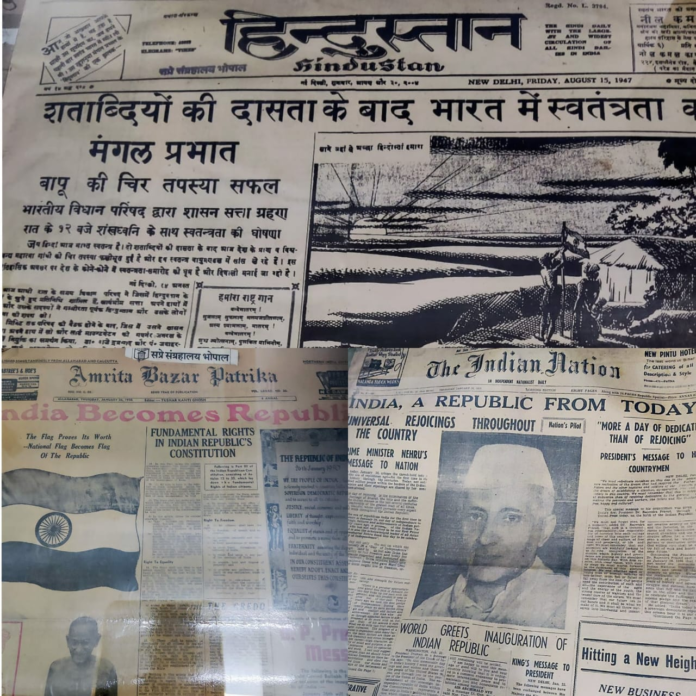
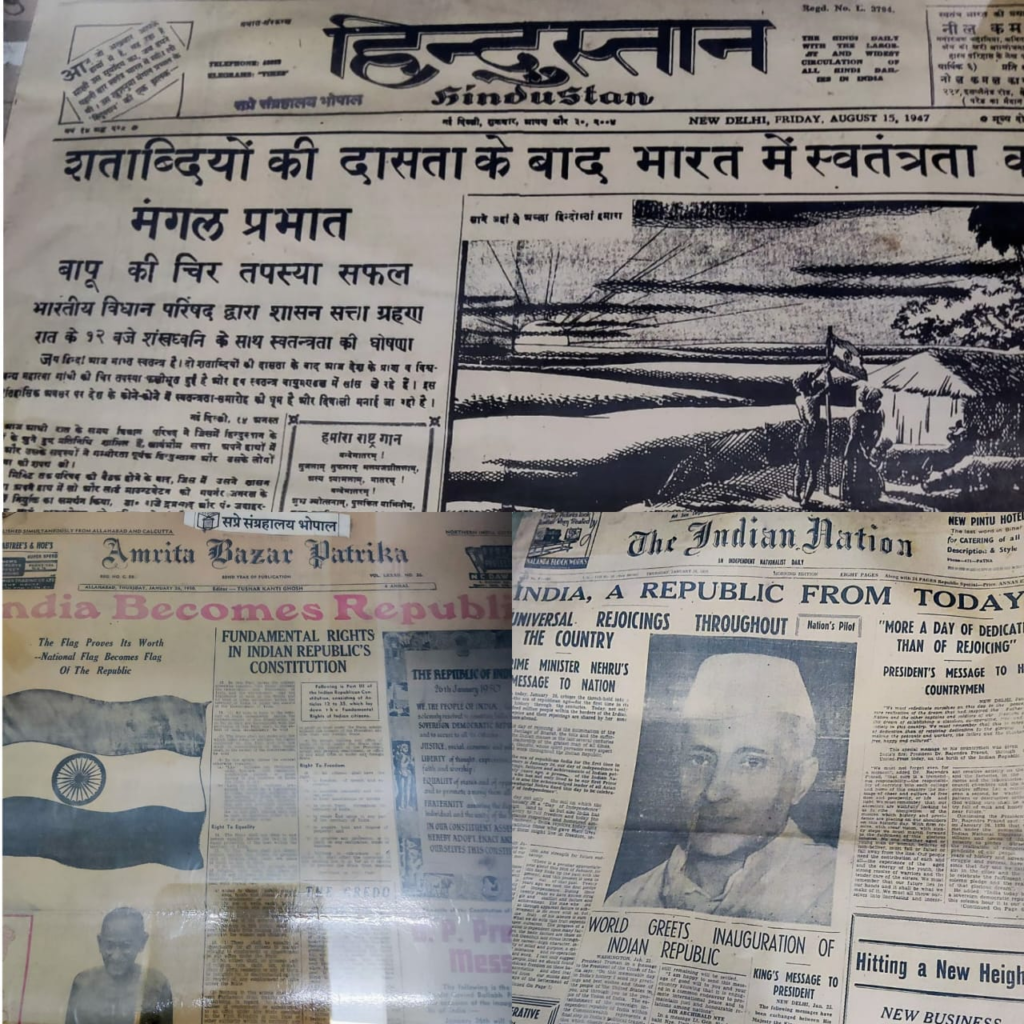
A Journey Through Sapray Sangrahalaya: Celebrating World Press Freedom Day

0

By Anjali Solanki

Today on World Press Freedom Day, I stepped into Sapray Sangrahalaya in Bhopal, a vibrant museum nestled in the serene Shyamla Hills. This global celebration of journalism’s courage and resilience felt perfectly at home in a space dedicated to the stories that shape our world. The visit was more than a walk through exhibits; it was a compelling exploration of the past of press freedom, crafted to resonate with anyone who values the pursuit of truth.

A Journey Through Sapray Sangrahalaya: Celebrating World Press Freedom Day

The museum’s modern yet earthy architecture, a striking mural set the tone: newspapers pens, books and more into roots and branches, symbolising journalism’s deep connection to humanity. A special exhibit, curated for World Press Freedom Day, aligned with 2024’s theme: “A Press for the Planet: Journalism in the Face of the Environmental Crisis.” It underscored the press’s role in confronting global challenges, from climate change to corporate accountability.
The journey began with an interactive display of a 1940s newsroom, complete with typewriters, telegrams, and sepia-toned newspapers. The clack of keys and the weight of colonial censorship came alive through the exhibit’s audio guide, which detailed how India’s press fueled the freedom struggle, defying British attempts to silence dissent. These early journalists, armed only with words, laid the foundation for today’s fight for truth a legacy that still inspires.
A shift to modern journalism brought a sobering perspective. A wall of quotes included one by slain journalist Gauri Lankesh: “The pen is mightier than the sword, but only if it dares to write the truth.”

Nearby, a digital memorial honored journalists lost to violence, their names glowing softly. The 2024 World Press Freedom Index ranks India 159th, a slight improvement but a reminder of ongoing challenges like legal harassment, censorship, and economic pressures. This section was a stark call to recognize the sacrifices behind every headline.

The heart of the visit was an immersive exhibit on the future of press freedom. A 360-degree projection room enveloped visitors in a whirlwind of images: drones capturing protests, AI-generated deepfakes, and citizen journalists streaming from conflict zones. A narrator’s voice posed a critical question: “In a world of algorithms and echo chambers, how do we protect the truth?” The exhibit balanced hope and caution, showcasing innovations like blockchain for source verification and AI to detect misinformation, while warning of surveillance and data manipulation. It was a thought-provoking glimpse into the complexities ahead.

In the museum’s outdoor amphitheater, local journalists led a panel discussion on the day’s theme, exploring how environmental reporting often underfunded and dangerous holds power to account. The speakers echoed UNESCO’s stance: “Freedom of expression is a driver for all other human rights.” Their words were a rallying cry, urging journalists and citizens alike to champion truth in an era of climate crises and corporate overreach.

As the sun set, the museum’s rooftop offered a stunning view of Bhopal’s lakes, a serene backdrop for reflection. A post on X captured the day’s essence: “World Press Freedom Day at Sapray Sangrahalaya a reminder that truth is worth fighting for. Here’s to a free, fierce, fearless press.

The Future of Press Freedom

The future of press freedom is a paradox of opportunity and obstacle. Technology has democratized storytelling, smartphones and social media give marginalized voices a stage, bypassing traditional gatekeepers. Yet, these tools also amplify disinformation, propaganda, and online harassment. The 2024 World Press Freedom Index reveals a global landscape where authoritarian regimes tighten media control, and even democracies face trust deficits. In India, legal threats and economic pressures persist, despite incremental progress.
Hope lies in resilience and innovation. Collaborative journalism, like cross-border investigations, can counter suppression. Encrypted communication and decentralized platforms can protect sources. Media literacy is vital readers must question narratives and verify facts. Above all, press freedom requires collective action: governments must uphold Article 19 of the Universal Declaration of Human Rights, and citizens must support independent media. Sapray Sangrahalaya’s exhibits made it clear: the press is not just a profession but a pillar of democracy, and its future depends on our resolve to keep it free.

This visit to Sapray Sangrahalaya was more than a museum tour it was a spark for action. It reminded us that every story we read, share, or question shapes

Artificial Intelligence: A Job Thief Or Job Enhancer?

0

By Anjali Solanki

The rise of artificial intelligence has sparked widespread concern, particularly among young people entering fields like construction, hospitality, and labor. Will AI take over these physical jobs, leaving the next generation scrambling? To address this pressing question, I talked with two experts: Ingarloss Karam, former ANI journalist, Professor of Mass Communication, and tech expert, and Harish Patidar, Director of MIT’s Computer Science and Artificial Intelligence Department. Their insights offer a refreshing perspective, turning fear into opportunity for the youth shaping the future of work.

AI Posing Job Threat?

The fear that AI will replace physical jobs is palpable, but Prof. Karam argues it’s often exaggerated. “AI is great for repetitive, data-driven tasks like assembly lines or basic data entry,” he explains. “But physical jobs like construction or hospitality? They require emotional intelligence, dexterity, and adaptability, which AI can’t easily replicate.” He points out that while a robot might vacuum a hotel room, it lacks the human touch of a concierge who can read a guest’s mood or a carpenter crafting something unique.

Harish Patidar takes a complementary view, framing AI not as a threat but as a partner. “In construction, AI-powered exoskeletons help workers lift heavier loads safely, boosting productivity,” he says. “In hospitality, AI handles repetitive tasks like inventory management, freeing staff to create memorable guest experiences.” For Patidar, AI augments human work, enhancing efficiency and opening new possibilities.

Addressing the Entry-Level Concern


One lingering worry is that AI could reduce demand for entry-level roles, a critical stepping stone for young workers. Patidar acknowledges the concern but sees it as a catalyst for growth. “Some repetitive tasks like basic cleaning or inventory checks might be automated, but this creates opportunities,” he notes. “It pushes workers to focus on higher-value roles.” In construction, for example, AI can handle site mapping, but human decision-making and creative problem-solving remain essential. His advice? “Young people should learn to work with AI, using tools like predictive maintenance software. Free tutorials on YouTube or platforms like Udemy can get them started.”

Prof. Karam agrees, emphasizing the adaptability of digital natives. “Entry-level roles might shift, but that’s not a bad thing,” he says. “In hospitality, they could learn data analytics to personalize guest services. In manufacturing, new roles like ‘robot coordinator’ are emerging to manage AI systems.” His practical tip: “Take a Coursera course, learn one skill, and combine it with human strengths like empathy or creativity. Small steps lead to big opportunities.”

A Mindset Shift for the Future

For young people paralyzed by fear about their career paths, both experts advocate a proactive mindset. Prof. Karam’s advice is direct: “Stop overthinking and start acting. You’re a digital native you’ve got an edge. Combine your human ingenuity with tech fluency. Learn one new skill, like using AI tools for data analytics or operating smart machinery. The future belongs to those who take action, not those who fear it.”
Patidar echoes this call to action, urging youth to embrace AI as a teammate. “Don’t wait for permission,” he says. “Dive in and explore AI tools in your field. Whether it’s hospitality or construction, see AI as a tool to stand out. Experiment with software that predicts maintenance needs or analyzes customer preferences. The ones who succeed will be those who embrace AI to shine.”

Shaping the Future of Work

The discussion with Prof. Karam and Mr. Patidar transforms fear into opportunity. AI isn’t coming for your job it’s waiting for you to harness it. By learning new skills, experimenting with AI tools, and combining them with uniquely human strengths, young people can thrive in an AI-driven world. As Prof. Karam puts it, “The future belongs to those who take action.” So, to the youth reading this: the future of work is yours to shape. Get to work!

International Harry Potter Day 2025: Why May 2 Is Celebrated by Fans Worldwide

0

International Harry Potter Day, celebrated every year on May 2, honors the beloved Harry Potter book series created by British author J.K. Rowling. With millions of fans across the globe, this day celebrates the magical universe that has inspired generations of readers and viewers since the first book’s publication in 1997.

Let’s explore the origin of International Harry Potter Day, why May 2 was chosen, and how fans commemorate this enchanting occasion.

Origin of International Harry Potter Day

The celebration of Harry Potter Day is rooted in the Battle of Hogwarts, a major and emotional turning point in the series. This battle takes place in the seventh and final book, Harry Potter and the Deathly Hallows, and marks the ultimate defeat of Lord Voldemort.

May 2nd is the date when the Battle of Hogwarts occurred — a day that saw the bravery of Harry and his friends, the fall of key characters, and the restoration of peace to the wizarding world. This poignant moment in the Harry Potter timeline symbolizes courage, friendship, and sacrifice, making it a fitting date for annual celebration.

The Journey of the Harry Potter Series

  • The first book, Harry Potter and the Philosopher’s Stone (titled Sorcerer’s Stone in the U.S.), was published in 1997.
  • The series spans seven books, chronicling Harry’s journey from an orphaned boy to the hero who defeats the darkest wizard of all time.
  • The books have sold over 500 million copies worldwide and have been translated into 80+ languages.

The success of the novels led to a globally successful film franchise, starting in 2001 with Harry Potter and the Sorcerer’s Stone. The films not only brought the magical world to life but also expanded the fan base across generations.

Why Is Harry Potter Day Celebrated on May 2?

May 2 is significant as it marks the anniversary of the Battle of Hogwarts. This final confrontation between good and evil resulted in the death of Voldemort and ended a dark era in the wizarding world.

Fans around the world observe this day by:

  • Re-reading their favorite Harry Potter books
  • Hosting movie marathons
  • Dressing up in Hogwarts house robes and wizard costumes
  • Sharing memories and trivia on social media
  • Attending themed events, quizzes, and cosplay parties

The Magical Legacy of Harry Potter

The Harry Potter universe has extended far beyond books and films:

  • Stage plays like Harry Potter and the Cursed Child
  • Merchandise, theme parks, and even real-life Butterbeer
  • The sport of quadball (inspired by Quidditch)
  • A vibrant fan community that continues to grow

International Harry Potter Day is more than just a celebration of a fictional series — it’s a tribute to imagination, friendship, and the magic of storytelling.

Morgan Stanley Plans to Launch Cryptocurrency Trading on E-Trade Platform in 2025

0


Global financial services giant Morgan Stanley is reportedly developing plans to introduce cryptocurrency trading on its popular retail investment platform, E*Trade. If implemented, this would mark one of the most significant moves by a major U.S. bank to provide mainstream access to digital assets, particularly for everyday retail investors.

A Major Shift Toward Retail Crypto Accessibility

According to individuals familiar with the matter, the project is still in its early stages, but Morgan Stanley executives are targeting a 2025 launch. This initiative would represent the bank’s boldest step yet into the crypto space and could help it tap into the growing demand among retail traders for digital assets such as Bitcoin, Ethereum, and other altcoins.

This development also comes as part of a broader shift within traditional finance toward embracing blockchain technology and digital currencies, especially following the regulatory easing initiated during the Trump administration.

What This Means for E*Trade Clients

If launched, E*Trade clients would be able to buy, sell, and possibly store cryptocurrencies directly from their trading accounts. This would put Morgan Stanley in closer competition with platforms like Robinhood, Coinbase, and Fidelity, which have already captured substantial retail interest in crypto trading.

The move could also significantly boost crypto adoption by bringing digital asset trading to millions of existing E*Trade users who are already engaged in stock, ETF, and options trading.

Why This Move Is Important:

  • First-of-its-kind move by a traditional Wall Street bank targeting everyday investors.
  • Bridges the gap between traditional finance and emerging digital assets.
  • Increases mainstream access to crypto, with integrated trading via E*Trade.
  • Could spark further institutional and regulatory acceptance of cryptocurrencies.

Char Dham Yatra 2025: 10,000 kilograms of flowers, comprising 45 different varieties to decorate Kedarnath Dham to Open on May 2

0

The sacred Char Dham Yatra 2025 has officially begun, drawing lakhs of pilgrims from across India and abroad. The doors of Gangotri and Yamunotri Dham opened on April 30, coinciding with the auspicious occasion of Akshaya Tritiya. Now, Kedarnath Dham is set to open on May 2, followed by Badrinath Dham on May 4.

Kedarnath Dham Ready to Welcome Devotees

The Panchmukhi Doli of Baba Kedar has arrived at the sacred Kedarnath temple. The temple will open its doors to devotees after ritualistic worship at 7 AM on Friday, May 2. The main priest, Jagadguru Rawal Bhimashankar Ling Shivacharya, will perform the first puja inside the sanctum sanctorum, accompanied by a limited group of four individuals including temple authorities.

In a statement, the Rawal said:

“The opening ceremony will include traditional rituals, military presence, and spiritual chants. The process will begin with the outer gates, followed by the inner sanctum. The first puja will be performed in continuation with the winter rituals, preserving Kedarnath’s spiritual legacy.”

Floral Decorations from 3 Countries and 8 Indian States

Kedarnath Dham has been adorned with over 10,000 kilograms of flowers, comprising 45 different varieties sourced from eight Indian states and three countries. Expert artisans from Vadodara and Kolkata are overseeing the elaborate floral decoration, creating a visual and spiritual spectacle for visiting devotees.

Expected Pilgrim Footfall to Cross 25 Lakh

With favorable weather conditions expected between June and August, officials anticipate a record-breaking 25 lakh pilgrims visiting Kedarnath Dham this year. The temple will remain open for six months, allowing devotees ample time for darshan.

What Devotees Are Saying

A devotee from Germany, shared her experience:

“This place is extremely energetic. It feels very close to heaven. Coming here feels like responding to an inner spiritual call from Lord Shiva.”

Another Indian devotee remarked:

“The arrangements are excellent—from accommodation to food and security. The administration is actively guiding us, ensuring a smooth and spiritual journey.”

Key Dates for Char Dham Yatra 2025:

  • Gangotri & Yamunotri Dham Opened: April 30
  • Kedarnath Dham Opens: May 2
  • Badrinath Dham Opens: May 4