Home Blog Page 297

Robert Francis Prevost Becomes New And First Pope from the US, Will Be Known With Name Pope Leo XIV

0

Vatican City, May 8 — In a historic development, the Vatican has elected a new pope on the second day of the Papal Conclave. Cardinal Robert Francis Prevost, 69, has been chosen as the new head of the Roman Catholic Church. He is the first cardinal from the United States to ascend to the papacy and will be known as Pope Leo XIV.

Prevost secured his election with a two-thirds majority—89 out of 133 votes cast by the College of Cardinals. This marks only the fifth time since 1900 that a pope has been elected within just two days of voting.

White smoke rising from the chimney of the Sistine Chapel on Thursday signaled the successful election, prompting cheers and applause from more than 45,000 gathered faithful in St. Peter’s Square. Notably, no previous pope had been elected on May 7, making this date significant in church history.

The conclave began with a solemn procession into the Sistine Chapel and an oath of secrecy by each cardinal. The first vote took place around 9:15 PM on Wednesday.

Pope Leo XIV’s First Words: “May Peace Be in the Hearts of All”

In his first address from the balcony of St. Peter’s Basilica, Pope Leo XIV spoke in Spanish, appealing for compassion, unity, and faith.

“I want to thank all the cardinals who have entrusted me with this sacred responsibility,” he said. “I will strive to walk with men and women who carry the message of Jesus with courage and remain faithful in mission and spirit. Let love and peace reign in every heart.”

S-400 Air Defence System: Know How It Foiled Pakistan’s Attack. Tracks 160 Targets, Locks from 400 KM Distance…

0

S-400 Air defence system…This is the trending word being used amid the ongoing Operation Sindoor. In a bold retaliation to the terrorist attack in Pahalgam, the Indian Army launched this operation,” following which Pakistan attempted to strike 15 Indian military installations late Thursday night. However, India’s state-of-the-art S-400 air defense system, deployed along the borders, intercepted and neutralised the threats. In a counter-response, India successfully destroyed Pakistan’s HQ-9 air defense system stationed in Lahore, which had been acquired from China four years ago.

Here’s a detailed explainer on the S-400 and HQ-9 air defense systems:

Q1: What has the Indian Army said about the Pakistani attacks?

The Ministry of Defense confirmed that around 2:30 PM on May 8, Pakistan tried to target several cities in northern and western India using missiles and drones. The attack spanned across Avanthipora, Srinagar, Jammu, Pathankot, Amritsar, Kapurthala, Jalandhar, Ludhiana, Adampur, Bathinda, Chandigarh, Naal, Phalodi, Uttarala, and Bhuj.

Thanks to the pre-deployment of the Russian-made S-400 air defense system along the border, India was able to intercept and neutralise the incoming threats. The Defense Ministry further confirmed that in retaliation, India targeted and destroyed a Pakistani air defense installation in Lahore.

Q2: What is the S-400, and how powerful is it?

The S-400 ‘Triumf’ is one of the most advanced air defense missile systems in the world, designed and manufactured by Russia’s Almaz Central Design Bureau. India signed a deal worth approximately ₹40,000 crore in 2018 to procure five units of the S-400.

Key Features:

  • Highly Mobile: Can be deployed via road, allowing quick relocation.
  • Advanced Radar: Equipped with 92N6E electronically steered phased-array radar, it can detect threats up to 600 km away.
  • Rapid Deployment: Becomes fully operational within 5 to 10 minutes.
  • Target Tracking: A single unit can track up to 160 targets at once and launch two missiles per target.
  • Range & Altitude: Capable of striking threats from 400 km away and at altitudes of up to 30 km.

Q3: How does the S-400 system work?

Each S-400 unit includes:

  • Command and Control Center
  • Surveillance Radar
  • Guidance Radar
  • Transport Erector Launcher (TEL)

It comes with four types of missiles (short, medium, long, and very long-range), offering interception capabilities from 40 km up to 400 km. India is specifically using the 40N6E missile variant, which can hit targets up to 400 km away and at an altitude of 180 km.

Working Mechanism:

  • Surveillance radar detects an incoming threat and sends data to the command center.
  • The guidance radar locks on to the target.
  • The missile is then launched to intercept and destroy the target mid-air.

Q4: What is Pakistan’s HQ-9 air defense system that was destroyed?

Pakistan’s HQ-9 is a long-range surface-to-air missile system developed by China’s Precision Machinery Import-Export Corporation (CPMIEC). It was inducted into Pakistan’s military in October 2021 and deployed in major cities like Lahore and Karachi to counter Indian aerial assets like Rafale and BrahMos.

Q5: How does India’s S-400 outperform Pakistan’s HQ-9?

FeatureIndia’s S-400Pakistan’s HQ-9
OriginRussiaChina
Range400 km125 km
Deployment Time5 minutes35 minutes
Missile Types4 (up to 400 km)Limited
RadarAESA (tracks stealth and multiple targets)PESA (less advanced)
Target InterceptionFighter jets, drones, cruise & ballistic missilesLess effective against stealth and long-range threats

India’s S-400 can intercept Pakistan’s JF-17, F-16, and Babur cruise missiles with ease, while the HQ-9 lacks comparable response time and radar sophistication.

India’s deployment of the S-400 has provided a significant strategic edge in air defense, allowing it to respond swiftly and effectively to aerial threats, as evidenced in the recent cross-border tensions

The Golden Thread of Madhya Pradesh: The Timeless Saga of Jute

0

In the heart of India, where the pulse of tradition beats in harmony with nature’s embrace, lies Madhya Pradesh a land of vibrant culture, ancient artistry, and boundless creativity. Amid its rolling hills, sacred rivers, and emerald fields, a humble yet extraordinary fiber weaves a story of resilience, sustainability, and timeless craftsmanship. This is the tale of jute, the “golden fiber,” a treasure of Madhya Pradesh that binds the past to the present, the artisan to the earth, and the heart of the state to the world. In the fertile plains of Bhopal and Vidisha, jute flourishes, not merely as a crop but as a symbol of the state’s rich heritage and its unwavering commitment to eco-conscious artistry.

A Gift from the Earth: The Origins of Jute in Madhya Pradesh

Jute, the second most significant vegetable fiber after cotton, thrives in the warm, monsoon-kissed soils of Madhya Pradesh. Known scientifically as Corchorus olitorius and Corchorus capsularis, this eco-friendly marvel has been cultivated for centuries in the regions of Bhopal and Vidisha, where the land’s fertility and the farmers’ expertise create the perfect cradle for its growth. The cultivation process is a labor of love, steeped in tradition. Farmers sow jute seeds during the pre-monsoon months, nurturing the plants through their rapid growth cycle until they reach maturity in just four to six months. Once harvested, the stalks are retted in water, stripped, and processed to yield the strong, lustrous fibers that have earned jute its golden moniker.

But jute’s story in Madhya Pradesh is more than agricultural it’s cultural. The fiber has long been a cornerstone of rural life, providing livelihoods to countless farmers and artisans while embodying the state’s ethos of sustainability. Unlike synthetic materials, jute is biodegradable, renewable, and requires minimal chemical intervention, making it a darling of eco-conscious creators. In a world increasingly turning to sustainable solutions, Madhya Pradesh’s jute stands as a beacon of harmony between humanity and nature.

From Fiber to Art: The Craftsmanship born out of Jute

The true magic of jute unfolds in the hands of Madhya Pradesh’s artisans, whose deft fingers transform raw fiber into objects of utility and beauty. For centuries, jute has been spun, woven, and crafted into an astonishing array of products sacks for carrying grain, ropes for tethering livestock, bags for everyday use, and intricate mats that adorn homes. But the artisans of Madhya Pradesh have elevated jute beyond the utilitarian, creating exquisite folders, wall hangings, and decorative pieces that marry functionality with artistry.

In villages across Bhopal and Vidisha, the rhythmic clatter of looms and the soft hum of spinning wheels fill the air as artisans work their craft. Each piece tells a story of the farmer who tended the crop, the weaver who shaped the fiber, and the cultural legacy that binds them. Jute bags, often adorned with vibrant embroidery or tribal motifs, reflect the aesthetic sensibilities of Madhya Pradesh’s diverse communities, including the Gond, Bhil, and Baiga tribes. Wall hangings and mats, with their intricate patterns, draw inspiration from the state’s natural beauty its forests, rivers, and wildlife while folders and accessories showcase the versatility of this humble fiber.

The artisans’ skill is not merely technical but deeply spiritual. For many, working with jute is a meditative act, a way to honor the land and their ancestors. Passed down through generations, these techniques are a living archive of Madhya Pradesh’s cultural heritage, preserving stories and traditions in every knot and weave.

A Cultural Showcase: Jute in Madhya Pradesh’s Museums

To witness the splendor of jute craftsmanship, one must visit the cultural heart of Madhya Pradeshits museums. The Aadivart Tribal and Folk Art Museum in Khajuraho is a treasure trove of indigenous artistry, where jute creations stand alongside other tribal crafts. Here, visitors can marvel at the intricate detailing of jute wall hangings and the sturdy elegance of woven bags, each piece a testament to the ingenuity of the state’s artisans. The museum’s vibrant displays bring to life the stories of the communities that create these works, offering a glimpse into their lives, beliefs, and traditions.

Similarly, the Madhya Pradesh Tribal Museum in Bhopal is a celebration of the state’s indigenous heritage. Jute artifacts, from utilitarian sacks to ornate decorative pieces, are showcased with pride, highlighting their role in both daily life and artistic expression. The museum’s immersive exhibits invite visitors to touch, feel, and connect with the materials, fostering a deeper appreciation for the labor and creativity behind each creation. These institutions are not just repositories of art but living spaces where Madhya Pradesh’s cultural legacy is preserved and shared with the world.

Jute in Modern Madhya Pradesh: A Sustainable Future

In today’s world, where sustainability is no longer a choice but a necessity, jute is experiencing a renaissance. Madhya Pradesh’s artisans are adapting to modern tastes, creating jute products that appeal to global markets while staying true to their roots. Fashion designers are incorporating jute into eco-friendly clothing and accessories, while home décor brands are embracing its rustic charm for sustainable furnishings. The state government, too, is playing a pivotal role, promoting jute through handicraft fairs, cooperatives, and initiatives that empower artisans and expand their reach.

Moreover, jute’s environmental credentials are unmatched. Its cultivation enriches the soil, requires minimal pesticides, and sequesters carbon, making it a champion of green agriculture. Products made from jute decompose naturally, leaving no trace of harm an antidote to the plastic pollution plaguing the planet. By championing jute, Madhya Pradesh is not only preserving its cultural heritage but also leading the charge toward a more sustainable future.

A Call to Celebrate Madhya Pradesh’s Golden Fiber

The story of jute in Madhya Pradesh is one of harmony between people and nature, tradition and innovation, utility and beauty. It is a reminder that the simplest materials, when touched by human creativity, can become extraordinary. To truly experience this golden fiber’s charm, visit the Aadivart Tribal and Folk Art Museum in Khajuraho or the Madhya Pradesh Tribal Museum in Bhopal, where the spirit of jute craftsmanship comes alive. Support the artisans by purchasing their creations at local markets or handicraft emporiums, and carry home a piece of Madhya Pradesh’s soul.

Stay connected with the heart of India’s cultural tapestry, and let the golden thread of jute weave its way into your life. In every sack, bag, rope, or wall hanging, you’ll find the essence of Madhya Pradesh a land where tradition thrives, sustainability reigns, and artistry knows no bounds.

How to Boost Facebook Likes & Page Likes Effortlessly?

0

Want to know what leading brands and influencers are doing to increase Facebook page likes and boost followership? You have reached the right page because here you will find some free and paid strategies to get more likes on your page.

Create Facebook groups to expand your audience reach.

Creating or participating in Facebook groups is the best strategy to connect with the target audience and expand the reach of your Facebook page. It helps in reaching like-minded people who share the same interests within your niche. Interact with your group members and encourage them to share their experiences with others or ask questions.

You can prefer meaningful interaction with members instead of direct promotions of your products or services. This makes your audience feel more valuable and engaged on your page. Focus on the feedback and preferences of your group members and try to leverage them in your Facebook content and marketing strategies.

Post varying types of quality and engaging content.

Since billions of people are using Facebook daily worldwide, creators require uploading compelling and engaging posts for their audiences. Do not restrict your creativity to a specific type of content, instead, post different types of content that resonate with your audience and boost your Facebook presence in the long term.

Facebook stories, reels, live-streaming videos, user-generated posts, contests and giveaways, inspiration quotes, funny posts, and Facebook videos are the most popular types of content to leverage on Facebook. You can try sharing your behind-the-scenes videos, telling stories, using product testimonials, and using branded content themes to increase and maintain a higher engagement rate.

Create Facebook page likes ads.

Running a page like ad is one of the most effective ways to reach people who may like your page and follow it. Remember, you will require task access to Ads or Facebook access to the Page. If you have this access, you can easily create a page likes ad by visiting the Facebook Page. Here, click on the Advertise option at the top and choose ‘Promote your page’ as your ad objective. Then, tap ‘See all’ and provide details for your ad. Choose the duration, audience, ads creative, placements, daily budget, and payment method for your ads. At last, tap Promote now.

Q&A sessions.

Post content that asks relevant questions regularly, allowing users to interact instantly and share their opinions. If you are creating engaging posts that encourage users to be a part of discussions, you are providing them with the opportunity for two-way, dynamic conversations. Moreover, you will get valuable real-time market research insights and can adapt accordingly for better experiences. To create a successful Facebook Q&A session, you can ask your followers about the next topic.

Invite friends to like your page.

Not everyone might be able to learn about your Facebook page. So, it is best to send invites to your friends, family, and colleagues to like and follow your page. Facebook has the feature to invite your friends to like or follow their page. Be sure to turn on professional mode before allowing your friends to invite their friends to follow your page. To invite friends, click on three horizontal likes under your page’s cover photo and select the “Invite friends” option. Tap on the profile name of the people you want to invite to like your profile or page. Finally, click on the “Send invitations” button.

Post consistently.

Ongoing engagement is important to develop a strong community on Facebook and get more Facebook likes. To create and foster this community, it is essential to maintain consistency in posting schedules. Providing valuable and interactive content regularly develops credibility and encourages users to keep visiting your page. This eventually increases the possibility that they will see and interact with your posts.

Use paid advertisements.

This strategy is mainly recommended to boost the reach of a page which eventually brings more followers and likes. Most brands invest in paid advertising because it helps reach the target audience based on behaviors, preferences, and demographics. Create well-defined ad sets to make sure your posts reach the potential audience who are interested in liking and interacting with them. This can provide a chance to convert those audiences into your loyal followers. Use the ‘customer audiences’ feature to retarget people who have already engaged with your posts, further strengthening your outreach strategy.

Use Meta business suite.

It is important to consistently track and analyse your Facebook presence to get useful information about your page and posts. Use Meta Business Suite to analyze the organic and paid performance of your Facebook and Instagram profile from one location. You can monitor various metrics, such as conversion rates, post reach, and engagement rates to make data-driven decisions and adapt your marketing strategy effectively based on your campaign objective. The extracted insights can be used to examine the audience’s preferences and behaviors of the target audience.

Include Facebook page posts on your website.

You should consider adding your Facebook posts to your website if you want to maximize your Facebook marketing potential. It can offer a range of benefits, such as improved visibility, enhanced SEO ranking, boosted website traffic, increased social proof, excellent market research, better brand storytelling, maximized engagement, and expanded Facebook and business growth.

Remember, your post that needs to be embedded on your blog or website must be public. Only public posts from Facebook profiles can be added by clicking the arrow icon on the corner of your post and choosing the “Embed Post” option from the drop-down list. A popup box will appear with a code. At last, copy and paste that code into the HTML code of your web page to embed your post.

Conclusion

To increase likes on your Facebook page, you’ll need to attract audiences, develop a community, share engaging and authentic content, and strengthen meaningful relations with the target audience. Use these strategies while maintaining consistency, originality, engagement, and analysis to ensure long-term success.

Shri Badal Bhoi State Tribal Museum: Celebrating Tribal Heritage and Unsung Freedom Fighters

0

Located in the culturally rich city of Chhindwara, Madhya Pradesh, the Shri Badal Bhoi State Tribal Museum stands as a proud tribute to India’s tribal legacy and the freedom struggle led by unsung heroes. Named after Badal Bhoi, a revered tribal freedom fighter, this museum serves as a vibrant hub of indigenous history, art, and heritage. Established in 1954, and recently spotlighted during the Janjatiya Gaurav Divas, the museum invites visitors to immerse themselves in the traditions, lifestyle, and cultural depth of the Scheduled Tribes of Madhya Pradesh and Chhattisgarh.

Who Was Badal Bhoi? The Tribal Gandhi of Chhindwara

Badal Bhoi (1845–1923) was a fearless leader from Dungaria Teetra village, Parasia tehsil, in Chhindwara district. Revered as the “Gandhi of Chhindwara”, he championed non-violent resistance against British rule, mobilizing thousands from tribal communities during the Non-Cooperation Movement. In 1923, he led a peaceful protest against colonial exploitation, demanding tribal rights to forests and land—core elements of their cultural identity.

Despite facing police brutality and imprisonment, Badal Bhoi remained committed to Ahimsa (non-violence) and tribal welfare. The museum that bears his name is a powerful reminder of his contribution and the countless tribal leaders often overlooked in mainstream historical narratives.

Shri Badal Bhoi State Tribal Museum: Celebrating Tribal Heritage and Unsung Freedom Fighters

Inside the Museum: A Journey Through Tribal Traditions

The Shri Badal Bhoi State Tribal Museum may be modest in size, but it is rich in content and cultural significance. The museum features a diverse collection of artifacts and installations that vividly illustrate tribal life:

  • Traditional Tools & Utensils: Displayed items include bows, arrows, fishing nets, and animal traps that reflect tribal innovation and harmony with nature.
  • Musical Instruments: Ritual drums, flutes, and folk instruments showcase the rhythm and soul of tribal festivities.
  • Tribal Art & Idols: Handcrafted idols, totems, and woven baskets speak volumes of the artistic finesse and spiritual depth of these communities.
  • Tattoo Art & Dance Forms: Dedicated sections highlight traditional tattoo motifs and vibrant tribal dances—integral elements of tribal identity.
  • Tribal Language Gallery: Picture exhibits display animals and objects with names in tribal dialects, offering linguistic insights.
  • Life-Sized Dioramas: Realistic models of tribal homes and lifestyles bring everyday tribal culture to life using plaster-of-Paris figurines.

Every gallery in the museum narrates the stories of tribes that have lived in harmony with nature for centuries while preserving their customs amid modernization.

Shri Badal Bhoi State Tribal Museum: Celebrating Tribal Heritage and Unsung Freedom Fighters

Cultural and Historical Significance

The museum’s recognition was amplified during Janjatiya Gaurav Divas 2024, when Prime Minister Narendra Modi urged the youth and educators to visit and understand the invaluable contributions of tribal communities. The museum is part of a broader effort to honor tribal heroes like Raja Shankar Shah and Kuvar Raghunath Shah, who are also commemorated through tribal museums across Madhya Pradesh.

Aligned with national initiatives like PM-JANMAN (Pradhan Mantri Janjati Adivasi Nyaya Maha Abhiyan) and Dharti Aaba Janjatiya Gram Utkarsh Abhiyan, the museum is a cultural pillar supporting the upliftment of tribal societies. These initiatives aim to improve tribal access to education, healthcare, and infrastructure while promoting cultural pride.

Visitor Information: A Must-Visit Destination in Chhindwara

The museum is located centrally in Chhindwara, making it easily accessible for tourists, students, and families. Key visitor details include:

  • Entry Fee: ₹10 per person – highly affordable.
  • Photography: Not permitted to preserve artifacts.
  • Best For: Students, history buffs, cultural researchers, and anyone interested in India’s tribal and freedom struggle narratives.
  • Nearby Attractions: Pair your museum visit with a trip to Jam Sawali Hanuman Mandir or the Shri Mataji Nirmala Devi Birthplace Shrine for a full cultural experience.

With its indoor exhibits, the museum is also ideal for rainy-day explorations.

Challenges and Future Opportunities

Though rich in cultural value, the Shri Badal Bhoi Tribal Museum faces certain limitations, including space constraints and a lack of interactive experiences. Enhancing visitor engagement through guided tours, digital exhibits, and lifted photography restrictions could boost its popularity.

As India expands its tribal education ecosystem with Eklavya schools, tribal universities, and cultural awareness programs, integrating this museum into academic tours and research collaborations could make it a national knowledge hub on tribal heritage.

A Living Legacy of Tribal Pride

The Shri Badal Bhoi State Tribal Museum is not just a collection of historical objects—it’s a living archive of tribal resilience, knowledge, and artistry. By honoring a non-violent warrior like Badal Bhoi, it invites visitors to re-examine India’s freedom struggle through the lens of tribal contributions.

As Prime Minister Modi emphasized, every Indian—especially the youth—should take time to visit such institutions and celebrate tribal pride, not only during commemorative days but as a lifelong learning journey.

Plan your visit today and experience the soulful spirit of India’s tribal heritage—preserved, honored, and proudly showcased at the Shri Badal Bhoi State Tribal Museum in Chhindwara.

The Life and Legacy of Swami Chinmayananda Saraswati

0

Swami Chinmayananda Saraswati (1916–1993) stands as one of the most influential spiritual teachers of the 20th century. Revered for his revival and popularization of Advaita Vedanta—the non-dualistic philosophy rooted in the Upanishads—he made timeless wisdom accessible to millions around the globe. Through his eloquence, intellectual clarity, and profound insight, he founded the Chinmaya Mission, a worldwide organization dedicated to spiritual education and service.

Early Life and Transformation

Born on May 8, 1916, in Ernakulam, Kerala, as Balakrishnan Menon, he hailed from a respected family steeped in culture and tradition. His father, Vadakke Kurupath Menon, was a judge, and his mother, Parukutty Amma, a devout and nurturing influence.

Balakrishnan, affectionately called Balan, was far from spiritual in his youth. Energetic, inquisitive, and modern in outlook, he pursued English literature at St. Thomas College, Thrissur, and later at Madras University. His interest in journalism led him to a postgraduate degree from Lucknow University. As a nationalist, he wrote revolutionary articles against British colonialism, landing him in jail for his activism.

As a journalist with The National Herald in Delhi, he quickly rose in prominence. Yet beneath his success, he harbored deep existential questions about life’s meaning, happiness, and India’s spiritual heritage. Initially skeptical of religious life, he set out to investigate it with a critical eye.

A Spiritual Awakening

In 1947, a visit to Swami Sivananda’s ashram in Rishikesh marked a turning point. Expecting to expose hypocrisy, Balakrishnan instead encountered genuine wisdom and compassion. Deeply moved, he began studying the Upanishads and the Bhagavad Gita under Swami Sivananda’s guidance.

In 1949, he embraced monastic life and was initiated as Swami Chinmayananda Saraswati—“one who revels in the bliss of pure consciousness.” To further his spiritual training, he studied in solitude under Swami Tapovan Maharaj in the Himalayas, dedicating eight years to intensive Vedantic study and meditation.

Spreading the Light of Vedanta

In the early 1950s, Swami Chinmayananda resolved to bring the teachings of Advaita Vedanta out of monasteries and into the public sphere. At the time, spiritual texts were largely inaccessible to the general public, especially the youth. Determined to change this, he began delivering public lectures—Jnana Yagnas—starting in Pune in 1951.

These talks, delivered in English, were revolutionary. He explained Vedantic concepts with clarity, humor, and relevance to everyday life, drawing diverse audiences—students, homemakers, professionals, and scholars alike.

His central message was that Vedanta is not a philosophy of renunciation, but a practical path to living with awareness, compassion, and purpose. He emphasized the Advaitic truth: the individual self (Atman) is identical with the universal consciousness (Brahman).

Founding the Chinmaya Mission

In 1953, to support his growing work, Swami Chinmayananda founded the Chinmaya Mission in Madras (now Chennai). Its goal: to spread Vedantic wisdom and promote Indian culture through education, service, and spiritual practice.

The Mission rapidly expanded across India and then globally, establishing study groups, youth wings (Chinmaya Yuva Kendra), children’s programs (Bala Vihar), and women’s groups (Devi Forums). The Mission also created schools, colleges, hospitals, and rural development programs, embodying Swami Chinmayananda’s vision of service-oriented spirituality.

He authored over 95 books, including widely respected commentaries on the Upanishads and the Bhagavad Gita. His Holy Gita and Kindle Life remain seminal texts for spiritual seekers.

Global Impact and Enduring Legacy

Swami Chinmayananda began global tours in the 1960s, taking the message of Vedanta to audiences in the U.S., Europe, Australia, and beyond. His engaging presence and relatable teachings earned him international admiration.

He strongly believed in empowering women and youth. Through various mission initiatives, he inspired a new generation to embrace spiritual values and contribute to society. His Chinmaya Vidyalayas—schools that combine academic excellence with cultural education—continue this legacy.

Despite health challenges later in life, Swami Chinmayananda remained active, delivering thousands of discourses and training disciples. He attained Mahasamadhi (left his physical body) on August 3, 1993, in San Diego, California.

Core Teachings

Swami Chinmayananda’s teachings distilled the essence of Advaita Vedanta:

  • Self-Realization: Realizing the Atman is the highest goal of life.
  • Practical Spirituality: Live in the world with wisdom and detachment.
  • Mind Management: Control of the mind leads to freedom and peace.
  • Selfless Service: Spiritual growth manifests through love and service.
  • Scriptural Study: The Gita and Upanishads are timeless guides for life.

Lasting Influence

Today, the Chinmaya Mission operates over 300 centers worldwide. Its educational institutions, social initiatives, and spiritual programs continue Swami Chinmayananda’s mission of inner transformation and societal upliftment.

His life is a shining example of how spiritual insight can illuminate not just individual lives, but entire communities. From a skeptic to a sage, his journey inspires millions to seek the truth within.

Key Dates in the Life of Swami Chinmayananda

  • May 8, 1916 – Born as Balakrishnan Menon in Ernakulam, Kerala
  • 1947 – Visit to Swami Sivananda in Rishikesh; spiritual turning point
  • 1949 – Initiated as Swami Chinmayananda Saraswati
  • 1951 – First Jnana Yagna held in Pune
  • 1953 – Chinmaya Mission founded in Madras
  • 1960s–70s – Began global Vedanta tours
  • August 3, 1993 – Attained Mahasamadhi in San Diego, USA

Swami Chinmayananda’s vision of a spiritually awakened world lives on through the countless hearts he touched and the mission he inspired. His legacy remains a guiding force for seekers everywhere.


The Epic Rise of Coca-Cola: A Fizz That Changed the World

0

On May 8, 1886, in a small Atlanta pharmacy, Dr. John Stith Pemberton created a unique carbonated drink that would later become Coca-Cola, the world’s most recognised soft drink. What started as a medicinal tonic transformed into a symbol of refreshment, joy, and American ingenuity.

The Origins of Coca-Cola: A Pharmacist’s Dream

Dr. Pemberton blended a caramel-colored syrup with carbonated water and extracts from coca leaves and kola nuts. This fizzy concoction was first served at Jacob’s Pharmacy and quickly caught the public’s imagination. Each glass cost just five cents, but it carried the potential to revolutionise the beverage industry.

Early Marketing Magic

Enter Asa Candler, a shrewd businessman who acquired full control of Coca-Cola by 1891. He launched aggressive marketing campaigns, standardized bottling, and turned the soda fountain drink into a national brand.

The Game-Changer: The Contour Bottle

In 1915, Coca-Cola faced imitation threats. To protect the brand’s identity, the company introduced the now-iconic contour bottle, designed by the Root Glass Company. This curvy, grippable bottle could be identified by touch, even in the dark, and became a branding masterpiece.

A Cultural Symbol

The unique bottle soon appeared in advertising, movies, pop art, and was embraced as a symbol of American culture. From World War II to global peace campaigns, Coca-Cola became more than a beverage—it was a statement.

Coca-Cola’s Global Expansion: From Local Favorite to Worldwide Phenomenon

By the mid-20th century, Coca-Cola had expanded to over 200 countries. During World War II, the company supplied U.S. troops with Coca-Cola, further cementing its patriotic and global identity. Its reach extended from bustling urban centers to remote villages.

Marketing that Connects

Legendary advertising campaigns featuring Santa Claus, polar bears, and the catchy “Open Happiness” and “Share a Coke” slogans have built emotional connections with generations of consumers. These campaigns made Coca-Cola not just a drink but an emotional brand experience.

Coca-Cola Today: Innovation and Legacy

With more than 1.9 billion servings consumed daily, Coca-Cola has become a leader in the global beverage industry. Yet, the essence of the brand remains unchanged—a symbol of joy, refreshment, and unity.

Sustainability and Social Impact

Modern Coca-Cola focuses on sustainability, recycling, and community initiatives, aiming to reduce its environmental impact while maintaining its position as a household name.

Conclusion: Coca-Cola—The Fizz That Changed the World

From its humble beginnings in an Atlanta pharmacy to becoming a global powerhouse, Coca-Cola’s story is one of innovation, strategic branding, and emotional connection. As we celebrate May 8 – Coca-Cola Day, we honor not just a drink, but a legacy that has refreshed the world for over a century.

Order Food in Train: Why Train food app is savior for Travelers

0

Train trips become an integral part of the long train journey. as it connects millions of rail networks on a daily basis. if you are solo travelers or visiting for a business purpose or for a comfort and convenience and ease for a train journey. One of the major problems and concerns of the  train travelers is hygienic, fresh and tasty meals on wheels, so the train food delivery app fulfils all your craving and caters all the taste. That is why digital innovations like RailRestro and RailMitra come in and transform the way people order food in train and manage their travel needs.

In this article, we explore how these two platforms are leading the charge of food delivery in train, and how apps like these are setting a new standard for travel convenience in India.

The Growing Demand for Food Delivery in Train

The days are gone when travellers relied solely on pantry cars or local vendors for meals during train journeys. With changing lifestyles, hygiene concerns, and the growing demand for variety, passengers now expect better options like they do at home or while flying. Today’s train traveler looks for quality food, timely service, and the ability to customize their order without hassle.

The requirement of food inside the train increases so food delivery in train fulfil the demand of travellers. Train food delivery app become an integral part of the journey as they become a partner with top fssai certified restaurants across the country. RailMitra delivers meals right to your train seat. With the click of a button, travellers can now browse menus, place orders, and enjoy their favorite meals whether it’s a thali, biryani, pizza, or even a regional specialty.

Order Food on Train: The Digital Shift in Indian Railways

Order food on train is no longer a problem. It is a standard feature of a smart travel experience. Thanks to smartphone penetration and increased internet accessibility across India, travellers can use mobile apps or official websites to get meals on wheels delivered to them at their desired station.

But what really makes the experience seamless is the coordination between technology and logistics. Travel platforms like RailRestro are doing exactly that, bridging the gap between the food industry and railway travellers by leveraging current time train tracking, fssai certified restaurant partnerships, and customer support to ensure every delivery is successful.

RailRestro: India’s Leading Food Delivery in Train App

At the heart of this transformation is RailRestro, one of India’s most trusted platforms and best app to order food in train. Designed specifically for Indian railway travellers, RailRestro allows users to browse menus from fssai certified restaurants and place orders in advance or even during the journey. Whether you are craving a light breakfast, a full lunch combo, or a sweet treat with tea, RailRestro has you covered.

Key features of RailRestro:

  • Best app to order food in train via official website or user friendly mobile app
  • PAN India coverage across 450+ stations
  • Partnered with 2500+ fssai certified restaurants
  • Pre booking and customise group order
  • Free delivery in train without any hidden charges at all stations
  • 24/7 customer support
  • Multiple payment options including UPI, net banking, and cash on delivery (COD)

Using RailRestro, travellers simply need to enter their PNR number or train details, choose a desired station where they want the food delivered, and select their preferred meal. The platform automatically tracks the train in current time and ensures the meals on wheel reaches the traveller at the train seat and on time.

As a best app to order food in train, RailRestro has not only improved the quality of train travel but also supported local fssai certified restaurant partners by connecting them to thousands of new customers daily.

RailMitra: More Than Just a Food Partner

While RailRestro focuses on food, RailMitra steps in as a broader travel utility app for train travellers. Think of it as your digital travel assistant. From checking live train running status to PNR status check and tracking coach positions, RailMitra offers it all in one place.

Key features of RailMitra:

  • Live train running status
  • PNR status check & confirmation chances
  • Train schedule & seat availability
  • Train between stations
  • Order food on train

Together, RailRestro and RailMitra form a powerful ecosystem for modern railway travelers in India. While RailRestro handles your food cravings, RailMitra ensures you stay updated with train related information, helping you make informed travel decisions throughout your journey.

Why Every Train Traveler Needs These Apps

The modern Indian traveler values time, convenience, and quality and rightly so. With apps like RailRestro and RailMitra, travellers no longer need to compromise on hygiene and taste of train food delivery, worry about finding their train platform, or stand in long queues to check their ticket status.

Here is why you should consider using these apps:

  • Save time and avoid platform rush
  • Enjoy restaurant style food delivered to your train seat
  • Plan your journey better with real time updates
  • Pre book or order food on train even while traveling
  • Avoid unreliable food vendors at unknown stations

Whether you are traveling for business, vacation, or a quick family visit, these apps add tremendous value to your journey and take the stress out of train travel.

Conclusion: Travel Smarter, Eat Better

As the Indian railway ecosystem modernizes, platforms like RailRestro, best app to order food in train and RailMitra, all in one railway app are leading the charge in making train travel more enjoyable and efficient. By offering reliable services and features all in one place, they have transformed the way we experience train journeys.

So next time you pack your bags, and do not forget to download the RailRestro and RailMitra mobile apps or visit their official websites to ensure you travel smart and eat well on the move.

Start your journey right and Order food on train with RailRestro and travel with confidence using RailMitra!

World Red Cross Day: Know Why We Celebrate It With Compassion, Resilience, and Global Impact…

0

World Red Cross Day, observed every year on May 8, is not just a day of remembrance—it’s a global call to action. Rooted in compassion and humanitarian values, the day honors the birth anniversary of Henry Dunant, the founder of the International Red Cross and the first Nobel Peace Prize laureate. As we commemorate this day, we recognize the incredible contributions of the International Red Cross and Red Crescent Movement and encourage individuals to join in building a more empathetic, resilient, and inclusive world.

Why World Red Cross Day Matters: A Celebration of Humanitarian Spirit

World Red Cross Day is a powerful reminder of our shared responsibility to support those in need. It highlights the core values of the Red Cross: humanity, impartiality, neutrality, independence, voluntary service, unity, and universality. These guiding principles not only inspire global humanitarian work but also urge individuals to act with kindness in everyday life.

To make this day impactful, it’s essential to share personal stories, visuals, and actionable steps that resonate with readers emotionally and inspire them to participate in meaningful ways.

Historical Significance: The Birth of a Humanitarian Vision

The Red Cross movement began in 1859, when Henry Dunant witnessed the horrific aftermath of the Battle of Solferino. His 1862 book, A Memory of Solferino, proposed the creation of neutral organizations to aid wounded soldiers, which led to the founding of the International Committee of the Red Cross (ICRC) in 1863.

This humanitarian vision soon gained international recognition. The First Geneva Convention of 1864, largely influenced by Dunant’s advocacy, laid the foundation for protecting war victims and medical personnel. World Red Cross Day celebrates this legacy, reminding us of the global commitment to alleviating human suffering, regardless of borders or conflict.

Global Impact: How the Red Cross Has Transformed Lives Worldwide

Over the decades, the Red Cross has played a vital role in responding to global crises. From world wars to natural disasters, and public health emergencies to refugee aid, its humanitarian footprint spans across nations and cultures.

Key Contributions:

  • World Wars: Offered critical medical aid, facilitated communication between POWs, and supported displaced families.
  • Disaster Relief: From the 1906 San Francisco earthquake to recent hurricanes and earthquakes, the Red Cross has been a first responder in emergencies worldwide.
  • Public Health: Initiated life-saving programs like blood donation drives, vaccination campaigns, first-aid training, and mental health support.

These milestones, celebrated on World Red Cross Day, underscore the organization’s lifesaving mission and its unwavering commitment to humanitarian service.

Modern Challenges: Evolving Humanitarian Needs in a Changing World

As global crises grow more complex, the Red Cross faces new challenges that require adaptive strategies, innovation, and sustained global cooperation.

1. Climate Change & Natural Disasters

Rising temperatures and extreme weather events are increasing the demand for emergency preparedness. Coastal areas and small island nations face heightened risks from floods and sea-level rise, demanding localized and sustainable response strategies.

2. Armed Conflict & Displacement

Crises in countries like Ukraine, Syria, and Yemen have displaced millions. The Red Cross must maintain its neutrality while delivering aid in conflict zones, often under threat to staff and infrastructure.

3. Public Health Crises

From COVID-19 to emerging diseases, public health remains a top priority. The Red Cross continues to support vaccination efforts, mental health initiatives, and community health education—especially in low-income or underserved regions.

4. Digital Ethics & Misinformation

While technology offers new tools for outreach, it also introduces risks—such as misinformation, cyber threats, and data privacy issues. The Red Cross must balance digital innovation with ethical responsibility.

5. Funding & Volunteer Mobilization

With growing global needs, securing funding and engaging volunteers are critical. The organization must rethink traditional models and connect with younger generations through digital campaigns, storytelling, and flexible volunteering opportunities.

6. Urbanization & Inequality

Rapid urban growth increases vulnerability to disasters in cities, especially in underserved neighborhoods. The Red Cross must tailor its services to urban risks, address health disparities, and advocate for inclusive public policy.

Call to Action: How You Can Support the Red Cross Today

World Red Cross Day is more than a celebration—it’s a call for collective action. Every individual has the power to make a difference.

Here’s how you can contribute:

  • Donate to support ongoing humanitarian projects.
  • Volunteer your time and skills in local Red Cross initiatives.
  • Share the Red Cross mission on social media to raise awareness.
  • Participate in blood donation drives and first-aid training.
  • Educate others about the history and importance of humanitarian values.

Conclusion: Honoring Humanity, One Act at a Time

This May 8, let’s come together to honor the legacy of Henry Dunant and the enduring work of the Red Cross. By embracing compassion, supporting those in crisis, and promoting humanitarian principles, we can help keep humanity alive in the face of adversity

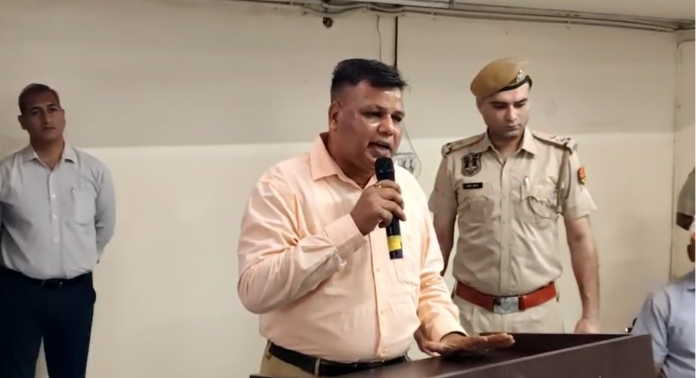
Mockdrill Awareness: Community Programme on Blackout Precautions Conducted in Jaipur by IPS Officer Pankaj Chaudhary

0

A mockdrill awareness programme was conducted in Jaipur on May 7, 2025 by Pankaj Chaudhary, IPS, Superintendent of Police and Nodal Officer at The Cambridge School, Mahesh Nagar, Jaipur, at 9:30 AM as part of a citizen awareness campaign.

The event began with the National Anthem and saw the participation of the entire school staff, local business association leaders, social workers, media personnel, and the Mahesh Nagar Police Station team. Shri Chaudhary delivered a detailed presentation on the use of sirens and blackout procedures, educating students and citizens on how to respond effectively during enemy attacks.

Awareness Campaign Continues in Kathputli Nagar

At 10:00 AM, the campaign moved to Kathputli Nagar’s Kacchi Basti, where Shri Chaudhary demonstrated the alert process using sirens and mock drills. Residents were informed about protective measures during wartime situations and how to stay safe during potential enemy airstrikes.

Session at Central Sanskrit University, Triveni Nagar

Later, at 11:00 AM, a session was held at the Central Sanskrit University, Triveni Nagar, where hundreds of students gathered. The event commenced with the National Anthem, followed by sirens and video demonstrations. In his address, Shri Pankaj Chaudhary expressed pride in the recently executed “Operation Sindoor” and emphasized the importance of national unity and readiness in times of conflict.

Also present was Professor Sudesh Kumar Sharma, Director of the university, along with faculty members, Shiprapath Police Station officials, and other dignitaries. Shri Chaudhary stressed that India’s unity and integrity stand as a global example, and detailed knowledge about sirens and blackouts is crucial for student preparedness.

Professor Sharma also shared his experiences from Jammu and Kashmir, elaborating on the importance of alert systems and civil readiness during emergencies.