Home Blog Page 278

800-Year-Old Pandya-Era Shiva Temple Unearthed in Tamil Nadu’s Madurai District

0

In a remarkable archaeological find, an 800-year-old Shiva temple dating back to the Later Pandya period (1216–1345 CE) has been discovered in Udampatti village of Melur taluk in Madurai district. This rare discovery adds a significant chapter to Tamil Nadu’s rich temple heritage and the legacy of the Pandya dynasty.

The temple, unearthed in Udampatti, is believed to have been constructed during the golden age of the Pandyas, under powerful monarchs like Maravarman Sundara Pandyan and Jatavarman Sundara Pandyan. These rulers were instrumental in expanding the Pandya empire and fostering temple architecture across southern India.

 Religious and Cultural Significance

Dedicated to Lord Shiva, the temple reflects the Pandyas’ strong allegiance to Shaivism—particularly after the decline of Jainism and Buddhism in the region. It is likely to have been built during the same era when iconic temples like the Meenakshi Amman Temple in Madurai and the Nellaiappar Temple in Tirunelveli were renovated and expanded.

Architectural and Archaeological Importance

Though detailed excavations are yet to be completed, the structure is expected to exhibit hallmarks of Dravidian architecture, with sculpted pillars, intricate carvings, and inscriptions. Experts believe this find could offer valuable insights into medieval Tamil society, temple economy, local governance, and religious rituals of the time.

The Legacy of the Pandya Dynasty

The Pandyas were among the Three Crowned Kings of ancient Tamilakam—alongside the Cholas and Cheras.

  • Early Pandyas (4th century BCE–3rd century CE) ruled from Korkai, a vital port city.
  • After a lull during the Kalabhra period, the dynasty was revived by Kadungon in the 6th century CE.
  • The Later Pandyas (13th–14th century CE) saw the empire reach its zenith, extending influence into Sri Lanka, Kalinga (Odisha), and Telugu territories.

Economic and Cultural Contributions

  • Maritime Trade & Pearls: Pandyas controlled the lucrative pearl fisheries along the Gulf of Mannar and engaged in robust trade with Rome, the Middle East, and Southeast Asia.
  • Literary Patronage: Supported Sangam poets, Tamil scholars, and produced a vast body of Tamil literature.
  • Temple Building: Commissioned grand temples and promoted devotional movements like Shaivism and Vaishnavism, closely tied to saint-poets like the Nayanars and Alvars.

Decline and Legacy

The Pandyas faced frequent conflicts with the Cholas, Pallavas, and later the Delhi Sultanate. The fall of Madurai to the Madurai Sultanate in 1335 CE marked a turning point, though the dynasty continued to rule in Tenkasi until being absorbed by the Vijayanagara Empire and Nayaka rulers in the 16th century.

Why This Discovery Matters

This temple is not just a relic—it is a living testament to the Pandyas’ devotion, craftsmanship, and vision. Archaeologists hope further exploration could uncover:

  • Stone inscriptions revealing royal edicts or donors.
  • Trade links or cultural exchanges.
  • Artworks shedding light on medieval life in Tamil Nadu.

As excavations continue, this discovery has the potential to redefine our understanding of Pandya-era religious life, architecture, and regional influence in South India’s historical tapestry
Sundar Pichai Turns 53 Today: Know All About His Journey from Chennai to the Helm of Google and Alphabet

0

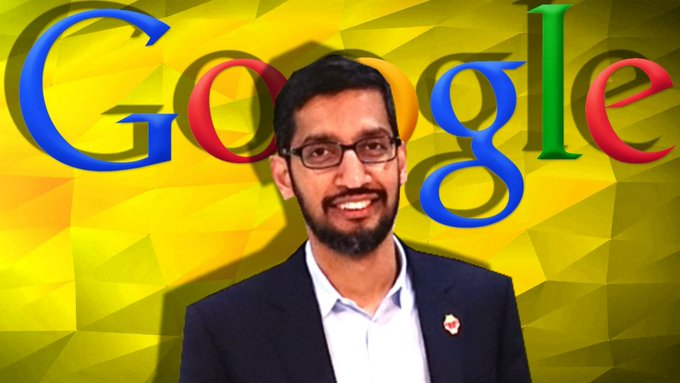
Sundar Pichai, the Indian-American tech visionary who heads both Google and its parent company Alphabet Inc., celebrates his 52nd birthday on June 10, 2025. Born in Chennai (then Madras) in 1972, Pichai’s story is nothing short of extraordinary—from humble beginnings in India to becoming one of the most influential CEOs in Silicon Valley.

Raised in a modest two-room apartment, Sundar’s fascination with technology was sparked early, thanks to his father, Regunatha Pichai, an electrical engineer with GEC, and his mother, Lakshmi, a stenographer. He grew up with limited access to technology—just a landline phone and a transistor radio—but his curiosity was boundless.

His first major brush with Google came on April 1, 2004, the very day Gmail was launched. Interviewed at the Googleplex, he initially thought the free email service was an April Fools’ prank! Little did he know that this was just the beginning of a trailblazing career.

Starting off by working on Google’s Toolbar as a Vice President of Product Management, Pichai soon proved his mettle. One of his early game-changing moves was convincing Google’s co-founders, Larry Page and Sergey Brin, that the company needed its own web browser. This led to the birth of Google Chrome, now one of the most-used browsers worldwide.

The decision came at a critical time—in 2006, Microsoft had made Bing the default search engine on Internet Explorer, threatening Google’s dominance. Chrome wasn’t just a browser; it was a defensive masterstroke. Pichai’s quiet yet impactful leadership earned him a reputation for “substance over style.”

By 2013, he was leading Android, Google’s mobile OS. He also spearheaded efforts like Chrome OS, powering affordable Chromebooks, and played a key role in Google’s $3.2 billion acquisition of Nest in 2014.

His rise through the ranks was rapid. Larry Page trusted him so much that by the end of 2014, Pichai was overseeing Google’s core products—Search, Maps, Ads, Commerce, and Google+. By 2015, he became the CEO of Google. Two years later, he joined Alphabet’s board, and in 2019, when Page and Brin stepped down, Pichai was named CEO of Alphabet Inc., cementing his place at the top of the tech world.

His leadership has not been without challenges—steering a trillion-dollar company through the COVID-19 pandemic, global layoffs, regulatory scrutiny, and now, the AI revolution. Yet, Pichai has remained a steady, thoughtful leader.

Financially, too, his stature reflects his value. In 2022, he earned $226 million, mostly through stock grants—making him one of the highest-paid CEOs in the United States. As of mid-2024, he held around 2.4 million Alphabet shares, of which 180,000 shares were sold through May. Estimates peg his net worth at roughly $390 million, with some figures going as high as $1.3 billion, including unvested stock units and earlier share sales.

From a boy in Chennai with limited resources to one of the tech industry’s most powerful figures, Sundar Pichai’s story continues to inspire millions—especially young dreamers across India. As he steps into another year, his journey stands as a reminder of what resilience, vision, and quiet determination can achieve in the world of technology

Purva Waterfall, Rewa, Being Fed by A Ganges Tributary, is A Hidden Gem of Madhya Pradesh

0

Do you a Ganges tributary is feeding a waterfall in Madhya Pradesh, making it look beautiful and pristine? If not, you should travel to Rewa in the heart of India to look at this water fall located amidst the lush green landscapes of Rewa district in Madhya Pradesh, Purva Waterfall—also spelled Poova Waterfall—is a spectacular natural wonder that offers a peaceful retreat from the bustle of urban life. Cascading from a height of approximately 70 meters (230 feet), this seasonal waterfall is nourished by the Tons River, a tributary of the Ganges. Ideal for nature lovers, photographers, and offbeat travelers, Purva Waterfall is a must-visit spot in Central India that remains relatively unexplored.

One of the primary reasons to visit Purva Waterfall is its unspoiled natural beauty, which is perfect for those seeking solitude and a deep connection with nature. It also offers plenty of opportunities for adventure activities and photography, especially long-exposure landscape shots. The tranquil surroundings enhance the overall experience, and its proximity to other major attractions in Rewa makes it even more appealing.

Best Time to Visit This Waterfall

The best time to witness the waterfall in its full glory is during or shortly after the monsoon season, typically from July to October. During this period, the Tons River flows in abundance, making the waterfall particularly picturesque. It’s best to avoid visiting in peak summer months, as the water flow may reduce drastically or dry up altogether.

Reaching Purva Waterfall is relatively easy. By road, it is located around 30–35 kilometers from Rewa city center. The nearest railway station is Rewa Railway Station, about 35 kilometers away. For air travelers, the closest airports are Khajuraho Airport (approximately 175 kilometers) and Jabalpur Airport (around 200 kilometers). It is recommended to use Google Maps or seek help from local guides, especially since the final stretch to the waterfall may involve navigating rough or unpaved terrain.

To Do Activities

Once there, visitors can enjoy various activities such as trekking around the waterfall, birdwatching, photography, and relaxing picnics. The area is rich in biodiversity, making it ideal for spotting local flora and fauna. However, visitors are advised to wear sturdy footwear as trails can be slippery, and to carry drinking water and snacks since local facilities are limited. It’s also important to avoid visiting late in the evening due to limited lighting and weak mobile connectivity. Responsible tourism is encouraged—visitors should respect the natural environment and refrain from littering.

Places to Visit Nearby

Nearby attractions in Rewa that can complement your visit include Rewa Fort, which showcases the city’s royal heritage; Govindgarh Palace and Lake, linked to the discovery of the first white tiger; Bahuti Waterfall, the tallest in Madhya Pradesh; and Keoti Waterfall, another scenic monsoon-season spot.

In conclusion, Purva Waterfall is a hidden gem that blends natural beauty with adventure and cultural richness. Its serene ambiance and relatively offbeat location make it a perfect getaway for travelers looking to explore Madhya Pradesh beyond the usual tourist circuit.

India Remembers Birsa Munda on His 125th Birth Anniversary. Tributes Pour in on Social Media…

0

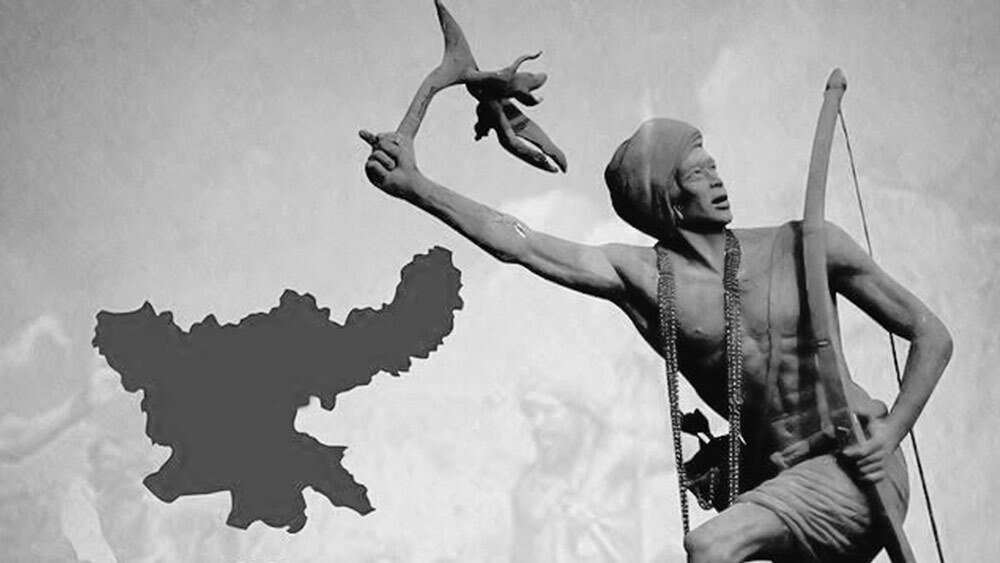
125th Martyrdom Anniversary of Birsa Munda: Honouring a Legendary Tribal Freedom Fighter

This year holds special significance in the remembrance of Bhagwan Birsa Munda, the iconic tribal leader who fought valiantly for the rights of Adivasis over jal, jungle, and zameen (water, forest, and land). Today marks the 125th anniversary of his martyrdom, while 15 November will commemorate 150 years since his birth.

For decades, the legacy of Birsa Munda remained underrepresented in mainstream historical narratives. However, in recent years, he has been rightfully acknowledged as one of the greatest tribal leaders and freedom fighters of all time. His movement, known as Ulgulan (The Great Tumult), which took place between 1895 and 1900, is now recognized as an integral part of the Indian freedom struggle.

His birthplace, Ulihatu, in present-day Jharkhand, has gained national recognition. In honour of his contributions, 15 November is celebrated across the country as Tribal Pride Day (Janjatiya Gaurav Diwas).

A statue of Bhagwan Birsa Munda has been installed in the Indian Parliament, symbolizing national respect for his heroic efforts. President Droupadi Murmu visited Ulihatu on 15 November 2022, followed by Prime Minister Narendra Modi on 15 November 2023, both paying tribute to the revered tribal icon.

Today, his statues can be found not only across Jharkhand but also in various other states, standing as enduring symbols of resistance, identity, and pride for tribal communities across India.

Stay Focussed, Dont Ramble and Listen Sharply, Like a Soldier on Duty, says Colonel Sandeep Ahlawat’s Guidance

0

The Saksham Sanchar Foundation, based in Jaipur and dedicated to promoting media literacy across India, organised a summer camp at Sandipani Vidyalaya in Ratlam district, Madhya Pradesh. Named as the “Gurukulam of Journalism,” the three-day camp focused on raising awareness about journalism, writing, filmmaking, storytelling, and the use of digital media. Esteemed professionals from diverse fields engaged with students and shared the opportunities and challenges in various media fields.

On the final day, the camp was graced with the presence of Colonel Sandeep Ahlawat, whose guidance to students added immense value to the event. Colonel Ahlawat provided detailed insights on body language and communication skills, while also addressing students’ queries on serving the nation.

Stay Focussed, Dont Ramble and Listen Sharply, Like a Soldier on Duty, says Colonel Sandeep Ahlawat’s Guidance

In the workshop’s concluding session, NCC Colonel Sandeep Ahlawat engaged students in a dynamic discussion on “Art of Conversation and Understanding body language.”

Mastering conversation and body language is your weapon for a successful future. Words are powerful, but it’s what you say, when you say it, and how you deliver that makes you exceptional. Speak clearly, with purpose, and time your words wisely, he advised students.

His message to students was ‘stay focused, don’t ramble, and listen sharply, like a soldier on duty. Discipline is key,” he added.

“Your body speaks louder than words. Stand tall, shoulders back, eyes forward—confidence emanates from posture. Slouching or fidgeting screams doubt; don’t let it undermine you. Notice others’ cues: a smile invites connection, crossed arms signal resistance. Align your gestures with your words for impact,” he added.

Every field—teaching, tech, or media—builds our nation, but communication sets you apart. Like soldiers pledging their lives, commit to your goals with discipline. Practice these skills daily, and you’ll command respect in any room. March forward with pride, said Col Ahlawat with smile as students continued listening to each line what he said signalling there was a lot takeaway from the session.

Starlink Internet in India: Revolutionizing Connectivity for a Digital Future

0

Introduction to Starlink Internet

Starlink, a satellite internet service developed by Elon Musk’s SpaceX, aims to provide high-speed, low-latency internet globally, particularly in underserved and remote areas. Unlike traditional broadband relying on fiber-optic cables or cellular towers, Starlink uses a constellation of Low Earth Orbit (LEO) satellites, orbiting 550-2,000 km above Earth. This network, with over 7,600 satellites as of May 2025, delivers internet speeds of 25-250 Mbps with latency as low as 20-50 ms, suitable for streaming, gaming, and video conferencing.

Starlink’s Arrival in India

In March 2025, Indian telecom giants Reliance Jio and Bharti Airtel announced partnerships with Starlink to bring its services to India, pending regulatory approvals from the Department of Telecommunications (DoT). Starlink received a license in June 2025, with operations expected to commence soon after spectrum allocation. This marks a significant step for India, the world’s second-largest internet market with 955 million users, yet plagued by connectivity gaps in rural and remote regions like Ladakh and Arunachal Pradesh.

Aim of Starlink in India

Starlink’s primary goal is to bridge India’s digital divide by providing reliable internet to remote villages, mountainous areas, and islands where traditional infrastructure is impractical. By partnering with Jio and Airtel, Starlink aims to complement existing networks, targeting schools, healthcare centers, and businesses in underserved regions. It also seeks to enhance digital inclusion, supporting India’s Digital India initiative for equitable access to education, e-governance, and telemedicine.

Future Aspects and Potential Changes

Starlink’s entry is poised to transform India’s telecom landscape. It will offer high-speed internet in areas untouched by fiber or 5G, fostering economic growth through e-commerce and digital services in rural regions. The service’s low latency makes it ideal for real-time applications, potentially revolutionizing remote education and telemedicine. However, challenges include high costs—estimated at ₹3,500-₹10,000 monthly with a ₹15,700-₹37,400 equipment fee—making it less competitive in urban areas where fiber broadband is cheaper. Regulatory hurdles, data localization, and weather-related disruptions also pose concerns.

Importance for India

Starlink’s importance lies in its potential to connect 250,000 villages, empowering millions with access to digital resources. It supports critical sectors like border surveillance, disaster response, and military communications, as seen in its use in Ukraine. By complementing BharatNet, Starlink can enhance India’s digital economy, projected to reach $25 billion in the satellite market. However, competition from local providers like Jio and Airtel, and alternatives like Google’s Taara, may drive innovation and affordability.

Anamika Sharma Pays Tribute to The Indian Army with Skydiving Feat in Thailand

0

Celebrating Operation Sindoor

Anamika Sharma, a young skydiver from Prayagraj, Uttar Pradesh, has elevated India’s pride by skydiving from 12,000 feet in Thailand, holding the flag of ‘Operation Sindoor.’ This daring act paid tribute to the Indian Army’s successful counter-terrorism operation in Pahalgam, Jammu and Kashmir, which delivered a strong response to Pakistan. The operation’s success has resonated beyond India’s borders, with Anamika’s skydive in Bangkok symbolizing national pride and valor.

A Historic Skydiving Tribute

On Thursday at 11 AM IST, Anamika performed this remarkable skydive, waving the red flag of Operation Sindoor. The video of her dive has gone viral on social media, showcasing her soaring through the sky with the flag, embodying courage and patriotism. This act has inspired countless Indians, boosting the morale of the armed forces.

Anamika Sharma Pays Tribute to The Indian Army with Skydiving Feat in Thailand

Rising Star in Skydiving

At just 10 years old, Anamika became India’s youngest female skydiver and is now training to be the country’s first female skydiving instructor. With over 300 skydives, her passion and skill were nurtured by her father, Ajay Sharma, a retired Indian Air Force Junior Warrant Officer and professional skydiver. Her family’s legacy of valor has shaped her journey.

A Legacy of Pride

This isn’t Anamika’s first international tribute. In January 2024, she skydived from 13,000 feet in Thailand with a Ram Mandir flag, earning widespread acclaim. Her latest feat has filled her family with pride. Her father expressed joy at her honoring the Indian Army, while her mother, Priyanka, highlighted Anamika’s fearless spirit, proving the potential of Indian daughters.

Anamika Sharma Pays Tribute to The Indian Army with Skydiving Feat in Thailand

Anamika’s skydiving feat in Thailand continues to inspire, reflecting India’s strength and the indomitable spirit of its youth.

Madhavi Lata: The Woman Who Built the World’s Highest Railway Bridge

0

Awards and Legacy: Honored as Top 75 Women in STEAM and Best Woman Geotechnical Researcher.

World’s Highest Railway Bridge: The Chenab Bridge, at 359 meters high, symbolizes Madhavi Lata’s dream and engineering prowess.

From Education to Eminence: Madhavi carved her identity with degrees from JNTU, NIT Warangal, and IIT Madras.

Inspiration for Women: Overcoming challenges in a male-dominated field, she proved women are second to none.

In the heart of Kashmir’s rugged mountains, where the Chenab River roars through steep gorges, stands the Chenab Bridge—an engineering marvel and the world’s highest railway bridge. Soaring 359 meters above the riverbed, this 1,315-meter-long structure is more than steel and concrete; it’s the embodiment of a woman’s audacious dream. Professor Madhavi Lata, a trailblazer from IISc Bengaluru, turned an impossible vision into reality, proving that women have wings—they just need to spread them and fly.

A Spark Ignited in Hyderabad

Madhavi Lata’s journey began in Hyderabad, where a curious mind found its calling in the mechanics of the world. Raised in a family that championed education, she pursued a B.Tech at JNTU, setting the stage for a remarkable career. Her brilliance shone at NIT Warangal, where she clinched a gold medal in M.Tech, and reached new heights with a PhD from IIT Madras in 2000. Each step honed her expertise in civil engineering, preparing her for challenges few could imagine.

Dreaming the Impossible: The Chenab Bridge

When the ambitious Udhampur-Srinagar-Baramulla Rail Link project proposed a bridge over the Chenab River, many deemed it unfeasible. The terrain was treacherous, the altitude daunting, and the seismic risks immense. Yet, Madhavi, a senior professor at IISc, saw opportunity where others saw barriers. Leading a team of engineers, she tackled the project’s most critical elements: designing a foundation to withstand earthquakes, ensuring slope stability, and mitigating environmental risks. Her expertise in geotechnical engineering became the bedrock of the bridge’s success.

Defying Odds with Resilience

Building the Chenab Bridge was no small feat. Madhavi faced skepticism in a male-dominated field, technical complexities, and the pressure of a project that would redefine India’s infrastructure. Undeterred, she poured her intellect into every detail—analyzing soil mechanics, modeling stress points, and ensuring the structure’s durability. Her leadership was a blend of precision and inspiration, rallying her team to share her unwavering belief in the dream. Hours turned into years, but Madhavi’s resolve never wavered.

A Legacy Beyond the Bridge

Completed in 2022, the Chenab Bridge now connects Kashmir to the rest of India, a symbol of unity and progress. But Madhavi’s impact extends far beyond. In 2022, she was named one of the Top 75 Women in STEAM, celebrating her contributions to science, technology, engineering, arts, and mathematics. She also earned the title of Best Woman Geotechnical Researcher, a testament to her pioneering work. At IISc, she mentors aspiring engineers, especially young women, urging them to embrace their potential and conquer challenges.

Wings to Soar

Madhavi Lata’s story is a powerful reminder that women are born with wings—intellect, resilience, and dreams that know no bounds. She didn’t wait for a clear path; she carved one through mountains. Her journey challenges every woman to look within, find their strength, and take flight. The Chenab Bridge stands as proof: no dream is too high, no obstacle too great.

As trains glide across the Chenab Bridge, they carry more than passengers—they carry Madhavi’s legacy. To every woman doubting her potential, her life whispers: your wings are ready. Spread them, face the winds, and soar. The sky is not the limit; it’s where you begin.

Govind Dev Ji Temple: Know Its Historical Significance And Summer And Winter Timings…

0

Yuvraj Singh Rathore

The Govind Dev Ji Temple, situated within Jaipur’s City Palace complex, is a revered Hindu shrine dedicated to Lord Krishna and Radha. It holds immense spiritual and historical significance, attracting devotees and tourists alike.

Historical Significance

The temple’s origins trace back to the early 18th century when Maharaja Sawai Jai Singh II, the founder of Jaipur, brought the idol of Govind Dev Ji from Vrindavan to Jaipur. This idol is believed to have been sculpted by Bajranabh, the great-grandson of Lord Krishna, based on descriptions from Krishna’s contemporaries.

During the Mughal era, particularly under Emperor Aurangzeb’s reign, many Hindu temples faced destruction. To safeguard the sacred idol, it was moved from Vrindavan to Amer and eventually to Jaipur. Initially housed in Suraj Mahal, the idol was later enshrined in its current location within the City Palace complex.

Architectural Highlights

The temple showcases a harmonious blend of Mughal and Rajput architectural styles. Its expansive complex is adorned with lush gardens, intricate frescoes, and paintings depicting scenes from Lord Krishna’s life. Notably, the temple’s Satsang Hall holds a Guinness World Record for being the world’s widest concrete building, featuring a pillarless hall that can accommodate up to 5,000 devotees.

Darshan and Aarti Timings

The temple operates on a schedule that varies between summer and winter months.

Summer Timings (April to July):

Morning: 4:30 AM – 12:00 PM

Evening: 5:45 PM – 9:30 PM

Winter Timings (November to February):

Morning: 5:00 AM – 12:15 PM

Evening: 5:00 PM – 8:45 PM

Daily Aarti Schedule:

Mangla Aarti: 5:00 AM – 5:15 AM

Dhoop Aarti: 7:45 AM – 9:00 AM

Shringar Aarti: 9:30 AM – 10:15 AM

Rajbhog Aarti: 10:45 AM – 11:45 AM

Gwal Aarti: 5:00 PM – 5:15 PM

Sandhya Aarti: 5:45 PM – 6:45 PM

Shayan Aarti: 8:00 PM – 8:15 PM

Timings may vary during festivals and special occasions.

Location and Accessibility

The temple is located at Jalebi Chowk within the City Palace complex in Jaipur, Rajasthan. Its central location makes it easily accessible from various parts of the city.

Festivals Which Are Celebrated With Pomp and Zeal


Govind Dev Ji Temple is a focal point for major Hindu festivals, including:
Janmashtami: Celebrating Lord Krishna’s birth.
Radhashtami: Honoring the birth of Radha.
Holi: The festival of colors.
Gopashtami, Sharad Purnima, and Kartik Purnima: Other significant festivals celebrated with fervor.

Alchi Kitchen in Leh: Know Why It Stands Different and Distinguished Serving the Delicious Ladakhi Cuisine and Watch Rare Pics too..

0

By Lakshya Govani

Alchi Kitchen is the first eatery in Ladakh dedicated solely to traditional Ladakhi cuisine. The all woman restaurant has been making headlines serving local cuisine with a modern twist here. Nestled in the serene village of Alchi, this unique restaurant attracts between 100 to 150 visitors daily, many of whom brave rugged mountain roads for the experience.

Despite Ladakh’s immense popularity as a tourist destination, most local eateries shy away from serving native dishes. Only a handful offer Ladakhi food, and even then, it’s typically limited to common items like mokmok (momos) and basic snacks. Alchi Kitchen breaks this mold with its deeply rooted yet innovative approach to food.

The Kitchen was started by one Nilza Wangmo who decided to open a restaurant dedicated exclusively to Ladakhi cuisine, her idea was met with skepticism—even from her closest friends and family.


“They thought outsiders and tourists would find the food bland and unappealing. But I was determined to introduce the world to authentic Ladakhi flavours,” says the 40-year-old.

Alchi Kitchen in Leh: Know Why It Stands Different and Distinguished Serving the Delicious Ladakhi Cuisine and Watch Rare Pics too..

5 Special Features of Alchi Kitchen:

  1. Authentic Ladakhi Menu
    It is the first restaurant to offer a full menu dedicated exclusively to traditional Ladakhi cuisine, preserving and promoting local culinary heritage.
  2. Modern Culinary Twist
    Classic Ladakhi dishes are reimagined with creative presentation and subtle innovation, appealing to both local and global palates.
  3. Women-led and Empowering
    Founded and operated by Nilza Wangmo, Alchi Kitchen also empowers local women by training and employing them, creating a space of inclusive growth.
  4. Scenic Location
    Located in the tranquil village of Alchi, the restaurant provides diners with a peaceful ambience surrounded by mountains, monasteries, and river views.
  5. Cultural Experience Beyond Food
    Beyond just meals, the restaurant offers a glimpse into Ladakhi traditions, ingredients, and stories, making every visit a rich cultural experience.
Alchi Kitchen in Leh: Know Why It Stands Different and Distinguished Serving the Delicious Ladakhi Cuisine and Watch Rare Pics too..