The United Nations General Assembly designated July 15 as World Youth Skills Day in 2014 to raise awareness about the importance of equipping young people with skills for employment, decent work, and entrepreneurship.
Significance: The day highlights the crucial role of Technical and Vocational Education and Training (TVET) in tackling global challenges such as youth unemployment and underemployment, promoting sustainable development, and ensuring economic growth.
2025 Theme: “Youth Empowerment through AI and Digital Skills” This year’s theme underscores the need to equip youth with future-ready skills, especially in light of the rapid transformation of the job market through Artificial Intelligence (AI) and digital technologies.
Focus Areas for 2025:
Enhancing digital literacy among youth
Expanding access to AI education and training
Preparing young people for jobs in data, coding, automation, and other emerging sectors
Ensuring inclusive access to digital tools, especially for marginalized and underserved groups
Global Activities: The day is observed worldwide through a variety of activities, including:
Workshops and training sessions
Seminars and conferences
Skill competitions and exhibitions
Awareness campaigns on skill development and youth empowerment
India’s Involvement: India launched the Skill India Mission on the first World Youth Skills Day in 2015. Since then, the country has continued to observe the day by promoting a range of skill development initiatives and schemes aimed at empowering its young population and aligning them with the needs of the modern workforce.
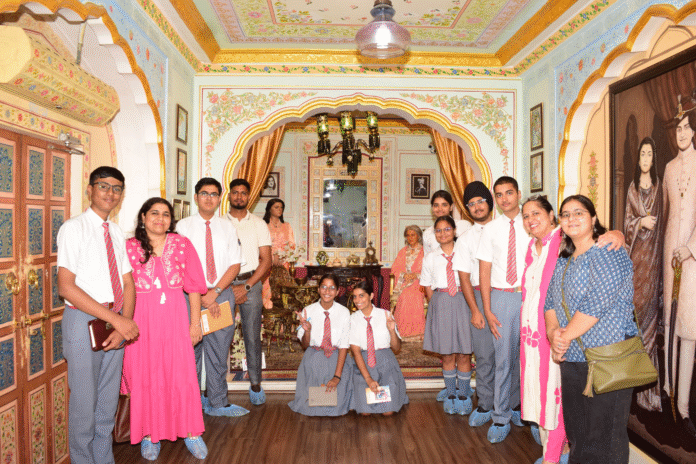
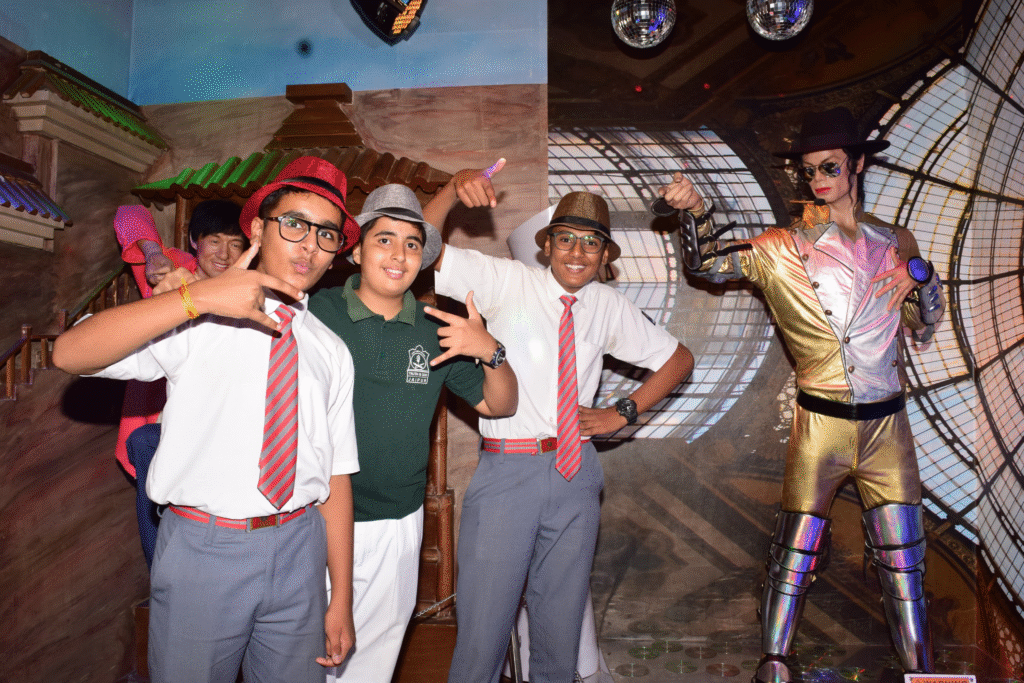
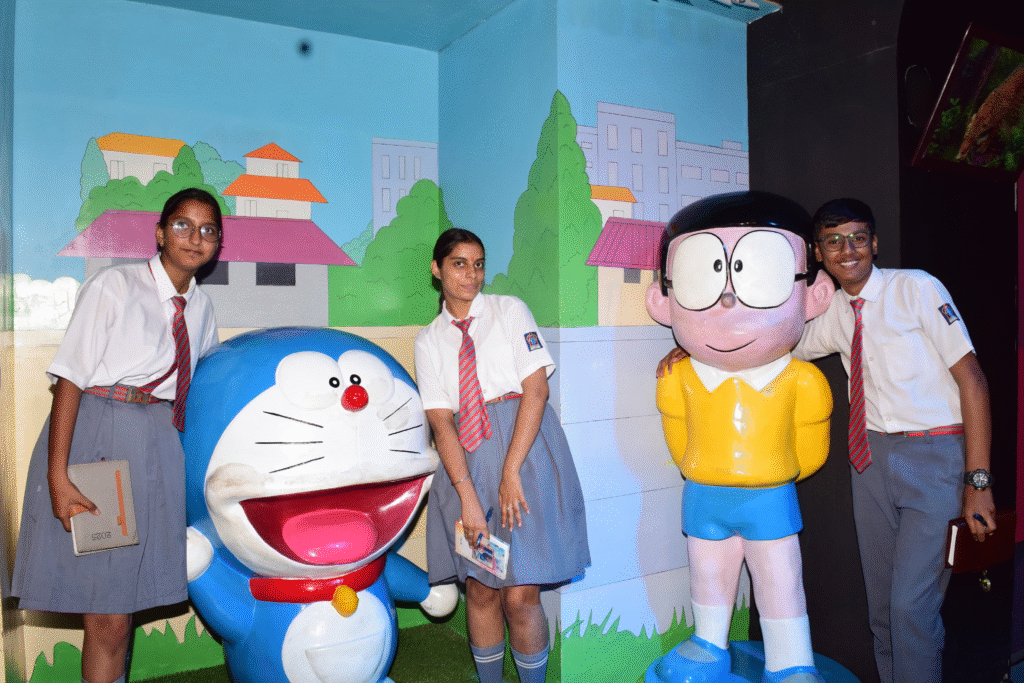
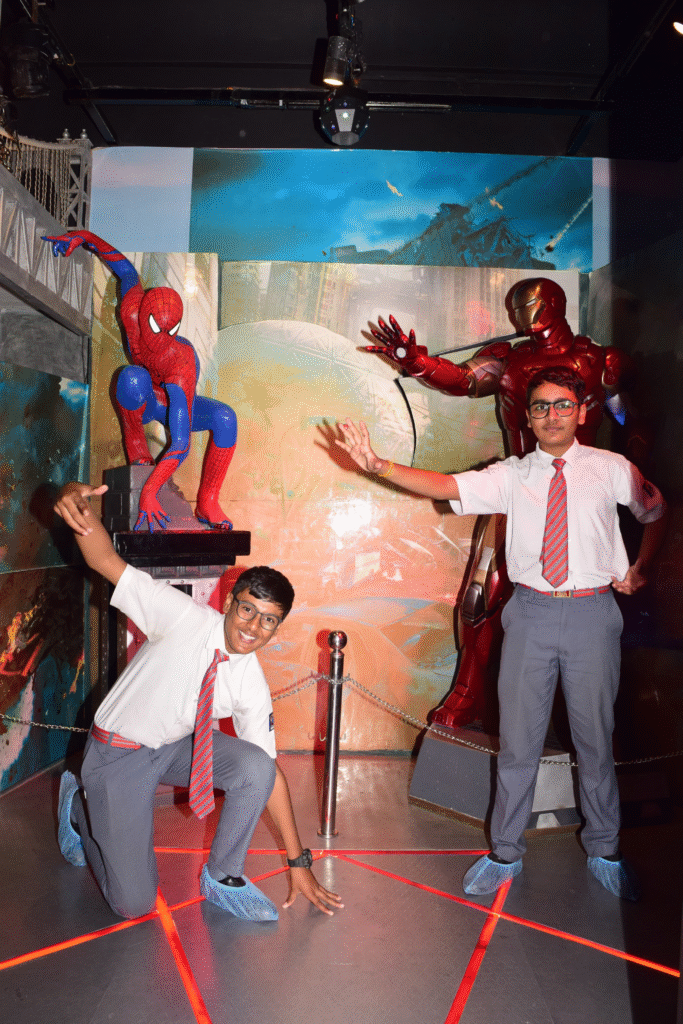
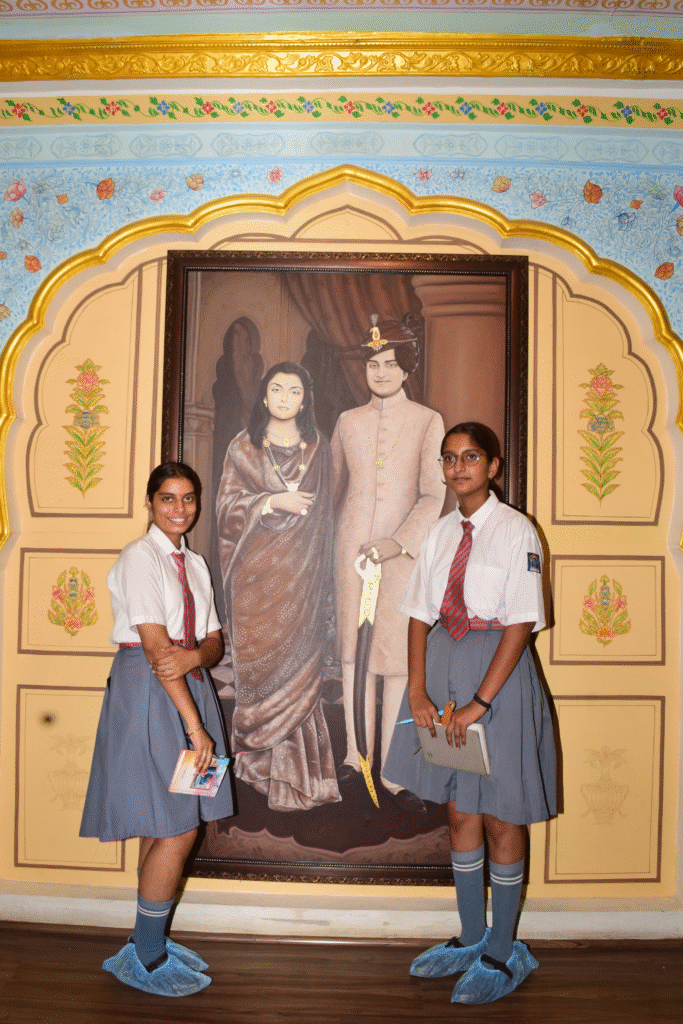
Some school trips are fun. Some are unforgettable. But this one? It was magical. Our visit to the Nahargarh Wax Museum in Jaipur wasn’t just another outing. It was an experience — one that made me laugh, stare in awe, feel goosebumps, and walk away with a heart full of memories. I was lucky to be chosen for this trip — part of the Saksham Sanskar Mass Media team, along with a few other specially selected students from our school. And together, we went on a journey we’ll never forget.
That morning at Army Public School, Jaipur, everything felt special — even the breeze. There was excitement in the air as we boarded the van — some of us chatting nonstop, others already taking selfies, and someone even playing music. The city slowly faded behind us, and ahead was something new… something big. As soon as we saw Nahargarh Fort, I just stared. It felt like a place from a royal storybook — grand, quiet, and full of secrets. Our mentors were waiting, smiling, as we arrived. There was this spark in everyone’s eyes — that feeling when you know something amazing is about to happen.
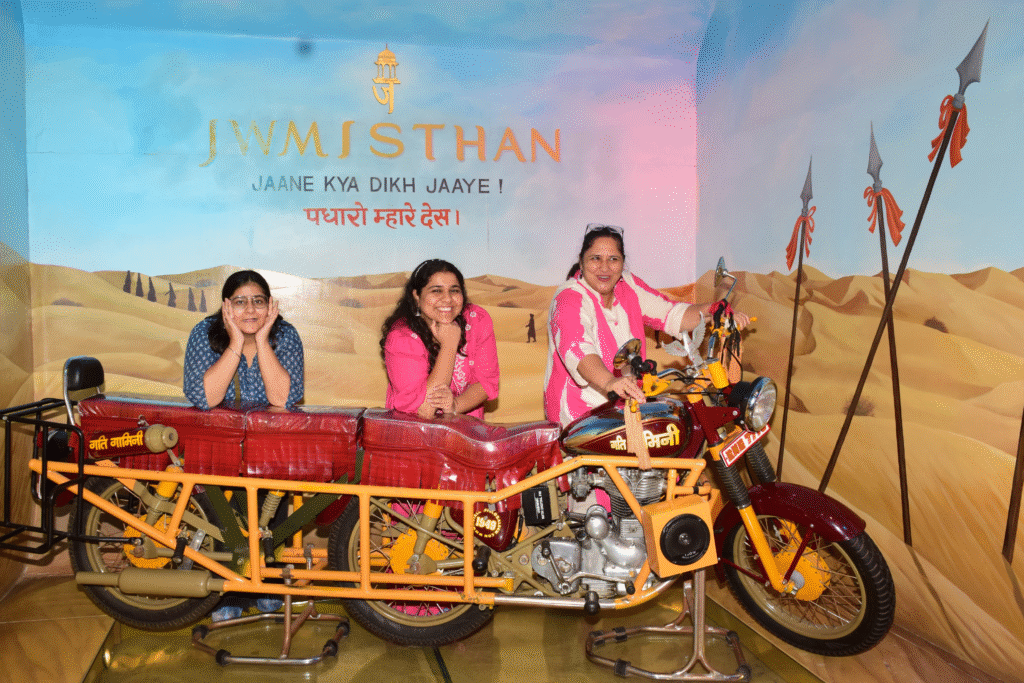
The first thing we saw inside the museum was a five-seater bike called Gati Gamini (1980). It looked old, but strong — like it had carried so many people through time. I couldn’t help but smile. It reminded me of how families stick together — even on a tight seat, there’s always space for love.
Then we walked under a replica of India Gate into a section called Kartavya Path. And that’s where I saw them — Gandhi ji, Nehru ji, Rabindranath Tagore — standing there, as if frozen in time, yet somehow alive. In that moment, I felt proud. I whispered a quiet “thank you” without even realizing it. And in the Freedom Fighters’ Gallery, when I saw Bhagat Singh, Netaji Subhas Chandra Bose, and others… I just stood there. Imagining their courage. I felt small — and inspired.
Then came the Sports Zone, and wow — what a shift! The energy changed the moment we walked in. A giant bat with signatures, a statue of Virat Kohli, and even a tribute to Kalpana Chawla. Seeing her made me think, “If she could touch the stars, why can’t I at least try?” And then came the part we were secretly most excited for — the Bollywood Zone! There was Amitabh Bachchan, looking taller than ever. Then Rajnikanth, Akshay Kumar — all standing like they were about to say their famous dialogues. Even though they were made of wax, they felt real. And yes — we took a lot of photos! Just around the corner, we met Lionel Messi, Queen Elizabeth II, Saina Nehwal, and even Swami Vivekananda — all in one place. Can you imagine?
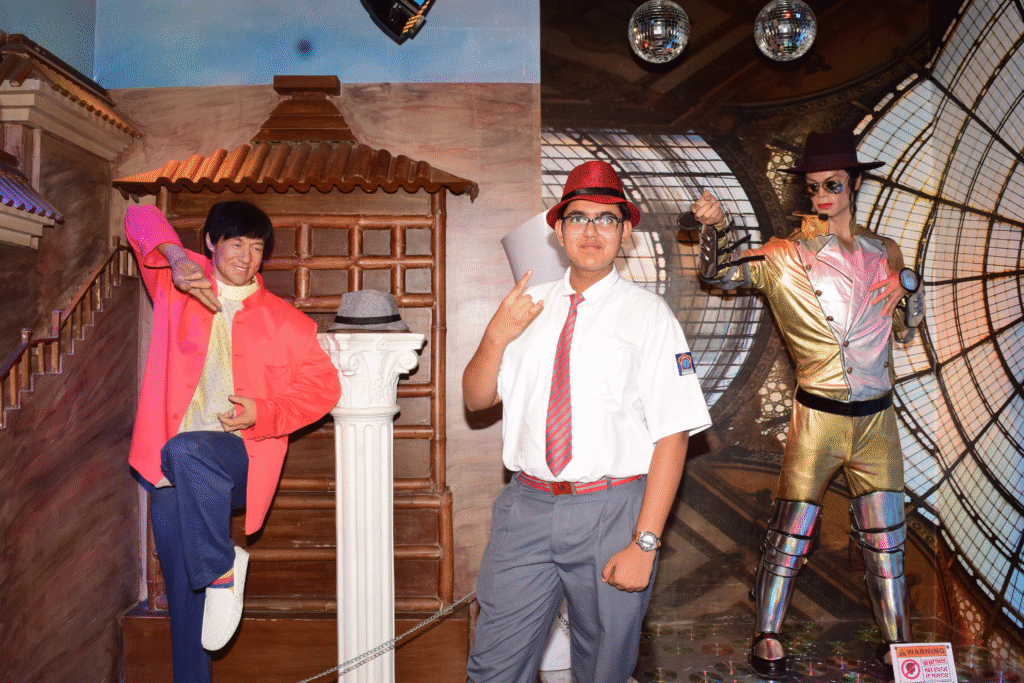
After all the laughter and fun, we entered a calm, softly-lit space. Gentle music played. And there they were — Mother Teresa and the 14th Dalai Lama. I don’t know what happened… but I felt still. Peaceful. Like my heart had paused to breathe. That was one of my favorite moments — quiet, but powerful. And then — boom! — there stood Michael Jackson, mid-dance! We burst out laughing.
Right next to him, Jackie Chan, looking ready to kick. Then came the Cartoon Zone — and my inner child screamed with joy. Doraemon, Nobita, Spider-Man, Iron Man — even Albert Einstein, looking like he might be wondering how he ended up in a room full of superheroes!
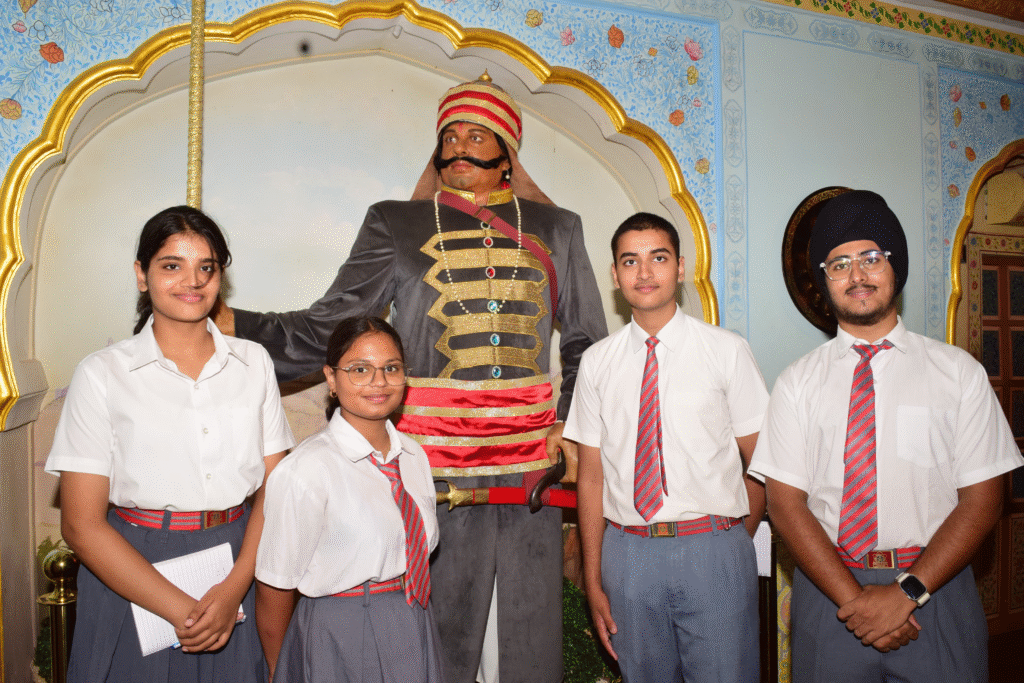
Next, we stepped into a regal hall filled with Rajasthan’s royal past. We saw Maharaja Sawai Jai Singh, and our guide explained how Jaipur was designed using ancient knowledge from texts like the Garud Puran — built with 9 zones and 7 protective gates. Listening to that, I didn’t just feel like a Jaipurite — I felt like I belonged to something timeless. And then… I saw her. Maharani Gayatri Devi. I stopped in my tracks. There was something magical in the way she stood — so elegant, so strong. Her eyes, even though made of wax, felt… real. She didn’t need words. Her presence said everything.
And then — the grand finale: Sheesh Mahal. I had seen pictures before, but nothing compares to standing inside it. The walls and ceiling were covered with over 25 lakh hand-cut mirrors. Everything sparkled. I turned slowly in a circle, taking it all in, feeling like a princess in a story. There were three parts: a royal court in rich colors with a shining throne, a golden room with the Kohinoor diamond replica, and a soft blue-and-white space where I just wanted to sit and stay forever.
We came for a school trip. But we left with something deeper — stories, emotions, pride, and a quiet spark inside us. The Nahargarh Wax Museum didn’t just show us statues. It showed us our heroes. Our history. Ourselves.
In 16th-century Mandu, Sultan Baz Bahadur fell deeply in love with Roopmati, a Hindu singer whose voice could hush the winds. Devoted to the sacred Narmada River, Roopmati requested a place to see it always. Baz Bahadur built the Rani Roopmati Pavilion atop Mandu’s hill, its arches framing the river’s silvery flow. Their romance thrived amidst music and poetry until 1561, when Mughal forces invaded. Baz Bahadur fled, and Roopmati, unwilling to surrender her honor, poisoned herself in the pavilion. Today, this UNESCO site stands as a testament to their tragic love, whispering their story through the monsoon mist.The Beauty of the PavilionPerched on Mandu’s southern edge, the Rani Roopmati Pavilion is a blend of Persian and Indian architecture, its simple elegance amplified by the monsoon. The two-story structure, with open arches and domed roofs, seems to float in the clouds when mist cloaks the Malwa plateau. The Narmada Valley below transforms into a lush, emerald expanse, the river glinting like a sacred thread. During the rains, the pavilion’s stone walls, cooled by the breeze, carry the scent of wet earth, creating a dreamlike ambiance. Its elevated design invites visitors to gaze across the misty landscape, where every arch frames a painting of nature and history. The pavilion’s water reservoir, part of Mandu’s ingenious system, adds practical charm, reflecting the monsoon’s magic. In this season, the site feels alive, as if Roopmati’s songs linger in the air, making it a place where love and loss intertwine with nature’s embrace
what mandu’s local said abot the place
Arjun padiyar, shopkeeper, 35: Mere dada ji batate the ki Roopmati ki awaaz valleys mein goonjti thi, itni pure ki janwar bhi ruk kar sunte the. Pavilion? Woh toh uska sanctuary tha. Wahaan khadi ho, Narmada ko dekhti, apne river aur sultan ke liye gaati thi. Kehte hain Baz Bahadur ne sirf uske liye banaya, taaki woh apni devi ke kareeb feel kare. Aaj bhi, jab monsoon aata hai, uski presence wahaan mehsoos hoti hai. Dhund pavilion ko aise lapet leti hai jaise uska dupatta, hawa mein lehrata hua.
arvind malviya guide, : Yeh sirf patthar nahi—shayari hai. Barish mein wahan khade ho, valley dekho, aur Roopmati ki awaaz sunai degi.” Rani Roopmati Pavilion, monsoon ke dhund mein lipata, bas ek monument nahi—ek pal hai jahan history, romance, aur nature milte hain, ek amar pyar ki kahani ka dilkash nazara dete hue.
From quiet harbors to global horizons, the Indian cruise sector is transforming into a seaborne saga of ambition, innovation, and cultural grandeur. In 2013–14, a mere 102 cruise ships docked at Indian ports, bringing in 84,000 passengers—a whisper on the global tourism radar. Fast forward to 2024–25, and the tide has turned: 282 ship calls have welcomed 4.92 lakh passengers, signaling a sixfold surge in just over a decade. But this isn’t the crescendo—it’s only the overture.
India’s cruise tourism is charting a visionary course, with ambitious targets by 2029 : 1.5 million river cruise passengers annually,1 million ocean cruise passengers per year By 2047, the centennial year of Indian independence, the government aims to sculpt a globally competitive cruise ecosystem, blending infrastructure, heritage, and sustainability.
Geography as Destiny
India’s natural endowments make it a cruise tourism goldmine:
7,500 km of coastline, touching the Arabian Sea, Bay of Bengal, and Indian Ocean
110 navigable inland waterways, ideal for river cruises
1,300 islands, many steeped in tribal and ecological heritage
200+ ports, from historic Mumbai to serene Kochi
With diverse cruise landscapes—from heritage cities like Varanasi to tropical paradises in Lakshadweep, India’s waters are operable year-round, unlike many seasonal destinations.
Ripple Effects Beyond the Shore
Cruise tourism isn’t just about leisure—it’s a potent force for economic stimulation: Boatbuilders, dock workers, and cruise crew see expanded employment Local guides, artisans, and handicraft vendors connect with global audiences Hospitality, transport, and entertainment services grow exponentiall India is backing this with lasting infrastructure—not surface-level beautification. Key initiatives include: Modern passenger terminals at major ports, Brand-new marinas for private and leisure vessels, Lighthouse circuits that convert heritage beacons into boutique stays.
Policy Waves & Vision Missions
India’s cruise renaissance is powered by reforms:
Simplified visa policies for tourists and crew, Digital customs clearance, ensuring faster turnarounds, Guaranteed berths and single-window systems for cruise lines. Flagship programs such as Cruise Bharat, Maritime India Vision 2030, and Amrit Kaal Vision 2047 aim to align cruise tourism with broader national growth. In a move that puts India on the regional cruise map, the first ASEAN–India Cruise Dialogue in Chennai saw India propose a Cruise Corridor across the Bay of Bengal, stitching together a shared maritime heritage.
River Routes: The Next Frontier
India is investing a staggering $5.3 billion to develop 5,000 km of river cruise circuits—one of the world’s largest inland cruise projects. These rivers not only showcase rural life and spiritual heritage but connect ports, farms, temples, and nature reserves in a seamless cultural experience.
The Voyage Ahead
As India turns its gaze seaward, it’s crafting a narrative where tradition meets tide. From the ghats of Varanasi to the sunlit shores of Goa, every wave carries the promise of transformation. India’s cruise tourism isn’t just about luxury—it’s about legacy, livelihood, and leading a regional renaissance.
In a world where development often trumps nature, 38-year-old Ramachandra from Hyderabad has proven that progress doesn’t have to come at the cost of greenery. Over the past decade, he has rescued more than 1.5 lakh trees through the rare and challenging process of tree translocation—a method that moves trees from one place to another without cutting them down.
It all began when Ramachandra saw trees being cut during highway construction. Heartbroken and helpless, he decided to act. Leaving behind a stable job in insurance, he pursued his true calling—saving trees. Despite facing skepticism, financial risks, and even threats, his passion never wavered.
Today, Ramachandra runs Green Morning Horticulture Services Pvt. Ltd., a Hyderabad-based company specializing in tree translocation. From Hyderabad’s Metro corridors to flyovers in Delhi, his team has carefully uprooted and replanted trees, one root at a time.
How Tree Translocation Works:
Pruning: 80% of the tree’s branches and leaves are trimmed.
Trenching: A trench is dug around the tree, adjusted to its age.
Root Treatment: Roots are chemically treated and wrapped in gunny bags to form a secure “root ball.”
Uplifting: Cranes lift the tree onto trailers for transportation.
Replanting: The tree is placed in a chemical-treated pit at its new location.
This ancient technique has roots dating back to 2000 BC Egypt, and although modern India is only recently embracing it, Ramachandra is among the few turning awareness into action. Governments and corporations are now recognizing the value of this process, thanks to pioneers like him who champion nature while respecting urban growth.
Before founding his company, Ramachandra earned a Master’s in Agriculture and an MBA in Agri Business. But when he landed a bank job, he felt disconnected from his roots—quite literally. “Eight years of agriculture studies, then working in finance… it didn’t feel right,” he reflects. So, he quit the job, choosing passion over comfort.
His work isn’t just technical—it’s deeply emotional. “Trees are cut every day. We need more people to step up. The future depends on it,” he urges. Ramachandra’s story reminds us that one person can make a difference—with heart, grit, and a shovel full of hope.
The Khajrana Ganesh Temple in Indore, Madhya Pradesh, stands as a testament to the rich cultural and spiritual heritage of the region. Constructed by the revered Maratha queen, Ahilya Bai Holkar, in 1735, this temple has been a prominent religious site for centuries. The temple’s origins are steeped in history, with its main deity, Lord Ganesha, represented by a unique idol crafted entirely from vermilion (sindoor). To protect this sacred idol from the Mughal emperor Aurangzeb, it was concealed in a well, only to be retrieved and enshrined by Ahilya Bai Holkar, a visionary ruler of the Holkar dynasty.
Architectural Grandeur
The temple’s sanctum sanctorum, or garbhagriha, is a marvel of craftsmanship. Its outer and upper walls are adorned with intricate silver designs, depicting various moods and festivals associated with Lord Ganesha. Adding to the divine allure, the deity’s eyes are crafted from diamonds, a generous donation by a local businessman from Indore. This blend of artistry and devotion makes the temple a visual and spiritual masterpiece.
Spiritual Practices and Beliefs
The Khajrana Ganesh Temple is renowned for its unique rituals and deep-rooted traditions. One of the most distinctive beliefs is that devotees can have their wishes fulfilled by drawing an inverted swastika on the back of Lord Ganesha’s idol. Once their prayers are answered, they return to draw a regular swastika as a gesture of gratitude. This practice draws thousands of devotees daily, with the temple witnessing over 10,000 visitors seeking blessings. Wednesdays and Chaturthi days are particularly significant, as they are dedicated to special worship of Lord Ganesha, attracting massive crowds of devotees.
A Hub of Divine Diversity
While Lord Ganesha is the presiding deity, the temple complex is a vibrant spiritual hub housing multiple shrines. Devotees can also pay homage to Goddess Durga, an underground Shivling of Lord Mahakaleshwar, a captivating statue of Goddess Ganga depicted on a crocodile with flowing water, and a temple dedicated to Goddess Lakshmi. The presence of a Hanuman shrine, along with majestic temples for Lord Shani Dev and Sai Baba, adds to the temple’s allure, offering a holistic spiritual experience.
A Beacon of Faith and Devotion
The Khajrana Ganesh Temple is not just a place of worship but a symbol of faith, resilience, and architectural brilliance. Its impeccable management ensures a seamless experience for the thousands who visit daily. The temple continues to thrive as a cherished religious and cultural landmark, embodying the legacy of Ahilya Bai Holkar and the unwavering devotion of countless devotees. Whether seeking divine intervention or marveling at its historical and artistic splendor, the temple remains a must-visit destination in Indore.
Nestled in the heart of Ramnagar, Mandla, Madhya Pradesh, the Vishnu Temple stands as a testament to the region’s rich cultural and historical heritage. Dedicated to Lord Vishnu, this Hindu temple is renowned for its unique architecture and historical significance. Declared a state-protected monument in 1984, the temple is a symbol of the Gond rulers’ devotion and architectural prowess.
Historical Significance of Vishnu temple
The Vishnu Temple was commissioned by Rani Sundari Devi, the wife of Raja Hirde Shah, a prominent Gond ruler. This sacred site not only serves as a place of worship but also reflects the deep religious devotion of the Gond dynasty. The temple once housed idols of Lord Shiva, Ganesha, Surya, and Goddess Durga, alongside the central deity, Lord Vishnu. While these additional idols are no longer present, the temple’s historical value remains intact, particularly due to a valuable stone inscription within its premises, which is considered an important historical artifact.
Architectural Brilliance
The Vishnu Temple is celebrated for its distinctive architectural style, blending influences from Gond, Mughal, and Bengali traditions. Built on a square plan, each side of the temple measures 56 feet. At its core is a central square chamber crowned by a dome, surrounded by open verandas on both sides that connect the corner rooms to the central space. Each corner of the courtyard features smaller domed rooms, adding to the temple’s symmetrical and harmonious design. This fusion of architectural elements makes the temple a unique example of regional craftsmanship.
Location and Cultural Importance
Located just 30 meters southwest of Moti Mahal in Ramnagar, Mandla, the Vishnu Temple is easily accessible and holds a significant place in the region’s cultural landscape. Its designation as a state-protected monument underscores its importance as a historical and religious site, attracting devotees, historians, and architecture enthusiasts alike.
The musical event Ruhaaniyat, held on July 12, 2025, at 5:00 PM in the First Floor Conference Hall of Hotel Ajanta, Ratlam, was a soulful celebration of the poetic works of Prof. Azhar Hashmi. Organized by Vidyarthi Parivar, the evening brought together prominent artists and dignitaries to honor Hashmi’s lyrical legacy. With heartfelt performances by well-known singers of Ratlam and enchanting folk presentations from across regions, the event offered the audience a rich cultural experience.
A soulful and culturally rich musical event titled “Ruhaaniyat” was recently held in Ratlam, organized by esteemed educationist Praveena Daweshar and the Vidyarthi Parivar. The evening brought together the essence of the city’s artistic spirit, poetic depth, and musical elegance on one platform, celebrating the lyrical legacy of renowned songwriter Prof. Azhar Hashmi.
Esteemed performers from Ratlam including Dr. Snehal Pandit, Kiran Upadhyay, Sangeeta Jain, Jayesh, Anupam Soni, and Shalini Suryavanshi graced the stage with heartfelt renditions of Hashmi’s evocative songs, immersing the audience in a truly ruhaani (spiritual) experience.
Adding further depth to the evening, the “Balihari Guru Aapko” segment showcased folk artists from various regions, expressing the soul of Indian folk traditions. Their performances highlighted the beauty of unity in diversity.
The event was graced by chief guest Shri Siddharth Kashyap, a well-known young music composer, while Shri Arvani Kumar, Divisional Railway Manager of Ratlam, presided over the evening as the honorary chairperson.
Ruhaaniyat was more than just musical entertainment—it was an awakening of the soul through song. The organizers aimed to bridge generations by connecting the youth to Hashmi’s poetic legacy and strengthening the threads of Indian cultural emotions.
In a landmark moment for Indian Railways and law enforcement, Sonali Mishra, a distinguished 1993-batch IPS officer from Madhya Pradesh, has been appointed the first woman Director General of the Railway Protection Force (RPF). Approved by the Appointments Committee of the Cabinet, her term begins August 1, 2025, and will continue until her retirement on October 31, 2026. Mishra succeeds Manoj Yadav, signaling a transformative step in gender representation within India’s security services.
A Career Forged Through Grit
Born in Bhopal, Mishra’s journey is one of relentless commitment and groundbreaking achievements. Across her three-decade career, she has held critical leadership roles—Superintendent of Police in Raisen, DIG in Jabalpur, and IG (Intelligence) at Madhya Pradesh’s Police Headquarters.
Her central deputation brought her national acclaim. In 2021, she became the first woman commander of the Border Security Force (BSF) along the volatile Attari stretch of the India-Pakistan border in Punjab. Her success there led to further historic postings—IG in Kashmir and ADG of BSF’s Eastern Command, securing the India-Bangladesh border in 2023. Her leadership in both intelligence and field operations exemplified her tactical acumen.
Her medals—the President’s Police Medal for Distinguished Service and the Police Medal for Meritorious Service—stand testament to her relentless pursuit of excellence. Recently, she headed the security detail for Prime Minister Narendra Modi during a high-profile women’s empowerment convention, earning both respect and recognition.
Shifting the Tracks of Tradition
Established in 1957, the RPF protects railway passengers and infrastructure across India’s vast train network. Though officially declared an Armed Force of the Union in 1985, it has historically been male-dominated. Mishra’s appointment is more than just symbolic—it’s a structural shift that echoes India’s broader efforts toward inclusivity.
Her leadership promises innovation and empathy in equal measure. “Leading the RPF is a matter of pride and responsibility,” she stated. “This is a message to women that hard work can overcome any barrier.” She credited her rise to the unwavering support of her family and colleagues.
A Symbol of Empowerment
The ripple effect of Mishra’s appointment is already being felt. The Madhya Pradesh DGP praised her as “disciplined and result-driven,” while senior RPF officials expressed optimism about her fresh leadership style. Across social media, her journey is being celebrated as a beacon of possibility: “Sonali Mishra’s appointment is a win for every woman who dreams of commanding her destiny.”
Her legacy is now growing—not only in railway corridors, but in the hearts of aspiring women officers who see her not just as a DG, but as a symbol that leadership knows no gender.
As Bharat embraces the monsoon, ancient wisdom continues to guide the people of Rajasthan. Every year during Ashadha, a unique blend of ritual, astronomy, and agricultural forecasting unfolds in the region’s sacred spaces, a living testament to how Indian science and culture move together.
This Ashadha Purnima, the renowned Shrinathji Temple in Nathdwara performed its centuries-old Ashadhi Tol,the ritual weighing of grains before the deity. According to reports, this year’s Tuladaan indicates normal rainfall and an average harvest, bringing relief to farmers in Mewar who rely on timely monsoons for sowing millets, pulses and maize.
Not far from Nathdwara, the Dwarkadheesh Temple in Rajsamand too held its traditional Ashadhi weighing ceremony. Here, grains and sometimes even jaggery are weighed in symbolic balance, and priests interpret the results using ancient texts and local weather patterns. The Dwarkadheesh Ashadhi Tol matched Nathdwara’s prediction: a normal to above-normal monsoon, promising good ground moisture for the Kharif season.
Meanwhile, in Jaipur, the historic Jantar Mantar, built by Maharaja Sawai Jai Singh II, carried out its annual wind test (Pawan Pariksha) in this Ashadh. Using yantras like the Samrat Yantra and observing wind direction, cloud cover, and planetary alignments, local astronomers forecast steady rainfall for Jaipur and nearby regions, with peak showers expected during Shravan. These time-tested methods, from temple Tuladaans to observatory yantras reveal how Bharat’s ancient science was deeply local and community-driven. Long before satellite models, priests and local astrologers studied wind patterns, shadows, stars, and water levels to guide village sowing cycles, food storage, and monsoon festivals.
Even today, villagers in Mewar and Marwar watch these forecasts closely. Many adjust sowing dates, cattle grazing, and even cultural fairs around these predictions trusting their ancestors’ methods alongside modern IMD bulletins. As climate uncertainties sharpen, these rituals stand as more than just cultural heritage,they are proof that traditional ecological knowledge can coexist with modern science, offering communities a deeper connection to the land and seasons.