Home Blog Page 239

Tesla Unleashed: The Model Y Saga Begins in India — Where Speed Meets Spirit, and Innovation Becomes Obsession

0

The roads of India just got a whole lot sexier—and smarter. Tesla’s Model Y has landed like a meteor in the EV universe, and it’s not just a car… it’s a declaration. A pulse-raising blend of tech, torque, and taste, designed to thrill the gearheads and enchant the digital dreamers.

Two Titans, One Revolution

Standard RWD (₹59.89 lakh) — Think of this as Tesla’s handshake to India. Sleek, minimal, futuristic. With a range of 500 km, it’s the rebel that whispers “I’ve got this” while flying from 0–100 in just 5.9 seconds. It’s the model for those who want the badge, the brains, and the beauty—all without going full throttle.

Long Range RWD (₹67.89 lakh) — Now this one? It’s for the hungry hearts. 622 km of unrelenting range, 0–100 in 5.6 seconds, and a thirst for the horizon. It doesn’t just drive—it dares. Perfect for long drives with zero guilt, and full tech indulgence.

Tech Flex for the Next-Gen

Inside? It’s a rolling command center. A giant 15.4-inch touchscreen acts like mission control, with updates arriving over-the-air like magic. No buttons. No clutter. Just glass, code, and adrenaline.

Charging up? The Long Range variant supports 250 kW supercharging, meaning juice is never far away. And with Tesla Vision, a cockpit of cameras and sensors lets the car think faster than you blink.

Customization with Attitude

Want that Ultra Red that screams passion or a Quicksilver that glows like liquid metal? Extra ₹1.85 lakh. Interior in black and white, like a Bond villain’s lounge? ₹95,000 more. Tesla even tempts you with Full Self-Driving (₹6 lakh)—though it’s not live in India yet.

The Bigger Story

While the U.S. gets its Model Y for under ₹38 lakh, Indian buyers are shelling out nearly ₹60–68 lakh thanks to import duties. Yes, it’s a stretch. But for car lovers and tech-savvy dreamers, it’s not just about the price—it’s about being part of something electric, iconic, and futuristic.

Not Just a Drive, It’s a Movement

Tesla Model Y isn’t here to blend in—it’s here to rewire the expectations of an entire generation. So if you’ve ever drooled over torque curves or geeked out over AI on wheels, it’s time to stop watching from the sidelines.
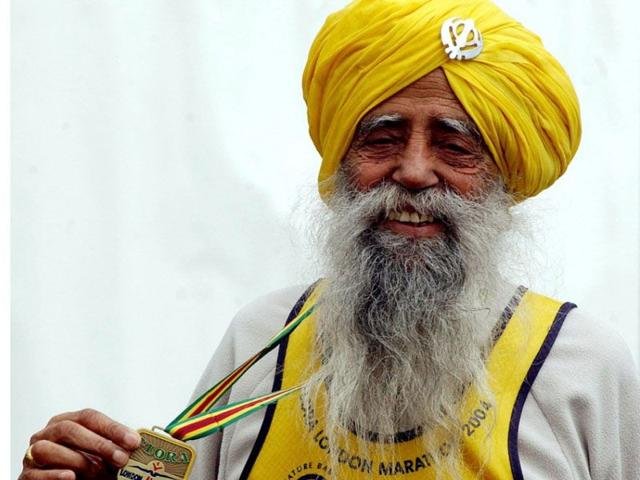
Legendary Marathoner Fauja Singh, the “Turbaned Tornado”, Dies at 114—A Century of Breaking Limits and Inspiring Generations

0

Fauja Singh was not just a runner; he was a revolution in slow motion—each stride defying time, convention, and limitation. Born in 1911 in Punjab, India, into a life marked early by fragility—unable to walk until age five—few could have predicted the soaring legacy he would carve in his twilight years. He began running in his eighties, not for medals but for meaning. The world watched in awe as Fauja took on full marathons in London, Toronto, and New York, his white beard flowing and saffron turban gleaming under skies that bore witness to history in motion. At 100, he became the oldest person ever to complete a marathon, proving that endurance isn’t just physical—it’s profoundly spiritual.

What set Fauja apart wasn’t just his records—it was his remarkable humility, infectious optimism, and unwavering belief that age is no cage. He ran not only for personal fulfillment but to uplift others—raising awareness for charities, motivating youth, and shining as a beacon for Sikh pride on global podiums.

As the world mourns his passing at 114, it also celebrates a spirit that never stopped running. Fauja Singh’s story is now etched into humanity’s collective conscience—a tale of courage over comfort, persistence over prediction, and a reminder that greatness blooms whenever we choose to chase it

The Turbaned Tornado may have crossed his final finish line, but his legacy continues to sprint through the hearts of millions.

Early Life and StrugglesFauja Singh was born on April 1, 1911, in Beas Pind, Jalandhar, under British India. The youngest of four children in a farming family, his early years were marked by challenges. His family believed he was disabled as he was unable to walk until the age of five due to weak and frail legs. Despite these physical limitations, young Fauja persevered, gradually overcoming his struggles. As he grew into adulthood, he took up farming to support his family, displaying the same grit that would later define his remarkable running career. Late Start to an Iconic Running CareerFauja Singh’s journey as a runner began under heartbreaking circumstances.

In August 1994, following the tragic loss of his fifth son, Kuldeep, Fauja turned to jogging as a way to cope with his grief. It wasn’t until the age of 89, in the year 2000, that he decided to take running seriously. That year, he gained international recognition by completing his first full marathon, the London Marathon, in an impressive 6 hours and 54 minutes. Remarkably, he finished the race 58 minutes faster than the previous world record holder in the over-90 age category.Fauja Singh went on to shatter multiple world records in various age categories. His personal best marathon time of 6 hours and 2 minutes came at the 2003 London Marathon. That same year, at the age of 92, he set another record at the Toronto Waterfront Marathon, completing the race in 5 hours and 40 minutes—an astonishing feat for the over-90 category.On October 16, 2011, Fauja Singh made history as the first centenarian to complete a full marathon, finishing the Toronto Waterfront Marathon in 8 hours, 11 minutes, and 6 seconds.

This achievement cemented his status as the world’s oldest marathon runner. In 2012, at the age of 101, Fauja carried the Olympic torch for the London Olympics, further solidifying his iconic status. He retired from competitive long-distance running in 2013, after completing a 10-kilometer race in Hong Kong in 1 hour, 32 minutes, and 28 seconds.

Symbol of Resilience and ToleranceFauja Singh’s achievements extended beyond the track. On November 13, 2003, he was honored with the Ellis Island Medal of Honor by the National Ethnic Coalition, becoming the first non-American to receive this prestigious award, recognizing his role as a symbol of racial tolerance. In 2011, he was also conferred the Pride of India title, celebrating his contributions to inspiring millions worldwide.

A Lasting LegacyFauja Singh’s life is a testament to the power of perseverance and the human spirit. From a frail child unable to walk until the age of five to a record-breaking centenarian marathoner, his journey captivated the world. Known for his humility, determination, and unwavering spirit, Fauja Singh inspired generations to push beyond limitations and embrace life with courage.As the world mourns the loss of this legendary figure, Fauja Singh’s story will continue to motivate and uplift, reminding us all that age is no barrier to achieving greatness.

Veteran Actor-Producer Dheeraj Kumar Hospitalized in Critical Condition

0

Renowned figure in India’s film and television industry, Dheeraj Kumar, has been admitted to Kokilaben Dhirubhai Ambani Hospital in Andheri, Mumbai, following a sudden deterioration in health due to a severe pneumonia infection. Sources indicate that Kumar had been experiencing breathing difficulties for several days, and on Monday, his condition worsened, prompting immediate hospitalization.

Currently placed in the hospital’s intensive care unit (ICU) and on a ventilator, he is under round-the-clock supervision by a dedicated team of specialists. As his health remains extremely fragile, his family has requested privacy during this challenging time and urged well-wishers to pray for his speedy recovery.

41 Years Later, India Still Appears ‘Saare Jahan Se Accha’ from Space: Shubhanshu Shukla’s Triumphant Return..

0

41 years after India’s first poetic glimpse from the cosmos, astronaut Shubhanshu Shukla’s return to space rekindles an enduring truth: “Saare Jahan Se Accha” isn’t just a song lyric—it’s a legacy etched into Earth’s orbit. His triumphant mission reaffirms the majesty of India as seen from above, reminding the world that patriotism can echo across galaxies. This historic moment stitches together past and present, science and sentiment, proving once again that India’s brilliance transcends borders—even atmospheric ones.

Tesla Opens Office in Mumbai…Social Media Triggers Language War…

0

Tesla, the electric vehicle giant led by Elon Musk, officially entered the Indian market on Tuesday, July 15, by launching its first showroom in Mumbai. The showroom is located in Maker Maxity mall at Bandra Kurla Complex (BKC), one of the city’s prime commercial districts. The company has also established a service center and warehouse roughly six kilometers from the showroom.

However, soon after the news spread around, the social media went abuzz and triggered a series of tweets turning attention towards the language war going in Maharashtra.

Tesla’s first offering in India will be the Model Y — a mid-range luxury electric SUV — available in two variants. The vehicle is being imported from Tesla’s Shanghai Gigafactory.

In the U.S., the long-range rear-wheel drive (RWD) version of the Model Y starts at $37,490 (approximately ₹32.2 lakh). However, the Indian version is expected to cost nearly double, primarily due to the 70% import duty levied on fully built electric vehicles. The price gap may reduce if Tesla begins local assembly in India, a possibility that has reportedly been under discussion.

Now, Experience The Delicious Delights Coming Right from Royal Kitchens of Awadh in Jaipur…!

0

Hyatt Regency Jaipur Mansarovar is proud to unveil SHROT X Noshe Jaan, a bespoke culinary pop-up that brings together a shared passion for heritage, craft, and hyperlocal cuisine.

Running from 18th to 20th July 2025, this exclusive three-day dining experience at SHROT, the hotel’s signature all-day dining destination, promises an immersive culinary journey steeped in tradition, flavour, and storytelling.

In a city that constantly seeks both nostalgia and novelty, Noshe Jaan—one of Mumbai’s most beloved names in home-style Awadhi cuisine—makes its Jaipur debut. Known for its soulful culinary narratives where every dish tells a story and every bite evokes memory, Noshe Jaan is celebrated for reviving the nuanced flavours of Awadh with reverence and authenticity.

Hosted at SHROT, which champions a “Pure. Local. Natural.” philosophy, this collaboration is a natural extension of Hyatt’s ‘Hyatt Loves Local’ initiative—an ongoing commitment to celebrating local artisans, heritage, and craftsmanship. While SHROT draws deeply from the soil and spirit of Rajasthan, Noshe Jaan pays homage to the royal kitchens of Awadh, with recipes brought to life by khansamas (traditional chefs) using time-honoured techniques—from slow cooking and hand-ground spices to rich, indigenous ingredients.

“Our food is slow because it is thoughtful,” says Neerusha Nikhat, Founder of Noshe Jaan. “Every kebab and every biryani is a reflection of my childhood, of memories passed down through generations. This pop-up is a chance to let guests dine like Nawabs, but with the warmth and ease of modern hospitality.”

A Culinary Showcase Like No Other

The thoughtfully curated menu is a blend of indulgence and nostalgia:

Vegetarian Delights

  • Kathal ki Shami Kebab – melt-in-your-mouth raw jackfruit kebabs
  • Dahi Kebabs – crisp outside, creamy inside
  • Paneer Kesariya Tikka – saffron-kissed paneer with bold spices

Meat Lovers’ Favourites

  • Mutton Galouti – legendary kebabs that need no introduction
  • Sounda Murgh Tikka – delicately spiced and char-grilled
  • Delhi 6-Style Chicken Fry – crispy, fiery, and full of street-style flair

Main Course Highlights

  • Murgh Malai Korma – creamy, aromatic chicken curry
  • Mutton Nihari – slow-cooked overnight to perfection
  • Boti Kebab Pasanda – tender cuts in a luscious gravy
  • Awadhi Mutton Dum Biryani, Sabz Biryani, and Bagara Pulav – layered rice dishes rich in depth and aroma

Desserts to Remember

  • Kimami Sewai – a festive favourite
  • Zafrani Mawa Phirni – a creamy saffron rice pudding

“This collaboration is an extension of what SHROT stands for—bringing soulful food experiences rooted in authenticity,” shares Naveen Yadav, General Manager, Hyatt Regency Jaipur Mansarovar. “We’re honoured to introduce Noshe Jaan’s rich culinary heritage to Jaipur’s discerning diners.”

SHROT X Noshe Jaan besides being a dining event is a tribute to slow-crafted cuisine, culinary memory, and the enduring charm of traditional flavours, he adds.

Event Details

Name: SHROT X Noshe Jaan Pop-up
Date: 18th to 20th July 2025
Time: Lunch & Dinner
Venue: SHROT, Hyatt Regency Jaipur Mansarovar

Copenhagen Tops Global Liveability Rankings in 2025: What Life’s Really Like in the World’s Best Cities

0

For years, Vienna reigned supreme on the Global Liveability Index, but 2025 saw a surprise shift: Copenhagen now holds the crown.

The Economist Intelligence Unit (EIU) has long measured where life is most comfortable, scoring cities on factors like stability, healthcare, culture, education, and infrastructure. While the top cities have remained fairly consistent, this year brought dramatic changes.

Copenhagen’s rise to No. 1 was powered by perfect scores in stability, education, and infrastructure — an unbeatable trio. Meanwhile, Vienna slipped from the top spot following high-profile safety concerns, including a 2024 Taylor Swift concert cancellation due to a bomb threat, and a recently foiled attack on a train station.

Beyond Vienna and Copenhagen, most top-10 cities remain concentrated in Western Europe, Australia, New Zealand, and Canada, with Osaka standing out as the only Asian entry.

But what’s it really like to live in these global hotspots? We spoke to locals in five of 2025’s highest-ranked cities to get the inside scoop.

Top 10 most liveable cities for 2025:

From Northern Europe to East Asia, the top cities on the 2025 Global Liveability Index aren’t just well-ranked on paper—they offer a high quality of life that residents feel every day. Here’s how five of the world’s best cities measure up, according to the people who live there.

1. Copenhagen, Denmark – The New No. 1

Taking the top spot this year, Copenhagen isn’t just the world’s most liveable city—it also recently ranked as the happiest. The two are deeply connected, as residents benefit from high scores in stability, infrastructure, and environmental quality.

From seamless public transport to clean air and inclusive city planning, Copenhagen proves that good governance and smart design can foster both comfort and contentment.

2. Vienna, Austria – Still a Gold Standard

Copenhagen Tops Global Liveability Rankings in 2025: What Life’s Really Like in the World's Best Cities

Though it slipped to second place, Vienna remains a global benchmark for urban living. The Austrian capital earned a perfect score in healthcare, higher than any other city in the index, along with top marks in education and infrastructure.

Residents describe life here as elegant and efficient—where opera houses meet punctual trams, and every corner seems curated for calm.

3. Geneva, Switzerland – Global Quality, Local Charm

Switzerland’s reputation for quality of life is well-earned, and this year both Zurich and Geneva made the top five. But locals say Geneva has a distinct personality.

Copenhagen Tops Global Liveability Rankings in 2025: What Life’s Really Like in the World's Best Cities

“Geneva is a well-run city in a well-run country,” says James F. Royal, an American expat and author of Options Trading 101. “It offers the benefits of a big city—music, arts, business—in a cosier, more relaxed environment.”

Nestled by Lake Geneva with views of the Alps, the city blends global sophistication with a village-like atmosphere.


4. Melbourne, Australia – Culture Meets Comfort

Ranked fourth, Melbourne continues to shine with perfect scores in healthcare and education. But it’s the city’s rich culture and green spaces that give it an edge over other Australian contenders like Sydney and Adelaide.

Copenhagen Tops Global Liveability Rankings in 2025: What Life’s Really Like in the World's Best Cities

Locals often describe it as Australia’s cultural capital, thanks to its vibrant food scene, festivals, and creative communities—all wrapped in a lifestyle that feels both urban and easygoing.

5. Osaka, Japan – Quietly Exceptional

The only Asian city in the top 10, Osaka comes in at No. 7, with perfect scores in stability, healthcare, and education. It may not have Tokyo’s international buzz, but for residents, that’s part of the appeal.

Copenhagen Tops Global Liveability Rankings in 2025: What Life’s Really Like in the World's Best Cities

“Osaka is a very well-developed, very cool city,” says long-time resident Graham Hill, founder of the review site Osaka City. “It’s like San Francisco to Tokyo’s New York—smaller, but with its own unique flavour.”

With a clean, punctual public transit system and less crowding, Osaka offers big-city perks without big-city stress. Hill notes it’s easier to get reservations at top restaurants—and prices are friendlier, too.

The complete list is here:

1. CopenhagenDenmark

2. Vienna Austria (tie)

3. Zurich, Switzerland (tie)

4. Melbourne, Australia

5. Geneva, Switzerland

6. Sydney, Australia

7. Osaka, Japan (tie)

7. Auckland, New Zealand (tie)

9. Adelaide, Australia

10. Vancouver, Canada

India’s Iconic Snacks Samosa and Jalebi Get a Reality Check : A Wake-Up Call— And It’s Deliciously Provocative

0

If you’re the kind of person who greets the day with a piping-hot samosa or swears jalebi is a valid love language, here’s a spicy twist you didn’t see coming. In a pioneering move that’s both bold and eye-catching, the Health Ministry is serving up visual health warnings for beloved high-fat, high-sugar snacks—starting with none other than AIIMS Nagpur. Think of it as your favorite street food getting a “nutrition reality check,” with posters that look more like something you’d see on a cigarette pack than at your local chai tapri.

But don’t panic—no one’s taking your mithai or kachori away. This isn’t about guilt-tripping; it’s about empowering foodies with bite-sized health wisdom. So, as you savor that flaky crust or syrupy swirl, you might also chew on a little knowledge about what’s inside—and what it’s doing to your insides. In a bold and unprecedented public health initiative, the Union Health Ministry has launched a campaign to introduce visual health warnings for popular high-fat and high-sugar Indian snacks—starting with AIIMS Nagpur as the pilot site.

India’s Iconic Snacks Samosa and Jalebi Get a Reality Check : A Wake-Up Call— And It’s Deliciously Provocative

What’s Changing?

  • Snacks like samosas, jalebis, pakoras, vada pav, and chai biscuits will now be accompanied by bright, cigarette-style warning posters in cafeterias and public spaces. These posters will display calorie counts, and highlight the oil, sugar, and trans-fat content of each item.The warnings aim to educate consumers about long-term health risks such as obesity, diabetes, hypertension, and heart disease.

Why AIIMS Nagpur?

  • AIIMS Nagpur has been chosen as the model institution to kick off the campaign. Cafeterias and food counters on campus are already installing “oil and sugar boards”—vivid, easy-to-read displays that mimic tobacco warnings. Officials confirmed that the initiative is part of a larger national movement to combat lifestyle diseases.

The Bigger Picture

  • According to projections, over 449 million Indians could be overweight or obese by 2050, making India the second-largest center of obesity globally. The campaign aligns with Prime Minister Narendra Modi’s “Fit India” movement, which promotes healthier living and a 10% national reduction in oil consumption.

Not a Ban—Just Better Awareness

  • The government clarified that this is not a ban on traditional foods. Instead, it’s a gentle nudge toward moderation, encouraging people to “eat wisely” without stripping away cultural staples. Health messages will also be printed on official stationery, and ministries are being urged to promote nutritious meals and physical activity in workplaces.

What’s Next?

  • The campaign is expected to expand to other cities and institutions later this year. If successful, it could revolutionize how India approaches food labeling and public health education, especially in a country where deep-fried and sugary snacks are cultural icons. So next time you reach for that crispy samosa or syrupy jalebi, you might just pause to read the fine print—and your future self might thank you for it.

World Youth Skills Day: A Call to Empower India’s Young Workforce

0

You are born in an era where innovation roars louder than tradition, and where skills—not just degrees—shape destinies. World Youth Skills Day isn’t just a date—it’s a movement. A reminder that your dreams, your talents, and your grit are the backbone of India’s progress. Whether you’re sketching stories from the soil of your hometown, building tech that connects villages to the world, or reviving cultural legacies with modern flair—the stage is yours. This is your time to turn aspiration into action. Let skills become your voice, your armor, your revolution.

Every year on July 15, the world celebrates World Youth Skills Day, an initiative by the United Nations to spotlight the importance of technical and vocational education and training (TVET). But for India, a country where over 66% of the population is under the age of 35, this day isn’t just a commemoration—it’s a clarion call to harness the untapped potential of its youth.

The Indian Youth Paradox

India boasts one of the largest youth populations in the world, yet many young Indians face a stark reality:

  • Unemployment and underemployment remain high due to skill mismatches.
  • The education system often emphasizes theory over practical, job-ready skills.
  • Many rural and semi-urban youths lack access to modern skill-training facilities.
  • Emerging sectors like AI, robotics, renewable energy, and digital services demand skills that are not widely taught yet.

Skill India Mission: A Step Forward

In response, the Government of India launched the Skill India Mission in 2015 to bridge the gap between education and employability. Key initiatives include:

  • Pradhan Mantri Kaushal Vikas Yojana (PMKVY): Offers free skill training and certification for youth.
  • National Apprenticeship Promotion Scheme (NAPS): Encourages practical learning through workplace apprenticeships.
  • Skill development programs in tribal and remote areas to bring inclusivity into vocational training.

However, challenges remain. Many programs need improved infrastructure, better trainers, and stronger industry partnerships to truly take flight.

Youth Voices and Aspirations

From Rajasthan to Ratlam, young Indians express a strong desire to learn relevant, future-forward skills. Whether it’s mastering graphic design, organic farming, or traditional arts with modern flair, there is an awakening—a call to blend heritage with innovation. Many youth are also creating impact through entrepreneurship, turning local crafts, culinary traditions, or eco-conscious ideas into sustainable businesses. With the right training and mentorship, these sparks can become bonfires.

The Road Ahead

World Youth Skills Day reminds us that India’s youth aren’t just workers—they’re creators, dreamers, changemakers. To empower them:

  • Invest in holistic skill ecosystems that connect education, industry, and innovation.
  • Make skill-training aspirational, not just a fallback option.
  • Focus on regional and cultural strengths that can create niche markets and jobs.
  • Promote gender inclusivity and accessibility, especially for marginalized groups.

India doesn’t just need skilled youth—it needs inspired youth, equipped to shape not just careers but communities. On this World Youth Skills Day, let’s pledge to turn potential into power.

WHO Recognizes India’s Leadership in AI-Powered Traditional Medicine

0

Recent developments show the World Health Organization’s (WHO) recognition of India’s pioneering role in applying Artificial Intelligence (AI) to traditional medicine. WHO released its first technical brief on this subject, following India’s proposal. The document outlines a global roadmap for AI use in traditional medicine, emphasising India’s Ayush systems. This marks step in digital health innovation and global healthcare collaboration.

AI Applications in Diagnosis and Treatment

AI supports traditional diagnostic methods such as pulse reading, tongue examination, and Prakriti assessment. Machine learning and deep neural networks analyse these inputs to improve accuracy. This integration modernises ancient practices while respecting their core principles.

Ayurgenomics

Ayurgenomics combines genomics with Ayurveda to identify disease markers and personalise health plans. AI analyses Ayurvedic constitution types to predict health risks and suggest preventive measures. This approach bridges traditional wisdom with modern genetics.

Herbal Formulations

AI helps decode the genomic and molecular basis of herbal medicines. This allows repurposing traditional remedies for modern diseases. Such research validates the efficacy of herbal formulations and supports their integration into contemporary healthcare.

Digitisation of Traditional Knowledge

India’s Traditional Knowledge Digital Library (TKDL) is a global model for preserving indigenous medical heritage. AI tools catalogue and semantically analyse ancient texts. This improves accessibility to therapeutic knowledge and protects against biopiracy.

Comparative Studies and Chemical Sensors

AI facilitates comparative studies across Ayurveda, Traditional Chinese Medicine (TCM), and Unani systems. Artificial chemical sensors assess traditional parameters like Rasa (taste), Guna (quality), and Virya (potency). These innovations validate and standardise traditional formulations scientifically.

Practitioner Empowerment

India promotes online consultations and digital literacy among Ayush practitioners. Interoperable digital systems integrate traditional medicine with mainstream healthcare. This strengthens healthcare delivery and expands access to traditional therapies.

Global Collaboration

WHO’s roadmap encourages international cooperation in AI and traditional medicine. India’s leadership reflects a commitment to responsible innovation and ethical use of technology. This encourages a robust scientific ecosystem for traditional medicine worldwide.