Home Blog Page 241

Happy Sawan Somwar 2025 Wishes: Celebrate Spirit Of The Holy Month With These Heartfelt Messages And Quotes

0

First Sawan Somwar 2025: The holy month of Sawan 2025, also called Shravan, begins on 11th July 2025. This holy month is dedicated to the worship of Lord Shiva through fasting, rituals, and prayers. Devotees celebrate the First Sawan Somwar with wishes, messages, greetings, images, WhatsApp status, Instagram cpations to seek Mahadev’s blessings for peace and prosperity.

According to Vedic astrology, this sacred period holds immense spiritual significance and is dedicated to Lord Shiva. Devotees observe fasts, visit temples, and chant mantras to seek blessings and inner peace during this auspicious time.

Happy Sawan Somwar 2025 Wishes: Celebrate Spirit Of The Holy Month With These Heartfelt Messages And Quotes

Wish You A Happy Sawan Somwar

Happy Sawan Somwar 2025 Wishes: Celebrate Spirit Of The Holy Month With These Heartfelt Messages And Quotes

Happy First Sawan Somwar Wishes 2025 (in English)

  • May Lord Shiva bless you and your family with good health and happiness.
  • Happy First Sawan Somwar 2025!
  • On this holy day, awaken your inner self and discover your life’s purpose. Har Har Mahadev!
  • Let’s bow down with respect to the Supreme Lord, Shiv Shankar, who is worshipped across the world. Happy Sawan Somwar!
  • May Lord Shiva’s blessings bring you peace, joy, and strength. Wishing you a
    very Happy First Sawan Somwar.

A Son’s Tribute: IPS Officer Pankaj Chaudhary to Build Library in Memory of His Father in Ballia Village

0

In a heartfelt tribute to his late father Shri Sadashiv Chaudhary, IPS officer Pankaj Chaudhary has announced the establishment of a grand library in his native village, Purushottam Patti in Ballia district. This library will be a beacon of knowledge and hope for underprivileged children from the village and nearby areas—an initiative born out of deep love, respect, and a desire to give back to the soil that raised him.

The library will be more than just a building; it will carry the dreams of countless rural children who yearn to rise through education but lack resources. To further support their journey, annual scholarships will also be instituted for meritorious boys and girls scoring high marks in Class 10 and 12.

Late Shri Sadashiv Chaudhary, a humble and principled junior engineer, served across various districts in Uttar Pradesh and present-day Uttarakhand. From the valleys of Pauri Garhwal to the plains of Banaras, he dedicated his life to public service. On 20 June 2025, he passed away peacefully in Bhopal at the age of 80. Fulfilling his last wish, his mortal remains were cremated at the holy Harishchandra Ghat in Kashi. His terahvi ceremony in the village was attended by dignitaries and well-wishers from across the country—including public representatives, senior bureaucrats, and Union Tourism Minister Gajendra Singh Shekhawat.

The spirit of service and discipline runs deep in the Chaudhary family. Pankaj’s grandfather, Late Ramlochan Pehalwan, was a legendary wrestler born in 1898, known for his formidable strength and simple lifestyle. A devout vegetarian, his diet consisted of milk, ghee, seasonal vegetables, and lentils. He once wrestled with stalwarts like Chandgi Ram at the national level. He lived nearly a century, passing away in 1997, leaving behind a legacy of physical endurance, moral strength, and deep-rooted values.

In 2020, on the sacred day of Mahashivratri, a temple was built in his memory in the village. The temple’s consecration was led by Pankaj’s wife, politician Mrs. Mukul Chaudhary, who brought the Shiv Parivar idol from Jaipur, reflecting the family’s unwavering spiritual grounding.

This story is not just about a library, a temple, or milestones of success. It is about honoring generations who quietly laid the foundation of values, integrity, and service. It is about a son fulfilling the dreams of his father and the legacy of his grandfather—not with pomp, but with purpose.

Purushottam Patti, once just a small village in Ballia, now echoes with memories of sacrifice, service, and vision—a timeless story of roots and wings

These 12 Maratha Forts Are Now UNESCO World Heritage Sites

0

In a proud moment for the nation, UNESCO has inscribed the Maratha Military Landscapes of India into the prestigious World Heritage List during its 47th session held in Paris. With this, India has secured its 44th World Heritage Site, reinforcing its status as a global repository of diverse cultural and historical treasures.

The inscription recognizes a network of twelve formidable forts built by the Maratha Empire between the 17th and 19th centuries. These forts, spread across Maharashtra and Tamil Nadu, are celebrated for their exceptional military architecture, strategic design, and deep cultural significance.

A Glimpse into the Forts

The twelve inscribed forts are:

  1. Raigad Fort – The capital of Chhatrapati Shivaji Maharaj, perched high in the Sahyadri ranges.
These 12 Maratha Forts Are Now UNESCO World Heritage Sites

Shivneri Fort – Birthplace of Shivaji Maharaj, known for its fortified hilltop location.

Salher Fort – The highest fort in Maharashtra, and site of the historic Maratha victory over the Mughals.

Lohgad Fort – A strategic hill fort guarding trade routes, famed for its monsoon beauty.

Rajgad Fort – The first capital of Shivaji, marked by complex architecture and strong natural defenses.

Pratapgad Fort – Associated with the iconic battle between Shivaji and Afzal Khan, set amidst dense forests.

    These 12 Maratha Forts Are Now UNESCO World Heritage Sites

    Panhala Fort – Known for the legendary escape of Shivaji and its strategic hill-plateau positioning.

    Vijaydurg Fort – A coastal stronghold nicknamed “Eastern Gibraltar” for its impregnable defences.

      These 12 Maratha Forts Are Now UNESCO World Heritage Sites

      Suvarnadurg Fort – A coastal fort that secured key maritime routes.

      Khanderi Fort – An island fort crucial for naval dominance near Mumbai.

      Gingee Fort (Tamil Nadu) – The only fort outside Maharashtra, known for its tri-fort structure and historical ties to Maratha expansion in the south.

        These forts are categorized based on their geography and strategic design. While Salher, Shivneri, Lohgad, Raigad, Rajgad, and Gingee are classic hill forts, Pratapgad is a hill-forest fort. Panhala, located on a plateau, is considered a hill-plateau fort. Vijaydurg is a prominent coastal fort, whereas Sindhudurg, Suvarnadurg, and Khanderi are island forts fortified against sea-based attacks.

        Heritage Protection and Conservation

        Out of the twelve, eight forts—Shivneri, Lohgad, Raigad, Suvarnadurg, Panhala, Vijaydurg, Sindhudurg, and Gingee—are protected by the Archaeological Survey of India (ASI). The remaining four—Salher, Rajgad, Khanderi, and Pratapgad—fall under the jurisdiction of the Directorate of Archaeology and Museums, Government of Maharashtra.

        India now ranks 6th globally and 2nd in the Asia-Pacific region for the highest number of World Heritage Sites. Currently, the country has 62 sites on the UNESCO Tentative List, which is a prerequisite for future nominations.

        The Maratha Military Landscapes of India are more than relics of the past—they are living symbols of strategic vision, architectural brilliance, and regional pride. This global acknowledgment aims to preserve and promote these marvels for generations to come, while reinforcing India’s commitment to safeguarding its cultural legacy.

        Smart Learning the Ladakh Way: With Joy, Travel and Play

        0
        oplus_131074

        By Lakshya Govani

        Hi everyone!
        I’m Lakshya, and today I’m super excited to take you on a short journey through the education system of Ladakh. While I was in Leh, I visited a government primary school, and what I saw there was truly amazing and unique with small students being taken on excursions to learn something newer.

        As I entered the school, I saw students celebrating Environment Day with a beautiful act performed in their local Ladakhi language. It was wonderful to see how they used their mother tongue to express such an important message. After the act, the students showed off their talents in music and singing. Imagine this — at 11,000 ft above sea level, these kids were confidently playing the guitar and singing so beautifully!

        A teacher then gave a speech on Environment Day, also in Ladakhi, making it easy for the students to understand the importance of protecting nature. After that, I spoke to some of the teachers and got an email summary of the school’s performance. The students were super excited to see me — they wanted to play with me and get recorded too!

        After the assembly, I noticed their unique attendance system and found out the total strength of the school. Their house system really caught my attention — it was fun and creative, with houses named after cartoon characters!

        In normal schools, each class has a separate attendance register where daily attendance of every class was taken but in this school I noticed that attendance was maintained on a white board and during assembly, that white board was updated as per the strength and absence of the students.

        Smart Learning the Ladakh Way: With Joy, Travel and Play

        I then talked to the adorable little kids of the school. They were so sweet, I honestly wished I could take one home with me! I also observed that the students were neatly dressed, all wearing I-cards, and very disciplined.

        Next, I visited the kindergarten section, where the teachers were doing an amazing job. They used fun and creative games and tricks to teach the little ones. The kids were having a blast — playing, reading, and writing, all while learning joyfully. I spoke with the teacher, asked a few questions, and then headed toward the Class 5 room.

        Here, I noticed something really unique — unlike most schools where students stay in one room and subjects come to them, in this school, students go to different classrooms based on subjects like Science, Ladakhi, etc. I found this system very innovative!

        In Class 5, the students shared what they were learning. I also asked them and their teachers a few questions. One thing I learned was that the government is supporting the school’s development, though because of this, some things like smart boards were removed temporarily during the renovation.

        Later, I visited the Class 2 Hindi class. There too, students were learning through activities and games. The entire school seemed focused on practical learning rather than just chasing marks.

        That really made me think: in big city schools, we often just run after marks — I do that too. But here, I realized how valuable it is to learn through experience. Like the famous line from 3 Idiots —
        “Success ke peeche mat bhago, excellence ke peeche bhago. Success jhak maarke tumhare peeche aayegi.”
        It’s true — learning something new is more important than just scoring high marks.

        Another beautiful thing I noticed was that the nursery kids were given proper meals (not just a mid-day meal). This helped them stay active and enjoy learning even more. I clicked some pictures, and the teachers told me they were getting ready for an Environment Day rally!

        I joined the students for the rally, and wow — their energy and excitement were amazing! I even gave out toffees, and one tiny nursery kid was so happy that she came and hugged me — that moment was truly heartwarming!

        After recording the joyful rally and thanking the teachers, I wrapped up my visit. But the lessons I learned stayed with me.

        So finally, I just want to say this:
        Don’t study only to score marks. Study to learn something new every day.
        Like another line from 3 Idiots says:
        “Aaj padhai is soch ke saath karo ki aaj kuch naya seekhne ko milega.”
        Let’s focus on learning with joy, not pressure.

        The Red Wedding (Monthly Edition)

        0

        By Shrutika Yadav

        “Red Wedding”?
        “Monthly?”
        Wait, is this about that Red Wedding from Game of Thrones?

        Well, thankfully, the “red wedding” we’re talking about here doesn’t involve a brutal massacre (or surprise stabbings at dinner) even though it does come with its fair share of bloodshed, betrayal, and emotional devastation.

        Welcome to menstruation: the recurring episode no one asked for, starring your uterus as the drama queen.

        By this point, you’re probably in one of two camps: either mildly disappointed that this isn’t a passionate takedown of the Game of Thrones writers for robbing us of Catelyn Stark, or already rolling your eyes at what you assume is yet another “overdramatic, overstimulated” monologue about how unfair menstrual cramps is.

        To the fair few men out there who dread that time of the month when the women in their lives begin a week-long saga of hair-pulling, aggressive rants, and emotional plot twists let me say this, from the depths of my hormonal heart: It’s not you. It’s me.

        And on a sunny afternoon when the birds are chirping and my uterus isn’t waging civil war, I will look you in the eye and tell you how much I appreciate your presence, your patience, and your emotional survival skills. I will thank you for sticking around when everything I say sounds like a mix between Shakespearean tragedy and WWE smack talk.

        But today is not that day.

        Because on this sunny afternoon, I am deep in work, bleeding like a low-budget horror film, my back is screaming, my stomach is staging a protest, and I’m sitting in what can only be described as a crime scene that used to be a chair.
        So, the one thing I kindly ask you not to say is:

        “She’s just overreacting.”

        Don’t get me wrong. I’m fully aware that, gender aside, we all carry our own sorrows, each of us quietly waging wars within ourselves. But when the battle inside me shifts and a wall gives way, I bleed unwillingly, unavoidably, every month.

        And on those days, when I can’t raise a white flag to the chaos in my own body, I only wish for a gentle “I’m here for you” (and maybe a bar of dark chocolate) to remind me that I’m not alone in this war.

        Most of all, I hope it’s you, who doesn’t cave to generations of shame and silence. That you, of all people, won’t bow to the tired old standard that calls this natural, painful, powerful process “impure”. Because if I must endure the storm every month, I’d like to do so knowing the person next to me doesn’t see me as unclean, but as unbreakable.

        The world is changing, and I carry a deep sense of pride in seeing my country slowly but surely move forward shedding layers of outdated shame and societal standards, one step at a time. Change is happening, and it’s leaving its mark.

        But even in a shifting world, there’s often a small part of us tucked away in the corners of our minds that still holds on to what we were taught. The beliefs passed down through silence and side-eyes. One can hope that this part of us learns to fight back. Not loudly, maybe. But firmly.

        I hope it finds the courage to look at the women around us moving through this natural, exhausting, red-stained phase and say:

        What you’re going through is okay.
        The pain, the bleeding, the fatigue it’s all normal.
        It’s not shameful. You don’t have to hide.
        Not in your room. Not in your pain. Not in your silence.

        (The writer aims at creating awareness to deconstruct various social stigmas such as menstruation, mental health etc. in a humorous manner)


        Don’t Call Yourself a True Jaipurite If You Haven’t Visited This Jaipur Wax Museum Yet!

        0

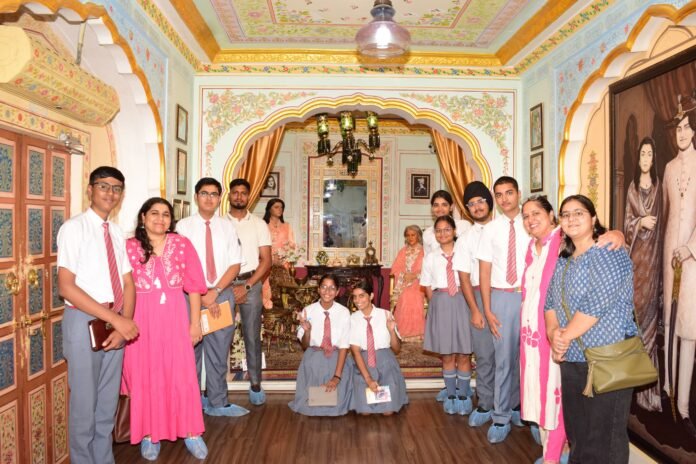
        Hey everyone, I’m Dimple—and if you’re someone who claims to be a true-blue Jaipurite but haven’t stepped into the Jaipur Wax Museum, then it’s time to rethink that claim!

        I recently visited this incredible place and let me be honest—it’s more than just a tourist spot. It’s a living example of vision, creativity, and sheer hard work. I’ve seen Jaipur’s magnificent heritage—the grand forts, palaces, and architecture created by the royals—but this place, tucked near the famous Nahargarh Fort, offers something deeply personal, cinematic, and emotionally moving.

        What makes it truly special? The man behind it—Anoop Shrivastav, whom I had the privilege of meeting. And let me tell you, meeting him felt like meeting a man who turned dreams into sculptures, quite literally.

        From a Haunted Place to a Dream Realized

        We all know about Nahargarh Fort and the beautiful Nahargarh Mahal. But did you know that just next to it lies a structure that was once considered haunted? Anoop Shrivastav saw potential in that very space. With his background in cinema, he envisioned the museum as a three-part story—just like a well-directed film—and brought it to life.

        He told us, “A good movie has a beginning, a middle, and a climax. So does this museum.” And oh, what a climax it is!

        Part I – A Walk Among Legends

        The first section is all about inspirational figures—from Amitabh Bachchan to Virat Kohli, Saina Nehwal to Kalpana Chawla, Doraemon to Spiderman, Gandhiji to Swami Vivekananda. It’s like walking through a hall of fame, but with cinematic lighting and storytelling that makes every figure feel alive.

        Part II – Rajasthan’s Pride on Display

        The second part took my breath away. It’s a tribute to the history-makers of RajasthanMaharana Pratap, Sawai Man Singh, Gayatri Devi, and more Rajas’ coming soon in the list of sculptures. The setup, costumes, and background scores create an atmosphere that feels more like a period film set than a static museum.

        Part III – The Grand Climax: Modern-Day Sheesh Mahal

        Now, let’s talk about my favorite part—the Sheesh Mahal. I’ve seen the original one built by kings, but this one? This is a 21st-century tribute that left me speechless. What makes it unique is that even the floor is made of mirrors, fascinating right?

        What I absolutely loved was how the Sheesh Mahal is divided into three color zonesyellow, blue, and white. Each zone brings a different mood. The beautifully rounded convex mirrors carved in intricate patterns not only show your face—they reflect the passion of the person who created this space. It was pure healing just standing there.

        More than this there are also puppet and magic shows happening which are really interesting!

        More Than Just Wax and Mirrors

        What makes the Jaipur Wax Museum different is not just the artistry, but the soul behind it. It’s not a government project. It’s not a royal inheritance. It’s a dream made real by one man—his vision, his passion, his belief that stories deserve a space to be celebrated.

        And honestly? That’s what makes this place so memorable.

        So, the next time you’re in Jaipur—or even if you live here—don’t miss out on this incredible space. Because to truly understand the modern creative spirit of Jaipur, you need to experience the Jaipur Wax Museum for yourself.

        📍 Located next to Nahargarh Fort

        Museum Timings : 10:00 am to 6:30 pm
        🎟️ Open all days
        📷 Perfect for photos, stories, and unforgettable memories

        Go visit. Feel it. Live the dream.

        Millennials Rewriting Property Desires

        0

        India’s real estate landscape—especially in the luxury housing segment—is witnessing a quiet yet powerful transformation, and at the forefront of this shift are millennial buyers. Often referred to as the “Aspirational Class,” this group, aged between 25 and 40, includes young professionals, entrepreneurs, and emerging nuclear families. Their buying decisions are driven not just by necessity, but by a deeper pursuit of lifestyle, privacy, and long-term investment value.

        According to a recent Magicbricks survey, these buyers typically belong to households with annual incomes exceeding ₹1 crore. Their focus goes beyond conventional parameters like size and price—they prioritize prime locations, seamless connectivity, and premium lifestyle upgrades. For them, homeownership is not just a milestone, but a strategic financial decision.

        Luxury with Purpose

        Unlike previous generations, millennials see real estate as a tool for wealth creation, rather than just security or inheritance. This informed generation is increasingly conscious of:

        • Work-life balance and “me time”
        • Aspirational amenities like co-working lounges, rooftop gardens, fitness centers
        • Enhanced privacy, especially in gated communities
        • Future-proof investment potential tied to urban infrastructure and branding

        With an eye on both livability and return on investment, millennials are redefining what luxury living means. Their preferences are steering developers toward smarter, tech-enabled, eco-conscious spaces designed for comfort and personal expression.

        As financial literacy improves and aspirations rise, this generation is reshaping the housing market into a blend of status, sustainability, and smart planning—transforming aspiration into solid acquisition.

        One of the notable developers in NCR is Prateek Group, which emerges as a beacon of this evolution, with its marquee projects across the Noida-Ghaziabad region. It’s projects like Prateek Canary and Prateek Grand Begonia, located in Noida Sector 150 and Siddharth Vihar, Ghaziabad (NH-24), respectively, that are raising the benchmark.

        Both projects reflect the deeper understanding of millennial buyers who seek a sanctuary that nurtures their lifestyle, aspirations, and sense of balance. Moreover, in NCR, the luxury home market has progressed beyond the realm of the wealthy.

        According to PropEquity, with a 66% growth in Gurugram’s sales value alone, Delhi-NCR would overtake Hyderabad and Mumbai as the top-selling housing market in nine cities . With this, Delhi-NCR has already exceeded the sales value threshold of Rs 1 lakh crore. In 2024, sales in the top nine cities reached Rs 6.73 lakh crore, a 12% rise. Gurugram alone surpassed the Rs 1 lakh crore mark in 2024, while Delhi-NCR saw a 63% increase in sales value to Rs 1.53 lakh crore. 

        Dr. Gautam Kanodia, Founder, KREEVA and Kanodia Group, says, “Delhi-NCR has long emerged as an active player in the luxury housing growth, holding several factors against the backdrop. We have seen millennial buyers remaining at the forefront of this evolution, steering the market toward a more lifestyle-focused and future-ready direction. This demand is quite visible in micro-markets like Dwarka Expressway, SPR, and New Gurgaon. These areas feature the right blend of green cover, connectivity, and premium amenities, which strongly appeal to this buyer segment, and the constant surge in luxury housing proves this trend. Hence, as developers, we envision catering to these buyers, offering them spaces that are immersive, artistic, and aspirational.

        From Trainee to Trailblazer: Priya Nair’s Rise to CEO & MD of HUL

        0

        Landing her role on August 1, 2025, Priya Nair becomes the first female Chief Executive Officer & Managing Director in Hindustan Unilever’s 92-year history.

        Early Life & Academic Foundation

        • Born in Palakkad, Kerala, to Malayali parents, Priya was raised in Mumbai .
        • Education:
          • B.Com in Accounts & Statistics, Sydenham College, Mumbai (1987–1992).
          • MBA (Marketing), Symbiosis Institute of Business Management, Pune (1992–1994).
          • Executive program, Business Administration & Management at Harvard Business School.

        Her strong academic grounding in commerce and marketing set the stage for a career in consumer goods.

        From Trainee to Trailblazer at HUL

        40+ years in FMCG began as a management trainee in 1995, in sales and marketing. Over the years, she built her reputation focusing on brands like Dove, Rin, and Comfort, with early roles in consumer insights and brand management.

        By 2014, she had become Executive Director – Home Care (South Asia), steering a turnaround through sustainability, cost reductions, and innovation. From 2020 to 2022, she headed Beauty & Personal Care, before stepping into the global spotlight as Global Chief Marketing Officer and then President – Beauty & Wellbeing, overseeing a €12–13 billion portfolio across 20+ markets.

        The Experience She Brings Onboard

        1. Deep Consumer Insight
          Two decades spent understanding Indian consumers – this gives HUL an insider’s edge.
        2. Brand Building & Innovation
          Led successful initiatives like Kan Khajura Tesan, earning global awards (Cannes Lions).
        3. Sustainability & Efficiency Mastery
          She executed a major turnaround in Home Care with cost efficiency, margin enhancement, and green innovation.
        4. Global Leadership Credentials
          As Unilever’s Global CMO and President (Beauty & Wellbeing), she mastered scaling brands digitally and across borders.
        5. Championing Diversity
          As one of the few Indian-origin women on Unilever’s global leadership team, her appointment is a strategic win for diversity and gender balance.

        Market Confidence & Strategic Outlook

        • Following her appointment, HUL shares jumped nearly 5%, closing around ₹2,520 – reflecting investor optimism in her strategic vision.
        • Analysts credit her track record in growing margins and market share in Home Care, and anticipate renewed focus on global brand introductions and innovation-led growth.

        What This Milestone Means

        Priya’s ascent signals a powerful shift: internal talent promotion, heritage brand revitalization, strategic modernization, and a strong stance on leadership diversity. With her blend of market acumen, consumer focus, global perspective, and gender-first leadership, she’s set to chart a new growth chapter for HUL.

        To bring it all together

        Priya Nair’s appointment as the first-ever female CEO and MD of Hindustan Unilever marks a watershed moment – not just in her storied 30-year career, but for corporate India as a whole. She brings to the table:

        • A deep-rooted understanding of the Indian consumer, cultivated since her start in 1995.
        • Proven ability to drive growth – she led strong volume, share, and margin improvements in Home Care (2014–2020), and guided the Beauty & Wellbeing division across 20+ markets globally.
        • A diversity of leadership experience across functions – sales, sustainability, brand building, and global strategy.

        The market noticed too – HUL’s shares jumped ~5% on the day of her appointment, reflecting investor confidence in her ability to refresh strategy, deepen margins, and tap into underserved segments.

        As she takes office on August 1, 2025, the road ahead will test her vision in balancing innovation, sustainability, and competitive resilience. With HUL facing pressure in categories like beauty, packs, and tea, her mandate will be to revitalize growth while retaining cost discipline.

        Ultimately, Priya Nair’s elevation signals more than just a leadership change – it’s a concrete step toward breaking India’s corporate glass ceiling. If she succeeds, it could spark a wave of inclusive leadership across the nation’s business landscape. And for HUL, it’s a strategic pivot – renewed energy, sharper insight, and a dash of history-making spirit heading into the next decade.

        OPES+ Launched with Flat INR 9 Brokerage Per Order

        0

        KBS India Limited, a SEBI-registered stockbroker and a distinguished member of both NSE and BSE, renowned for over 45 years of trusted service in the financial industry, has launched OPES+. It is a new-age trading and investing app built to meet the demands of today’s traders and investors. Offering powerful tools combined with a flat INR 9 per order pricing, OPES+ makes professional-grade trading and investing accessible to all.


        This transparent pricing approach removes cost as a barrier, empowering active traders & investors. OPES+ offers an intuitive experience, complete with real-time market commentary, GTT (Good Till Triggered) orders, customisable charts powered by TradingView, and advanced options analytics including Greeks.


        Speaking at the launch, Tushar Shah, Managing Director at KBS India Limited, said, “With OPES+, we’ve built something simple, smart, and backed by decades of trust. This is about creating a platform that helps traders & investors make confident, informed decisions without the worry of high brokerage costs.”


        The app also integrates features such as live portfolio tracking, personalised analysis tools, and seamless back-office access, making it a comprehensive solution for modern traders and investors. Whether it’s equities, mutual funds, or derivatives, OPES+ aims to be a one-stop destination for all users. 

        ‘Tirupati in India is Among Asia’s Most Affordable Summer Destinations in 2025’

        0

        Digital travel platform Agoda has revealed its list of the most budget-friendly summer destinations in Asia for June to August 2025. From cultural hubs to scenic retreats, these destinations offer travelers the chance to explore without stretching their wallets. Surabaya, Indonesia, leads the list with an average room rate of just INR 3037 per night*, making it a top choice for those eager to embrace culture and adventure this summer. 

        Surabaya is followed closely by Tirupati, India, and Hat Yai, Thailand in the top three, with average room rates of Rs. 3211 and Rs. 3385 per night, respectively. These destinations offer the perfect summer escape, combining rich culture, diverse cuisine, and picturesque settings for an unforgettable getaway.
         
        Gaurav Malik, Country Director – India, Sri Lanka & Nepal at Agoda, shared, “It is exciting to see Tirupati featured in a diverse mix of destinations in this year’s list of Asia’s most affordable summer getaways. Travellers today are seeking value without compromising on cultural depth or travel ease, and many of these cities offer just that, with good connectivity, simple visa processes, and rich local experiences. Tirupati stands out as a destination that blends spiritual significance with affordability. At Agoda, we remain committed to making such meaningful journeys easier and more accessible for everyone.”
         
        The Cheapest Summer Destinations ranking is based on average room rates in the ten most popular destinations across nine Asian markets, highlighting the most wallet-friendly options for summer travelers.
         
        1. Surabaya, Indonesia (Rs. 3037 average room rate per night)
        Known for its rich history and vibrant culture, Surabaya offers visitors a chance to explore its historic architecture, bustling markets, and delicious street food. The city is also a gateway to nearby attractions like Mount Bromo and Madura Island.
         
        2. Tirupati, India (Rs. 3211 average room rate per night)
        Home to the renowned Venkateswara Temple, Tirupati is a spiritual haven for many. Beyond its religious significance, the city offers a rich cultural experience with its vibrant festivals, traditional music, and delectable South Indian cuisine.
         
        3. Hat Yai, Thailand (Rs. 3385 average room rate per night)
        Famous for its lively markets and mouthwatering street food, Hat Yai is a versatile destination that also serves as a gateway to nearby beaches and islands. The city is perfect for those looking to enjoy a mix of urban and natural attractions.
         
        4. Dalat, Vietnam (Rs. 3905 average room rate per night)
        Nestled in the Central Highlands, Dalat is known for its cool climate, beautiful landscapes, and charming French colonial architecture. Visitors can enjoy activities like hiking, cycling, and exploring the city’s vibrant flower gardens.
         
        5. Iloilo, Philippines (Rs. 4079 average room rate per night)
        Iloilo offers a blend of historical landmarks, beautiful beaches, and a thriving food scene. Visitors can explore the city’s Spanish colonial churches, enjoy local delicacies, and relax on the pristine beaches of nearby islands.
         
        6. Kuching, Malaysia (Rs. 4600 average room rate per night)
        Kuching is a cultural gem, offering a mix of heritage sites, local cuisine, and access to natural attractions like Bako National Park. Its laid-back vibe makes it a great choice for a summer getaway.
         
        7. Nagoya, Japan (Rs. 7811 average room rate per night)
        Nagoya offers a wealth of experiences for travelers, from the iconic Nagoya Castle to the Toyota Commemorative Museum. Food enthusiasts can savor the city’s renowned hitsumabushi (grilled eel), while shoppers can enjoy unique finds in its bustling shopping districts.
         
        8. Kaohsiung, Taiwan (Rs. 7811 average room rate per night)
        Kaohsiung is a vibrant port city with a mix of cultural landmarks, night markets, and scenic spots like Lotus Pond. It’s an excellent destination for those looking to experience the charm of southern Taiwan.
         
        9. Daejeon, South Korea (Rs. 8072 average room rate per night)
        Daejeon offers a mix of modern attractions and natural beauty, with highlights like the Expo Science Park and Yuseong Hot Springs. Its parks and museums make it a great destination for families and solo travelers alike.
         
        With over 5 million holiday properties, 130,000 flight routes, and 300,000 activities available, Agoda makes it easy to plan the perfect summer getaway. Visit Agoda.com/deals or download the Agoda mobile app for the best deals.