Home Blog Page 190

Poland’s Living Mystery of Bent Pines, Nature’s Art or Manmade Mystery?

0

A Forest That Defies Nature

Tucked away near the small town of Gryfino in West Pomerania, Poland, lies one of Europe’s most baffling natural wonders — the Crooked Forest . This quiet patch of woodland contains a surreal gathering of pine trees, each with an identical and inexplicable twist in its trunk. Near their base, the trees bend sharply — almost at a 90-degree angle — before curving upright again toward the sky. From a distance, it looks like nature itself has taken artistic liberties, sculpting trees into question marks across the landscape.

The Numbers Behind the Mystery

While some early reports suggested that as many as 400 crooked pines were originally planted, officials from the Gryfino Forest District now confirm that fewer than 100 trees remain, clustered within a 2-hectare area. Despite their strange shape, the trees are healthy, with many reaching up to 50 feet (15 meters) in height. They were planted sometime between 1930 and 1945, and dendrological records indicate they were between 7 and 10 years old when their growth was somehow redirected.

Poland’s Living Mystery of Bent Pines, Nature’s Art or Manmade Mystery?

Northward Bends: A Curious Detail

What makes the Crooked Forest even more peculiar is that almost all the curved trunks point northward. This consistent orientation suggests that the shaping was not random — it was deliberate, though the reason remains lost to history. Natural phenomena like heavy snowfall, gravitational pull, or phototropism (growth toward light) have all been considered and largely ruled out.

Theory: Man-Made Timber for War or Craft?

The most accepted theory is that local farmers or woodworkers purposefully bent the saplings. Why? To grow naturally curved timber that could be harvested for shipbuilding, sled runners, furniture, or even war equipment. Bent wood has structural advantages in construction, particularly for elements like boat keels or rocking chairs. This method, known as tree shaping or arborsculpture, has historical precedent but no records from the time have survived to confirm this theory in Gryfino’s case.

A Mystery Deepened by War

One of the reasons the forest remains such a puzzle is that Gryfino was largely evacuated during the early years of World War II, and most of the region’s pre-war residents never returned. Those who might have known the truth — the planters, foresters, or local craftsmen — took their secrets with them. With few living witnesses and no written documentation, the forest became a natural enigma frozen in time.

Tourist Attraction and Conservation Efforts

Today, the Crooked Forest draws thousands of curious visitors each year, from nature lovers to conspiracy theorists. Some claim the trees are the result of gravitational anomalies or even UFO landings, though these ideas remain in the realm of folklore. Conservationists are now working to preserve the remaining trees, but no efforts have been made to replicate the technique — partly because no one knows how it was done, and partly to maintain the uniqueness of this eerie botanical gallery.

Nature’s Riddle, Still Unsolved

Whether shaped by human hands or by some unknown force of nature, the Crooked Forest continues to stand as one of Poland’s strangest and most photogenic sights. Its twisted trees remain a haunting and beautiful reminder that even something as straightforward as a tree’s growth can become a lasting mystery.

Gauri Khan to Design Trophy Mantle as Shah Rukh Wins National Award

0

It was a moment many believed would come — and today, it finally did.

As the curtains were drawn back at the 71st National Film Awards ceremony in New Delhi, Shah Rukh Khan stood centre stage and accepted the Best Actor National Film Award for his performance in Jawan, achieving a milestone that had long been anticipated. (Hindustan Times)

Watching proudly from behind the scenes was Gauri Khan — his wife, partner, and longtime confidante. In a heartfelt social media post, she celebrated the moment with emotion and admiration. She wrote:

“What a journey it’s been @iamsrk. Congratulations on winning the National Award!!! So deserving… it’s a result of your years of hard work and dedication.” (Hindustan Times)

But her message didn’t end with just words. True to her creative spirit, Gauri revealed she would be designing a special mantle to beautifully display this well-earned trophy — a symbol not only of his achievement but of the enduring journey behind it. (Hindustan Times)

Their children, Suhana and Aryan, also joined in the celebration, posting their own message celebrating their father’s achievement, recalling his constant striving, his belief in doing meaningful work, and how this award, though silver, means gold to their hearts. (The Indian Express)

As the applause echoed, as camera flashes lit up his smiling face, Gauri’s admiration shone through — not just as a proud spouse, but as someone who has witnessed every late night on set, every script read till dawn, every moment of doubt turned into resolve.

Today, this award is more than a trophy; it’s testimony. Testimony of a journey of decades — of an actor’s persistence, a family’s support, and the promise that sometimes dreams do wait for the right moment. And in that promise, Gauri’s words, her gift, and her unwavering faith make this moment even more profound.

In fact, Gauri also congratulated Rani Mukherjee and Karan Jauhar who were also feted with coveted award. This picture and post speaks volume.

https://www.instagram.com/p/DO8utQGCCnZ/?igsh=ampkemdkb2YwMHBr

World Bollywood Day: Know its History and Significance…

0

The Indian film industry began its journey in the early 1900s, much like Hollywood, with silent films. But it wasn’t until the advent of talking films, notably with the establishment of Bombay Talkies in the 1930s, that the industry began to truly evolve and grow. Unlike Western cinema, where the plot and script often took center stage, Indian films became largely driven by star power, making the actors themselves the primary draw for audiences.

By the 1970s, India’s film industry had grown so significantly that it surpassed Hollywood in terms of production volume and popularity. This remarkable growth led to the coining of the term “Bollywood”, a blend of Bombay (now Mumbai) and Hollywood. While Hollywood is an actual district in Los Angeles, Bollywood does not refer to a specific location but rather to the idea and identity of the Hindi-language film industry centered in Mumbai.

Even after the city of Bombay was officially renamed Mumbai in 1995, the term Bollywood remained in popular use, continuing to represent the industry’s unique blend of storytelling, music, drama, and spectacle. Today, Bollywood produces approximately 1,000 films annually, making it one of the largest film industries in the world by output.

One of Bollywood’s most defining features is its vibrant use of music and dance. Elaborate song-and-dance sequences are central to the cinematic experience. Traditionally, actors have lip-synced to songs performed by professional playback singers—a practice that has long been accepted as part of the Bollywood tradition. However, in recent years, some actors have begun performing their own vocals, signaling a shift toward more multifaceted talent.

With a global audience of over 3 billion viewers, Bollywood continues to capture hearts across the world. World Bollywood Day is a celebration of this colorful, influential, and ever-evolving industry—a perfect opportunity for fans around the globe to honor its legacy and impact.

So, whether you’re a lifelong fan or new to Indian cinema, get ready to dance, sing, and celebrate—World Bollywood Day is the time to immerse yourself in the magic of Bollywood!

Silver That Weighs More Than Metal: The Untold Story of Jhabua’s Tribal Ornaments

0

(PC:fiber2fashion)

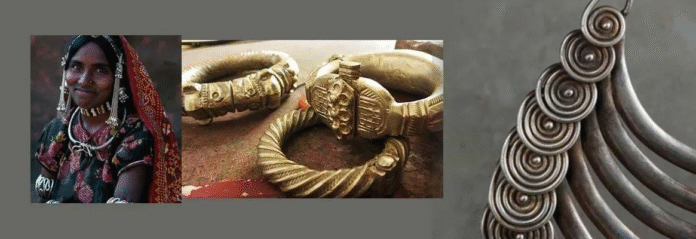
In the hilly heartland of western Madhya Pradesh, where the Bhils and Bhilalas have lived for centuries, silver isn’t just a metal. It’s a legacy. A language. A lifelong companion. From the moment a girl is born, her body is adorned with solid silver locks—on her neck, wrists, ankles. Not for fashion. Not for wealth. But as a ritual, a mark of dignity, and a silent symbol of gendered endurance.

These ornaments, often weighing kilograms, are never removed. Not until death. And even then, they’re preserved by the family—passed down like sacred relics, reminders of a woman’s journey through a male-dominated world.

The Land That Breathes Tradition

Jhabua, surrounded by Gujarat and Rajasthan’s borders, is a tribal district rich in minerals—limestone, dolomite, calside—but poor in rain and resources. The terrain is rugged, the economy agrarian, and the people resilient. Despite droughts and degraded wastelands, the tribes celebrate life with color and pride. Festivals like Bhagoriya erupt in dance, storytelling, and the exchange of silver jewelry as tokens of love and union. In this land, boys don’t offer roses—they offer heavy silver ornaments to the girl they wish to marry. If she accepts it publicly, the wedding happens the same day. No dowry. No cash. Just silver. And a lifetime of wearing it.

From Spirals to Chains: The Evolution of Craft

Earlier designs were simple—round tubular locks, spiral ends, cast in pure silver. But poverty and rising silver prices have changed the game. Today, artisans use copper alloys, lighter chains, dome-shaped pieces. The tradition survives, but it’s adapting. In some villages, it’s fading. In others, it’s fiercely alive.

Even families below the poverty line refuse to part with ancestral ornaments. “We may die of hunger,” they say, “but the silver stays.”

A Tradition Under Threat

But this legacy is under siege. Robbery cases have surged. Women are attacked for the silver they wear. The ornaments that once symbolized pride now attract danger. Slowly, the community is shifting to lighter, occasional-wear designs—still beautiful, still meaningful, but safer. And yet, in the remote corners of Jhabua, the old customs persist. Silver bricks are exchanged during festivals. Street plays echo ancestral tales. Elders narrate stories of chivalry and resilience. The bow and arrow—Teer-Kamthi—still hangs proudly in homes

Blockbusters, Breakthroughs & Big Wins: Here’s Who Ruled the 71st National Film Awards!

0

(image: Lokmat.com)

The 71st National Film Awards were announced in New Delhi, celebrating excellence in Indian cinema. Shah Rukh Khan and Rani Mukerji made history with their first National Awards. Legendary actor Mohanlal was honoured with the Dadasaheb Phalke Award 2023 for his iconic contribution to Indian cinema.

Take A Look On Top Honours1

  • Best Actor in a Leading Role (Shared)
    • Shah Rukh KhanJawan
    • Vikrant Massey12th Fail
  • Best Actress in a Leading Role
    • Rani MukerjiMrs. Chatterjee vs Norway
  • Best Director
    • Sudipto SenThe Kerala Story
  • Best Feature Film
    • 12th Fail
  • Best Popular Film Providing Wholesome Entertainment
    • Rocky Aur Rani Kii Prem Kahaani
  • Best Feature Film Promoting National, Social & Environmental Values
    • Sam Bahadur

Writing & Screenplay

  • Best Screenplay
    • Baby (Telugu)Sai Rajesh Neelam
    • Parking (Tamil)Ramkumar Balakrishnan
  • Best Dialogue Writer
    • Deepak KingraniSirf Ek Banda Kafi Hai

Music & Singing

  • Best Female Playback Singer
    • Shilpa RaoChaleya (Jawan)
  • Best Male Playback Singer
    • PVN S RohitPremisthunna (Baby)

Technical

  • Best Cinematography
    • The Kerala Story

Best Regional Films

  • Best Hindi FilmKathal: A Jackfruit Mystery
  • Best Telugu FilmBhagavanth Kesari
  • Best Tamil FilmParking
  • Best Punjabi FilmGodday Godday Chaa
  • Best Odia FilmPushkara
  • Best Marathi FilmShyamchi Aai

Donald Trump Tells UN: ‘End the Failed Experiment of Open Borders’, Slams Global Climate and Energy Policies

0

In a fiery address to the United Nations General Assembly, former U.S. President Donald Trump called for an end to what he described as the “failed experiment of open borders,” accusing the UN of enabling an “invasion” of Western nations through its immigration stance.

Trump singled out Europe, claiming the continent is in “serious trouble” due to uncontrolled migration. He also criticized European nations for their continued purchase of Russian energy, calling their inability to “cut off” supplies “embarrassing.”

In his wide-ranging and often combative speech, Trump described climate change as “the greatest con job ever,” declaring that UN climate predictions “were wrong.” According to the BBC’s Bernd Debusmann Jr., the remark was met with audible gasps across the assembly hall.

Trump also revisited one of his signature talking points, claiming to have ended “seven wars” since his return to the White House—while taking a swipe at the UN for allegedly failing to contribute meaningfully to global conflict resolution. “The UN did not even try to help,” he said.

On the Israel–Palestine conflict, Trump reiterated his opposition to recognising a Palestinian state, calling it “a reward for the terrible atrocities Hamas has committed.” He also issued a direct appeal during his speech: “Release the hostages now.”

The address marked one of the most controversial moments of this year’s UN General Assembly debate, with Trump’s remarks on climate, migration, and global diplomacy sharply dividing the chamber.

Trump Imposes $100,000 Fee on New H-1B Visa Applications

0

President Donald Trump announced a $100,000 one-time fee on new H-1B visa petitions filed after September 21, 2025, targeting outsourcing firms to prioritize high-value hires while sparing existing visa holders.

The policy triggered a plunge in the Indian rupee to a record low of 88.76 against the dollar and a 2-3% drop in the Nifty IT index, erasing over $5 billion in market value for companies like Infosys and Wipro. Indian experts such as IIT Madras Director V. Kamakoti see potential benefits, viewing the fee as a catalyst for domestic innovation and reduced U.S. visa reliance amid emerging global talent programs in China and elsewhere.

Meanwhile, the Indian rupee hit a record low of 88.76 against the US dollar.

US dollar bills with denominations including $100, an Indian 1 rupee coin from 1994, and Indian rupee notes with denominations including ₹500. The currency is arranged in stacks and scattered across the image.

China’s Yuan Wang 5 Enters Indian Ocean Waters

0

China’s advanced spy ship Yuan Wang 5 has reappeared in the Indian Ocean region after three years. This development comes amid India’s preparations for a possible hypersonic missile test over the Bay of Bengal. New Delhi is closely monitoring the ship due to its sophisticated satellite and missile tracking capabilities. The presence of Yuan Wang 5 near India’s maritime neighbourhood has raised strategic concerns.

Recent Movements and Strategic Context

The Yuan Wang 5 was last spotted near Indonesia around 18 September 2025. India has issued a Notice to Airmen (NOTAM) restricting airspace over the Bay of Bengal from 24 to 25 September. This has led to speculation about India testing a hypersonic long-range anti-ship missile during this period. The simultaneous presence of the Chinese tracking vessel nearby has heightened vigilance in New Delhi.

Capabilities of Yuan Wang 5

Yuan Wang 5 is equipped with multiple high-accuracy, long-range monopulse radar systems. These radars can acquire and track objects manually or automatically. The ship tracks satellites and missiles, including intercontinental ballistic missiles. It has a crew of over 400 personnel and is operated by the Strategic Support Force of the Chinese People’s Liberation Army Navy (PLA Navy). The vessel has been involved in over 80 missions since 2007, including tracking China’s crewed spacecraft and lunar missions.

Technical Upgrades and Operational History

In 2022, Yuan Wang 5 underwent a technical upgrade. Improvements were made to its navigation power, safety features, reliability and specialised equipment operability. The ship’s enhanced capabilities strengthen its role in space and missile tracking. In August 2022, it docked at Hambantota Port in Sri Lanka, a strategic location leased to a Chinese state-owned company. This visit had sparked security concerns in India.

Geopolitical Implications in the Indian Ocean

The Indian Ocean is a critical zone for maritime security and strategic competition. China’s deployment of Yuan Wang 5 near India signals its intent to maintain surveillance and tracking capabilities in the region. India views this with caution due to dual-use technology on the ship that could support intelligence gathering. The timing of the ship’s return alongside India’s missile test preparations adds to regional strategic tensions.

India’s Response and Regional Security Measures

India’s issuance of a NOTAM restricting Bay of Bengal airspace indicates readiness for missile testing and heightened security alertness. New Delhi is actively monitoring Chinese naval movements and diplomatic channels to manage security risks. The Indian Ocean remains a theatre of strategic rivalry with increasing naval deployments and surveillance activities by regional powers.

The Bus Conductor Who Built India’s Largest Free Personal Library

0

A Modest Beginning with a Grand Dream

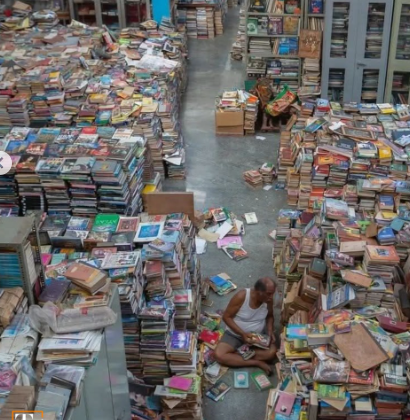
At just 20 years old, while working as a bus conductor, Anke Gowda from Haralahalli village near Mysuru began a journey that would one day make him the custodian of nearly two million books. Born into a humble farming family in Mandya district, his childhood offered little access to books. But a professor’s encouragement and his own hunger for knowledge changed his life forever.

Lifelong Passion for Books

Over the years, Anke Gowda poured nearly 80% of his income into buying books—often by the truckload. He even sold his house in Mysuru to expand his growing collection. His passion was never for personal gain, but to make knowledge accessible to all. His three-decade-long career at a sugar factory supported his dream. Every spare rupee went into buying books—from rare foreign volumes to regional manuscripts.

The Bus Conductor Who Built India’s Largest Free Personal Library

Welcome to Pustaka Mane – The House of Books

Today, Anke Gowda’s massive personal library, lovingly called Pustaka Mane (Book House), stands as a living monument to learning. Built on 22 guntas of land with support from industrialist Sri Hari Khoday, it holds:

  • Over 500,000 rare foreign books
  • 5,000+ dictionaries
  • Manuscripts dating back to 1832
  • Books in 20+ languages, including Kannada, Sanskrit, English, and other international languages

Library Without Walls

What makes Pustaka Mane truly extraordinary is its openness:

  • No membership
  • No fees
  • No restrictions

From students and researchers to IAS aspirants and even Supreme Court judges, everyone is welcome. It’s a rare, inclusive space where knowledge is free, as it should be.

Family Mission

Anke Gowda isn’t alone in this mission. His wife, Vijayalakshmi, and son, Sagar, are his devoted companions. They live inside the library, cook in a corner, and sleep on the floor—all to protect and maintain the treasure trove of knowledge they’ve built. Together, they sort, clean, and preserve the books, even as 250+ bags of uncatalogued books await attention. The family now hopes to receive support for digitisation, to safeguard this priceless collection for future generations.

“I wanted to make knowledge accessible to everyone, no matter who they are”. (Anke Gowda)

How India Benefits from HYBE’s Launch

0

(image: kanganamtimes.com)

HYBE, the global entertainment company behind BTS, has officially launched in India with its new branch HYBE India in Mumbai. This move brings several big benefits to India’s entertainment industry:

1. Opportunities for Indian Artists

HYBE will discover and train Indian talent using their world-class system. Indian singers, dancers, and performers can now get a global platform.

2. Global Exposure

Indian artists under HYBE may get the chance to perform internationally, just like K-pop stars. This could make India a key player in global pop music.

3. Boost to Local Industry

More concerts, music videos, fan events, and collaborations will increase jobs in music, events, production, and marketing fields.

4. Better Quality and Innovation

HYBE brings high standards in music, visuals, and storytelling. This will raise the level of Indian pop music and inspire local companies to improve.

5. Fusion of Cultures

HYBE aims to mix Indian styles with global music trends, creating new and exciting genres that reflect India’s unique culture.

6. Youth Empowerment

With India’s large young population, HYBE gives many young people a chance to turn their passion for music and performance into a real career.

HYBE India brings world-class music training, global reach, more jobs, and fresh opportunities for Indian talent to shine on the international stage.