Home Blog Page 188

Kolkata’s Streets Turn into Art Galleries, Yellow Taxis Become Pujo’s New Canvas in Kolkata

0

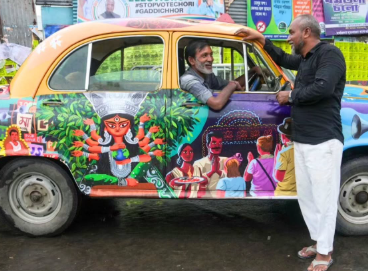
Kolkata’s iconic yellow Ambassador taxis are getting a vibrant makeover this Durga Puja, transforming into moving artworks celebrating the city’s biggest festival. As part of a public art initiative titled “Pujor Shaaj Gaari”, local artists from the Government College of Art & Craft have hand-painted traditional Durga Puja motifs on dozens of taxis — from images of Maa Durga and dhaakis to intricate alpona and scenes from Kumartuli.

Kolkata’s Streets Turn into Art Galleries, Yellow Taxis Become Pujo’s New Canvas in Kolkata

The project, supported by the Kolkata Municipal Corporation and taxi unions, aims to revive the cultural identity of these fading vehicles while offering a nostalgic nod to Bengal’s artistic roots. For taxi drivers, the response has been overwhelming. Many now offer themed rides through pandal routes, with passengers requesting selfies and stories behind the artwork.

Kolkata’s Streets Turn into Art Galleries, Yellow Taxis Become Pujo’s New Canvas in Kolkata

A grand “Moving Art Parade” is scheduled before Bijoya Dashami, featuring the painted taxis in a festive convoy through central Kolkata. In a city where art, emotion, and celebration merge seamlessly, these taxis now carry more than passengers — they carry the spirit of Pujo itself.

Asia Cup 2025: If India Wins Today, Final Spot Almost Certain — Team Unbeaten in Last 5 Years

0

Team India will take on Bangladesh today in the Super-4 stage of the Asia Cup. After defeating Pakistan by 6 wickets in the first match of this round, a win today would bring India very close to securing a place in the final. On the other hand, Bangladesh, which beat Sri Lanka in its opening Super-4 match, will also strengthen its chances of reaching the final if it manages to upset India.

India’s dominance over Bangladesh

India has a one-sided record against Bangladesh in T20 cricket. Out of 17 encounters, India has won 16, while Bangladesh has managed to win only once — back in 2019 in Delhi. In their most recent clash last year in Hyderabad, India registered a commanding 133-run victory.

Likely Playing XI for India

India is expected to retain the same XI that defeated Pakistan. Shubman Gill will open alongside Abhishek Sharma, with Sanju Samson handling the middle order. Jasprit Bumrah is likely to lead the pace attack, supported by all-rounders Hardik Pandya and Shivam Dube. Spin duties will once again rest with Axar Patel, Kuldeep Yadav, and Varun Chakravarthy.

Bangladesh’s possible change

Bangladesh may bring in Tanzim Hasan in place of Shoriful Islam, who conceded 49 runs against Sri Lanka. Captain Liton Das, who had a back strain in the previous game, is expected to regain fitness for today’s clash.

Hardik Pandya eyes T20I record

All-rounder Hardik Pandya needs four wickets to surpass Arshdeep Singh as India’s leading wicket-taker in T20 internationals. Hardik currently has 97 wickets, while Arshdeep tops the chart with 100.

Probable XIs

India: Abhishek Sharma, Shubman Gill, Suryakumar Yadav (captain), Tilak Verma, Sanju Samson, Shivam Dube, Hardik Pandya, Axar Patel, Kuldeep Yadav, Jasprit Bumrah, Varun Chakravarthy.

Bangladesh: Saif Hasan, Tanzid Hasan, Liton Das (captain), Tauhid Hridoy, Shamim Hossain, Zakir Ali, Mehidy Hasan, Nasum Ahmed, Taskin Ahmed, Tanzim Hasan, Mustafizur Rahman.

Fasting with Wisdom: Rujuta Diwekar’s Navratri Nutrition Guide

0

PC:(Indian tv)

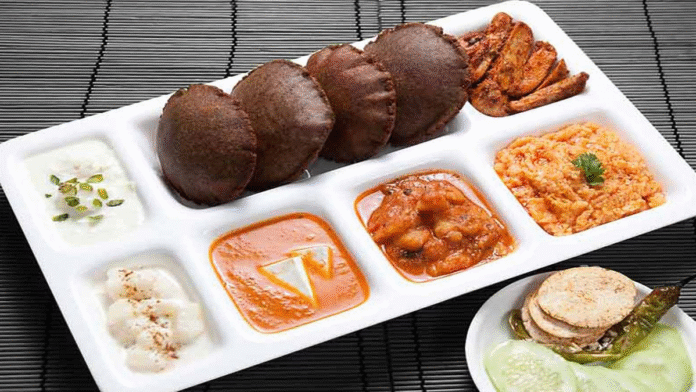
On the first day of Navratri, celebrity nutritionist Rujuta Diwekar, renowned for her seamless integration of traditional dietary wisdom with modern nutritional science, shared her insights on Instagram. She challenges the popular notion of fasting as a mere “detox” and instead emphasizes its role in enhancing digestion, diversifying diets, and promoting mental and physical relaxation. Here’s a closer look at her recommended foods to make your Navratri fast both nourishing and meaningful.

Rajgira (Amaranth): The Iron-Rich Powerhouse

Rajgira, commonly known as amaranth, is a nutrient-packed grain that Diwekar highlights for its versatility and health benefits.
Boosts Oxygen Flow high in iron, rajgira supports healthy hemoglobin levels, ensuring efficient oxygen transport in the body. Enhances Hair Vitality Rich in lysine, an essential amino acid, it promotes hair growth and adds natural shine. Strengthens Mind and Body adequate iron intake from rajgira sustains physical energy and mental clarity, perfect for fasting.
Whether enjoyed as flour-based dishes or puffed grains, rajgira is a cornerstone of a balanced Navratri diet.

Cashews: The Magnesium-Packed Soother


A handful of cashews can transform your fasting experience, thanks to their high magnesium content. Promotes Restful Sleep magnesium’s sedative properties help relax muscles and calm nerves, improving sleep quality. Alleviates Discomfort cashews can ease nighttime foot pain and evening bloating, offering comfort during fasting.
Adding cashews to your Navratri menu brings both nourishment and calm to your festive days.

Bananas: The Mood and Gut Booster


Bananas, a fasting staple, are celebrated by Diwekar for their Vitamin B6 content, which supports emotional and digestive health.
Elevates Mood vitamin B6 aids serotonin production, fostering emotional stability and a sense of well-being. Eases Premenstrual Symptoms for women, bananas can reduce breast tenderness before periods.
Supports Digestion the prebiotics in bananas promote healthy gut bacteria, enhancing digestive function.

Legumes (Sundal): The Protein-Rich Tradition


Drawing from South Indian culinary heritage, Diwekar recommends legumes like chana, lobia, or rajma, prepared as sundal—a sprouted, cooked vegetable dish.Builds and Repairs Tissues: Legumes are rich in protein and amino acids, essential for tissue repair and muscle health. Fortifies Bones these amino acids also strengthen bones, supporting long-term skeletal health. Nourishes Brain Function: Regular legume consumption enhances cognitive health, keeping the mind sharp. Sundal offers a delicious way to incorporate protein and tradition into your fasting routine.

A Universal Approach to Fasting & Fasting with Purpose

While Diwekar underscores the benefits of these foods for women, she emphasizes their inclusivity. Men can equally benefit from adding rajgira, cashews, bananas, and legumes to their Navratri diet, making fasting a nourishing experience for all.

Rujuta Diwekar’s Navratri nutrition guide reimagines fasting as an opportunity to nurture the body and mind while staying rooted in tradition. By incorporating nutrient-dense foods like rajgira, cashews, bananas, and legumes, you can enhance digestion, reduce stress, and embrace dietary diversity. This Navratri, let’s fast with purpose, celebrating health, inclusivity, and the timeless wisdom of balanced nutritio


Rolex, Tanishq, Taj Hotels Lead India’s Luxury Brand Rankings in 2025

0

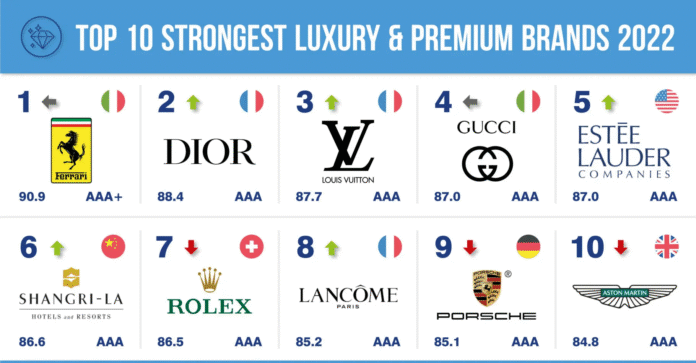
India’s luxury market continues to shine on the global stage, with several homegrown and international brands making their mark in the country’s latest brand rankings. According to the recently released Hurun India Best of the Best Brands 2025 and the Brand Finance India 100, Rolex, Tanishq, and Taj Hotels have emerged as some of the top luxury brands favoured by Indian consumers.

Taj Hotels: India’s Strongest Brand

Taj Hotels, a flagship of the Indian Hotels Company Limited (IHCL), was once again crowned India’s Strongest Brand, achieving a Brand Strength Index (BSI) score of 92.2 out of 100. The hospitality giant continues to dominate the luxury hotel segment with its iconic properties and legendary service. According to Brand Finance, Taj also ranks among the strongest hotel brands globally, thanks to its high customer familiarity, recommendation, and trust.

Rolex: The Gold Standard of Luxury Watches

Among international luxury brands, Rolex stood tall as the most preferred luxury watch brand in India. The Swiss timepiece maker topped the Hurun list in the watches category, reflecting its enduring legacy and aspirational value among affluent Indian buyers.

Tanishq: India’s Jewellery Powerhouse

Tanishq, owned by the Tata Group’s Titan Company, was named the best Indian jewellery brand in 2025. Known for its trustworthiness, contemporary designs, and wide national presence, Tanishq continues to set benchmarks in the luxury jewellery space. It is one of the few Indian brands that successfully blends traditional craftsmanship with modern retail experiences.

Other Top Luxury Brands in India

The rankings also highlighted international labels like Gucci, which topped the accessories category, and Louis Vuitton, voted the best fashion brand. In the luxury footwear space, Jimmy Choo led the pack, while Montblanc dominated the writing instruments category. Notably, Indian brands Malabar Gold & Diamonds and Titan were featured in Deloitte’s Top 100 Global Luxury Goods Companies, showcasing the growing influence of Indian players in the global luxury arena.

Luxury Categories Dominated by Diverse Players

The rankings spanned across several categories — from hospitality and fashion to jewellery and accessories — indicating a well-diversified luxury market in India. While global brands like Rolex, Louis Vuitton, and Montblanc maintain strong desirability, Indian brands are increasingly gaining ground with high trust and recognition among domestic consumers.

India’s Evolving Luxury Landscape

The rise of Indian luxury brands like Tanishq, Taj Hotels, and Malabar signals a shift in consumer preference toward homegrown names that blend heritage with innovation. Meanwhile, established global giants continue to enjoy aspirational value among the country’s growing affluent class. With India projected to become one of the fastest-growing luxury markets in the world, these rankings offer a clear picture of the brands that are winning both hearts and wallets.

What makes these brands stand out

  • Heritage / Trust: Brands like Taj, Rolex, Tanishq benefit from decades of reputation and consistent quality.
  • Brand Strength Index & perception: Taj has very high scores for familiarity, consideration, recommendation among Indian consumers.
  • Mix of global + Indian players: International brands like Louis Vuitton, Gucci, Montblanc are very strong, but Indian brands are also performing very well.
  • Wide luxury categories: Watches, jewellery, hotels, fashion, accessories.

Why ICC Suspended USA Cricket: Governance Failures, Olympic Recognition Issues, and Damaged Reputation

0

The International Cricket Council (ICC) has suspended USA Cricket (USAC), citing repeated governance failures and lack of progress on reforms.

The ICC noted three main reasons for the suspension:

  1. Governance Gaps – USAC failed to establish a functional administrative and governance structure despite repeated reminders.
  2. Olympic Recognition Issues – No concrete progress was made toward gaining recognition as a national governing body with the US Olympic and Paralympic Committee (USOPC).
  3. Damage to Cricket’s Image – Certain actions and irregularities by USAC reportedly harmed cricket’s credibility in the US and abroad.

The ICC had already placed USAC on notice during its 2024 Annual General Meeting, giving it 12 months to conduct free and fair elections and reform its governance. After no significant progress, the suspension was imposed.

Impact on Teams

Despite the suspension, the US men’s and women’s teams will not be affected. They will continue to compete in ICC tournaments, including the T20 World Cup 2026 (India & Sri Lanka) and the Los Angeles 2028 Olympics.

Road Ahead

The ICC will temporarily oversee the US national teams and has tasked its Normalization Committee with monitoring USAC. To lift the suspension, USAC must implement governance reforms, strengthen its operations, and rebuild cricket’s credibility.

From Selling water can to Creating ‘Kantara’: The Inspiring Journey of Rishab Shetty

0

Before the thunder of Kantara echoed across Indian cinemas, capturing hearts and sparking cultural conversations, Rishab Shetty was just another dreamer — grinding through everyday jobs, chasing a passion that few believed in at the time.

Humble Beginnings

Born and raised in the small town of Kundapura, Karnataka, Rishab didn’t come from a film family. There were no shortcuts, no easy entries into the glamorous world of cinema. In fact, before he ever stepped onto a film set, Rishab juggled multiple odd jobs — from marketing chaipatti (tea leaves) to delivering water cans to homes. These were not just side hustles; they were survival tactics. “I’ve done everything from waiting tables to selling products door to door,” Rishab once said in an interview, “but cinema was always on my mind.”

A Dream That Refused to Die

Despite financial struggles and a lack of connections, Rishab never gave up on his dream. He eventually enrolled at Bangalore’s Government Film and TV Institute, one of the few structured steps toward his cinematic journey. Even there, survival was tough. He continued to take up small jobs to fund his education and sustain himself in the city. His early work in the film industry was mostly behind the scenes — assistant director roles, small cameos, working on shoestring budgets. But every project, big or small, sharpened his storytelling skills.

A Breakthrough with Substance

Rishab’s directorial debut Ricky (2016) and then Kirik Party (2016) marked his entry into mainstream recognition. Kirik Party, in particular, was a turning point. It became a blockbuster, turning him into a bankable director overnight. But Rishab wasn’t here to play safe. He wanted to tell stories rooted in tradition, culture, and spiritual depth.

Kantara: The Cultural Earthquake

Released in 2022, Kantara wasn’t just a film — it was a phenomenon. Deeply entrenched in folklore, coastal Karnataka traditions, and a mystical narrative, the film resonated across India. Audiences were captivated by its authenticity, storytelling, and Rishab’s own powerful performance. What made Kantara stand out wasn’t just its cinematic quality, but its soul — something that comes only from lived experience, from struggle, from a genuine connection to the land and its stories.

Legacy in the Making

Today, Rishab Shetty stands as a symbol of perseverance. His story is proof that success doesn’t come overnight — it comes to those who hustle, who stay rooted, and who refuse to give up even when the odds seem impossible. From marketing tea leaves and delivering water cans to directing one of India’s most celebrated films in recent years, Rishab Shetty’s journey is nothing short of cinematic itself.

Final Thoughts

In a world that often glorifies overnight success, Rishab Shetty’s story is a refreshing reminder that grit, passion, and patience are still the most powerful ingredients in any success story. So the next time you watch Kantara, remember — it was born not just from a script, but from the real struggles of a man who once knocked on doors to make ends meet

Poland’s Living Mystery of Bent Pines, Nature’s Art or Manmade Mystery?

0

A Forest That Defies Nature

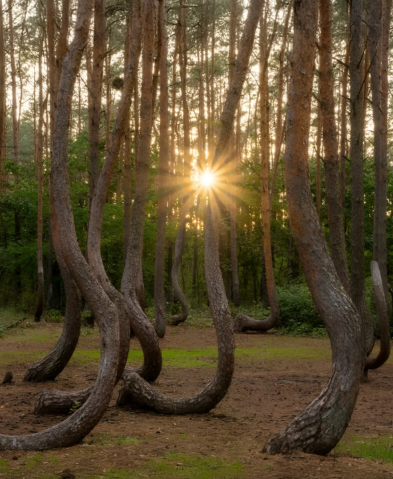
Tucked away near the small town of Gryfino in West Pomerania, Poland, lies one of Europe’s most baffling natural wonders — the Crooked Forest . This quiet patch of woodland contains a surreal gathering of pine trees, each with an identical and inexplicable twist in its trunk. Near their base, the trees bend sharply — almost at a 90-degree angle — before curving upright again toward the sky. From a distance, it looks like nature itself has taken artistic liberties, sculpting trees into question marks across the landscape.

The Numbers Behind the Mystery

While some early reports suggested that as many as 400 crooked pines were originally planted, officials from the Gryfino Forest District now confirm that fewer than 100 trees remain, clustered within a 2-hectare area. Despite their strange shape, the trees are healthy, with many reaching up to 50 feet (15 meters) in height. They were planted sometime between 1930 and 1945, and dendrological records indicate they were between 7 and 10 years old when their growth was somehow redirected.

Poland’s Living Mystery of Bent Pines, Nature’s Art or Manmade Mystery?

Northward Bends: A Curious Detail

What makes the Crooked Forest even more peculiar is that almost all the curved trunks point northward. This consistent orientation suggests that the shaping was not random — it was deliberate, though the reason remains lost to history. Natural phenomena like heavy snowfall, gravitational pull, or phototropism (growth toward light) have all been considered and largely ruled out.

Theory: Man-Made Timber for War or Craft?

The most accepted theory is that local farmers or woodworkers purposefully bent the saplings. Why? To grow naturally curved timber that could be harvested for shipbuilding, sled runners, furniture, or even war equipment. Bent wood has structural advantages in construction, particularly for elements like boat keels or rocking chairs. This method, known as tree shaping or arborsculpture, has historical precedent but no records from the time have survived to confirm this theory in Gryfino’s case.

A Mystery Deepened by War

One of the reasons the forest remains such a puzzle is that Gryfino was largely evacuated during the early years of World War II, and most of the region’s pre-war residents never returned. Those who might have known the truth — the planters, foresters, or local craftsmen — took their secrets with them. With few living witnesses and no written documentation, the forest became a natural enigma frozen in time.

Tourist Attraction and Conservation Efforts

Today, the Crooked Forest draws thousands of curious visitors each year, from nature lovers to conspiracy theorists. Some claim the trees are the result of gravitational anomalies or even UFO landings, though these ideas remain in the realm of folklore. Conservationists are now working to preserve the remaining trees, but no efforts have been made to replicate the technique — partly because no one knows how it was done, and partly to maintain the uniqueness of this eerie botanical gallery.

Nature’s Riddle, Still Unsolved

Whether shaped by human hands or by some unknown force of nature, the Crooked Forest continues to stand as one of Poland’s strangest and most photogenic sights. Its twisted trees remain a haunting and beautiful reminder that even something as straightforward as a tree’s growth can become a lasting mystery.

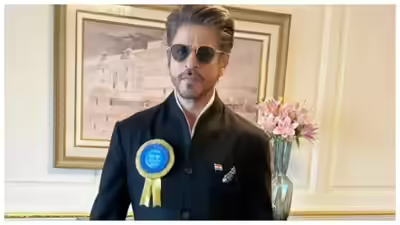
Gauri Khan to Design Trophy Mantle as Shah Rukh Wins National Award

0

It was a moment many believed would come — and today, it finally did.

As the curtains were drawn back at the 71st National Film Awards ceremony in New Delhi, Shah Rukh Khan stood centre stage and accepted the Best Actor National Film Award for his performance in Jawan, achieving a milestone that had long been anticipated. (Hindustan Times)

Watching proudly from behind the scenes was Gauri Khan — his wife, partner, and longtime confidante. In a heartfelt social media post, she celebrated the moment with emotion and admiration. She wrote:

“What a journey it’s been @iamsrk. Congratulations on winning the National Award!!! So deserving… it’s a result of your years of hard work and dedication.” (Hindustan Times)

But her message didn’t end with just words. True to her creative spirit, Gauri revealed she would be designing a special mantle to beautifully display this well-earned trophy — a symbol not only of his achievement but of the enduring journey behind it. (Hindustan Times)

Their children, Suhana and Aryan, also joined in the celebration, posting their own message celebrating their father’s achievement, recalling his constant striving, his belief in doing meaningful work, and how this award, though silver, means gold to their hearts. (The Indian Express)

As the applause echoed, as camera flashes lit up his smiling face, Gauri’s admiration shone through — not just as a proud spouse, but as someone who has witnessed every late night on set, every script read till dawn, every moment of doubt turned into resolve.

Today, this award is more than a trophy; it’s testimony. Testimony of a journey of decades — of an actor’s persistence, a family’s support, and the promise that sometimes dreams do wait for the right moment. And in that promise, Gauri’s words, her gift, and her unwavering faith make this moment even more profound.

In fact, Gauri also congratulated Rani Mukherjee and Karan Jauhar who were also feted with coveted award. This picture and post speaks volume.

https://www.instagram.com/p/DO8utQGCCnZ/?igsh=ampkemdkb2YwMHBr

World Bollywood Day: Know its History and Significance…

0

The Indian film industry began its journey in the early 1900s, much like Hollywood, with silent films. But it wasn’t until the advent of talking films, notably with the establishment of Bombay Talkies in the 1930s, that the industry began to truly evolve and grow. Unlike Western cinema, where the plot and script often took center stage, Indian films became largely driven by star power, making the actors themselves the primary draw for audiences.

By the 1970s, India’s film industry had grown so significantly that it surpassed Hollywood in terms of production volume and popularity. This remarkable growth led to the coining of the term “Bollywood”, a blend of Bombay (now Mumbai) and Hollywood. While Hollywood is an actual district in Los Angeles, Bollywood does not refer to a specific location but rather to the idea and identity of the Hindi-language film industry centered in Mumbai.

Even after the city of Bombay was officially renamed Mumbai in 1995, the term Bollywood remained in popular use, continuing to represent the industry’s unique blend of storytelling, music, drama, and spectacle. Today, Bollywood produces approximately 1,000 films annually, making it one of the largest film industries in the world by output.

One of Bollywood’s most defining features is its vibrant use of music and dance. Elaborate song-and-dance sequences are central to the cinematic experience. Traditionally, actors have lip-synced to songs performed by professional playback singers—a practice that has long been accepted as part of the Bollywood tradition. However, in recent years, some actors have begun performing their own vocals, signaling a shift toward more multifaceted talent.

With a global audience of over 3 billion viewers, Bollywood continues to capture hearts across the world. World Bollywood Day is a celebration of this colorful, influential, and ever-evolving industry—a perfect opportunity for fans around the globe to honor its legacy and impact.

So, whether you’re a lifelong fan or new to Indian cinema, get ready to dance, sing, and celebrate—World Bollywood Day is the time to immerse yourself in the magic of Bollywood!

Silver That Weighs More Than Metal: The Untold Story of Jhabua’s Tribal Ornaments

0

(PC:fiber2fashion)

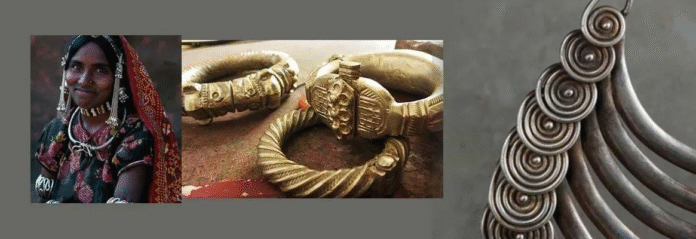
In the hilly heartland of western Madhya Pradesh, where the Bhils and Bhilalas have lived for centuries, silver isn’t just a metal. It’s a legacy. A language. A lifelong companion. From the moment a girl is born, her body is adorned with solid silver locks—on her neck, wrists, ankles. Not for fashion. Not for wealth. But as a ritual, a mark of dignity, and a silent symbol of gendered endurance.

These ornaments, often weighing kilograms, are never removed. Not until death. And even then, they’re preserved by the family—passed down like sacred relics, reminders of a woman’s journey through a male-dominated world.

The Land That Breathes Tradition

Jhabua, surrounded by Gujarat and Rajasthan’s borders, is a tribal district rich in minerals—limestone, dolomite, calside—but poor in rain and resources. The terrain is rugged, the economy agrarian, and the people resilient. Despite droughts and degraded wastelands, the tribes celebrate life with color and pride. Festivals like Bhagoriya erupt in dance, storytelling, and the exchange of silver jewelry as tokens of love and union. In this land, boys don’t offer roses—they offer heavy silver ornaments to the girl they wish to marry. If she accepts it publicly, the wedding happens the same day. No dowry. No cash. Just silver. And a lifetime of wearing it.

From Spirals to Chains: The Evolution of Craft

Earlier designs were simple—round tubular locks, spiral ends, cast in pure silver. But poverty and rising silver prices have changed the game. Today, artisans use copper alloys, lighter chains, dome-shaped pieces. The tradition survives, but it’s adapting. In some villages, it’s fading. In others, it’s fiercely alive.

Even families below the poverty line refuse to part with ancestral ornaments. “We may die of hunger,” they say, “but the silver stays.”

A Tradition Under Threat

But this legacy is under siege. Robbery cases have surged. Women are attacked for the silver they wear. The ornaments that once symbolized pride now attract danger. Slowly, the community is shifting to lighter, occasional-wear designs—still beautiful, still meaningful, but safer. And yet, in the remote corners of Jhabua, the old customs persist. Silver bricks are exchanged during festivals. Street plays echo ancestral tales. Elders narrate stories of chivalry and resilience. The bow and arrow—Teer-Kamthi—still hangs proudly in homes