Home Blog Page 184

Dhaan Murti Kala: The Tribal Art of Life, Grain, and Bamboo

0

(image: gaatha.com)

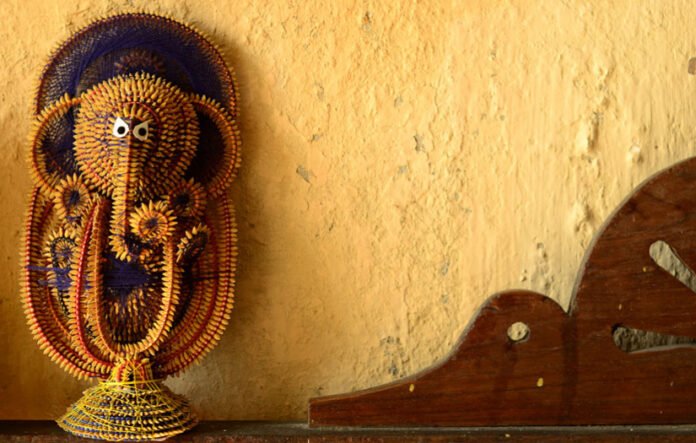
In the heart of Madhya Pradesh’s forests, where the rustle of bamboo meets the rhythm of tribal drums, a quiet miracle unfolds—Dhaan Murti Kala, the art of sculpting divine and everyday forms using bamboo sticks and paddy grains. This isn’t just craft. It’s culture woven with nature, a tradition passed down by tribal communities like the Gond, Baiga, and Korku, who treat bamboo not as material, but as memory.

Where It Happens

The art thrives in tribal belts of Mandla, Dindori, Balaghat, and Betul, where bamboo grows wild and abundant. These regions are home to the Gond and Baiga tribes, known for their deep connection to the forest and their vibrant visual storytelling.

Who Makes It

  • Baiga Tribe: Known for their spiritual worldview, they often create murti (idols) of deities and animals using bamboo and paddy.
  • Gond Tribe: Famous for their Gond paintings, they also practice bamboo craft, making ritualistic and decorative figures.
  • Korku Tribe: Skilled in bamboo weaving, they contribute to the structural finesse of Dhaan Murti forms.

These artisans are often women and elders, who gather bamboo, split it into fine strips, and bind it with paddy grains to form Ganesh idols, birds, elephants, and human figures. The process is meditative, often accompanied by folk songs.

How They Make It

  1. Harvesting Bamboo: Selected for flexibility and strength.
  2. Splitting & Shaping: Using knives and handmade tools, bamboo is sliced into thin strips.
  3. Binding with Dhaan (Paddy): Paddy grains are used to decorate or fill the forms, symbolizing prosperity.
  4. Forming Shapes: From gods to animals to abstract forms, each murti tells a story.
  5. Drying & Preservation: The final piece is sun-dried and sometimes coated with natural oils.

These murtis are often used in festivals, rituals, and local fairs, especially during Ganesh Chaturthi and harvest celebrations

India’s Millionaire Boom: One New Crorepati Every 30 Minutes

0

(Newtradu.com)

In a stunning testament to India’s economic rise, the country has been adding one millionaire household every 30 minutes between 2021 and 2025. That’s not just a statistic—it’s a seismic shift in wealth creation, signaling a new era of prosperity, ambition, and transformation.

The Numbers Behind the Boom

According to the Mercedes-Benz Hurun India Wealth Report 2025, the number of millionaire households—defined as families with a net worth of ₹8.5 crore or more—has nearly doubled in just four years:

  • 2021: 4.58 lakh millionaire households
  • 2025: 8.71 lakh millionaire households

That’s an addition of over 4 lakh new crorepati families, averaging one every 30 minutes.

Where Are India’s Millionaires?

The surge isn’t limited to traditional metros—it’s sweeping across the country:

  • Mumbai: 1.42 lakh millionaire households, making it India’s “Millionaire Capital”
  • Delhi: 79,800 households
  • Bengaluru: 31,600 households, driven by its booming tech and startup ecosystem
  • Other rising hubs include Ahmedabad, Pune, Hyderabad, Chennai, and Kolkata

What’s Fueling This Wealth Explosion?

Several powerful forces are driving this transformation:

  • Stock Market Surge: The Nifty index rose nearly 70% from 2021 to 2025
  • Gold Prices: More than doubled, crossing ₹1.14 lakh per 10 grams
  • Luxury Consumption: High-end brands and experiences are thriving
  • Real Estate & Digital Payments: Strong investment returns and financial inclusion
  • GDP Growth: Maharashtra’s economy alone grew 55% to ₹40.5 trillion ($480 billion)

The Flip Side: Rising Inequality

While the millionaire count is soaring, the report also highlights a sobering reality:

  • Millionaire households make up just 0.31% of all Indian households
  • Only 5% of millionaires in 2017 graduated to the ₹100 crore+ bracket
  • A mere 0.01% became billionaires

This points to a widening gap between the affluent and the ultra-rich, and raises questions about inclusive growth.

What It Means for India

This millionaire boom is more than just a headline—it’s a reflection of India’s evolving identity:

  • A nation of aspiring entrepreneurs, tech innovators, and wealth creators
  • A society where luxury and ambition are no longer taboo
  • A country poised to redefine global perceptions of affluence and opportunity

As Anas Rahman Junaid, founder of Hurun India, puts it: “India’s wealth creation story is both real and resilient.”

Ambulance Before Pizza’: Delhi CM Rekha Gupta Launches 11 CATS Ambulances Amid Healthcare Overhaul

0

PC:(Business standards)

With the catchy slogan “Ambulance in Delhi should reach before pizza,” Chief Minister Rekha Gupta on September 25, 2025, flagged off 11 state-of-the-art Centralized Accident and Trauma Services (CATS) ambulances in New Delhi. This initiative, part of the ‘Sewa Pakhwada’—a two-week service drive honoring Prime Minister Narendra Modi’s 75th birthday—aims to drastically improve emergency response times, ensuring life-saving help arrives faster than a food delivery. Officials highlighted this as a pivotal step in modernizing Delhi’s healthcare infrastructure, addressing longstanding issues like traffic congestion and delayed medical aid.

Unveiling a Comprehensive Health Package for Delhiites

In a ceremony attended by Health Minister Pankaj Kumar Singh, Gupta unveiled a robust array of healthcare enhancements designed to promote accessibility, transparency, and efficiency. Beyond the ambulances, the launches included Delhi’s inaugural organ donation portal, 40 True Nat machines, 10 Patho Detect machines, and 27 hand-held X-ray machines to accelerate early detection and treatment of tuberculosis (TB). These tools will be deployed across the city, enabling quicker diagnoses in community settings and reducing the burden on hospitals.

The CATS ambulance fleet now stands at 277, with 53 more slated for rollout in October 2025. Gupta outlined an ambitious expansion plan to reach 1,000 ambulances, stating, “We are committed to ensuring every resident has timely access to emergency medical services.” This scale-up is expected to transform Delhi’s emergency ecosystem, potentially setting a benchmark for urban healthcare in India by minimizing response times in a city notorious for gridlock.

Pioneering Organ Donation and Child Health Initiatives

A highlight of the event was the launch of the State Organ and Tissue Transplant Organization (SOTTO)-backed organ donation portal, marking Delhi’s first organized platform for pledges. “Anyone can register, and after death, their organs can give new life to those in need,” Gupta explained, emphasizing transparency and public participation. Building on the success of an eye donation portal launched on September 17, 2025—which has already garnered 1,222 pledges—she added, “For the first time in the national capital, organ and eye donation is being promoted systematically. We aim to inspire a culture where we serve our country in life and continue helping others after death.”

Additionally, Gupta inaugurated the District Early Intervention Centre (DEIC) at Chacha Nehru Bal Chikit Salaya, a specialized facility for screening and treating children with developmental challenges. This center will offer early interventions, from therapies to medical support, ensuring vulnerable kids receive timely care to thrive.

Transformative Reforms Under Gupta’s Leadership

Health Minister Singh lauded the Chief Minister’s vision, crediting her for unprecedented achievements in a short span. “In just 167 days, we’ve constructed 168 Arogya Mandirs—nearly one every day,” he said. Other milestones include doubling dialysis capacity to 300 machines, expanding hospital beds, appointing 1,300 nurses and permanent medical superintendents, and implementing a transparent centralized system for medicine procurement. “These reforms have made quality healthcare a fundamental right for Delhi residents, all thanks to Rekha Gupta’s dynamic leadership,” Singh remarked.

A Vision for Inclusive and Efficient Healthcare

The newly launched CATS ambulances are poised to tackle Delhi’s emergency response bottlenecks, while the organ donation portal empowers citizens to contribute to life-saving efforts with full transparency. The DEIC and advanced TB detection equipment further underscore the government’s focus on preventive care, particularly for children and at-risk populations.

As ‘Sewa Pakhwada’ continues, these initiatives reflect a holistic push toward a healthier Delhi—one where compassion meets innovation. Gupta’s “ambulance before pizza” mantra not only captures public imagination but also signals a paradigm shift: prioritizing lives over convenience in one of the world’s most populous cities. With these enhancements, Delhi is on track to become a model of resilient, equitable healthcare for the nation.

The Wondiwoi Tree Kangaroo: A Rare Marsupial’s Remarkable Rediscovery

0

PC:(Zee news)

Deep in the montane forests of Papua, Indonesia, the Wondiwoi tree kangaroo (Dendrolagus mayri) clings to survival. Once thought extinct after vanishing for nearly 90 years, this critically endangered marsupial was rediscovered in 2018, reigniting hope for its conservation. Known as one of the world’s rarest mammals, the Wondiwoi tree kangaroo embodies a unique blend of kangaroo and monkey-like traits, making it a captivating symbol of New Guinea’s biodiverse wilderness.

A Creature of Arboreal Grace

Tree kangaroos, belonging to the genus Dendrolagus, are unlike their ground-dwelling Australian cousins. These marsupials are masters of the jungle canopy, equipped with adaptations that make them agile climbers. The Wondiwoi tree kangaroo sports large, soulful eyes framed by long eyelashes, thickly furred arms, and strong, curved claws designed for gripping tree branches. Its burnt umber and terracotta-colored fur blends seamlessly into the lush palette of Papua’s montane forests. A long, pendulous tail provides balance, while shorter, broader hind feet and spongy paws ensure superior agility in the treetops. Females nurture their young in a forward-opening pouch with four teats, and their teeth are adapted for shearing the verdant foliage that forms their primary diet.

A Precarious Existence in a Threatened Habitat

The Wondiwoi tree kangaroo calls the remote Wondiwoi Peninsula in Papua, Indonesia, home. This medium-sized marsupial thrives in the cool, misty environment of montane forests, but its habitat is under siege. Human activities such as palm oil deforestation, rare mineral mining, and hunting have pushed the species to the brink of extinction. With an estimated population of fewer than 50 adults, the Wondiwoi tree kangaroo is critically endangered, making every sighting a precious moment for conservationists.

The Rediscovery: A Beacon of Hope

First scientifically described in 1928, the Wondiwoi tree kangaroo remained unseen for nearly nine decades, leading many to fear it had vanished forever. That changed in 2018 when British naturalist Michael Smith captured a photograph of a living individual, confirming the species’ survival. This serendipitous discovery was a landmark event in conservation, proving that even species presumed lost can still endure. Smith’s photograph not only documented the animal’s existence but also underscored the urgent need to protect its dwindling habitat.

A Call for Conservation

The rediscovery of the Wondiwoi tree kangaroo is a powerful reminder of the resilience of nature and the importance of preserving fragile ecosystems. With its population critically low, immediate action is needed to combat habitat loss and hunting. Conservation efforts fueled by this rediscovery offer a glimmer of hope for the species’ survival, ensuring that this enchanting marsupial continues to grace the jungles of New Guinea. The Wondiwoi tree kangaroo, with its chubby cuteness and arboreal elegance, stands as a symbol of what we stand to lose—and what we can still save.

Timing Is Everything: Why Eating Breakfast Earlier Could Boost Your Health

0

PC:(Vital choice)

A recent study using data from the National Health and Nutrition Examination Survey (NHANES) has revealed a startling connection between the timing of breakfast and overall health. Eating breakfast later, particularly after 9:00 AM, is independently linked to increased risks of depression, fatigue, and even mortality in adults. This research highlights breakfast timing as a potential early indicator of broader mental and physical health issues, with consistent, earlier breakfasts associated with improved well-being, especially for older adults.

The Risks of a Late Breakfast

The NHANES study uncovered compelling findings about the consequences of delayed breakfasts:

Increased Mortality Risk: For every hour breakfast is delayed, there’s an 8-11% higher risk of mortality from any cause during the follow-up period.

Mental and Physical Health Impacts: Participants who ate breakfast later reported higher rates of depression, fatigue, poor sleep, difficulty preparing meals, and worse oral health.

Chronotype Connection: Individuals with a “late chronotype”—a natural tendency to stay up and wake later—were more likely to eat breakfast later, suggesting internal body clocks play a role.

These findings indicate that late breakfasts may reflect or contribute to underlying health challenges, particularly in older adults.

Why Breakfast Timing Matters

The timing of breakfast impacts health through several biological, lifestyle, and psychological mechanisms:

Circadian Rhythms: The body’s internal clock regulates sleep, digestion, hormone release, and metabolism. Eating breakfast too late can misalign meals with optimal metabolic windows, impairing nutrient processing and increasing stress on systems like glucose regulation.

Sleep and Energy: Late breakfasts are often linked to poor sleep quality or disrupted routines, which can exacerbate fatigue and strain the body’s energy systems.

Behavioral Factors: Older adults with mobility issues, depression, or dental problems may struggle to prepare or eat breakfast early, compounding health risks. Delayed eating may also reduce early-day nutrient intake, affecting metabolism.

Actionable Steps for Better Health

To leverage these insights for improved health, especially as you age, consider these practical recommendations:

Eat Breakfast Early: Aim to have breakfast within 1-2 hours of waking, ideally by 8-9 AM if you wake between 6-7 AM, to align with your body’s metabolic rhythm.

Maintain Consistent Mealtimes: Regular meal schedules, such as breakfast between 7-9 AM, lunch around noon, and dinner before 6-8 PM, help regulate hormones, digestion, and energy levels.

Prioritize Nutrient-Rich Breakfasts: Choose protein- and fiber-rich options like eggs with vegetables, oatmeal with nuts and fruit, or yogurt with seeds to stabilize blood sugar and sustain energy.

Improve Sleep Hygiene: Since late chronotypes and poor sleep contribute to delayed eating, prioritize consistent sleep schedules, earlier bedtimes, and reduced screen time before bed.

Monitor Health Warning Signs: If you notice fatigue, depression, difficulty preparing meals, or oral health issues, consult a healthcare provider, as these may signal underlying problems.

A Holistic Approach to Well-Being

The NHANES study underscores that breakfast timing is more than a daily habit—it’s a window into overall health. Consistent, early breakfasts can support cognitive function, energy levels, and long-term well-being, particularly for older adults. By paying attention to when you eat, you can take proactive steps to align your lifestyle with your body’s natural rhythms, reducing risks of depression, fatigue, and other health challenges.

A Simple Change for a Healthier Future

The timing of your breakfast may seem like a small detail, but it can have a profound impact on your mental and physical health. By eating earlier, choosing nutrient-dense foods, and maintaining consistent routines, you can support your body’s circadian rhythms and enhance your well-being. As this NHANES study suggests, a timely breakfast could be a simple yet powerful step toward a healthier, longer life.


Seoul’s Rain-Activated Art: Transforming Monsoon Days with Vibrant Street Murals

0

PC:(South Korean culture)

In South Korea, dreary monsoon days are being transformed into moments of wonder through an innovative form of street art. Using special hydrophobic paint, artists have created rain-activated murals that remain invisible on dry surfaces but burst into vibrant patterns and designs when wet. From sidewalks to staircases and plazas, these hidden artworks are redefining urban spaces, bringing joy to passersby during rainy seasons.

Project Monsoon: A Cultural Celebration

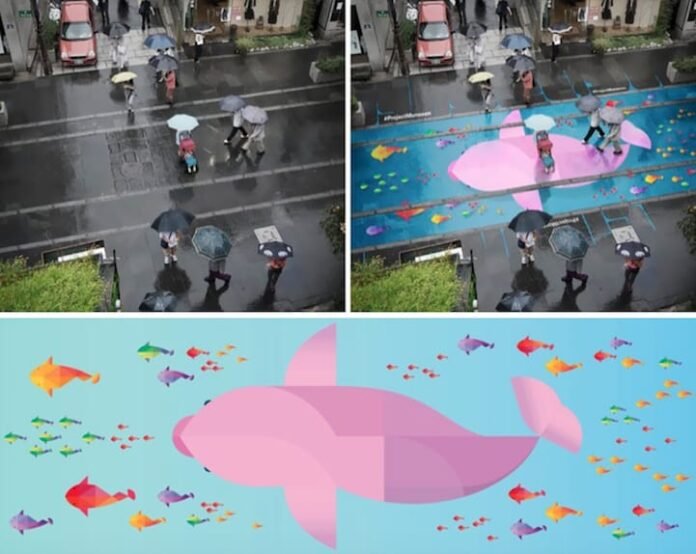
One standout initiative, Project Monsoon, saw ANTONE collaborate with designers and art directors from the School of the Art Institute of Chicago to transform Seoul’s streets. Using hydrochromic paint—a special coating that shifts from transparent to opaque when wet—the team painted somber roads with colorful murals inspired by South Korean culture. Drawing on East Asian traditions that celebrate the elegance of rivers and water flow, the artworks feature aquatic themes, including swimming fish, turtles, and intricate underwater scenes that come alive under rainfall.

How Rain-Activated Art Works

The magic of these murals lies in the technology of hydrophobic paint. In treated areas, the paint repels water, keeping those sections light when wet, while untreated surrounding concrete darkens in the rain. This contrast reveals hidden designs, from cheerful quotes to elaborate patterns, creating a striking visual effect. The non-slip, eco-friendly paint is designed to last for months before naturally fading, ensuring durability without environmental harm.

Designs That Brighten the Day

The rain-activated artworks showcase a variety of designs:

Cultural Motifs aquatic scenes with koi fish and turtles reflect South Korea’s reverence for rivers and water.Floral and Geometric Patterns intricate designs add beauty to urban landscapes.Uplifting Messages cheerful quotes inspire joy and positivity among pedestrians.These creations appear in public parks, near schools, and in cultural districts, turning everyday spaces into dynamic canvases.

Turning Gloom into Wonder

South Korea’s monsoon season can bring up to three weeks of continuous rain, often casting a gloomy spell over cities like Seoul. The rain-activated art counters this with bursts of color and creativity, transforming urban environments into interactive experiences. As pedestrians reach for their umbrellas, they’re greeted by vibrant underwater worlds and uplifting messages, fostering a sense of connection with their city and lifting spirits on even the dreariest days.

A Model of Urban Innovation

This initiative exemplifies urban innovation, blending art, technology, and cultural inspiration to enhance public spaces. The eco-friendly approach ensures minimal environmental impact, while the temporary nature of the designs allows for fresh creations over time. By turning rainy days into opportunities for joy, South Korea’s rain-activated street art sets a global example for how cities can creatively engage residents and reimagine urban landscapes.

A Bright Future for Rainy Days

Seoul’s rain-activated street art proves that even the gloomiest weather can spark creativity and community spirit. Through projects like Monsoon, South Korea is showing the world how to transform urban spaces into sources of wonder and inspiration. As the rain falls, these vibrant murals remind us that beauty can emerge in the most unexpected moments, making every rainy day a celebration of art and culture.

Surat’s Innovative Leap: Transforming Under-Flyover Spaces into Vibrant Community Hubs

0

PC:(Desh Gujarat)

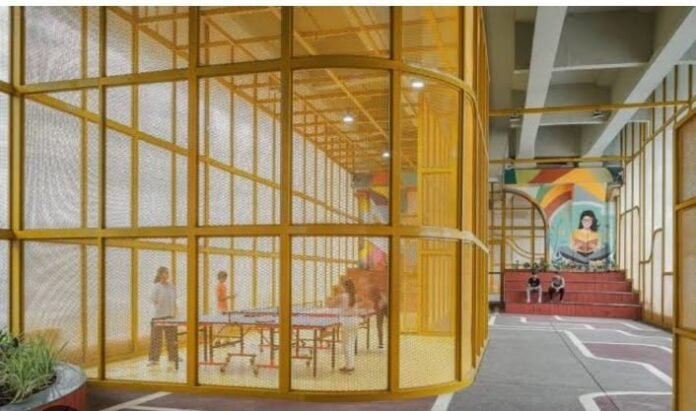
Reimagining Urban Spaces Surat, a bustling city in Gujarat, has set a remarkable precedent for urban innovation by transforming a neglected space beneath the Shaheed Veer Bhagat Singh Bridge at Parle Point Char Rasta into the city’s first indoor sports and recreation facility. Inaugurated by the Surat Municipal Corporation (SMC) at a cost of ₹2.5 crore, this project converts three spans of previously unused space under the flyover into a vibrant, multi-functional hub. This initiative not only revitalizes a once-idle area prone to encroachment but also serves as a model for repurposing under-flyover spaces across India.

A New Life for Under-Flyover Spaces

Located near the popular Jani Farsan landmark, the facility transforms a formerly neglected area into a dynamic community space. Offering indoor games like table tennis, chess, carrom, snakes and ladders, air hockey, bowling, and box cricket, the hub caters to diverse age groups. Additional amenities include a children’s play zone, seating for senior citizens, a reading room to promote literacy, a cafeteria for family gatherings, and a secure locker system, ensuring inclusivity and accessibility for all.

Benefits of Repurposing Under-Flyover Spaces

Transforming under-flyover areas offers significant advantages for densely populated Indian cities:

Expanding Public Spaces: With open land scarce in urban areas, under-flyover spaces provide opportunities for new plazas, parks, and community centers without requiring additional land acquisition.

Enhancing Safety: Neglected underpasses often attract illegal activities. Proper lighting, landscaping, and amenities deter encroachment and create safer environments for residents.

Environmental Improvements: Green spaces with pollution-resistant flora and aesthetic installations like murals enhance the urban landscape and help mitigate air pollution.

Fostering Community Bonds: These hubs bring together residents of all ages, promoting social interaction through play areas, seating, and family-friendly spaces.

Economic Opportunities: Redeveloped spaces can support local vendors, cafes, and small markets, boosting economic activity and livelihoods.

Challenges in Implementation

While the potential of such projects is immense, several challenges must be addressed:

Design and Safety Concerns: Under-flyover areas are often noisy, polluted, and lack sunlight. Designs must mitigate these issues while ensuring the structural integrity of the flyover. For instance, a 2023 proposal for a skating rink under a Bengaluru flyover was abandoned due to safety concerns.

Community Engagement: Successful projects require tailoring spaces to local needs through active resident involvement in the planning process to ensure relevance and usage.

Urban Planning Considerations: Creating community hubs under flyovers could increase foot traffic in already congested areas, necessitating careful planning to avoid disrupting traffic flow or pedestrian access.

Maintenance and Sustainability: Long-term success depends on robust maintenance protocols and sustained community involvement to prevent deterioration.

A Model for Urban Innovation

Surat’s under-flyover facility demonstrates how cities can rethink existing infrastructure to create valuable community assets. Instead of allowing such spaces to become dumping grounds or makeshift parking lots, urban planners advocate for their transformation into inclusive, functional hubs. The project’s thoughtful design, incorporating diverse amenities and addressing community needs, positions it as a blueprint for other cities to emulate.

Paving the Way for Smarter Cities

Surat’s pioneering initiative under the Shaheed Veer Bhagat Singh Bridge highlights the transformative potential of repurposing neglected urban spaces. By addressing challenges and prioritizing community needs, cities across India can replicate this model to create safer, greener, and more connected urban environments. As urban populations grow, such innovative solutions will be key to building sustainable and inclusive cities for the future.

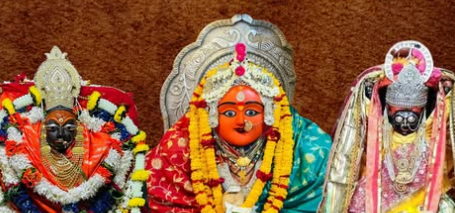
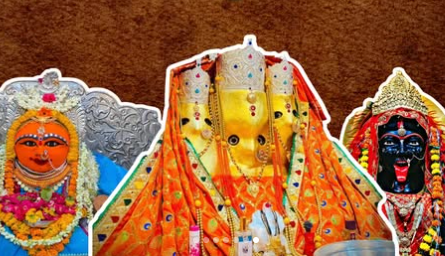
Madhya Pradesh’s Most Iconic and Spiritually Powerful Mata Temples—Each one A Living Legend of Devotion, Architecture, and Local Pride

0

Maa Chamunda Maharani, Dewas

A fierce form of Durga, Chamunda Mata is worshipped atop Tekri Hill. Devotees climb hundreds of steps to seek her blessings, especially during Navratri when the temple becomes a sea of devotion and color.

Hinglaj Mata Mandir, Mandla

Inspired by the original Hinglaj Shaktipeeth in Pakistan, this temple is a rare site in central India. Locals believe the goddess protects them from evil forces and grants strength in times of crisis.

Maa Sharda Devi Mandir, Maihar

One of the most revered Shaktipeeths, Ma Sharda’s temple sits atop Trikuta Hill. Legend says Alha and Udal, the brave warriors, were her devotees. Pilgrims climb 1,000+ steps or take the ropeway to reach her abode.

Maa Narmada Mandir, Amarkantak

Dedicated to the sacred river goddess Narmada, this temple is the spiritual heart of Amarkantak. It marks the origin of the Narmada River and is surrounded by serene forests and ancient ashrams.

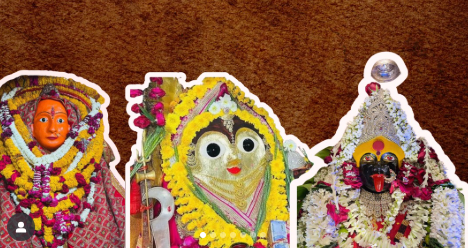
Madhya Pradesh’s Most Iconic and Spiritually Powerful Mata Temples—Each one A Living Legend of Devotion, Architecture, and Local Pride

Maa Pitambari Pith, Dtiya

A powerful tantric shrine, Pitambara Peeth is known for its intense spiritual energy. Devotees come seeking justice, protection, and success. The temple also houses rare manuscripts and a unique library.

Maa BaglaMukhi, Nana kheda (ujjain)

A form of the Dasha Mahavidyas, Baglamukhi is worshipped for victory over enemies and legal battles. Her temple in Nanakheda is a hub for sadhaks and spiritual seekers.

Harsiddhi Mata, Ujjain

One of the 51 Shaktipeeths, Harsiddhi Mata’s temple is near the Mahakaleshwar Jyotirlinga. Famous for its deep-stambh (lamp towers), it glows with thousands of diyas during festivals.

Maa Bijasan, Ujjain

Perched on a hilltop near the airport, Bijasan Mata is a guardian deity of Indore. The panoramic view and peaceful ambiance make it a favorite for both pilgrims and tourists.

Maa gad kali, ujjain

A fierce protector goddess, Gadkalika is believed to have been worshipped by Kalidasa. The temple is a symbol of wisdom and poetic inspiration.

Madhya Pradesh’s Most Iconic and Spiritually Powerful Mata Temples—Each one A Living Legend of Devotion, Architecture, and Local Pride

Bhadwa Mata, Neemuch

Known for miraculous healings and wish fulfillment, Bhadwa Mata’s temple draws thousands during the annual fair. Her devotees believe she cures ailments and blesses families.

Vijayasan Mata Mandir, Salkanpur

A major Shaktipeeth, Vijayasan Mata is worshipped as a form of Durga. The temple sits atop a hill with 1,000+ steps and is especially vibrant during Navratri.

Ratanagad Mata Mandir, Datiya

A hidden gem, Ratangarh Mata is revered for her protective powers. The temple is surrounded by dense forest and is a popular pilgrimage during Chaitra and Ashwin Navratri.

MahaMai Mata Mandir, Bhopal

A local guardian goddess of Bhopal, Mahamai’s temple is a center of faith for thousands. Her devotees believe she watches over the city and its people.

Antari Mata Mandir, Neemuch

A tribal goddess worshipped with deep reverence, Antari Mata’s temple blends folk traditions with mainstream Hindu rituals. It’s a symbol of grassroots devotion.

Chausath Yogini Devi, Jabalpur

A mystical circular temple with 64 yogini statues, it’s one of the few surviving Yogini shrines in India. The site is linked to tantric practices and ancient feminine power

Istanbul’s Crown Jewel of the Seas: Rafale, the $265 Million Superyacht That Redefines Elegance

0

Turquoise Yachts, the legendary Turkish shipbuilder known for crafting some of the world’s most exquisite vessels, is building its most ambitious masterpiece yet: Rafale, an 81.3-meter (266.7 ft) superyacht set to launch in 2028. With a price tag of ₹2,200 crore ($265 million), Rafale isn’t just a yacht—it’s a floating palace sculpted for royalty, visionaries, and dreamers.

Key Highlights of Rafale

  • Five sculpted decks with flowing lines and seamless glazing for panoramic sea views
  • Three swimming pools—on the main, owner, and sun decks—each designed for a unique experience
  • Beach club with three open sides, connecting directly to the sea for an immersive ocean experience
  • Hybrid propulsion system combining twin MTU engines and a 1920 kWh battery bank, enabling a top speed of 17 knots with reduced emissions
  • Owner’s suite with private office, his & hers dressing rooms, and a personal terrace with its own pool
  • Accommodation for 14 guests in 7 luxurious suites, plus space for 17 crew members
  • Central spiral staircase—a sculptural centerpiece connecting all decks
  • Heli-capable bow, gym, spa, formal dining for 16, and a beach club bar
  • Tenders & toys include luxury tenders, jet skis, and a wave runner

Construction & Design:

  • Hull: Steel
  • Superstructure: Aluminium
  • Design: H2 Yacht Design (UK)
  • Class: Lloyd’s Register of Shipping
  • Flag: Cayman Islands

Rafale’s silhouette is a blend of sculptural elegance and technical precision, with reverse chamfered superstructure planes and cascading decks that evoke motion even when anchored. It’s not just a yacht—it’s a statement of power, grace, and futuristic luxury.

India’s Second Largest Akshardham Temple Inaugurated in Jodhpur

0

Jodhpur witnessed a historic spiritual moment today with the inauguration and consecration of idols at the country’s second largest Akshardham Temple, after Delhi. The temple, a marvel of traditional craftsmanship and modern engineering, was completed after seven years of work by 500 artisans.

Union Ministers Ashwini Vaishnav and Gajendra Singh Shekhawat attended the inauguration, while Mahant Swami Maharaj, head of the Bochasan-based Shri Akshar Purushottam Swaminarayan Sanstha (BAPS), performed the Pran-Pratishtha rituals of the divine idols this morning.

Architectural Brilliance

Built entirely with Jodhpur’s Chittar stone, the temple is unique as it uses no iron or stainless steel in its structure. Instead, all stones are bound together using a traditional interlock system, ensuring durability and strength. Even the pillars employ Glass Fiber Reinforced Gypsum (GFRG) technology, blending tradition with innovation.

The temple is designed to remain naturally cool even in 45-degree desert heat. It features intricate carvings up to six inches deep and reflects the Sirohi Ghat architectural style. Spread across a 40-bigha complex, the main shrine covers 10 bighas, rising 91 feet high and 181 feet long, built on a 13-foot-high base.

Unique Features

  • 281 circular pillars, an unprecedented number in any BAPS temple.
  • A distinctive shape with eight to nine angles, instead of the conventional square or rectangular design.
  • A pillarless satsang hall measuring 140 by 125 feet, accommodating 3,000 devotees with a 100×30 feet stage, 14 ACs, and 12 helicopter fans.
  • An automatic Annapurna kitchen, capable of preparing meals for 20,000 people simultaneously, with seating for 500 devotees at a time.

Cultural Significance

The temple is not only a place of worship but also a center for social and cultural initiatives. Campaigns on drug de-addiction and value education for children will be conducted here.

On the eve of the Pran-Pratishtha festival, the temple was beautifully lit up, with fireworks adding grandeur to the celebration. Thousands of devotees gathered to witness the ceremony, marking a new spiritual landmark in Rajasthan.

Union Minister Gajendra Singh Shekhawat, who visited the temple last evening, hailed the project as the beginning of “a new phase of religion and culture in the country,” recalling how faith has found new acceptance globally, including the Akshardham temple recently built in Abu Dhabi.

With its scale, craftsmanship, and spiritual vision, the Jodhpur Akshardham Temple stands as a shining symbol of devotion, heritage, and community service.