
Home Blog Page 172

Durga Puja Surprises All With Maha Kumbh Theme And Silicon Made Durga Statue

0

PC:ANI News

In its 86th year, the Agarpara Tarapukur Adi Sarvajanin Committee in North 24 Parganas, West Bengal, has redefined Durga Puja with a breathtaking ‘Maha Kumbh’ theme for 2025. This UNESCO-recognized festival, celebrated with unparalleled fervor across West Bengal, finds a unique expression in the committee’s pandal, which transforms into a vibrant homage to the Kumbh Mela. At its heart stands a groundbreaking silicon idol of Goddess Durga, crafted in a meditative Yogini form, blending spiritual depth with artistic innovation. This pandal not only honors India’s rich cultural heritage but also captures the divine essence of one of Hinduism’s grandest pilgrimages.

A Pandal Immersed in the Maha Kumbh’s Mystique

Recreating the Kumbh Mela
The Agarpara Tarapukur pandal transports visitors to the sacred banks of the Ganges, Yamuna, and Saraswati rivers, where the Maha Kumbh Mela unfolds every 12 years. The committee chose this theme to celebrate India’s spiritual and cultural traditions, especially poignant following the Maha Kumbh 2025 held earlier in Prayagraj. Inside the pandal, a symphony of colors, sounds, and scents recreates the Kumbh’s sanctity—rhythmic chants of priests, the fragrance of incense, and the distant call of conch shells evoke the pilgrimage’s divine atmosphere.

The Silicon Durga: A Modern Marvel

The centerpiece of the pandal is a stunning idol of Goddess Durga, crafted entirely from silicon—an unprecedented artistic choice for Durga Puja. Depicting the goddess in a meditative Yogini form, the idol emphasizes the spiritual essence of the Kumbh Mela, symbolizing inner peace and divine connection. According to committee secretary Arpan Ghosh, “The depiction of Maa Durga as a Yogini in a meditative state reflects the spiritual depth of the Kumbh festival, uniting two sacred traditions in a single narrative.”

Mythological and Artistic Grandeur

The pandal’s design is a testament to meticulous craftsmanship and cultural authenticity. Life-sized statues of gods and demons line the pathway, vividly portraying the mythological Samudra Manthan (churning of the ocean) from which the Kumbh, or pot of nectar, emerged. Above, a swirling ocean of blue and white fabric cradles a replica of the Kumbh, symbolizing the divine nectar of immortality. The pandal’s ceiling, painted as a celestial canvas adorned with constellations and divine symbols, underscores the cosmic significance of the Maha Kumbh.

Collaborative Craftsmanship

To ensure authenticity, the committee collaborated with artisans and scholars to accurately depict the Kumbh Mela’s cultural and mythological significance. Each element, from the statues to the intricate decorations, was crafted with precision to convey the intensity and drama of the ancient tale, making the pandal a living narrative of Hindu mythology.

Cultural and Spiritual Significance

The ‘Maha Kumbh’ theme creates a profound connection between Durga Puja and the Kumbh Mela, two pillars of Hindu tradition. Both celebrations emphasize spiritual renewal, community, and devotion, and the pandal’s design reflects this shared essence. By portraying Goddess Durga as a Yogini, the committee highlights the introspective and transformative power of faith, resonating with the Kumbh’s focus on purification and enlightenment.

A Timely Celebration

The choice of the Maha Kumbh theme is particularly relevant in 2025, following the grand Maha Kumbh Mela in Prayagraj earlier in the year. This pandal stands as a tribute to that historic event, bringing its spiritual vibrancy to the heart of West Bengal’s Durga Puja festivities. As one of many artistic installations across the state, it exemplifies the creativity and cultural pride that earned Durga Puja its UNESCO Intangible Cultural Heritage status in 2021.

A Testament to Faith and Creativity

The Agarpara Tarapukur Adi Sarvajanin Committee’s 2025 Durga Puja pandal is a masterful blend of tradition, innovation, and spirituality. Through its ‘Maha Kumbh’ theme and the pioneering silicon idol of Goddess Durga, the committee has created an immersive experience that honors India’s sacred heritage while pushing artistic boundaries. This pandal not only celebrates the divine feminine power of Durga but also invites devotees and visitors to reflect on the eternal quest for spiritual immortality, as symbolized by the Kumbh Mela. As West Bengal’s Durga Puja continues to captivate the world, this installation stands as a shining example of the festival’s ability to unite faith, art, and culture in a timeless celebration.
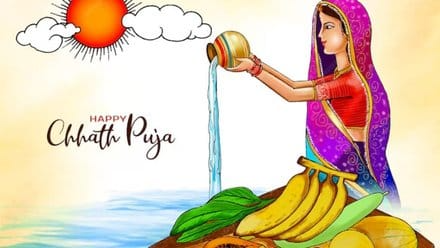

Chhath Puja: Know Dates, Significance and Essence of This Sacred Festival Dedicated to Nature and Devotion

0

Chhath Puja, a revered Hindu festival, is a vibrant celebration of nature, devotion, and gratitude, primarily dedicated to Lord Surya (the Sun God) and Chhathi Maiya (Goddess Shashthi). This four-day festival, deeply rooted in tradition, is observed with immense faith, rigorous rituals, and strict discipline. Originating from Bihar, Eastern Uttar Pradesh, and Jharkhand, Chhath Puja has transcended regional boundaries and is now celebrated across India and by Indian communities worldwide. This article explores the significance, history, rituals, and cultural essence of Chhath Puja.

Historical Significance: Roots in Ramayana and Mahabharata

Chhath Puja holds a rich historical legacy, with its origins traced back to the eras of the Ramayana and Mahabharata. According to beliefs, Lord Rama and Goddess Sita performed Chhath rituals to express gratitude to Lord Surya upon their return to Ayodhya after 14 years of exile. Similarly, Draupadi, the wife of the Pandavas, is said to have observed the Chhath fast, praying for the victory and well-being of her family. These ancient connections highlight the festival’s deep spiritual and cultural significance.
The festival is unique in its worship of both the setting and rising sun, symbolizing the cycle of life and the eternal bond between nature and humanity. Chhath Puja is a heartfelt expression of gratitude to Lord Surya for sustaining life on Earth through his radiant energy, nurturing crops, and fostering prosperity.

The Essence of Chhath Puja: A Festival of Discipline and Devotion

Chhath Puja is celebrated primarily on the sixth day (Shashthi) of the Kartik month’s Shukla Paksha, with another observance during Chaitra Shukla Shashthi, known as Chaiti Chhath. The festival is dedicated to Lord Surya and Chhathi Maiya, believed to be Lord Brahma’s daughter and the protector of children. Devotees seek blessings for family prosperity, longevity, and good health, particularly for their children.
The rigorous 36-hour fast, which includes abstaining from food and water, is considered one of the most challenging in Hindu traditions. This fast is believed to detoxify the body and strengthen mental health, emphasizing the festival’s holistic benefits. Chhath Puja embodies gratitude for nature’s bounty, celebrating the harvest of Rabi and Kharif crops and the life-giving energy of the sun.

The Four Days of Chhath Puja: Rituals and Traditions

Chhath Puja spans four days, each marked by distinct rituals that reflect purity, devotion, and community bonding. Below is an overview of the rituals for each day, based on the 2025 schedule:

Day 1: Nahay Khay (October 25, 2025, Saturday)
The festival begins with Nahay Khay, a day of purification. Devotees take a ritual bath in a river or pond and prepare a simple, sattvic meal, typically consisting of rice, pumpkin curry, and mustard greens. This day sets the tone for the spiritual journey ahead.

Day 2: Kharna (October 26, 2025, Sunday)
On the second day, devotees observe a strict nirjala (waterless) fast throughout the day. In the evening, they prepare and offer kheer (jaggery-based rice pudding), roti, and fruits as prasad to Chhathi Maiya. The family shares this sacred offering, reinforcing familial bonds.

Day 3: Sandhya Arghya (October 27, 2025, Monday)
The third day, the main day of Chhath Puja, is marked by the offering of Sandhya Arghya to the setting sun. Devotees stand in knee-deep water in rivers or ponds, offering prayers and arghya (water offerings) to Lord Surya. This ritual is a profound expression of gratitude and devotion.

Day 4: Pratahkalin Arghya (October 28, 2025, Tuesday)
The festival concludes with Pratahkalin Arghya, where devotees offer prayers to the rising sun. After this ritual, the fast is broken, and prasad is distributed among family and friends, spreading joy and blessings.

Chhath Puja Prasad: A Symbol of Purity

The prasad of Chhath Puja is prepared with utmost care and purity. Common offerings include thekua (a wheat-based sweet), malpua, rice laddoos, fruits, and coconuts. These items are meticulously crafted and offered to Lord Surya and Chhathi Maiya, symbolizing gratitude for nature’s abundance.

Traditional Chhath Puja Songs: The Soul of the Festival

Chhath Puja is incomplete without its soulful folk songs, which resonate with devotion and cultural pride. These songs, sung in local dialects, express the emotions of devotees and enhance the festive spirit. Two popular songs include:

  1. Kanch Hi Bans Ke Bahangiya“Kanch hi bans ke bahangiya, bahangi lachkat jaye…”
    This song describes the delicate bamboo basket (bahangi) carried by devotees, symbolizing their devotion despite challenges.
  2. “Uga ho Suraj Dev, bhail argh ke ber…”
    This song celebrates the moment of offering arghya to the rising sun, marking the culmination of the festival.

James Webb Space Telescope Uncovers Frozen Water in Distant Star Systems, Shedding Light on Planet Formation

0

PC:(CNN)

The James Webb Space Telescope (JWST) has revolutionized our understanding of the cosmos with two groundbreaking discoveries of frozen water in distant star systems. By detecting crystalline water ice in the debris disk of the young, sun-like star HD 181327 and frozen water in the protoplanetary disk 114-426 in the Orion Nebula, JWST has provided critical insights into the early stages of planet formation and the distribution of water—a key ingredient for life—across the universe. These findings, leveraging the advanced capabilities of JWST’s Near-Infrared Camera (NIRCam), mark a significant milestone in space exploration.

Crystalline Water Ice in HD 181327’s Debris Disk

Located just 155 light-years from Earth, the young, sun-like star HD 181327 hosts a debris disk—a ring of dust and ice remnants from planet formation. Using JWST’s NIRCam, astronomers detected crystalline water ice mixed with dust particles in this disk, marking the first definitive evidence of frozen water in a young, nearby star system. Published in Nature, this discovery offers a glimpse into the processes that shape planetary systems.

Significance for Planet Formation

The presence of crystalline water ice in HD 181327’s debris disk suggests that water, essential for life, can be preserved close to a star, facilitating its delivery to forming rocky planets. The spectral data from this disk resemble observations of Kuiper Belt objects in our own solar system, indicating that the processes of ice formation and water delivery may be universal across planetary systems.

Implications for Water Delivery

This discovery underscores the role of debris disks as reservoirs for water ice, which can be incorporated into planets during their formation. By confirming that frozen water is common in young planetary systems, astronomers gain a better understanding of how water-rich environments conducive to life may emerge.

Frozen Water in the Orion Nebula’s Protoplanetary Disk

A Distant Cosmic Nursery
Situated 1,300 light-years away in the Orion Nebula, the protoplanetary disk 114-426 spans over 1,000 astronomical units and is a hub of active star and planet formation. JWST’s NIRCam, observing at a wavelength of 3 micrometers, detected frozen water on dust grains within this disk. This breakthrough highlights JWST’s ability to peer into the coldest, most distant regions of space with unprecedented clarity.

Visualizing the Disk
The edge-on orientation of disk 114-426 creates a silhouette against the bright backdrop of the Orion Nebula, with scattered light revealing bright lobes that indicate the presence of ice and other volatile compounds. This unique perspective has allowed scientists to study the disk’s composition in detail, offering clues about the materials that form planets.

Role of Volatile Compounds

In addition to water, JWST detected volatile compounds such as methane and carbon dioxide in the protoplanetary disk. These compounds are critical for the formation of organic molecules, the building blocks of life. Their presence suggests that this disk could foster conditions suitable for life-supporting environments, raising exciting possibilities for the search for extraterrestrial life.

Broader Implications for Planetary Systems

The discoveries in HD 181327 and the Orion Nebula’s disk 114-426 demonstrate that water is not unique to Earth but is a widespread component in the formation of planetary systems. These findings enhance our understanding of how water is distributed across the galaxy and its role in creating habitable planets.

Advancing the Search for Life
By confirming the presence of water and organic molecules in distant star systems, JWST’s observations suggest that the conditions necessary for life may be common in the universe. These discoveries pave the way for future studies to explore the prevalence of life-supporting environments beyond our solar system.

The Power of JWST’s NIRCam

JWST’s Near-Infrared Camera has proven instrumental in these discoveries, enabling scientists to detect subtle features in distant and faint objects. Its ability to capture detailed spectra and observe at specific wavelengths, such as 3 micrometers, has unlocked new insights into the composition of debris and protoplanetary disks, solidifying JWST’s role as a cornerstone of modern space exploration.

A New Era of Discovery

The detection of frozen water in the debris disk of HD 181327 and the protoplanetary disk 114-426 marks a turning point in our understanding of planetary formation and the origins of water in the universe. These findings, made possible by JWST’s cutting-edge technology, highlight the ubiquity of water in young star systems and its potential to support life. As JWST continues to probe the cosmos, scientists anticipate further revelations about the materials and conditions that shape planets and the possibilities for life beyond Earth.

The Evolution and Global Impact of The Church of Jesus Christ of Latter-day Saints

0

PC:(Wikipedia)

The Church of Jesus Christ of Latter-day Saints, commonly known as the Mormon Church, has grown from a small, controversial religious movement in 19th-century America to a global denomination with over 17.5 million members as of 2024. Founded by Joseph Smith in 1830, the church’s history is marked by divine claims, westward migration, and adaptation to modern challenges. Its emphasis on restorationist theology, missionary work, family values, and humanitarian efforts has solidified its place as a significant force in global Christianity. This article traces the church’s historical journey, doctrinal distinctives, and contemporary relevance, highlighting its transformation into a mainstream yet unique religious institution.

The Founding Vision: Joseph Smith and the Birth of Mormonism

The Church of Jesus Christ of Latter-day Saints was born during the Second Great Awakening, a period of fervent religious revival in the United States. In the 1820s, Joseph Smith, a young farmer in upstate New York, claimed to have received angelic visitations and discovered ancient gold plates. These plates, he asserted, contained the text of the Book of Mormon, a sacred record of ancient American civilizations. Published in 1830, the Book of Mormon became the cornerstone of the church’s theology, which Smith officially organized on April 6, 1830, in Fayette, New York.

Early Challenges and Persecution

The church’s early years were tumultuous, as its unconventional beliefs and practices sparked hostility from surrounding communities. Facing intense persecution, church members relocated from New York to Ohio, Missouri, and later Illinois. These moves were driven by mob violence, economic tensions, and accusations of heresy, culminating in the murder of Joseph Smith in 1844 by an angry mob in Carthage, Illinois. Despite these setbacks, the church’s resilience laid the foundation for its westward expansion.

Westward Expansion: Building Zion in Utah

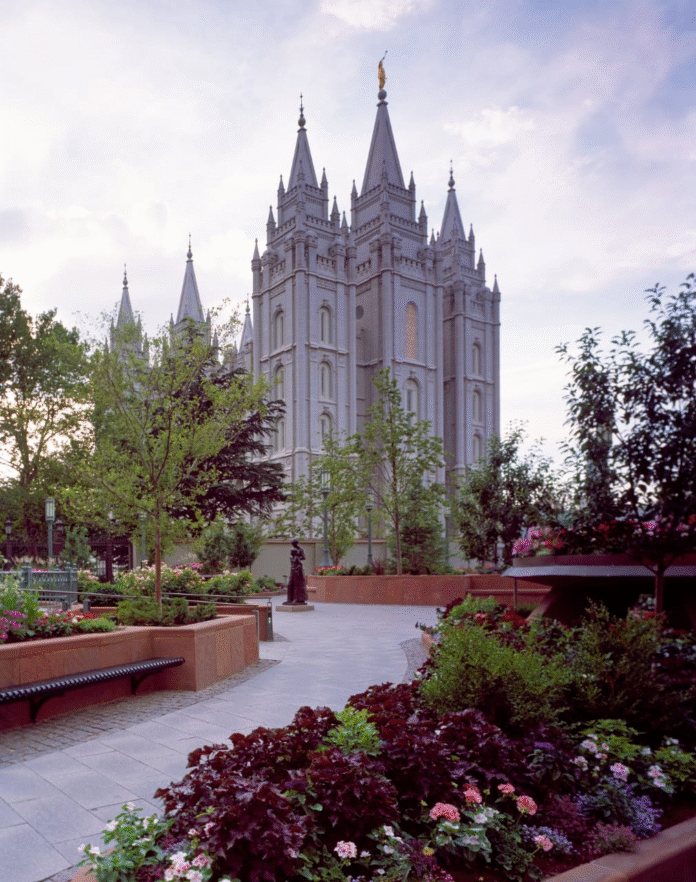
Following Smith’s death, Brigham Young emerged as the church’s second president and led the majority of its members on a grueling migration to the Utah Territory. In 1847, the pioneers arrived in the Salt Lake Valley, establishing Salt Lake City as the church’s headquarters and a sacred center. This settlement became a haven for Latter-day Saints, who transformed the arid region into a thriving community through collective effort and faith.

The Polygamy Era and Its End

One of the church’s most controversial practices, polygamy, was officially introduced in 1852. While it was seen as a divine principle by early members, it drew significant opposition from the U.S. government and society. Mounting legal pressure led to the church’s official discontinuation of polygamy in 1890, with further reinforcement in later years. This shift marked a pivotal moment in the church’s journey toward mainstream acceptance.

Modern Transformation: From Isolation to Global Influence

In the early 20th century, the church sought to integrate into mainstream American culture. It embraced the nuclear family model, distanced itself from its polygamous past, and emphasized values like education, community, and self-reliance. This period of assimilation helped the church gain broader acceptance while maintaining its distinct identity.

Global Expansion and Missionary Zeal

The church’s growth accelerated in the 20th century, driven by an ambitious missionary program. Young men and women, and increasingly older couples, serve as missionaries worldwide, spreading the church’s message and providing humanitarian aid. By the late 1990s, the church’s international membership surpassed its U.S. membership, reflecting its transformation into a global faith. As of 2024, the church boasts over 17.5 million members, with a significant presence in Latin America, Africa, Asia, and the Pacific.

Sacred Spaces: Temples and Family History

The church’s global network of over 382 temples, either built or under construction, underscores its commitment to sacred ordinances, including eternal marriage and proxy baptisms for deceased ancestors. Through its FamilySearch program, the church offers free genealogical services, with billions of searchable records, fostering connections to family heritage and reinforcing its doctrine of eternal families.

Core Beliefs and Practices: A Restorationist Faith

Latter-day Saints believe their church is a restoration of Christ’s original church, guided by a living prophet, seer, and revelator—the church president—who receives divine revelation. This belief in continuing revelation sets the church apart from traditional Christian denominations and shapes its adaptability to modern challenges.

Distinct Doctrines

The church’s theology includes a non-Trinitarian view of God, portraying God the Father, Jesus Christ, and the Holy Spirit as distinct beings united in purpose. Its vision of salvation involves a hierarchical afterlife and eternal progression, with families playing a central role. Temple ordinances, such as sealings for eternal marriage, are integral to these beliefs.

Global Impact and Humanitarian Efforts

The church has invested billions of dollars in global humanitarian initiatives, addressing poverty, disaster relief, and education. These efforts, often independent of its missionary work, reflect its commitment to Christian service and have earned it recognition as a significant humanitarian actor.

Cultural and Social Influence

The church’s emphasis on family, education, and self-reliance has influenced cultural norms, particularly in regions with large Latter-day Saint populations. Its global membership and media presence, including high-profile members in politics, business, and entertainment, amplify its cultural footprint.

Navigating Modern Challenges

The church has faced scrutiny over its historical practices, financial transparency, and stances on social issues like same-sex marriage. In response, it has shown a willingness to adapt, such as reversing past policies on interracial marriage and leveraging technology for missionary outreach. These changes reflect the church’s efforts to balance its distinct identity with modern societal expectations.

Public Discourse and Relevance

As a rapidly growing denomination, the church remains a subject of fascination and debate. Its unique doctrines, global reach, and ability to adapt ensure its continued relevance in religious and cultural discussions. The church’s emphasis on community, family, and service resonates with millions, while its restorationist theology offers a distinctive perspective on Christianity.

India PM Narendra Modi Pens Foreword for Giorgia Meloni’s Autobiography, Calls It ‘Her Mann Ki Baat’

0

Prime Minister Narendra Modi has authored the foreword for the Indian edition of Italian Prime Minister Giorgia Meloni’s memoir, describing it as ‘Her Mann Ki Baat’ and praising her leadership and patriotism.

The book chronicles Meloni’s rise from a working-class childhood in Rome to becoming Italy’s first female prime minister in 2022, emphasizing resilience and public service.

The gesture underscores the deepening India-Italy strategic partnership, marked by increased bilateral trade in defense and renewables, and recent diplomatic engagements.

Ellison Family, A Tech Titan, Emerges as America’s New Media Powerhouse

0

Forget the Murdochs—there’s a new name reshaping America’s media landscape: the Ellisons. Tech billionaire Larry Ellison and his Hollywood producer son David Ellison are no longer just disrupting technology and entertainment; their growing influence now stretches deep into the world of news and media. From TikTok to CNN and Paramount, the Ellisons’ empire-building, backed by strategic ties to President Donald Trump, positions them as the newest media tycoons on the global stage.

Larry Ellison: From Tech Titan to Media Mogul

At 81, Larry Ellison remains one of the world’s richest men, with a staggering net worth of nearly ₹33 lakh crore ($3.3 trillion). The Oracle founder, who revolutionized databases, has seen his fortune double in the past year thanks to Oracle’s critical role in building AI infrastructure. For a brief period, he even overtook Elon Musk as the world’s richest person. Today, however, Ellison’s ambitions extend far beyond Silicon Valley—into the commanding heights of media power.

A key to his rise has been his long-standing closeness to Donald Trump. In 2020, he hosted a high-profile fundraiser for the former president. Soon after, Oracle secured hosting rights for TikTok’s U.S. data, a deal that expanded in scope this year: Oracle now holds control over TikTok’s powerful algorithms, effectively shaping what millions of Americans watch online.

David Ellison: Hollywood’s Next Big Player

While Larry moves tech into media, his 42-year-old son David Ellison has firmly planted himself in Hollywood. Though his debut production Flyboys (2006) failed at the box office, his persistence paid off with the launch of Skydance Media in 2010. The studio went on to deliver blockbuster franchises such as Mission Impossible, Top Gun: Maverick, and World War Z.

David’s boldest move came with the family-backed takeover of Paramount, a legacy entertainment giant employing 18,000 people and running news outlets like CBS. This acquisition vaulted the younger Ellison into the top tier of Hollywood power brokers—cementing the family’s control across film, television, and news.

The New Media Dynasty

With Oracle’s grip on social media algorithms and Paramount’s global reach in entertainment and news, the Ellisons are crafting a cross-industry empire. Their rise, powered by political connections and financial muscle, signals a major shift in America’s media balance of power—one that could redefine influence in both Silicon Valley and Hollywood for years to come.

The Magic of Books in Parimal Garden

0

(image: betterindia/Ahmdabad mirror)

Once upon a time in Ahmedabad, two college friends—Heet Doshi and Om Thakkar—were sitting in Parimal Garden, dreaming big. They had just discovered Kerala’s famous “Book Village” in Perumkulam through social media, where people could freely pick up and read books in public spaces.

Heet said, “Imagine if we had something like this in our city!”
Om smiled, “Let’s make it happen!”

Together, they created a unique concept called Book & Box—a large box filled with around 30 books, placed in public parks. Anyone could come, read a book, borrow one, or even donate their own. Soon, people started gathering—kids, elders, students—all drawn to the world of stories.

Some asked, “What if someone steals the books?”
Heet replied with a smile, “Readers don’t steal. And those who steal, never read.”

By November 2024, they planned to install six such boxes across major parks in Ahmedabad. Each box costs around ₹5,000–₹6,000 and welcomes donations—books or financial support. This initiative not only offers free access to books but also brings people together—reading side by side, sharing stories, donating books, and building a sense of community.

Oil India Discovers Natural Gas Off Andaman Islands

0

Oil India Limited (OIL) has announced the discovery of natural gas off the Andaman Islands, marking the first confirmed hydrocarbon find in the region’s shallow offshore block. The breakthrough could open a new chapter in India’s energy exploration and gradually reduce the nation’s dependence on imports.

Discovery and Testing

The exploratory well Vijayapuram-2, drilled about 17 km from the Andaman shoreline, struck natural gas at a depth of 2,212–2,250 metres beneath 295 metres of water. Initial tests indicated intermittent gas inflow, with samples containing 87% methane—confirming the presence of natural gas. Isotope studies are underway to determine the origin and potential of the reserves.

Exploration in the Andaman Basin

The Andaman Sea has long been viewed as a promising hydrocarbon zone due to its similarities with gas-rich belts stretching from Myanmar to Indonesia. Both OIL and ONGC have been conducting exploration under the Open Acreage Licensing Policy (OALP), though this is the first confirmed shallow offshore discovery in the basin.

Strategic Significance

India currently imports nearly 88% of its crude oil and 50% of its natural gas. A successful find in the Andaman basin could help trim this dependence and bolster energy security. Industry experts have compared the basin’s potential to Guyana’s prolific oil fields, suggesting prospects of large-scale reserves. If commercialised, the discovery could reshape India’s eastern offshore energy landscape.

Road Ahead

OIL will continue testing higher prospects in the block to assess commercial viability. The company expects the results to guide its future exploration strategy in the region. Meanwhile, ONGC’s ultra-deepwater drilling efforts in nearby blocks may complement OIL’s findings and add further momentum to the basin’s development.

Geological and Environmental Considerations

Located in a tectonically complex zone between the Indian and Burmese plates, the Andaman basin offers multiple hydrocarbon migration pathways. However, offshore drilling in this ecologically sensitive region demands cutting-edge technology and strict environmental safeguards to balance energy needs with conservation priorities.

Chaniya Choli: Once a Daily Wear Is Now Fashion Trend in Festivals and Special Occasions…

0

(image: esty.com)

When a girl twirls in her Chaniya-Choli during Garba, she isn’t just dancing—she becomes a living tribute to her ancestors, a symbol of her culture, and a muse for generations to come. Clothing isn’t just fabric—it’s a mirror of society. More than just attire, the Chaniya-Choli stands as a symbol of female creativity, self-reliance, and cultural pride. Every time a woman wears one—whether in a Garba circle or at a wedding—she brings to life a legacy stitched together over centuries

A Journey from the Vedic Era

The roots of the modern Chaniya-Choli go back to ancient India — to garments like Stanapatta (breast cloth), Antariya (a lower garment like the modern lehenga), and Uttariya (a draped cloth over the shoulders). Depictions of goddesses in the Ajanta-Ellora caves and references in the Vedas show us that this attire wasn’t just about modesty or beauty, but also a reflection of one’s social identity and cultural belonging.

Every Stitch Tells a Story

The Chaniya-Choli is not just an outfit, but a living tapestry of folk art, especially in regions like Gujarat and Rajasthan. From mirror work and Bandhani, to Kutch embroidery, Ajrakh prints, and intricate gota-patti work—every detail tells a story. These designs are often hand-stitched by women who have passed these techniques down through generations—from mother to daughter, and daughter to daughter-in-law—like an heirloom of identity and skill.

Once Everyday, Now Festive Glory

What we now consider festive attire—worn during Navratri, weddings, or cultural events—was once everyday wear in rural India. The Chaniya-Choli was favored for its comfort and functionality in hot climates, while also being a canvas for creative expression. With urbanization and the rise of Western fashion influences, it gradually became reserved for special occasions—but its grandeur and cultural essence have never faded.

The Modern Revival of Chaniya-Choli

Today, Chaniya-Choli has taken on bold new avatars. Designers are blending tradition with innovation, giving it a global appeal through fusion fashion, contemporary silhouettes, and eco-conscious materials.

Current Trends:

  • Asymmetrical lehenga hems
  • Minimalist cholis with mirror detailing
  • Sustainable khadi and organic cotton choices
  • Digital prints and block printing fusions
  • Bollywood-inspired designer lehengas

8th Pay Commission to Be Fully Implemented by 2028; Benefits Effective from 2026

0

The 8th Pay Commission may take until 2028 for full implementation, though its benefits will be available from January 1, 2026. While the Union Cabinet approved the formation of the commission in January, an official notification has not yet been issued, the terms of reference are pending, and the list of commission members has not been released.

The new pay commission will impact over 5 million central government employees and approximately 6.5 million pensioners. The basic salary for Level 1 central government employees could rise from ₹18,000 to ₹44,000, with the commission potentially applying a fitment factor of 2.46.

How Much Could Salaries Increase?

The increase in basic salary depends on the fitment factor and the merger of Dearness Allowance (DA). In the 7th Pay Commission, the fitment factor was 2.57; it is expected to be 2.46 in the 8th.

DA resets to zero with every new Pay Commission because the revised basic salary already accounts for inflation. DA then gradually increases again. Currently, DA is 55% of basic pay, so removing it temporarily may make the total salary increase appear smaller.

Example (Level 6 employee):

Current 7th Pay Commission Salary:

  • Basic Pay: ₹35,400
  • DA (55%): ₹19,470
  • HRA (Metro, 27%): ₹9,558
  • Total Salary: ₹64,428

With 8th Pay Commission (fitment factor 2.46):

  • New Basic Pay: ₹35,400 × 2.46 = ₹87,084
  • DA: 0% (reset)
  • HRA (27% of basic): ₹23,513
  • Total Salary: ₹1,10,597

Fitment Factor Explained:
The fitment factor is a multiplier applied to the current basic salary to determine the new basic pay, taking into account inflation and cost of living.

Why Will Implementation Take Until 2028?

Each Pay Commission typically requires 2–3 years from formation to implementation. Even if the 8th Pay Commission is formed soon, time is needed to prepare the report, obtain government approval, and finalize recommendations.

Full implementation by 2028 does not mean employees will only receive benefits then. The effective date is set for January 1, 2026, meaning salary and pension increases will be calculated from that date.

Timeline of Previous Pay Commissions

  • 5th Pay Commission: Constituted in April 1994; report submitted January 1997; recommendations effective January 1, 1996. Original 51 pay scales reduced to 34.
  • 6th Pay Commission: Constituted October 20, 2006; report submitted March 2008; approved August 2008; effective January 1, 2006.
  • 7th Pay Commission: Constituted February 2014; terms of reference finalized March 2014; report submitted November 2015; approved June 2016; effective January 1, 2016.