Home Blog Page 16

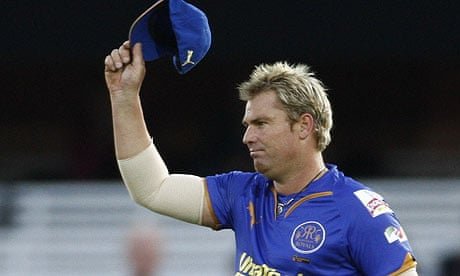
Shane Warne’s Masterstroke: The 0.75% Bet That Became a ₹460 Crore Legacy

0

In the ever-evolving world of cricket, where player auctions and match-winning performances often dominate headlines, some stories quietly unfold over years—gaining meaning with time. The journey of Shane Warne and his association with Rajasthan Royals is one such story. It is not merely about cricketing brilliance, but about foresight, belief, and a decision that would eventually turn into one of the most remarkable financial outcomes in the history of the sport.

When the Indian Premier League began in 2008, it was still an untested concept. Franchises were newly formed, the format was experimental, and the future of the league—though promising—was uncertain. Amid this backdrop, Shane Warne signed on with Rajasthan Royals. But his role extended far beyond that of a player. He became the captain, mentor, and the strategic force behind a team that lacked the star power of its rivals.

What made Warne’s contract particularly unique was a clause that, at the time, did not attract much attention. Alongside his playing salary, he negotiated a 0.75% ownership stake in the franchise for each year he played. In today’s context, such deals are seen as forward-thinking, but in 2008, this was an unusual move. The IPL had not yet proven its long-term value, and equity in a cricket team did not carry the weight it does today. Yet, Warne saw something others perhaps did not—a future where the league could grow into a global sporting powerhouse.

That very year, Warne delivered on the field in spectacular fashion. Leading a relatively unknown squad, he guided Rajasthan Royals to victory in the inaugural IPL season. It remains one of the greatest underdog triumphs in cricket history. More importantly, it laid the foundation for the franchise’s identity—one built on instinct, strategy, and belief rather than big budgets.

Over the next few years, Warne continued with the Royals, eventually accumulating a 3% ownership stake in the franchise. At the time, the financial value of this stake, while respectable, was not extraordinary. The Royals had been originally bought for around $67 million in 2008, and even as their valuation grew over the next decade, the real explosion in value was yet to come.

That transformation arrived in 2026. In a landmark development for the IPL, Rajasthan Royals were acquired by a US-based consortium for approximately $1.63 billion, making them the most valuable franchise in the league’s history. Almost overnight, the meaning of Warne’s earlier decision changed dramatically. His 3% stake, once a small contractual addition, was now worth nearly ₹450–460 crore.

It is here that the story takes on a deeply emotional dimension. Shane Warne passed away in 2022, four years before this historic valuation was realised. He did not witness the full scale of what his decision had become. Yet, his foresight ensured that his family would benefit from it in a significant way. What he once saw as a long-term opportunity ultimately turned into a legacy—one that extended far beyond his achievements on the cricket field.

This story resonates because it reflects a rare quality in sport: the ability to think beyond the present. At a time when most players were focused on match fees and endorsements, Warne chose to invest in the future of the league itself. He believed in the IPL when it was still finding its feet, and in doing so, he positioned himself not just as a player, but as a stakeholder in its success.

Today, Shane Warne is remembered as one of the greatest cricketers the game has ever seen—a magician with the ball, a leader who inspired belief, and a personality who changed the game. But this chapter of his life reveals something equally compelling: a man who understood value, timing, and opportunity in a way few others did.

His 0.75% decision was small in appearance, but monumental in impact. It stands as a powerful reminder that sometimes, the most significant victories are not the ones celebrated in stadiums, but the ones that unfold quietly over time—shaped by vision, patience, and belief in what lies ahead.

Karnataka Draft Policy Caps Students’ Screen Time at 1 Hour; Know its Guidelines on AI And Why It Recommends Internet Shutdown After 7 PM

0

Guidelines for Classes 9–12 focus on digital well-being, mental health, and responsible tech use

The Karnataka government on Tuesday released a draft policy aimed at regulating digital usage among students of Classes 9 to 12, proposing strict limits on screen time and internet access.

The policy recommends that, apart from academic use, students’ screen time for entertainment should be restricted to one hour per day. It also suggests switching off internet access after 7:00 PM to curb excessive usage.

Additionally, the draft advises that students should avoid screens for at least one hour before bedtime. It proposes the introduction of a ‘Child Plan’ for mobile devices, featuring options such as audio-only mode and automatic internet shutdown after a set time. The policy also calls for the development of age-appropriate devices and operating systems.

The move comes amid concerns over rising digital dependency, with the government noting that nearly 25% of adolescents face internet addiction—leading to sleep deprivation, anxiety, and poor concentration.

Key Highlights of the Draft Policy

Digital Reforms in Schools:
Digital well-being and online safety will be integrated into the curriculum, covering topics like cyberbullying, online privacy, and responsible internet use. Schools will implement dedicated digital usage policies, observe ‘Digital Detox Days,’ and introduce ‘tech-free periods.’ Traditional school diaries may replace WhatsApp for student communication.

Focus on Mental Health:
School counseling systems will be strengthened, and teachers will be trained to identify signs of digital addiction and guide students toward professional help when required.

Roles for Teachers and Parents:
Teachers will monitor students’ digital habits and offer guidance, while parents will be encouraged to set screen-time limits, create ‘no-phone zones,’ and model healthy digital behavior.

Guidelines on AI Usage:
Schools will frame rules for the use of Artificial Intelligence in academics, regulate its use in homework, and establish safeguards against misuse and cheating.

Policy Prepared with Expert Input

The draft has been prepared in collaboration with the Department of Health and Family Welfare, Karnataka State Mental Health Authority, NIMHANS, and the Department of Education.

Notably, this proposal is separate from the state government’s earlier announcement on stricter social media regulations. In his Budget speech on March 6, Chief Minister Siddaramaiah highlighted the growing use of mobile phones and social media among children and its adverse impact, proposing tighter controls for those under 16.

Kanya Puja 2026: March 26 or 27? Check Ashtami-Navami Date, Timings and Significance

0

Kanya Puja 2026: Know the correct muhurat, ritual method, and importance of worshipping girls aged 2 to 10 during Navratri

Chaitra Navratri 2026 will conclude on March 27, marking the end of the nine-day festival dedicated to the worship of Goddess Durga. Devotees observe fasts and offer prayers to the nine forms of the Goddess throughout this period.

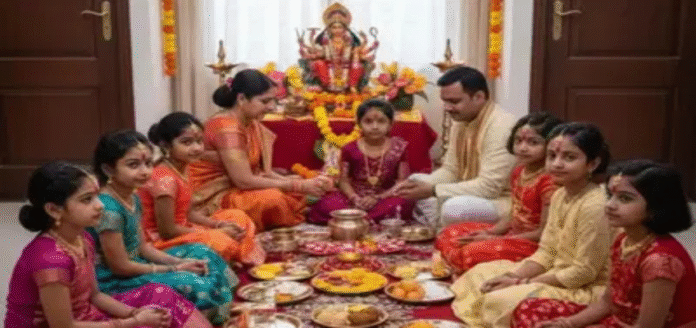
Among these, the last two days—Ashtami and Navami—hold special significance. On these days, devotees perform Kanya Puja (also known as Kanjak Puja), where young girls are worshipped as embodiments of the divine feminine.

When to Perform Kanya Puja in 2026

If observing Kanya Puja on Ashtami, the ritual should be completed before 11:48 AM on March 26, 2026.

For Navami Kanya Puja, the tithi begins at 11:48 AM on March 26 and continues until 10:06 AM on March 27. As per Udaya Tithi, devotees can perform the पूजा either on March 26 or on the morning of March 27 before 10:06 AM.

Age-wise Significance of Girls Worshipped

According to Hindu beliefs, girls between the ages of 2 and 10 are worshipped during Navratri, with each age symbolising a distinct form of the Goddess:

  • 2 years – Kumari
  • 3 years – Trimurti
  • 4 years – Kalyani
  • 5 years – Rohini
  • 6 years – Kalika
  • 7 years – Shambhavi
  • 8 years – Durga
  • 9 years – Chandika
  • 10 years – Subhadra

Worshipping these forms is believed to bring blessings, prosperity, and spiritual growth.

How to Perform Kanya Puja

On Ashtami or Navami, devotees begin the day with a ritual bath and prayers to Goddess Durga. Young girls are then invited respectfully to the home—traditionally nine girls, along with one young boy symbolising Bhairav.

Their feet are washed as a mark of reverence, followed by the application of tilak using roli and rice. A sacred thread is tied on their wrists, and they are offered a red chunri as a symbol of devotion.

The girls are then seated and served traditional prasad such as puri, chane, halwa, or kheer. After the meal, devotees offer gifts, clothes, or monetary tokens as per their capacity and seek blessings.

Kanya Puja is considered one of the most significant rituals of Navratri, symbolising respect for divine femininity and embodying values of gratitude, humility, and devotion.

Disclaimer: The information provided is based on religious beliefs and traditional practices. There is no scientific evidence supporting these claims.

Rajasthan Royals Become IPL’s Costliest Franchise in Landmark $1.63 Billion Deal

0

In a moment that signals a dramatic shift in the business of cricket, Rajasthan Royals have become the first franchise in the history of the Indian Premier League to cross the billion-dollar mark—a milestone that is as symbolic as it is staggering.

But to truly understand why this moment matters, one must look beyond the numbers—into the story of a team that has always done things differently.

The Deal That Changed the IPL Forever

In March 2026, a US-based consortium led by entrepreneur Kal Somani acquired Rajasthan Royals for approximately $1.63 billion (over ₹15,000 crore), making it the most expensive franchise sale in IPL history.

What makes this even more remarkable is the journey leading up to this deal. Just months earlier, the franchise had attracted multiple bids ranging from $1.1 billion to $1.3 billion, sparking a global bidding war involving major investors and private equity giants.

Names like Blackstone, Carlyle Group, Times Internet, and other global players entered the race—clear evidence of how the IPL has evolved into a magnet for international capital.

From an initial valuation of around $250 million just a few years ago, the Royals’ meteoric rise reflects not just their brand value, but the explosive growth of the IPL ecosystem itself.

A Franchise Built on Belief, Not Big Names

Founded in 2008, Rajasthan Royals were never the loudest or the richest team in the league. In fact, they were written off even before the first ball was bowled.

Yet, under the legendary Shane Warne, they went on to win the inaugural IPL title in 2008, creating one of the most iconic underdog stories in cricket history.
That identity—of spotting potential over purchasing stardom—became their hallmark.

Over the years, the Royals have consistently:
●Backed young and uncapped talent
●Built squads with strategic precision
●Focused on long-term team culture rather than short-term glamour

Even when they didn’t dominate the scoreboard, they remained one of the most respected franchises in terms of cricketing philosophy.

Why Rajasthan Royals Became the First Billion-Dollar Franchise

Interestingly, this historic valuation has little to do with recent trophies and everything to do with vision.

Despite mixed on-field performances in recent seasons, Rajasthan Royals have:
●Built a strong global fan base
●Positioned themselves as a data-driven, modern franchise
●Benefited from the IPL’s booming media rights and revenue-sharing model

The IPL itself has seen broadcast rights soar past $6 billion in recent cycles, dramatically increasing franchise valuations and investor interest.

In many ways, Rajasthan Royals became the perfect example of how sports teams today are not just about winning matches—but about building scalable global brands.

The Globalisation of the IPL

The acquisition by Kal Somani’s consortium marks a turning point—not just for Rajasthan Royals, but for the IPL as a whole.

Somani, known for his ventures in technology, AI governance, and global business ecosystems, represents a new class of investors entering sports—those who see franchises as long-term, multi-dimensional assets.

This deal reflects:
●Rising global confidence in Indian cricket
●The IPL’s transformation into a premier sports business league
●The merging of technology, entertainment, and sport

The Royals, once considered the league’s most “moneyball” team, have now become its most valuable story.

More Than a Team: A Story That Resonates

For fans, especially across Rajasthan, this moment feels deeply personal.
Rajasthan Royals have always symbolised opportunity over privilege, strategy over spending and belief over hype. Their rise mirrors the aspirations of countless Indians—where success is built not on resources alone, but on vision and courage.

Conclusion: A Full-Circle Moment

From being the least fancied team in 2008 to becoming the most valuable franchise in 2026, Rajasthan Royals have come full circle.
This is not just a financial headline—it is a story.
A story of how an underdog team quietly built a legacy strong enough to redefine the economics of cricket.
And as the IPL enters a new era of billion-dollar franchises and global investments, one thing is clear:
Rajasthan Royals haven’t just made history—they’ve changed the game.

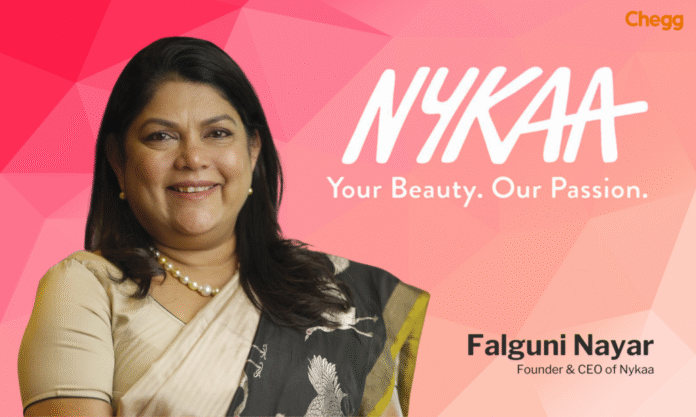
Falguni Nayar: The Visionary Who Redefined India’s Beauty Landscape

0

In the world of Indian entrepreneurship, the journey of Falguni Nayar stands out as a powerful reminder that ambition has no age limit. At a stage in life when most professionals begin to slow down, she chose to begin anew—eventually building Nykaa into one of India’s most influential consumer brands.

Roots Shaped by Business and Curiosity

Born into a Gujarati business family in Mumbai, Falguni grew up in an environment where entrepreneurship was not just a profession but a way of life. Dinner table conversations often revolved around margins, markets, and growth. This early exposure instilled in her both curiosity and confidence in business.

Her academic journey reflected her sharp intellect and discipline. After graduating in commerce from Sydenham College, she earned her MBA from Indian Institute of Management Ahmedabad —a place known for shaping some of India’s finest business leaders. This strong educational foundation would later play a critical role in her entrepreneurial journey.

A Stellar Corporate Career

Long before Nykaa came into existence, Falguni Nayar had already built an impressive corporate career. She spent nearly two decades at Kotak Mahindra Group, eventually rising to the position of Managing Director at Kotak Mahindra Capital.

During this time, she worked closely with some of India’s biggest companies, advising them on IPOs, mergers, and growth strategies. This experience gave her a rare vantage point—she didn’t just understand businesses; she understood how successful businesses were built, scaled, and sustained. Yet, despite her success, there remained a quiet desire to create something of her own.

The Leap of Faith at 50

In 2012, at the age of 50, Falguni Nayar made a decision that would redefine her life. She stepped away from a secure and prestigious career to launch Nykaa under FSN E-Commerce Ventures.

At the time, India’s beauty market was largely unorganized. Consumers struggled with access to genuine products, and online beauty retail was still in its infancy. Falguni saw an opportunity not just to sell products, but to build a platform rooted in trust, authenticity, and education.

Nykaa was born with a simple yet powerful vision—to become a reliable destination where consumers could discover, learn about, and purchase beauty products with confidence.

Building Nykaa: A Thoughtful and Strategic Journey

What set Nykaa apart was not just what it sold, but how it sold. Falguni understood early on that beauty is deeply personal, and consumers needed guidance as much as they needed products. Nykaa therefore blended content with commerce—offering tutorials, expert advice, and reviews alongside its product listings. This approach helped build a strong sense of trust and community.

As the brand grew, it expanded beyond the digital space into physical retail. The launch of offline stores allowed customers to experience products firsthand, reinforcing Nykaa’s omnichannel presence. This seamless integration of online and offline experiences became one of its defining strengths.

Another significant step was the introduction of Nykaa’s own private labels. From Nykaa Cosmetics to Nykaa Naturals and Nyveda, these in-house brands not only strengthened the company’s identity but also improved profitability. At the same time, Nykaa brought global beauty giants like MAC and Huda Beauty to Indian consumers, establishing itself as a comprehensive beauty destination.

A Landmark Rise

Nykaa’s growth over the years has been nothing short of remarkable. What began as a niche e-commerce platform soon evolved into a unicorn startup, crossing a billion-dollar valuation. Its IPO in 2021 marked a historic moment—not just for the company, but for Indian entrepreneurship—making Falguni Nayar one of the country’s richest self-made women billionaires.

The company continued to expand its footprint, both digitally and physically, reaching millions of customers across the country. More importantly, it reshaped how India approached beauty—making it more accessible, informed, and inclusive.

Beyond Beauty: Building a Lifestyle Ecosystem

Today, Nykaa is no longer limited to beauty alone. It has grown into a diversified lifestyle platform. With the launch of Nykaa Fashion, the brand entered the apparel and accessories segment, while Nykd focused on intimate wear and comfort-driven fashion.

What Falguni has built is not just a company, but an ecosystem—one that brings together global brands, homegrown labels, and Nykaa’s own product lines under a single trusted umbrella. The platform now caters to millions of consumers, offering everything from skincare and makeup to fashion and wellness.

The Present and the Path Ahead

In its current phase, Nykaa continues to expand aggressively, opening new retail stores across India while strengthening its digital capabilities. The company is also investing in technology, personalization, and content to enhance customer experience.

At the same time, initiatives aimed at supporting emerging beauty entrepreneurs reflect Falguni Nayar’s broader vision—not just to build a business, but to nurture an entire industry.

A Story of Courage and Reinvention

Falguni Nayar’s journey is ultimately a story of courage—the courage to walk away from certainty, to trust one’s instincts, and to begin again. It is also a story of patience, discipline, and long-term thinking in an age often driven by quick success.

Her legacy goes beyond Nykaa. She has inspired countless individuals—especially women—to believe that it is never too late to chase a dream.
In redefining beauty retail in India, she also redefined what it means to start over.

IPL 2026 to Be The Biggest: 84 Matches, 10 Teams; Action Begins From March 28. Know Schedule, Dates, Grounds, Teams and Where to Watch

0

The 19th edition of the Indian Premier League (IPL) is set to kick off on March 28, with the final scheduled for May 31. In what will be the biggest season in the tournament’s history, a total of 84 matches will be played among 10 teams, with each side featuring in 16 games.

Defending champions Royal Challengers Bengaluru (RCB) will face Sunrisers Hyderabad (SRH) in the opening clash at Bengaluru’s M. Chinnaswamy Stadium.

Partial Schedule Released Amid Election Calendar

With Assembly elections scheduled across five states in April-May—including key IPL venues like West Bengal, Tamil Nadu and Assam—the BCCI has released only the initial phase of the schedule.

So far, fixtures for the first 20 matches, spanning March 28 to April 12, have been announced. The remaining schedule is expected after further coordination with authorities.

Here is the English version of the schedule from your image:

IPL 2026 – Opening Matches Schedule

MatchDateDayTimeVenue
RCB vs SRHMarch 28Saturday7:30 PMBengaluru
MI vs KKRMarch 29Sunday7:30 PMMumbai
RR vs CSKMarch 30Monday7:30 PMGuwahati
PBKS vs GTMarch 31Tuesday7:30 PMNew Chandigarh
LSG vs DCApril 1Wednesday7:30 PMLucknow
KKR vs SRHApril 2Thursday7:30 PMKolkata
CSK vs PBKSApril 3Friday7:30 PMChennai
DC vs MIApril 4Saturday3:30 PMDelhi
GT vs RRApril 4Saturday7:30 PMAhmedabad
SRH vs LSGApril 5Sunday3:30 PMHyderabad
RCB vs CSKApril 5Sunday7:30 PMBengaluru
KKR vs PBKSApril 6Monday7:30 PMKolkata
RR vs MIApril 7Tuesday7:30 PMGuwahati
DC vs GTApril 8Wednesday7:30 PMDelhi
KKR vs LSGApril 9Thursday7:30 PMKolkata
RR vs RCBApril 10Friday7:30 PMGuwahati
PBKS vs SRHApril 11Saturday3:30 PMNew Chandigarh
CSK vs DCApril 11Saturday7:30 PMChennai
LSG vs GTApril 12Sunday3:30 PMLucknow
MI vs RCBApril 12Sunday7:30 PMMumbai

10 Teams in the Fray

The tournament will feature the following teams:

Chennai Super Kings, Mumbai Indians, Kolkata Knight Riders, Royal Challengers Bengaluru, Delhi Capitals, Rajasthan Royals, Punjab Kings, Sunrisers Hyderabad, Lucknow Super Giants and Gujarat Titans.

Playoff Window Likely from May 26

While official playoff dates are awaited, the timeline suggests:

  • Qualifier 1: May 26
  • Eliminator: May 27
  • Qualifier 2: May 29
  • Final: May 31 (Bengaluru)

Matches Across 13 Cities; Raipur Returns After 13 Years

IPL 2026 will be hosted across 13 cities. While seven teams will stick to a single home venue, Bengaluru, Punjab and Rajasthan will use two home grounds each.

Notably, the Shaheed Veer Narayan Singh Stadium in Raipur will host IPL matches after a 13-year gap. The last game at the venue was played in 2013 between Delhi Capitals and Kolkata Knight Riders. RCB has adopted Raipur as its second home ground this season.

Key Rule Changes This Season

  • No Match-Day Practice: Teams cannot practice on match day or use the opposition’s nets under any circumstances.
  • Strict Travel Protocols: Players must travel only via designated team buses; family access is restricted to hospitality zones.
  • Discipline Measures: Mandatory ID cards for all staff; unauthorized family members barred from dugouts and field areas.
  • Cap & Dress Rules: Orange and Purple Cap holders must wear their caps for at least the first two overs while fielding. Sleeveless jerseys are not allowed during post-match presentations.

RCB Enter as Defending Champions

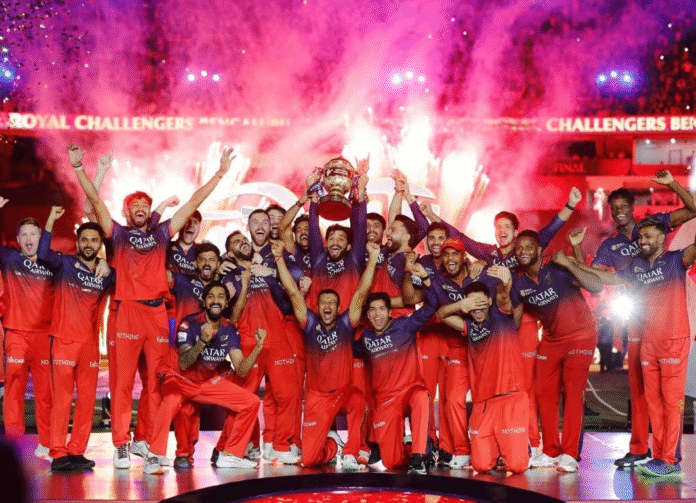
Royal Challengers Bengaluru head into the season as defending champions after clinching their maiden IPL title in 2025, defeating Punjab Kings by six runs in a thrilling final.

Auction Highlights

  • Most Expensive Player: Cameron Green (KKR) – ₹25.20 crore
  • Top Uncapped Buys: Prashant Veer and Kartik Sharma (CSK) – ₹14.20 crore each

Where to Watch

IPL 2026 will be broadcast live on the Star Sports Network, with streaming available on Jio Hotstar. Live scores and updates can also be tracked via mobile apps.

Rare Hibiscus: A Striking “Blue” Bloom Captivates the Islands in Early 2026

0

In early 2026, social media platforms lit up with breathtaking images of a rare blue hibiscus that had finally bloomed in Hawai’i after nearly ten years of careful tending. The viral posts described the event as a “botanical miracle,” symbolizing resilience, patience, and the delicate balance of nature. Gardeners and nature enthusiasts celebrated the moment, noting how true blue tones are exceptionally uncommon among hibiscus flowers, which typically display shades of red, pink, yellow, or white.
While the story spread widely as an inspiring tale of waiting for something extraordinary, a closer look reveals important botanical context that adds depth to the beauty of this bloom.

The Challenge of True Blue in Flowers

Producing a stable, vibrant blue color is biochemically difficult for most plants, including hibiscus. It usually requires specific pigments like delphinidin combined with a precise cellular pH balance. As a result, many so-called “blue” hibiscus varieties actually lean toward lavender, lilac, or powdery blue rather than a deep, true cerulean.

Hawai’i’s seven native hibiscus species (representing about 13 taxa) do not naturally produce blue flowers. The iconic state flower, Hibiscus brackenridgei (ma’o hau hele), is bright yellow, while others appear in white, red, orange, or occasionally light purple tones. Many of these endemic plants are endangered due to habitat loss and invasive species, making conservation efforts crucial for Hawaii’s unique biodiversity.

What Is the Famous “Blue Hibiscus”?

The plant often celebrated in these stories is frequently Alyogyne huegelii, commonly known as the blue hibiscus or lilac hibiscus. Despite the name, it is not a true member of the Hibiscus genus (though it belongs to the same mallow family, Malvaceae). This fast-growing evergreen shrub is native to the coastal regions of Western Australia, not Hawai’i.

Alyogyne huegelii produces large, trumpet-shaped flowers in lovely lilac-blue to deep purple hues and is popular in tropical and subtropical gardens worldwide, including parts of Hawai’i, because of its hardiness and showy blooms. Cultivated hybrids and varieties (such as certain Rose of Sharon types like ‘Blue Chiffon’ or ‘Oiseau Bleu’) can also display blue-toned flowers and are grown by dedicated gardeners and botanical enthusiasts. The “ten-year” timeline in the viral reports likely refers to the long-term patience required by cultivators to nurture a specific plant or collection through Hawaii’s climate, soil conditions, and seasonal cycles until it produced its striking flowers.

Such dedicated care highlights the effort behind many rare or unusual blooms in tropical gardens. flowers. Such dedicated care highlights the effort behind many rare or unusual blooms in tropical gardens.

A Symbol of Patience and Conservation

Regardless of its exact scientific identity, the viral story has served as a beautiful reminder of nature’s timing. It echoes other “flowers of patience,” such as Hawaii’s own Haleakalā silversword, which can take 20-50 years to bloom once before dying.

The attention also shines a light on the importance of preserving fragile ecosystems. While this particular bloom appears to be a cultivated rarity rather than a wild rediscovery of a native blue variety, it encourages appreciation for Hawaii’s endemic hibiscus species and the ongoing work of botanical gardens and conservationists. Whether a true Hibiscus hybrid, a lilac-toned cultivar, or the Australian Alyogyne huegelii thriving in Hawaiian soil, the flower’s appearance in early 2026 through Hawaii’s climate, soil conditions, and seasonal cycles until it produced its striking flowers. Such dedicated care highlights the effort behind many rare or unusual blooms in tropical gardens.

A Symbol of Patience and Conservation

Regardless of its exact scientific identity, the viral story has served as a beautiful reminder of nature’s timing. It echoes other “flowers of patience,” such as Hawaii’s own Haleakalā silversword, which can take 20-50 years to bloom once before dying.

The attention also shines a light on the importance of preserving fragile ecosystems. While this particular bloom appears to be a cultivated rarity rather than a wild rediscovery of a native blue variety, it encourages appreciation for Hawaii’s endemic hibiscus species and the ongoing work of botanical gardens and conservationists. Whether a true Hibiscus hybrid, a lilac-toned cultivar, or the Australian Alyogyne huegelii thriving in Hawaiian soil, the flower’s appearance in early 2026 brought joy and wonder to many. It stands as a vivid example that sometimes the most beautiful things in life – and in nature require years of quiet care and anticipation to reveal themselves.

Niche Business Ideas Targeting Specific Customer Groups

0

In many markets, broad demand is already controlled by large operators, which is why smaller businesses often grow faster when they focus on a narrow audience instead of trying to serve everyone. A niche model works because it starts with one clearly defined need, one purchasing pattern, and one customer group whose expectations are often ignored by general providers. Market segmentation research consistently shows that businesses become easier to position when they define customers through behavior, lifestyle, usage habits, or specific unmet needs rather than through general demographics alone.

That is why many early-stage founders study narrow buying patterns before product design, and some readers who compare digital demand trends through this website also notice how targeted user groups often respond more predictably than broad audiences. A niche business does not depend on volume first; it depends on relevance, repeat need, and operational clarity.

Why Niche Markets Often Outperform Broad Concepts

A niche business reduces one of the main risks in early development: unclear positioning. When a business serves a narrow group, product decisions become simpler because the target user already defines acceptable pricing, communication style, service format, and delivery expectations.

A general business may struggle because it competes on many fronts at once. A niche business often competes on one factor only: understanding the customer better than others.

This works especially well when the customer group has one of these characteristics:

  • regular recurring needs
  • limited existing supply
  • special service requirements
  • emotional loyalty to tailored solutions
  • willingness to pay for convenience

The STP framework—segmentation, targeting, and positioning—is often used because it forces a business to choose one segment before investing in expansion. Without this discipline, many small businesses create products first and search for customers later.

Business Idea 1: Meal Planning for Shift Workers

Most food delivery services target office routines, but shift workers have different timing, calorie needs, and ordering patterns.

Healthcare staff, factory employees, transport operators, and emergency workers often eat at irregular hours. A niche business can build subscription meal systems designed around night schedules, early starts, and rotating shifts.

The business becomes stronger if it offers:

  • delivery before sunrise
  • packaging for delayed consumption
  • macro-balanced options
  • weekly flexible scheduling

This segment values reliability more than menu complexity.

Business Idea 2: Administrative Services for Freelancers With Irregular Income

Freelancers often face the same operational issue: income arrives unevenly, while taxes, invoices, and reporting require fixed discipline.

A focused service for freelancers can combine:

  • monthly invoice organization
  • tax calendar reminders
  • expense categorization
  • contract review support

The niche becomes stronger when directed toward one professional group only, such as designers, writers, developers, or consultants.

This reduces communication costs because service language becomes specific to one type of work.

Business Idea 3: Fitness Programs for Adults Returning After Long Inactivity

Many fitness businesses target active users, but one under-served group includes adults returning after years without structured exercise.

Their barriers differ:

  • fear of injury
  • lack of confidence
  • limited mobility
  • unclear progress expectations

A niche business here may combine:

  • low-impact small-group training
  • mobility assessment
  • habit rebuilding plans
  • short-duration sessions

Behavioral segmentation often works better here than age segmentation because motivation level matters more than birth year.

Business Idea 4: Travel Planning for Single Parents

Travel products often assume two adults manage logistics. Single parents face another structure entirely: transport, child timing, luggage handling, and accommodation all require different planning.

A niche agency for this group may focus on:

  • routes with minimal transfers
  • accommodation near transport hubs
  • meal timing support
  • emergency flexibility

The value is not luxury. The value is reducing friction.

Business Idea 5: Home Organisation Services for Small Apartments

Urban housing creates a specific segment: people with limited space but long-term storage problems.

This service can target:

  • renters
  • remote workers
  • young families
  • people moving frequently

Instead of selling furniture, the business sells practical system design:

  • storage zoning
  • item rotation plans
  • room-use restructuring
  • seasonal inventory logic

The strongest niche businesses often sell decision clarity rather than objects.

Business Idea 6: Learning Support for Adults Changing Careers After 35

Many education services still focus on students or early-career workers, while adults changing sectors often need different formats.

Their main constraints are:

  • limited evening time
  • fear of technical gaps
  • direct income pressure

A focused learning business can provide:

  • short modules
  • industry vocabulary training
  • interview simulation
  • role-based task practice

This becomes especially strong when built around one transition path, for example from administration into digital operations.

Business Idea 7: Local Repair Services for Premium Everyday Goods

Mass products are replaced easily, but many customers now prefer repair for selected household items.

A niche repair model may focus only on:

  • kitchen devices
  • bicycles
  • leather accessories
  • office chairs

The advantage comes from specialization.

A repair business that handles one category becomes faster, cheaper, and more trusted than a general repair workshop.

How to Evaluate If a Customer Group Is Large Enough

A niche should not be chosen because it sounds unusual. It should be chosen because the group is narrow but economically active.

Three practical questions help:

Does the group spend repeatedly?

A niche with one purchase per year is weaker than one with monthly recurring demand.

Is there frustration with current options?

If people already complain about generic solutions, entry becomes easier.

Can communication be direct?

The strongest niches are easy to reach through one channel: communities, forums, associations, local groups, or profession-based networks.

A niche becomes weak when customer acquisition depends on expensive broad advertising.

Why Some Niche Businesses Fail Even With Good Ideas

Failure often comes from choosing identity instead of behavior.

For example, targeting “young professionals” is too broad.

Targeting “young professionals working rotating schedules in city hospitals” creates operational meaning.

Micro-segmentation matters because buying decisions are often tied to context rather than age alone. Small segments can become profitable when their needs are stable and their alternatives are poor.

Long-Term Advantage of Focused Positioning

A niche business often begins with one group but later expands through adjacent segments.

A service for shift workers may later expand into transport workers.

A freelancer accounting service may later serve small remote teams.

The key is sequence:

  1. dominate one narrow demand
  2. document repeat patterns
  3. expand only after process stability

Many businesses fail because they reverse this order.

A narrow start is not a limitation. It is often the most efficient way to reach stable growth with controlled cost and clearer market identity.

Ozempic, Generics, and the Big Shift: Everything You Need to Know

0

India is witnessing a major healthcare shift. Following the expiry of the patent for semaglutide—the active ingredient in Ozempic—several Indian pharmaceutical companies have launched significantly cheaper generic versions of the drug. Prices have dropped by as much as 50–80%, with some treatments now costing a fraction of the original brand.

This has opened access to millions of patients, especially in a country with a large burden of diabetes and obesity. However, experts and regulators are also raising concerns about misuse, over-prescription, and safety monitoring as availability rapidly expands.

So, what exactly is Ozempic—and what should you know before considering it?

What Is Ozempic?

Ozempic is a prescription medication used to treat Type 2 Diabetes. It contains semaglutide, a GLP-1 receptor agonist that:
●Helps control blood sugar
●Slows digestion
●Reduces appetite

This is why it has also gained global popularity for weight management, though it is not originally designed as a cosmetic weight-loss drug.

10 Important Things You Must Know Before Taking Ozempic

1. It’s Not a “Weight-Loss Shortcut”
While widely used for weight loss, Ozempic works best when combined with diet and exercise. Without lifestyle changes, results are limited—and often temporary.

2. It Requires Long-Term Use
Stopping the medication can lead to weight regain and rising blood sugar levels, meaning it is typically a long-term commitment.

3. It’s a Weekly Injection
Ozempic is taken once a week via injection in the abdomen, thigh, or upper arm—making it convenient but still requiring discipline.

4. It Is Only for Type 2 Diabetes
It should not be used for Type 1 Diabetes or as a replacement for insulin therapy.

5. Common Side Effects Are Digestive
Many users experience:
•Nausea
•Vomiting
•Diarrhea or constipation
These are especially common in the early stages of treatment.

6. Serious Thyroid Warning
Ozempic carries a boxed warning about thyroid C-cell tumors. It should be avoided if there is a history of:
•Medullary thyroid cancer
•MEN 2 syndrome

7. Risk of Pancreatitis

Severe abdominal pain could indicate pancreatitis, a rare but serious side effect that requires immediate medical attention.

8. Kidney and Eye Complications
There is a risk of:
•Kidney injury (especially with dehydration)
•Worsening diabetic eye disease
Regular monitoring is essential.

9. Generics Are Cheaper—But Not Risk-Free

India’s new generic versions are making treatment far more affordable, with dozens of brands entering the market.
However, experts warn that increased access could lead to:
•Self-medication
•Misuse for cosmetic weight loss
•Inconsistent medical supervision

10. Always Consult a Doctor First
Before starting Ozempic, discuss:
•Existing health conditions
•Pregnancy or breastfeeding
•Cost and long-term affordability
This is not a medication to start casually.

Final Takeaway

The arrival of cheaper semaglutide drugs marks a turning point in global healthcare access—especially in countries like India. What was once an expensive, elite treatment is now becoming widely available.

But with greater access comes greater responsibility.

Ozempic is not just a trend—it is a powerful medical therapy that must be used carefully, under supervision, and alongside lifestyle changes. Understanding both its benefits and risks is the key to using it safely and effectively.

Iran Beyond Headlines: Persia’s Timeless Soul

0

Some civilisations are remembered in ruins—but Persia continues to live in words, art, and memory.
In today’s fast-moving world, nations are often reduced to headlines shaped by conflict and politics. Yet beneath these fleeting narratives lies something far more enduring. Iran, frequently seen through the prism of global tensions, carries within it the legacy of one of history’s most refined and resilient civilisations—Persia.

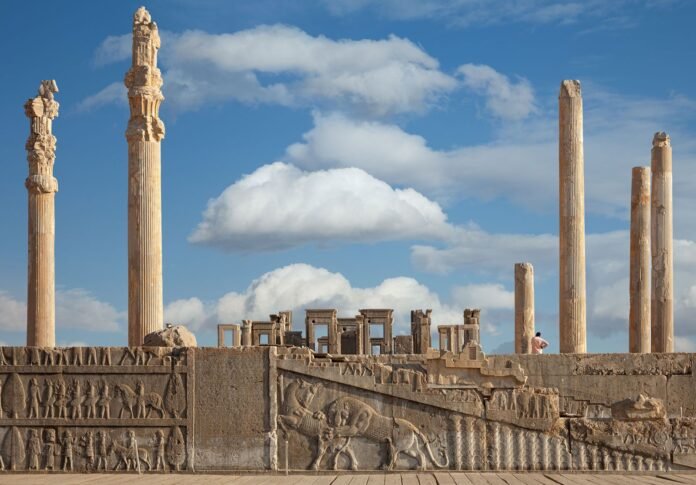
At the heart of this legacy stands Persepolis, a recognised UNESCO World Heritage Site that once symbolised the grandeur of the Achaemenid Empire. Founded in the 6th century BCE under Darius the Great, Persepolis was not merely a city—it was a ceremonial centre where art, architecture, and imperial vision came together. Delegations from across the empire gathered here, bringing tribute and celebrating a shared cultural identity.

History, however, carries both creation and destruction. In 330 BCE, during the campaign of Alexander the Great, Persepolis was set ablaze—an act whose intent historians still debate. The fire consumed palaces and treasures, symbolising the fall of an empire rather than causing it. What remains today are striking ruins—columns, gateways, and intricate reliefs—that continue to speak of both glory and loss.

And yet, even in ruin, Persepolis endures. It stands not as a relic of defeat, but as a powerful reminder that while empires may fall, the essence of a civilisation cannot be erased.

This enduring spirit defines Persian culture itself. It lives on not only in stone, but in thought and expression. The poetry of Rumi, Hafez, and Ferdowsi continues to resonate across centuries, shaping emotions and philosophies far beyond its origins. In Persian culture, poetry is not confined to books—it is woven into everyday life, offering a lens through which love, spirituality, and existence are understood.

From the symmetry of Persian gardens to the lyrical beauty of Farsi , every element reflects a deep pursuit of harmony and meaning. Even today, Persian art, literature, and cinema continue to influence global cultural conversations, quietly extending this ancient legacy into the modern world.

To look beyond the headlines is to discover more than a nation—it is to encounter a civilisation that has endured the rise and fall of empires, yet remains steady and luminous. In the silent stones of Persepolis and the timeless verses of its poets, Persia lives on—graceful, resilient, and impossible to forget.