Home Blog Page 154

The Iron Man Who Molded a Nation: Remembering Sardar Vallabhbhai Patel on National Unity Day

0

By Rishita Sogani

When Freedom Felt Fragile: In 1947, India stood at the dawn of independence free yet fractured. The British had left behind not one nation, but a patchwork of more than 560 princely states. Fear, uncertainty, and ambition lingered in the air. It could have all fallen apart if not for one man whose courage was carved in iron and whose vision stretched beyond borders: Sardar Vallabhbhai Patel.

A Farmer’s Son with a Fire Within


Born in the quiet lands of Gujarat, Patel wasn’t born into power; he built it through grit and grace. A lawyer by profession, he found his true calling in the fight for justice and equality. His leadership during the Bardoli Satyagraha where he stood shoulder to shoulder with struggling farmers earned him the title “Sardar”, the leader. It wasn’t a name given out of respect alone, but out of faith, faith that he could move mountains if India needed him to.

Forging Unity from Uncertainty


When independence arrived, it brought a challenge few could have faced integrating hundreds of princely states into one nation. Patel, as the first Deputy Prime Minister and Home Minister, took on the impossible. With calm persuasion for some, firm resolve for others, and unwavering nationalism for all, he brought them together under one flag.
He didn’t just unite territories; he united hearts. His diplomacy wasn’t coated in softness but rooted in steel earning him the title “The Iron Man of India.”

Strength Woven with Compassion


Patel’s iron was not cold or cruel. It was the strength that protects, guides, and uplifts. Behind his steely gaze was a man who deeply loved his country who believed unity was not just about maps but about minds. His vision of a united India wasn’t political; it was emotional, cultural, and deeply human.

A Statue That Stands for a Spirit


Decades later, his towering legacy took physical form in the Statue of Unity the tallest statue in the world, rising 182 meters above Gujarat’s soil. But more than its height, it is the idea it represents that stands tallest the belief that courage and unity can shape destiny.

As we celebrate Rashtriya Ekta Diwas, we remember Sardar Patel the man who turned fragments into a nation and dreams into India.

Uber Partners with Nvidia to Deploy 100,000 Robotaxis Worldwide by 2027

0

In a landmark move toward the future of autonomous transport, Uber Technologies has partnered with Nvidia to develop and deploy a global fleet of 100,000 driverless robotaxis by 2027. The announcement, made at Nvidia’s GTC Conference in Washington, DC, signals a major leap in the commercial rollout of large-scale autonomous mobility.

Uber Partners with Nvidia to Deploy 100,000 Robotaxis Worldwide by 2027

Strategic Collaboration for Autonomous Mobility

The partnership builds upon an earlier agreement signed in January, under which Uber shared extensive driving data to enhance Nvidia’s AI systems and self-driving chip technology. The project will be powered by Nvidia’s Drive AGX Hyperion 10 platform, which integrates advanced sensors, processors, and software to enable full-scale autonomous operations.
The collaboration aims to create a global AI-driven mobility network, positioning Uber as a frontrunner in autonomous ride-hailing.

Stellantis and Foxconn to Supply the First Fleet

Automaker Stellantis will manufacture the first 5,000 robotaxis equipped with Nvidia’s advanced hardware, with Foxconn supporting production and system integration. Pilot programs are set to begin in the United States, followed by a global rollout by 2028. Uber will oversee the entire fleet operation — including maintenance, charging, remote monitoring, and customer support — while continuing to collaborate with other self-driving partners like Waymo, WeRide, and Nuro.

Building the Robotaxi Data Factory

To accelerate innovation, Uber and Nvidia will jointly establish a “Robotaxi Data Factory”, designed to process more than three million hours of driving data collected from Uber’s global operations. Nvidia will supply the necessary processors, simulation tools, and analytics systems to train AI models for safer and more efficient driverless performance.

Exam-Oriented Key Facts

  • Uber to deploy 100,000 Nvidia-powered robotaxis globally by 2027.
  • Stellantis and Foxconn to build the first 5,000 vehicles for the fleet.
  • Powered by Nvidia Drive AGX Hyperion 10 for integrated autonomous technology.
  • Uber–Nvidia’s Robotaxi Data Factory to utilize 3 million+ hours of driving data.

Implications for the Future of Ride-Hailing

The collaboration marks a pivotal step in transforming Uber’s business model. By reducing dependence on human drivers, Uber expects to cut operational costs, expand coverage, and improve profitability. For Nvidia, the partnership reinforces its dominance in AI and automotive computing, advancing the global transition toward safe, scalable, and sustainable autonomous transport.

If executed as planned, this initiative could redefine the future of ride-hailing, making driverless mobility a mainstream reality within the next decade.

“Tourism Vision 2029” — 50 World-Class Destinations to Showcase India’s Heritage

0
The valleys of Himachal Pradesh

The Government of India has unveiled “Tourism Vision 2029”, an ambitious national initiative aimed at transforming 50 domestic destinations into world-class tourist hubs by 2029. The project, part of the Modi government’s broader Tourism Boost Vision 2029, seeks to redefine India’s global tourism identity by blending cultural heritage, natural beauty, and modern infrastructure.

A Nationwide Push for Global-Standard Tourism

Under the new plan, each state and union territory has been directed to propose potential destinations within a month. The shortlisted sites will undergo major redevelopment over the next three to four years, guided by a central framework emphasizing sustainability, accessibility, safety, and visitor engagement.
From Kashmir’s snow-capped valleys and Kerala’s serene backwaters to Gujarat’s coastal heritage and Assam’s lush green hills, the initiative seeks to celebrate India’s incredible diversity through a unified vision of excellence in tourism.

Cultural and Economic Empowerment

Officials have described the program as a strategic step toward converting India’s vast cultural and natural wealth into global tourism assets. The framework ensures equitable representation, with at least one flagship destination in every state and union territory.
Aligned with the government’s call for self-reliance and national pride, the plan integrates heritage preservation, skill development, and local entrepreneurship to ensure that the economic benefits of tourism reach grassroots communities.

Boosting Local Economies and Employment

The upgraded destinations are expected to create thousands of jobs, empower local artisans, and strengthen small and medium tourism businesses. Local guides, homestay operators, and handicraft sellers are set to benefit directly from the surge in tourism activity.
The initiative also aims to attract foreign investment in hospitality and infrastructure while ensuring that all projects meet global standards for environmental sustainability and cultural preservation.

Exam-Oriented Highlights

  • The government will develop 50 world-class tourist destinations under Tourism Vision 2029.
  • Each state and UT will have at least one flagship site under the scheme.
  • The focus areas include sustainability, infrastructure, accessibility, and cultural preservation.
  • The initiative will be implemented over three to four years, targeting completion by 2029.
  • It aims to position India as a premier global tourism destination while boosting employment and local economies.

Reimagining India’s Global Tourism Identity

Described as a modern-day Swadeshi movement in tourism, Tourism Vision 2029 blends India’s timeless traditions with contemporary innovation. By 2029, the government envisions that travelers from around the world will find “50 new reasons to explore India”—destinations that are traditional in spirit, sustainable in design, and global in experience.

OpenAI to Offer 1-Year Free ChatGPT Go Access in India Starting November 4

0

In a move set to shake up the AI landscape in India, OpenAI has announced free, one-year access to ChatGPT Go for all Indian users beginning November 4, the same day the company hosts its first-ever DevDay Exchange in Bengaluru.

The announcement underscores India’s growing influence in the global AI ecosystem, as the country has rapidly become one of ChatGPT’s largest and fastest-growing markets.

ChatGPT Go, introduced earlier this year, sits between the free and Plus tiers offering advanced tools like GPT-5 access, higher message limits, image creation, file uploads, and longer conversation memory for a more personalized experience.

Originally launched in India in August at Rs 399 per month, the plan quickly gained traction among users seeking premium features at an affordable rate. Now, with OpenAI waiving the fee entirely for one year, millions of Indian users will gain premium-level access for free.

The move is seen as part of OpenAI’s strategy to strengthen its presence in India while countering competition from rivals like Google and Perplexity.

Google recently made its AI Pro membership free for students, while Perplexity partnered with Airtel to offer free premium access fueling what’s becoming a heated AI adoption race in the country.

Nick Turley, Vice President and Head of ChatGPT, said the company’s decision reflects the creativity and enthusiasm of Indian users. “Since launching ChatGPT Go in India, the adoption and innovation we’ve witnessed have been incredible. Ahead of our first DevDay Exchange, we’re making ChatGPT Go freely available for a year to help more people across India experience the benefits of advanced AI,” he said.

With this bold move, OpenAI seems ready to make India the heart of its next big AI chapter.

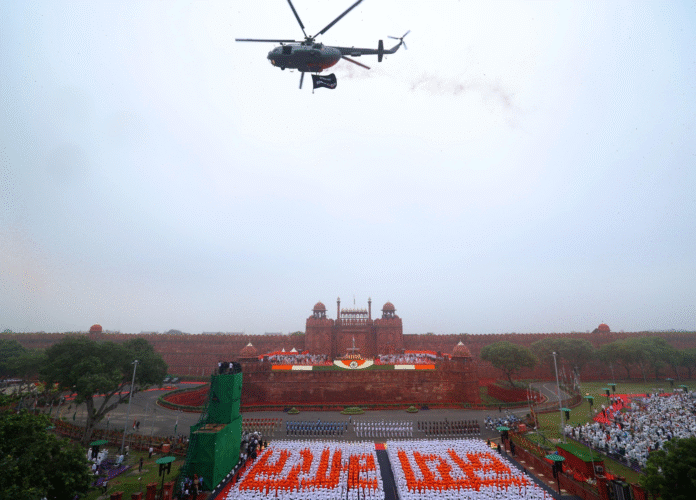
Delhi to Witness Red Fort Turning into a Divine Stage: 3-Day ‘Kirtan Darbar’ to Honour Guru Tegh Bahadur

0

The Red Fort, a symbol of India’s power and history, is set to transform into a soulful arena of devotion and light. From November 23 to 25, the Delhi government will host a three-day “Kirtan Darbar” to commemorate the 350th martyrdom anniversary of Guru Tegh Bahadur, the ninth Sikh Guru, remembered for his courage, sacrifice, and message of faith and freedom.

The celebration promises to be unlike anything seen before. Imagine devotional music echoing through the grand walls of the fort, a tech-powered light and sound show bringing to life Guru Tegh Bahadur’s extraordinary journey, his teachings, his philosophy, and his ultimate sacrifice.

With narrative storytelling and visual effects curated by the Union Ministry of Culture, the event aims to connect generations with the Guru’s timeless message of peace, tolerance, and unity.

Adding to the experience, a temporary museum will be set up inside the Red Fort, showcasing rare glimpses from his life. Visitors can also look forward to the release of a beautifully curated coffee table book chronicling his contributions to humanity.

The Delhi government has gone beyond celebrations announcing an academic chair in Guru Tegh Bahadur’s name at Guru Gobind Singh Indraprastha University to promote research on his teachings, and fast-tracking the renovation of Guru Tegh Bahadur Hospital with modern upgrades.

As Delhi Tourism Minister Kapil Mishra said, this is not just a religious event, it’s a tribute to India’s spiritual unity, cultural richness, and the timeless courage of a man who stood for freedom of faith.

Himachal’s Lahaul-Spiti Emerges as India’s Fast-Growing Snow Leopard Tourism Hub

0

The Ghost of the Mountains, it seems, has become the Star of Himachal Pradesh’s frozen valleys as it us witnessing a new kind of winter rush one driven by the mystique of the snow leopard. Once known as the “ghost of the mountains,” this rare and majestic creature is now drawing thousands of visitors to Lahaul-Spiti, turning the region into one of Himachal’s most fascinating winter destinations.

From Remote Villages to Global Map


Villages like Kibber and Chicham, once cut off during harsh winters, are now buzzing with adventure seekers, wildlife photographers, and nature lovers. What began as a niche experience for trekkers has evolved into a booming local economy, powered by eco-tourism.
Homestays, local guides, and winter expeditions have flourished as over five lakh tourists now explore the region each year a number that has surged steadily over the past four years.
Where Ice Meets the Sky
At over 14,000 feet above sea level, the landscape is nothing short of breathtaking. Frozen rivers, ancient monasteries wrapped in snow, and rugged mountains form the perfect backdrop for those hoping to catch a glimpse of the elusive predator. The combination of adventure, solitude, and spirituality makes Lahaul-Spiti a one-of-a-kind travel experience.

Balancing Beauty with Sustainability


With rising tourist footfall, authorities and locals are working hand-in-hand to promote sustainable tourism. From eco-friendly stays to regulated snow leopard trails, the goal is to protect both the region’s fragile ecosystem and its wildlife while ensuring the community benefits from the boom.

A Journey of Awe and Respect


Spotting a snow leopard is more than just a thrill, it’s a moment of awe, a reminder of nature’s quiet resilience in one of the toughest terrains on Earth. As winter draws near, Lahaul-Spiti is all set to welcome another wave of dreamers, adventurers, and wildlife lovers all chasing that one unforgettable glimpse of the mountain’s silent ruler.

‘Dream of Desert’ Luxury Train in Saudi Will Be A ‘Moving Palace on Rails’ With Lounge, Restaurant and Luxury…

0

pic courtesy: wwd.com Stephan Julliard

Saudi Arabia’s Dream of the Desert train — the Middle East’s first five-star luxury train — is set to make its maiden voyage in late 2026, redefining travel through the heart of the Kingdom. Designed by Aline Asmar d’Amman, the celebrated Lebanese architect known for her work on Paris’ Hôtel de Crillon and collaborations with Karl Lagerfeld, the project combines heritage, design, and ultra-luxury hospitality.

Unveiled at Riyadh’s Future Investment Initiative conference, the train is a joint creation of the Saudi Arabian Ministry of Culture, Saudi Arabia Railways, and Italian luxury hospitality firm Arsenale. It will travel 807.8 miles from Riyadh, offering one- and two-night itineraries through Saudi Arabia’s most breathtaking landscapes and cultural landmarks.

'Dream of Desert' Luxury Train in Saudi Will Be A 'Moving Palace on Rails' With Lounge, Restaurant and Luxury...

A Moving Palace on Rails

The Dream of the Desert features 33 private suites accommodating up to 66 guests, blending traditional Middle Eastern aesthetics with modern luxury. Interiors draw from a desert-inspired palette — earthy browns, sandy tones, and oasis greens — complemented by Murano blown glass, reminiscent of old desert lanterns.
Elegant wood carvings and textile weavings highlight local craftsmanship, while a Majlis-style lounge and fine-dining restaurant car serve Michelin-level menus curated by both Saudi and international chefs.

'Dream of Desert' Luxury Train in Saudi Will Be A 'Moving Palace on Rails' With Lounge, Restaurant and Luxury...

Aline Asmar d’Amman’s Vision

Aline Asmar d’Amman, who also designed the upcoming Orient Express Palazzo Donà Giovannelli in Venice, envisions the Dream of the Desert as a journey that blends architecture, culture, and emotion. “It’s about honoring the spirit of place,” she said, “where every detail tells a story of heritage and rebirth.”

Part of Vision 2030

The train is a key highlight of Saudi Arabia’s Vision 2030 — an ambitious plan to diversify the economy and make the Kingdom a global tourism hub. The country aims to attract 150 million visitors by 2030, fueling demand for 362,000 new hotel rooms and new forms of luxury travel.

World Stroke Day: Know Early Signs And Reason For Increasing Stroke Cases in India

0

World Stroke Day, observed every year on 29 October, serves as a global reminder to recognise the early signs of a stroke and act swiftly within the golden window of 4.5 hours, when treatment can prevent death or permanent disability. In 2025, the focus turns to an often-overlooked yet serious risk factor — air pollution, which is increasingly recognised as a silent but powerful trigger for strokes, even among younger adults.

Stroke: The “Brain Attack”

A stroke, often described as a “brain attack”, occurs when the blood supply to a part of the brain is interrupted or reduced, preventing brain tissue from getting oxygen and nutrients. This interruption can be due to a blockage (ischaemic stroke) or bleeding (haemorrhagic stroke). Every minute that passes without treatment leads to the death of about two million neurons, making time the most crucial factor in survival and recovery.
Globally, one in four adults will experience a stroke in their lifetime. In India, the number of new cases has risen from 650,000 in 1990 to over 1.25 million in 2021, marking a dramatic 51% increase. Alarmingly, 20–30% of strokes now occur in people under 50 years of age, indicating that the condition is no longer confined to the elderly. Stroke has become one of the leading causes of death and long-term disability in the country, with nearly half of survivors left permanently impaired.

Recognising Stroke Early: The BEFAST Method

Quick identification of stroke symptoms can save lives. The acronym BEFAST is widely used to help people remember the warning signs:

  • B – Balance: Sudden loss of balance or coordination
  • E – Eyes: Sudden vision loss or double vision
  • F – Face: Facial drooping or uneven smile
  • A – Arms: Weakness or numbness in one arm
  • S – Speech: Slurred or confused speech
  • T – Time: Time to call emergency services immediately

Recognising these signs and reaching a stroke-ready hospital within 4.5 hours is critical. Treatments such as intravenous thrombolytic therapy (a clot-dissolving medication) and mechanical thrombectomy (removal of large clots) can only be performed within this limited time frame. Unfortunately, fewer than 1% of stroke patients in India receive these life-saving interventions because they arrive too late for effective treatment.

Air Pollution: The Invisible Threat

Air pollution, once viewed mainly as a respiratory concern, is now understood to pose a serious threat to neurological health. Fine particulate matter, particularly PM2.5, can penetrate deep into the lungs, enter the bloodstream, and travel to the brain. These particles can inflame blood vessels, thicken arterial walls, and trigger blockages or ruptures, leading to strokes even in people with no previous risk factors.
Recent studies have linked millions of stroke-related deaths worldwide to polluted air. One global analysis indicated that one in four stroke deaths in low- and middle-income countries is directly related to air pollution exposure. This connection demonstrates that the problem is both environmental and medical in nature.

Rising Stroke Burden in India

India’s rapidly urbanising cities face some of the world’s worst air quality levels, especially during winter months and post-festive periods when fireworks and smoke push pollution into the hazardous range. In major cities, the Air Quality Index (AQI) frequently crosses into the ‘red zone’, with PM2.5 levels many times higher than the recommended safe limit.
This toxic air has become a serious health hazard. The growing number of strokes among younger adults in urban areas indicates that environmental exposure is now an equally significant risk factor as poor lifestyle habits. The rising stroke burden demonstrates that clean air is not only an environmental issue but also a public health priority.

Prevention Through Lifestyle and Environment

Stroke prevention begins with awareness and everyday health management. Early recognition of warning signs — sudden weakness, facial drooping, or slurred speech — demands immediate medical attention within the golden hour. However, preventive measures must also focus on lifestyle and environmental protection.
Key preventive actions include:

  • Monitor air quality: Check daily AQI levels and avoid outdoor exercise during high-pollution periods.
  • Improve indoor air quality: Use air purifiers and ensure proper ventilation.
  • Eat an antioxidant-rich diet: Include berries, nuts, and leafy vegetables to reduce inflammation caused by pollutants.
  • Control key health factors: Maintain healthy levels of blood pressure, blood sugar, and cholesterol.
  • Avoid smoking and exposure to second-hand smoke: Both increase clotting risks.
  • Exercise regularly: Physical activity enhances blood circulation and overall brain health.

The Golden Window: Acting in Time

The message for 2025, “Brain Stroke: Time to Act”, emphasises the urgency of immediate response. If a patient reaches medical care within 4.5 hours of the first symptom, recovery chances improve drastically. Thrombolysis can dissolve clots and restore blood flow, while thrombectomy can remove larger blockages in advanced facilities.
The main challenge remains delayed hospital arrival due to lack of awareness, poor emergency response systems, and traffic congestion. Expanding stroke-ready centres, improving ambulance services, and educating the public about the BEFAST method are essential steps toward better outcomes.

Air Quality and Brain Health: A Public Health Challenge

The link between air pollution and stroke highlights the urgent need for cleaner environments. National and global health authorities advocate for stronger emission controls, improved waste management, and stricter regulation of industrial and vehicular pollutants.
Initiatives such as the National Clean Air Programme (NCAP) aim to reduce particulate matter by up to 30% in major Indian cities, but consistent enforcement and public cooperation remain critical. Improving air quality not only reduces respiratory illnesses but also lowers the burden of neurological diseases and stroke-related deaths.

Protecting the Brain Through Clean Air

Stroke is no longer a disease confined to older populations. It increasingly affects younger individuals due to changing lifestyles, stress, and deteriorating environmental conditions. Clean air, therefore, is not merely a comfort but a lifesaving necessity.
Public awareness, early detection, and preventive care form the foundation of stroke management. In the long term, protecting the brain begins with protecting the air we breathe. World Stroke Day 2025 reinforces the message that time, awareness, and clean air together can save millions of lives and ensure a healthier future for all.


Yadadri Temple in Telangana Finds its Reference in Standapurana Too. Soak Spiritual Serenity As You Pray to Lakshmi Narasimha Here…

0

Perched atop a scenic hillock in the charming town of Yadagirigutta lies the revered Sri Lakshmi Narasimha Swamy Temple, affectionately known as Yadadri or Yadagirigutta Temple. This sacred site, also referred to as Pancha Narasimha Kshetram and Rishi Aradhana Kshetram, is dedicated to Narasimha, the powerful avatar of Lord Vishnu. With stunning architecture and tranquil surroundings, the temple beckons you to explore its beauty, especially during the vibrant Brahmothsavams festival, the highlight of the year.

Visiting the temple is particularly enchanting from October to March when the weather is pleasant. As you walk through this divine destination, you’ll join a steady stream of devoted visitors, with an average of 5,000 to 8,000 pilgrims arriving daily to offer their prayers and partake in sacred rituals such as Saswata pujas and Abhisekam.

Come, experience the unique atmosphere and the beauty of this cherished spiritual destination in Bhongir!

A mesmerising cave temple

Located deep within a breathtaking cave, this enchanting temple invites you to explore its captivating beauty – standing 12 feet high and stretching 30 feet long. As you descend the stairway into the chamber, a sense of wonder fills the air. Here, you’ll encounter the majestic Jvala Narasimha, with his serpentine form, and the Yogananda Narasimha, gracefully seated in a yoga pose, embodying peace and mysticism. In the main shrine, the silver icon of Lakshmi-Narasimha shines brightly, beckoning you closer.

As you wander through this spiritual haven, don’t miss the Hanuman temple positioned just beside the main entrance. Close by, a long horizontal gap in the rock hints at legendary tales – it’s said to be the manifestation site of the powerful Gandaberunda Narasimha. Devotees believe that sincere wishes made here have the power to come true. The sanctum sanctorum, or garbhagriha, is a marvel, cleverly hidden beneath a massive slating rock that provides a grand canopy over half the temple.

The inviting complexity of the temple continues with its rich history of reconstruction. Having transformed from its original humble size of 0.81 hectares (2 acres) to an impressive 6.5 hectares (16 acres), this larger-than-life temple invites you to traverse its expansive grounds and soak in the beauty of your surroundings.

Yadadri Temple in Telangana Finds its Reference in Standapurana Too. Soak Spiritual Serenity As You Pray to Lakshmi Narasimha Here...

Where the divine manifested

The Skanda Purana tells a captivating tale of Yada, a devoted son of a sage, who undertook a rigorous penance at the sacred site dedicated to Lord Narasimha. Pleased by Yada’s unwavering dedication, Narasimha revealed himself in five forms: Jvala Narasimha, Gandabherunda Narasimha, Yogananda Narasimha, Ugra Narasimha, and Lakshmi Narasimha.

In a heartfelt plea, Yada requested the mighty deity to permanently reside on the hill in these divine manifestations. As a testament to this remarkable event, the temple houses stunning stone deities of Narasimha in all five forms, elegantly enshrined within the main cave. Rich in history, this temple has also long adhered to the revered Tenkalai tradition of the Vaishnava Agama Shastras that resonate through the spiritual landscape of South India.

in.gov.incredibleindia.core.models.impl.ImageUtilModelImpl@24465186
Timings

Opening time – 04:00 AM – 04:00 PM

and 04:00 PM – 09:45 PM

Nearby attractions to visit

Near the Sri Lakshmi Narasimha Swamy Temple, you can explore several other fascinating attractions. The Bhongir Fort, perched atop a monolithic hill, offers panoramic views and a peek into history. You can also visit the Kolanupaka Jain Temple, which is known for its exquisite architecture and religious significance.

Nvidia Projected to Become the First-Ever US$5 Trillion Company; Apple Hits $4 Trillion on iPhone Surge

0

Two of the world’s biggest technology giants—Apple and Nvidia—have achieved historic milestones in global markets. While Apple briefly crossed the US$4 trillion valuation mark for the first time, driven by strong demand for its latest iPhones, Nvidia surged closer to an unprecedented US$5 trillion valuation amid the ongoing artificial intelligence (AI) boom.

Apple’s Record Market Milestone

Apple’s market capitalisation momentarily touched US$4.005 trillion after its shares hit $269.89 on Tuesday before closing slightly lower at US$3.992 trillion.
This achievement makes Apple the third company to reach the US$4 trillion milestone, following Nvidia and Microsoft.

The surge comes on the back of robust global sales of the iPhone 17 series and the ultra-slim iPhone Air, which performed exceptionally well across the U.S., China, and India. Analysts attribute Apple’s turnaround to strong consumer demand and the company’s ability to retain users within its ecosystem.

Despite concerns over U.S. tariffs affecting manufacturing hubs in Asia, Apple has managed to maintain profitability. Brokerage projections indicate that the tech major is on track to exceed quarterly expectations and post strong year-end guidance.


Nvidia’s AI Dominance Reshapes Global Tech Landscape

In contrast, Nvidia continues to dominate global markets through its AI leadership. The chipmaker’s valuation reached US$4.89 trillion, gaining nearly 5% in a single trading session after announcing US$500 billion in AI processor bookings and plans to construct seven supercomputers for the U.S. Department of Energy.

Nvidia’s success underscores its unrivaled dominance in AI hardware, with soaring demand for its Blackwell chips powering both commercial and government AI infrastructure worldwide.
Analysts predict Nvidia could soon become the first company in history to touch the US$5 trillion market cap, marking a defining moment in the AI-driven evolution of the technology industry.

Key Facts

  • Apple became the third company to cross the US$4 trillion mark, after Nvidia and Microsoft.
  • Nvidia is projected to become the first-ever US$5 trillion company, buoyed by US$500 billion AI chip orders.
  • Apple’s iPhone 17 sales grew 14% year-on-year in major markets.
  • Nvidia is building seven AI supercomputers for the U.S. Department of Energy, powered by 100,000 Blackwell chips.

AI Uncertainty and Market Outlook

While Nvidia’s trajectory remains firmly anchored in AI innovation, Apple is treading more cautiously in this space. Delays in the rollout of its Apple Intelligence suite, including the much-anticipated AI-enhanced Siri, have raised questions among investors about its long-term positioning in the AI race.

Nevertheless, Apple’s consistent hardware demand and ecosystem resilience provide solid footing, even as the global market shifts toward AI-driven technologies.

As Apple and Nvidia rewrite valuation records, their contrasting strategies symbolize the dual engines of modern tech growth—consumer electronics and artificial intelligence—that continue to shape the world’s economic future.