Home Blog Page 145

Happy Children’s Day 2025: Best Wishes, Messages, and Quotes to Celebrate Childhood

0

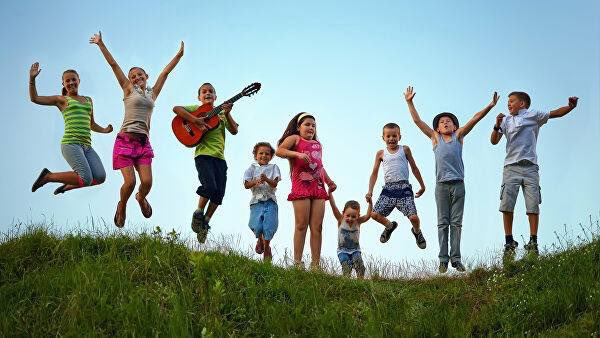
Children’s Day 2025, also known as Bal Diwas, celebrates the joy of childhood and the legacy of Jawaharlal Nehru.

Children’s Day 2025: Celebrating India’s Youngest Citizens: Every year on November 14, India celebrates Children’s Day to mark the birth anniversary of Pandit Jawaharlal Nehru, the nation’s first Prime Minister. Affectionately known as Chacha Nehru, he believed that children are the foundation of a nation’s future and emphasized the importance of education and moral upbringing.

Also known as Bal Diwas, the day highlights the need to nurture, educate, and empower young minds. Across India, schools organize cultural programs, fun activities, and awareness drives celebrating the spirit of childhood and creativity.

Whether you’re a parent, teacher, or guardian, Children’s Day is the perfect time to express love, appreciation, and hope for the younger generation.

Heartfelt Children’s Day 2025 Wishes & Messages

  • On this Children’s Day, let’s celebrate the joy and laughter that children bring into our lives.
  • To all the little hearts who make the world brighter — Happy Children’s Day! May your life always be full of wonder and dreams.
  • Every child is a unique flower, and together they make this world a beautiful garden.
  • To the young stars of today — may your future shine brighter than ever. Happy Children’s Day!
  • Wishing every child a day full of happiness, play, and imagination.
  • May your laughter never fade and your dreams never die — you are the hope of tomorrow.
  • Happy Children’s Day! Stay curious, stay bold, and never lose the magic of childhood.
  • You are the builders of tomorrow — grow strong, kind, and wise.

Inspiring Children’s Day 2025 Quotes

“Children are the world’s most valuable resource and its best hope for the future.” — John F. Kennedy

“Every child is a different kind of flower, and together they make this world a beautiful garden.” — Khalil Gibran

“The children of today will make the India of tomorrow.” — Jawaharlal Nehru

“If you want your children to be intelligent, read them fairy tales.” — Albert Einstein

“The soul is healed by being with children.” — Fyodor Dostoevsky

“Children see magic because they look for it.” — Christopher Moore

“A childhood without books is like being shut out from the enchanted world of joy.” — Astrid Lindgren

“Every child is an artist. The problem is how to remain one when we grow up.” — Pablo Picasso


Why We Celebrate Children’s Day

Children’s Day is more than just a celebration — it’s a reminder of our duty to create a safe, loving, and empowering world for the next generation. As Chacha Nehru once said, “The children of today will make the India of tomorrow.”

So, take this day to appreciate their innocence, encourage their dreams, and invest in their education — because a happy child means a hopeful tomorrow.


Keywords (SEO Tags):
Delhi’s Jawaharlal Nehru Stadium to Be Demolished – Here’s What’s Really Coming Next

0

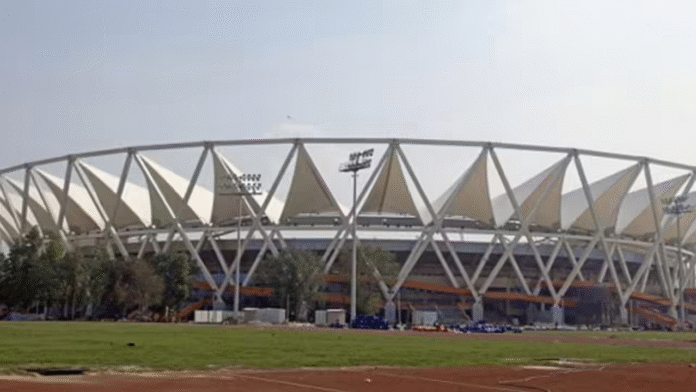
Delhi’s iconic Jawaharlal Nehru Stadium (JLN), home to historic sporting moments is all set for a dramatic transformation. The government is planning to demolish the 60,000-seater arena to build India’s first world-class Sports City, a project inspired by Doha’s Aspire Zone.

Built for the 1982 Asian Games and revamped for the 2010 Commonwealth Games at a cost of ₹961 crore, the stadium recently underwent another ₹50 crore upgrade before hosting the World Para Athletics Championships.
Yet, the Sports Ministry believes the massive 102-acre complex is underutilized with only about 35% of its space in active use.

The vision? A high-tech Sports City that will house venues for all major Olympic disciplines, athlete residences, and modern training facilities creating an ecosystem where athletes can live, train, and compete in one place.

“All offices will be relocated and the main stadium dismantled,” a ministry official confirmed. “We want to use every inch of the area efficiently.”

This isn’t the first time such a plan has surfaced. Back in 2020, an ₹8,000-crore redevelopment project was proposed under then sports minister Kiren Rijiju, promising indoor training arenas and a 5-star accommodation facility.
But this time, the government’s intent seems stronger buoyed by a renewed focus on turning India into a global sports hub.

Over the years, JLN has hosted everything from the Commonwealth Games to concerts and cultural events, becoming more than just a sporting venue, it’s a piece of Delhi’s soul.

Its demolition will mark the end of an era, but perhaps also the beginning of India’s bold new sporting future.
A goodbye to an icon. A hello to ambition. The race to reimagine India’s sports capital has just begun.

Kota Is India’s first signal-free city in India

0

Kota: Imagine what hppens when a city removes every red light? There are no red lights, no chaos but just smooth roads…Imagine driving through a busy Indian city without ever hitting a red light. No signal stops, no honking battles just free-flowing traffic. Sounds like a dream, right? That’s now reality in Kota, Rajasthan, officially crowned India’s first traffic-light-free city. And it’s not luck; it’s smart design and even smarter discipline.

How this city Rewrote the Rules of the Road
Once famous for coaching centres, Kota has now topped the charts in urban innovation. Spearheaded by the Urban Improvement Trust (UIT Kota), the city redesigned its entire road network of flyovers, underpasses, roundabouts, and one-way corridors to eliminate every major traffic signal. Instead of red, yellow, and green lights, Kota runs on continuous movement by design.

No Signals, No Stress – Just Smart Science
How does it all work? Think engineering over electronics. Clear signage, precise lane markings, and disciplined one-way systems guide vehicles naturally. Traffic police step in only during peak hours, ensuring pedestrians and cars move in harmony. The result? Zero bottlenecks, fewer accidents, and calmer drives.

When Roads Breathe, the City Breathes Too
The benefits go beyond convenience. With no idling at red lights, fuel use has dropped, emissions have fallen, and honking has quieted down. The city feels fresher, quieter, and surprisingly peaceful. Residents say, “Driving in Kota now feels like the city itself is exhaling.”

The Future of Indian Traffic Might Just Be Signal-Free
Urban planners across India are watching closely. Could Mumbai or Delhi pull this off? Maybe not yet but Kota has shown that flow, not force, is the future of traffic management. With design, discipline, and daring innovation, Kota hasn’t just removed red lights it’s turned the green light into a lifestyle.

Happy Children’s Day 2025: Best Jawaharlal Nehru Birth Anniversary Quotes, Messages, and Inspirational Thoughts to Share on Bal Diwas

0

India celebrates Children’s Day, or Bal Diwas, every year on November 14 to mark the birth anniversary of Pandit Jawaharlal Nehru, the country’s first Prime Minister. Fondly known as Chacha Nehru, he was deeply loved by children and believed that “the children of today will make the India of tomorrow.”

While the United Nations celebrates Universal Children’s Day on November 20, India observes it on November 14 to honour Nehru’s affection for children and his vision for their education and well-being.

Why We Celebrate Children’s Day

Pandit Nehru, born on November 14, 1889, was a strong advocate for education, equality, and child welfare. He envisioned a nation where every child could grow with freedom, curiosity, and imagination.
Children’s Day, therefore, is not only a celebration of childhood but also a reminder of our collective responsibility to nurture young minds and shape a brighter future.

Happy Children’s Day 2025: Best Quotes by Jawaharlal Nehru

“The children of today will make the India of tomorrow. The way we bring them up will determine the future of the country.”
Pandit Jawaharlal Nehru

Happy Children’s Day 2025: Best Jawaharlal Nehru Birth Anniversary Quotes, Messages, and Inspirational Thoughts to Share on Bal Diwas

“Children are like buds in a garden and should be carefully and lovingly nurtured, as they are the future of the nation and the citizens of tomorrow.”

Happy Children’s Day 2025: Best Jawaharlal Nehru Birth Anniversary Quotes, Messages, and Inspirational Thoughts to Share on Bal Diwas

“Time is not measured by the passing of years but by what one does, what one feels, and what one achieves.”

Happy Children’s Day 2025: Best Jawaharlal Nehru Birth Anniversary Quotes, Messages, and Inspirational Thoughts to Share on Bal Diwas

“Let us be humble enough to see greatness in small things and wisdom in children’s innocence.”

Inspirational Messages for Nehru Jayanti & Children’s Day 2025

  • Happy Children’s Day 2025! May every child be blessed with joy, learning, and boundless dreams for the future.
  • On Nehru Jayanti, let us remember the leader who believed that every child is the heartbeat of a strong and happy nation.
  • Today we celebrate not just childhood, but the man who believed in its power — Chacha Nehru!
  • May the innocence and laughter of children light up every home with love and happiness.
  • Let’s build a nation where every child has the right to dream, learn, and achieve greatness.
  • Happy Nehru Jayanti and Children’s Day! Let us carry forward Nehru’s vision of a nation that grows through the education and empowerment of its children.
  • Children are the living messages we send to the future — let’s nurture them with care, wisdom, and compassion.
Happy Children’s Day 2025: Best Jawaharlal Nehru Birth Anniversary Quotes, Messages, and Inspirational Thoughts to Share on Bal Diwas

Children’s Day 2025 Images & Greetings

Sample Wishes to Share on Social Media:
🌸 “Happy Children’s Day! Let’s celebrate the joy of innocence and the promise of a better tomorrow.”
🌸 “Wishing everyone a joyful Bal Diwas — may every child’s smile inspire hope, peace, and progress.”
🌸 “Today we celebrate both childhood and leadership — the two pillars that shape our nation’s future. Happy Nehru Jayanti 2025!”
🌸 “Celebrating innocence, curiosity, and imagination — Happy Children’s Day and Nehru Jayanti!”

The Legacy of Chacha Nehru

Jawaharlal Nehru’s love for children was not just symbolic — he envisioned schools, child welfare initiatives, and a system where education would empower every young citizen. His birthday reminds us to create a world where every child has access to education, equality, and opportunity.

“Children are the world’s most valuable resource and its best hope for the future.”
Chacha Nehru’s timeless message still resonates today.

Happy Children’s Day 2025!

May this Bal Diwas remind us that every child deserves to smile, to dream, and to be loved — because the future truly rests in their hands.

Cricket Returns, Equality Rises: Inside the Historic Los Angeles 2028 Olympics Schedule

0

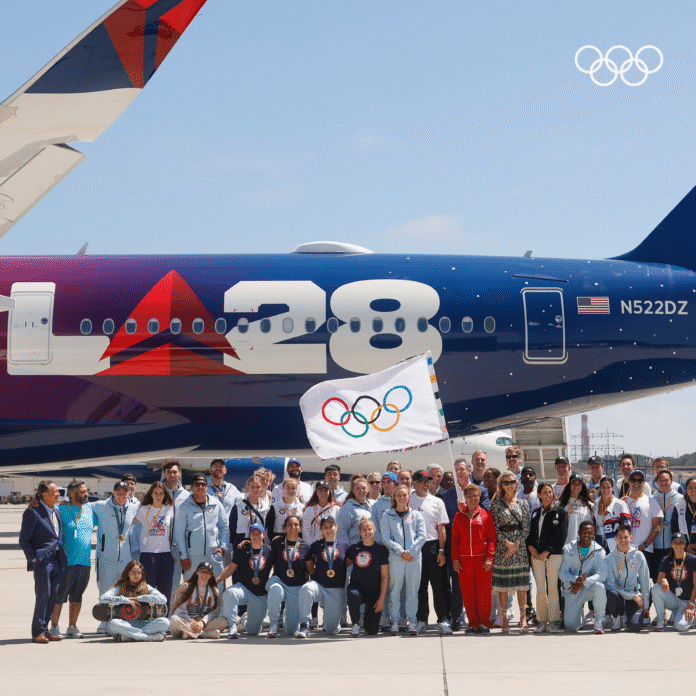
The long-awaited schedule for the Los Angeles 2028 Olympic Games has officially been announced, marking a major milestone in the countdown to one of the most anticipated sporting events of the decade.

The opening ceremony is set for July 14, 2028, at 8:00 p.m. ET (6:30 a.m. IST, July 15), while the closing ceremony will take place on July 30, 2028, at 9:00 p.m. ET (7:30 a.m. IST, July 31).

The announcement also confirmed that ticket registration for LA28 will open in January 2026, giving fans around the world a head start in planning their Olympic experience.

Biggest Olympic Games in History

The Los Angeles 2028 Olympics are projected to be the largest in history, featuring 51 sports contested across 49 venues spread across 18 zones in the greater Los Angeles region. Select events will also be hosted in Oklahoma City.

CategoryDetails
Host CityLos Angeles, USA
DatesJuly 14–30, 2028
Opening CeremonyJuly 14, 8:00 PM ET (July 15, 6:30 AM IST)
Closing CeremonyJuly 30, 9:00 PM ET (July 31, 7:30 AM IST)
Venues49 across 18 zones
Sports51 total
Athletes11,200
Women’s Participation50.5% (Highest in history)
Special HighlightCricket returns after 128 years
Ticket Registration OpensJanuary 2026

“Athletes and fans from around the world now have what they need to plan an unforgettable Olympic experience,” said LA28 CEO Reynold Hoover, as quoted by NDTV Profit.

Historic Step for Gender Equality

The 2028 Games are set to break new ground in gender representation. For the first time in Olympic history, every team sport will feature equal or more women’s teams than men’s, contributing to a record 50.5% of the total 11,200 athletes being women.

This marks a historic milestone for gender balance, positioning LA28 as the most inclusive Games ever.

Opening Ceremony and Key Highlights

The 17-day sporting extravaganza will begin on July 14 (ET) with an opening ceremony celebrating culture, creativity, and global unity. Fans in India can tune in live at 6:30 a.m. IST on July 15.

The Games will conclude on July 30 (ET) with a spectacular closing ceremony, blending sport, art, and entertainment to showcase the best of human achievement.


Focus on Women’s Sports to Open LA28

The Los Angeles Games will open with a strong focus on women’s sports.
Day 1 will feature the women’s triathlon as the first event, followed by the highly anticipated women’s 100m final — setting the tone for an Olympics built on equality.

Track and field events will dominate the first week, while swimming takes center stage in the second week, promising non-stop excitement for fans across the globe.

Cricket’s Historic Comeback

After more than a century-long absence, cricket makes its return to the Olympic stage at LA28.

  • The women’s cricket final will be held on Day 6, and
  • The men’s final will take place on Day 15.

This marks a monumental moment for the sport — and for cricket-loving nations such as India, Australia, and England.

‘Super Saturday’: The Biggest Day of LA28

Organizers are calling Day 15 the most action-packed of the Games — dubbed “Super Saturday.”

It will feature 26 finals across 23 sports, including 15 team medal events and multiple individual gold-medal contests.

The final weekend will close with endurance highlights: the women’s marathon on July 29, followed by the men’s marathon on July 30, bringing the curtain down on the LA28 Games.

Ticket Registration and Booking Details

Fans eager to experience the Olympics live can begin ticket registration in January 2026 via LA28.org. Ticketing will be managed by AXS and EVENTIM, the official providers for the Games.

A total of 14 million tickets will be available to the public, with flexible pricing to promote global accessibility.
According to LA28 Chief of Sport Shana Ferguson (AFP), organizers will not use dynamic pricing, ensuring stable costs for fans.

Premium Hospitality and Payment Options

For fans seeking premium access, exclusive hospitality and VIP packages will be offered through On Location, the official provider for both the Olympic and Paralympic Games.

Visa remains the official payment partner, continuing its longstanding Olympic partnership. Fans can subscribe to the LA28 newsletter for updates on registration, schedules, and venue details.


A Global Celebration Awaits

The Los Angeles 2028 Olympics promise to be a celebration of diversity, equality, and sporting excellence. With record gender parity, the return of cricket, and 51 sports spread across world-class venues, LA28 is set to redefine the Olympic experience and inspire a new generation of athletes and fans.

Supriya Lifescience Delivers Strong Q2 FY26 Performance with 20.3% YoY Revenue Growth

0

Supriya Lifescience Ltd., a cGMP-compliant global API manufacturer with a presence in over 120 countries, has announced its unaudited financial results for the second quarter of FY26. The company, known for its diversified product portfolio across therapeutic segments such as anti-histamine, anti-allergic, vitamin, anaesthetic, and anti-asthmatic, delivered a robust performance with a 20.3% year-on-year revenue increase.

Key Consolidated Financial Highlights (₹ in crore)

ParticularsQ2 FY26Q2 FY25
Revenues199.83166.10
EBITDA72.6564.72
EBITDA Margin36.4%39.0%
PAT50.4346.15
PAT Margin25.2%27.8%
Quarterly EPS (₹)6.275.71

Performance Highlights

  • Revenue Growth: Supriya Lifescience reported revenues of ₹199.83 crore in Q2 FY26, up 20.3% from ₹166.10 crore in Q2 FY25.
  • Profitability: EBITDA stood at ₹72.65 crore with a margin of 36.4%, compared to ₹64.72 crore and a 39.0% margin last year. PAT rose to ₹50.43 crore from ₹46.15 crore, reflecting steady profitability.
  • Segment Growth:
    • The anaesthetic segment led revenue growth, contributing 54% to H1 FY26 revenues, up from 46% in H1 FY25.
    • The anti-histamine segment share increased to 12% (from 10%), and the vitamin segment also grew to 12% (from 11%) during the same period.

Geographical Performance

European markets remained the company’s largest revenue driver, contributing 37% of total business in Q2 FY26. The Asian and Latin American (LATAM) markets also posted strong growth — Asia accounted for 34% (up from 32% in Q1 FY26), while LATAM contributed 21% (up from 17% in Q1 FY26).

Operational Update

Capacity utilization improved from 70% in FY25 to 78% in H1 FY26, driven by higher demand and operational ramp-up. The company has also acquired three new land parcels near its existing plants to support future expansion and business diversification.

Management Commentary

Satish Wagh, Executive Chairman and Whole-Time Director, said:

“Our second quarter reflects a healthy recovery in revenue and sustained profitability, supported by steady demand across key markets. Exports contributed around 81% of Q2 FY26 revenues, with Europe accounting for 40% of the total business mix.

Capacity utilization improved to 78% in H1 FY26, aided by the ramp-up of the newly commissioned Module E at our Lote Parshuram facility, enhancing operational efficiency and stability. With the upcoming commercial launch of our Ambernath formulation facility in H2 FY26 and continued focus on regulated markets, backward integration, and new product launches, we remain confident of delivering stronger growth in the second half of the year.”

Learn with Bheem: An Interactive Learning App for Children Aged 2–8+

0

Green Gold Animation, the studio behind some of India’s most beloved animated characters, has announced the launch of “Learn with Bheem”, an interactive learning app designed for children aged 2 to 8 and above. The app marks Green Gold’s entry into the educational technology space, blending structured learning with play-based engagement through familiar characters from its popular franchises.

Available globally on the Google Play Store and Apple App Store, Learn with Bheem offers curated learning modules aimed at making early education more accessible, interactive, and enjoyable for young learners. Developed with guidance from educators and child development experts, the app’s content aligns with early learning goals across key developmental areas — including language, numeracy, creativity, memory, logic, and problem-solving.

Age-Based Learning Paths

Each learning path within the app is tailored to a child’s age and evolving cognitive abilities:

  • Ages 2–3: Foundational concepts such as colours, shapes, alphabets, and numbers are introduced through simple puzzles and games featuring Mighty Little Bheem.
  • Ages 4–5: Focuses on early math and language-building skills — including addition, subtraction, and memory development — through interactive stories with Chhota Bheem and Chutki.
  • Ages 6–7: Introduces more complex challenges like crosswords, time-telling, and creative modules such as dress-up and room decoration.
  • Ages 8+: Engages older children with logic puzzles, quick math, knowledge quizzes, and strategy-based games such as cricket and basketball.

Safe, Flexible, and Accessible

Learn with Bheem follows a B2C model, offering both free (ad-supported) and premium (subscription-based) access. Users can choose monthly or yearly subscription plans for an ad-free experience and exclusive premium content. Built around a child-safe digital environment, the app ensures children can learn and explore without exposure to inappropriate or intrusive material.

Leadership Insight

Speaking about the launch, Rajiv Chilaka, Founder and CEO of Green Gold Animation, said:

“With Learn with Bheem, we wanted to extend the world of our characters beyond entertainment and into education. For nearly two decades, Chhota Bheem and his friends have inspired values like friendship, courage, and curiosity. This app builds on that emotional connection, allowing children to learn in a setting that feels safe, familiar, and enjoyable. Our goal is to make early learning holistic — balancing knowledge with creativity and play.”

Beyond Entertainment: Green Gold’s Educational Vision

The launch of Learn with Bheem reflects Green Gold’s commitment to contributing to early childhood education through engaging, locally relevant content. The app emphasizes active participation over passive viewing, encouraging children to interact, experiment, and solve problems through guided play.

This release also underscores Green Gold Animation’s evolution from a pioneering Indian animation studio into a cross-platform content creator and innovator. Having shaped India’s children’s entertainment landscape through television, films, and digital content, the company is now expanding its reach into interactive learning experiences designed for the next generation.

Balochistan Martyrdom Day: Why the World Must Recognize Its Struggle for Survival

0

Every year on November 13, the people of Balochistan commemorate their Martyrdom Day, honoring those who gave their lives in the ongoing struggle for freedom and dignity. Initially, this day was marked in remembrance of Nawab Mehrab Khan, the ruler of Kalat, who fought against the British in 1839. Today, it also pays tribute to thousands of Baloch men and women who have died resisting Pakistan’s illegal occupation of their land.

Following Pakistan’s independence in 1947, Balochistan was annexed by force — a move widely considered illegal and against the will of its people. Since then, the Baloch nationalist movement has continued for over seven decades, demanding autonomy and justice.

A Struggle Repressed but Not Silenced

Since 2005, Pakistan’s security forces have intensified their crackdown on Baloch activists, journalists, and civilians. Enforced disappearances, extrajudicial killings, and military operations have become routine, as the state attempts to crush dissent. Yet, despite these brutal tactics, the insurgency endures, fueled by deep resentment and a desire for self-determination.

The Human Rights Commission of Pakistan (HRCP), in its 2023 report “Balochistan’s Struggle for Hope”, documented the widespread anger and fear among citizens. The report describes Balochistan as a “colony of the state,” plagued by enforced disappearances, economic exclusion, and curbs on press freedom. It highlights a climate of fear perpetuated by paramilitary checkpoints and political manipulation.


Exploitation Amidst Poverty

Despite constituting 44% of Pakistan’s land area, Balochistan remains the country’s poorest province, rich in resources but deprived of development. The province houses the strategic Gwadar port and holds vast reserves of natural gas, copper, and minerals. Yet its people remain impoverished due to exploitation by the Pakistan-China nexus, particularly under the China-Pakistan Economic Corridor (CPEC).

According to the UN publication Development Advocate Pakistan (2023):

  • Only 19% of women in Balochistan have primary or higher education.
  • The province has a child stunting rate of 45.5%, far above the national average.
  • Just 6.45% of households own a computer, the lowest in the country.
  • Female labour participation stands at a mere 7.9%, compared to 26.5% in Punjab.

These stark figures reveal the systematic neglect of Balochistan’s people and the structural inequalities that sustain Pakistan’s colonial-style governance in the region.

Religious Radicalisation as a State Tool

A 2023 research paper published in Liberal Arts and Social Sciences International Journal argues that the Pakistani state has deliberately promoted Islamisation to weaken Baloch ethnic unity. This policy has fostered extremism and sectarian violence, eroding traditional Baloch social structures that once resisted radical ideologies. As the study notes, what began as a demand for autonomy has transformed into a popular call for independence, driven by decades of repression.

A Global Responsibility

Balochistan’s decades-long resistance is not just a regional issue—it’s a human rights crisis that deserves global attention. The world cannot continue to ignore the systematic repression, economic exploitation, and human suffering in the province.

Supporting the Baloch struggle should be viewed as part of the international commitment to decolonisation and human dignity. The international community, including the UN, human rights organisations, and democratic nations, must push Pakistan to end enforced disappearances, restore political freedoms, and ensure Balochistan’s right to self-determination.

Conclusion

For more than 75 years, the people of Balochistan have fought to reclaim control over their destiny. Their struggle is not for dominance, but for survival, justice, and freedom. Thousands have been martyred, yet their spirit endures.

On this Baloch Martyrdom Day, the world must not turn away. Recognising and supporting Balochistan’s fight for justice is not merely solidarity—it is a moral imperative in the global journey toward freedom and decolonisation.

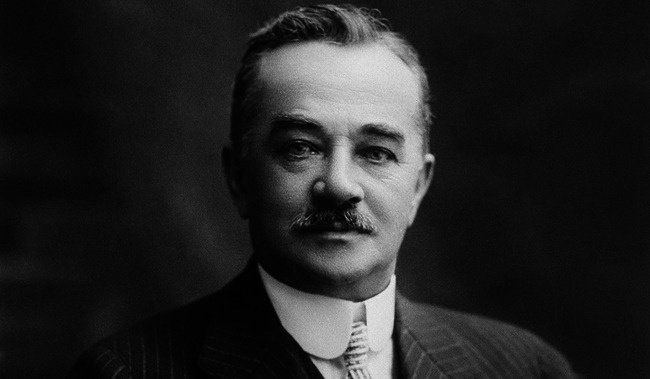
Milton Hershey: The Chocolate King Who Turned Failure and Grief into a Legacy of Love

0

Milton Hershey knew what it felt like to fail. Before he became the “Chocolate King,” he failed—spectacularly—twice. His first candy business in Philadelphia went bankrupt. His second in New York also collapsed. By the age of 30, Hershey was broke, in debt, and living back with his parents in rural Pennsylvania.

Most people would have given up. Milton didn’t.

By 1900, he’d finally succeeded beyond his wildest dreams. The Hershey Chocolate Company was making millions, and he’d built an entire town—Hershey, Pennsylvania—for his workers, complete with homes, parks, and trolley lines. He married Catherine “Kitty” Sweeney, the love of his life, and built a mansion overlooking his chocolate empire.

They had everything—except the one thing they wanted most: children.

Unable to have children of their own, Milton and Kitty decided to give their love to those who had no families. In 1909, they founded the Hershey Industrial School, a boarding school for orphaned boys. It wasn’t a charity in name only—it was a real home, where children lived, learned trades, and were treated with dignity and care. The school began with just four boys, each personally interviewed by Milton and Kitty themselves.

When Kitty died suddenly in 1915, Milton was devastated. But instead of withdrawing, he deepened his commitment. In 1918, he did something unprecedented: he transferred the majority ownership of the Hershey Chocolate Company—worth $60 million at the time—into a trust for the school.

Every Hershey bar, every Reese’s Peanut Butter Cup, every Hershey’s Kiss would now fund the education and care of children in need.

Business peers thought he was foolish. “What if the company fails?” they asked. Milton’s reply was simple:

“If I wanted monuments to myself, I’d have built them already. I want to build futures for kids who have none.”

He expanded the school, building more homesteads and hiring teachers. Orphaned and impoverished boys now had warm beds, food, healthcare, and education.

When Milton Hershey died in 1945 at 88, he had given away nearly his entire fortune. But his legacy didn’t end—it grew.

Today, 79 years later, the Milton Hershey School educates over 2,000 students—boys and girls from low-income and single-parent families—completely free of charge. The Hershey Trust now manages over $17 billion, funding housing, meals, clothing, healthcare, and college scholarships for every student.

Over 11,000 alumni have graduated—doctors, engineers, artists, teachers, and entrepreneurs—all made possible by one man who turned failure into purpose and grief into generosity.

Milton Hershey never had biological children, but he became a father to thousands. His statue on the school grounds shows him kneeling beside a young boy, eye to eye—a reminder that his empire was never just about chocolate.

Because every Hershey bar is sweet, but the story behind it? That’s even sweeter.

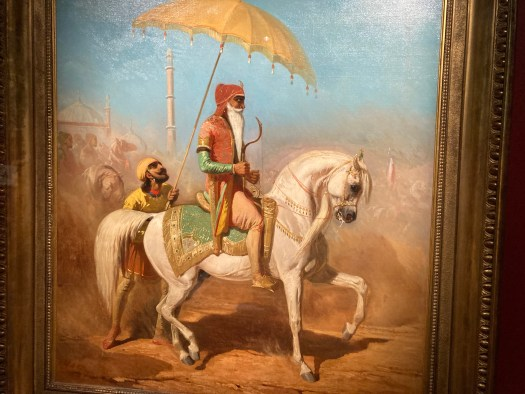
Maharaja Ranjit Singh: The Sikh Emperor Who United Punjab and Kept the British at Bay for Four Decades

0

In the modern history of India, Maharaja Ranjit Singh remains one of the most successful and admired rulers. Known as the “Lion of Punjab,” he transformed Lahore (now in Pakistan) into the capital of a vast, prosperous empire that stretched from the Sutlej River to the Khyber Pass and from Ladakh to the Thar Desert. Born in 1780, he ascended the throne at just 19 and ruled for nearly four decades before his death on June 27, 1839, at the age of 58.

Despite ill health in his later years, Ranjit Singh remained vigilant against British expansion. His reign marked a rare era of stability and independence in North India—one that ended only seven years after his death, when the British finally entered Lahore.

Building a Kingdom Through Strategy and Strength

Ranjit Singh inherited the Sukerchakia misl from his father, Maha Singh, at the young age of 12. His political brilliance was evident early on—he strengthened his position through strategic marriages with the Kanhaiya and Nakai clans. His second wife, Datar Kaur (Mai Nakain), became the mother of his heir, Kharak Singh.

In 1799, at the age of 19, Ranjit Singh captured Lahore, which was then under Afghan control. By 1801, he had declared himself sovereign, establishing an independent Sikh Empire. His army—comprising Sikhs, Hindus, Muslims, and even European officers trained under Napoleonic veterans—was among the most advanced in Asia.

Modernisation, Merit, and the Dogra Connection

Ranjit Singh was a visionary administrator who rewarded merit and loyalty over lineage. Among his most trusted allies were the Dogra brothers—Gulab Singh, Dhyan Singh, and Suchet Singh—who helped expand and consolidate the empire. Gulab Singh, recognised for his valour, was anointed Raja of Jammu in 1822. The Dogra dynasty would later rule Jammu and Kashmir until India’s independence in 1947.

Legacy of the Sikh Empire

Interestingly, Maharaja Ranjit Singh never issued coins in his own name. The coins of his empire, called Nanakshahi, bore the names of Guru Nanak Dev and Guru Gobind Singh, symbolising his deep respect for the Sikh Gurus. During his rule, the Kohinoor diamond came under his possession—a prized jewel that now rests in the British Crown.

Maharaja Ranjit Singh’s disciplined leadership kept foreign invaders away from India’s north-western frontiers. The Afghans, long considered formidable warriors, were decisively subdued. His empire stood as a symbol of unity, strength, and religious tolerance—qualities that earned him a revered place in Indian history.

End of an Era

After Maharaja Ranjit Singh’s death, his successors failed to maintain the empire’s integrity. Internal rivalries and British interference led to the eventual annexation of Punjab in 1849. Yet, Ranjit Singh’s rule remains remembered as a golden chapter—an era when Punjab stood independent, proud, and unyielding to colonial power.