Home Blog Page 144

Weddings 2025: The Year Indian Weddings Reinvent Themselves

0

Weddings 2025: New rituals. New cultures. New aesthetics. The most unexpected shift in Indian celebrations has begun. 2025 weddings aren’t just upgraded — they’re evolving.
Designers, planners, and families are collectively rewriting how we celebrate love. And for the first time, trends go beyond décor and outfits… they reflect values, perspectives, and modern identities shaping ancient traditions.

Welcome to the most interesting wedding year yet.

1. The Rise of “Equality Rituals” — Inspired by Cinema, Accepted by Society

Weddings are no longer about ritual alone; they are about shared symbolism and emotional equality. A powerful social shift is emerging as families rethink how traditions are performed and what they represent.

Indian weddings have always belonged to families — now, they belong to mindsets. After Rocky Aur Rani Ki Prem Kahani, a beautiful cultural correction began…

2. Intimate Court Weddings + After-Parties Are Becoming Aspirational

The idea of a ‘simple wedding’ has transformed from compromise to luxury. Couples today are redefining intimacy as elegance, proving that less can indeed feel more. What was once seen as a shortcut is now a statement

3. Destination Weddings: Cinematic Fever Takes Over India

The wedding venue is no longer a location — it’s a cinematic canvas. Bollywood, influencers, and visual storytelling have sparked a dramatic rise in destination-style celebrations. 2025 couples are choosing forts, beaches, and houseboats because they want cinema, not ceremony…

Weddings 2025: The Year Indian Weddings Reinvent Themselves

4. The New Fashion Shift

Bridal and groom fashion is entering its most expressive era yet. The focus has moved from trends to personal identity, with brides and grooms curating looks that speak their story.

Brides

Bridal fashion is returning to roots — but with modern emotion stitched in. Retail giants report the comeback of red and pink, while designers say personal expression still rules the palette.

Grooms

Grooms are stepping into the spotlight with more individuality than ever. Menswear has evolved from traditional uniformity to bold, minimal, modern silhouettes.

5. Decor Trends No One Saw Coming

Wedding décor is no longer just beautiful — it’s interactive, meaningful, and intelligent. From artistic mandaps to digital memory walls, 2025 décor is designed to tell a story.

Couples now want personalised installations, daylight aesthetics, and emotional experiences built into décor…

6. The Music Trend of the Year: Full Retro Revival

Nostalgia is back — and it’s leading every dance floor. 2025 weddings are rediscovering the emotional magic of old Bollywood melodies. Families are returning to classics because these songs understood relationships…

Weddings 2025: The Year Indian Weddings Reinvent Themselves

7. The Newest 2025 Wedding Shifts (Unheard, Unexpected, Unmissable)

Beyond décor and outfits, new micro-moments are redefining what celebration looks like. These emerging rituals are intimate, heartfelt, and deeply human. From ‘Unplugged Moments’ to ‘Audio Guestbooks,’ these trends are reshaping how couples preserve memories…

The 2025 Wedding Essence

Weddings this year are quieter in spirit yet richer in meaning. There is a conscious shift toward authenticity — celebrations that reflect the couple, not society’s expectations.

2025 weddings ask one simple question:
“How do we celebrate love in a way that feels like us?”
Epic Games CEO Tim Sweeney: A Billionaire Who Chose Forests Over Yachts

0

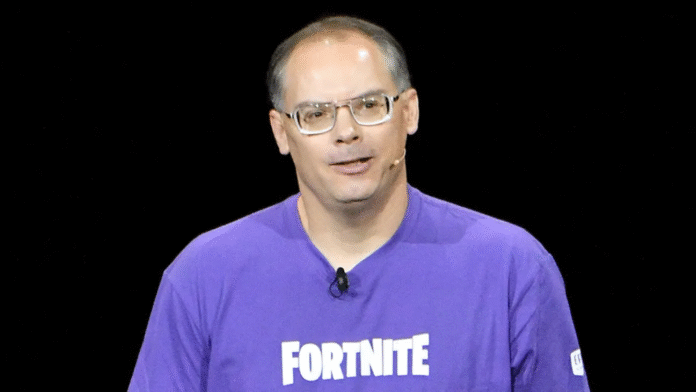
At a time when billionaire lifestyles often dominate headlines, Epic Games CEO Tim Sweeney stands out for a completely different reason – he’s using his fortune not to buy luxury toys, but to protect tens of thousands of acres of untouched nature.
Since around 2008, Sweeney has quietly acquired over 50,000 acres of land across North Carolina, making him one of the state’s largest private landowners. But unlike commercial developers, his mission is clear: buy land to keep it wild.

Sweeney’s conservation efforts focus on regions known for rich biodiversity, including the Roan Highlands, McDowell County’s Foothills, and the Rocky River area.
These landscapes are home to fragile ecosystems, rare species, and important water sources, all vulnerable to unchecked development.

By purchasing these lands, Sweeney ensures they remain protected from commercial exploitation.
But he hasn’t stopped at buying. He has also donated thousands of acres to trusted conservation groups.

In 2016, he secured a 7,000-acre tract and donated a conservation easement to the U.S. Fish and Wildlife Service. In 2021, he pledged about 7,500 acres to the Southern Appalachian Highlands Conservancy.
He has also transferred land to the state, helping expand Mount Mitchell State Park, home to the highest peak in the eastern United States.

As land prices surged post-2021, Sweeney shifted strategies. Instead of rapidly purchasing new parcels, he now focuses on holding large contiguous blocks of land until conservation groups or the state are ready to acquire them.
He often sells at discounted prices, reinvesting the proceeds into future environmental protection.

Through this long-term, preservation-first approach, Tim Sweeney has become a powerful example of how wealth can restore, rather than exploit, the natural world proving that not all billionaires are chasing luxury; some are quietly protecting the planet.

Indian Army Deploys Indigenous High-Altitude Mono Rail System in Arunachal Pradesh: A Logistics Breakthrough at 16,000 ft

0

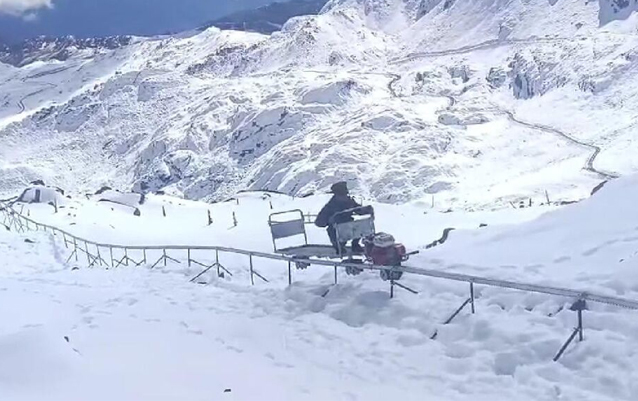
In a major leap for high-altitude logistics, the Indian Army’s Gajraj Corps has successfully operationalised an indigenous mono rail system at an elevation of 16,000 feet in the Kameng Himalayas of Arunachal Pradesh. The innovation marks a first-of-its-kind achievement in India, designed to support troops stationed in some of the country’s harshest and most remote terrain.


According to Defence spokesperson Lt Col Mahendra Rawat, the system was fully conceptualised, engineered, and deployed in-house, addressing one of the most persistent challenges in the eastern Himalayas delivering uninterrupted supplies to forward posts that remain cut off due to snow, landslides, vertical cliffs, and severe winter conditions.

A Reliable Lifeline in the Harshest Terrain
The indigenous mono rail system can transport over 300 kg of load in a single run, enabling the movement of mission-critical supplies such as ammunition, rations, fuel, engineering material, and bulky equipment across steep gradients where mules, porters, and even specialised vehicles fail.

Operating day and night, the system can function with or without escort, and remains unaffected by hail, snow, storms, or freezing temperatures, Lt Col Rawat said. Its robust design ensures year-round logistical connectivity to posts with no other mode of access.

Critical for Troops and Casualty Evacuation
Beyond transporting stores, the system has also shown tremendous potential for casualty evacuation. In terrains where helicopters cannot land due to turbulent winds or cloud cover and where foot evacuation is slow and risky the mono rail offers a safe, rapid alternative to move injured personnel to medical aid points.

Indigenous Innovation, Operational Impact
Calling it a “testament to the ingenuity and adaptability” of the Gajraj Corps, Lt Col Rawat emphasised that the mono rail significantly enhances operational readiness and sustainability in isolated high-altitude posts. The initiative also highlights the Army’s commitment to indigenous, mission-focused solutions tailored for India’s extreme border environments.

With this deployment, the Indian Army has set a new benchmark in high-altitude logistics combining innovation, practicality, and resilience to support soldiers guarding the nation’s most challenging frontiers.

Tips to Stay Young Longer: Science Says Speaking More Languages May Be the Secret to a Younger Brain

0

Stay young: Could learning a new language actually keep your brain younger? A major new study suggests the answer is yes. According to research published in Nature Aging, speaking multiple languages may significantly slow down brain ageing and the benefits grow with every additional language you know.

The large-scale study analysed data from over 80,000 adults aged 51 to 90 across 27 European countries.


The results were striking: people who spoke only one language were twice as likely to show signs of faster brain ageing compared to those who were multilingual. In contrast, individuals who spoke two or more languages were half as likely to experience accelerated ageing.

Researchers say these benefits come from something called cognitive reserve the brain’s ability to stay functional despite the natural decline that comes with age.

Dr Etu Ma’u, dementia researcher and lecturer at the University of Auckland, explains that the brain begins shrinking by about 5% per decade after the age of 40. However, mentally stimulating activities can strengthen cognitive reserve and help keep the brain resilient.

Speaking or learning multiple languages is one of the most powerful forms of mental stimulation. It constantly engages memory, attention, problem-solving, and processing speed essentially giving the brain a full workout.
Dr Ma’u noted that each additional language provides even greater benefits, with bilinguals and multilinguals often showing brain ages that appear younger than their real age.

Monolinguals, on the other hand, showed higher levels of brain ageing, making them more vulnerable to long-term cognitive decline.

The study also reinforces that dementia develops due to cumulative damage over many years, underscoring the importance of early lifestyle habits. Dr Ma’u emphasised that promoting language learning whether in childhood or later in life can help keep the brain active, healthy, and resistant to ageing.

His message is clear: “It’s never too early or too late to learn a new language.”

Physics Wallah Alakh Pandey Now Richer Than Shah Rukh Khan: Built a Rs 30,000-Crore Edtech Giant in Just 9 Years; IPO Subscribed 1.92 Times in 3 Days

0

Born in 1991 in a struggling family in Prayagraj, Uttar Pradesh, Alakh Pandey once feared mathematics and grew up in severe financial hardship. His father lost his job, and the family had to sell their house and scooter. But that same “average student” is today known across India as Physics Wallah, the founder of one of the fastest-growing edtech companies in the country.

In just nine years, Alakh has built a company valued at ₹30,000 crore, and his personal net worth has reached ₹14,510 crore—surpassing even Bollywood superstar Shah Rukh Khan, whose net worth stands at ₹12,490 crore.

Physics Wallah’s IPO opened on November 11 and closed today after being subscribed 1.92 times in three days.

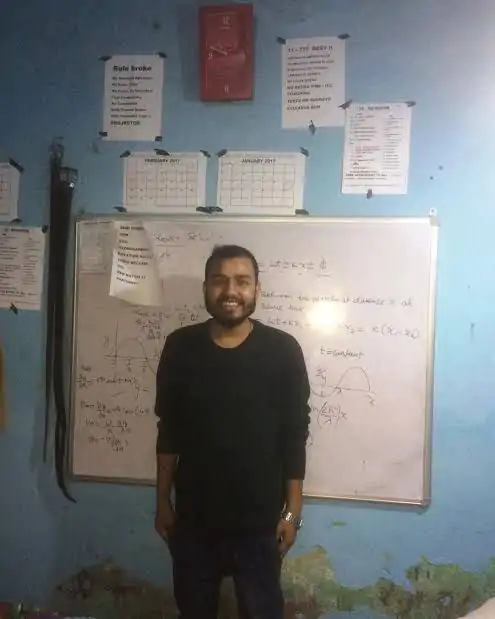
A photo from the launch of PW’s first Kota centre shows how far the company has come—today the firm stands among India’s biggest edtech success stories, valued at nearly ₹30,000 crore.

Key Highlights of the Physics Wallah IPO

  • Price Band: ₹103–₹109 per share
  • Fresh Issue: ₹3,100 crore
  • Offer for Sale (OFS): ₹380 crore
  • Promoter Selling: Alakh Pandey and Pratik Boob together offloading ₹190 crore via OFS
  • Promoter Stake: 40.31% combined
  • Lot Size: Minimum 137 shares (₹14,933 investment)
  • Maximum Retail Lots: 13 lots (₹1,94,129 investment)
  • Listing Date: November 18

The Inspiring Journey of Alakh Pandey: Chapter by Chapter

Chapter 1: Childhood in Poverty

Born in Prayagraj, Alakh’s early life was marked by financial crisis. His father lost his job, forcing the family to sell their home and move into a rented room. By Class 8, Alakh was teaching younger kids to support the family. He calls himself “average” in studies—with math being his biggest fear. A picture with his mother shows the emotional core of his story—he credits most of his success to her support.

Chapter 2: Dropping Out to Teach

Alakh joined college in Prayagraj but dropped out in his third year, saying he “lost interest in traditional education.”
He began teaching physics at local coaching centres, often travelling with friends due to lack of money.
In 2015, he launched a Facebook page—it failed.

Chapter 3: The First Rs 8,000 from YouTube

In 2016, he started a YouTube channel named Physics Wala, shooting and editing videos himself. After a year of consistent uploads, he earned his first ₹8,000 from YouTube. He quit his coaching job—without a plan B—to focus full-time on the channel. His unique, energetic teaching style made him a student favourite. In 2020, he launched the Physics Wallah app—35,000 users joined within days.

Behind him stood Pratik Maheshwari, an operations and startup expert who became a key force in building the PW empire.

PM Modi in Dediapada Today: A Look at the Tribal Region’s Unique Identity and Natural Heritage

0

Prime Minister Narendra Modi will visit Dediapada in Gujarat’s tribal-dominated Narmada district on Saturday to address a public gathering marking the birth anniversary of tribal icon Bhagwan Birsa Munda. Ahead of the event, he will also inspect the under-construction bullet train station in Surat to review progress on the Mumbai–Ahmedabad High-Speed Rail Corridor.

While the visit highlights major development initiatives worth over ₹9,700 crore for the region, it also brings attention to Dediapada’s unique USP — its blend of untouched natural beauty, rich tribal culture, and traditional livelihoods.

What Makes Dediapada Special?

A Natural Treasure

  • Shoolpaneshwar Wildlife Sanctuary: A biodiversity hotspot with dense forests, rare wildlife, and lush greenery.
  • Ninai & Rampan Waterfalls: Among Gujarat’s most scenic waterfalls, attracting nature lovers and adventure seekers.
  • Kevdi Dhodh (Saribar): A peaceful, picturesque site ideal for eco-tourism.

Culture Rooted in Tradition

  • Predominantly Tribal Region: Home to the Vasava and other tribal communities whose customs reflect a blend of Gujarat and Maharashtra’s cultural influences.
  • Folk Arts & Handicrafts: Woodwork, herbal products, and traditional crafts are integral to local identity.

Economy Connected to Nature

  • Agriculture-Based Livelihoods: Farming remains the backbone of the region.
  • Herbs & Wood Industries: Local industries that process forest-based herbs and wood continue to support the rural economy.

Spiritual Landmark

  • Kokam Hanumadada Mandir: A well-known temple in Kokam, frequently visited by pilgrims and locals.

PM Modi’s visit not only marks significant developmental announcements but also puts the spotlight on Dediapada’s untouched charm — a region where nature, culture, and tradition blend beautifully, making it one of Gujarat’s emerging eco-tourism and tribal heritage destinations.

EBG Group Launches Children of Life on Children’s Day; US$7 Million Mission Over 5 Years to Uplift 100,000 Children by 2030

0

Marking Children’s Day—a day dedicated to the vision of India’s first Prime Minister, Pandit Jawaharlal Nehru—the EBG Group launched Children of Life, a flagship social-impact mission under the EBG Foundation. The initiative underscores EBG’s commitment to aligning business growth with deep, sustained community transformation.

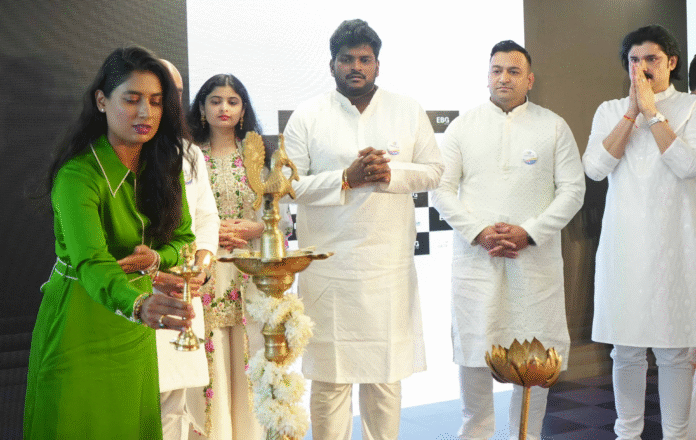
As a symbolic beginning, ten student ambassadors attended the inauguration, representing the voices and aspirations the mission seeks to uplift. The initiative was officially unveiled in Hyderabad on Friday by former Indian Women’s Cricket Captain Mithali Raj.

Phase 1 Rollout Across Three Pilot Districts

In its first phase (2025), the initiative will operate across Hyderabad (urban), Wanaparthy (semi-rural) in Telangana, and Thiruvananthapuram (coastal) in Kerala. These districts were strategically chosen to represent diverse socio-economic contexts that can be replicated nationally.

Budget and Funding

The program’s first-year budget is ₹12 crore ($1.4 million), with a five-year outlay of ₹60 crore ($7 million). Funding will come from EBG Group CSR allocations, partner contributions, and public micro-donations through the Children of Life digital platform. Notably:

  • 80% of total expenditure is earmarked for direct program delivery,
  • Less than 10% for administration, and
  • Less than 10% for audits and communication.

Built on Six Core Pillars

Dr. Irfan Khan, Chairman & Founder, EBG Group, said,
“Launching Children of Life on Children’s Day marks a defining moment for our Group and our city. Hyderabad now houses a place where ideas become outcomes and compassion becomes action. Built on six fundamental pillars—Food, Shelter, Clothes, Health, Education, and Safety—the mission aims to fight child hunger, sustain learning, support physical and mental well-being, and safeguard children from neglect and abuse.”

Mithali Raj, unveiling the mission, said,
“It is a privilege to unveil Children of Life on Children’s Day. A nation’s true progress lies in the opportunities it creates for its children. I applaud EBG Foundation for committing to measurable, long-term impact. With these young student ambassadors, we are reminded that when communities and corporates act together, every child’s dream can find a path.”

Impact Targets for the First 12 Months

Under its six pillars, the initiative will deliver:

  • Food: 1.5 million nutritious meals through school meal top-ups and weekend ration kits.
  • Shelter: Rapid repair of 200+ vulnerable homes, identified via schools and ward offices.
  • Clothes: Seasonal Dignity Kits—uniforms, sweaters, footwear—for 9,000 children.
  • Health: 12,000 screenings (vision, dental, posture), plus follow-up care.
  • Education: Creation of 15 study rooms in government or community schools—digital-free spaces equipped with books, lighting, and mentors.
  • Safety: A dedicated child-protection helpdesk, POCSO SOP training in 300 schools, and integration with 1098/112 emergency systems.

Vision 2030: Long-Term Goals

By 2030, Children of Life aims to:

  • Support 100,000 children across 26 districts
  • Serve 20 million meals
  • Conduct 200,000 health screenings
  • Build 1,000 study rooms
  • Certify 2,000 schools under the Six-Star School Safety Framework

Progress will be transparently published in annual public impact reports by the EBG Foundation.

Implementation & Accountability

The program will be steered by the EBG Foundation’s central program office in Hyderabad and executed in partnership with verified district NGOs and schools under MoUs with local authorities. A rigorous monitoring system—including quarterly audits, a public dashboard, and third-party verifications—will ensure transparency and accountability.

About Children of Life

Children of Life is a non-commercial, evidence-based initiative dedicated to improving the lives of children born in India after 2010. Supported by CSR contributions from EBG Group companies and a nationwide partner network, it operates a unified referral and support system across states, ensuring measurable, transparent, and accountable impact at every step

India’s 2012 Rules Strictly Regulate Ammonium Nitrate Use

0

India continues to enforce stringent regulations on ammonium nitrate, a chemical classified as a special category explosive due to its history of misuse in high-impact attacks. The Ammonium Nitrate Rules, 2012, brought in to tighten oversight, govern every stage of its manufacturing, storage, sale and transportation, ensuring strict control and preventing diversion for illegal purposes.

Legal Framework Under Explosives Act and IDR Act

The regulatory regime operates under the Explosives Act, 1884, through which the 2012 rules were framed. Additionally, the chemical falls partly under the Industries (Development and Regulation) Act, 1951, which mandates industrial licences for its manufacture. Recognising ammonium nitrate’s dual-use nature, the framework establishes layered permissions and close monitoring across industries that handle it.

Licensing, Storage and Compliance Requirements

Licences for manufacturing are issued by the Department for Promotion of Industry and Internal Trade (DPIIT), while the Petroleum & Explosives Safety Organisation (PESO) oversees production, conversion, bagging, transport, import, export and possession. Local storage licences are granted by district magistrates.

All licence-holders are required to maintain detailed records and submit monthly stock accounts documenting quantities received, used, destroyed or lost, enabling full traceability from factory to end user.

Misuse Risks and Explosive Potential

While pure ammonium nitrate is generally stable and requires extreme heat or a detonator to explode, it becomes a powerful blasting agent when mixed with fuel to form ammonium nitrate fuel oil (ANFO). Though commonly used in mining, ANFO has been misused in several terrorist attacks in India and abroad. Its high destructive potential is the primary reason for stringent controls and enhanced surveillance.

Facts

  • Regulated under Ammonium Nitrate Rules, 2012, framed under the Explosives Act, 1884.
  • Classified as a special category explosive.
  • PESO licenses manufacturing, transport, import, export and possession.
  • Monthly stock reporting is mandatory for all licence-holders.

Oversight by Multiple Authorities

Regulation involves the coordinated oversight of various agencies to minimise loopholes. Industrial approvals, explosive safety checks and district-level storage licensing work together to ensure secure handling and prevent unauthorised access. The stringent rules strengthen national security by controlling a chemical often associated with large-scale explosions and past terror incidents.

US Shutdown Ends Without Relief as Political Fallout Continues

0

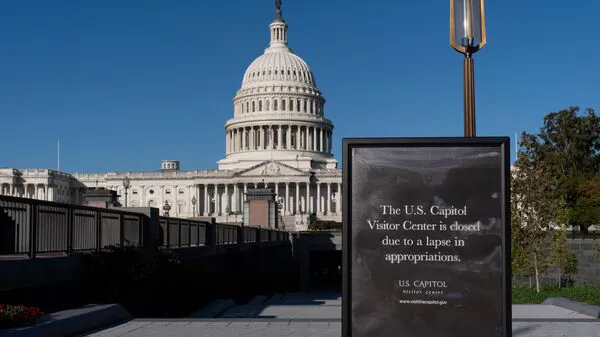
The United States has finally ended the longest government shutdown in its history, concluding six weeks of political stalemate. Yet, despite federal funding being restored, Washington shows little sign of celebration. Public anger remains high, and both major parties face criticism as millions continue to feel the shutdown’s economic and social effects.

Political Standoff Over Health Subsidies

The shutdown stemmed from a dispute over public health subsidies under the Affordable Care Act. Democrats pushed for an extension of enhanced tax credits to lower insurance premiums, while Republicans demanded passage of a funding bill first. With neither side willing to compromise, negotiations froze until a temporary agreement was finally reached.

Leadership Under Pressure, Parties Divided

Throughout the impasse, leaders from both parties came under intense scrutiny. Democrats stressed the need for bipartisan cooperation to achieve the Senate’s required voting threshold, but internal rifts weakened their leverage. Republicans, meanwhile, struggled with dissent over administration policies, further intensified by the departure of more than 200,000 federal employees during the president’s second term. Critics accused both parties of prioritising politics over governance.

Public Frustration Peaks

Surveys show widespread frustration, with Americans blaming both Republicans and Democrats for the crisis. Polls indicated slightly higher blame toward Republicans in Congress, though Democrats were not spared. Elections held during the shutdown reflected mixed results but clearly signalled declining trust in political leadership. The situation revived calls to reconsider Senate procedures, including demands to abolish the filibuster.

Key Facts

  • Shutdown lasted six weeks — the longest in US history.
  • $11 billion estimated economic loss (CBO).
  • Dispute centred on extending enhanced health insurance tax credits.
  • Polls show majorities blaming both parties for the deadlock.

Nationwide Economic and Social Impact

Although much of the economic loss may recover over time, analysts warn that the long-term damage remains substantial. Federal employees went weeks without pay, forcing many into financial strain. Airport delays mounted due to staffing shortages, and support programmes such as food assistance temporarily halted. Experts caution that repeated political instability risks undermining global confidence in US governance.

Vaishno Devi Yatra: A Journey Through a New India

0

Once it was pithus; now it is prams. Once we searched for lockers; now DigiLockers stand ready—perfect examples of how the Vaishno Devi Yatra reflects the “New India” slogan. After 14 long years, I undertook the pilgrimage again, and I was stunned by the transformation from Katra all the way up to the Vaishno Devi shrine. Katra itself has taken the shape of a small, modern mini-metro city, bustling with malls, food joints and all kinds of conveniences that were unimaginable earlier.

Our family has been taking this pilgrimage annually for years. Back then, we would board the train from Ratlam to Jammu, and from Jammu, a bus would carry us to Katra. Those bus rides were a spiritual experience in themselves—our entire family singing bhajans, chanting Jai Mata Di, and building up the divine energy that would stay with us throughout the journey. As soon as we reached Katra, the very first thing we did was remove our shoes and bow down to the sacred Trikuta Parvat.

Vaishno Devi Yatra: A Journey Through a New India

Then began the real challenge: finding a room. Decades back, hotels were scarce, and securing a place to stay was almost a pilgrimage before the pilgrimage. I vividly remember my father and chachas carrying us on their shoulders as we trekked the steep 14-km uphill path. There were pithus too—gentle, dependable men who carried children on their backs—but we were always a little scared to sit on their shoulders. We tried it once or twice, but nothing felt safer than being on our fathers’ shoulders.

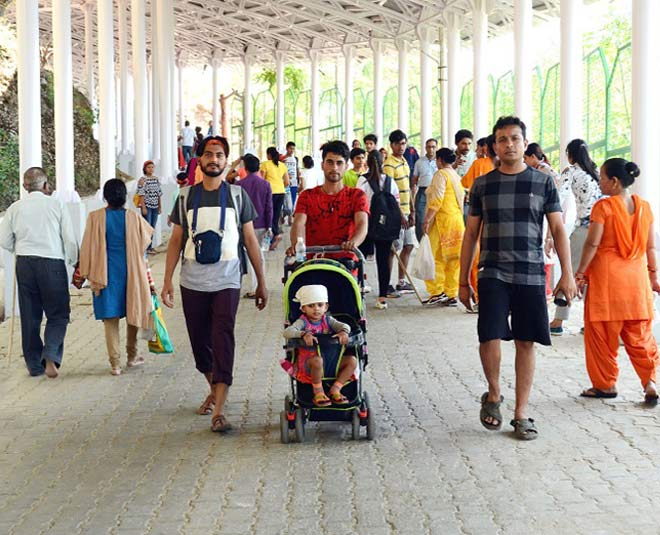
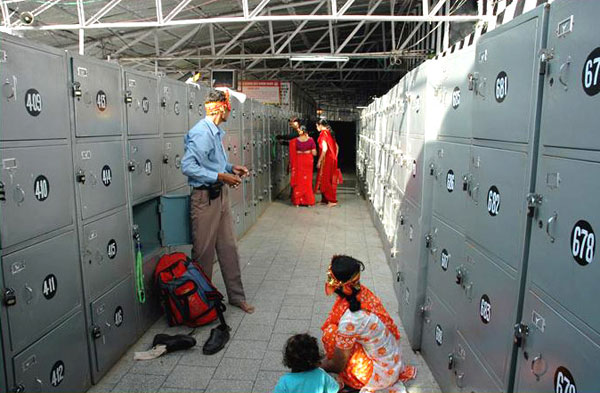
This time, however, I was pleasantly surprised to see colourful prams—decorated with toys and all kinds of attractive features—being pushed uphill. The pithus now happily assist by guiding these prams instead of carrying children the way they once did. “A good change,” I thought. The shrine authorities have also introduced DigiLockers at Bhavan, allowing devotees to deposit their phones and valuables with total peace of mind. Earlier, we would leave most belongings behind in Katra and carry only essentials. Now, the entire process feels effortless compared to what it used to be.

Vaishno Devi Yatra: A Journey Through a New India

A special mention must go to the CRPF. Alongside maintaining tight security, they are doing wonderful service work—offering free milk bottles and even milk for newborns. Their dedication adds another layer of sanctity to the holy experience.

The shrine, the people, the atmosphere—everything reflects devotion, care, and an evolving India that blends tradition with thoughtful modernization. May the Holy Mother bless everyone who contributes to this sacred journey.