Home Blog Page 134

Kaal Bhairav Jayanti 2025: Date, Puja Timings, Significance, and Aarti

0

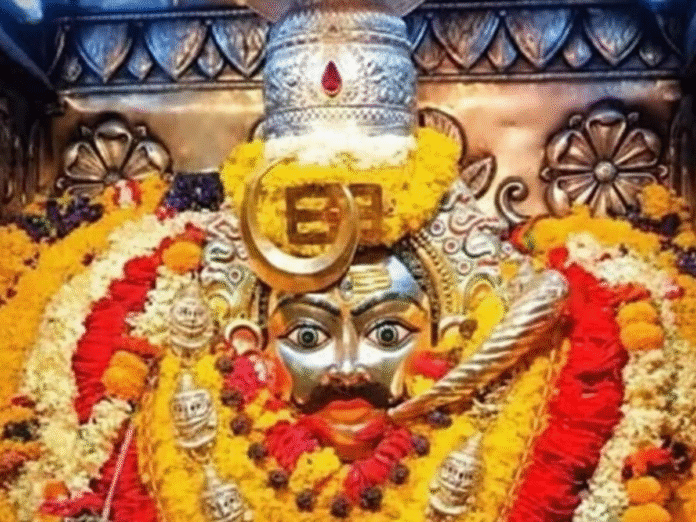
Kaal Bhairav Jayanti 2025: Kaal Bhairav Jayanti, also known as Bhairav Ashtami or Kaal Bhairav Ashtami, is an important Hindu festival dedicated to Lord Kaal Bhairav, the fierce manifestation of Lord Shiva. As per scriptures, worshipping Kaal Bhairav helps remove negativity, planetary defects (Graha Dosh), and all forms of fear, including the fear of untimely death.

When is Kaal Bhairav Jayanti 2025?

According to the Vedic calendar, the Ashtami Tithi of Krishna Paksha in the Kartik month begins at 11:08 PM on November 11 and ends at 10:58 PM on November 12.
Based on Udaya Tithi (sunrise-based calculation), Kaal Bhairav Jayanti will be observed on Wednesday, November 12, 2025.

Auspicious Puja Timings

Devotees can perform Kaal Bhairav Puja at any time during the day, but performing it during the Bhairav Kaal Muhurat is considered most auspicious.

  • Morning Muhurat: 6:41 AM to 9:23 AM
  • Midday Muhurat: 10:44 AM to 12:05 PM

Lighting a mustard oil lamp (Deepak) before Lord Bhairav and offering black sesame, mustard oil, and dog food (roti or prasad) is considered highly auspicious.

Significance of Kaal Bhairav Jayanti

Lord Kaal Bhairav is regarded as the Kotwal (guardian deity) of Kashi (Varanasi). It is believed that any devotee who worships Him with devotion attains protection from evil influences, enemies, and fears.

Worshipping Kaal Bhairav is also believed to pacify Rahu, Ketu, and Shani Dosh, bringing relief from planetary troubles and obstacles in life. The day holds deep spiritual importance for devotees seeking courage, protection, and liberation from negativity.

ISRO Validates Gaganyaan Parachutes in Critical Airdrop Test

0

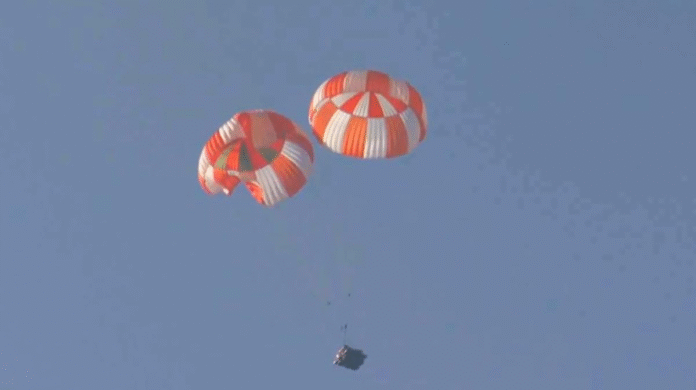
The Indian Space Research Organisation (ISRO) achieved another milestone in its Gaganyaan human spaceflight programme by successfully completing the Integrated Main Parachute Airdrop Test at the Babina Field Firing Range in Jhansi, Uttar Pradesh. The test simulated extreme re-entry conditions for the Gaganyaan crew module, validating the robustness and redundancy of its parachute system.

The critical test demonstrated that even with asymmetric deployment—a delay in the full opening of one of the main parachutes—the system ensured a stable descent and soft landing. This confirmed that two parachutes are sufficient for safe crew module recovery, reinforcing the design’s safety and reliability.

The experiment involved dropping a simulated crew module mass from an altitude of 2.5 km using an Indian Air Force IL-76 aircraft. The parachute deployment sequence unfolded exactly as planned, with flawless execution through all stages, culminating in a smooth touchdown.

ISRO explained that the Gaganyaan main parachutes deploy through a process known as reefed inflation, where the canopy first opens partially (reefing) and then fully after a controlled delay (disreefing), using pyro devices. This method ensures a gradual reduction of descent speed, minimizing mechanical stress on the spacecraft.

The test specifically evaluated asymmetric disreefing, one of the most demanding conditions expected during actual mission descent. It assessed the system’s structural integrity, load distribution, and dynamic performance, ensuring that the parachute assembly can handle real-world challenges during crew re-entry.

The success of this test represents a major step forward in qualifying the parachute system for human spaceflight. It was conducted through a coordinated effort involving the Vikram Sarabhai Space Centre (VSSC), Aerial Delivery Research and Development Establishment (ADRDE) of DRDO, the Indian Air Force, and the Indian Army.

With this validation, ISRO is now closer to its next milestones — an uncrewed Gaganyaan mission in 2026, followed by India’s first crewed spaceflight in 2027, marking a historic leap in the nation’s space exploration journey.

Dharmendra Deol: Meet The He-Man Who Won Millions With a Heart of Gold

0

Dharmendra Deol Spotlight: The lights of Bollywood seem to dimming today, but the glow of Dharmendra’s charm can still be felt. The man who defined love, laughter, and loyalty on screen has taken his final bow leaving behind not just a career, but an emotion that generations grew up with.

He is not merely a movie star. Dharmendra is the feeling of comfort when cinema felt too loud. His smile looks magnetic, his voice sincere, and his presence larger than life yet deeply human.
He embodies the perfect blend of strength and sensitivity, earning the title of Bollywood’s He-Man while carrying the gentlest heart.

His journey began with Phool Aur Patthar, where he redefined masculinity – brave, yet tender. Then came the unforgettable Veeru from Sholay, the man who made friendship eternal and romance playful. His teasing line, *“Basanti, in kutton ke samne mat nachna!” *still echoes with laughter across generations.

Just when the audience crowned him the action king, Hrishikesh Mukherjee’s Chupke Chupke revealed a different Dharmendra – the comic genius, the professor with wit sharper than words.
Whether it was Ajit in Mera Gaon Mera Desh, Jugnu the patriot, or Professor Parimal the prankster, every role carried that unmistakable sparkle only Dharmendra could bring.

And as decades passed, he didn’t fade, he has evolved. From Yamla Pagla Deewana with his sons Sunny and Bobby, to his heartwarming presence in Karan Johar’s Rocky Aur Rani Ki Prem Kahani, Dharmendra proved that legends don’t age, they simply adapt to new stories with the same old magic.

A Legacy Written in Love and Laughter

  • Over 300 films across six decades of cinematic brilliance
  • Recipient of Padma Bhushan (2012) and Filmfare Lifetime Achievement Award (1997)
  • Iconic partnerships with Hema Malini, Amitabh Bachchan, Sharmila Tagore, and many more

Beyond films, he is a producer, poet, and people’s representative. Through Vijayta Films, he gifted Bollywood timeless stories like Betaab. In Parliament, he spoke with the same honesty that defined his performances. And in his private world, he penned poetry – gentle, soulful verses that revealed the man behind the myth.

Dharmendra belonged to an era when heroes didn’t need VFX, just heart. His laughter, his humility, and his old-school grace remains unmatched till date.

“Dharmendra in His Own Words”
“Main filmon mein hero bana, par zindagi mein insaan banne ki koshish ki.”
(I became a hero in films, but I always tried to remain human in life.)

Dharmendra didn’t just act. He made us feel — deeply, beautifully, truly.
And though the reel seems slowly spinning, his warmth stays forever in every cinema lover’s heart.

(The article has been written by Rishita Sogani)

Band Baaja Budget: Inside India’s New-Age Weddings Where Love Outshines Luxury

0

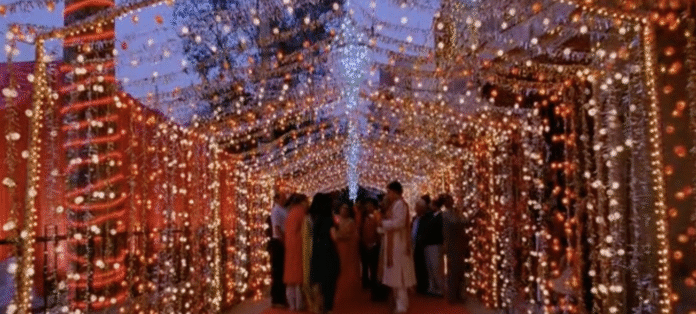
The sound of the shehnai may be timeless, but the way India celebrates weddings in 2025 is changing significantly. The Big Fat Indian wedding has evolved into something far more meaningful – financially smart yet emotionally rich.
Couples today are blending tradition with tenderness, luxury with logic, and love with a lasting sense of purpose.

From Extravagance to Essence
Once upon a time, weddings were judged by the size of the guest list or the sparkle of the décor. Now, it’s about intimacy, emotion, and individuality.
Micro weddings with 50 to 100 close guests are redefining the shaadi scene. The focus is on laughter over logistics, memories over showmanship. As one bride from Jaipur said, “We didn’t cut costs; we cut chaos.”

Trending Destinations, Trending Emotions
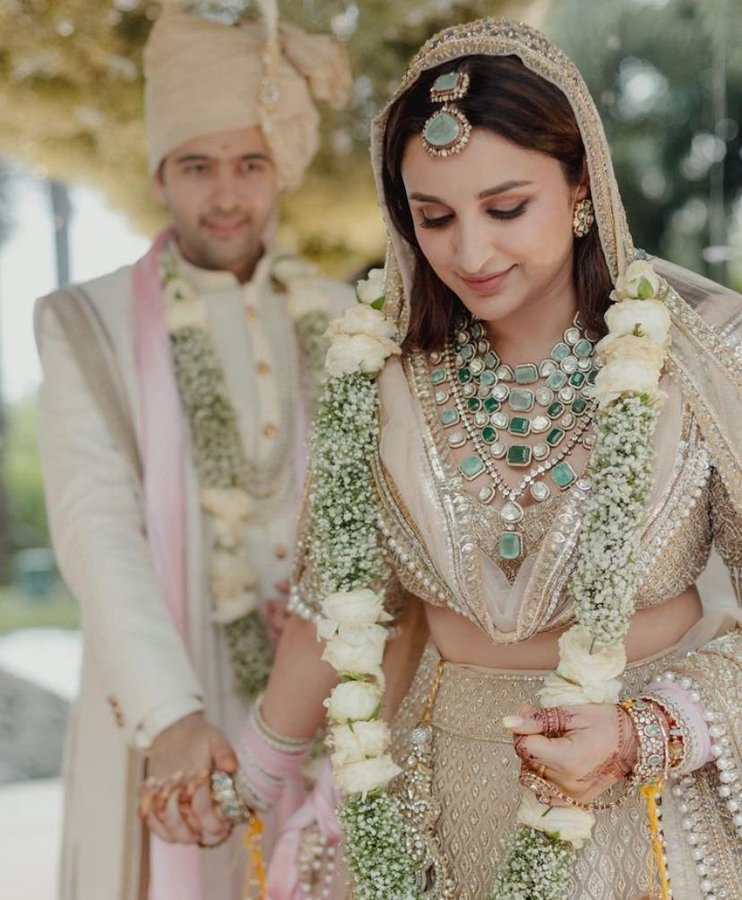
The year 2025 is all about picture-perfect places from the palatial charm of Udaipur and Jaipur to the serene beaches of Gokarna and Mahabalipuram with couples choosing meaningful experiences over over-the-top grandeur. Day weddings under golden sunlight – perfect for dreamy pastel photographs continue to dominate, with ivory, blush pink, and mint green ruling bridal palettes.

Band Baaja Budget: Inside India’s New-Age Weddings Where Love Outshines Luxury

Smart Weddings, Strong Bonds
The idea of love has matured and so has wedding planning. Many couples now choose court marriages followed by small family gatherings, saving big for their future or their first adventure together. The mantra is clear: spend smart, celebrate harder.

Brides and grooms are renting designer outfits, repeating looks with new styling, and investing in moments that matter. As one planner put it, “It’s no longer about the biggest budget, but the brightest smiles.”

Lights, Camera, Commitment
Modern weddings now come with their own content creation corners beautifully lit spots for Instagram-worthy photos and Reels. Personalized décor, neon name signs, digital photo booths, and emotional pre-wedding films have turned shaadis into living love stories. And yes, bride and groom entries are now mini-movies with varmalas exchanged under fireworks, tears, and laughter.

Band Baaja Budget: Inside India’s New-Age Weddings Where Love Outshines Luxury

The New Definition of “Happily Ever After”
The new-age Indian wedding is not about impressing it’s about expressing. Karan Johar’s Rocky Aur Rani Ki Prem Kahani beautifully captured this shift when the groom’s father joined the bride’s father in performing kanyadaan, symbolising that they were giving their son too, not just accepting a daughter. It reflected the new Indian wedding ethos: love is mutual, not one-sided; daughters are not given away, they are welcomed. This spirit is shaping real-life weddings too where love, not patriarchy, leads the way.

As the old saying goes, “A wedding is for a day, but love is for a lifetime.”

And in 2025, India’s couples are finally planning for both: wise in budget, and rich in heart.

Dharmendra: The Last of the Golden Hearts

0

When confirmed media reports say that curtain has fallen on one of Indian cinema’s most beloved legends. Dharmendra, the man whose smile lit up generations of screens and hearts, his wife Hema Malini came up and refused the rumours which said that he passed away at 89 in Mumbai. The veteran actor, known affectionately as the He-Man of Bollywood, had been admitted to Breach Candy Hospital due to breathing complications.

When his condition worsened, doctors placed him on a ventilator, and his family gathered by his side — a moment heavy with love and heartbreak. His sons, Sunny and Bobby Deol, along with Sunny’s children, Karan and Rajveer, rushed to the hospital. The Deol family, usually stoic and private, could not hold back their tears.

Late into Monday night, Mumbai’s film fraternity stood in solidarity. Shah Rukh Khan, Salman Khan, and several others came quietly to the hospital — a silent salute to a man who embodied the best of Bollywood’s golden age.

A Life Larger Than the Screen

Born on December 8, 1935, in the small village of Nasrali (now in Punjab’s Ludhiana district), Dharmendra Singh Deol’s journey from a farmer’s son to one of Hindi cinema’s most adored stars is the stuff of dreams.

From the moment he stepped into the film industry in the early 1960s, Dharmendra was a revelation — ruggedly handsome yet irresistibly gentle. He could throw a punch in Sholay and melt hearts in Satyakam. He was the romantic of Phool Aur Patthar and the patriot of Haqeeqat.

In an industry obsessed with glamour, Dharmendra’s appeal came from authenticity. His charm wasn’t crafted in studios — it came from the soil, the sun, and the sincerity of a man who remained deeply rooted to his beginnings.

The Handsome Hero Everyone Loved

He was called the most handsome man in Indian cinema — and not without reason. Dev Anand once famously sighed, “Why don’t I have such a face?” Even the great Dilip Kumar once said he wished to be like Dharmendra in his next life.

His presence was magnetic — not just for his looks, but for the warmth he exuded on and off the screen. Co-stars often said Dharmendra was incapable of anger. “His heart was as pure as his smile,” one director once remarked.

Even in his later years, Dharmendra believed “age is just a number.” He continued to appear in films, attend shoots, and charm everyone with his humor and humility. He often said he still wanted to do a romantic film with Sridevi or Madhuri Dixit — proof that his heart remained forever young.

A Bond with Dilip Kumar — His God and Guru

Dharmendra often said that his love affair with cinema began when he first saw Dilip Kumar’s film “Shaheed” while in tenth grade. Watching the tragedy unfold on screen, young Dharam was transfixed.

Years later, he would recall,

“I used to work and ride a bicycle everywhere. Whenever I saw film posters, I’d stop and look at my reflection. I’d stay up all night asking myself in the mirror, ‘Can I ever become Dilip Kumar?’”

For him, Dilip Kumar wasn’t just an idol — he was divine inspiration. Dharmendra would often post heartfelt tributes to his mentor, calling him “God, brother, and guide.”

The Fighter Behind the Smile

Behind that easy smile was a man who battled health challenges with quiet courage. Between 2015 and 2020, Dharmendra faced repeated bouts of back pain and weakness, often leading to hospital stays. Earlier this year, he underwent a cornea transplant surgery after damage to his left eye.

Just few days back, he had been admitted twice for breathing problems. Each time, he bounced back, joking with doctors and posing for photos with fans. He believe deeply that the love of the audience kept him alive.

The Final Curtain — But Not Goodbye

Dharmendra’s final screen appearance will be in “Ekkis,” a film that tells the story of war hero Arun Khetrapal. The film stars Agastya Nanda as Khetrapal, with Dharmendra playing his father, M.L. Khetrapal — a fitting final role for a man who played hero, mentor, and father both on screen and off.

As he prepares to grace the screen one last time, his fans will once again see the gentle eyes, the proud posture, and the unspoken strength that defined him.

The Legacy of a Gentleman

Dharmendra is just a superstar — he is the heart of a simpler, more soulful Bollywood. His love for poetry, his humility, his laughter, and his unwavering affection for fans made him timeless.

He often said,

“I never acted for fame. I acted for love — love of people, love of cinema.”

That love will live on — in reels, in memories, and in every heart that once skipped a beat watching him on screen.

The man may have left, but Dharmendra’s warmth, laughter, and humanity will remain etched forever in the story of Indian cinema.


Autopay Rules Decoded: What RBI New Norms Mean for Your Cards and Subscriptions

0

If you regularly pay for OTT subscriptions, insurance premiums, mobile plans, or electricity bills, autopay can save you from missed deadlines. But under the Reserve Bank of India’s (RBI) updated e-mandate rules, every automatic payment now follows a strict security process to protect users and prevent unauthorized transactions.

How to Set Up Autopay


You can activate autopay either through your bank (for debit or credit cards) or directly on a merchant’s platform. Once you register, the bank takes up to seven days to approve the mandate. If any bill is due before that, you’ll need to pay it manually. Once active, the bank automatically deducts the amount on the due date, but make sure your account has enough balance to avoid return charges.

Fixed vs Variable Mandates
Autopay works in two ways:

  • Fixed Mandate: Same amount every month (e.g., ₹399 OTT plan).
  • Variable Mandate: Amount changes monthly (e.g., electricity or water bills).
    Both types follow the same RBI guidelines, but your approval requirement depends on the amount deducted.

The ₹15,000 Rule You Must Know


For recurring transactions up to ₹15,000, payments go through automatically. Anything higher requires an OTP confirmation through a pre-debit alert.
However, in sectors like insurance and mutual funds, the OTP-free limit is ₹1 lakh. The same applies to credit card bill payments made via standing instruction.

24-Hour Pre-Debit Alerts


Banks must send a pre-debit message 24 hours before any transaction. This message shows the merchant name, amount, and due date, and allows users to opt out or modify the payment ensuring transparency and control.

If Your Card Is Lost or Blocked


Autopay stops working if your card is lost, expired, or blocked. You’ll need to delete the old mandate and re-register with your new card details.

Bottom Line: Safe, Smart, and Strict


RBI’s tightened autopay rules may seem complex, but they offer enhanced security and full user control. By keeping track of your mandates, OTP limits, and alerts, you can enjoy hassle-free recurring payments safe from surprises or failures.

World War I Ended on November 11: Know History and Significance of Armistice Day and ‘Power of 11’

0

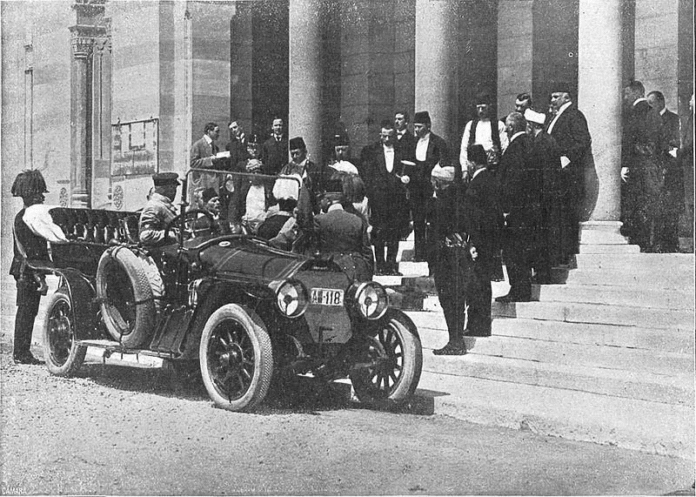
On this day, 107 years ago, World War I came to an end — at the 11th hour of the 11th day of the 11th month in 1918. The date became known as Armistice Day, marking the moment when the Allied Powers and Germany signed an agreement to cease hostilities. The armistice brought an end to a brutal conflict that had raged for more than four years and claimed over 15 million lives worldwide.

Unlike a formal surrender, the armistice was a mutual decision to lay down arms as the fastest way to end the immense suffering and devastation caused by the war. It paved the way for peace negotiations, which culminated in the signing of the Treaty of Versailles in June 1919 — officially ending the “war to end all wars.”

The Final Days of the War

By late 1918, the German army was collapsing under the relentless advances of British, French, and American troops. The Allies, despite being in a position to invade Germany, opted for peace rather than pressing further, recognising that an invasion of Berlin would demand enormous manpower and resources.

The Armistice Negotiations

Germany, aware that defeat was inevitable, began seeking peace as early as September 1918. The German government reached out to the United States, hoping for terms based on President Woodrow Wilson’s “peace without victory” principles.

Negotiations were led by Marshal Ferdinand Foch, Commander-in-Chief of the Allied Forces, who made it clear that Germany would not dictate any terms. When the German envoys asked if the Allies had proposals to offer, Foch famously replied:

“I have no proposals to make.”

What Germany Agreed To

Under the Armistice terms, Germany was required to:

  • Withdraw all troops from France, Belgium, and Luxembourg within 15 days, or risk capture.
  • Release all Allied prisoners of war without demanding reciprocity.
  • Surrender massive quantities of military equipment, including:
    • 5,000 artillery guns
    • 25,000 machine guns
    • 1,700 aircraft
    • 5,000 locomotives, 5,000 trucks, and 150,000 railway wagons
  • Return the Alsace-Lorraine territory to France.
  • Accept Allied occupation along the Rhine River, which lasted until 1930.

The Birth of Armistice Day

In 1919, Britain’s King George V declared that Armistice Day would be observed annually with two minutes of silence at 11 a.m. — the exact time the ceasefire had taken effect.

“The thoughts of everyone may be concentrated on reverent remembrance of the glorious dead,” the King proclaimed.

In the Commonwealth nations, November 11 later became known as Remembrance Day. Each year, a National Service of Remembrance is held at The Cenotaph in London, where people wear red poppies as a symbol of sacrifice and remembrance. Sporting events and public gatherings across the UK and other nations observe moments of silence as bugles sound “The Last Post.”

Armistice Day in the United States

A few days after King George’s announcement, U.S. President Woodrow Wilson declared that Americans too would mark the occasion.
In his proclamation, Wilson said:

“With splendid forgetfulness of mere personal concerns we remodelled our industries, concentrated our financial resources, increased our agricultural output, and assembled a great army, so that at the last our power was a decisive factor in the victory.”

Later, in 1953, Alvin J. King of Emporia, Kansas, proposed renaming the holiday Veterans Day to honour all U.S. military veterans, not just those from World War I.

The Legacy of November 11

Today, November 11 stands as a solemn reminder of peace and sacrifice. Across the world, ceremonies, poppy tributes, and moments of silence pay homage to those who served and fell in the Great War and beyond.

What began as a day to mark the end of World War I has evolved into a global tradition — a universal reminder of the cost of war and the value of peace.

National Education Day 2025: Theme, Speeches, Quotes & Significance

0

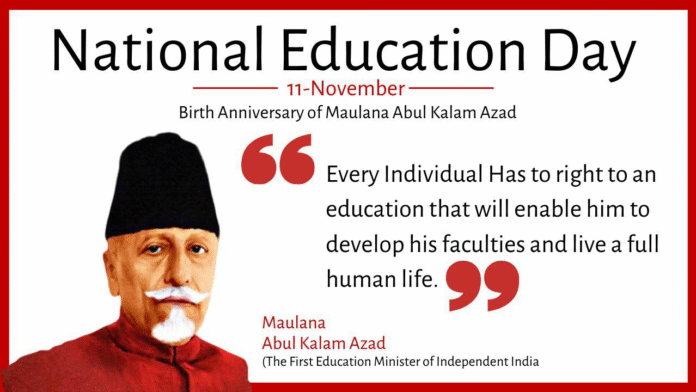
Every year on November 11, India celebrates National Education Day to honour Maulana Abul Kalam Azad, the country’s first Education Minister and a key architect of modern Indian education. In 2025, the theme — “AI and Education: Preserving Human Agency in a World of Automation” — reminds us that education must stay human, inclusive, and future-ready, even in an age of technology and automation.

Why National Education Day is Celebrated

Declared officially in 2008, National Education Day marks Maulana Azad’s birth anniversary (born November 11, 1888). It’s a day to reflect on education’s vital role in shaping individuals and society.

Maulana Azad was not only a freedom fighter and scholar but also a visionary educationist who believed learning was the key to social progress. He promoted girls’ education, founded major educational institutions, and worked tirelessly to fight illiteracy and inequality.

National Education Day 2025 Theme

This year’s theme, “AI and Education: Preserving Human Agency in a World of Automation,” highlights the balance between technology and human values. It asks us to ensure that education continues to empower, include, and inspire — not replace human creativity with machines.

The theme also aligns with India’s goals of building a high-quality, equitable, and future-ready education system — one that bridges gaps, leverages technology, and nurtures curiosity alongside academic success.

Inspiring Quotes by Maulana Abul Kalam Azad

“Educationists should build the capacities of the spirit of inquiry, creativity, entrepreneurial and moral leadership among students.”


“Clinging to the past is the worst form of slavery.”
“A country that cannot provide basic education to all its citizens cannot progress.”


“Education is not merely about literacy but about awakening the mind.”


“The foundation of every state is the education of its youth.”


🌐 Famous Quotes on Education

“Education is the most powerful weapon which you can use to change the world.” – Nelson Mandela


“The roots of education are bitter, but the fruit is sweet.” – Aristotle


“Children must be taught how to think, not what to think.” – Margaret Mead


“One book, one pen, one child, and one teacher can change the world.” – Malala Yousafzai


“An investment in knowledge pays the best interest.” – Benjamin Franklin

Speech Ideas for Schools & Colleges

1. Student SpeechTheme: “Education: The Light That Never Fades”

Good morning everyone,
Today we celebrate National Education Day — a tribute to Maulana Abul Kalam Azad, our first Education Minister. He believed that education awakens the mind and strengthens the nation.
In today’s world of innovation and AI, education remains our greatest power. Let’s promise to use our knowledge not just for success, but for service to others.
Thank you, and Happy National Education Day!

2. Teacher SpeechTheme: “Inclusive Quality Education — The 2025 Vision”

Respected Principal, colleagues, and dear students,
This year’s theme — “AI and Education: Preserving Human Agency in a World of Automation” — reminds us that even in a digital era, learning must stay human.
Maulana Azad envisioned education that builds character, curiosity, and courage. Let’s work together to make our classrooms inclusive, creative, and compassionate — where every child feels seen and valued.

3. Principal/Chief Guest SpeechTheme: “The Power of Education in Nation Building”

Good morning everyone,
On this day, we remember Maulana Abul Kalam Azad — a leader who believed education was the foundation of freedom and progress.
This year’s theme calls on us to make learning accessible and meaningful for all. Let’s honour his legacy not just through words, but by fostering curiosity, compassion, and courage in every learner.

The Path Forward

As we celebrate National Education Day 2025, let’s remember that education is more than a right — it’s a responsibility. Maulana Azad’s legacy reminds us to keep learning human, inclusive, and full of purpose. The future belongs to those who learn not just to work, but to think, care, and create.

Arshi Gupta Becomes First Indian Female Karting Champion

0

Nine-year-old Arshi Gupta has etched her name in Indian motorsport history by becoming the first Indian female to win the FMSCI National Karting Championship (Rotax) in the Micro Max class. The Delhi Public School, Faridabad student clinched the title at Meco Kartopia, Bengaluru, racing against competitors aged 8–12. Remarkably, she achieved this feat in only her second competitive season, becoming both the first Indian female and the youngest-ever champion in the Rotax series’ 21-year history.

Season highlights and decisive round


Racing for Leapfrog Racing, Arshi, born on 18 October 2016 in Faridabad, built her title momentum with a win in Round 3 at the Madras International Karting Arena in August 2025, followed by dominant performances in Coimbatore. In the Bengaluru finale, she stormed from mid-grid to victory in the Pre-Final and then controlled the Final from pole position to secure the national crown.

Racecraft and skill


Competing in the Micro Max category demands precision, consistency, and composure. Arshi impressed with clean starts, tactical overtakes, and mature tyre management—traits that belied her age. Her ability to adapt across circuits with varying grip and technical layouts showcased exceptional race intelligence for a nine-year-old.

Early start and training pathway


Arshi’s journey began when her father noticed her natural flair for speed during cycling sessions. Under coach Rohit Khanna, she began structured karting training in Gurugram in 2023. Her first major outing came at the Meritus Cup in 2024, and she entered the Rotax Nationals in 2025 as the youngest female competitor. International stints in the UAE (five months) and the UK (10 weeks) further refined her pace and discipline.

She also holds an India Book of Records title as the youngest female to earn a National Karting Licence, and represented Team India at the Asia Pacific Motorsports Championships in Sri Lanka (September 2025), finishing fourth in her class.

Loan Against Silver: RBI Unlocks a New Way to Borrow from Your White Metal

0

We’ve long seen banks offer easy loans against gold, but now the Reserve Bank of India (RBI) is adding a new sparkle – loans against silver. With the “Lending Against Gold and Silver Collateral Directions, 2025” coming into effect on April 1, 2026, borrowers can soon pledge their silver ornaments and coins for quick cash, just like gold.

Who Can Lend and Who Can Borrow


Under the new norms, commercial banks, small finance banks, regional rural banks, co-operative banks, NBFCs and housing finance companies can all extend loans against silver. However, loans against bullion (primary silver or gold) or financial assets like ETFs or mutual funds are not allowed. Only jewellery, ornaments and coins qualify.

How Much You Can Pledge


The RBI has set clear limits:

  • Gold ornaments: Up to 1 kg
  • Silver ornaments: Up to 10 kg
  • Gold coins: Up to 50 g
  • Silver coins: Up to 500 g
    The loan tenure for bullet repayment-style loans can’t exceed 12 months.

Loan-to-Value (LTV) Ratio
The amount you can borrow depends on the LTV ratio:

  • Up to ₹2.5 lakh – 85%
  • ₹2.5–5 lakh – 80%
  • Above ₹5 lakh – 75%
    This means for every ₹100 worth of silver, you can get up to ₹85 as a loan.

Valuation & Transparency


Valuation will be based on the lower of the last day’s or 30-day average price, as published by IBJA or a SEBI-regulated commodity exchange. Only the intrinsic metal value counts gems or stones are excluded.
Borrowers must be present during valuation, receive a certificate, and all loan documents must be in their preferred language.

Collateral & Auction Rules


Collateral will be stored in secured vaults, with surprise audits for safety. Once a loan is repaid, silver or gold must be returned within 7 working days or lenders pay ₹5,000 per day for delays.
If the borrower defaults, lenders can auction the pledged items, but only after proper notice and at a reserve price of at least 90% of current value.

With these detailed norms, the RBI has not just expanded access to credit but also ensured trust, transparency, and accountability proving that silver too, can now shine as collateral.