Home Blog Page 111

Khajuraho Stone Carving and Chhatarpur Furniture Registered for GI Tag; Traditional Arts to Receive National Identity and Legal Protection

0

Madhya Pradesh’s ancient craftsmanship and cultural heritage have taken a historic leap forward. Five unique traditional art forms of the state—Khajuraho Stone Carving, Chhatarpur Artistic Furniture, Betul Ekamatrava Metal Craft, Gwalior Stone Craft and Gwalior Handmade Paper Gum Art—have now formally entered the Geographical Indication (GI) registration process. This step is expected to provide national and global recognition to these art forms along with legal protections, better market opportunities, and improved livelihoods for artisans.

Applications Filed

The application for Khajuraho Stone Craft has been submitted by Arise and Aware Foundation Committee, Thatipur, while the Chhatarpur Furniture Association has filed the GI registration request for Chhatarpur’s handcrafted furniture. Experts consider this move significant for the preservation, documentation, and promotion of traditional craft practices.

Khajuraho Craft to Receive Global Recognition

Khajuraho’s intricate stone carving tradition—famous worldwide for its finesse, historical relevance, and architectural legacy—is now in line for formal GI protection. Once approved, the craft will gain legal safeguards against duplication, a distinct identity in the market, and greater access to international platforms. The move is expected to boost tourism, enhance economic opportunities, and connect local artisans with global business avenues, including e-commerce platforms.

Chhatarpur Furniture to Emerge as a Recognised Brand

Renowned for hand-crafted workmanship, detailed woodwork, and premium finishing, Chhatarpur furniture holds a strong reputation across Madhya Pradesh. With the GI application now in process, experts foresee a major rise in national demand, branding value, and manufacturing expansion. The approval will label these products as certified under the name “Chhatarpur Furniture”, strengthening small-scale industries, local carpenters, and woodcraft clusters, and creating new employment opportunities.

Benefits Expected from GI Tag

  • National & global recognition
  • Protection against imitation
  • Increase in income as GI products command premium prices
  • Entry into international trade and wider markets
  • Boost to tourism and cultural economy
  • Institutional support and government recognition

Institutional Support and Progress

Key institutions including NABARD and SIDBI have provided funding and technical support to advance the applications. The MSME Department, local craft clusters, and traditional artisan communities played a crucial role in documentation and procedural formalities.

Currently, Panna Diamond is the only registered GI-tagged product from Madhya Pradesh. However, approximately 25 additional products are now in the final evaluation stage—indicating a huge cultural and economic transformation underway in the state.

Senior officials including Rajshekhar Pandey (General Manager, MSME), Secretary Brajendra Gupta, and teams from various cultural organizations have actively contributed to the process.

Five Registered Art Forms Under GI Process

  • Khajuraho Stone Craft
  • Chhatarpur Artistic Furniture
  • Betul Ekamatrava Metal Art
  • Gwalior Stone Craft
  • Gwalior Handmade Paper Gum Craft

With these developments, Madhya Pradesh is set to strengthen its cultural legacy and secure its position on the global heritage and creative economy map.
The Gang Canal Turns 100: The Vision, Struggle, and Legacy That Turned a Desert Green

0

Stretching across the golden sands of Rajasthan, the Gang Canal stands today not just as an engineering marvel but as a testimony to one ruler’s courage, foresight, and unwavering belief in possibility. Where once only dust storms and drought existed, lush fields now stretch to the horizon. At the heart of this transformation is one name — Maharaja Ganga Singh of Bikaner.

A Dream Born From Hardship

Maharaja Ganga Singh was born in 1880, and by the age of just seven, in 1888, he became the ruler of Bikaner. His early years on the throne were marked by devastating famines. Between 1899 and 1905, severe droughts pushed the region to the brink of collapse — crops failed, livestock perished, and survival became a daily struggle.

These traumatic years sowed the idea of an ambitious dream in the Maharaja’s mind:
What if water could be brought from the Satluj River to the desert?

The Plan Takes Shape

Between 1910 and 1915, Maharaja Ganga Singh made a bold decision — to build a canal system that would bring Satluj water to the barren sands of Bikaner. With British engineer Colonel Dyas, planning began, but the project soon hit political resistance from Punjab and Bahawalpur states.

Despite setbacks, the Maharaja refused to abandon the vision. In 1903, he pledged that the project would be completed — no matter how long it took.

War, Diplomacy, and a Turning Point

In 1913, world events unexpectedly shifted in his favor. As World War I began, Maharaja Ganga Singh joined the British war cabinet and later signed the Treaty of Versailles — the only Indian ruler to do so. His growing international stature strengthened his negotiating power.

Finally, in 1919, the Punjab government formally approved the Satluj Canal proposal, and a tripartite agreement was signed between Punjab, Bahawalpur, and Bikaner states.

Construction Begins

By 1920, the estimated cost of the project reached ₹5.5 crore — a monumental sum at the time. Along with the canal, plans were made for a railway line to support construction.

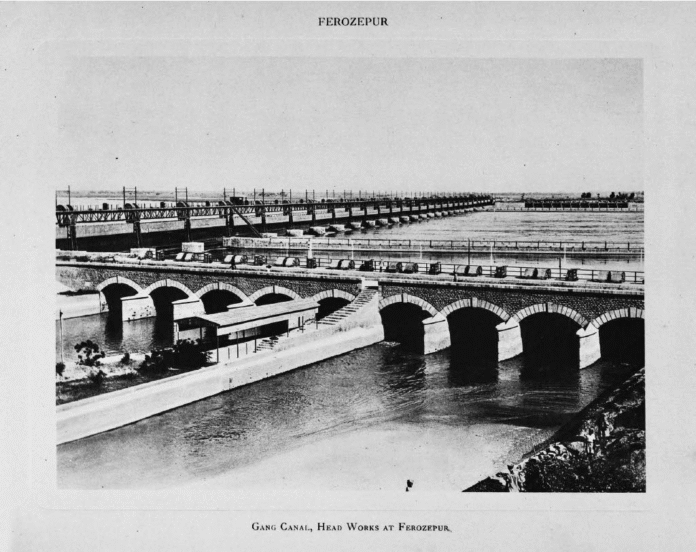
On 5 December 1925, the foundation stone of the canal was laid in Firozpur, marking the beginning of a new era. In just two years, construction progressed rapidly and the 144 km long canal was completed in 1927.

It was officially inaugurated on 26 October 1927 by Viceroy Lord Irwin in a historic ceremony.

A Legacy Written in Water

The Gang Canal transformed Rajasthan’s identity. Dry dunes turned into fertile fields; wheat, cotton, mustard, and sugarcane began to flourish. Villages previously bound to famine now prospered. Generations of farmers owe their livelihood to a king who refused to accept the limits imposed by geography.

Today, nearly a century later, the Gang Canal remains a lifeline — a living monument to visionary leadership, engineering genius, and the belief that even a desert can bloom.

Maharaja Ganga Singh didn’t just build a canal.

He built hope — and turned the impossible into reality.

RBI Reduces Repo Rate…Loans to Become Cheaper…

0

The Reserve Bank of India (RBI) has reduced the repo rate by 0.25% to 5.25% which will make loans cheaper in the coming days, and existing EMIs will also decline. This decision was taken during the Monetary Policy Committee (MPC) meeting held from December 3 to 5, and was announced by RBI Governor Sanjay Malhotra on December 5.

The repo rate is the rate at which the RBI lends money to commercial banks. A cut in the repo rate lowers the cost of borrowing for banks, which they typically pass on to customers. As a result, loans such as home and auto loans are likely to become 0.25% cheaper in the coming days.

With the latest reduction, the EMI on a ₹20 lakh loan for 20 years will fall by about ₹310, while the EMI on a ₹30 lakh loan will decrease by around ₹465. Both new and existing borrowers stand to benefit from this. Lower interest rates are also expected to boost housing demand, as more people will be able to invest in real estate.

Repo rate reduced four times this year, total cut of 1.25%

The RBI has cut the repo rate four times this year, bringing the total reduction to 1.25%.

  • In February, the rate was reduced from 6.5% to 6.25%—the first cut in nearly five years.
  • The next cut, in April, brought it down by another 0.25%.
  • In June, the rate was reduced by 0.50%.
  • The latest cut of 0.25% brings the repo rate to 5.25%.

Why does the RBI change the repo rate?

The repo rate is a key monetary policy tool used to control inflation and manage economic growth.

  • To control inflation: When inflation is high, the RBI increases the repo rate. This makes loans costlier for banks and customers, reducing money flow and cooling demand.
  • To support economic growth: When the economy slows, the RBI lowers the repo rate to make borrowing cheaper. This increases liquidity, boosts spending, and supports economic recovery.

MPC meets every two months

The Monetary Policy Committee has six members—three from the RBI and three appointed by the central government. The MPC meets every two months to review economic conditions and decide the policy rate.

Recently, the RBI released the MPC meeting schedule for the 2025–26 financial year. A total of six meetings will be held. The first meeting took place on April 7–9.

Aspendos: The World’s Best-Preserved Roman Theatre Still Defying Centuries

0

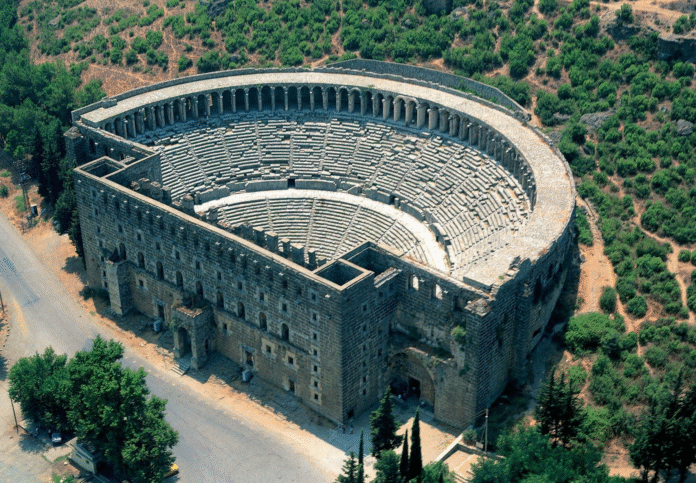
Aspendos: “This is unlike anything I have ever seen before.” With these words in 1909, British archaeologist David George Hogarth described the Aspendos Theatre—adding: “You may have seen amphitheatres in Italy, France, Dalmatia and Africa; temples in Egypt and Greece; palaces in Crete. You may be sated with antiquity, or scornful of it. But you have not seen the theatre of Aspendos.”

More than a century later, Hogarth’s impression remains accurate. Aspendos houses the best-preserved ancient theatre in the world—an architectural masterpiece reflecting traces of Roman ambition and later Seljuk intervention. Built during the reign of Emperor Marcus Aurelius between 160 and 180 A.D., the theatre bears an inscription crediting its architect Zenon, son of Theodorus, and naming its benefactors: the wealthy brothers A. Curtius Crispinus Arruntianus and A. Curtius Crispinus.

Like many theatres in Asia Minor, the lower part of the cavea (audience seating) is carved directly into the eastern slope of the acropolis, while the upper section sits atop a system of stone arches and vaults. The theatre is monumental in scale, with a façade approximately 100 meters wide and 22 meters high. Its exceptional state of preservation and elaborate architectural detailing distinguish it from all others. Recent studies estimate the theatre’s capacity at 7,300–7,600 spectators—assuming 45 cm of seating width per person—though in crowded events this may have reached up to 8,500.

The cavea is divided by a diazoma (horizontal walkway), with 20 seating rows below and 21 above. Two vaulted parodoi serve as the main entrances to the lower cavea, while multiple gates along the exterior wall provided additional access routes. A rare covered gallery encircles the cavea, offering shade and shelter—making it the best-preserved example of its kind in Asia Minor and beyond.

The two-storied stage building (scaenae frons) still rises to its full height. Five doors opened onto the stage, the largest at centre and framed by progressively smaller doors. The richly decorated façade featured monolithic columns, carved friezes, garlands hanging from bucrania, tendril motifs, cornices, and pediments. Though many projecting architectural elements are lost, what survives offers a remarkable sense of its original splendour. The theatre’s design demonstrates sophisticated acoustic engineering and may once have been topped with a wooden roof.

The theatre owes much of its preservation to 13th-century Seljuk reuse under Sultan Alaeddin Keykubat, when it briefly served as a palace. Traces of this period survive in red zigzag wall paintings and modifications to windows and internal access routes.

While most visitors know Aspendos for its theatre, the city’s aqueducts—with two exceptionally preserved siphons—are equally significant. Carrying water from mountain sources 15–19 km away at an elevation of roughly 500 meters, the system sustained both the city and the fertile Pamphylian plain. Epigraphic evidence suggests it was built in the 2nd century A.D. by Tiberius Claudius Italicus at a cost of 2 million denarii. The inverted siphons, each around 30 meters high, enabled water to cross a 1.7 km-wide valley. Their stone channels measure 55–60 cm wide and 90 cm high. Rising at a 55-degree incline, the channels span the valley via arches 5.5 meters apart and up to 15 meters high—making this one of the tallest Roman hydraulic constructions still preserved.

Aspendos’ aqueducts can be compared to the Pont du Gard in France and the aqueducts of Segovia in Spain—both UNESCO-listed—yet Aspendos surpasses them in length and uniquely preserves two hydraulic siphons. Although siphons exist near Lyon (Mont d’Or, Brévenne, Gier), none provide such clarity regarding construction or function.


Outstanding Universal Value

Aspendos embodies exceptional cultural and technological achievement. The theatre is among the most complete Roman theatres globally, retaining its original form, decoration, and layered historical character—from Roman engineering mastery to Seljuk adaptation. The aqueducts stand as a rare and invaluable example of advanced hydraulic engineering, preserved to a degree that continues to inform modern research.

Criteria Justification

Criterion (i):
Both the theatre and aqueducts represent exceptional craftsmanship, technological innovation and intellectual accomplishment.

Criterion (ii):
Aspendos illustrates cultural continuity and adaptation—from Roman construction to Seljuk reuse—providing a rare dialogue between civilizations.

Criterion (iv):
Aspendos offers a unique opportunity to study an exceptionally intact Roman theatre with visible architectural phases, including its transformation into a medieval palace.


Authenticity and Protection

The site is protected under Turkish Law No. 2863 for the protection of cultural and natural heritage. It has been registered since 8 September 1994 as a 1st-degree archaeological and 3rd-degree natural site.


Comparative Analysis

Only two comparable Roman theatres survive: the Theatre of Orange (France) and Aspendos—of which Aspendos retains the greatest amount of original material and presents multiple historical layers, including Seljuk modifications and reused earlier architectural fragments.

Likewise, the aqueducts stand apart from other major Roman hydraulic structures due to their preserved siphons, construction materials—including brick, an unusual choice for Asia Minor—and overall scale.


Mahaparinirvan Diwas: Honouring the Life and Legacy of Dr. BR Ambedkar

0

Mahaparinirvan Diwas is observed every year on 6 December to mark the death anniversary of Bharat Ratna Dr. Bhimrao Ramji Ambedkar—architect of the Indian Constitution, social reformer, and one of the most influential voices of equity and human dignity. On this day, millions across India and abroad pause to remember his transformative work and the values he championed.

This year marks the 70th Mahaparinirvan Diwas, observed by the Dr. Ambedkar Foundation (DAF) under the Ministry of Social Justice and Empowerment at Prerna Sthal in the Parliament House Complex. Senior leaders including the Vice President, Prime Minister, and members of Parliament will offer floral tributes, reaffirming the enduring impact of Ambedkar’s ideas on India’s democratic journey.

Why Mahaparinirvan?

The term Mahaparinirvan comes from Buddhist philosophy, meaning final liberation—freedom from the cycle of birth, suffering, karma, and death. Just as Gautama Buddha’s passing is remembered as Mahaparinirvan, Dr. Ambedkar’s followers commemorate December 6 as a spiritual moment marking his liberation and the continuation of his ideals.

For Ambedkar, Buddha’s teachings were not merely philosophical—they offered a path to social reform rooted in compassion, human dignity, and equality. His conversion to Buddhism in 1956 became a watershed moment in India’s socio-cultural landscape, influencing millions and giving rise to a modern Buddhist revival grounded in social transformation.

A Life Committed to Justice

Born in 1891 in Mhow, Madhya Pradesh, Dr. Ambedkar rose from systemic exclusion to become a scholar of global repute, earning doctorates in economics, law, and political science. His life’s work centred on dismantling caste discrimination and empowering Dalits, women, labourers, and other historically marginalized groups.

Through initiatives such as:

  • Mooknayak (The Leader of the Voiceless)
  • Bahishkrit Hitkarini Sabha
  • Mahad Satyagraha
  • Kalaram Temple Entry Movement

he challenged social structures and expanded the meaning of rights, dignity, and citizenship in India.

His pragmatic negotiation during the Poona Pact (1932) remains a turning point in India’s social justice movement, ensuring political representation for oppressed communities.

Nation Builder Beyond the Constitution

Though remembered foremost as the principal architect of the Indian Constitution, Dr. Ambedkar’s contributions shaped the financial, administrative, and infrastructural foundations of modern India.

His scholarly work contributed to:

  • The Reserve Bank of India Act (1934)
  • The establishment of Employment Exchanges
  • Large-scale national projects including Hirakud Dam, Damodar Valley Corporation, and early ideas for a national power grid

His doctoral research also laid intellectual groundwork for the creation of the Finance Commission of India.

Recognising his unmatched contribution, the Government of India posthumously awarded him the Bharat Ratna in 1990.

A Legacy That Continues to Guide India

Mahaparinirvan Diwas is not just a day of remembrance—it is an invitation to introspect. Dr. Ambedkar envisioned a democracy that goes beyond elections toward dignity, equality, liberty, and fraternity in everyday life.

As the nation observes this day, his words continue to remind us:
“We must make our political democracy a social democracy.”

His vision remains relevant—perhaps now more than ever—as India continues its journey toward becoming a society where every citizen has equal opportunity, voice, and respect.

Shah Rukh Khan & Kajol Unveil Life-Size Raj–Simran Statue in London as DDLJ Marks 30 Years

0

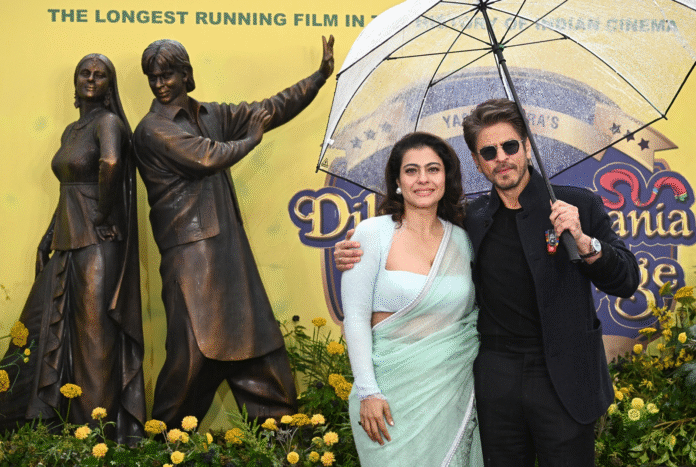
In a landmark moment for Indian cinema, a life-size bronze statue of Shah Rukh Khan and Kajol from Dilwale Dulhania Le Jayenge (DDLJ) has been unveiled at London’s iconic Leicester Square — the first time an Indian film has been honoured in such a manner.

To commemorate the film’s 30-year legacy, Shah Rukh Khan and Kajol flew to London and personally unveiled the statue, which captures the beloved Raj and Simran in their signature pose from the film. Images and videos from the ceremony have taken the internet by storm, triggering a wave of nostalgia among fans across the globe.

Kajol attended the event wearing a striking ocean-blue saree, while Shah Rukh Khan appeared in a classic black suit — a fitting homage to the timeless elegance of the film.

A Milestone Tribute to a Cultural Phenomenon

Released in October 1995, Aditya Chopra’s DDLJ revolutionized the romantic drama genre and became a defining piece of Indian pop culture. Even today, Mumbai’s Maratha Mandir continues to screen the film daily — a tradition upheld for three decades.

Speaking at the event, Shah Rukh Khan reflected on the milestone and the film’s enduring connection with audiences:

“It doesn’t feel like it’s been 30 years since Dilwale Dulhania Le Jayenge released. It feels like yesterday because bade bade deshon mein aisi choti choti baatein hoti rehti hain… but it still feels unbelievable. I’m truly grateful for all the love. Nobody could have imagined the place this film holds in people’s hearts around the world.”

A Global Legacy

Upon its release, DDLJ earned ₹102.5 crore — making it the highest-grossing Indian film of 1995. Over the years, it transcended commercial success and became a cultural landmark, influencing fashion, music, storytelling, and the global perception of Bollywood.

Its international relevance is reflected in multiple honours:

  • Featured among 1001 Movies You Must See Before You Die
  • Ranked 12th on the British Film Institute’s Top Indian Films of All Time
  • Included in the BFI Sight & Sound list of the 1,000 Greatest Films Ever Made (2012)

A Film That Defined a Generation

Dilwale Dulhania Le Jayenge marked Aditya Chopra’s directorial debut — a passion project he spent three years writing before presenting it to his father, filmmaker Yash Chopra. Despite skepticism from industry peers, Aditya insisted on full creative control and went ahead with his unconventional vision of modern romance.

The result was not just a film — but a generational memory, a cinematic benchmark, and now, a permanent symbol in one of the world’s most famous public squares.

Three decades later, Raj and Simran still aren’t just characters — they’re a legacy.

Siddhi Jain Drops IIT, Makes History as NDA’s First Woman President’s Medalist, Know Her Inspiring Story

0

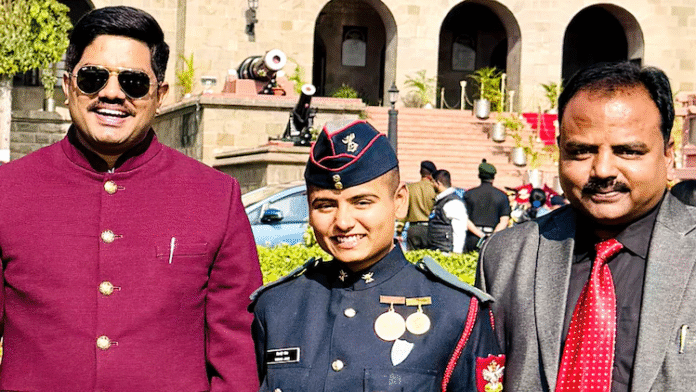
Siddhi Jain, who once aspired to crack the IIT-JEE, has made history as the first female cadet ever to earn the coveted President’s Medal at the National Defence Academy (NDA)’s 149th Passing Out Parade, a moment that has ignited pride and inspired hope across India.

From IIT dreams to defence calling


Hailing from Ujhani in Uttar Pradesh’s Badaun district, Siddhi had initially charted a conventional academic path: she was preparing vigorously for IIT-JEE in Kota and had secured admission to a top-tier engineering institute, the National Institute of Technology (NIT). However, despite a promising future in engineering, she chose a drastically different course, one filled with discipline, risk, and purpose.

That decision came after she opted to leave behind the promise of a stable engineering career in favour of joining the armed forces. Her first attempt at NDA ended in disappointment when she was screened out at the SSB. Yet, refusing to accept defeat, she enrolled at Centurion Defence Academy, where under rigorous training and mentorship she rebuilt her resolve, focused on cracking NDA entry and succeeded on her second attempt.

Rising through the ranks where hard work meets grit


At NDA, Siddhi’s journey was defined by resilience. Through three years of gruelling physical and mental training, spanning academics, military drills, leadership challenges, and service-subject coursework she outshone peers in performance and discipline.
As the 329 cadets of the 149th batch marched out, 15 women from this cohort completed their training. But only Siddhi earned a place in the overall order of merit, clinching the President’s Bronze Medal and the title of Best All-Round Air Cadet.

Navy Chief Admiral Dinesh Tripathi, who presented the medal, praised Siddhi’s achievement as a defining moment for women in uniform. “Her performance sets a new benchmark of excellence and reflects the growing strength and leadership of women in the armed forces,” he said, calling her dedication an example of the future India envisions for its military leadership.

Why her journey inspires future candidates


Siddhi’s story speaks volumes: it’s about daring to choose purpose over predictability; it’s about transforming rejection into renewed determination; and it’s about proving that gender is no barrier when willpower is strong.

Recalling the tough days after her first rejection and the confidence she regained through training, Siddhi said with pride, “One setback cannot decide your future, today I stand here proving that determination always wins.”

Her victory underlines how early setbacks like a failed first attempt do not define ambition. As she moves on to the Air Force Academy for further training, her commitment shines through: to serve with honour and inspire thousands of young girls to chase their dreams fearlessly.

In choosing uniform over engineering, resilience over comfort, and grit over certainty, Siddhi Jain has not only carved a path for herself, but also paved the way for many more to follow.

Navy Day Special: At 20, Rakshita Rathore Becomes Rajasthan’s First Female Technical Officer in the Indian Navy — Here’s Her Success Mantra

0

Navy Day Inspirational Story: At just 20 years old, Rakshita Rathore has created history by becoming a Sub Lieutenant and the first female technical officer from Rajasthan to join the Indian Navy. Her remarkable achievement has become a source of pride for the entire state and an inspiration for young aspirants across the country.

Her Success Mantra

For Rakshita, the dream was clear from the beginning—she wanted to serve the nation. Sharing the mantra that shaped her journey, she said:

“There are no shortcuts to success. If you work hard on your passion, you will definitely achieve success.”

Her disciplined approach and complete commitment to her goal helped her overcome every challenge on the way.

A Family That Believed in Her

Rakshita hails from a small village in Parbatsar, where her parents—Pushpa Rani and Rajendra Rathore—work as teachers. They always supported their daughter’s choices and never imposed their expectations.

Initially, they enrolled her in Science–Biology in Class 11 to guide her toward becoming a doctor. But when Rakshita expressed her desire to join the Navy, they immediately supported her decision and allowed her to change her subjects.

Rakshita proudly says she owes her success to her parents’ encouragement, especially since no one in her family had ever served in the Navy before.

Journey From Parbatsar to the Indian Navy

  • Schooling: Rakshita completed her primary education at Seema Memorial School, Parbatsar.
  • Subject Shift: After Class 10, she began studying Science–Biology but later switched to Science–Mathematics in Class 12 to pursue her military dream.
  • Academic Excellence: She completed her B.Tech with 85% marks, strengthening her technical foundation.
  • Dream Realized: With focus and hard work, she achieved what she had envisioned since childhood—earning a prestigious place in the Indian Navy as a technical officer.

A Role Model for India’s Youth

Rakshita’s story is more than a personal achievement—it is a message of courage, determination, and clarity of purpose. On the occasion of Navy Day, her journey serves as a reminder that no dream is too big for those who are willing to work relentlessly for it.

International Cheetah Day: India’s Cheetah Population Reaches 32 in Project Milestone

0

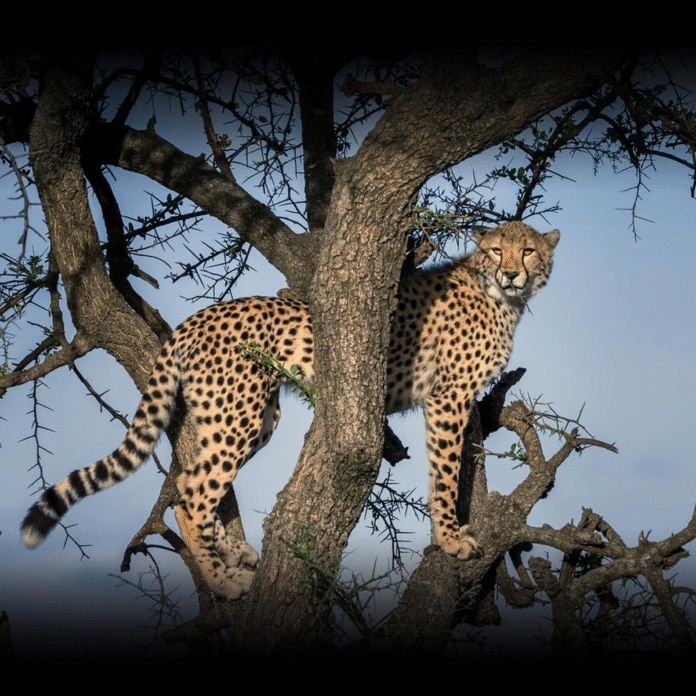
International Cheetah Day: Prime Minister Narendra Modi celebrated International Cheetah Day by highlighting Project Cheetah’s progress, launched in 2022 with 20 cheetahs imported from Namibia and South Africa to Kuno National Park in Madhya Pradesh.

The population has grown to 32 as of late November 2025, including 21 cubs born in India, with 16 now roaming free and more releases planned. Local volunteers called Cheetah Mitras help monitor them, while visitor numbers at Kuno rose 19% last year, drawing global wildlife enthusiasts to witness the revival.

Special Planes Of World Leaders: How Supreme Leaders Travel in Power, Luxury & Extreme Security

0

When the world’s most powerful leaders take to the skies, their planes become more than transport, they transform into mobile war rooms, airborne diplomatic suites, and flying national fortresses. Equipped with encrypted networks, missile defence systems, medical units, and ultra-luxury interiors, these high-security jets ensure global governance continues even at 40,000 feet.

The United States Iconic Air Force One


The Boeing VC-25A better known as Air Force One isn’t just an aircraft, it’s a symbol of American might. Costing $3.2 billion, it has hardened defence systems, advanced radar jammers and its own secure satellite network, allowing the U.S. President to execute military operations from the air.
Inside, it has a full medical suite, conference rooms, and executive offices, almost a White House in the sky.

India’s New-Age Air India One


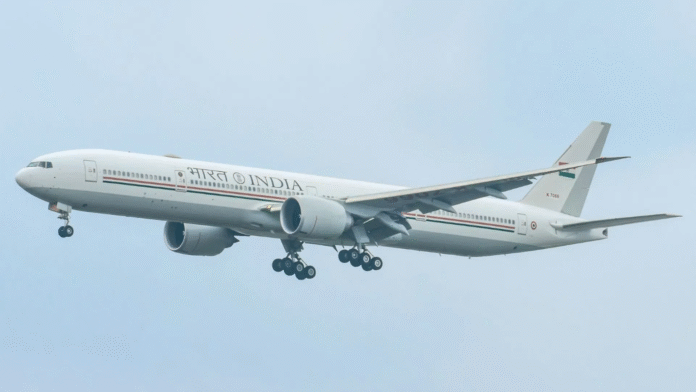
India’s Boeing 777-300ER, valued at $190 million, recently received state-of-the-art upgrades including missile-defeating technology, encrypted communications, and enhanced VIP suites. Operated by the Indian Air Force, it reflects India’s rising global profile with the capability to conduct strategic decisions mid-flight.

China’s Diplomatic Dominance in the Air


China’s Boeing 747-8, worth $250 million, serves as a private meeting arena in the skies, allowing China’s leadership to negotiate international matters while airborne. With reinforced cyber protection and restricted-access interiors, it keeps national strategy tightly secured.

Europe’s Elite: UK, France & Germany


The UK’s RAF Voyager Vespina, an Airbus A330 costing $250 million doubles as a military refuelling tanker, showcasing Britain’s defence-first approach.

France’s presidential aircraft, the Airbus A330-200 Cotam 001 ($270 million), features a presidential office, a secure command room and interiors reflecting French elegance with strategic functionality.

Germany leads in tech efficiency with the Airbus A350-900 Konrad Adenauer ($312 million), known for long-range capability, green aviation engineering, and a medical emergency suite that ensures readiness for any crisis.

Russia & Saudi Arabia’s fying castles


Russia’s Il-96-300PU Flying Kremlin ($70 million) looks modest in cost, but the confidential defence tech on board including nuclear command capabilities makes it one of the most secure planes on Earth.

Saudi Arabia’s Boeing 747-400 Flying Palace ($220 million) lives up to its name with gold-plated luxury and royal exclusivity, a sky palace for the monarchy.

Japan, where precision meets prestige


Japan’s Boeing 777-300ER ($350 million) reflects its engineering legacy combining meticulous design with top-tier air security and diplomatic preparedness. From global diplomacy to national survival, these airborne fortresses make one thing clear: world leadership doesn’t just travel, it travels in power, protection, and prestige.