Home Blog Page 109

Netflix Just Changed the Streaming War—Here’s What the Warner Bros Deal Means

0

It may look like just another corporate merger — but Netflix’s move to acquire Warner Bros Discovery feels more like a Hollywood thriller. There’s a powerful buyer, political tension, industry shockwaves, and a plot full of suspense. And just like any good series… this story is far from over.

Here are five things to watch as this blockbuster deal unfolds:

1. Netflix Just Leveled Up

Already the world’s biggest streamer, Netflix now stands poised to absorb Warner Bros’ legendary catalogue — from Harry Potter and Friends to HBO giants like Game of Thrones and Succession.

With more than 300 million Netflix subscribers and the potential addition of HBO’s 128 million users, analysts are calling the platform “almost untouchable.”

2. Prices Could Shift — in Either Direction

Will HBO and Warner Bros titles fold into Netflix, or remain separate as a premium tier? No one knows yet.

Netflix’s dominance could mean higher prices — but if viewers end up paying for one service instead of two, some may actually save money.

3. Streaming Now Fully Rules Hollywood

This deal is another signal that traditional Hollywood is fading. Warner Bros — once a symbol of the golden age of cinema — is being absorbed by the digital future.

Filmmakers like James Cameron have already sounded alarms, warning the move could be “a disaster” for the industry.

4. Approval Isn’t Guaranteed

Before anything becomes official, regulators in the US and Europe must sign off — and they’re already raising questions about competition and pricing power.

Netflix may be confident, but the road ahead is anything but smooth.

5. One More Wild Card: Donald Trump

With a president who openly comments on media mergers — and has ties to rival bidder Paramount Skydance — political influence could play a big role in how this ends.

As the credits roll on Act One, one thing is clear: this isn’t just a merger — it’s the beginning of a new era in entertainment, and the whole world is watching.
Armed Forces Flag Day 2025: Know Day And Why Is It Celebrated? History, Significance, and Purpose

0

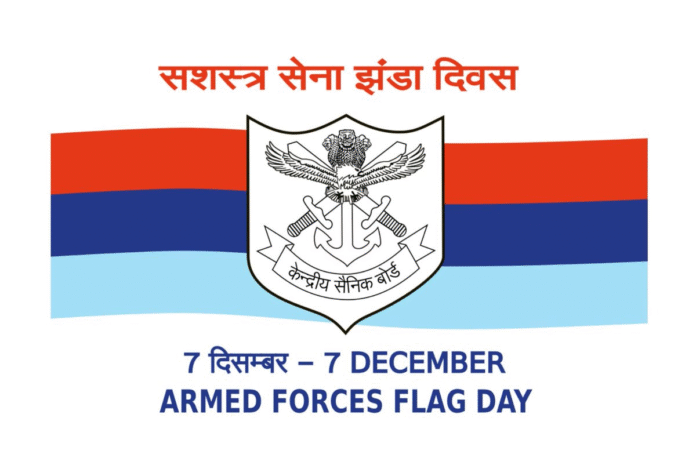
Armed Forces Flag Day, also commonly known as Army Flag Day, is observed every year on December 7 across India. This special day is dedicated to honoring the bravery, sacrifices, and service of the soldiers who protect the nation and to raising funds for the welfare of serving personnel, veterans, and families of martyrs.

History of Armed Forces Flag Day

After India gained independence, the government recognized the urgent need to support martyred soldiers’ families, disabled war veterans, and ex-servicemen. To address this, a committee was established on August 28, 1949, under the chairmanship of then Defence Minister Baldev Singh.

The committee proposed that December 7 be observed annually as Flag Day with the following goals:

  • To honor the martyrs and remember their sacrifices
  • To collect funds for the welfare of armed forces personnel
  • To encourage public involvement and express national gratitude

Since then, on this day, symbolic flags representing the Army, Navy, and Air Force are distributed across the country in exchange for voluntary contributions.

Significance of the Day

Armed Forces Flag Day serves multiple purposes:

  1. Welfare and Rehabilitation:
    Funds collected through the Armed Forces Flag Day Fund (AFFDF) support:
    • War-widows and dependents
    • Disabled soldiers needing long-term rehabilitation
    • Ex-servicemen requiring financial assistance
  2. National Respect and Gratitude:
    The day reminds every citizen of the dedication, discipline, and sacrifices made by soldiers who guard India’s borders under extreme conditions.
  3. Unity and Patriotism:
    Armed Forces Flag Day promotes national unity as soldiers serve without bias of caste, religion, or region — symbolizing one India.

Schools, colleges, government offices, and public institutions mark the day through awareness programs, parades, and tribute ceremonies.

Why It Matters

Armed Forces Flag Day is not just a symbolic observance — it is an opportunity for every citizen to contribute meaningfully to those who protect the nation.

“A salute to the brave hearts who stand guard so India can sleep in peace.”

Vladimir Putin ’s Armoured Limousine Rolling Through India. Know The Story Behind Aurus Senat…

0

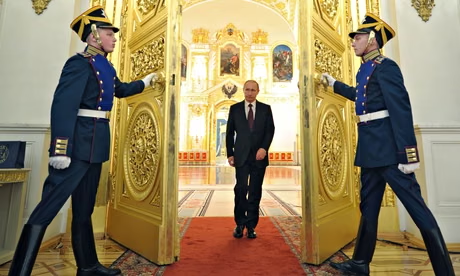
When Russian President Vladimir Putin landed in India for his 2025 state visit, it wasn’t just the diplomatic entourage that turned heads it was the black, imposing limousine riding alongside him: the Aurus Senat. Sleek, retro-styled yet menacingly fortified, the Senat isn’t just a car it’s a moving fortress engineered for war-zone level threats while offering the luxuries expected of a head-of-state vehicle.

Russia’s home-grown Presidential ride

The Aurus Senat was developed under Russia’s ambitious “Kortezh” project, initiated to replace imported limousines and establish a home-grown state car for top officials.
Since its debut in 2018, it has served as the official limousine of the Russian presidency, symbolising national engineering prowess and autarkic pride.

Bulletproof armour, blast-resistance & chemical defence

What makes the Senat a fortress on wheels is its extraordinary defensive architecture. It conforms to the VR-10 ballistic protection standard meaning it can withstand armour-piercing rounds, grenade blasts, and even chemical threats.

Its multi-layer armoured shell, 6-cm thick bullet-resistant glass, run-flat tyres, reinforced underbody protection and sealed cabin with independent oxygen supply all combine to provide survival in extreme danger scenarios.

The car also includes fire-suppression systems, emergency exits, and blast-resistant fuel tanks features that turn it into a fully self-contained safe pod even under threat.

Power & performance: Not just a bulky tank

Despite its heavy armoured build, the Aurus Senat doesn’t sacrifice on performance or comfort. Under the hood lies a hybrid 4.4-litre twin-turbo V8 engine, delivering roughly 598 hp and 880 Nm torque, mated to a 9-speed gearbox. That powertrain enables the limousine to accelerate 0-100 km/h in about 6-9 seconds (depending on variant), and cruise at high speeds when needed.

Inside, the cabin merges state-level security with luxury: leather seats, premium wood finishes, mood lighting, climate control, a “mobile command-centre” of communications and advanced infotainment essentially a secure executive suite on wheels.

From Kremlin convoys to Delhi roads, what Senat in India signals

With the Aurus Senat making its way through Indian streets as part of Putin’s convoy, global attention isn’t just on the man inside but on what the car itself broadcasts. As India–Russia diplomacy unfolds, the arrival of Senat reflects not just security logistics but symbolic weight: power, independence, and readiness. The vehicle’s presence underscores that for leaders like Putin, diplomacy travels not just with words, but with armour and engineering.

More than a Limousine – a statement

The Aurus Senat is more than a presidential limo. It’s a statement of national ambition, of personal security, and of the stark realities of geopolitics. As the fortress on wheels makes its way through India during this high-stakes visit, it stands as a rolling symbol of power and protection.
In a world where optics matter as much as talks, the Senat isn’t just transporting a leader it’s carrying a message.

IndiGo Flight Chaos: Centre Caps Airfares; Know Entire Story Behind Crisis

0

The air-travel turmoil surrounding IndiGo entered its fifth consecutive day on December 6, 2025: more than 400 flights were cancelled across major airports in Bengaluru, Mumbai, Delhi and Hyderabad, even after temporary regulatory relief. The escalating mess triggered panic among travellers and prompted the government to step in to stabilise fares and protect passengers.

Why flights kept getting cancelled

The root of the crisis lies in a sharp shortage of available pilots. New DGCA-mandated crew rest and flight-duty rules forced IndiGo into a roster-management failure. Even after regulators temporarily relaxed certain night-duty and landing limits, the airline could not stabilise operations resulting in massive cancellations.

Airports worst hit: Bengaluru, Mumbai, Delhi, Hyderabad see major fallout

On Saturday alone, cancelations included about 124 flights at Bengaluru, 109 at Mumbai, 106 at Delhi and 66 at Hyderabad stranding thousands and disrupting travel plans nationwide. Even beyond the big four hubs, regional airports from Pune to Goa felt the ripple effect, with multiple flights axed or delayed.

Passengers left in limbo: Stranded, delayed, furious

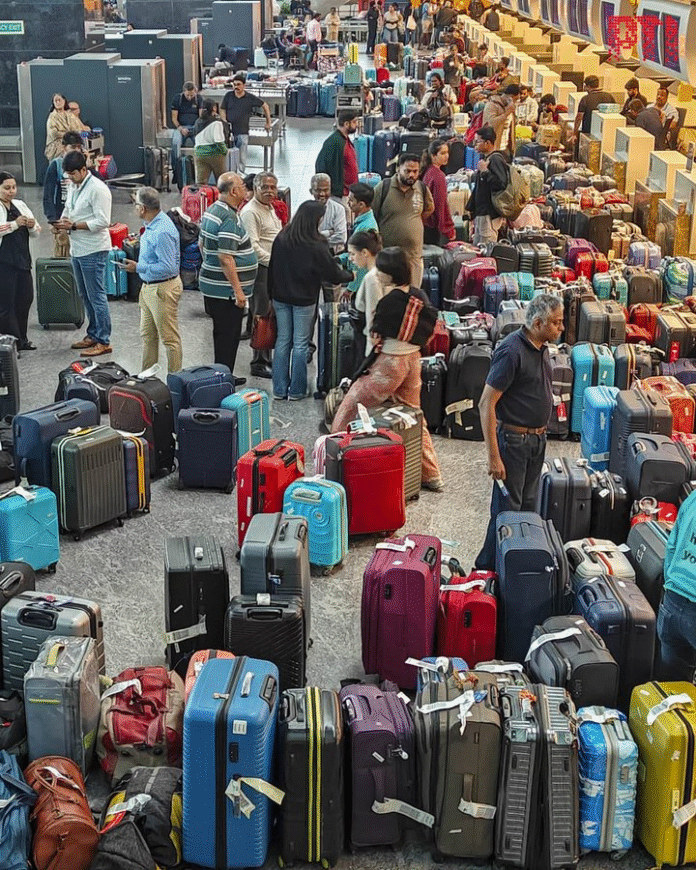
Travellers across cities reported chaotic scenes: long queues at airport counters, lost baggage, last-minute cancellations, and minimal information. The shortage forced many to scramble for alternatives trains or other airlines often at soaring last-minute fares.

Government reacts fare caps, refunds, alternate travel & probe

With fares on some routes reportedly spiking into the tens of thousands, the government invoked regulatory powers to impose ticket-price caps across airlines, aiming to curb opportunistic hikes.

Meanwhile, IndiGo offered full waivers on cancellations/rescheduling between Dec 5-15, arranged hotel stays and transport for stranded passengers, and initiated refund processing.

At the same time, DGCA has launched a formal inquiry into the airline’s crew-rostering failures and ordered submission of an operational roadmap to prevent recurrence.

What’s next

IndiGo’s management projects that full normalcy may return only by December 10-15, giving time to stabilise crew schedules, but the damage to public trust and the airline’s reputation may linger longer.
The debacle also revived concerns about over-dependence on a single carrier for India’s vast domestic air travel demand calling into question competition and capacity distribution across the aviation sector.

Four Reasons Why Modi Ditched His Range Rover & Mercedes To Chose Fortuner for Ride With Putin

0

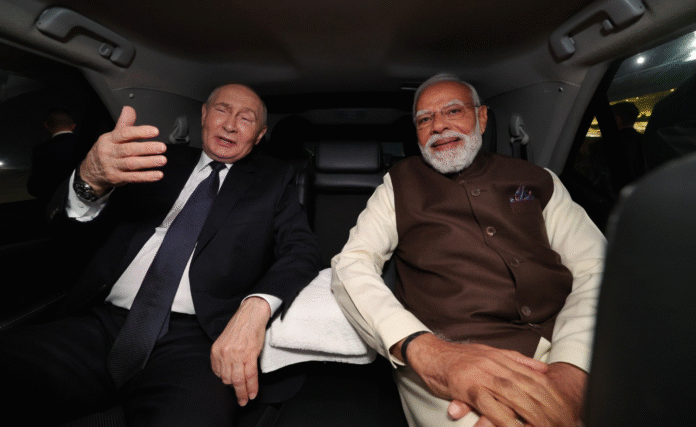
When Narendra Modi greeted Vladimir Putin at the Delhi airport and whisked him away not in his signature Range Rover or a Mercedes-Maybach but in a white Toyota Fortuner, the signal sent was loud and clear. The unexpected choice has triggered a wave of speculation and theories from diplomatic posturing to plain practicality.

European luxury? Not this time

In normal circumstances, leaders opt for opulent European vehicles. But this time no Range Rover, no Mercedes. Analysts believe that with Western countries having imposed sanctions on Russia, using a European-branded car could have created adverse optics. Opting for a Japanese-origin SUV helped sidestep that narrative entirely.

“Make-in-India” message on wheels

The Fortuner used was reportedly assembled in India, giving room for another powerful interpretation: alignment with the government’s push for domestic manufacturing and self-reliance. This choice speaks to promoting Indian-assembled vehicles even in matters of high diplomacy.

Third row matters for diplomacy & protocol

There’s also a practical side. The Fortuner offers a third row of seating useful for interpreters or aides traveling along with the leaders. The usual Range Rover lacks this flexibility, making Fortuner a smarter logistical fit for a two-plus-two ride.

Quiet diplomacy

What might look like a simple change of car was in fact a carefully calibrated diplomatic gesture. By blending practicality with symbolism, the ride in Fortuner offered a soft yet unmistakable message avoiding flash, embracing sovereignty, and delivering a quiet demonstration of intent that resonated with global watchers.
Ultimately, whether it was symbolism, practicality, or both this modest SUV moment for top-level diplomacy became one of the most talked-about visuals of Putin’s visit, showing how even choice of wheels can carry geopolitical weight.

Kani Shawl Back in Spotlight as PM Modi, Amitabh Bachchan Endorse Heritage Weave. Know Its Roots and Making Story…

0

The Kani Shawl traces its roots to the village of Kanihama in Kashmir, a cradle of textile artistry where generation after generation of artisans have woven stories into fabric. What began as intricate shawl weaving centuries ago has evolved into one of India’s most revered sartorial treasures.

Artistry beyond embroidery: The technique of Kanis

Unlike regular embroidered or printed textiles, each motif on a Kani shawl is not stitched or painted, it is woven directly into the fabric. Craftsmen use tiny wooden bobbins called kanis to interlace colored weft yarns onto a pashmina or wool warp, following complex, graph-paper-like patterns (known as talim). This labor-intensive process can take months, even years for a single shawl.

This structural weaving makes the shawl remarkably durable and grants it a depth and richness of texture that embroidery simply can’t match.

Royal roots: From Mughal courts to global luxury

The Kani shawl’s rise to prominence traces back to the era of medieval and Mughal-period patronage. It was cherished by Mughal emperors, Sikh maharajas, and later adopted by European aristocracy.
Some historical records note that during its peak, there were over 15,000 active Kani looms in the Kashmir Valley.
European nobility admired Kani’s elegance as much as Indian royalty, one iconic testament: portraits in major European museums show figures draped in authentic Kani shawls.

From diplomacy to stardom: PM Modi & Amitabh Bachchan champion the kani revival

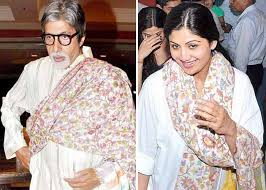
Today, the shawl is not just a royal relic, it’s a symbol of India’s modern cultural confidence. Prime Minister Narendra Modi has been seen wearing Kani shawls at high-profile global meetings, subtly placing Kashmiri craftsmanship on the world stage. Meanwhile, megastar Amitabh Bachchan, a long-time admirer of Indian textiles has been spotted draped in Kanis at prestigious events, inspiring fashion lovers across generations.

Their choices reflect more than style: it’s a tribute to artisanal heritage and a signal to the world that India’s craftsmanship is not just history it’s prestige.

Heritage under threat

The march of time political turbulence, economic shifts, mechanised alternatives took a heavy toll on Kani weaving. Many artisans abandoned the craft as it became harder to sustain livelihoods. But a few devoted families, notably from Kanihama, preserved the tradition, passing down intricate weaving techniques over generations.

Recognizing its cultural value, the shawl has been granted a Geographical Indication (GI) tag. This ensures only shawls woven in Kanihama using traditional methods can legally be sold as Kani shawls, helping safeguard authenticity and protect artisans.

From heritage to haute couture

Far from being a relic of the past, the Kani shawl has made a stylish comeback weaving itself into contemporary wardrobes. Recent sightings of prominent public figures wearing the shawl have brought renewed attention to the craft’s enduring elegance and relevance.
For many, owning a genuine Kani shawl is more than a fashion statement it’s wearing a piece of history, tradition, and artistry. In an age of fast fashion, it stands out as a testament to patience, craftsmanship and timeless beauty.

Why Kani Shawl matters today

The Kani Shawl isn’t just fabric it’s living heritage. Each piece encapsulates decades (or centuries) of tradition, skill, and cultural memory. As we move forward, valuing and preserving such craftsmanship becomes more than aesthetic appreciation it becomes a commitment to heritage, identity, and the artisans who make it possible.

Putin Gifted Assam Tea, Kashmiri Saffron, Russian Edition Bhagavad Gita, Silver Horse & More. Know Their Significance…

0

During the 2025 state visit of Russian President Putin to India, Narendra Modi presented him with a remarkably symbolic “gift hamper” not of luxury cars or lavish trinkets, but of carefully chosen items that reflect India’s spiritual depth, cultural heritage, regional diversity, and craftsmanship. The gesture has been widely interpreted not just as diplomatic decorum, but as a deliberate act of cultural communication. and soft-power diplomacy.

Assam tea & Kashmiri Saffron – A sip and a whiff of Indian soil

At the top of the list was fine Assam black tea, grown in the fertile Brahmaputra plains. Valued for its malty flavour, bright liquor, and traditional processing, Assam tea is among India’s most globally recognized agricultural products and carries a GI-tag since 2007, underscoring its protected heritage status.

Complementing it was Kashmiri saffron, the prized “red gold” of the mountains: rare, aromatic, and historically prized for its flavour, colour and medicinal value. The inclusion of these edible gifts symbolises warmth, hospitality, and a connection to India’s agrarian and artisanal roots.

A Russian-Edition Srimad Bhagavad Gita – Spiritual bridge, cultural gesture

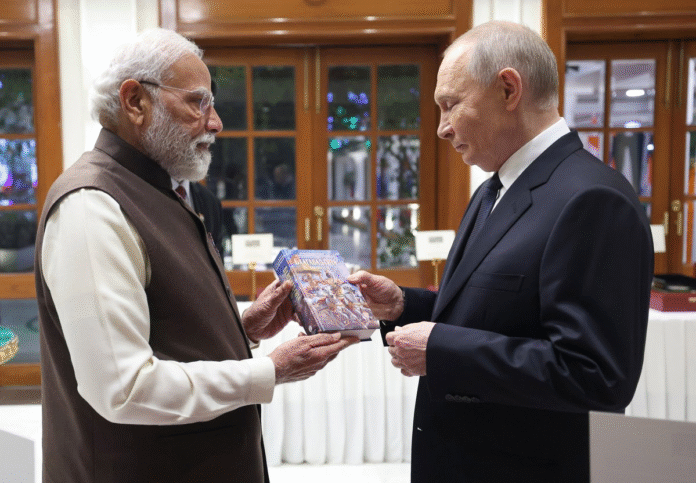
Perhaps the most layered gift was a Russian translation of the sacred text Bhagavad Gita. By handing this to Putin, Modi extended more than a book he offered what many consider timeless guidance on duty, ethics, self-realization, and inner peace. In today’s globalised world, where spiritual heritage often gets lost in political messaging, this gesture resonated as a bridge across cultures.

It reflects a broader push to share India’s philosophical and literary traditions beyond linguistic and geographical borders positioning cultural diplomacy as much about values as it is about strategy.

Handcrafted treasures: Silver horse, tea set, chess & more

Beyond food and scripture, the hamper included richly symbolic artefacts:
A handcrafted silver horse, symbolising dignity, valour and forward movement traits that echo in both Indian and Russian cultural imagery. As officials noted, its poised stance metaphorically reflects the ever-advancing India-Russia partnership.

An ornate silver tea set, with intricate engravings, a nod to Bengal’s metal-craft traditions and to the shared ritual of tea-drinking, which serves as a warm cultural common ground between India and Russia.

A marble chess set, a product of skilled stone-inlay craftsmanship blending artistry with functional elegance, perhaps symbolising strategic thinking and shared games of diplomacy.

Together, these artisanal gifts showcase India’s regional diversity, heritage crafts, and the human touch behind each piece.

Diplomacy Beyond Deals: A narrative of culture, heritage & shared respect

The significance of these gifts lies not in their material value, but in the stories they carry stories of soil and seasons, of timeless wisdom, of skill passed down generations, of shared values across borders. By gifting tea, saffron, scripture and craftsmanship, India didn’t just offer hospitality; it extended its identity. The gesture helps build a diplomatic narrative grounded in respect, shared heritage, and soft-power resonance.

In an era where geopolitics often hinges on resource deals, defense pacts and strategic posturing, gestures like this gift hamper remind us that culture and values remain powerful connectors capable of humanising diplomacy, connecting people, and cultivating long-term goodwill beyond immediate interests.

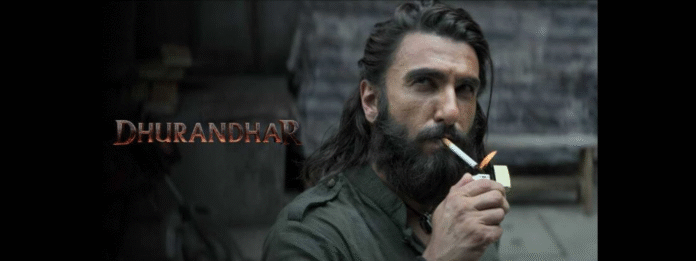
Film Review – Dhurandhar: Ranveer Singh Shines in a High-Voltage Mix of Action, Patriotism and Espionage

0

Ranveer Singh’s much-awaited film Dhurandhar finally hit cinemas on Friday and has instantly become a talking point among audiences. Directed by Aditya Dhar, the film goes beyond conventional action—it blends espionage, patriotism, and high-risk covert operations, delivering a cinematic experience packed with suspense, thrills, and emotional intensity.

Film Review – Dhurandhar: Ranveer Singh Shines in a High-Voltage Mix of Action, Patriotism and Espionage

Produced by Jio Studios and B62 Studios, the film features a powerful ensemble cast including Sanjay Dutt, Akshaye Khanna, R Madhavan, Arjun Rampal, Sara Arjun, and Rakesh Bedi, alongside Ranveer Singh in the lead.

Plot Inspired by Real Events

Dhurandhar draws inspiration from two major events in India’s history—the 1999 IC-814 hijacking and the 2001 Parliament attack. The story begins with R. Madhavan as Ajay Sanyal, the head of Indian intelligence, determined to dismantle the terrorism network operating from Pakistan.

For a classified mission, he recruits Hamza (Ranveer Singh), a young man serving prison time with no public identity—making him the perfect undercover asset. After intense covert training, Hamza is sent to Pakistan, where he navigates the dangerous underworld of Lyari and crosses paths with ruthless figures like gangster Rehman Dakait (Akshaye Khanna) and Karachi’s feared SP Chaudhary Aslam (Sanjay Dutt).

While the first half dives deep into crime, violence, and gang rivalry, the second half focuses on espionage, betrayal, and high-stakes strategy—keeping viewers on edge till the final frame.

Performances

Ranveer Singh delivers one of his most intense and mature performances. His transformation, body language, and emotional depth make Hamza believable and gripping. Akshaye Khanna stands out as a cold, unpredictable antagonist, while Sanjay Dutt and R Madhavan lend credibility and weight to the narrative.

Despite limited screen time, Sara Arjun leaves a strong emotional impact.

Technical Brilliance and Music

Aditya Dhar presents the film on a large cinematic scale, with authentic sets, gripping chase sequences, and strong visual tone. Though its runtime of 3 hours and 16 minutes may feel long, the pacing is mostly engaging.

The music enhances the storytelling—tracks like “Jogi”, “Ez-Ez”, and “Ghehra Hua” already resonate with audiences.

Verdict

With solid performances, real-life inspiration, gripping action, and a patriotic core, Dhurandhar is a must-watch for fans of action thrillers and spy dramas. Despite minor pacing issues, the film stands strong as a big-screen spectacle.

Rating: 4/5

Dharmendra’s 90th Birth Anniversary: Know How Deol Family Will Mark Occasion in Khandala; Fans Invited, Transport Arranged

0

Legendary Bollywood star and Hindi cinema’s iconic He-Man, Dharmendra, who passed away on November 24 at the age of 89, was set to celebrate his 90th birthday on December 8. In his memory, the Deol family will now celebrate the occasion as a tribute at their farmhouse in Khandala — and fans will also be welcome to join.

According to a report in Hindustan Times, Sunny Deol and Bobby Deol have decided to gather at Dharmendra’s farmhouse on his birth anniversary to honor his remarkable journey and legacy. The family wants his admirers to feel included in the remembrance, and therefore, the farmhouse will be open to all fans wishing to pay tribute or meet the family.

The tribute event is scheduled to begin at 12:30 PM. No passes or registrations will be required, and arrangements have been made for easy access. Special bus services will operate from Lonavala, ensuring fans can travel conveniently to the farmhouse. The family has clarified that this will not be a grand celebration but a simple, emotional, and heartfelt gathering. Media will also be allowed to attend.

Dharmendra’s Final Days

Dharmendra had been struggling with age-related health complications in recent months. On November 10, he complained of difficulty breathing and was admitted to Mumbai’s Breach Candy Hospital, where he was briefly put on a ventilator. Rumors regarding his condition and death circulated earlier, but the family dismissed them at the time. Though he was discharged on November 12 with continued care advised at home, his health deteriorated, and he passed away on November 24.

His funeral was held at Vile Parle crematorium, attended by several industry icons including Salman Khan, Amitabh Bachchan, Sanjay Dutt and Aamir Khan. On Wednesday, his ashes were immersed in the Ganga at Har Ki Pauri, Haridwar. Sunny Deol’s manager, Pankaj Joshi, confirmed that the immersion was performed by Dharmendra’s grandson Karan Deol around 9:30 AM, in the presence of close family members.

Dharmendra may no longer be physically present, but his family, fans and the film industry continue to celebrate his unforgettable legacy.

Vladimir Putin: From Modest Salary to Alleged $200 Billion Empire Including Yachts, Jets and Flying Kremlin

0

Imagine earning a declared annual salary of roughly $140,000 then living a life that rivals royalty. That’s the bizarre paradox surrounding Vladimir Putin. While official Russian disclosures list little more than a small flat, a trailer and a couple of cars, a vast web of investigative reports suggest a hidden empire worth as much as $200 billion.

From humble apartment to palaces at the black sea

On paper, Putin reportedly owns an 800-square-foot apartment hardly befitting a world leader. But behind a curtain of secrecy lies what some call the world’s most opulent private residence – the seaside mansion near Gelendzhik, a sprawling estate allegedly built for Putin and said to cost well over $1 billion.
Tales from former workers describe frescoed ceilings, marble swimming pools, underground passageways, helipads, even casinos and nightclubs, luxuries straight out of a blockbuster movie, not an official residence.

Yachts, jets and the Flying Kremlin

Among the claims: a $700 million super-yacht called Scheherazade now seized by Italian authorities and a private jet fleet including “Flying Kremlin,” valued in the billions
Investigations reveal that Scheherazade shares staff and construction links with other Kremlin-associated vessels, and its crew list includes officers from Russia’s Federal Protective Service, the agency responsible for guarding Putin.

700 cars, dozens of homes and a hidden infrastructure of wealth

Beyond palaces and yachts, reports attribute to Putin a staggering 700 cars, 19 estates, and 58 aircraft and helicopters, a grand mobile and stationary fleet worthy of a private fleet, not a publicly declared politician.
And yet, none of these appear in his official financial disclosures.

Why is it so difficult to trace this alleged fortune?

Experts point to a shady network of shell companies, proxies, offshore arrangements, and loyal associates. Much of the wealth: properties, yachts, jets are formally owned by friends, oligarchs or obscure firms, far removed from Putin’s official name.
One key example is a conglomerate of firms under the domain of a now-infamous network linked to the president, entities that reportedly control billions in assets, yet operate with near-total opacity.

Why this story still matters and why you should be watching

If even a fraction of the alleged wealth is real, it’s more than just money, it’s a testament to how power can be transformed into private opulence. It defines a stark contrast: while millions struggle under sanctions and economic hardship, whispers of yachts, golden mansions, and hidden jets paint a radically different picture for those at the top.

For journalistic watchdogs, human-rights advocates, or anyone curious about global inequality, this isn’t mere gossip. It’s a potential scandal of global proportions, one that challenges transparency, accountability and justice.

Until hard evidence surfaces and disclosure is demanded, this empire stays hidden, cloaked by luxury and silence. And as long as it does, it will keep raising questions about power, privilege, and the true cost of hidden riches.