

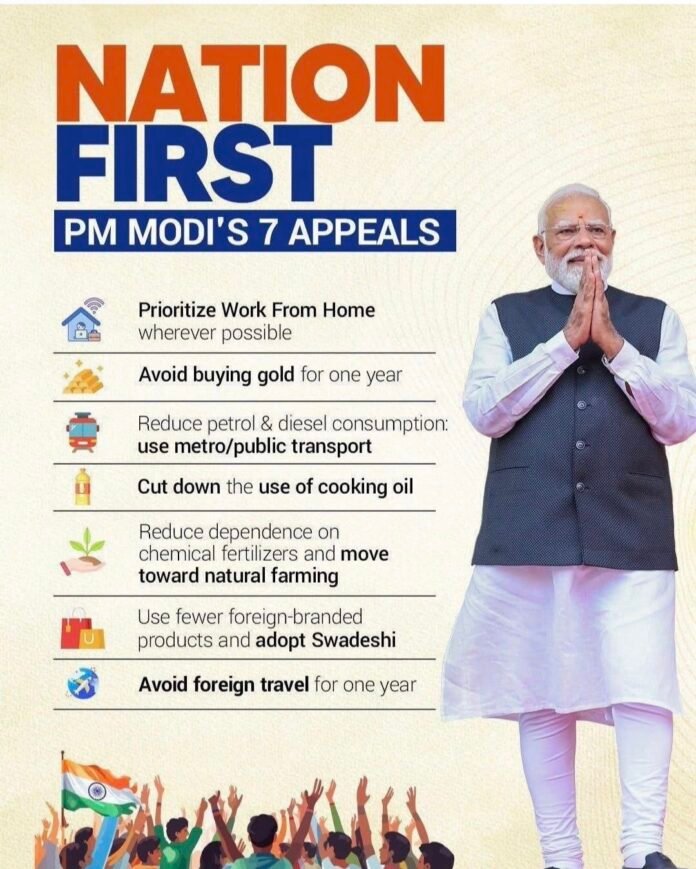
Prime Minister Narendra Modi has urged citizens to adopt a series of lifestyle and economic measures aimed at protecting India from the impact of the ongoing global crisis, particularly rising fuel prices and supply-chain disruptions linked to tensions in West Asia. Speaking at a public gathering in Hyderabad during his visit to Telangana, the Prime Minister said that in difficult global circumstances, “nation first” must take priority over personal convenience.
The appeal comes at a time when global crude oil prices have surged because of the prolonged conflict involving Iran and the United States. India, which imports a major portion of its crude oil and gold, faces pressure on fuel prices, foreign exchange reserves and import bills during such international crises.
During his address, PM Modi outlined seven major appeals to citizens. One of the most discussed among them was his suggestion to revive Covid-era work habits such as work-from-home, virtual meetings and video conferencing wherever possible. According to the Prime Minister, reducing unnecessary commuting can significantly lower fuel consumption and help conserve foreign exchange reserves.
He also appealed to people to reduce the use of petrol and diesel and prefer public transport systems like metro rail services. He encouraged carpooling and greater adoption of electric vehicles, saying collective small efforts could reduce India’s dependence on imported fuel. Businesses were also advised to shift cargo movement towards railway networks wherever feasible.
Another major appeal was to avoid purchasing gold for one year unless absolutely necessary. India is among the world’s largest gold importers, and high gold imports increase pressure on foreign currency reserves during periods of economic stress. PM Modi said reducing non-essential gold purchases would help the country conserve valuable foreign exchange.
The Prime Minister also urged citizens to postpone non-essential foreign travel, overseas vacations and destination weddings for at least a year. Instead, he encouraged people to support domestic tourism and prioritise spending within the country.
Beyond fuel and imports, PM Modi also spoke about reducing cooking oil consumption for health and economic reasons and encouraged farmers to reduce dependence on chemical fertilisers by moving towards natural farming methods. He further appealed to people to choose more Indian-made products and strengthen the “Swadeshi” spirit to boost self-reliance.
The Prime Minister’s remarks have sparked political debate, with opposition leaders criticising the appeals as a sign of economic strain, while supporters described them as preventive and patriotic measures aimed at protecting the economy during uncertain times.
Whether viewed as economic caution or a call for national discipline, the message reflects growing concern over how global geopolitical conflicts can directly affect everyday life in India. Through these appeals, the government appears to be encouraging citizens to participate collectively in reducing economic pressure and strengthening the country’s resilience during a volatile global period.