

PC: (Aaj Tak, Social News XYZ)
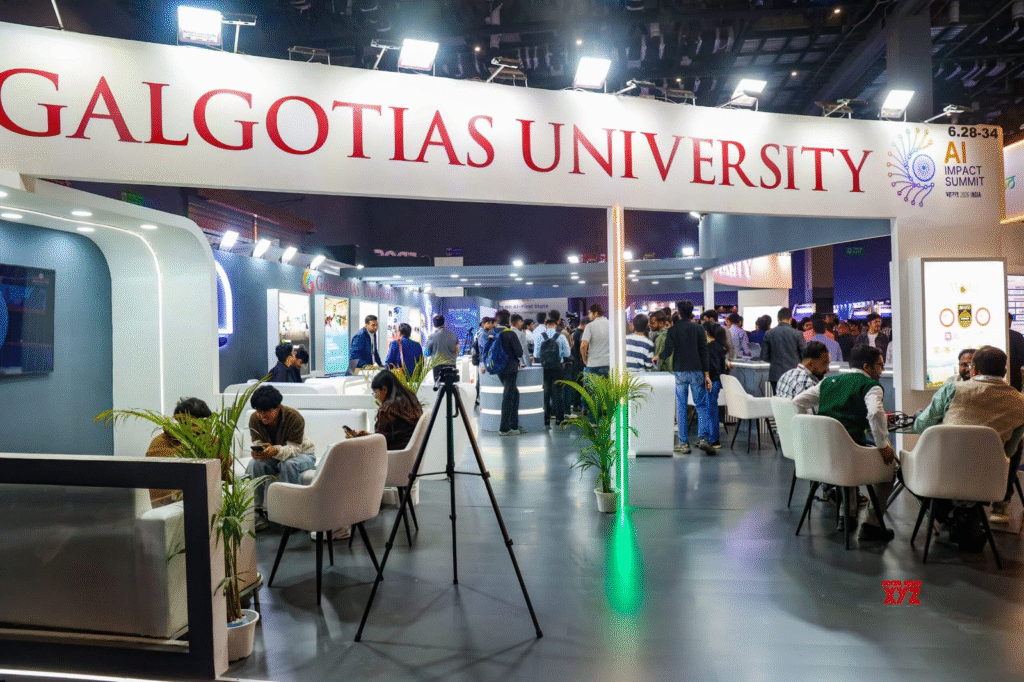
Galgotias University’s pavilion at the prestigious India Al Impact Summit 2026 turned into a viral embarrassment, sparking outrage, memes, and official intervention. What began as an attempt to showcase Al innovation ended with the university’s stall being vacated amid accusations of misrepresentation and substandard exhibits.
The high-profile event, focused on indigenous Al advancements under India’s Al Mission and attended by global leaders, saw Galgotias University’s displays draw sharp criticism for allegedly passing off imported or makeshift tech as homegrown breakthroughs. Social media erupted with mockery, calls for UGC accreditation review, and questions about standards in private higher education’s role in national tech showcases.
Primary Controversy: Passing Off a Chinese Robotic Dog as Indigenous Innovation
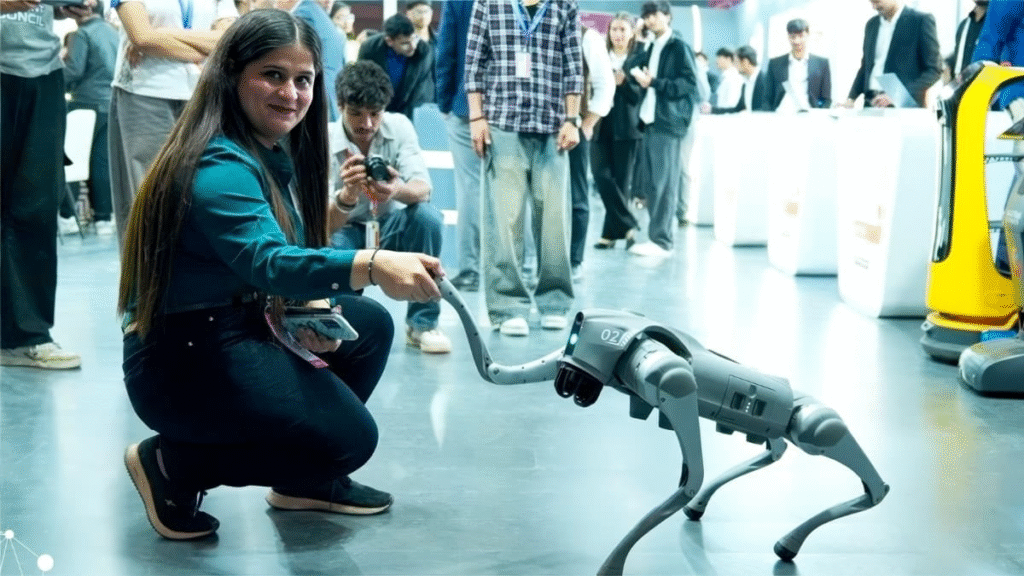
The biggest storm centered on a robotic dog displayed as “Orion” and presented as an in-house development by the university’s Centre of Excellence. Professor of Communications Neha Singh told state broadcaster DD News that the robot had been “developed” at the university, describing it as versatile for tasks like surveillance.
Social media users swiftly identified it as the Unitree Go2 – a commercially available quadruped robot from Chinese firm Unitree Robotics, priced at around 2-3 lakh and commonly used in global research and education.
The mismatch clashed directly with the summit’s push for self-reliant Al, leading to widespread accusations of misleading the public by rebranding imported tech as original Indian work.
Government sources confirmed that Galgotias was ordered to vacate its stall immediately. Power to the pavilion was cut, barricades erected, and staff/faculty seen packing up and leaving. A Meity official emphasized the move was to prevent “controversial agencies” from misleading attendees and to prioritize genuine indigenous exhibits.
In response, the university issued an apology, clarifying it “neither built nor claimed” to have built the robot. It stated the device was procured purely for student learning purposes and blamed the incident on an “ill-informed” representative’s miscommunication during media interactions.
Thermocol Drone’ Mockery
Adding fuel to the fire, a makeshift drone model at the pavilion – reportedly crafted from thermocol (styrofoam), wrapped in plastic/foil, and secured with rubber bands – became a target of ridicule. Many compared it to a rudimentary school science project rather than an advanced Al exhibit.
Netizens flooded social media with sarcastic
comments like: “Don’t fourth-grade kids make thesefor school projects?” and “Cancel this university’sUGC accreditation – they’re ruining students’ lives.”Viral videos and posts amplified the contrast between the summit’s cutting-edge focus and the low-tech display.
Additional Scrutiny: Drone Soccer Arena and Broader Claims
Reports also questioned a “drone soccer arena” promoted as fully in-house development, with allegations it closely resembled a commercially available product from South Korea. This fueled perceptions of exaggeration surrounding the university’s broader Al ecosystem claims, including investments exceeding ₹350 crore in labs and Centres of Excellence.
The back-to-back controversies triggered a meme frenzy, demands for accountability, and debates on ethical representation in tech education and national events. While Galgotias maintained the exhibits were meant to inspire learning, the episode highlighted the risks of over-enthusiastic claims in high-stakes forums promoting “Make in India” innovation.
As the dust settles, the incident serves as a cautionary tale for institutions navigating the spotlight of global Al showcases: authenticity matters more than optics.