

A Historic Digital Shift in India’s Biggest Exercise
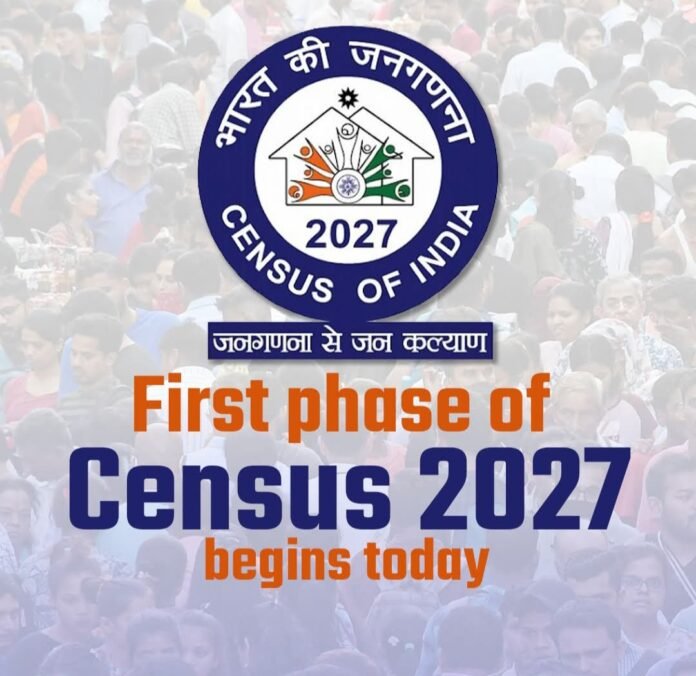
India has officially begun its Census 2027 on April 1, 2026, marking a historic transition as the country adopts digital technology for the first time in its population count. Conducted by the Office of the Registrar General & Census Commissioner, India, this will be the 16th Census and the first since 2011, after delays due to the COVID-19 pandemic.
Recognised as the world’s largest administrative and statistical exercise, the census will cover over 1.4 billion people, making its digital transformation a major governance milestone.
Two-Phase Operation Across 2026–27
The census will be conducted in two phases:
●Phase 1 (April–September 2026): Houselisting and Housing Census
●Phase 2 (Early 2027): Population Enumeration
The first phase will record housing conditions, household assets, and access to basic amenities, while the second will capture demographic, social, and economic data of individuals.
Massive Workforce and Scale
According to official details, the exercise will involve around 30 lakh (3 million) enumerators and supervisors, supported by advanced digital tools. This massive workforce ensures door-to-door coverage across urban and rural India, maintaining the census’s depth and accuracy.
33 Questions Reflecting a Changing India
The houselisting phase includes a 33-question framework, covering:
●Type and condition of housing
●Access to water, electricity, sanitation
●Availability of internet, smartphones, and digital devices
●Household assets and fuel usage
These additions reflect India’s rapid digitalisation and changing lifestyle patterns.
Technology at the Core: Apps, GPS & Real-Time Monitoring
A defining feature of Census 2027 is its digital-first approach. Enumerators will use mobile applications for data collection, enabling:
●Real-time data entry and monitoring
●GPS tagging of households for accuracy
●Faster processing and reduced errors
Citizens can also use a self-enumeration portal and mobile app, allowing them to submit their details independently before verification by officials.
Simplified and Inclusive Process
The government has clarified that no mandatory document submission is required during enumeration, making the process more accessible and citizen-friendly. The hybrid approach—digital self-entry combined with physical verification—aims to balance convenience with accuracy.
Why Census 2027 Matters
The Census is the backbone of India’s policymaking. It determines:
●Allocation of government funds
●Planning of welfare schemes
●Infrastructure and urban development
●Representation and administrative decisions
With digital tools, data processing is expected to be significantly faster than previous cycles, enabling more timely policy responses.
A Data-Driven Future for India
Census 2027 is not just a statistical exercise—it represents India’s shift toward technology-driven governance. By integrating digital tools at such a massive scale, the country is setting a benchmark for large-scale data collection globally.
Counting India, Shaping Tomorrow
As millions of enumerators reach every corner of the country, Census 2027 reflects a rapidly evolving India—connected, data-driven, and forward-looking. In counting its people digitally, India is laying the foundation for smarter planning and inclusive growth in the decades ahead.