

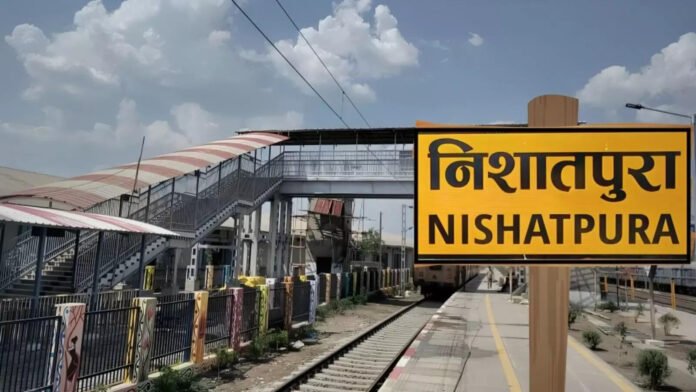
In a country where railway stations are often bustling with commuters, vendors and the constant movement of trains, Nishatpura Railway Station in Bhopal stands out for an unusual reason, it has never welcomed a single scheduled passenger train despite being fully built. Completed at a cost of nearly ₹6 crore, the station has earned the nickname “Bhopal’s Ghost Station”, symbolising a public infrastructure project waiting to fulfil its intended purpose.
A Station Ready, But Without Trains
Located in Bhopal, Madhya Pradesh, Nishatpura Railway Station was developed to ease congestion at the city’s main railway station and improve connectivity for residents in nearby areas. The station is equipped with modern passenger amenities, including platforms, waiting areas, ticketing facilities and other essential infrastructure.
Despite being structurally complete, the station has remained non-operational for passenger services. No scheduled passenger train has been assigned to halt there, leaving its platforms deserted months after construction was completed.
Why Has It Not Opened?
According to railway authorities, the station is awaiting final operational approvals and scheduling decisions before passenger services can begin. Officials have indicated that introducing train halts requires coordination between different departments, including operational planning, railway timetables and safety clearances.
Until these approvals are completed and trains are officially allotted stoppages, the station cannot function as a regular passenger railway station.
Why Was Nishatpura Station Built?
The primary objective behind constructing Nishatpura Railway Station was to reduce pressure on Bhopal Junction, one of the busiest railway stations in central India. With thousands of passengers travelling through Bhopal every day, an additional station was expected to distribute passenger traffic more efficiently while improving accessibility for people living in northern parts of the city.
The project also aimed to strengthen the city’s growing railway infrastructure and support future transportation needs.
The Cost of Idle Infrastructure
The station’s prolonged inactivity has raised questions about infrastructure planning and project execution. Public infrastructure is designed to serve citizens, and when completed projects remain unused, they inevitably attract scrutiny over planning, coordination and utilisation of public funds.
While the construction of the station has been completed, its intended benefits, reduced congestion, improved connectivity and enhanced passenger convenience, remain unrealised until train services commence.
Urban planning experts often point out that infrastructure projects require not only physical construction but also timely operational integration. Without proper coordination between planning, approvals and service rollout, even well-built facilities can remain underutilised.
A Symbol of Planning Challenges
Nishatpura Railway Station has become more than just an unused building. It highlights a broader challenge faced by many infrastructure projects: the gap between completion and functionality. Across sectors, delays in approvals, operational planning or administrative coordination can prevent public assets from delivering their intended value.
Although the station has been labelled a “ghost station,” it is not abandoned. Railway authorities maintain that it is expected to become operational once the necessary approvals are in place and passenger train halts are incorporated into railway schedules.
Waiting for Its First Passenger
For now, Nishatpura Railway Station remains fully constructed yet unusually silent. Its empty platforms, unused facilities and absence of passengers have made it one of the country’s most talked-about railway stations.
Whether it eventually becomes a busy suburban transport hub or continues to wait for its first scheduled train will depend on how quickly operational decisions are finalised. Until then, Nishatpura stands as a reminder that successful infrastructure is measured not just by what is built, but by how effectively it serves the people it was created for.