

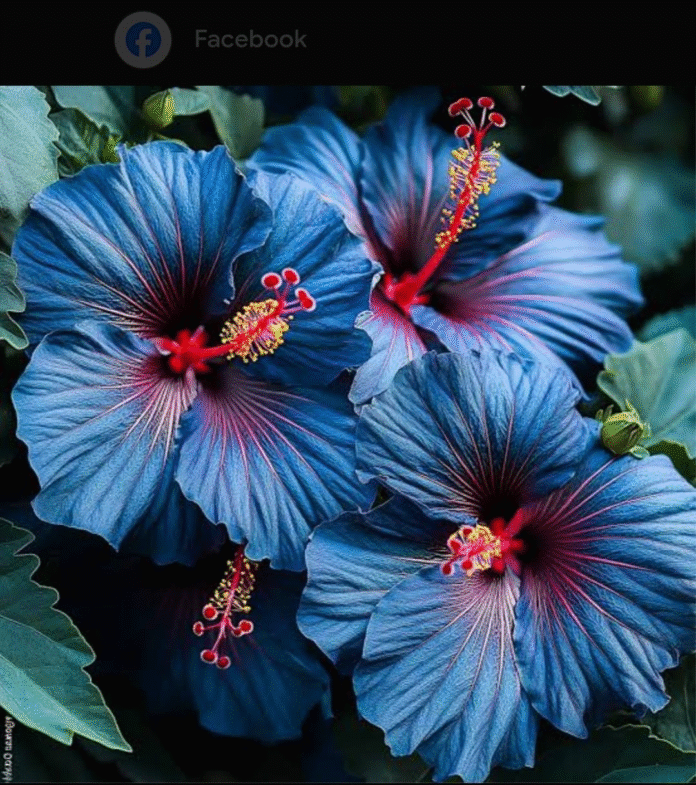
In early 2026, social media platforms lit up with breathtaking images of a rare blue hibiscus that had finally bloomed in Hawai’i after nearly ten years of careful tending. The viral posts described the event as a “botanical miracle,” symbolizing resilience, patience, and the delicate balance of nature. Gardeners and nature enthusiasts celebrated the moment, noting how true blue tones are exceptionally uncommon among hibiscus flowers, which typically display shades of red, pink, yellow, or white.
While the story spread widely as an inspiring tale of waiting for something extraordinary, a closer look reveals important botanical context that adds depth to the beauty of this bloom.
The Challenge of True Blue in Flowers
Producing a stable, vibrant blue color is biochemically difficult for most plants, including hibiscus. It usually requires specific pigments like delphinidin combined with a precise cellular pH balance. As a result, many so-called “blue” hibiscus varieties actually lean toward lavender, lilac, or powdery blue rather than a deep, true cerulean.
Hawai’i’s seven native hibiscus species (representing about 13 taxa) do not naturally produce blue flowers. The iconic state flower, Hibiscus brackenridgei (ma’o hau hele), is bright yellow, while others appear in white, red, orange, or occasionally light purple tones. Many of these endemic plants are endangered due to habitat loss and invasive species, making conservation efforts crucial for Hawaii’s unique biodiversity.
What Is the Famous “Blue Hibiscus”?
The plant often celebrated in these stories is frequently Alyogyne huegelii, commonly known as the blue hibiscus or lilac hibiscus. Despite the name, it is not a true member of the Hibiscus genus (though it belongs to the same mallow family, Malvaceae). This fast-growing evergreen shrub is native to the coastal regions of Western Australia, not Hawai’i.
Alyogyne huegelii produces large, trumpet-shaped flowers in lovely lilac-blue to deep purple hues and is popular in tropical and subtropical gardens worldwide, including parts of Hawai’i, because of its hardiness and showy blooms. Cultivated hybrids and varieties (such as certain Rose of Sharon types like ‘Blue Chiffon’ or ‘Oiseau Bleu’) can also display blue-toned flowers and are grown by dedicated gardeners and botanical enthusiasts. The “ten-year” timeline in the viral reports likely refers to the long-term patience required by cultivators to nurture a specific plant or collection through Hawaii’s climate, soil conditions, and seasonal cycles until it produced its striking flowers.
Such dedicated care highlights the effort behind many rare or unusual blooms in tropical gardens. flowers. Such dedicated care highlights the effort behind many rare or unusual blooms in tropical gardens.
A Symbol of Patience and Conservation
Regardless of its exact scientific identity, the viral story has served as a beautiful reminder of nature’s timing. It echoes other “flowers of patience,” such as Hawaii’s own Haleakalā silversword, which can take 20-50 years to bloom once before dying.
The attention also shines a light on the importance of preserving fragile ecosystems. While this particular bloom appears to be a cultivated rarity rather than a wild rediscovery of a native blue variety, it encourages appreciation for Hawaii’s endemic hibiscus species and the ongoing work of botanical gardens and conservationists. Whether a true Hibiscus hybrid, a lilac-toned cultivar, or the Australian Alyogyne huegelii thriving in Hawaiian soil, the flower’s appearance in early 2026 through Hawaii’s climate, soil conditions, and seasonal cycles until it produced its striking flowers. Such dedicated care highlights the effort behind many rare or unusual blooms in tropical gardens.
A Symbol of Patience and Conservation
Regardless of its exact scientific identity, the viral story has served as a beautiful reminder of nature’s timing. It echoes other “flowers of patience,” such as Hawaii’s own Haleakalā silversword, which can take 20-50 years to bloom once before dying.
The attention also shines a light on the importance of preserving fragile ecosystems. While this particular bloom appears to be a cultivated rarity rather than a wild rediscovery of a native blue variety, it encourages appreciation for Hawaii’s endemic hibiscus species and the ongoing work of botanical gardens and conservationists. Whether a true Hibiscus hybrid, a lilac-toned cultivar, or the Australian Alyogyne huegelii thriving in Hawaiian soil, the flower’s appearance in early 2026 brought joy and wonder to many. It stands as a vivid example that sometimes the most beautiful things in life – and in nature require years of quiet care and anticipation to reveal themselves.