

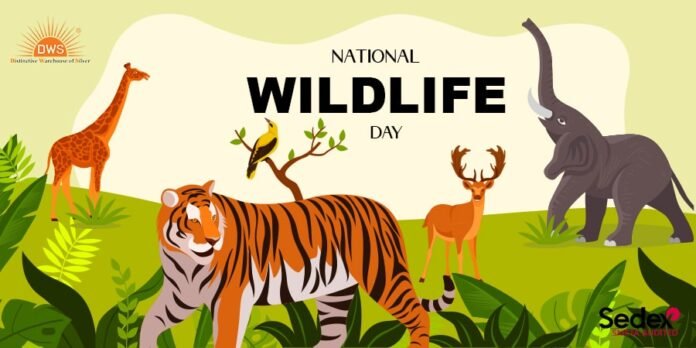
Every year on September 4, National Wildlife Day draws attention to the importance of wildlife conservation and the urgent need to protect animals, birds and their natural habitats. The day encourages people to appreciate the incredible diversity of life on Earth while recognising the growing threats faced by wildlife because of habitat loss, climate change, pollution, poaching and human-wildlife conflict.
National Wildlife Day was established in the United States in 2005 by animal behaviourist Colleen Paige in memory of Steve Irwin, the Australian wildlife conservationist and television personality who died that year while filming a documentary. The observance has since become an occasion to promote wildlife awareness, conservation education and responsible interaction with animals.
Wildlife is far more than the animals we see in forests or national parks. It includes mammals, birds, reptiles, amphibians, insects and countless other organisms that form interconnected ecosystems. Every species has a role to play in maintaining ecological balance. Predators regulate populations, pollinators support plant reproduction, birds disperse seeds and countless organisms contribute to soil health and nutrient cycles.
India is home to remarkable wildlife diversity, ranging from the Himalayan ecosystems and northeastern forests to the deserts of Rajasthan, the Western Ghats, mangroves and coastal habitats. The country is home to iconic species such as the Bengal tiger, Asiatic lion, Asian elephant, one-horned rhinoceros, snow leopard, gharial and Indian peafowl. Several of these species, however, face serious threats to their survival.
Habitat loss remains one of the greatest challenges. As cities, roads, industries and agricultural areas expand, natural habitats can become fragmented. Animals that once moved freely across large landscapes may find themselves restricted to smaller areas. This can reduce access to food and water, disrupt migration routes and increase encounters between wildlife and human communities.
India has undertaken several important conservation initiatives to address these challenges. Project Tiger, launched in 1973, has played a significant role in protecting tiger habitats and populations. Similar conservation efforts have focused on elephants, rhinos, lions, crocodiles and other threatened species.
National parks, wildlife sanctuaries, conservation reserves and community-managed areas provide important protection for wildlife and their habitats.
The success of conservation, however, cannot be measured only by the number of animals in protected areas. Wildlife often moves beyond the boundaries of forests and reserves, making cooperation with local communities essential. Conservation programmes increasingly recognise the importance of ensuring that people living near wildlife habitats can protect their livelihoods while coexisting with animals.
Climate change has added another layer of uncertainty. Changing temperatures, unpredictable rainfall, droughts, forest fires and rising sea levels can alter habitats and food availability. Species that depend on specific environmental conditions may struggle to adapt quickly enough. Protecting diverse habitats and restoring degraded ecosystems can therefore strengthen wildlife resilience in a changing climate.
Illegal wildlife trade is another serious threat. Animals and their body parts are illegally trafficked for meat, traditional medicines, ornaments and the exotic pet trade. Poaching can have devastating consequences, particularly for species with already small populations. Strong enforcement, international cooperation and public awareness are necessary to combat wildlife crime.
National Wildlife Day is also an opportunity to reconsider how humans interact with wild animals. Wildlife should be observed with respect rather than treated as entertainment or property. Responsible tourism, maintaining distance from animals, avoiding feeding wildlife and supporting ethical conservation initiatives are small but meaningful steps individuals can take.
Perhaps the most important lesson of wildlife conservation is that protecting animals also means protecting ourselves. Healthy forests, wetlands, grasslands, rivers and oceans provide clean water, regulate climate, support agriculture and protect communities from environmental disasters. When ecosystems decline, human societies ultimately experience the consequences.
National Wildlife Day therefore asks us to look beyond the beauty of individual species and understand the larger ecological systems that sustain life. A tiger, elephant or bird is not simply a magnificent creature to be photographed. It is part of a complex natural network on which countless other species, including humans, depend.
The future of wildlife will ultimately depend on the choices made today. Conservation requires governments, scientists, forest departments, local communities, businesses and individuals to work together. Protecting habitats, reducing pollution, combating illegal trade and respecting nature can help ensure that future generations inherit a world where wildlife continues to exist not merely in photographs and history books, but in the forests, rivers and landscapes where it belongs.
National Wildlife Day is, at its heart, a reminder that wildlife does not need us to survive nearly as much as we need a healthy natural world to survive. Protecting the wild is therefore not only an act of compassion towards animals; it is an investment in the future of our planet.