

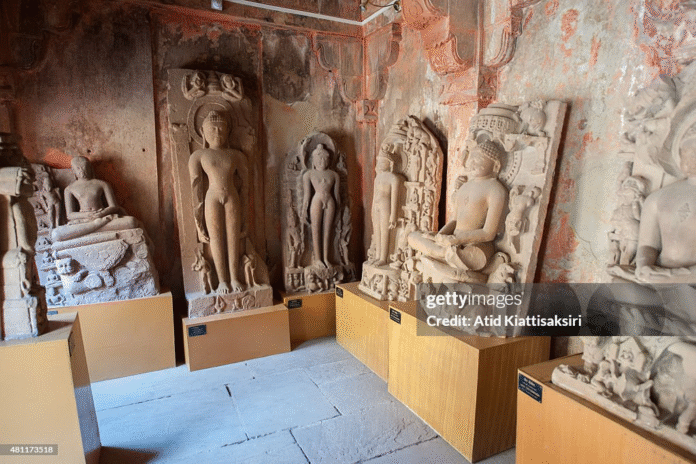
The Vidisha District Museum (also known as Vidisha District Archaeological Museum) is a premier archaeological institution in the historic city of Vidisha, Madhya Pradesh, India. Established in 1964 by the Directorate of Archaeology, Archives and Museums, Government of Madhya Pradesh, it preserves and displays artifacts primarily from the ancient city of Besnagar (ancient Vidisha).
Vidisha, situated at the confluence of the Betwa and Bes rivers, was known in ancient times by names such as Besnagar, Bhilsa, Bhelsa, Bedsa, and Alamgirpur. It served as a major cultural, religious, and trading center during the Mauryan, Shunga, Gupta, and Paramara periods. Excavations in the early 20th century and discoveries during stone quarrying in the 1940s revealed numerous sculptures, terracottas, coins, and inscriptions, prompting the need for a dedicated museum to conserve and showcase this rich heritage.
Location and Structure
Located centrally in Vidisha city along the Sagar-Vidisha Road, near the Betwa River, the museum is an open-air gallery with three outdoor sections for display. Managed by the state’s archaeology department, it houses over 1,700 antiquities, including stone sculptures, lithic inscriptions, terracotta figures, coins, and architectural fragments. The collection draws from sites like Besnagar, Udayagiri Caves, Pawaya, and surrounding areas, reflecting the region’s layered history from antiquity to the medieval period. It emphasizes Shaiva, Vaishnava, Shakta, and Jain religious art, making it a systematic narrative of central India’s cultural evolution.
Collection Overview and Key Periods
The museum’s holdings span from the Mauryan-Shunga era (2nd century BCE) through the Gupta period (4th-6th centuries CE) to the early medieval (8th-12th centuries CE) Paramara times, with some Harappan influences noted. Highlights include stone sculptures of Hindu, Jain, and nature-spirit deities, terracotta figurines, ancient coins, inscriptions, and excavation finds. The artifacts showcase artistic excellence in depicting deities, mythical beings, and daily life motifs, providing insights into religious diversity, trade, and craftsmanship in ancient central India.
The Iconic Colossal Kubera Yaksha: Museum’s Star Attraction
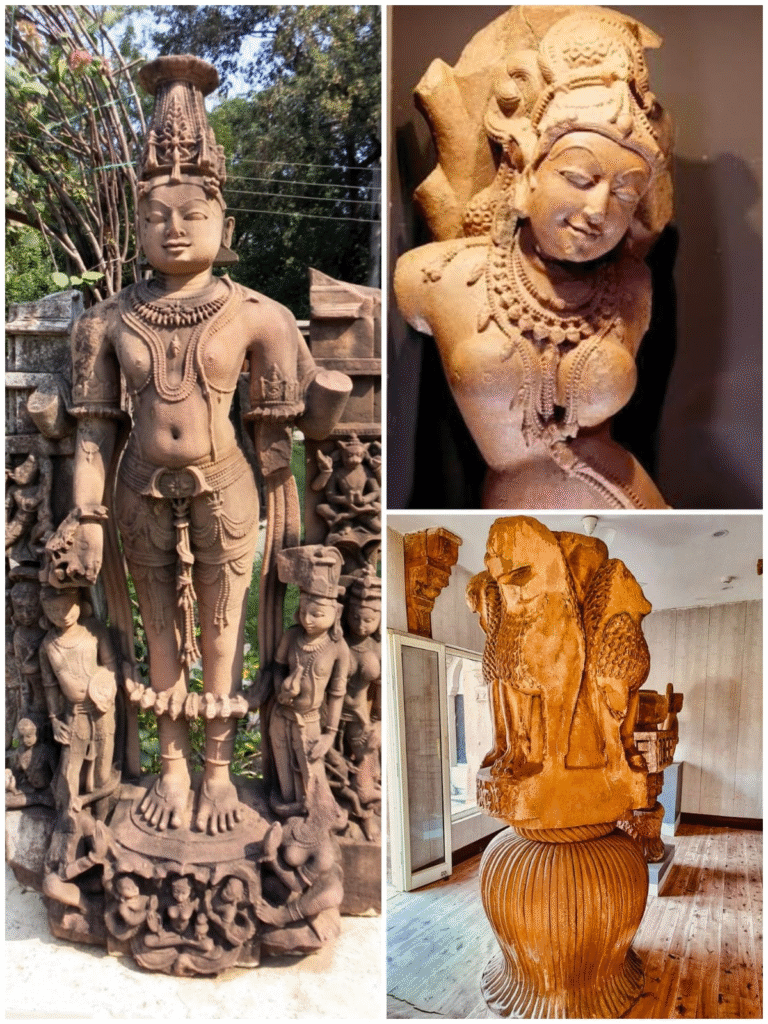
The museum’s most celebrated masterpiece is the Kubera Yaksha, a monolithic sandstone statue dated to 99-1 BCE (late Mauryan or early Shunga period, approximately 2200 years old). Discovered in 1957 from the Betwa River bed, this colossal figure stands at 337 cm (over 11 feet or about 3.37 meters) tall. The Yaksha, identified as Kubera (god of wealth), is depicted in a frontal stance with a robust build-large head, thick neck, rounded belly-adorned in a dhoti, multi-stranded necklaces, thick spiral earrings, armlets, and holding a bag of coins in the left hand (though the hand is partially damaged).
Accompanying it is a 207 cm tall Yakshi figure holding mango leaves and fruits. These free-standing sculptures highlight early Indian monumental yaksha worship and are among the best-preserved examples from Besnagar.
Other Notable Sculptures and Artifacts
The collection features impressive pieces like Bhairavnath (with his dog), a panel of Jain Tirthankaras (including Mahavira engravings), statues of Kubera, Ganesha, Vishnu, Parvati, Brahma, Surya (early medieval), Sapta Matrikas, and various Jain Tirthankars such as Adinatha and Ambika. Gupta-period terracottas and sculptures from Pawaya and Udayagiri add depth, showing female busts, male torsos, heads, and narrative panels. Coins from ancient dynasties, architectural fragments, and inscriptions further enrich the displays, illustrating Vidisha’s role as a flourishing hub of art and religion.
Significance and Visitor Appeal
Vidisha District Museum stands as one of Madhya Pradesh’s key archaeological sites, offering history enthusiasts, scholars, students, and tourists a direct connection to ancient India’s spiritual and artistic legacy. Reviews highlight its fine collection of 8th-12th century sculptures and artifacts (some reconstructed), though the building condition receives occasional criticism. It complements nearby sites like Udayagiri Caves and Besnagar ruins. A must-visit for anyone exploring Madhya Pradesh’s heritage-here, you can witness over two millennia of cultural continuity through breathtaking stone masterpieces!