

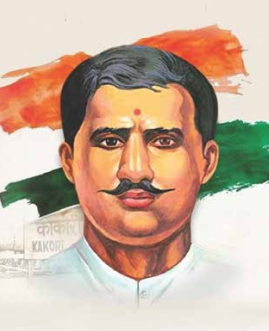
Every year on June 11, India remembers one of the most fearless revolutionaries of the freedom struggle, Pandit Ram Prasad Bismil, on his birth anniversary. A patriot, poet, and revolutionary leader, Bismil played a pivotal role in the fight against British colonial rule and inspired an entire generation with his courage, sacrifice, and powerful writings. Born on June 11, 1897, in Shahjahanpur, Uttar Pradesh, he remains one of the most celebrated heroes of India’s independence movement.
Bismil’s journey into the freedom struggle began at a young age. Deeply influenced by the teachings of the Arya Samaj and nationalist leaders of his time, he developed a strong commitment to ending British rule. He believed that political freedom was essential for the nation’s dignity and progress. His revolutionary ideas were further strengthened after learning about the harsh treatment of Indian nationalists by the colonial government.
A gifted writer and poet, Bismil used literature as a weapon against oppression. Writing in Hindi and Urdu under the pen name “Bismil,” he composed patriotic poems that ignited the spirit of nationalism among young Indians. His name became synonymous with revolutionary zeal, and his writings continue to inspire generations. Among the most famous patriotic verses associated with the freedom movement is “Sarfaroshi Ki Tamanna,” which became a rallying cry for revolutionaries fighting for independence.
Beyond his literary contributions, Bismil was a key architect of revolutionary activities in northern India. In 1924, he co-founded the Hindustan Republican Association (HRA) along with fellow revolutionaries including Sachindra Nath Sanyal and others. The organization sought to achieve independence through organized resistance against British rule and envisioned a free and democratic India.
His most famous act was the Kakori Train Action of 1925. Along with revolutionaries such as Ashfaqulla Khan, Chandrashekhar Azad, Rajendra Lahiri, and others, Bismil planned the operation to seize government funds being transported by train. The action was intended to finance the revolutionary movement and challenge British authority. Though initially successful, many participants were later arrested following an extensive investigation.
After a lengthy trial, Ram Prasad Bismil was sentenced to death. He was executed on December 19, 1927, at Gorakhpur Jail at the age of just 30. His martyrdom transformed him into a symbol of courage, patriotism, and sacrifice. Even in his final days, he remained steadfast in his commitment to the cause of freedom.
Today, more than a century after his birth, Ram Prasad Bismil’s legacy continues to inspire Indians. He is remembered not only as a revolutionary who challenged an empire but also as a poet whose words awakened the spirit of freedom. His life serves as a reminder that the struggle for independence was built on the sacrifices of countless young men and women who placed the nation above themselves.
On his birth anniversary, the nation pays tribute to a hero whose courage, ideals, and patriotism remain etched in the history of India’s freedom movement.