

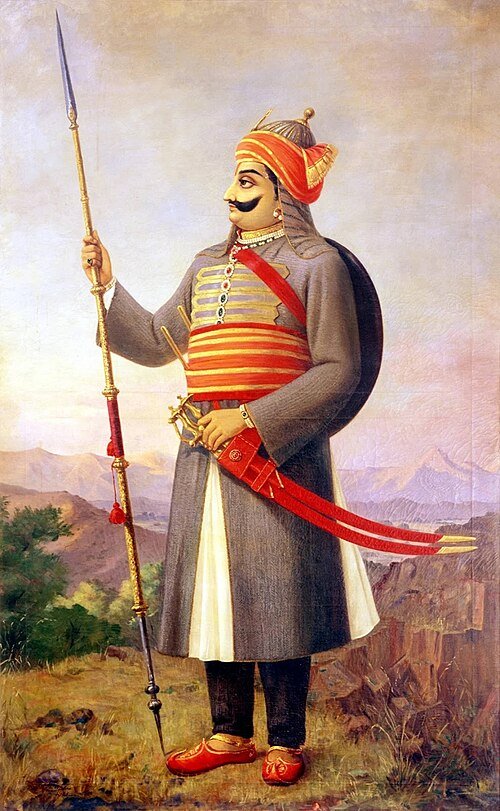
Every year, Maharana Pratap Jayanti is observed with great pride and reverence across India, especially in Rajasthan, to honour the birth anniversary of Maharana Pratap — one of the most celebrated warrior kings in Indian history. Known for his unmatched courage, fierce patriotism, and unwavering resistance against the Mughal Empire, Maharana Pratap remains a timeless symbol of self-respect, independence, and sacrifice.
Born on May 9, 1540, to Rana Udai Singh II and Maharani Jaiwanta Bai, Maharana Pratap belonged to the Sisodia dynasty of Mewar. After the death of his father in 1572, he ascended the throne of Mewar at a time when much of northern India had come under the control of Mughal emperor Akbar. While several Rajput kingdoms accepted Mughal supremacy, Maharana Pratap chose a far more difficult path — resistance.
His refusal to bow before Akbar became the defining chapter of his life and legacy. Akbar reportedly sent several diplomatic missions to persuade him to accept Mughal authority, but Maharana Pratap remained steadfast in protecting the sovereignty of Mewar. His determination eventually led to the historic Battle of Haldighati in 1576, one of the most iconic battles in Indian history.
Fought in the narrow mountain pass of Haldighati in present-day Rajasthan, the battle saw Maharana Pratap’s comparatively smaller army confront the mighty Mughal forces led by Raja Man Singh of Amber. Despite limited resources, the warriors of Mewar fought with extraordinary bravery. Maharana Pratap also received support from Bhil tribal warriors and Afghan commander Hakim Khan Sur, reflecting the broad alliances he built in defence of his kingdom.
Although the battle is often described as a tactical advantage for the Mughals, Maharana Pratap was never captured, nor did he surrender. Instead, he retreated into the Aravalli hills and continued guerrilla warfare for years. Over time, he succeeded in reclaiming much of Mewar, except Chittorgarh. Historians and public discussions continue to debate the exact outcome and interpretation of the Battle of Haldighati, but Maharana Pratap’s resilience and refusal to submit remain central to his enduring legacy.
No account of Maharana Pratap is complete without mentioning Chetak, his loyal horse, whose bravery became legendary in Indian folklore. According to popular accounts, even after being grievously wounded during the battle, Chetak carried Maharana Pratap to safety before collapsing. The story of their bond continues to inspire generations and has become an inseparable part of Rajput history and culture.
Today, Maharana Pratap Jayanti is marked by processions, cultural programmes, tributes, and discussions on his life and ideals. Schools, organisations, and communities remember him not merely as a ruler, but as a symbol of courage, honour, and devotion to one’s land and principles.
More than four centuries after his death, Maharana Pratap continues to occupy a unique place in India’s collective memory. His life story is not just about warfare or kingship; it is about resilience in adversity and the belief that dignity and freedom are worth every sacrifice.